
A Retrospective Look at the Changing Picture of the Neolithic Formation. A Survey of Changes Since the 1970s from the Time of Russian Expeditions
Journal: Brief Communications of the Institute of Archaeology @ksia-iaran
Article in issue: 283, 2026.
Free access
In the early years, when the so-called Fertile Crescent was defined as the primary zone of Neolithisation, the northern arc of this crescent-shaped region remained an archaeological terra incognita for the Neolithic period. At that time, the Neolithic was a novel concept, understood merely as a simple way of life, small communities struggling to survive on wild cereals. The Fertile Crescent was regarded as the core area of sedentary farming, and our knowledge was based on only a few recently excavated sites: Jarmo on its eastern wing and sites of the Kebaran and Natufian cultures on its western wing. The excitement generated by the discovery of a two-stage Pre-Pottery horizon at Jericho was still fresh, spurring further work in Syria. Consequently, our Russian colleagues had little contemporary research with which to relate their findings, and, regrettably, no mutual contact with the Çayönü excavations, which were taking place simultaneously. Later, with the onset of dam-rescue excavations, the region’s intensive early Neolithic occupation came to light, revealing spectacular sites, including Göbeklitepe. Much has happened since then, not only revolutionising our understanding but also requiring a redefinition of the term “Neolithic”. Here, we will highlight some of the most critical and unforeseen developments.
Short address: https://sciup.org/143186093
IDS: 143186093 | DOI: 10.25681/IARAS.0130-2620.283.13-31
Ретроспективный взгляд на меняющуюся картину неолитической формации. Исследование изменений с 1970-х годов с момента начала русских экспедиций
На раннем этапе исследований, когда первичной зоной неолитизации считалась территория так называемого Плодородного полумесяца, северная дуга рассматриваемого региона, по форме напоминающего полумесяц, в неолитический период оставалась абсолютной terra incognita. В тот период неолит был новой концепцией, используемой для обозначения простого образа жизни небольших групп людей, которые пытались выжить, собирая дикие злаки. Плодородный полумесяц считался основной территорией оседлого земледелия, при этом наши знания основывались на данных недавно раскопанных памятников – поселения Джармо в восточной части и памятников кебаранской и натуфийской культур в западной части региона. Радостное волнение по поводу открытия двух слоев докерамического неолита в Иерихоне еще не улеглось, когда раскопки продолжились в Сирии. Таким образом, нашим русским коллегам практически не с чем было сравнивать результаты своих исследований данного периода. К сожалению, они тогда не контактировали с археологами, проводившими охранно-спасательные археологические раскопки на поселении Чайоню, в ходе которых были обнаружены слои раннего неолита и следы интенсивной деятельности, а также открыты такие яркие памятники, как Гёбекли-Тепе. С тех пор произошло много событий, которые не только коренным образом изменили наше понимание неолита, но и заставили нас пересмотреть само понятие «неолит». В настоящей статье обсуждается ряд важнейших и неожиданных находок и их обстоятельств.
Text of the scientific article A Retrospective Look at the Changing Picture of the Neolithic Formation. A Survey of Changes Since the 1970s from the Time of Russian Expeditions
The joint project of the Universities of İstanbul and Chicago was launched in the heartland of wild wheat and lentils to investigate how local communities engaged with local resources. Initiated in 1963, the project began with an extensive field survey of the entire foothill zone along the southern flanks of the Eastern Taurus Mountains. For the Neolithic period, this region had been an archaeological terra incognita. Several Neolithic sites were identified during the survey - some, such as Gobeklitepe, were particularly prominent - yet Qayonu was selected as the first site to be tested, with no expectation of uncovering substantial architectural remains. Before excavation, intensive surface collection was carried out across the full extent of the site. The westernmost part yielded a prolific assemblage of lithic artefacts, whereas the easternmost area produced a disappointingly low number. However, due to difficulties in leasing land from local landowners, excavation was conducted at the eastern end of the site, in the area with the poorest surface yield ( Braidwood et al ., 1971; Çambel, Braidwood , 1980).
The artefactual yield of the first excavation season, though limited, was clearly Pre-Pottery Neolithic, yet it presented a picture entirely different from Jarmo, featuring the well-preserved remains of a substantial settlement. Among the finds were a well-built stone structure later designated the “Grill Building” and a very impressive monumental edifice later termed the “Flagstone Building”, with a floor paved with finely polished stone slabs, a buttressed revetment wall lined with benches, and six standing stones set into the floor (Fig. 1). It was apparently almost identical to what
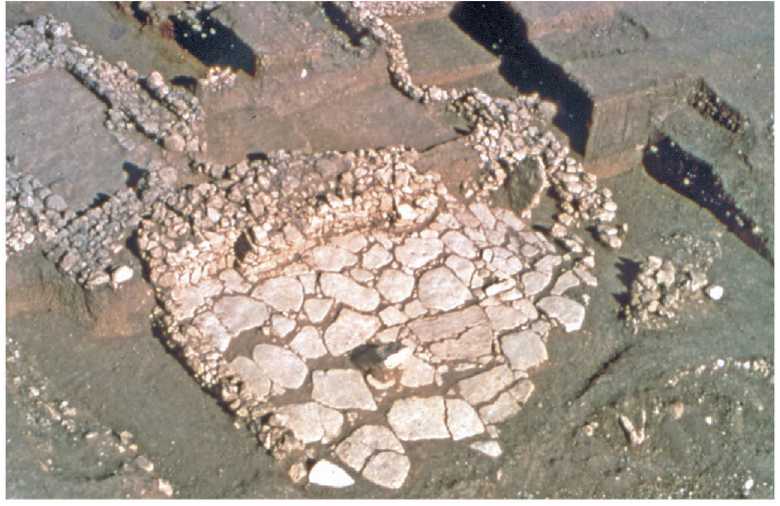
Fig. 1. The Flagstone Building at Çayönü, early PPNB Stage.
The first of the Göbeklitepe type of Special Buildings *
* All photos except Fig. 5 are from the author’s own collection. Fig. 5 is from above noted publication.
we now recognise as PPNB cult buildings of the Göbeklitepe cultural horizon. At the time, however, it seemed embarrassingly anomalous, particularly to Braidwood, whose theory was based on the unpretentious nature of early farming settlements. He interpreted it as a large-room building, with the standing stones functioning as roof supports. Moreover, the material recovered from other trenches – such as native copper beads and implements (Fig. 2) – was not only far more elaborate but also served as a marker of technological innovation. All of this was so unforeseen that excavations continued for years, ultimately redrawing the picture of the early Neolithic era.
Year after year, Qayonu continued to yield spectacular finds: a monumental building with terrazzo flooring, a plaza over 60 by 25 metres adorned with standing stones, and a special structure containing the remains of hundreds of individuals, together with clear evidence of a highly stratified social structure and a hunting-gatherer way of life ( Özdoğan , 2018b). In fact, what we now recognise from sites of the Göbek-litepe culture, such as art, sculpture, fantasy objects, and cult buildings, was already evident at Qayonu. Yet for twenty years, from the first season in 1964 onward, Qayonu remained the only excavated Neolithic site in all of southeastern Turkey, with findings unmatched by those in either the Levant or the Zagros region ( Erim-Özdoğan , 2011). Despite the sophistication of these discoveries, scholarly interest, as with
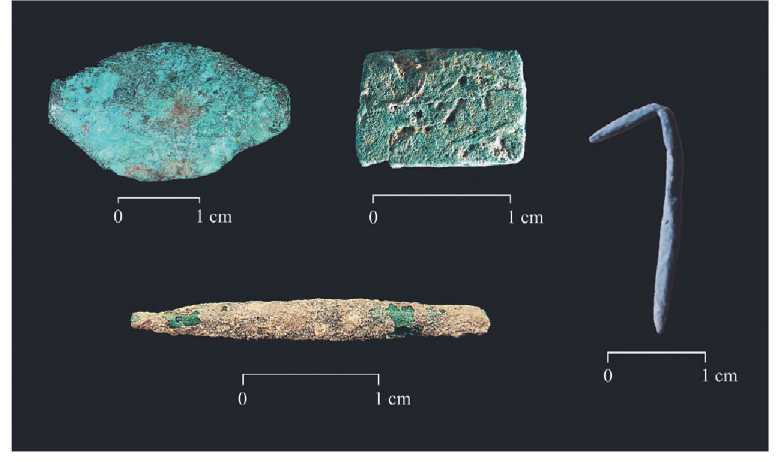
Fig. 2. Copper objects from Çayönü; of native copper, shaped by heat treating contemporary sites, focused mainly on subsistence patterns, botanical and faunal remains, and environmental constraints.
During the years when Çayönü was isolated, there was some activity in Syria, mainly in the form of rescue excavations along the Euphrates basin. It was also during those years that our Russian colleagues began working in northern Syria and Iraq, just south of our border. Although some of the sites they investigated were later in date, their work at Tell Maghzaliyah produced material that complemented Çayönü, especially regarding the early use of copper ( Bader , 1979; 1993; Munchaev et al ., 1984). It is most regrettable that during those years we had no contact with our Russian colleagues, who were working so close to our border and on comparable cultural assemblages. A coalescent approach at the time could have helped break the Levanto-centric view of the Neolithic in the Euphrates basin. Under the prevailing influence of this Levanto-centric model of neolithization, the Neolithic of northern Syro-Mesopotamia and of Çayönü continued to be regarded as a “secondary Neolithic” or merely a delayed reflection of the Levantine Neolithic ( Cau-vin , 1988; Kislev, Bar-Yosef , 1988).
Nevertheless, the Levant-based perspective on the northern regions began to be questioned with the start of excavations at Nevali Qori in 1983. The site revealed findings similar to those at Qayonu, but with even more striking sculptural remains, findings soon further underscored by discoveries at Göbeklitepe ( Bar-Yosef , 2014). Since then, interest in the early Neolithic cultures of Southeastern Anatolia has increased rapidly, and the number of excavated sites has now risen to 32 (Fig. 3). Ongoing work in early settlements in Southeastern Anatolia and its immediate surroundings is already producing a picture that diverges markedly from the conventional view ( Özdoğan , 2024).
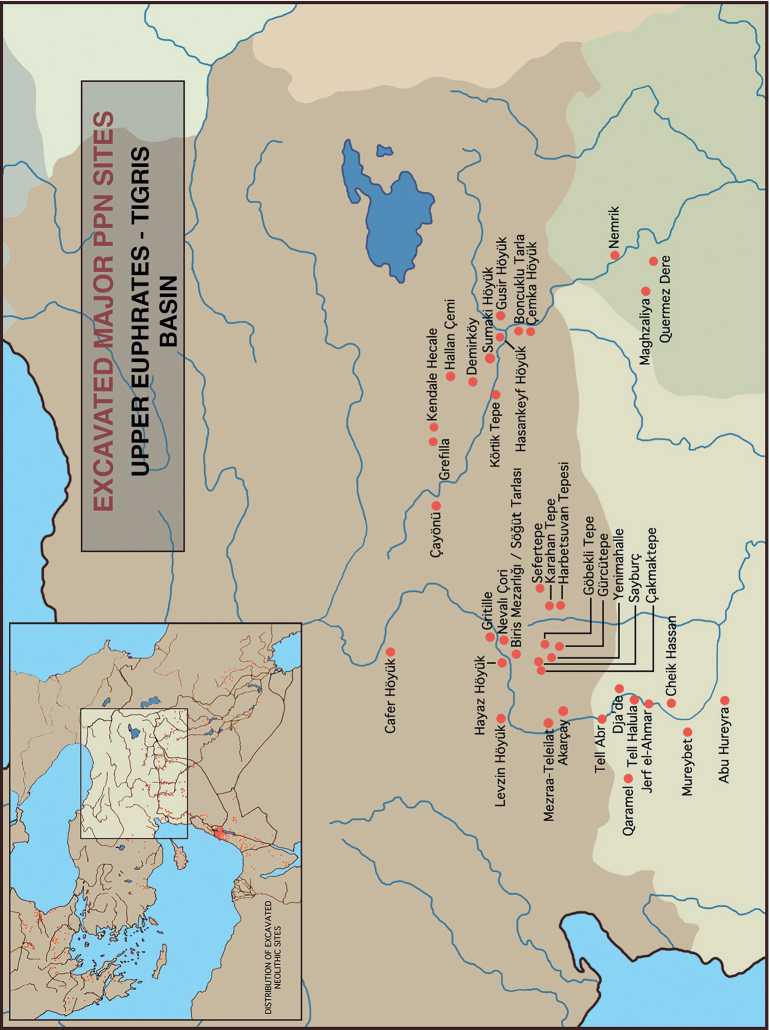
Fig. 3. Upper Euphrates – Upper Tigris region, excavated Pre-Pottery Neolithic sites
This emerging picture is so provocative that, before turning to the details, a general overview is necessary to clarify the characteristics of this new cultural entity.
A Conspectus of the Newly Emerging Picture and Some Considerationsa) Defining the Geographic Setting and Looking for Antecedent Stages
The areal extent of this newly emerging cultural entity extends into northern Syria and Iraq along the Turkish border, encompassing almost all of southeastern Anatolia except its westernmost tip, the so-called Levantine corridor. It also includes the chain of plains along the northern foothills of the Eastern Taurus range. The Eastern Taurus Mountains form an arc about 50–60 km wide and rise to 3,700 metres. Although comparable Early Neolithic cultures occur on both sides of the mountain range, the mountainous zone itself has never been systematically surveyed.
In sharp contrast to neighbouring regions such as the Southern Levant, the Zagros, and the Caucasus, the late stages of the Upper Palaeolithic are conspicuously absent or, at best, extremely scarce and poorly represented throughout southeastern Anatolia. Clear evidence of occupation appears across most of southeastern Anatolia only from the mid-eleventh millennium BC. Notably, the upper Tigris and upper Euphrates regions share similar cultural traits and developed together as a single cultural entity. This does not mean that every site in the region is identical, but rather that they share fundamental features that emerged simultaneously.
Some colleagues now refer to this cultural zone as “Upper Mesopotamia”, a designation we consider inapplicable, since the term “Mesopotamia” implies a particular environment in which the two rivers run close to each other. Here, by contrast, they are almost 300 km apart, separated by the Karacadağ massif. It is therefore more appropriate to define this territory as the “Upper Tigris - Upper Euphrates Basin”. From now on, we use this term to refer to the areal extent of the “Göbeklitepe Culture” described below.
-
b) Contextualising and Naming the Culture
In the early stages of research, when the study of the local Neolithic was still in its infancy, identifying comparative material – and especially appropriate terminology – required looking to the southern Levant and/or the Zagros region, both of which had an incomparably long history of investigation. In both regions, there is a continuous sequence from the Upper Palaeolithic to the Neolithic ( Price , Bar-Yosef , 2011). The transitional stage, the forerunner of Neolithic culture, known as the Epi-Palaeo-lithic, is abundantly attested across much of the area.
However, in almost all parts of the Upper Tigris – Euphrates basin, evidence for the Epi-Palaeolithic and Late Upper Palaeolithic is conspicuously absent or extremely rare, except at the region’s outer margins. Epi-Palaeolithic assemblages characteristic of the Zagros occur in the easternmost parts of southeastern Anatolia, in Mardin province, extending towards the Zagros region. To the west, lithic assemblages typical of the southern Levant extend along the northern end of the so-called Levantine Corridor, in the provinces of Antakya and Maraş.
By the later part of the eleventh millennium BC, settlement sites appear across almost the entire Upper Tigris – Euphrates basin, with no clear antecedents. Consequently, they were conventionally assumed to have been founded by communities moving northwards from the southern Levant and/or the Zagros regions, and it long seemed appropriate to adopt the terminology developed there. The basal layers uncovered in the Upper Tigris – Euphrates basin were thus termed “Proto-Neolithic”, followed by “Pre-Pottery Neolithic A” and “Pre-Pottery Neolithic B”.
As the pace of work increased in southeast Anatolia, however, a high degree of uniformity became apparent even in the earliest phases – not only in settlements, buildings, and artefactual assemblages, but also in the social contexts in which they occurred. With more than 30 sites of this culture now excavated and hundreds more identified by surface surveys across the region, it has become evident that the cultural entity of the Upper Tigris – Euphrates basin differs notably from those of the southern regions, and that this area possessed an independent cultural identity. When naming newly emerging cultures, the customary practice in archaeology is to use the name of the site where they were first defined. Accordingly, the term “Gobeklitepe Culture” is the most appropriate designation for the newly emerging culture of the Upper Tigris–Euphrates basin. However, despite the clearly uniform cultural assemblage, there is no indication of developmental stages. Therefore, we consider it must have migrated into the region as a fully developed culture originating elsewhere.
-
c) Defining the Particularities of the Göbeklitepe Culture
Subsistence. Before delving into the particulars, the basic traits of the so-called Göbeklitepe Culture will be summarised in a brief overview. In its early stages, the primary mode of subsistence was hunting and gathering. Almost all known sites from this period are located on the limestone plateau (Fig. 4) , which at the time was likely covered with rich grasslands capable of supporting large herds of herbivores. The presence of several well-organised desert kites clearly underscores the importance of hunting.
Settlements and Structures. All settlements of the Göbeklitepe Culture appear well-organised, as if laid out according to a pre-planned design ( Redman , 1983). Although the excavated areas at most sites remain limited, it is now possible to distinguish substantial settlements, such as Göbeklitepe or Karahantepe, from more modest ones, such as Sayburç.
In every settlement, in addition to conventional habitation areas, there are “special buildings” constructed as semi-subterranean structures, either cut into a slope or sunk into the ground. These buildings are characterised by impermeable floors, revetment walls that are sometimes buttressed or niched, benches along the walls, and standing stones set into the floors. They were occasionally deliberately buried by infilling, with new structures then built above them. Those from the early, so-called PPNA stage are larger and more substantial than those of the PPNB stage. Although from the earliest phases they all share the same basic features, special buildings in substantial settlements are larger and more complex, and, interestingly, are detached from the domestic areas with ordinary housing. In substantial settlements, alongside these special buildings, there are also special houses. These are larger and better built than ordinary houses, follow the same basic plan, and contain special finds as well as lumps of raw materials ( Kurapkat , 2009; Özdoğan, Özdoğan , 1998; Schmidt , 2006; Stordeur , 2006).
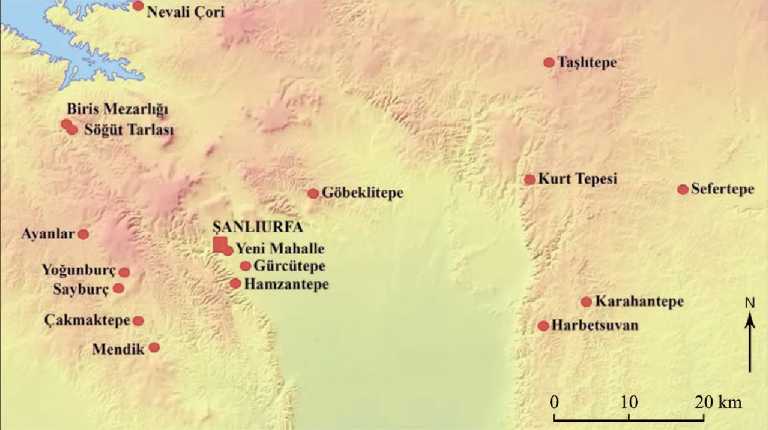
Fig. 4. Upper Euphrates;
Distribution of Pre-Pottery Neolithic sites located on the limestone plateau
What are commonly referred to as “Special Buildings”, found at almost all sites of the Göbeklitepe Culture, are now come to be seen as the hallmark of this cultural entity. They display broadly similar features across the entire distribution of this culture, from the Upper Tigris to the Upper Euphrates ( Kodaş, Çiftçi , 2021). However, there is still no consensus either on their function or on how to name them. There is considerable debate about the purpose of what has become known as “Special Buildings”.
The conventional view of the Neolithic era excludes the presence of special-purpose structures such as shrines, cult buildings, and, especially, temples. All such ostentatious, imposing structures have traditionally been taken as indicators of complex societies no earlier than the Late Chalcolithic. Yet the buildings uncovered at almost all sites of the Göbeklitepe Culture are far too elaborate and monumental to have been intended for daily use. Although they lack visual impact from the outside – being semisubterranean, with only their rooftops visible – their construction is masterful, and, once inside, they are monumental in the full sense of the term. Some contain standing stones up to seven metres high, with altars, niches, and occasional statues along their walls, making them broadly comparable to the temples of later periods.
As noted above, the first cult building, the so-called “flagstone building”, was recovered as early as 1964 at Çayönü. It is regarded as a normal structure, larger than others, and it required roof supports, the standing stones. Later, with the discovery of the “terrazzo building” - which at first met with some suspicion - it became necessary to reassess these interpretations. The subsequent discovery of the “Skull Building” led to these structures being termed “special buildings” and, with some reluctance, “cult buildings” (Özdoğan, Özdoğan, 1998). Following Çayönü, similar buildings were first identified at Nevali Qori and later, in increasing numbers, at Göbeklitepe. They are now known from almost every site in the region, with particularly prolific examples at Karahantepe, Saybur? and Grefilla (Ozdogan E., 2024).
There is now ample evidence to reconstruct these structures reliably, confirming the interpretive drawing by Kurapkat, the first architect of the Gobeklitepe excavation ( Kurapkat , 2012), which depicts a steeply sloping entrance passing through a porthole stone. It is thus evident that the main opening had a very narrow entry that could be passed through only by bending over. Once inside, there are benches along the walls and, occasionally, an altar-like cavity. No domestic or utilitarian objects have been found in any of these compounds.
However, it is clear that whatever ceremonial activities took place in these buildings involved the use of some form of liquid, as there are basins, some even with beer residues. As evidenced at Çayönü and Karahantepe, there are also water channels running over the walls, indicating that they are auxiliary structures attached to the main hall. All such edifices were intentionally filled in - occasionally with prestigious objects deposited as building burial gifts – and then built over with a new one, without reusing or disturbing the walls of the earlier structure ( Karul , 2021; Özdoğan , 2018a; Özdoğan, Özdoğan , 1998).
Altogether, the evidence suggests that these special buildings served functions related to faith or symbolism, and even at an early stage Schmidt was bold enough to describe them as “temples” ( Schmidt , 2000). In recent years, some colleagues, uneasy with a term that directly implies religious belief, have preferred to call them “communal buildings”. However, their restricted access rules out their use as public spaces and instead points to controlled entry, making this term inappropriate. To avoid unproductive debate, the terms “cult buildings” or “shrines” seem more suitable for now. By contrast, what has been identified at Qayonu as “the plaza” - defined by rows of standing stones separating the cult buildings, the Terrazzo Building, Skull Building, Flagstone Building, and special houses from the domestic quarters – remains the only clearly identifiable communal area so far recovered from this early horizon.
Assemblage as an Indicator of Social Stratification. Even at a cursory glance, the material assemblage reveals a high proportion of non-utilitarian items. These include sculpted statues, decorated stone slabs, richly ornamented stone vessels, and finely crafted ornaments, most of which were produced from non-local raw materials. The artistic quality and diversity of the designs – particularly on stone vessels and plaques – are noteworthy. In addition to stone vessels, numerous decorated objects, most notably stone plaques, display a wide range of stylistic diversity, particularly in examples with stone inlay decoration. The fact that craftsmen produced objects requiring such time-consuming effort, both in their manufacture and in their decoration, suggests what might be termed a reassuringly embraced competition, seemingly not only within the community but also across a wider social sphere ( Schmidt , 1998).
Likewise, the diversity of burial customs is striking , some graves contain rich grave goods – sometimes hundreds of beads, stone vessels, and similar items (Fig. 5) – while others include only a single flint tool or nothing at all. Some skeletons received special treatment, such as skull removal and multiple layers of paint applied to the bones, whereas others are simple inhumations ( Özkaya, Siddiq , 2024). The contrast between “special” and domestic houses and burials, together with the abundance
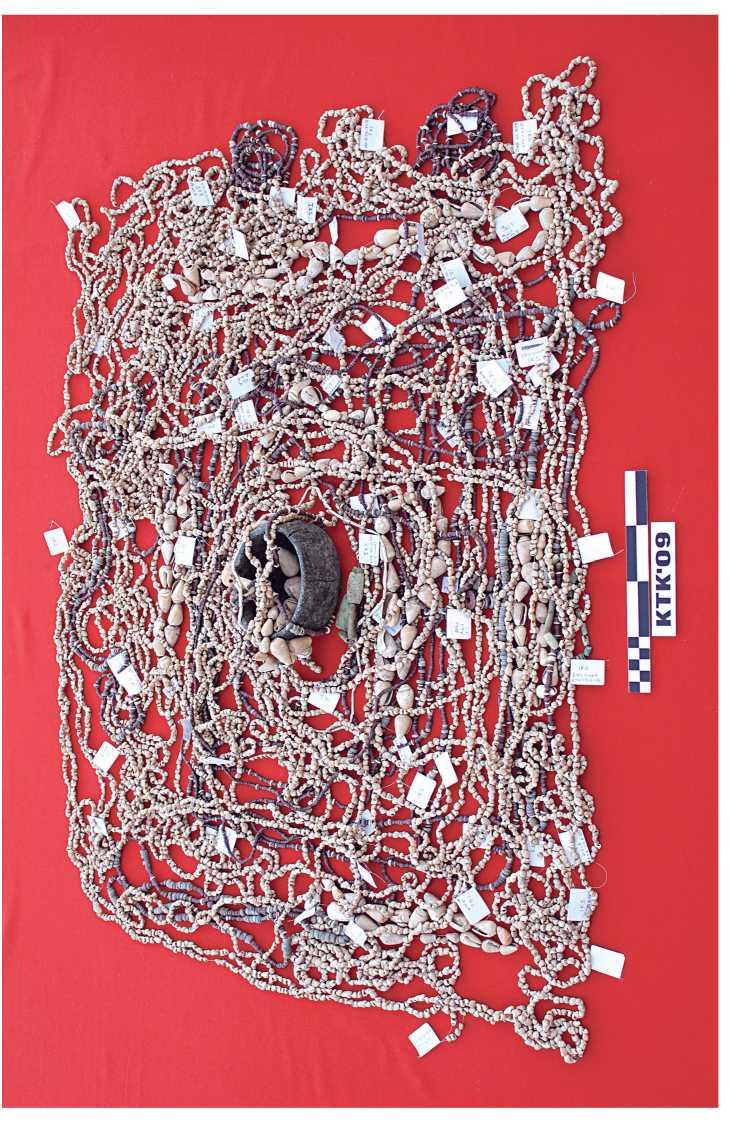
Fig. 5. Körtiktepe, burial gifts in one of the stone vessels (afetr Özkaya, Coşkun , 2011. P. 127, Fig. 38)
of non-utilitarian objects that required time-consuming production, strongly indicates a stratified society characterised by “elitist competitiveness”.
Innovativeness. The overall picture of this era is one of innovation and clear momentum for change – a pattern rarely seen in such early periods, when most prehistoric societies were highly conservative and resistant to transformation. The Göbek-litepe communities appear to have actively sought new raw materials and experimented with them. Among their most striking innovations are the shaping of native copper through heat treatment and the production of terrazzo flooring by burning lime ( Hauptmann, Yalçın , 2000; Maddin et al ., 1999; Muhly , 1989; Özdoğan, Özdoğan , 1999; Yalgin , 2017). Pressure flaking to produce fine blades from obsidian or flint was not a local invention, as it first appeared in the region during the PPNA; despite the technical challenges it posed, it was rapidly adopted and employed on a large scale. Likewise, in architecture, by trial and error method they developed simple huts to structured houses (Fig. 6).
Depictions and Symbolism. Sites belonging to the Göbeklitepe culture are exceptionally rich in realistic imagery, displaying remarkable diversity across all aspects. In terms of scale, these depictions range from miniature to life-size. They may be schematic or naturalistic and are executed as engravings, low or high reliefs, or freestanding statues. Almost all the reliefs and sculptures are associated with special buildings, most of them carved on the faces or bases of standing stones. Several large animal statues, mostly shown in threatening postures, stand near these special buildings, often on pedestals. Smaller examples have been found in burials, deposited as grave goods, or left in backfilled special buildings as burial offerings.
Regarding symbolism, there is a clear dualism between ritual and domestic spheres (Fig. 7) ( Ozdogan , 2001). In all special buildings, there is a wide range of figurative depictions that can be grouped into three categories: humans, animals, and human - animal hybrids. When humans and mammals are depicted with identifiable gender, they are always male, signified by an erect phallus (Ibid.). There are also numerous phallic figurines, the largest of which is almost 60 cm long. The second category, animals, features a wide variety of creatures that are unconventional in prehistoric imagery, mostly non-hunted and non-domesticated species ( Peters, Schmidt , 2004). Notably, regardless of whether they are edible or not, any being capable of movement – from insects and birds to lions and bulls – is represented. Snake imagery is particularly common. The third category comprises complex compositions, some resembling totem poles, formed by combinations of vultures, animals, and humans. Others appear to be narrative scenes, possibly illustrating popular fables immediately recognisable to contemporary viewers ( Özdoğan E ., 2024).
Figurative objects recovered from domestic buildings differ markedly from those found in cult structures. In contrast to cult buildings, figurative objects in domestic contexts are notably scarce, smaller, and most often crudely modelled in clay. All human figures are female, sometimes depicted as pregnant, and the animals represented are exclusively edible, hunted species.
The End of the Gobeklitepe Culture. As briefly outlined above, almost all early sites of the Göbeklitepe Culture are located on the limestone plateau – a terrain unsuitable for agriculture but offering optimal conditions for hunting. It is now evident that the main mode of subsistence, at least until the later stages of the PPNB, was
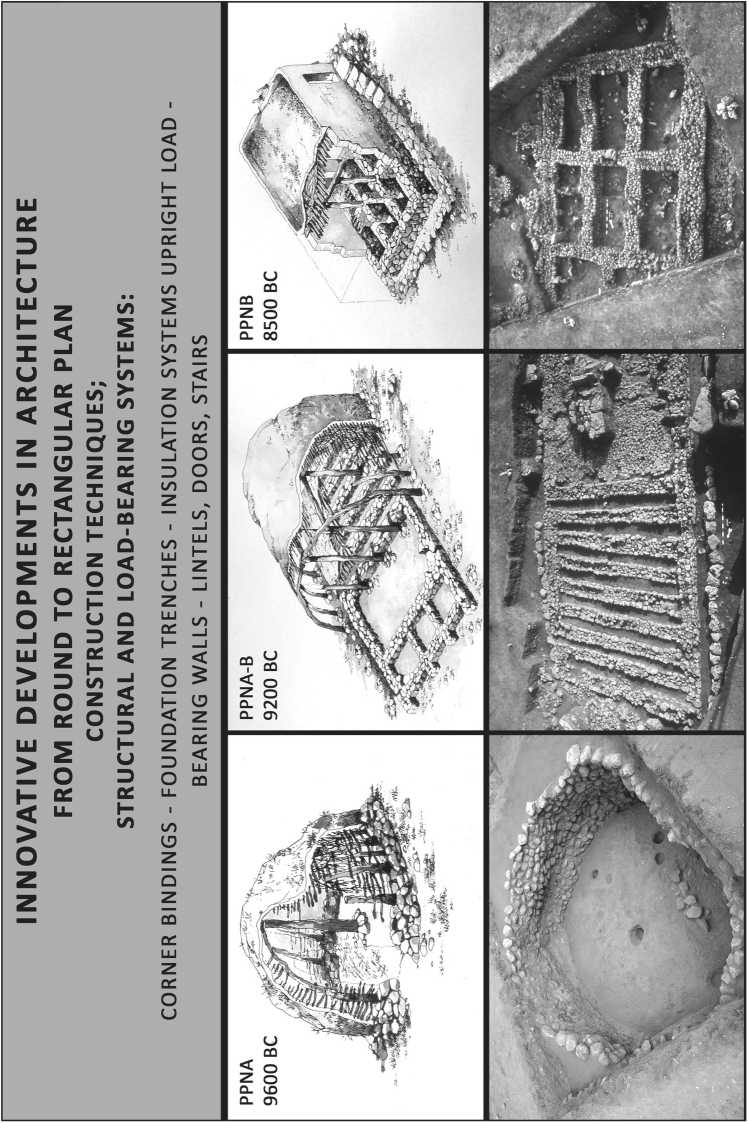
Fig. 6. Development of architectural techniques through thePre-Pottery stage, as evidenced at Çayönü
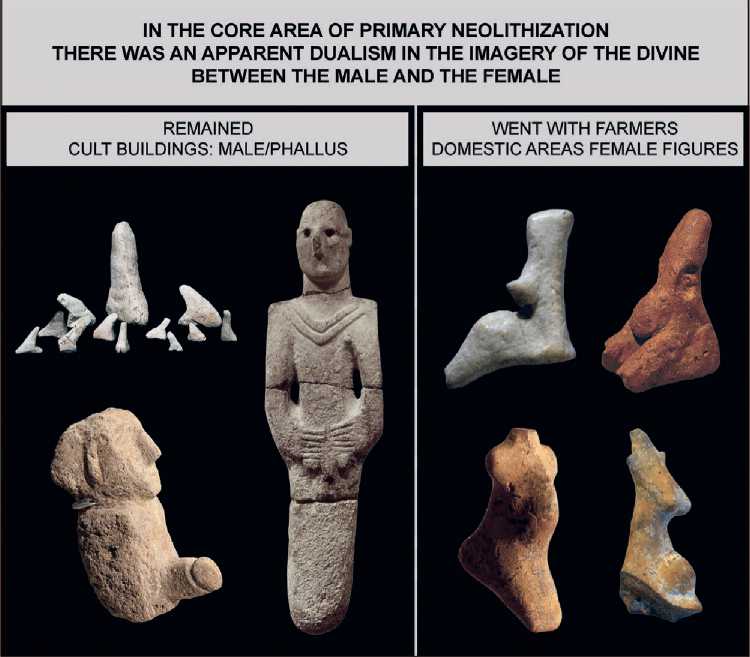
WENT WITH FARMERS DOMESTIC AREAS FEMALE FIGURES
REMAINED
CULT BUILDINGS: MALE/PHALLUS
IN THE CORE AREA OF PRIMARY NEOLITHIZATION THERE WAS AN APPARENT DUALISM IN THE IMAGERY OF THE DIVINE BETWEEN THE MALE AND THE FEMALE
Fig. 7. Dualism in symbolism between the cult and domestic quarters hunting and gathering. In this context, the broader region of Southeast Anatolia is the homeland of the Neolithic ‘founder crops’ – einkorn wheat, emmer wheat, barley, lentil, pea, bitter vetch, chickpea, and flax - as well as the wild ancestors of livestock. It appears that, particularly in the later stages, various communities of the Göbeklitepe Culture were already experimenting with cereal collection and animal management, developments that would eventually become a driving force of the Neolithic Revolution (Bar-Yosef, Meadow, 1995; Zeder, 2024).
Nevertheless, by the so-called PPNB stage, the momentum of the Göbeklitepe culture appears to slow, becoming more pronounced by about 7600 BC. This period is sometimes referred to as PPNC or the Final PPN, and the culture almost completely disintegrates by 7400 BC. However, the gradual nature of this collapse strongly suggests that the terrain was losing its capacity to support such a dense concentration of settled communities that relied primarily on hunting. Thus, overpopulation, environmental destruction through deforestation for lime-burning to produce terrazzo floors, climatic fluctuations, and possible social unrest may all have contributed to this decline. During this time, most likely triggered by some form of social upheaval, an exodus of simple farming communities began, migrating in almost all directions and bringing with them the knowledge of agriculture – the true Neolithic way of life.
Eventually, all settlements on the limestone plateau were abandoned, and several new ones were established in the alluvial plains. Their way of life changed: they now had pottery and had become farmers. However, none of these newly established settlements contained any special buildings or designated areas, and there is no indication of social stratification. They match exactly what is connoted by the term “Neolithic” ( Özdoğan , 2014).
-
d) Problem in Classifying Göbeklitepe Culture – Should We Call It Neolithic?
As already mentioned, until a few decades ago, the Neolithic cultures of Southeastern Anatolia and neighbouring lands to the south were regarded as delayed reflections of Southern Levantine Neolithic cultures. Consequently, all cultural designations were adopted directly from the Levant, without considering their suitability for more northerly areas. For example, the term “Epi-Palaeolithic” was coined in Palestine to describe cultural continuity from the Palaeolithic to the Neolithic, without interruption. In most regions outside the Southern Levant, however, there is a cultural break between these periods, and the Neolithic does not develop locally. In such areas, the term “Mesolithic” was introduced to denote the final, evolved stage of the Upper Palaeolithic. Over time, “Epi-Palaeolithic” came to be seen as the more prestigious label. As a result, across much of Anatolia, the Aegean, and many other regions, the term “Mesolithic” was abandoned in favour of “Epi-Palaeolithic”, often without regard for actual cultural continuity ( Gilead , 1984).
Likewise, the terms Pre-Pottery Neolithic A and B (PPNA and PPNB) were adopted from Palestinian archaeology to denote communities in transition to food production that had not yet developed the manufacture or use of clay vessels. All PPN sites in the Levant, although they represent true settlements in terms of social complexity, still conform to conventional prehistoric norms ( Bar-Yosef, Belfer-Cohen , 1989).
The picture we have drawn of the sites belonging to the Göbeklitepe culture – setting aside, for the moment, the presence of monumental constructions and artistic depictions; the marked differences between privileged and simple burials; the unique, non-repetitive artistic decorations on non-utilitarian objects that can only be described as expressions of “elitist competitiveness”; and the orderly organisation of the settlement (Fig. 8) and labour, as well as the drive required to build monumental structures, to backfill them while still in use, and then to erect new ones above - clearly indicates the existence of a stratified society, pronounced social inequality, and a decision-making authority, none of which correspond to what we would expect of prehistoric communities at a pre-state social level. In fact, social hierarchy has its roots in socio-economic models based on surplus production, triggering an economic order dependent on surplus value – a development that lies far beyond the sphere of early prehistory.
Thus, in an overall assessment, the Göbeklitepe Culture does not align with what the term “Neolithic” implies. If a site of this kind had been discovered beyond the “conceptual territory of the Near Eastern Neolithic”, would anyone have dared to call it Neolithic? When we look at the later stages of the Upper Palaeolithic, particularly Gravettian and Epigravettian sites, we find sedentary hunter-gatherer
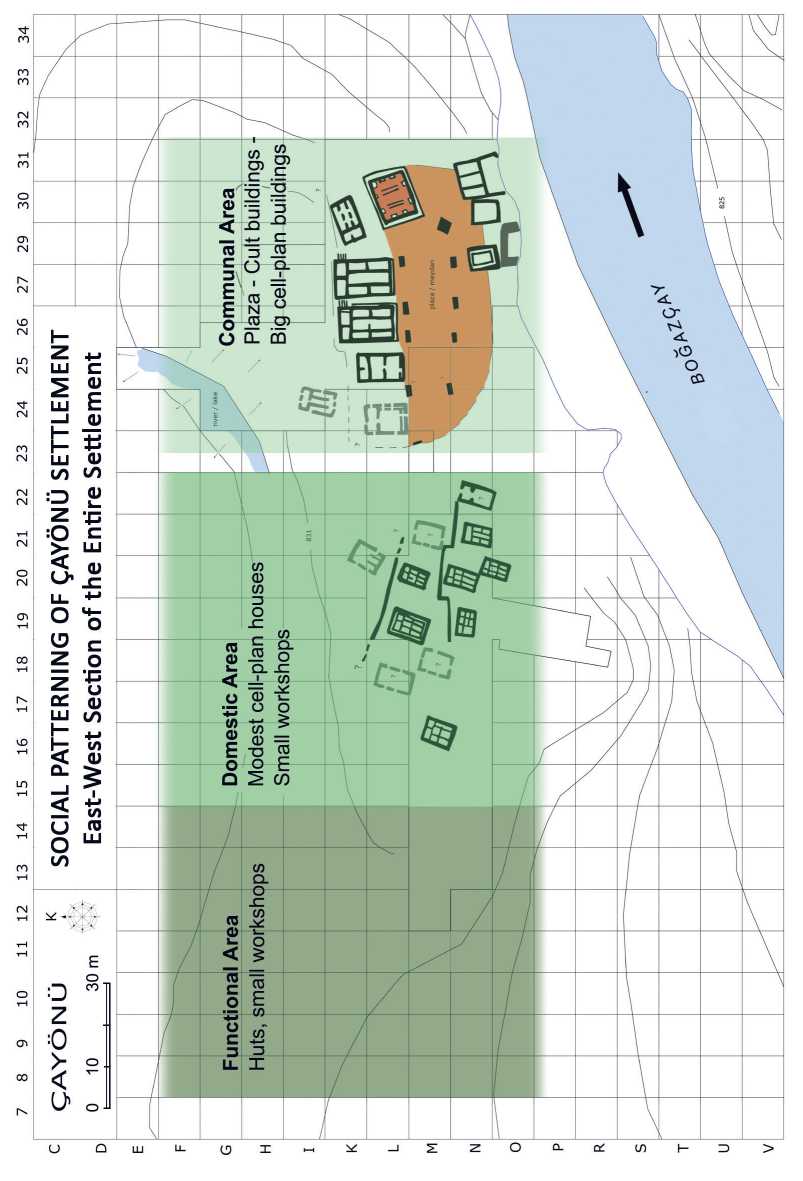
Fig. 8. The entire section of the Pre-Pottery Neolithic Site of Çayönü, indicating social status areas communities with sophisticated art, statue-like figurines, and cult practices - yet we still classify them as Palaeolithic (Amirkhanov, Lev, 2008). Likewise, the Kostenki group, just north of the Black Sea (Soffer et al., 2000), is renowned for its figurines and for settlements such as Mezhyrich, with mammoth-bone huts and shrines (Iakovleva, 2024), and the Mal’ta culture of Siberia (Leafloor, 2015; Güneri, 2025), with colossal wooden statues – all of which we still call Upper Palaeolithic.
Turning back to the Göbeklitepe Culture in the Upper Euphrates and Upper Tigris basins, it fits the definition of the term “Neolithic” only after the transition to farming, around 7600 BC. At that time, communities moved from the limestone plateau to the alluvial plains, established settlements without cult buildings or other special structures, and maintained an egalitarian social system that endured for hundreds of years. Perhaps it is now time to reconsider how we situate the Göbeklitepe Culture and to decide whether or not to classify it as “Neolithic”.
