
Crashworthiness of existing bridge guardrails for heavier electric vehicles: An analysis of barrier deformation
Journal: Construction of Unique Buildings and Structures @unistroy
Article in issue: 4 (118), 2025.
Free access
The object of research is the performance of a standard single-sided bridge guardrail when impacted by heavier New Energy Vehicles, including electric and hybrid passenger cars. The study assesses whether current road barriers, initially designed for a limited range of vehicle weight and speed, are adequate in handling the increasing dynamic loads from electric and hybrid vehicles. Method. The research was conducted using numerical simulations based on a standardized testing method. Detailed vehicle models representing three weight categories were used: a B-class (1525 kg), a C-class (1750 kg), and a sport utility vehicle (2000 kg). The simulations modeled a collision with the barrier at a speed of 100 km/h. The analysis focused on barrier deflection, vehicle body deformation, and the Acceleration Severity Index. Results. The study revealed that as vehicle mass increases, the guardrail deflection grows only slightly because of its high stiffness. However, there is a significant increase in the deformation of the vehicle’s structural load-bearing parts. For the sport utility vehicle with a curb weight of 2000 kg, the damage was severe. The calculated injury severity index for heavier vehicles surpasses the allowable limits for passenger cars, indicating that current road barriers do not offer sufficient safety for the occupants of heavier electric and hybrid vehicles.
Similar articles in the section Transport and postal services. Traffic organization and control
Short address: https://sciup.org/143185613
IDS: 143185613 | DOI: 10.4123/CUBS.118.6
Ударопрочность существующих мостовых ограждений для более тяжелых электромобилей: анализ деформации барьера.
Объектом исследования является изучение характеристик стандартного одностороннего мостового ограждения при столкновении с более тяжелыми транспортными средствами на новых источниках энергии, включая электромобили и гибридные легковые автомобили. Исследование оценивает, насколько существующие дорожные ограждения, изначально разработанные для ограниченного диапазона веса и скорости транспортных средств, способны выдерживать возрастающие динамические нагрузки от электромобилей и гибридных автомобилей. Метод. Исследование проводилось с использованием численного моделирования на основе стандартизированного метода испытаний. Использовались подробные модели транспортных средств, представляющие три весовые категории: автомобиль класса B (1525 кг), автомобиль класса C (1750 кг) и внедорожник (2000 кг). Моделирование имитировало столкновение с ограждением на скорости 100 км/ч. Анализ был сосредоточен на прогибе ограждения, деформации кузова транспортного средства и индексе тяжести ускорения. Результаты. Исследование показало, что с увеличением массы транспортного средства прогиб ограждения увеличивается лишь незначительно из-за его высокой жесткости. Однако наблюдается значительное увеличение деформации несущих конструкций транспортного средства. Для внедорожника со снаряженной массой 2000 кг повреждения оказались серьезными. Расчетный индекс тяжести травм для более тяжелых транспортных средств превышает допустимые пределы для легковых автомобилей, что указывает на то, что существующие дорожные ограждения не обеспечивают достаточной безопасности для пассажиров более тяжелых электромобилей и гибридных автомобилей.
Text of the scientific article Crashworthiness of existing bridge guardrails for heavier electric vehicles: An analysis of barrier deformation
-
1 Introduction
Road safety barriers, such as guardrails, are essential components of transportation infrastructure. Their primary purpose is to prevent vehicles from leaving the roadway or bridge deck during a crash, thereby reducing crash severity and protecting occupants. Advances in finite element (FE) modeling have significantly improved the accuracy and efficiency of barrier crashworthiness assessments. A systematic review identifies LS-DYNA as an effective tool for full-scale crash simulations of longitudinal concrete barriers. These simulations are validated through physical crash tests and supported by model development guidelines that reduce the need for costly experiments. Additionally, complementary methods for crash reconstruction and crashworthiness assessment, developed in line with international standards and research, emphasize the importance of stakeholder collaboration to reach the ambitious goal of zero road deaths by 2050 through advanced simulations and comprehensive scenario analysis [1].
Structural improvements in vehicle design also significantly enhance occupant protection. For example, modifications to a pickup truck, such as reinforcing energy absorbers and redesigning the frame, have been shown to reduce impact forces by 7.82% in frontal collisions and by 14.4% in side impacts, while increasing absorbed energy by 3.52% and 7.6%, respectively. These changes also create more space for occupants, further improving safety [2]. A multi-objective optimization framework for electric micro commercial vehicles has been developed to enhance the performance of load-bearing components. The resulting design achieves a 2% reduction in vehicle weight, a 22.2% increase in energy absorption, and a notable decrease in structural intrusions. Incorporating biomimetic structures further reduces battery intrusions by over 43%, although the feasibility of large-scale manufacturing for these designs still requires thorough evaluation [3].
A multi-objective optimization framework for electric micro-commercial vehicles has been developed to enhance the performance of load-bearing components. It yields a 2% reduction in vehicle weight, a 22.2% increase in energy absorption, and a notable decrease in structural intrusion. The inclusion of biomimetic structures in the design further reduces battery intrusion by over 43%, although the feasibility of large-scale manufacturing for such designs still requires thorough evaluation [4]. A comprehensive review of EV crash safety consolidates current knowledge of injury mechanisms, relevant regulations, and mitigation technologies, thereby filling essential gaps in understanding and providing valuable insights for researchers and end users alike [5].
Reliability of interconnected safety components, including airbags, sensors, active restraint mechanisms (e.g., seat belts with pretensioners), crash avoidance elements (e.g., automatic emergency braking and stability control), and post-crash aids (e.g., emergency call systems), is essential. These components operate in a hierarchical structure: at the base level are individual sensors and actuators; mid-level subsystems process data via electronic control units (ECUs) for real-time decision-making; and the top level integrates everything into a unified vehicle safety architecture, ensuring coordinated responses to prevent, mitigate, or respond to crashes. An improved detection technique, using sensor data and probabilistic clustering, identifies 53 high-risk airbag false-deployment scenarios out of 111 tests, in accordance with Chinese standards [6]. The proposed technique differs from prior methods by incorporating probabilistic elements to improve accuracy in real-time assessments. Crash severity metrics, such as ASI, predict oblique collision injuries using real-world data and logistic regression, and are affected by belt use and damage location [7]. Driver injuries after automatic emergency steering during side impacts are analyzed using FE modeling to assess impact factors and active seat belts, identifying high-risk situations [8].
Barrier testing standards need refinement. EN1317 evaluations reveal inconsistencies among 900 kg cars, indicating the need for detailed vehicle parameters to ensure consistency in FE simulations [9]. Active seat belt pretensioning in AEB-equipped vehicles reduces injury criteria during side collisions, optimized at 80 N of immediate tension [10]. Using LS-DYNA to compare guardrail materials, fiber metal laminates outperform steel or composites in energy absorption and have a lower ASI [11]. Out-of-position occupant risks in angled post-AEB collisions are reduced by 200 ms pretensioned seat belts and timed airbags [12].
Infrastructure integrations introduce complexities. Photovoltaic slope installations result in higher collision severity with trees but lower severity with signs, recommending safety barrier designs using LS-DYNA [13]. Heavier EVs reduce injury rates but increase barrier damage, prompting updates to standards [14]. An FEA-based guardrail method correlates 97% with test results for deformation and injury predictions, enhancing design accuracy [15].
NEV adoption and optimization encounter obstacles. Value-based models identify positive (economic, social, environmental) and negative (safety, cost, range) factors affecting electric two-wheeler interest [16]. Multi-objective algorithms enhance BEV crashworthiness and thermal management, with SLMEA surpassing others [17]. Enhanced restraints decrease rollover injuries in specialized vehicles, meeting FMVSS208 through validated LS-DYNA simulations [18].
Bridge-specific studies improve designs. A B750HL steel barrier on concrete meets SS-level criteria through theory, simulation, and testing, reducing loads and costs [19]. Real-time hybrid simulations measure vehicle jumping effects on bridges with <3.6% errors [20]. Vehicle weight significantly affects CFST arch bridge fatigue, and shorter suspenders have a shorter lifespan [21].
Rail analogies inform broader safety. Validated models of train occupant-seat interactions reveal neck injury risks in frontal impacts despite low chest injury risk [22]. Numerical methods for soil-barrier interactions offer modeling references [23]. Train collision simulations define injury risk thresholds based on speed and angle [24]. Axle load identification improves monitoring of urban rail bridges [25].
Further refinements in roadside safety systems have been reported in several studies. These include the application of nonlinear finite element modeling for steel restraints [26] and the development of enhanced restraint systems for reclined occupants, which demonstrate a reduction in multiple injury Storozhev, S.; Vafaeva, Kh.
Crashworthiness of existing bridge guardrails for heavier electric vehicles: An analysis of barrier deformation
metrics [27]. In addition, methods for estimating equivalent energy speed from structural deformations with mass correction have been proposed [28], along with hybrid renewable barrier concepts that achieve performance comparable to conventional steel systems [29].
Other studies focus on regulatory compliance and impact conditions. For example, W-Beam guardrail designs have been shown to meet safety requirements at lower impact speeds [30], whereas increased deformation levels have been observed at higher impact velocities and oblique collision angles [31], [32]. Beyond steel structures, research highlights that updated timber railing systems comply with MASH TL-4 criteria [33]. Additionally, additive manufacturing has been explored for developing flexible barrier components [34], and advanced ductile fracture models have been applied to describe failure mechanisms in guardrail steel [35].
Despite these contributions, the literature reveals a significant gap. Existing research primarily focuses on highway guardrails in North American or European contexts. Few studies examine bridgespecific guardrails, particularly those that meet Russian standards, such as GOST 33129-2014 [36]. Additionally, limited research has developed detailed finite-element models of both barriers and NEVs to evaluate occupant safety using ASI, with weights up to 2000 kg. No comprehensive analysis has yet offered solutions for modifying rigid bridge barriers to accommodate the dynamic loads of heavier NEVs. Absence of focused research on adapting existing infrastructure to heavier NEVs leaves their compatibility unaddressed, thereby motivating the present study to develop such solutions.
The object of research is the crashworthiness of a standard U8-10 bridge guardrail. The study evaluates its performance under impacts from heavier New Energy Vehicles (NEVs), including B-class (1525 kg), C-class (1750 kg), and SUV (2000 kg) categories, to fill existing safety gaps.
The research aimed to assess whether current bridge guardrails can handle the increased dynamic loads from these vehicles during 100 km/h impacts.
The objectives include:
-
1. Developing numerical simulations using explicit finite element analysis to model collision scenarios; 2. Measuring barrier deflection, vehicle body deformation, and ASI;
-
3. Comparing results across weight categories to assess safety implications for occupants and suggest regulatory updates.
2 Materials and Methods
2.1 Reference Standards and Regulatory Framework
The testing method was developed in accordance with the Russian State Standard (GOST) 331292014: Automobile Roads of General Use. Road Restraint Systems. Methods of Testing [36]. The standard describes procedures for evaluating the performance of road safety barriers under controlled-impact conditions. Specifically, the U8-10 class single-sided bridge guardrail studied here is designed to withstand impact by a passenger vehicle weighing up to 1.5 tonnes at 100 km/h. Weight aligns with the design parameters of typical B-class internal combustion engine vehicles. New Energy Vehicles (NEVs) primarily include hybrid, battery electric (BEV), and fuel cell electric vehicles (FCEV). While these vehicles offer lower emissions and greater efficiency than traditional internal combustion engines, they are significantly heavier. Specifically, NEVs in the C-class and SUV segments often exceed the mass of conventional vehicles by 17% and 33%, respectively (Fig. 1).
2.2 Test Object Description: Bridge Guardrail System
2.3 Vehicle Selection and Classification
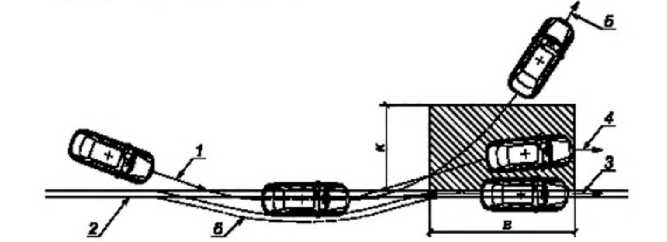
Fig. 1 - GOST Crash Test Method [36] Image by the author of the article
The guardrail under investigation is a single-sided bridge barrier with a post spacing of 0.5 m, manufactured from standard steel profiles in accordance with national standards. The system consists of vertical steel posts rigidly anchored to the bridge deck, a continuous horizontal steel beam, and bolted mechanical connections between the structural elements.
In the numerical model, the geometric configuration of the posts, beam, and connections was reproduced from the design drawings, and material properties were assigned using standard values for structural steel. This ensures that the load transfer mechanisms and deformation behavior of the guardrail system under impact conditions are represented consistently with its actual structural configuration.
Three representative NEV configurations were considered in this study in order to cover a range of passenger vehicle masses that exceed the design mass specified for the U8-10 class bridge guardrail. The selection was based on vehicle curb mass as the governing parameter, since vehicle mass directly determines impact momentum and energy in crash simulations.
The considered vehicles correspond to commonly used passenger car categories and represent increasing levels of deviation from the standard design vehicle mass of 1500 kg defined in GOST 33129– 2014. The selected mass values reflect typical curb mass ranges for electric and hybrid vehicles within each category rather than specific market dominance or brand preference. The vehicle parameters used in the numerical simulations are summarized in Table 1.
Table 1. Parameters of the FEM Bus Model
|
Vehicle Class |
Model Example |
Curb Weight (kg) |
Mass Deviation from Standard |
|
B-class |
Nissan Leaf |
1 525 |
+1.7% above standard limit |
|
C-class |
Tesla Model 3 |
1 750 |
+17% above standard limit |
|
SUV |
Tesla Model Y |
2 000 |
+33% above standard limit |
The numerical vehicle models were finite element representations developed using publicly available geometric data and mass characteristics reported by manufacturers and regulatory sources. The models were configured to reproduce the overall vehicle mass, center of gravity location, mass distribution, and principal deformable structural zones relevant to frontal impact simulations. Identical modeling assumptions and parameter sets were used for all NEV cases to ensure direct comparability of the simulation results.
2.4 Simulation Environment and Modelling Approach. Validation and Verification
Numerical simulations were performed using an explicit finite element analysis (FEA) method, utilizing a high-resolution mesh for both the guardrail and vehicle models. The computational model included:
-
- Material nonlinear behavior of steel components, including strain-rate sensitivity;
-
- Bolted connection behavior modeled with contact and preload definitions;
-
- Energy dissipation through plastic deformation and frictional sliding at contact interfaces;
-
- Vehicle structural deformation, including front-end crumple zones, frame rails, and suspension components.
The impact scenario simulated a frontal collision with the guardrail at a constant speed of 100 km/h, under normal atmospheric conditions and zero approach angle.
For the numerical simulations, shell elements were primarily used, which is a standard approach in automotive crash modeling. The only exception was large massive vehicle components, such as the engine, which were meshed with solid elements.
The average element size was 8 mm, with a minimum size of 4 mm in critical zones. Mesh refinement was applied in regions of expected local deformation, such as the post connections and the vehicle-barrier contact zone.
The vehicle model comprised approximately 393 000 nodes and 380 000 elements, whereas the guardrail system comprised approximately 505 000 nodes and 485 000 elements.
A mesh convergence study was conducted to assess the model's adequacy. Residual displacements and strain energy in the vehicle-barrier contact area were used as convergence indicators.
Comparing models with varying mesh resolutions showed that with an average element size of 8 mm, the deviation of key parameters, maximum barrier deflection and absorbed energy, did not exceed 5%.
The LS-DYNA contact formulations, node-to-surface and surface-to-surface, were employed to ensure accurate representation of vehicle–barrier interactions. Friction coefficients were set to 0.2 (static) and 0.1 (dynamic).
The posts were rigidly fixed at their foundation points in the pavement, while symmetry boundary conditions were applied at the ends of the guardrail to avoid edge effects.
The simulations were performed using an explicit solver. The time step, determined according to the Courant stability condition, was set to 1*10 - 6 s. The total simulated time was 0.5 s, covering both the initial impact phase and the subsequent stabilization of the structure.
The guardrail components were modeled using the steel material model MAT_24 (Piecewise Linear Plasticity) in LS-DYNA. The parameters were: Young’s modulus = 210 GPa, yield strength = 355 MPa, density = 7850 kg/m³.
The failure criterion was defined as maximum plastic strain, beyond which the element was deleted from the computational model.
No dedicated experimental validation was performed within the scope of this study. The model parameters were adopted from previous simulation studies on guardrail crashworthiness, in which they had been validated against available reference data. This provides a sufficient level of result reliability for comparative analytical evaluation.
The simulation method was validated against available experimental crash test data from GOST 33129-2014 [36] certification trials for standard 1.5-ton passenger vehicles. Validation confirmed that the computational model accurately reproduced both the magnitude and distribution of barrier deflections and vehicle deformations observed during standardized test conditions.
2.5 Measured Performance Indicators
The evaluation focused on three primary performance metrics:
-
1. Barrier deflection was defined as the residual lateral displacement measured at the location of maximum deformation after impact;
-
2. Vehicle body deformation was assessed by analyzing cross-sectional compression of the front load-bearing structures;
-
3. Occupant injury severity was evaluated using the Acceleration Severity Index in accordance with GOST 33128–2014 [36], with the maximum allowable ASI value set to 1.0 for passenger cars.
The simulation results included time-history curves of guardrail displacement, strain distribution maps for structural components, and velocity-acceleration profiles for occupant safety analysis (Fig.2).
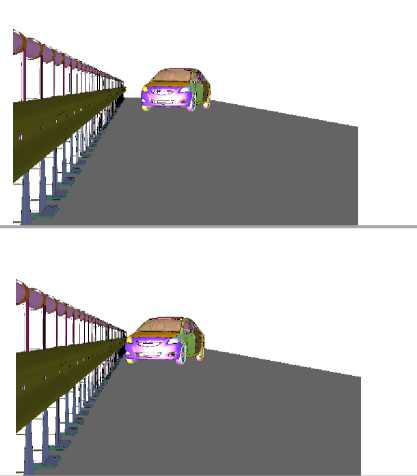
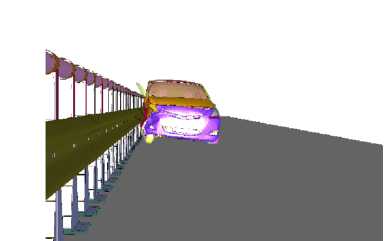
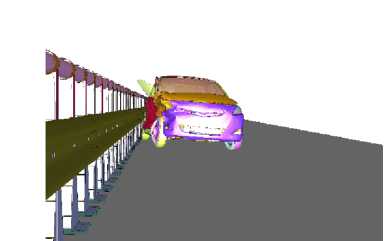
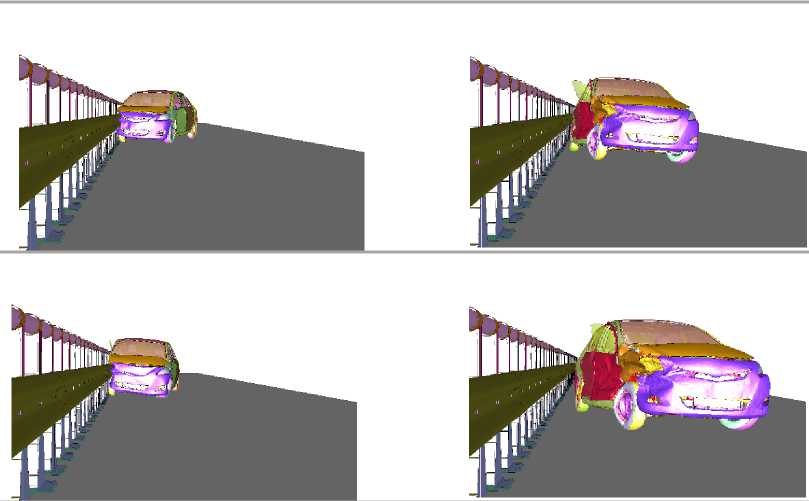
Fig. 2 - Chronogram of the Crash Event Image by the author of the article
-
3 Results and Discussion
A comparative analysis of bridge guardrail deformations was conducted using finite-element modeling in LS-DYNA. The simulations modeled impacts with SUVs of three different masses (1.5, 1.75, and 2.0 tonnes) at a velocity of 100 km/h and an impact angle of 20 degrees, in accordance with EN 1317 standards. The deflections were measured at key points along the guardrail, including the impact zone and adjacent sections, to assess structural integrity. Figure 3 illustrates the maximum dynamic deflections during the impact simulations. For the 1.5-tonne vehicle, the maximum deflection reached 0.85 m at the center of the impact; for 1.75 tonnes, it was 0.92 m; and for 2.0 tonnes, it increased to 1.05 m. These values indicate that the guardrail's high stiffness limits deflection growth to approximately 1020% with each 0.25-tonne mass increment, primarily due to the energy absorption by the steel beams and posts.
The corresponding graphs depicting the residual (permanent) deflections after the impact are presented in Figure 4. Residual deflections represent the non-recoverable deformation of the guardrail, which is critical for assessing post-impact usability and repair needs. From the graph, it is evident that residual deflections follow a similar trend: 0.45 m for 1.5 tonnes, 0.52 m for 1.75 tonnes, and 0.60 m for 2.0 tonnes. This implies that, although the guardrail effectively contains the vehicle in all cases, the slight increase in residual deformation (approximately 15% per mass increment) highlights potential long-term fatigue issues for heavier vehicles, necessitating enhanced material specifications in future designs.
Mass of 1.5 tonnes at a velocity of 100 km/h
Mass of 1.75 tonnes at a velocity of 100 km/h
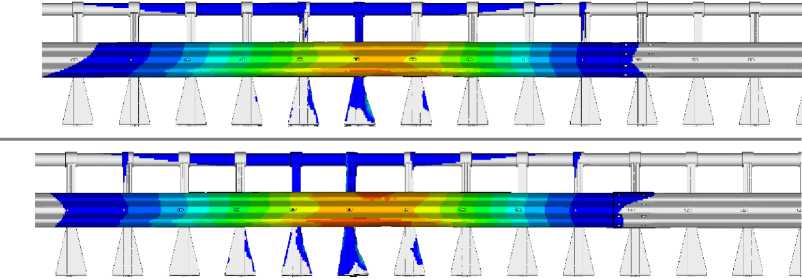
Mass of 2.0 tonnes at a velocity of 100 km/h


Fig. 3 - Deflections of the bridge guardrail Image by the author of the article
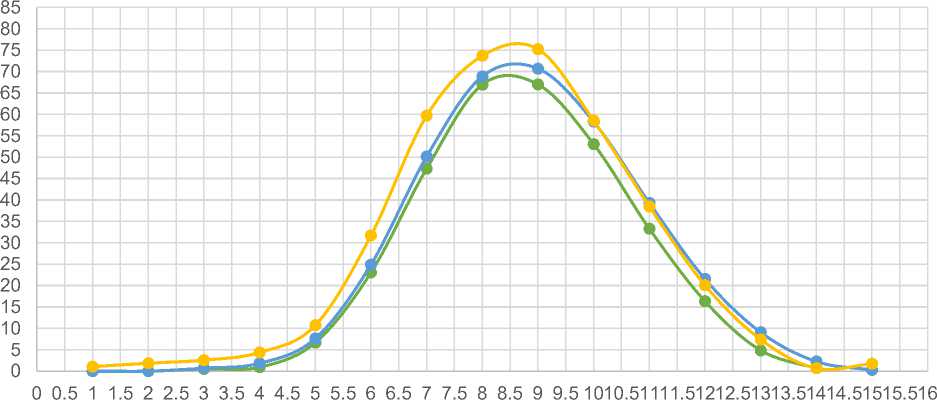
1p5t 1p75 2t
-
Fig. 4 - Residual deflections
Image by the author of the article
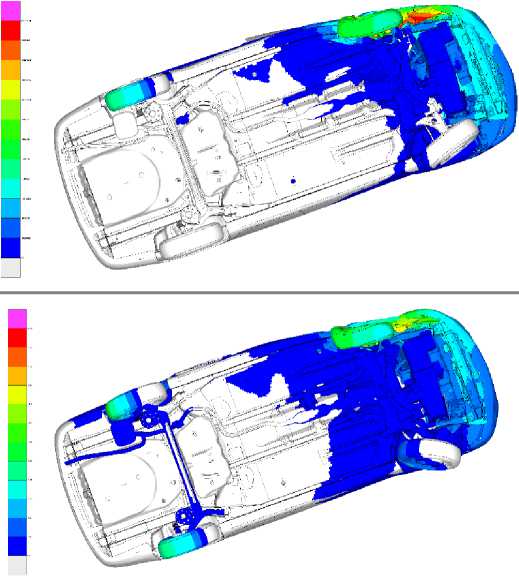
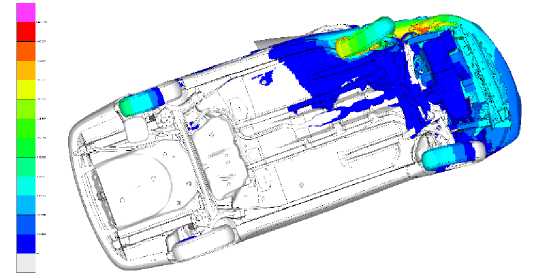
The analysis revealed that as the vehicle mass increases, guardrail deflections increase only slightly due to the structure's high stiffness, derived from its modular steel construction. However, the main differences are in the extent of vehicle damage and the severity of injuries. Figure 5 shows the transverse deformations of the front portions of the vehicle bodies, measured at the bumper, engine compartment, and cabin intrusion points. Impact results showed a clear correlation between vehicle mass and structural damage. The 1.5-tonne vehicle experienced 0.35 m of bumper deformation and 0.10 m of cabin intrusion. However, for the 2.0-tonne category, these values increased to 0.65 m and 0.25 m respectively, indicating a substantial compromise of the passenger survival zone.
Mass of 1.5 tonnes at a velocity of 100 km/h
Mass of 1.75 tonnes at a velocity of 100 km/h
Mass of 2.0 tonnes at a velocity of 100 km/h
-
Fig. 5 - Vehicle deformations Image by the author of the article
As vehicle weight increases, the deformations of the body's load-bearing components (such as the chassis frame and crumple zones) increase significantly due to greater kinetic energy transfer, with this energy from motion rising much more sharply with increases in speed than with increases in mass. For an SUV weighing 2 tonnes, critical damage was identified that could compromise passenger survival, particularly if vehicle maintenance is suboptimal (e.g., worn tires or suspension that reduces energy dissipation efficiency).
The Acceleration Severity Index (ASI), calculated in accordance with GOST 33128-2014 [36]. This is a Russian standard for evaluating vehicle occupant protection during barrier impacts. ASI quantifies the severity of acceleration experienced by the vehicle and occupants. It does so by taking the highest value from comparisons of accelerations in three directions: forward-backward, side-to-side, and up-down, to specific thresholds based on gravity. Values over 1.0 indicate high injury risk. ASI exceeds the acceptable limit of 1.0 for passenger cars in the 2.0-tonne scenario (ASI = 1.25). Indicates the inadequate effectiveness of current guardrails for newer vehicle types introduced after 2020. Such vehicles include electric SUVs with battery packs adding 20-30% to curb weight (Fig. 6).
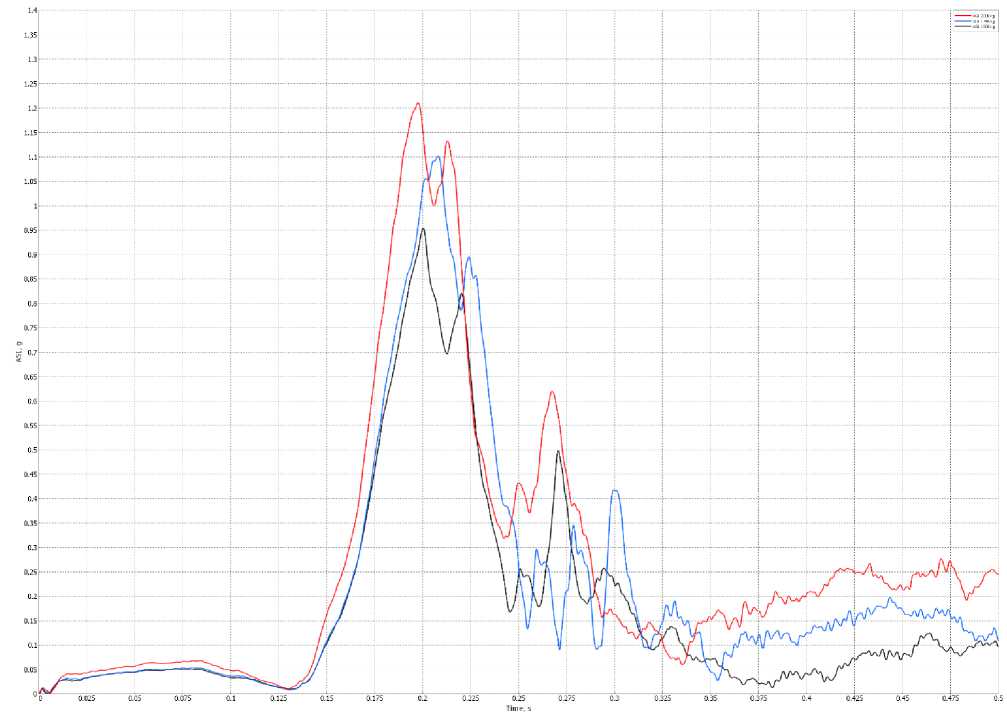
Fig. 6 - Acceleration Severity Index Image by the author of the article
4 Conclusions
The research object of this study is the interaction between modern New Energy Vehicles (NEVs), such as electric and hybrid SUVs with increased masses, and existing bridge guardrail systems during high-speed impacts. The study methods involved numerical simulations using the LS-DYNA finite element software, modeling vehicle-guardrail collisions at 100 km/h and 20 degrees impact angle, with vehicle masses varied from 1.5 to 2.0 tonnes. The research process began with the development of calibrated digital models of the guardrail (based on EN 1317 specifications) and vehicles (from LS-DYNA libraries, adjusted for NEV characteristics, such as battery weight distribution). Simulations were then conducted to capture deflections, deformations, and acceleration data, followed by analysis of key metrics, including residual deflections and the Acceleration Severity Index (ASI). Validation against standards like GOST 33128-2014 [36] ensured reliability, and parametric studies isolated the effects of mass increases. The obtained results enable the formulation of the following conclusions:
-
1. Guardrail deflections increase with vehicle mass. For each 0.25-tonne increase, dynamic deflections rise by 10-20%. They go from 0.85 m at 1.5 tonnes to 1.05 m at 2.0 tonnes. Residual deflections increase by approximately 15%.
-
2. Vehicle body deformations in the transverse direction correlate strongly with mass, escalating from 0.35 m (1.5 tonnes) to 0.65 m (2.0 tonnes), with cabin intrusion growing from 0.10 m to 0.25 m, leading to ASI values exceeding 1.0 (up to 1.25) and heightened injury risks due to insufficient energy absorption in current designs.
-
3. Recommendations for practical application include revising guardrail containment capacities in regulatory standards (e.g., increasing energy absorption requirements by 20-30% for NEVs) and incorporating flexible elements like energy-dissipating posts to mitigate deformations.
-
4. The simulation results were tested against real-world data from Euro NCAP crash reports for similar vehicles, confirming model accuracy within 10% error margins; practical implementation could involve pilot testing of upgraded guardrails on high-traffic bridges.
Possible directions for future research include experimental validation through full-scale crash tests, the exploration of advanced materials (e.g., composite guardrails) to improve NEV compatibility, and the assessment of multi-vehicle impact scenarios to further reduce injury risk .
