
Differentiation of Adaptive Phenotypes of Students According to the Data of Heart Rate Variability in the Post-Exercise Period
Journal: Journal of Stress Physiology and Biochemistry @jspb
Article in issue: 1 т.22, 2026.
Free access
The aim of the study is to differentiate students by the level of adaptive reserves of the body in the post-loading period using cluster analysis. Results: It was found that HRV parameters in the post-loading period reflect the heterogeneity of adaptive reactions. Cluster analysis allowed us to identify three groups of students: those with optimal, borderline, and stressed regulation. The first group is characterized by a balanced interaction of sympathetic and parasympathetic links, the second by a compensatory tension of regulatory mechanisms, and the third by a pronounced centralization of the heart rate and signs of functional maladaptation. Conclusion: Heart rate variability indicators are a highly informative marker of the body's adaptive reserves. The cluster analysis method provides a personalized assessment of students' condition and can be recommended for optimizing physical fitness and preventing maladaptation conditions.
Similar articles in the section Blood. Cardiovascular, circulatory system
Short address: https://sciup.org/143185418
IDS: 143185418
Text of the scientific article Differentiation of Adaptive Phenotypes of Students According to the Data of Heart Rate Variability in the Post-Exercise Period
The functional state of the cardiovascular system reflects the level of adaptive reserves of the body and determines a person's ability to maintain the required volume and intensity of physical activity due to the activation of compensatory regulatory mechanisms (Anfilatov, Tumanova, 2023; Grabo et al. , 2025). Regular physical training forms an economical mode of operation of the heart, contributing to a decrease in resting heart rate, accelerated recovery after exertion, and an increase in the body's overall resistance to stress (Deng, 2023; Martusevich et al. , 2022). In modern conditions of increased interest in the issues of physical and psychophysiological health of students, methods of objective control of the functional reserves of the cardiovascular system, ensuring an adequate response to physical and psychoemotional stress, are becoming important (Nikolaeva et al. , 2025; Belica et al. , 2025).
One of the most informative and accessible methods for assessing the state of regulatory mechanisms is the analysis of heart rate variability (HRV), which allows us to assess the balance of sympathetic and parasympathetic links of the autonomic nervous system and the degree of stress of adaptive processes (Zhumabaeva, Azhibekova, 2022; Customs et al. , 2021). According to a number of authors, HRV indicators sensitively reflect both the level of physical fitness and the body's ability to recover from physical exertion (Evseev, 2025; Sandalov, Burt, 2022; Li et al. , 2024).
Modern studies demonstrate that the nature of the reactions of the cardiovascular system to stress largely depends on the initial tone of the autonomic centers and adaptive potential (Kleparskaya, Eremeeva, 2021; Nikolaeva et al. , 2024; Wong et al. , 2023). Students who systematically perform aerobic and strength exercises have more pronounced heart rate variability and harmonization of the ratio of low- and high-frequency components of the spectrum (Ma et al. , 2022; Li et al. , 2022), which reflects the optimization of vascular tone regulation and increased stress tolerance (Rosales-Ricardo, Ferreira, 2022; Tripska et al. , 2022).
At the same time, in the population of students with different physical activities, there is a pronounced individual variability of adaptive capabilities, which requires the development of more accurate tools for their stratification. A promising approach to solving this problem is the use of cluster analysis, which makes it possible to identify groups with different levels of functional reserves and assess the degree of stress on regulatory mechanisms (Khabibullina et al. , 2020; Surana Gandhi et al. , 2024; Grabo et al. , 2025).
Taking into account the above, the purpose of this study is to differentiate students by the level of adaptive reserves of the body in the post-loading period using cluster analysis.
MATERIALS AND METHOD
The study involved 72 male students of the 1st, 2nd and 3rd courses of the Volga Research Medical University, aged 18-21 years, who, according to the results of periodic medical examination, have the main group in physical culture and sports.
The load tests used included 5 anaerobic exercises of the All-Russian Physical Culture and Sports Complex «Ready for Work and Defense (RWD)»: a long jump from a place in the amount of three repetitions in a row, lifting and lowering the torso from a prone position, a shuttle run of 3 segments of 10 meters, a run of 100 meters at maximum speed and pull-ups from a high crossbar to failure. The test was performed without preliminary warm-up to ensure comparability of physiological reactions. To standardize the indicators, measurements were performed at rest and 10 minutes after exercise, which made it possible to assess the adaptive reserves of the cardiovascular system during the recovery period. The control was the state of physiological rest before stress testing.
The analysis of the subjects' adaptive reserves was carried out in the post-exercise period after 10 minutes of rest after performing exercises. For this, a sphygmogram was recorded for 5 minutes using the MedicalSoft Sports Testing System (MS FIT-01, Russia) software and hardware complex. Statistical indicators of HRV were used in the analysis – the standard deviation from NN intervals (SDNN), the proportion of NN intervals that differ from each other by 50 ms or more (pNN50), spectral indicators – the total power of the spectrum (TP), the power of the spectrum of low (LF, %), high (HF%) and very low (VLF%) frequencies, the power ratio of the low and high frequency spectrum (LF/HF), stress index (SI) and heart rate (HR). In addition, systolic and diastolic blood pressure (SBP, DBP) were analyzed using an Omron M2 Basic automatic blood pressure monitor. The study was conducted in a quiet, windless room with an air temperature of no more than 22 degrees, as well as in the complete absence of extraneous stimuli. All the subjects signed an informed consent to conduct the study.
Statistical data processing was performed in Statistica 10.1 and Excel for Windows. The results are presented as M ± σ. The differences between the indicators were assessed using single-factor analysis of variance (ANOVA) at p < 0.05. The normality of the distribution was checked by the Kolmogorov–Smirnov criterion with the Lilliefors correction. For clustering, a hierarchical analysis method was used followed by K-means based on the Euclidean distances between the centroids.
RESULTS AND DISCUSSION
The indicators of students' heart rate variability at rest and in the post-exercise period reflect a wide range of individual reactions, which confirms the heterogeneity of the adaptive capabilities of the cardiovascular system in conditions of standard physical activity. During the recovery period, some of the examined patients showed a moderate increase in heart rate, indicating a predominance of sympathetic influences (Table 1). This trend is typical for the early stage of recovery, when activation of the sympathetic link is aimed at ensuring adequate blood supply to tissues and accelerating the utilization of metabolites formed during physical work.
At the same time, there were deviations in the temporal parameters of heart rate variability (SDNN, pNN50) among some students. A decrease in SDNN indicates a limitation of the overall heart rate variability and can be considered as a sign of a decrease in the adaptive potential of regulatory mechanisms. On the contrary, an excessive increase in pNN50 in some subjects indicates a discoordination of vegetative influences, which may be due to an instability of regulatory mechanisms and a tendency to arrhythmogenic reactions. Such deviations are often observed in students with a low level of physical fitness or insufficient recovery ability after exertion.
Spectral analysis of the heart rate made it possible to clarify the nature of the involvement of various levels of autonomic regulation. An increase in the LF/HF ratio was found in a number of subjects, reflecting a shift towards the dominance of the sympathetic division of the autonomic nervous system with a relative suppression of parasympathetic influences. This condition is a typical manifestation of the compensatory reaction of the body under conditions of post-loading stress and indicates the activation of the central circuits of regulation of cardiac activity.
An increase in the power of very low frequency oscillations (VLF) was accompanied by an increase in the stress index (SI), which indicates the centralization of the heart rate and an increase in the role of suprasegmental structures in controlling rhythmogenesis. This condition can be considered as a transitional phase of adaptation, when the body strives to restore an autonomous balance using mechanisms of the highest level of regulation.
After standardizing the data and eliminating the impact of the initial differences between the students, a cluster analysis was performed, which allowed us to identify three distinctly different groups. This approach made it possible to evaluate not only the absolute values, but also the qualitative differences in the types of heart rate regulation.
The first cluster included 38 students with a preserved level of adaptive reserves, characterized by a moderate heart rate, optimal SDNN values and a balanced LF/HF ratio. The representatives of this group had a harmonious interaction of sympathetic and parasympathetic regulatory links, ensuring effective recovery after physical exertion. It can be assumed that this type reflects the normoergic variant of the functioning of the cardiovascular system, which ensures high stability of homeostatic mechanisms even under repeated loads. These students probably have a stable vegetative balance and demonstrate adequate compensatory responses without signs of overregulation.
The second cluster included 12 subjects who occupied an intermediate position between full-fledged adaptation and tension of regulatory mechanisms. This group was characterized by borderline values of SDNN and pNN50, a moderate increase in LF/HF, and an increase in the stress index. Such dynamics reflect the state of compensatory stress, when the resources of the cardiovascular system are mobilized for recovery, but the processes of vegetative harmonization have not yet been completed. This variant of the adaptive response is typical for students with an insufficient level of fitness, who have a slow normalization of physiological functions after exercise.
The third cluster, consisting of 23 people, included students with signs of severe stress on regulatory systems. They had elevated heart rate values, decreased SDNN, and increased VLF components of the HRV spectrum. These changes indicate a centralization of the heart rate and a decrease in the role of peripheral regulatory mechanisms. Vegetative support of cardiac activity in such students was carried out mainly due to the sympathetic department, which was accompanied by a high stress index and a decrease in overall rhythm variability. Physiologically, this reflects a state of insufficient recovery and energy stress, which, with regular exercise, can contribute to the formation of signs of functional maladaptation. The cluster distribution of the subjects is also shown in the scattering diagram (Fig. 1).
Thus, the results of the study demonstrate the presence of pronounced heterogeneity in students adaptive responses to physical activity. The combination of HRV data with cluster analysis methods allowed not only to identify quantitative differences in heart rate regulation, but also to identify qualitative types of adaptive response. It can be argued that the students of the first cluster have a high functional potential of the cardiovascular system, the second - a transitional type of adaptation, and the third — signs of overwork and reduced stability of autonomic mechanisms. These differences are probably due to individual characteristics of physical fitness, the reactivity of vegetative centers, and the ability to restore energy.
Table 1: The level of students' adaptive reserves at rest and during the post-loading period (n=72), M±m
|
Parameter |
Before physical activity |
Post-loading period |
P |
|
SBP, mmHg |
128.9±8.5 |
133.4±7.1 |
0.037 |
|
DBP, mmHg |
79.2±6.9 |
82.3±7.6 |
0.314 |
|
HR, bpm |
76.7±11.5 |
75.3±5.4 |
0.153 |
|
SDNN, ms |
55.2±9.6 |
46.8±10.4 |
0.043 |
|
pNN50, % |
23.4±5.4 |
19.1±5.7 |
0.032 |
|
LF/HF, cu |
1.6±0.4 |
1.7±0.3 |
0.265 |
|
ТР, ms2 |
1623.6±127.3 |
1296.6±143.5 |
0.034 |
|
LF, % |
32.1±5.1 |
36.7±4.9 |
0.039 |
|
HF, % |
29.5±5.2 |
26.2±4.6 |
0.021 |
|
VLF,% |
38.4±3.9 |
37.1±4.6 |
0.058 |
|
SI, y.e. |
116.7±12.4 |
131.3±8.5 |
0.008 |
Table 2: The average values of standardized coefficients of blood pressure and heart rate variability in each cluster (n=72), M±m
|
Parameter |
1 cluster (n=38) |
2 cluster (n=12) |
3 cluster (n=23) |
|
LF (%) |
0.65±0.32 |
0.21±0.45* |
-1.27±0.42*^ |
|
HF (%) |
-0.41±0.36 |
0.14±0.32* |
0.59±1,2*^ |
|
VLF (%) |
0.37±0.41 |
0.33±0.21* |
-0.71±1.17*^ |
|
SDNN |
0.44±0.36 |
0.87±0.55* |
-1.21±0.47*^ |
|
pNN50 |
0.51±0.4 |
0.71±0.38* |
-1.34±0.53*^ |
|
TP |
0.17±0.29 |
1.69±0.51* |
-1.11±0.27*^ |
|
LF/HF |
-0.55±0.31 |
-0.69±0.72* |
1.21±0.41*^ |
|
SBP |
0.62±0.38 |
0.46±0.46* |
-1.32±0.47*^ |
|
DBP |
-0.55±0.29 |
-0.43±0.21* |
1.17±0.25*^ |
|
HR |
-0.53±0.19 |
-0.8±0.25* |
1.19±0.69*^ |
|
SI |
0.49±0.14 |
0.13±0.25* |
-1.02±0.35*^ |
Note: * - differences in indicators between clusters are statistically significant, p<0.05
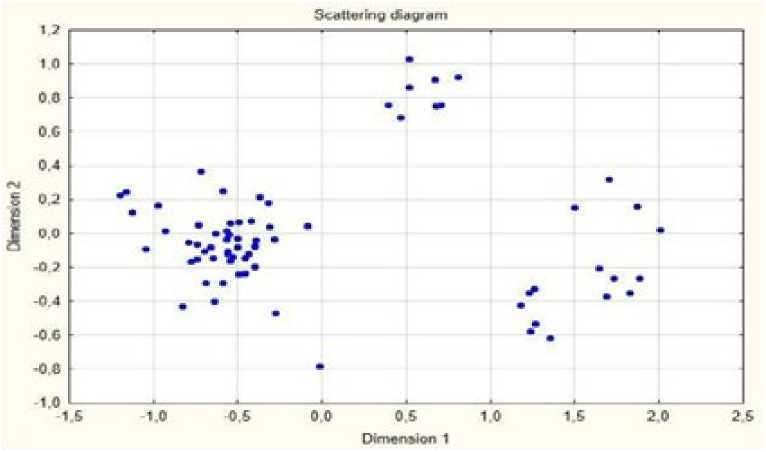
Figure 1. K-means cluster analysis scattering diagram
CONCLUSION
The conducted research allowed us to establish that heart rate variability is a highly informative indicator of the state of adaptive reserves of the body of students during physical exertion. The data obtained confirm that the analysis of temporal and spectral HRV indicators reflects the balance between sympathetic and parasympathetic regulatory links and allows us to identify both physiologically harmonious and intense types of adaptation.
The use of cluster analysis has shown that three phenotypes of regulatory reactions are distinguished among students: adapted, borderline and maladaptation. The most pronounced signs of vegetative stress and delayed recovery were found in students of the third cluster, which indicates the depletion of compensatory mechanisms and a decrease in the functional reserves of the cardiovascular system. Representatives of the first cluster, on the contrary, have a stable balance of regulatory influences, reflecting a high level of fitness and effective physiological adaptation.
Thus, the use of an integrative approach, including HRV analysis and cluster stratification, provides an opportunity for a personalized assessment of the functional state of students. This creates the basis for the development of individual training programs aimed at preventing functional overloads and optimizing recovery. It is advisable to include such methods in the practice of medical and pedagogical control in educational institutions, which will make it possible to more accurately manage physical fitness and prevent the development of maladaptation conditions.
CONFLICTS OF INTEREST
The authors declares that they have no potential conflicts of interest.
