
environmental stress, scavenging enzymes, ROS, biochemical constituents
Journal: Journal of Stress Physiology and Biochemistry @jspb
Article in issue: 4 т.21, 2025.
Free access
Medicinal plants have been utilized in the treatment of a number of disorders, considering they have potential pharmacological actions, including antimicrobial, antioxidant, anti-inflammatory, antidiabetic, antidiarrheal and other activities. The existence of particular bioactive components in plants is linked to their medicinal efficiency. The current studies of Tamarix aphylla (L.) Karst. It is a halophytic salt-tolerant flowering plant, which belongs to the Tamaricaceae family, has significant medicinal uses, and is collected from Koddha, Gujarat, India. This plant is known for hypertension, stomach discomfort, hair loss, cough and asthma, paralysis, skin problems, swelling, wounds, jaundice, fever, and teeth infections. It is seen that not much research work is being carried out on phytochemical analysis of Tamarix aphylla (L.) Karst. from Gujarat state. The plant is mentioned in the Holy Quran, specifically in Surah Saba` (34:16), where it is referred to as “Athl’. The Quran describes how the people of Saba` (Sheba) were punished by Allah, and their gardens and trees, including Athl, were destroyed. This plant has been found to exhibit different pharmacological activities. The present study was to evaluate the preliminary phytochemical analysis of different extracts of Tamarix aphylla (L.) Karst. This study examines the phytochemical composition of a plant and identifies the presence of bioactive constituents such as alkaloids, flavonoids, phenolics, tannins, glycosides, steroids and saponins in various solvents. These phytochemicals can be correlated to the plant’s medicinal properties.
Similar articles in the section Pharmacology. Therapeutics. Toxicology
Short address: https://sciup.org/143185129
IDS: 143185129
Text of the scientific article environmental stress, scavenging enzymes, ROS, biochemical constituents
In general, plants have significant therapeutic benefits that can be both preventive and curative. Because of their many uses. edicinal plants are the most numerous pharmaceutical bioresources in traditional medicine. They also give plants their unique colors, flavors and fragrances. (Pradeep A et.al., 2014) Phytochemical and bioactivity screening in addition to ethnomedical documentation is a promising approach to discovering new drugs derived from medicinal plants. (Suleiman 2019) Traditional medicine across the world uses plants to produce high quantities of protective chemicals in addition to mainstream medications used to treat a variety of disorders. (Hassiba 2014).
In dry and semi-arid areas, Tamarix aphylla ( .) Karst. plant is essential to preserving ecological balance. Which develops in high-salinity soil or water and obtains saline water through its roots or by salts, spray, as in saline semi-deserts. They occur naturally in salty environments such as inland salts, coastal dunes, and coastal swamps. The unique group of higher plants known as halophytes has special morphological, anatomical and physiological adaptations that allow them to survive and grow in extremely salinized environments. Its deep roots help to stabilize soil and prevent erosion, while its leaves provide shade and food for various animals. The WHO states that the best source of a wide range of medications is medicinal plants. Approximately 80% of individuals in developed nations utilize traditional medicines, which contain substances derived from medicinal plants. But further research is needed to completely understand the characteristics, safety and effectiveness of such plants (Thite et.al.,2013). Isolating different plant elements for evaluation of their biological activity or potential medical applications is known as phytochemical screening ( umtaz et.al.,2014). In several regions of India, the local population uses traditional medicine made from locally available plants or animals (Patel et.al.,2013).
The present work here is an attempt to study Tamarix aphylla ( .) Karst. and its medicinal value. Tamarix aphylla ( .) Karst. It is reported in the flora of Kachchh District (Gujarat). Tamarix aphylla ( .) Karst. It is Tamarix’s largest known species. Athel Tamarix, Athel tree and Athel pine are other names of the species., native to North, East and Central Africa, as well as the iddle East and Western and Southern Asia, this tree is an evergreen.
Description of the Plant:
Tamarix aphylla ( .) Karst. It is a 4 to 6 m tall tree and generally occurs in scattered or gregarious regions. The bark is reddish or dark purple, the leaves are minute, simple, alternate, small and reduced to tiny scales that ensheathe the wiry twigs. Flowers show a small pale pink to whitish color in the middle of August to September with five sepals and petals, five stamens that are anti-sepalous, simple, spike- like inflorescences, and fruits that are capsule- shaped, pyramidal and smooth. It is seen that not much research work is being done out on phytochemical analysis of Tamarix aphylla ( .) Karst. From the Gujarat, India.
Taxonomical classification:Kingdom: Plantae
Phylum: Spermatophyta
Subphylum: Angiospermae
Class: Dicotyledonae
Order: Tamaricales
Family: Tamaricaceae
Genus: Tamarix
Species: aphylla
Botanical Name: Tamarix aphylla ( .) Karst.
Vernacular Name:
Hindi: al Jar, Urdu: Farash, Gujarati: al Jau, Punjabi: Farwa, Sindhi: Gazu Sanskrit: Jhavuka, Tamil: Athichavuku, Rajasthan: Faras.
Study area:
Is shown on figure 3
MATERIALS AND METHODS
The present study was conducted on the halophytic, medicinal plant Tamarix aphylla ( .) Karst. The plant materials (leaves, stem and flower) of Tamarix aphylla ( .) Karst were collected from Koddha located in ittle Rann of Kachchh, Gujarat, India, in August 2024.
Plant Authentication
The plant was authenticated by Dr A.R. Seliya, I/C Principal of aktabah Jafariyah College of Science and Technology, Sedrana, Gujarat, India. And with reference to “Flora of Gujarat State” by G. . Shah (1978). The collected plant sample was cleaned and dried in the shade at the laboratory of aktabah Jafariyah College of Science and Technology, Sedrana, Gujarat, India.
Extract Preparation
The collected plant material was washed and cleaned and shade dried for 10 to 15 days. The shade-dried plant material was powdered from all parts (leaf, stem and flower) of the plant using an electric blender, and the powdered materials of the plant were stored in an airtight box for further use. In addition, 5gm of the fresh sample (powder) of plants, all parts (leaf, stem and flower), were immersed in a conical flask containing 50 ml of four solvents, which are ethanol, acetone, water and chloroform, and put in a shaker for 24 hours. After each plant extract was filtered with Whatman No. 1 filter paper, the filtrate was kept in an air-tight amber glass container and stored in a refrigerator at 4o C for further investigations (Yadav and Agarwala 2011). (Hakim and Patel 2023).
Phytochemical Analysis
The extracts were investigated using the following methods. A chemical test was performed using various extracts such as acetone, methanol, water and chloroform. To identify the presence of the alkaloids, saponins, tannins, terpenoids, flavonoids, glycosides and reducing sugars using the standard method of J.B. Harborne, (1998), and J.B. Harborne, (2005).
Test for Alkaloids
Mayers Test ix 2ml of aqueous extract with 3 ml of 1% HCl. And then add ayers reagent. Green color formation, a sign that alkaloids are present.
Test for Flavonoids
Lade Acetate Test :2 ml of aqueous extract were added with 1 ml of 10% lead acetate solution, and then the formation of yellow- colored precipitate, a sign that flavonoids are present.
Test for Tannins
Ferric Chloride Test : Add 2 ml of aqueous extract were stirred with 2 ml of distilled water, and a few drops of FeCl 3 solution were added. The formation of a green or dark blue color, a sign that tannins are present.
Test for Saponins
Foam Test : Add 2 ml of aqueous extract that was shaken with an equal volume of distilled water in a test tube and shake it. The presence of saponins indicated the formation of stable foam.
Test for Glycosides
Add 2 ml of aqueous extract mixed with 1.5ml chloroform and then add 10% ammonia. Pink color formation, a sign that glycosides are present.
Test for Steroids Add 2 ml of aqueous extract mixed with 1ml chloroform and add 0.5 ml H 2 SO 4 . Reddish brown ring formation, a sign that steroids are present.
Test for Phenol
Ferric Chloride Test
Add 2 ml of aqueous extract mixed with 1ml water and then add 2% FeCl 3 solution. violet color formation, a sign that phenol is present.
Test for Carbohydrate
Molisch Test
Add 2 ml of aqueous extract and add olisch reagent and 2 to 3 drops of conc. H 2 SO 4 . Formation of a violet ring, which showed carbohydrates are present.
RESULTS AND DISCUSSION
The phytochemical investigation of the various extracts such as: leaf, stem and flower of Tamarix aphylla ( .) Karst. showed the presence of different important chemicals: alkaloids, saponins, tannins, glycosides, phenol and flavonoids. The phytochemical compounds of Tamarix aphylla ( .) Karst. In extracted solvents are mentioned in table 1.
The powdered plant materials were extracted using various solvents such as methanol, acetone, chloroform and water. The result of this qualitative phytochemical analysis showed the presence of different phytochemicals, such as alkaloids, tannins, saponins, glycosides, phenols and flavonoids. Organic solvents, particularly methanol, are preferred for extracting phytoconstituents, as not all chemicals can be extracted in the same solvent. The phytochemical compounds which are present in different parts of plant extract. But after this investigation, we showed that methanolic plant extract, which had the best and easiest to extract for any compounds as compared to other extracts. On the other hand, a Tamarix aphylla ( .) Karst. phytochemical investigation has not been reported. Therefore, the current work will be beneficial for future pharmacological research.
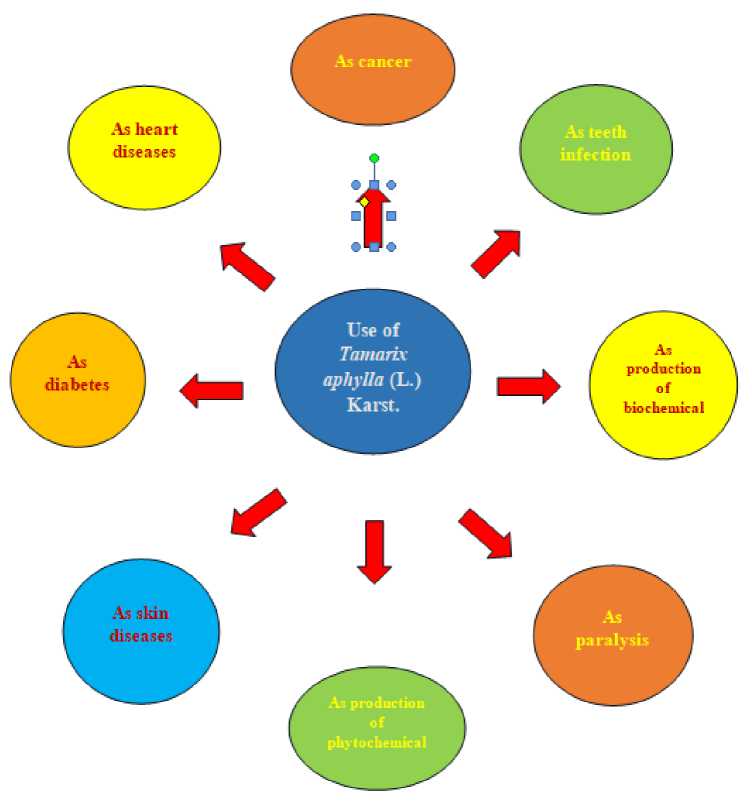
Figure 1: Uses of Tamarix aphylla ( .) Karst.
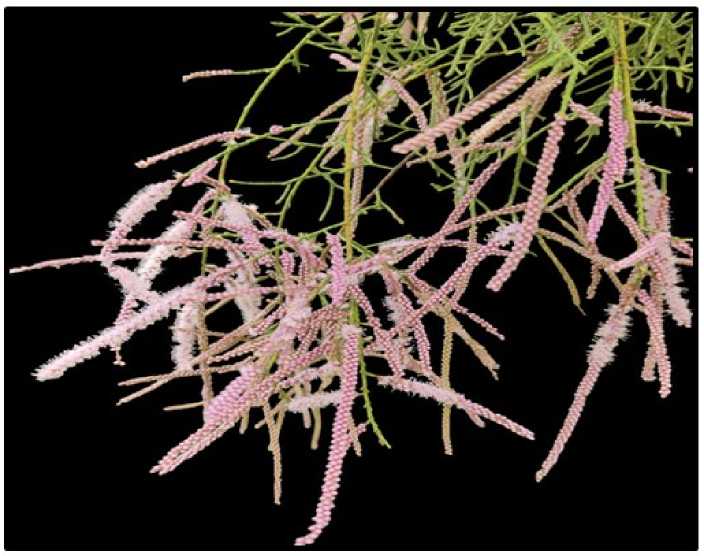
Figure 2: Photograph of Tamarix aphylla ( .) Karst.
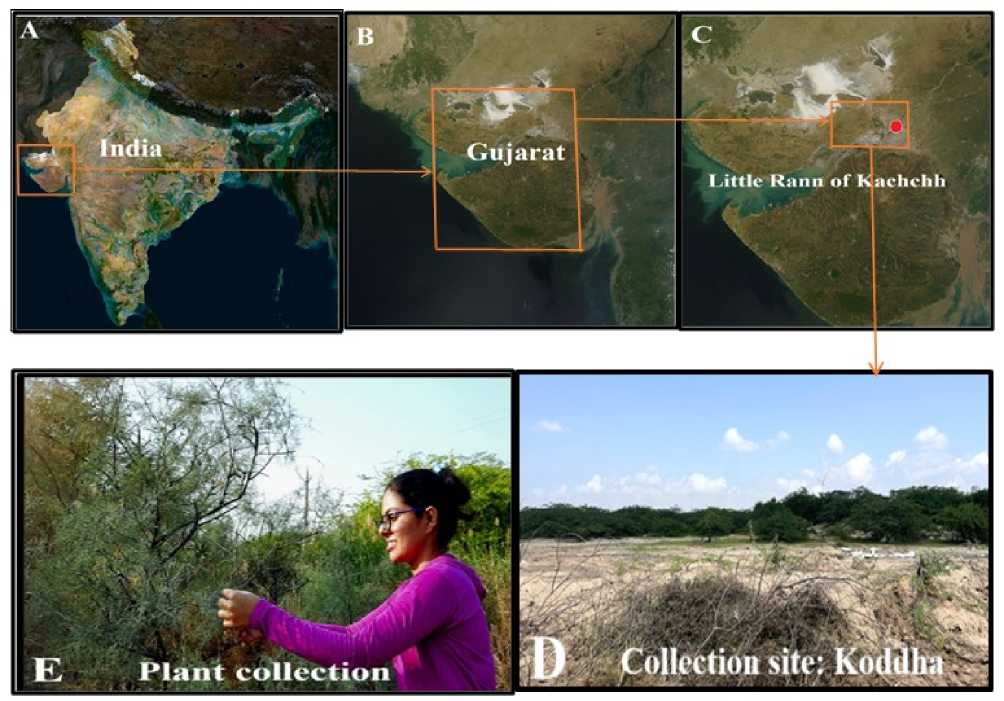
Figure 3: Sample collection site: (a) India, (b) Gujarat, (c) ittle Rann of Kachchh, (d) sample collection site Koddha, (e) Plant collection
Table 1. Qualitative phytochemical analysis of Tamarix aphylla ( . Karst.
|
Phytochemical |
eaf |
Stem |
Flower |
|||||||||
|
ME |
AE |
WE |
CE |
ME |
AE |
WE |
CE |
ME |
AE |
WE |
CE |
|
|
Alkaloids |
+ |
+ |
- |
+ |
+ |
+ |
- |
+ |
+ |
+ |
- |
+ |
|
Glycosides |
+ |
+ |
- |
+ |
+ |
+ |
+ |
- |
+ |
+ |
+ |
- |
|
Flavonoids |
+ |
+ |
+ |
- |
+ |
+ |
- |
+ |
+ |
+ |
+ |
- |
|
Steroids |
+ |
+ |
+ |
+ |
+ |
+ |
- |
+ |
+ |
+ |
+ |
- |
|
Saponins |
+ |
+ |
- |
+ |
+ |
+ |
- |
+ |
+ |
+ |
- |
+ |
|
Phenol |
+ |
+ |
+ |
+ |
+ |
+ |
+ |
+ |
+ |
+ |
+ |
+ |
|
Carbohydrate |
+ |
+ |
+ |
+ |
+ |
+ |
+ |
+ |
+ |
+ |
+ |
+ |
|
Tannins |
+ |
+ |
- |
+ |
+ |
+ |
- |
+ |
+ |
+ |
+ |
- |
(Note: E= ethanol Extract, AE= Acetone Extract, WE= Water Extract, CE= Chloroform Extract, + = Present and - = Absent)
CONCLUSIONS
In conclusion, the overall results of the investigation indicate that all medicinal plants contain more than one pharmacologically active component. Chemical characterization must be carried out in order to find and evaluate active phytoconstituents and create medicines with a promising role in curing ineffective disorders. Tamarix aphylla ( .) Karst. is a Quranic Athl plant, holding significant cultural, ecological, and medicinal importance. The significance of conservation and responsible use of natural resources is repeatedly highlighted throughout the Quran.
The qualitative phytochemical analysis of Tamarix aphylla ( .) Karst. indicated the presence of different important chemical compounds such as alkaloids, tannins, saponins, glycosides, flavonoids and phenolic compounds. Tamarix aphylla ( .) Karst. has various medicinal values and it can be used for hypertension, stomach discomfort, hair loss, skin- related problems, cough and asthma, paralysis, teeth infection, swelling, wounds, jaundice and fever. Additional research on the plant Tamarix aphylla ( .) Karst. is necessary from the perspective of its potential medicinal uses.
ACKNOWLEDGEMENT
The author would like to be thankful to the principal of aktabah Jafariyah College of Science and Technology, Sedrana, and unicipal Arts and Urban Bank Science College, ehsana, Hemchandracharya North Gujarat University, Patan, Gujarat, India, for providing laboratory facilities to carry out this work. And also acknowledge to the Government of Gujarat, India, for providing a fellowship under SHODH (ScHeme Of
Developing High-quality research) (Reference no.2023014046) for doctoral research.
CONFLICTS OF INTEREST
All authors declare that they have no conflicts of interest.
