
Impact of nanoparticles on the phytoremediation potential of Coleus amboinicus Lour.
Journal: Journal of Stress Physiology and Biochemistry @jspb
Article in issue: 1 т.22, 2026.
Free access
Contamination of soil by toxic heavy metals is a serious environmental issue which requires an effective remediation method. Phytoremediation, a cost-effective plant-based technology, can be effectively used to clean up the soil, air and water that is contaminated. The present study was conducted to investigate the cadmium (Cd), nickel (Ni) and lead (Pb) phytoremediation potential of Coleus amboinicus, a terrestrial plant that has been reported to accumulate heavy metals efficiently. In addition, the effect of magnesium oxide (MgO) and zinc oxide (ZnO) nanoparticles on the accumulation of Cd, Ni and Pb in C. amboinicus was evaluated. The results revealed that C. amboinicus could effectively accumulate Cd, Ni and Pb proving it to be a good option for the remediation of soils contaminated with these heavy metals. The application of MgO and ZnO nanoparticles could enhance the accumulation of Cd in the roots (4% and 94% respectively) and shoots (137% and 276% respectively) of C. amboinicus compared to the Cd only treated plant. However, root and shoot accumulation of Ni and Pb was reduced by the application of MgO and ZnO nanoparticles. It was also found that Cd, Ni and Pb and MgO and ZnO nanoparticles reduced all the growth parameters, root volume and tolerance index compared to the control C. amboinicus plants. Further research is necessary to clarify the underlying mechanisms and to improve this strategy for phytoremediation.
Similar articles in the section Threats to the environment
Short address: https://sciup.org/143185428
IDS: 143185428
Text of the scientific article Impact of nanoparticles on the phytoremediation potential of Coleus amboinicus Lour.
Human life depends on soil, which is also a vital part of the natural world. Soil pollution is a result of human activity like urbanisation and industrialisation. Heavy metals, with high atomic weights and densities, are significant soil pollutants. They consist of non-essential elements like arsenic, cadmium, mercury, and lead that are naturally detrimental to plants and animals, as well as necessary elements like boron, copper, nickel, and zinc that become toxic at high concentrations (Farlex, 2005; Gupta et al. , 2010). Humans, animals, and plants can all suffer from heavy metal exposure. Lead and cadmium are the most studied heavy metals and the most common heavy metals found in contaminated areas. Cadmium, which contaminates the food chain, is highly toxic and accumulates in the body, causing longterm health risks including cancer (Yu et al. , 2001; Genchi et al. , 2020). Lead poses serious health concerns to people, particularly children, as it alters neurological and physiological processes (Amodio-Cocchieri, 1995; Verstraeten et al. , 2008). In humans, nickel poisoning causes lung and nasal tumours, headaches, and nausea, among other symptoms.
Due to the toxic nature and the persistence of these heavy metals in soil, urgent soil restoration techniques are necessary. Conventional techniques for remediating soil are expensive and frequently insufficient. With methods like phytoextraction and phytostabilization, phytoremediation — the use of plants to eliminate or neutralise pollutants — offers a more economical option (Salt et al., 1995; Ali et al., 2013). The ability of plants to tolerate and accumulate heavy metals for phytoextraction and phytostabilization purposes can be measured using the translocation factor (TF) and bioconcentration factor (BCF), which are defined as the ratio of metal concentration in plant roots to soils ([Metal]Root/[Metal]Soil) and the ratio of metal concentration in plant shoots to roots ([Metal]Shoot/[Metal]Root), respectively (Yoon et al., 2006). In phytoextraction, plants with both bioconcentration factors (BCF larger than one) and translocation factors (TF) may be used. For phytostabilization, plants with bioconcentration factors larger than one and translocation factors smaller than one can be employed (Yoon et al., 2006). lant toxicity and lengthy remediation timeframes are two obstacles that phytoremediation must overcome despite its potential (Saifullah et al., 2009). Therefore, cuttingedge phytoremediation approaches that can reduce toxicity and encourage environmental cleanup must be used to guarantee maximum metal extraction from contaminated locations in a constrained amount of time and economic benefits.
Nanotechnology offers fresh ways to improve phytoremediation. For instance, iron oxide and metal oxide nanoparticles can reduce phytotoxicity and improve the removal of contaminants (Tripathi et al. , 2015; Siddiqi & Husen, 2017). Several authors have suggested that the use of nanomaterials could improve the phytoremediation of soil contaminated with cadmium, chromium, lead, nickel, and zinc (Tripathi et al. , 2015; Khan & Bano, 2016; Singh & Lee, 2016; Liang et al. , 2017).
According to reports, Coleus amboinicus Lour., a member of the Lamiaceae family, has been reported with the ability to recover heavy metal-contaminated soil (Warrier, 1994; Unde & Kumar, 2022). Nevertheless, no studies have been carried out on the application of MgO and ZnO nanoparticles to augment the potential of C. amboinicus for heavy metal phytoremediation. Thus, this study set out to analyse the impact of these nanoparticles on the accumulation of heavy metals in C. amboinicus . The effects of these heavy metals and nanoparticles on the plant's growth metrics, root volume, moisture content, and tolerance index were also evaluated in order to ascertain the plant stress response.
MATERIALS AND METHODS
Plant Materials
Experimental Design
Coleus amboinicus plants were collected and acclimatised in the Botanical Garden of St. Joseph's College (Autonomous), Devagiri, Kozhikode, Kerala, for the study. For two weeks, the stem cuttings were left to root in grow bags filled with a potting mixture consisting of soil, cocopeat, and cow dung (4:1:1). After rooting the plants were provided with different heavy metal and nanoparticle treatments. Among the treatments were plants treated with 100 mg/kg of lead chloride ( bCl 2 ), nickel nitrate (Ni(NO 3 ) 2 ), or cadmium chloride (CdCl 2 ), as well as a control group that received no treatments. Zinc oxide nanoparticles (ZnO N s) or magnesium oxide nanoparticles (MgO N s) at a dose of 100 mg/kg were used in the nanoparticle treatments. Additionally, combination treatments included pairs of cadmium, nickel, or lead with MgO or ZnO nanoparticles. The treatment duration was one month, and Table 1 lists the specific combinations.
Plant Growth Parameters lant samples were collected and cleaned with distilled water after treatment. A graduated scale was used to measure the lengths of the roots and shoots. An electronic weighing balance (Scale-Tec, SAB 224CL INCAL, India) was used to record the fresh and dried weights of the roots and shoots. In order to determine the dry weight, the samples were dried in a hot air oven at 600 C until the weight reached a consistent value.
Moisture Content
The fresh and dry weights of C. amboinicus plants were measured in order to measure their moisture content (Lokhande et al. , 2011). The following formula was used to determine the percentage of tissue moisture content.
Moisture content (MC) % = [(Fresh Weight– Dry Weight)/Fresh Weight] × 100
Root Volume
The methodology of Rahul et al. (2019) was followed for measuring the root volume of C. amboinicus plants. To measure the root volume, a glass beaker was filled to the brim with water, and the roots were submerged entirely in the beaker, allowing the water to overflow. The amount of water that overflowed was measured using a measuring cylinder. The root volume was expressed in cm3.
Tolerance Index (TI)
Using the given formula, the tolerance index (TI) of C. amboinicus under heavy metal and nanoparticle treatments was calculated (Rabie & Almadini, 2005).
TI % = (Dry weight of treated plants/ Dry weight of control plants)×100
Sample Preparation and Heavy Metal Analysis lant samples, after drying, were ground into a powder. The preparation of the samples for the heavy metal analysis was conducted according to Allan's (1969) method. 0.5g of powdered roots and shoots from each treatment were digested with 40ml of nitric acid (HNO3). After the mixtures were dried out by evaporation, they were extracted using distilled water. The solutions were then boiled, filtered and made upto 50ml. The metal ion concentrations were analysed by atomic absorption spectrophotometer (Varian AA 240, USA). From the obtained AAS results, the phytoremediation parameters like BCF, TF and BAF were calculated following the equations of Yoon et al. (2006) and Liu et al. (2007).
Bioconcentration Factor (BCF) = Heavy metal concentration in root/ Heavy metal concentration in soil
Translocation Factor (TF) = Heavy metal concentration in shoot/ Heavy metal concentration in root
Bioaccumulation Factor (BAF) = Heavy metal concentration in the whole plant/ Heavy metal concentration in soil
RESULTS AND DISCUSSION
Effect of MgO and ZnO nanoparticles on Cd, Ni and Pb accumulation in Coleus amboinicus
Effect of MgO and ZnO nanoparticles on Cd accumulation in C. amboinicus
The level of Cd in the roots and shoots of control, MgO N and ZnO N treated Coleus amboinicus plants was below detectable limit. Thus, it is inferred that the soil used for present study is not contaminated with Cd. Cd treated, Cd+MgO N treated and Cd+ZnO N treated plants showed high levels of Cd in the root. Among these, the highest accumulation of Cd was seen in plants treated with Cd+ZnO N . Compared to Cd treated plant, Cd+MgO N treated and Cd+ZnO N treated C. amboinicus plants showed a 4% and 94% increase of Cd accumulation in the roots, respectively (Figure 1).
In the case of shoots of Cd treated, Cd+MgO N treated and Cd+ZnO N treated C. amboinicus also, the plant revealed high Cd accumulation. Of these, the shoots of plants treated with Cd+ZnO N showed the highest Cd accumulation. The Cd+MgO N treated plants displayed a 137% increase in Cd accumulation in the shoot when compared to the Cd treated plant. On the other hand, the shoots of plants treated with Cd+ZnO N showed a 276% increase in Cd accumulation with respect to that of the Cd treated C. amboinicus (Figure 1) .
On analyzing the BCF, TF and BAF values, we observed that C. amboinicus plants had BCF and BAF values greater than one and TF value lesser than one for Cd. The BCF indicates the capacity of plants to eliminate metal compounds from the soil/substrate and TF designates the capacity of the compound to be transferred from roots to other organs of the plant (Mellem et al. , 2012). lants can be considered as hyperaccumulators if their BCF and TF values are >1 (Usman et al. , 2013) while plants can be used as phytostabilizers if their BCF values are >1 and TF values < 1. BAF indicates the total heavy metal accumulation in the plant. Higher the BAF value, higher the ability of the plant to remove heavy metals from the growth matrix. Based on these reports, we identify C. amboinicus as a potential phytostabilizer of Cd. Cd+MgO N treated and Cd+ZnO treated plants had higher accumulation of Cd in the roots and shoots as compared to Cd treated plants. It was also noted that Cd+ZnO N treated plants had the highest BCF (67.46) and BAF values (71.2), while
Cd+MgO N treated plants had the highest TF value (0.06) (Figure 2). This indicated that the application of MgO and ZnO nanoparticles was effective in enhancing Cd accumulation in C. amboinicus plant. Similar results were observed by Zhang et al. (2019) on the accumulation of Cd in rice plants treated with ZnO nanoparticles. The addition of high-concentration ZnO-N s can lead to a large amount of Zn2+ released to the soil, and Zn2+ could displace Cd2+ from soil absorption sites, which means that Zn might lead to increased Cd uptake by plants (Garg & Kaur, 2013).
Effect of MgO and ZnO nanoparticles on Ni accumulation in Coleus amboinicus
Nickel is a micronutrient and is essential for plants. The control, MgO N treated and ZnO N treated C. amboinicus plants accumulated Ni in the roots as well as shoots. Compared to the control, the roots of Ni treated (2805%), Ni+MgO N treated (717%) and Ni+ZnO N treated (1756%) plants exhibited increased Ni accumulation in roots. However, the Ni+MgO N treated and Ni+ZnO N treated plants displayed a 72% and 36% reduction of Ni accumulation in the roots when compared to that of the Ni treated plant (Figure 3).
Ni accumulation was also observed in the shoots of control, Ni-treated, Ni+MgO N treated, and Ni+ZnO N treated C. amboinicus . Ni treated plants exhibited the greatest Ni accumulation out of all of these. Compared to the Ni treated plant, the Ni+MgO N treated and Ni+ZnO N treated plants showed a 51% and 94% reduction in Ni accumulation in the shoot, respectively (Figure 3).
lants are potential phytostabilizers of heavy metals if their BCF values are >1 and TF values < 1 (Usman et al. , 2013). Therefore, having BCF value greater than one (16.5) and TF value lesser than one (0.19), C. amboinicus can be considered as an effective phytostabilizer of Ni also. Application of MgO and ZnO nanoparticles decreased Ni accumulation in the roots and shoots of Ni+MgO N treated and Ni+ZnO N treated plants. The analysis of BCF, TF, and BAF values revealed that the plants treated with Ni+MgO N and Ni+ZnO N had reduced BCF (4.64 and 10.54 respectively) and BAF (6.19 and 10.74 respectively)
values compared to the Ni treated C. amboinicus (Figure 4). This may be assigned to the decreased bioavailability of heavy metals caused by increased pH of the soil due to the application of nanoparticles (Zhang et al. , 2019).
Effect of MgO and ZnO nanoparticles on Pb accumulation in Coleus amboinicus
The roots and shoots of C. amboinicus plants treated with b, b+MgO N and b+ZnO N treated plants accumulated sufficiently high levels of b. However, compared to the b treated plant, the b+MgO N treated and b+ZnO N treated C. amboinicus showed a 58% and 19% decrease in b accumulation in the root. This indicated that the application of nanoparticles had a negative effect in b accumulation in C. amboinicus (Figure 5).
In the case of shoots, C. amboinicus plants treated with b+MgO N showed the highest accumulation of b. The b+MgO N treated plants displayed a 156% increase in b accumulation in the shoot when compared to the b treated plant. The plants treated with b+ZnO N showed a 112% increase in b accumulation in C. amboinicus shoots (Figure 5).
On analyzing the phytoremediation parameters, BCF (14.73), and BAF (15.23) values of b treated C. amboinicus were found to be greater than one while the TF (0.033) value was lesser than one (Figure 6). This result indicates that C. amboinicus is a suitable plant for b phytostabilization. The lower b accumulation in roots and BCF and BAF values of b+MgO N treated and b+ZnO N treated C. amboinicus compared to b treated plants points out that these nanoparticles are not efficient in enhancing b phytoremediation potential of C. amboinicus . The probable reason may be the augmented pH of the soil by the addition of nanoparticles that reduced the bioavailability of b (Zhang et al. , 2019). However, further studies are required to confirm this conclusion.
Effect of heavy metals (Cadmium, Nickel, Lead) and nanoparticles (MgO and ZnO NPs) on the growth parameters of Coleus amboinicus Lour.
Heavy metal stress is often associated with plant growth inhibition in a wide range of plant species grown in polluted soil and water (Ullah et al., 2018; Gong et al., 2019). Application of nanoparticles have been reported to result in positive as well as negative effects on plant growth based on the concentration of nanoparticles applied. In some cases, nanoparticles have been found to alleviate heavy metal toxic effects in plants (Konate et al., 2017; Usman et al., 2020).
Effect of Cd and nanoparticles (MgO and ZnO) on the growth parameters of Coleus amboinicus
The present study has found decreased growth parameters in Coleus amboinicus due to the effect of heavy metals and nanoparticles.
The root lengths of Cd treated and Cd+MgO N treated plant showed a decrease of 6% and 49% respectively in comparison with the control plant. But the root length of Cd+ZnO N treated plants showed an increase of 26% compared to the control plants. When the root length of Cd+MgO N treated plants was compared to that of the Cd treated plants, a 46% decrease in the same was observed. However, Cd+ZnO N treated plants showed increased root length (26%) compared to the Cd treated plant. In the case of shoot lengths, the shoot lengths of the Cd-treated, Cd+MgO N , and Cd+ZnO N treated plants decreased by 67%, 53%, and 53%, respectively compared to the control C. amboinicus . However, a 43% and 41% increase, respectively, in the shoot length of the Cd+MgO N and Cd+ZnO N treated plants was noted when compared to that of the Cd treated C. amboinicus (Table 2).
The root fresh weights of the Cd-treated, Cd+MgO N treated, and Cd+ZnO N treated plants reduced by 48%, 51%, and 74%, respectively, in relation to the control plant. When compared to the Cd treated plants, the root fresh weights of the Cd+MgO N treated and Cd+ZnO N treated plants decreased by 6% and 50%, respectively (Table 2).
The shoot fresh weights of the Cd-treated, Cd+MgO N treated and Cd+ZnO N treated plants decreased by 70%, 61%, and 81%, respectively compared to the control plant. But the shoot fresh weight of the Cd+MgO N treated plants increased by 31%, while the Cd+ZnO N treated plants exhibited a 37% decrease with respect that of the Cd treated plants (Table 2).
The root dry weights of the Cd-treated, Cd+MgO N treated, and Cd+ZnO N treated plants reduced by 53%, 74%, and 81%, in comparison to the control plant. Compared to the Cd treated plant, the root dry weight of the Cd+MgO N treated and Cd+ZnO N treated plants dropped by 44% and 59%, respectively (Table 2).
The shoot dry weights of the Cd-treated, Cd+MgO N treated, and Cd+ZnO N treated plants reduced by 63%, 50%, and 77%, respectively, in comparison to the control plant. However, the shoot dry weights of Cd+MgO N treated plants increased by 37% and that of Cd+ZnO N treated plants decreased by 39%, respectively, in comparison to the Cd treated plant (Table 2).
revious studies have reported the detrimental effects of Cd on plant growth parameters. Many investigations reported the inhibiting effect of Cd on fresh and dry mass accumulation, height, root length, leaf area, and other parameters of plants (Farid et al., 2013). Reduced photosynthetic activity is mainly responsible for the decreased growth of plants under Cd stress (Greger & Gren, 1991). The results of our study may also be due to reduced photosynthesis. However, this can only be confirmed after conducting studies on physiological and biochemical parameters of C. amboinicus . The reduced growth of C. amboinicus under the combined effect of heavy metals and nanoparticles may be due to the high concentration of nanoparticles applied.
Effect of Ni and nanoparticles (MgO and ZnO) on the growth parameters of Coleus amboinicus
The root lengths of the Ni-treated and Ni+ZnO N treated plants decreased by 25% and 41%, respectively when compared to the control C. amboinicus. However, compared to the control plants, the root length of Ni+MgO N treated plants displayed an increase of 182%. There was a 276% increase in root length in the Ni+MgO N treated plants when compared to the Ni treated plants. On the other hand, compared to the Ni-treated plant, the root lengths of the Ni+ZnO N treated plant exhibited a 22% reduction. The shoot lengths of the Ni-treated, Ni+MgO N treated, and Ni+ZnO N treated plants decreased by 46%, 61%, and 33%, respectively, in comparison to the control plant. On comparing the shoot lengths of Ni treated plants to that of the Ni+MgO N and Ni+ZnO N treated plants, it was found that Ni+MgO N treated plants showed a 27% reduction while Ni+ZnO N treated plants exhibited a 24% increase of the same (Table 3).
The fresh weight of roots of Ni-treated, Ni+MgO N treated, and Ni+ZnO N treated plants decreased by 76%, 70%, and 15%, respectively compared to the control C. amboinicus . The root fresh weights of Ni+MgO N treated and Ni+ZnO N treated plants increased by 23% and 247%, respectively, in comparison to the Ni treated plant. Similarly, the shoot fresh weights of the Ni-treated, Ni+MgO treated and Ni+ZnO treated plants decreased by 84%, 75%, and 66%, respectively, in comparison to the control plant. However, compared to the Ni treated plant, the shoot fresh weights of the Ni+MgO treated and Ni+ZnO treated plants increased by 54% and 111%, respectively (Table 3).
Compared to the control plant, the root dry weight of the Ni-treated, Ni+MgO N treated, and Ni+ZnO N treated plants decreased by 82%, 77%, and 79%. The root dry weight of the Ni+MgO N treated and Ni+ZnO N treated plants increased by 30% and 20%, respectively, in comparison to the Ni treated plant. The shoot dry weight of the Ni-treated, Ni+MgO N treated, and Ni+ZnO N treated plants decreased by 72%, 72%, and 52%, respectively compared to the control plant. Compared to the Ni-treated plant, the shoot dry weight of the Ni+MgO N treated plants dropped by 2%, while that of the Ni+ZnO N treated plants increased by 70% (Table 3).
The presence of Ni in soil resulted in decreased growth and biomass production in various plants due to disrupted chlorophyll synthesis, photosynthesis and inhibition of CO2 assimilation (Chen et al., 2009). Our study also had similar results and may be attributed to the above-mentioned reasons. However, an indepth study is required to confirm this inference. Even though the heavy metal toxicity reduction aided by nanoparticles in several plants have been reported by several authors, our study has not found a notable heavy metal alleviating effect of nanoparticles on C. amboinicus. This could be due to the excess concentration of nanoparticles applied. To clarify this, further studies should be conducted by applying low concentrations of nanoparticles as well.
Effect of Pb and nanoparticles (MgO and ZnO) on the growth parameters of Coleus amboinicus
The root lengths of the b treated, b+MgO N treated, and b+ZnO N plants decreased by 40%, 19%, and 15%, respectively when compared to the control plant. However, a 35% and 58% increase in root length was observed in b+MgO N and b+ZnO N treated plants respectively, compared to that of the b treated plants. The shoot lengths of the b-treated, b+MgO N treated, and b+ZnO N treated plants decreased by 38%, 61%, and 53%, respectively compared to that of control C. amboinicus . When compared to the b treated plant, the shoot lengths of the b+MgO N treated and b+ZnO N treated plants decreased by 38% and 24%, respectively (Table 4).
The root fresh weight of the b-treated, b+MgO N treated and b+ZnO N treated plants reduced by 61%, 63%, and 41%, respectively, in comparison to the control plant. When compared to the b treated plant, the root fresh weight of the b+MgO N treated plants dropped by 4%, while that of the b+ZnO N treated plants exhibited an increase of 51%. The shoot fresh weights of the b-treated, b+MgO N treated, and b+ZnO N treated plants dropped by 47%, 41%, and 62%, respectively compared to the control plant. With respect to the b treated plant, the shoot fresh weights of the b+MgO N treated plants increased by 12%, but the b+ZnO N treated plants experienced a 28% decrease of the same (Table 4).
The root dry weights of the b-treated, b+MgO N treated, and b+ZnO N treated plants was 74%, 77%, and 68% lower than that of the control plants. Compared to the b-treated plants, the root dry weights of the b+MgO N treated plants dropped by 13%, while that of the b+ZnO N treated plants exhibited a 20% increase. The shoot dry weights of the b-treated, b+MgO N treated, and b+ZnO N treated plants decreased by 54%, 70%, and 67%, respectively, in comparison to the control plant. When compared to the b treated plant, the shoot dry weights of the b+MgO
N treated and b+ZnO N treated plants dropped by 36% and 29%, respectively (Table 4).
A study conducted by Hussain et al. (2021) found that b stress significantly halted growth (stem and root length), biomass (fresh and dry), and total water content in Persicaria hydropiper compared to plants grown in b-free medium. Our study has also revealed a decrease of growth parameters in C. amboinicus under b stress. Ekmekçi et al. (2009) reported that plant growth retardation by metal stress is due to water deficit resulting from disturbance of water balance. Decreased growth of C. amboinicus under b stress in the present study may be attributed to disturbed water balance of the plant. The application of MgO and ZnO nanoparticles in heavy metal stressed plants have been reported to increase the growth parameters of various plants. However, the present study revealed reduced growth parameters in b+MgO N treated and b+ZnO N treated C. amboinicus compared to control (Table 4). This could be because the applied concentrations of MgO and ZnO nanoparticles might have been high. High concentrations of nanoparticles have been reported to result in toxicity and reduced growth in plants (Hussain et al. , 2021).
Effect of heavy metals (Cadmium, Nickel, Lead) and nanoparticles (MgO and ZnO) on the root volume, moisture content and tolerance index of Coleus amboinicus Lour.
Root Volume
The present study observed decreased root volume in the case of Cd, Ni, b, Cd+MgO N treated, Cd+ZnO N treated, Ni+MgO N treated, Ni+ZnO N treated, b+MgO N treated and b+ZnO N treated C.
amboinicus plants. When compared to the control plant, the root volume of the Cd-treated, Cd+MgO N treated, and Cd+ZnO N treated plants decreased by 42%, 50%, and 58%, respectively. The root volumes of the Cd+MgO N treated and Cd+ZnO N treated plants revealed a 13% and 28% decrease respectively with respect to that of the Cd treated plants (Figure 7).
The root volume of the Ni-treated, Ni+MgO N treated, and Ni+ZnO N treated plants decreased by 60%, 63%, and 44%, respectively, in comparison to the control plant. On comparing the root volume of Ni+MgO N treated plant with that of the Ni treated C. amboinicus , a 7% reduction was noted in the former. But the Ni+ZnO N treated plant displayed a 40% greater root volume compared to the Ni treated C. amboinicus (Figure 7).
The root volume of the b treated, b+MgO N treated, and b+ZnO N treated C. amboinicus reduced by 56%, 57%, and 56%, in comparison to the control plant. The root volume of the b+MgO N treated and b+ZnO N treated plants exhibited a negligible decrease and increase respectively compared to the b treated plants (Figure 7).
Heavy metals and nanoparticles have been reported to decrease the root volume of several plants (Konate et al. , 2017; Wang. et al., 2012; Lin et al., 2012). The present study also witnessed decreased root volume under all the treatments probably due to the effect of high concentration of heavy metals and nanoparticles.
Moisture Content
The moisture content of the Cd-treated, Cd+MgO N treated, and Cd+ZnO N treated C. amboinicus decreased by 2%, 1%, and 1%, respectively, in comparison to the control plant. There was a slight increase in the moisture content of the Cd+MgO N treated (1%) and Cd+ZnO N treated (1%) treated plants compared to the Cd treated plant (Figure 8).
With respect to the control plant, the moisture content of the Ni-treated, Ni+MgO N treated, and Ni+ZnO N treated plants dropped by 4%, 0.32%, and 0.57%, respectively. However, compared to the Ni treated plant, the moisture content of both the Ni+MgO N treated and Ni+ZnO N treated plants increased by 4% (Figure 8).
The moisture content of the b-treated, b+MgO N treated, and b+ZnO N treated plants increased by 2%, 4%, and 2%, respectively compared to the control plant. However, when compared to the b treated plant, the moisture content of the b+MgO N treated plants increased by 2%, while the b+ZnO N treated plants exhibited a 1% decrease (Figure 8).
The toxic nature of heavy metals and excess concentration of nanoparticles lead to decrease in the moisture content of several plants (Khan et al., 2020). However, in the present study, a notable decrease in the moisture content of C. amboinicus under all treatments was not observed. Further studies are required to know more about this response.
Table 1. Various Treatment Combinations of Heavy Metals and Nanoparticles
|
lant |
Treatment Combinations |
Cd (mg/kg) |
Ni (mg/kg) |
b (mg/kg) |
MgO N s (mg/kg) |
ZnO N s (mg/kg) |
|
C. amboinicus |
Control |
0 |
- |
- |
- |
- |
|
Cd only |
100 |
- |
- |
- |
- |
|
|
Cd + MgO N |
100 |
- |
- |
100 |
- |
|
|
Cd + ZnO N |
100 |
- |
- |
- |
100 |
|
|
Ni only |
- |
100 |
- |
- |
- |
|
|
Ni + MgO N |
- |
100 |
- |
100 |
- |
|
|
Ni + ZnO N |
- |
100 |
- |
- |
100 |
|
|
b only |
- |
- |
100 |
- |
- |
|
|
b + MgO N |
- |
- |
100 |
100 |
- |
|
|
b +ZnO N |
- |
- |
100 |
- |
100 |
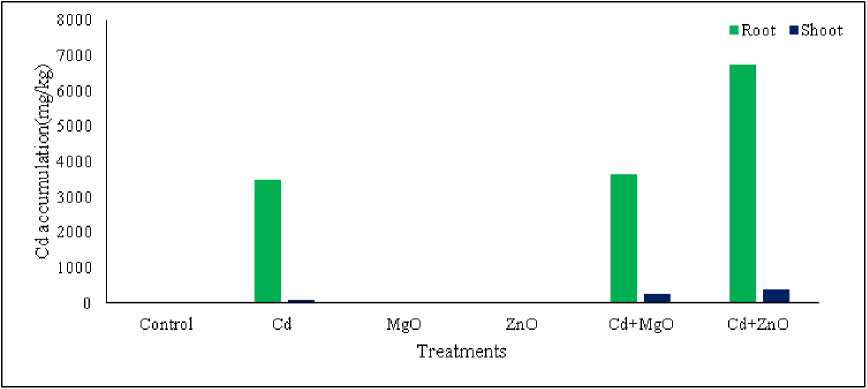
Figure 1 Effect of MgO and ZnO nanoparticles on Cd accumulation in C. amboinicus
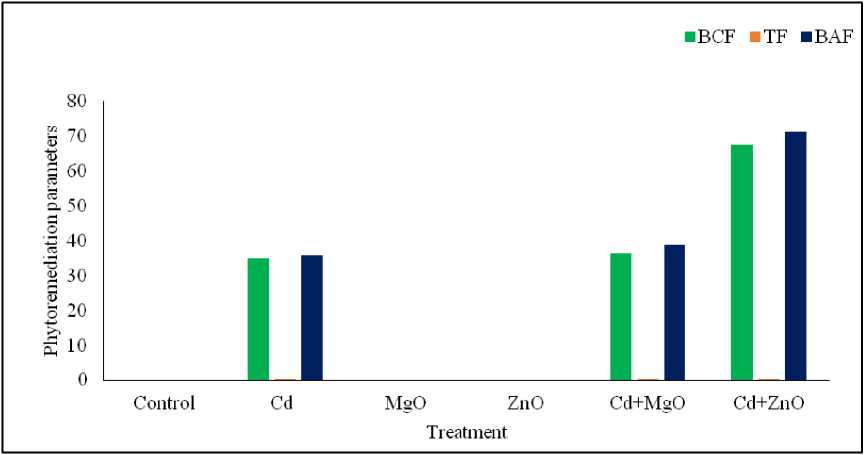
Figure 2. Effect of MgO and ZnO nanoparticles on BCF, TF and BAF values in C. amboinicus
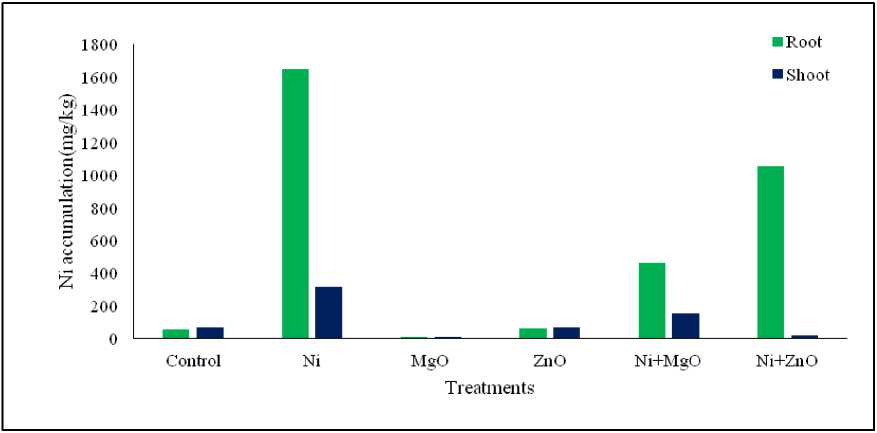
Figure 3. Effect of MgO and ZnO nanoparticles on Ni accumulation in C. amboinicus
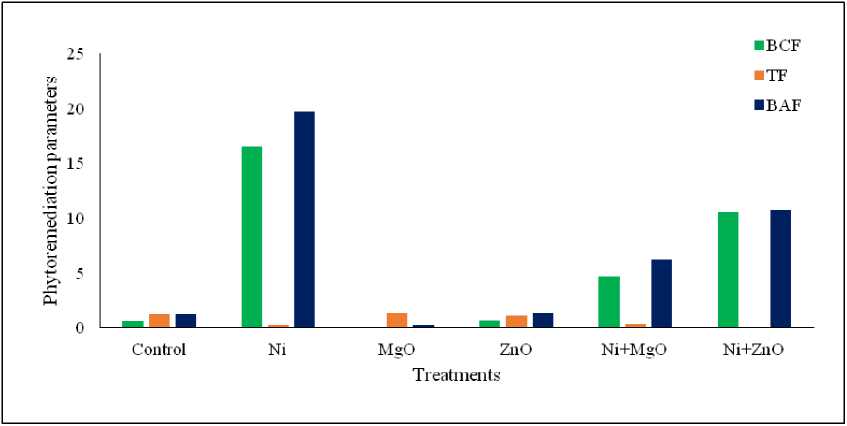
Figure 4. Effect of MgO and ZnO nanoparticles on BCF, TF and BAF values in C. amboinicus
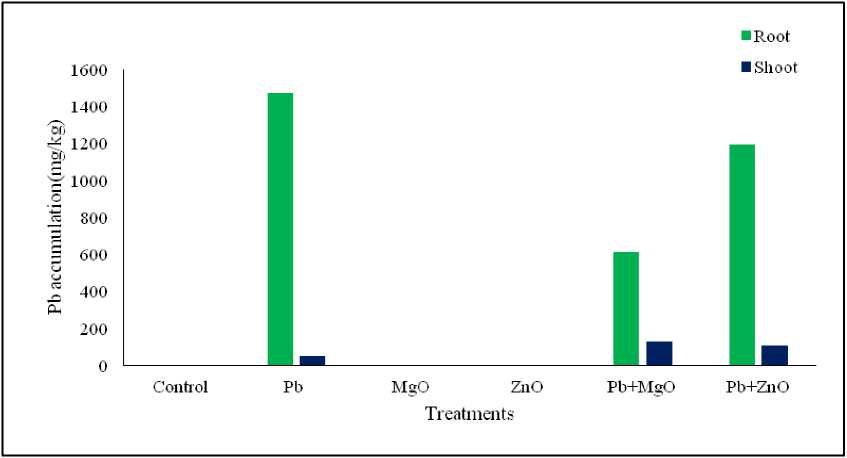
Figure 5. Effect of MgO and ZnO nanoparticles on b accumulation in C. amboinicus
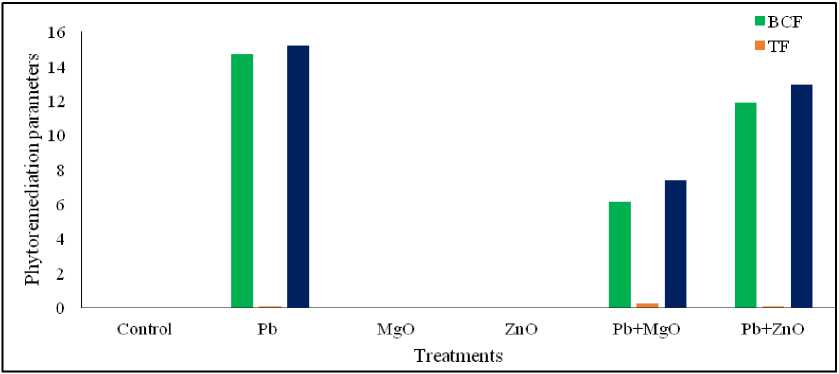
Figure 6. Effect of MgO and ZnO nanoparticles on BCF, TF and BAF values in C. amboinicus
Table 2: Effect of Cd and nanoparticles (MgO and ZnO) on the growth parameters of Coleus amboinicus
|
Sl No |
Treatments |
Root length (cm) |
Shoot length (cm) |
Fresh weight (g) |
Dry weight (g) |
||
|
Root |
Shoot |
Root |
Shoot |
||||
|
1 |
Control |
14.36±1.871 |
59.33±17.55 |
3.054±0.953 |
28.51±3.329 |
0.57±0.02 |
2.04±0.10 |
|
2 |
Cd |
13.5±6.082 |
19.5±3.5 |
1.574±0.696 |
8.535±6.111 |
0.27±0.01 |
0.75±0.03 |
|
3 |
MgO N |
19.5±9.367 |
38.43±13.90 |
1.666±0.308 |
12.12±1.554 |
0.19±0.01 |
0.86±0.04 |
|
4 |
ZnO N |
12.96±3.271 |
29.16±6.934 |
1.695±0.550 |
17.90±6.721 |
0.01±0.00 |
1.24±0.06 |
|
5 |
Cd+MgO N |
7.333±2.081 |
28±1 |
1.482±1.244 |
11.19±3.481 |
0.15±0.00 |
1.03±0.05 |
|
6 |
Cd+ZnO N |
18.16±17.63 |
27.66±4.725 |
0.791±0.259 |
5.372±1.862 |
0.11±0.00 |
0.46±0.02 |
Table 3: Effect of Ni and nanoparticles (MgO and ZnO) on the growth parameters of Coleus amboinicus
|
Sl No |
Treatments |
Root length (cm) |
Shoot length (cm) |
Fresh weight (g) |
Dry weight (g) |
||
|
Root |
Shoot |
Root |
Shoot |
||||
|
1 |
Control |
14.36±1.871 |
59.33±17.55 |
3.054±0.953 |
28.51±3.329 |
0.57±0.02 |
2.04±0.10 |
|
2 |
Ni |
10.76±0.251 |
31.83±9.504 |
0.745±0.293 |
4.62±1.294 |
0.10±0.00 |
0.57±0.02 |
|
3 |
MgO N |
19.5±9.367 |
38.43±13.90 |
1.666±0.308 |
12.12±1.554 |
0.19±0.01 |
0.86±0.04 |
|
4 |
ZnO N |
12.96±3.271 |
29.16±6.934 |
1.695±0.550 |
17.90±6.721 |
0.01±0.00 |
1.24±0.06 |
|
5 |
Ni+MgO N |
40.5±46.44 |
23.3±9.854 |
0.915±0.428 |
7.122±4.685 |
0.13±0.01 |
0.56±0.02 |
|
6 |
Ni+ZnO N |
8.433±2.227 |
39.66±6.806 |
2.583±2.407 |
9.778±8.380 |
0.12±0.01 |
0.97±0.04 |
Table 4: Effect of band nanoparticles (MgO and ZnO) on the growth parameters of Coleus amboinicus
|
Sl No |
Treatments |
Root length (cm) |
Shoot length (cm) |
Fresh weight (g) |
Dry weight (g) |
||
|
Root |
Shoot |
Root |
Shoot |
||||
|
1 |
Control |
14.36±1.871 |
59.33±17.55 |
3.054±0.953 |
28.51±3.329 |
0.57±0.02 |
2.04±0.10 |
|
2 |
b |
8.666±3.214 |
37±23.62 |
1.196±0.377 |
15.15±2.254 |
0.15±0.01 |
0.94±0.04 |
|
3 |
MgO N |
19.5±9.367 |
38.43±13.90 |
1.666±0.308 |
12.12±1.554 |
0.19±0.01 |
0.86±0.04 |
|
4 |
ZnO N |
12.96±3.271 |
29.16±6.934 |
1.695±0.550 |
17.90±6.721 |
0.01±0.00 |
1.24±0.06 |
|
5 |
b+MgO N |
11.66±3.752 |
22.83±5.392 |
1.142±0.276 |
16.91±10.24 |
0.13±0.01 |
0.60±0.03 |
|
6 |
b+ZnO N |
3.617±12.16 |
28.16±0.763 |
1.804±0.550 |
10.82±4.348 |
0.18±0.00 |
0.67±0.03 |
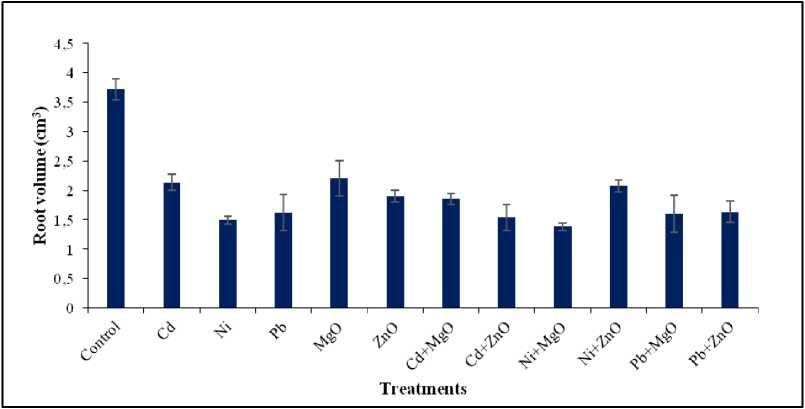
Figure 7. Effect of heavy metals (Cd, Ni & b) and nanoparticles (MgO and ZnO) on the root volume of Coleus amboinicus
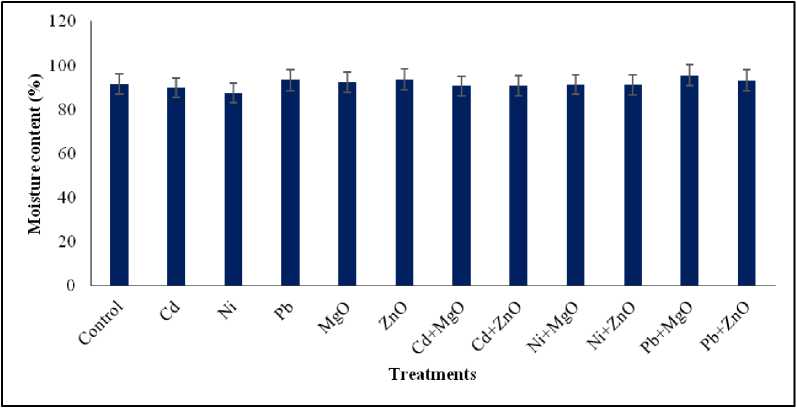
Figure 8. Effect of heavy metals (Cd, Ni & b) and nanoparticles (MgO and ZnO) on the moisture content of Coleus amboinicus
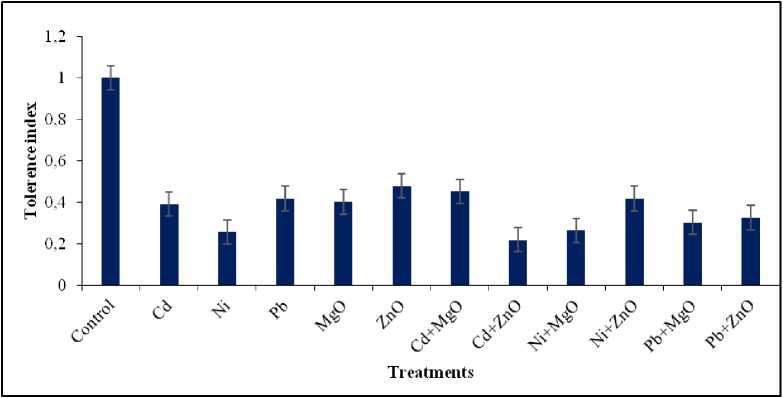
Figure 9. Effect of heavy metals (Cd, Ni & b) and nanoparticles (MgO and ZnO) on the tolerance index of Coleus amboinicus
Tolerance Index
Tolerance Index (TI) is a measure of relative tolerance of plants to metal toxicity (Ismail et al., 2013). The plants having TI > 0.6 shows increased metal tolerance potential (Lux et al. , 2004). The present study found that C. amboinicus plants under all treatments had tolerance index lower than 0.6 which means that the concentration of heavy metals and nanoparticles applied is not tolerable by the plant. The tolerance index of C. amboinicus increased in the order Cd+ZnO N < Ni < Ni+MgO N < b+MgO N < b+ZnO N < Cd < MgO N < Ni+ZnO N , b < Cd+MgO N < ZnO N < Control (Figure 9). The data showed that least tolerance index was exhibited by Cd+ZnO N treated C. amboinicus . The decreased tolerance indices of all the treatments compared to the control indicates that all the treatments have imposed stress on C. amboinicus plants.
CONCLUSION
Toxic heavy metal contamination of soil is a severe environmental problem that calls for an efficient remediation technique. hytoremediation is a low-cost plant-based method for treating contaminated soil, air, and water. As a terrestrial plant with an effective capacity to accumulate heavy metals, Coleus amboinicus is a good choice for phytoremediation. Nevertheless, there aren't many publications on using nanoparticles to increase this plant's phytoremediation capacity. Thus, the primary goal of the current work was to examine how MgO and ZnO nanoparticles affected the accumulation of the heavy metals Cd, Ni, and b in C. amboinicus . Analysis was also done on how these heavy metals and nanoparticles affected the growth characteristics, root volume, moisture content, and tolerance index of the plant.
The results revealed that C. amboinicus could effectively accumulate Cd, Ni and b proving it to be a good option for the remediation of soils contaminated with these heavy metals. The application of MgO and ZnO nanoparticles could enhance the accumulation of Cd in the roots and shoots of C. amboinicus. However, root and shoot accumulation of Ni and b was reduced by the application of MgO and ZnO nanoparticles. It was also found that Cd, Ni and b and MgO and ZnO nanoparticles reduced all the growth parameters, root volume and tolerance index compared to the control C. amboinicus plants. All these indicates the stressful conditions heavy metals and nanoparticles have exerted on C. amboinicus. However, more studies are required to find out whether these kinds of responses are due to the effect of high concentration of nanoparticles applied. Moreover, further physiological, biochemical and molecular studies are needed for an indepth understanding of these responses.
ACKNOWLEDGEMENT
The authors acknowledge the St. Joseph’s College (Autonomous), Devagiri, Kozhikode, Kerala, India and University of Calicut, Malappuram, Kerala, India for providing the facilities to conduct the research work.
CONFLICTS OF INTEREST
The authors declare that they have no potential conflicts of interest.
