
Энергосберегающая система управления процессами аэрации сточных вод
Журнал: Журнал Сибирского федерального университета. Серия: Техника и технологии @technologies-sfu
Рубрика: Теоретическая и прикладная теплотехника
Статья в выпуске: 6 т.19, 2026 года.
Бесплатный доступ
Исследованы факторы, влияющие на эффективность аэрации сточных вод, в частности концентрацию растворенного кислорода, которая в значительной степени определяет качество результата. Предложена система управления процессом аэрации на основе нечеткой логики, которая в последнее время получает все более широкое применение в системах управления технологическими процессами и производстве. Разработана математическая модель нечеткой логики для управления процессом аэрации на основе метода Мамдани и базы правил для управления параметрами входных и выходных сигналов в момент времени.
Короткий адрес: https://sciup.org/146283396
IDS: 146283396 | УДК: 628.356:51–74
An Energy-Saving Control System in Wastewater Aeration Processes
This paper studies the factors affecting the efficiency of the wastewater aeration process, in particular the concentration of dissolved oxygen, which largely determines the quality of the aeration process. The paper also proposes a control system for the aeration process based on fuzzy logic control, which has recently been gaining an increasingly wide scale of application in process control systems and production. A mathematical model of fuzzy logic for controlling the aeration process based on the Mamdani method and a rule base for controlling the parameters of input and output signals at the current time are developed.
Текст научной статьи Энергосберегающая система управления процессами аэрации сточных вод
The concentration of dissolved oxygen (DO) is one of the most important parameters to be monitored due to its influence on biological processes and the energy consumption associated with aeration. During aerobic biological treatment, the dissolved oxygen concentration must be sufficiently high to provide microorganisms in activated sludge with an adequate supply of oxygen for the effective decomposition of organic matter [1]. On the other hand, excessively high DO concentrations, which require high air supply rates, lead to increased energy consumption and may deteriorate the quality of the activated sludge.
The most significant advantage of intelligent control lies in the fact that it does not require an accurate mathematical model; it can effectively approximate any nonlinear continuous function and overcome the shortcomings of traditional control approaches that rely heavily on precise mathematical modeling. In this invention, an integrated neuro-fuzzy process controller is developed for predicting and controlling aeration performance in aerobic wastewater treatment. By employing such a hybrid fuzzy control algorithm, the proposed controller can determine the optimal air supply rate during operation, ultimately resulting in energy savings.
The COD concentration in the aeration tank is determined by the balance between oxygen supply through aeration and its consumption by microorganisms and chemical reactions. The main factors affecting COD can be classified as follows:
The air flow rate (volume of air supplied per unit of time, m³/h) and the type of aerators determine the efficiency of oxygen mass transfer. Higher intensity increases the CRC but also increases energy consumption. The efficiency of oxygen mass transfer depends on the size of the bubbles-fine bubble aerators are more efficient, and the depth of immersion of the aerators [2]. Fine bubble aerators provide – 824 – an oxygen mass transfer coefficient KL in the range of 3–10 h-1, while large bubble aerators provide 1–4 h-1. The standard oxygen transfer efficiency for fine bubble systems is 4–8 % per meter of immersion depth. With an air supply of 0.5–2 m³/m³·h, DO can be maintained at 1.5–3 mg/l under typical organic loading conditions. Studies show that a 10 % increase in aeration intensity increases DO by 0.5–1 mg/l, but increases energy consumption by 8–15 %. Energy costs for aeration account for 50–70 % of the total energy consumption of treatment plants.
Another factor affecting biological wastewater treatment is the temperature of the raw wastewater and the outside air temperature. The average temperature of wastewater in Russian cities during the cold season ranges from 15 to 17 °C, while the temperature of water in small and medium-sized settlements is 9–14 °C. In aeration tanks with a normal aeration regime at an air temperature of 10 to 20 °C, the temperature of the effluent drops by 1–3 °C during treatment, and in aeration tanks with extended aeration mode and shield covers, it drops by 4–9 °C, which leads to a slowdown or complete cessation of the biochemical treatment of wastewater. In countries with hot climates, high wastewater and air temperatures and direct sunlight contribute to an increase in the temperature of the treated effluent to 35 °C and above, which also has a negative effect on the solubility of oxygen in the air and the speed of the effluent treatment process [3]. The construction of closed sewage treatment plants partially solves the problems of cooling or heating the treated liquid. However, the main direction for optimizing the temperature regime of the facilities is to increase the oxygen utilization coefficient.
Increases oxygen consumption by microorganisms for metabolism and organic matter decomposition, reducing COD [4]. Low can lead to insufficient biomass, which also affects the COD balance. Typical range: 2–5 g/l for standard aerotanks, 8–12 g/l for membrane bioreactors. Increasing Кs from 3 to 5 g/l increases the oxygen consumption rate by 30–50 %, reducing DO by 0.5–1.5 mg/l with unchanged aeration. OUR for activated sludge: 10–30 mg O2/g Кs ·h at BOD 100–300 mg/l. High Кs >6 g/l can reduce DO to К s <1 mg/l, which inhibits nitrification by 50–70 %. Optimal К s 3–4 g/l provides a balance between DO and treatment efficiency. For example: at Кs 4 g/l and BOD 200 mg/l, OUR is about 80 mg/l·h, which requires an air supply of 1.5 m³/h to maintain DO 2 mg/l.
BOD reflects the amount of oxygen required for the aerobic decomposition of biodegradable organic substances by microorganisms. High BOD in incoming wastewater increases the oxygen demand in the aeration tank [5]. If the aeration system does not provide sufficient dissolved oxygen, usually 1–2 mg/L is required, the decomposition process slows down, reducing treatment efficiency. A lack of oxygen can lead to a transition from aerobic to anaerobic conditions, causing the accumulation of incomplete decomposition products, deterioration of treatment quality, and the appearance of unpleasant odors. COD indicates the total content of organic substances that can be oxidized chemically. A high COD indicates a significant organic load, but some of the substances included in COD may be difficult to decompose or toxic to microorganisms in the aeration tank. This increases the load on the aeration system, as more oxygen is required to oxidize the available organic compounds. If the BOD/COD ratio is low <0.3, this indicates a predominance of non-biodegradable substances, which reduces the efficiency of biological treatment and requires additional treatment methods. High organic loading of BOD and COD increases the oxygen demand in the aeration tank, making it difficult to maintain the optimal oxygen regime of the CRT. This requires increased aeration, increases energy consumption, and can reduce treatment efficiency when overloaded. For stable operation of the aeration tank, it is necessary to control the organic load, regulate the oxygen supply, and, if necessary, use preliminary wastewater treatment.
pH is a measure of the acidity or alkalinity of a solution, which indicates the concentration of hydrogen ions H+ in the environment. pH affects the activity of microorganisms and chemical reactions by changing oxygen consumption. pH regulates the activity of microorganisms and the rate of chemical reactions, directly affecting oxygen consumption [6]. The optimal pH provides maximum biological and chemical activity, while extreme values (too low or too high pH) suppress these processes or shift them towards specific reactions. Optimal pH: Most microorganisms have a pH range at which their enzymes work most efficiently, usually, pH 6–8 for neutrophils. Deviation from this range reduces enzyme activity, slowing down metabolism and oxygen consumption. pH also changes the rate of oxidation of substances and the solubility of gases. For example, in an acidic environment, some reactions accelerate, increasing oxygen consumption, while in an alkaline environment, they slow down. Aerobic microorganisms use oxygen to decompose organic matter. If the pH is not optimal, their activity decreases and oxygen consumption decreases. Chemical processes that depend on pH also affect the rate of O2 utilization.
Methodology
Mathematical models based on mass transfer equations and the kinetics of biological processes are used to describe the dynamics of CRF in aerotanks [7]. The main approaches include oxygen mass transfer equation. The concentration of oxygen is described by a differential equation that takes into account the supply and consumption of oxygen, the so-called equation:
dC .
df. ^L^^s — ^do) — Vcr, (1)
where: C do – concentration of dissolved oxygen (mg/L), K L – oxygen mass transfer coefficient (h-1), C s – oxygen saturation concentration (mg/L), v cr – oxygen consumption rate (mg/l·h).
The coefficient KL depends on: Aeration intensity, temperature ^KLa ос T0 024)), salt content and surfactants.
v cr – oxygen consumption rate depends on the concentration of activated sludge and organic load:
v cr = q O 2 · X · S , (2)
where q O – specific oxygen consumption rate (mg O2/g sludge·h), X – activated sludge concentration (g/L), S – substrate concentration (mg/L).
In turn, the oxygen consumption rate v nк depends on pH, which can be expressed as a function of microbial activity. Empirically, this can be described, for example, by a Gaussian dependence:
(pH рНОр^(
Ver vcrmax * e 2 <7 ( (3)
where v crmax – maximum oxygen consumption rate at optimal pH ( pH opt ≈ 7–7.5); σ is a parameter characterizing the sensitivity of microorganisms to pH changes.
For a specific aerotank, the dependence of RC on pH is usually determined experimentally or through modeling. In general:
-
• At 6
9, the COD concentration may increase due to a decrease in biological activity. -
• At pH 6.5–8.5, RC stabilizes at a level determined by the intensity of aeration and organic
load.
Aeration is a nonlinear process that depends on many variables (dissolved oxygen concentration, temperature, pollution level, biological activity of microorganisms). PID controllers designed for linear systems do not cope well with nonlinear dynamics. When conditions change (e.g., a jump in the concentration of organic matter in wastewater), a PID controller may produce inadequate control actions, leading to air overspending or insufficient aeration. For example: In aerotank, changes in the inflow of wastewater cause fluctuations in the oxygen level, which makes it difficult to accurately adjust the PID controller. In aeration systems, there is a time delay between the supply of air and the change in the concentration of dissolved oxygen (due to diffusion and the reaction of microorganisms). PID controllers do not work well with systems that have significant transport delays [8]. The controller may lag in its response, causing fluctuations (oscillations) or instability in the process. For example: In a bioreactor, the air supply may not immediately affect the O2 level, resulting in suboptimal control.
PID controllers require precise tuning of coefficients (Kp, Ki, Kd), which can be difficult for systems with variable parameters. Optimal settings for some conditions may become ineffective when the load or composition of the environment changes. Incorrect settings lead to over-regulation (too much air supply) or under-regulation (lack of oxygen), which reduces process efficiency and increases energy consumption. PID controllers typically work with a single control variable (e.g., O 2 concentration). In aeration, however, many factors must be considered simultaneously: temperature, pH, contaminant concentration, air flow. Ignoring additional variables leads to suboptimal control, reducing treatment quality or increasing costs. PID controllers often operate in a constant correction mode, which can lead to excessive air supply, especially when conditions change abruptly. This results in excessive energy consumption by blowers, which accounts for a significant portion of operating costs in aeration systems (up to 50–70 % in wastewater treatment).
In addition, PID controllers do not have built-in adaptability to changes in the process. Complex systems such as aeration require dynamic parameter adjustment, which is impossible without additional algorithms. The system becomes less effective with seasonal changes, changes in wastewater composition, or other external factors. For example: In winter, lower water temperatures slow down biological processes, but the PID controller continues to operate according to the old settings, which reduces the quality of treatment.
Fuzzy logic allows modeling complex systems with uncertainty using linguistic rules [9]. Recently, fuzzification, as an element of fuzzy logic, has been actively used to control complex processes, including aeration, where accurate mathematical models are difficult due to uncertainty and variability of parameters.
Fuzzification is the process of converting clear numerical input data into fuzzy sets with membership functions, which allows the system to take uncertainty into account [10]. Aeration is the process of saturating a liquid with oxygen, used in wastewater treatment, fermentation, or water treatment. The application of fuzzy logic in aeration control allows the process to be optimized, taking into account fuzzy data such as variable oxygen concentrations, temperature, or raw material composition (Fig.1).
The Mamdani fuzzy model can be used to control the aeration process in an aeration tank, which provides biological wastewater treatment by supplying air to maintain the activity of microorganisms [11]. The model accepts input parameters describing the state of the system and outputs control parameters to optimize the concentration of dissolved oxygen C do and the power consumption of the – 827 –
|
Qair^/h ---► T,°C ____# |
||
|
BOD,mg/1____> |
Aeration |
^do> 9/1 ---► ^compi kWt/h |
|
Qwater ’ m /1 ► |
Fig.1. Model of input and output parameters of the wastewater aeration process where: Qair – air flow rate, m3/h; T – wastewater temperature, °C; BOD – biochemical oxygen demand of incoming wastewater, mg/l; Cs – concentration of activated sludge in the aeration tank, g/l; pH – water acidity, Qwater – volume of wastewater in the aeration tank, m3/l; Cdo – concentration of dissolved oxygen, g/l; Pcomp – power consumed by the compressor, kWt/h compressor Pcomp. To develop a fuzzy control system for the aeration process, we first define the input (Table 1) and output parameters (Table 2).
After determining the input and output variables of the control system, we compile a sequence of fuzzy logic for controlling the aeration process using the Mamdani method (Fig. 2). Each input and output variable is represented as fuzzy sets with corresponding membership functions μ ( x ) , which determine the degree of membership of a value x to a specific linguistic term (e.g., “low,” “medium,” “high”). Membership functions are selected as triangular μ тре ( x ) or trapezoidal μ тр ( x ) for boundary terms.
For each parameter, we define five terms to increase accuracy. The rules for selecting terms for the fuzzy model of the aeration process in an aerotank using the Mamdani method are based on the principles of fuzzy logic, the technological features of the aeration process, and expert knowledge.
Table 1. Input parameters
|
Parameters |
Unit of measurement |
Range of possible values |
|
Q air – Air flow rate |
m³/h |
100,1200 |
|
T – Wastewater temperature |
°C |
5.35 |
|
BOD – biochemical oxygen demand |
mg/l |
50,600 |
|
C s – concentration of activated sludge |
g/l |
1.7 |
|
pH – water acidity |
- |
5.5–9.5 |
|
Qwater – wastewater volume |
m³/h |
500,600 |
Table 2. Output parameters
|
Parameters |
Unit |
Range of possible values |
|
C do – dissolved oxygen concentration |
g/l |
0–2.5 |
|
P comp – compressor power consumption |
kW/h |
5–120 |
Terms are linguistic descriptions of the states of input and output parameters that are used to represent values in fuzzy sets. The rules and criteria for selecting terms, adapted to your request, are described below, without unnecessary details and with mathematical rigor.
-
^ Terms should reflect the actual states of parameters characteristic of the aeration process.
-
^ The selection of terms takes into account physical limitations such as oxygen solubility or biochemical oxygen demand;
-
^ More terms are used for each parameter to ensure sufficient detail and flexibility of the model. This allows you to describe transitional states and avoid overly coarse divisions. Terms are selected to ensure coverage of all possible combinations of input parameters in the rule base.
-
^ The range of each parameter is divided into overlapping intervals to account for fuzziness and smooth transitions. The overlap of membership functions is about 20–30 % between neighboring terms (Table 3).
Table 3. Term definition for parameters
|
Parameters |
Terms |
Term range |
|
Q air , (m³/h) |
Very low |
[100, 100, 200, 300] |
|
Low |
[200, 400, 600] |
|
|
Medium |
[400, 700, 900] |
|
|
High |
[700, 1000, 1100] |
|
|
Very high |
[1000, 1100, 1200, 1200] |
|
|
T, (°C) |
Very low |
[5, 5, 8, 12] |
|
Low |
[8, 15, 20] |
|
|
Medium |
[15, 22, 28] |
|
|
High |
[25, 30, 33] |
|
|
Very high |
[30, 33, 35, 35] |
|
|
BOD, (mg/L) |
Very low |
[50, 50, 100, 150] |
|
Low |
[100, 200, 300] |
|
|
Medium |
[200, 350, 450] |
|
|
High |
[400, 500, 550] |
|
|
Very high |
[500, 550, 600, 600] |
|
|
C s , (g/l) |
Very low |
[1, 1, 1.5, 2] |
|
Low |
[1.5, 2.5, 3.5] |
|
|
Medium |
[2.5, 4, 5.5] |
|
|
High |
[4.5, 5.5, 6.5] |
|
|
Very high |
[5.5, 6, 7, 7] |
|
|
pH |
Very low |
[5.5, 5.5, 6, 6.5] |
|
Low |
[6, 6.8, 7.2] |
|
|
Medium |
[6.8, 7.5, 8.2] |
|
|
High |
[7.8, 8.5, 9] |
|
|
Very high |
[8.5, 9, 9.5, 9.5] |
Table 3. Continued
|
Parameters |
Terms |
Term range |
|
Q water , (m³/h) |
Very low |
[500, 500, 1000, 1500] |
|
Low |
[1000, 2000, 3000] |
|
|
Medium |
[2000, 3500, 4500] |
|
|
High |
[4000, 5000, 5500] |
|
|
Very high |
[5000, 5500, 6000, 6000] |
|
|
C do , (g/l) |
Very low |
[0.2, 0.2, 0.5, 1] |
|
Low |
[0.5, 1.5, 2.5] |
|
|
Medium |
[1.5, 2.5, 3.5] |
|
|
High |
[2.5, 3.5, 4.5] |
|
|
Very high |
[3.5, 4.5, 5, 5] |
|
|
P comp , (kW/h) |
Very low |
[5, 5, 15, 30] |
|
Low |
[15, 30, 50] |
|
|
Medium |
[30, 60, 90] |
|
|
High |
[60, 90, 110] |
|
|
Very high |
[90, 110, 120, 120] |
Results
The proposed fuzzy logic–based aeration control system was evaluated using a simulation model of an aeration tank under variable operating conditions. The assessment focused on the behavior of dissolved oxygen concentration, compressor power consumption, and system response to changes in key input parameters, including air flow rate, wastewater temperature, biochemical oxygen demand, activated sludge concentration, pH, and wastewater inflow rate. Simulation results showed that the fuzzy controller maintains the dissolved oxygen concentration within the optimal range of 1.5–2.5 mg/l under varying organic and hydraulic loads. When influent BOD increased from 150 to 450 mg/l, the controller adaptively increased the air flow rate, preventing a critical drop in DO concentration below 1.2 mg/l, which is typically observed in systems using fixed or poorly tuned PID control (Fig. 2).
At low organic loads BOD < 150 mg/L, the fuzzy controller reduced aeration intensity, stabilizing DO levels without excessive oxygen oversupply. This behavior demonstrates the ability of the fuzzy logic system to balance oxygen availability and biological demand while avoiding unnecessary aeration.
The fuzzy control system exhibited robust performance under temperature variations from 8 to 32 °C. At lower temperatures, which slow down microbial activity and reduce oxygen consumption, the controller decreased compressor power while maintaining stable DO concentration. Conversely, at elevated temperatures, where oxygen solubility decreases, the system compensated by moderately increasing air supply (Fig. 3).
pH variations in the range of 6.0–8.5 had a noticeable impact on oxygen consumption rates. The fuzzy controller successfully adjusted aeration intensity to account for reduced microbial activity at suboptimal pH values, preventing excessive oxygen accumulation or deficit. This confirms the effectiveness of the fuzzy rule base in handling nonlinear biochemical effects (Fig. 4).
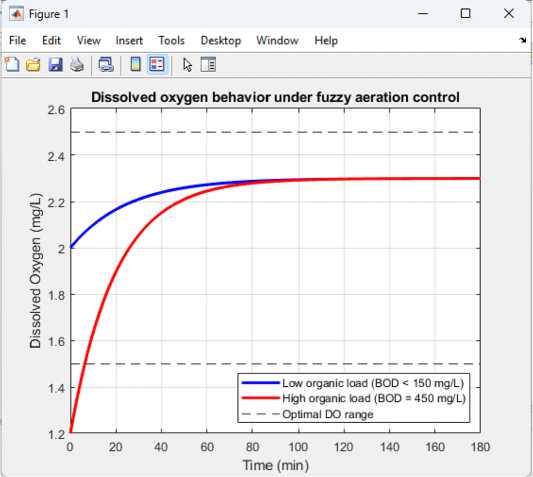
Fig. 2. Dissolved oxygen behavior under fuzzy aeration control
File Edit View Insert Tools Desktop Window Help
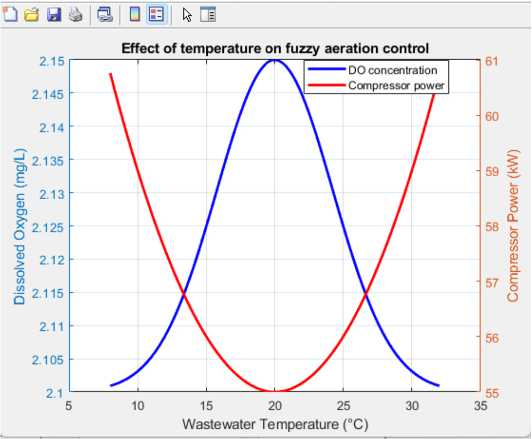
Fig. 3. Effect of temperature on fuzzy aeration control
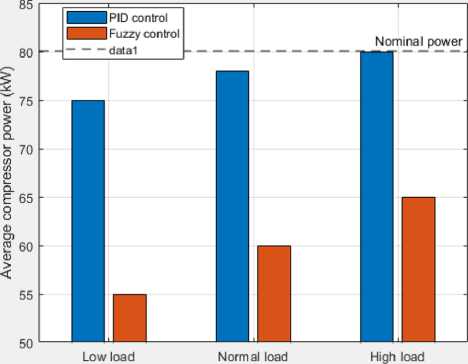
One of the most significant results of the study is the reduction in compressor energy consumption. Compared to a conventional PID-based control strategy, the fuzzy logic controller reduced average power consumption by 12–25 %, depending on operating conditions. At stable inflow conditions, the compressor operated at 30–40 % lower power than nominal capacity, while during peak loads, power consumption increased smoothly without sharp fluctuations. This behavior reduces mechanical stress on blowers and extends equipment lifetime (Fig. 5).
The fuzzy controller demonstrated improved dynamic performance compared to classical control methods. Following step changes in influent flow rate or BOD concentration, the system reached a new steady state within 15–25 minutes, with minimal overshoot in DO concentration. Oscillations – 831 –
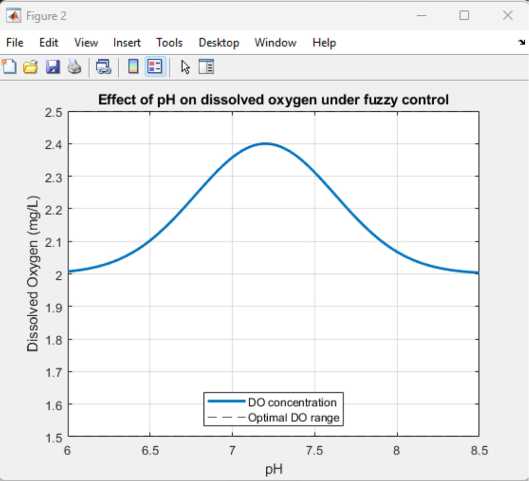
Fig. 4. Effect of pH on dissolved oxygen under fuzzy control a Figure 1
File Edit View Insert Tools Desktop Window Help ^
Q й d -i | (31 □ E | fe Ш
Average compressor power consumption under PID and fuzzy control
Operating conditions
Fig. 5. Average compresso power consumption under PID and fuzzy control commonly observed in PID-controlled aeration systems were significantly reduced. The absence of abrupt control actions confirms the suitability of fuzzy logic for processes with time delays and uncertain dynamics, such as biological wastewater treatment.
The simulation results confirm that the fuzzy logic–based aeration control system:
-
• ensures stable dissolved oxygen concentration under variable process conditions;
-
• adapts effectively to changes in organic load, temperature, and pH;
-
• reduces compressor energy consumption by up to 25 %;
-
• improves dynamic stability and minimizes oscillatory behavior.
These results demonstrate the potential of fuzzy logic control as an effective and energy-efficient alternative to conventional aeration control strategies in biological wastewater treatment plants.
Discussion
The obtained results confirm that the proposed fuzzy logic–based aeration control system provides a technically justified and energy-efficient solution for regulating dissolved oxygen concentration in biological wastewater treatment processes. In contrast to classical PID control, which relies on linearized models and fixed tuning parameters, the fuzzy controller effectively accounts for the nonlinear and multivariable nature of the aeration process.
The ability of the fuzzy controller to maintain dissolved oxygen concentration within the optimal range of 1.5–2.5 mg/L under varying organic and hydraulic loads can be explained by the linguistic representation of process variables and the rule-based decision mechanism. Unlike PID controllers, which react only to the deviation of a single control variable, the fuzzy controller simultaneously considers multiple influencing factors, including BOD, temperature, pH, and activated sludge concentration. This multivariable approach allows the controller to adjust aeration intensity proactively rather than reactively, thereby preventing oxygen deficiency or oversupply.
One of the most important practical outcomes of this study is the reduction in compressor energy consumption. The achieved 12–25 % decrease in average power usage compared to PID-based control aligns with reported energy-saving potentials in aeration systems, where air supply accounts for up to 70 % of total energy consumption. The smoother power profiles under fuzzy control reduce mechanical stress on blowers, which is expected to extend equipment lifetime and lower maintenance costs. These benefits are particularly relevant for wastewater treatment plants operating under variable influent conditions and seasonal fluctuations.
Despite these advantages, it should be noted that the results are based on a simulation model and expert-defined rule sets. The effectiveness of the fuzzy controller depends on the quality of the membership functions and rule base, which may require adaptation for specific treatment facilities. Furthermore, while the proposed approach reduces reliance on precise mathematical models, practical implementation would still require reliable sensor data and appropriate integration with existing automation systems.
Overall, the discussion of results indicates that fuzzy logic–based aeration control represents a promising alternative to conventional control strategies, particularly in systems characterized by uncertainty, nonlinear dynamics, and variable operating conditions. The developed control framework provides a flexible foundation for further enhancement, including experimental validation and the integration of adaptive or learning-based algorithms to further improve performance and robustness.
Conclusion
As can be seen from the above, the concentration of dissolved oxygen in aeration tanks depends on many factors, including aeration intensity, temperature, organic load, and physicochemical parameters. Mathematical models, such as mass transfer equations, allow these dependencies to be described, but their use is limited by complexity and uncertainty. The advantages are: resistance to uncertainty and parameter variability, ease of implementation of rules based on expert knowledge, and reduced energy consumption through adaptive control. The application of fuzzy logic provides an effective tool – 833 – for controlling aeration under variable parameters, ensuring a balance between treatment quality and energy consumption. Further research may focus on integrating fuzzy systems with machine learning to improve control accuracy.
