
Key Features of Decarbonization in Russia’s Oil and Gas Companies in the Context of Northern and Arctic Resource Development
Журнал: Arctic and North @arctic-and-north
Рубрика: Social and economic development
Статья в выпуске: 64, 2026 года.
Бесплатный доступ
The current economic and environmental agenda presents complex challenges for enterprises in the energy sector. In the context of simultaneous growth in global energy consumption, the continued dominance of fossil fuels in the energy mix, and increasingly demanding international climate policy requirements, oil and gas companies are compelled to transition toward more sustainable operational models. One of the key directions of such transformation is decarbonization. This study aims to conceptualize decarbonization in relation to the specific characteristics of the Russian oil and gas sector. Four dominant approaches to interpreting this phenomenon are identified, and a refined definition is proposed, adapted to the operational conditions of oil and gas companies. Particular attention is paid to the specific features of the Russian oil and gas industry, including the concentration of production capacity in the Arctic region, which is highly sensitive to the consequences of climate changes. Based on empirical data from major Russian companies, current trends in greenhouse gas emissions reduction are analyzed, including instances of decreased decarbonization efficiency and, conversely, emission growth. The study systematizes the key internal and external factors influencing the choice of decarbonization strategies: the political and legal conditions, the structure and quality of the resource base, the degree of state participation, the geographical distribution of assets, and emission dynamics. It is revealed that there is a lack of unified targets or regulatory guidelines for emission reductions in the oil and gas industry, which leads to fragmentation in the strategies and variability in the selection of instruments for achieving carbon neutrality. As a result of the study, a conceptual vision of decarbonization for Russian oil and gas companies is developed, encompassing promising development directions and the specific nature of industry transformation under the conditions of Northern and Arctic resource development.
Короткий адрес: https://sciup.org/148334385
IDS: 148334385 | УДК: [338.26:622](985)(045) | DOI: 10.37482/issn2221-2698.2026.64.113
Текст научной статьи Key Features of Decarbonization in Russia’s Oil and Gas Companies in the Context of Northern and Arctic Resource Development
DOI:
This research was supported by the Russian Science Foundation grant No. 22-78-10181, “Decarbonization of Russia’s oil and gas sector: concept, new interfaces, challenges, and technological and organizational-managerial transformations” .
The new, turbulent world poses numerous external challenges for industry and business. Environmental and social issues are forcing companies to restructure their business models and redefine their understanding of key operating principles. Issues concerning the impact of rawmaterial-based companies on the environment in general, and on air pollution in particular, are currently of critical importance. Meanwhile, modern technological development is driving rising energy consumption, with traditional energy sources dominating the energy balance. A complete transition to non-traditional energy sources is not feasible in the foreseeable future.
Oil and gas companies are reviewing their roles and transforming their existing business models in order to adapt to external challenges (Saitova, Ilyinskiy, Fadeev, 2022). The current climate agenda in the context of energy development, and the issue of reducing greenhouse gas (GHG) emissions by industry, have led to the emergence of the concept of decarbonization in the business environment (Rissman, Bataille, Masanet et al., 2020).
Oil and gas companies around the world have already begun taking active steps to reduce their carbon footprint. However, there are some differences both in the approaches and methods used and in the results achieved (Cherepovitsyna, Sheveleva, Riadinskaia, 2023). It is important to note that Russian oil and gas companies are also making efforts to adapt to the climate agenda. In particular, they are setting climate targets based on SMART criteria; some of these targets have already been achieved by companies such as Rosneft, Tatneft, Gazprom, and Novatek. Researchers note that Russian oil and gas companies are responsibly undertaking a wide range of goals that are realistic and, consequently, achievable in the foreseeable future (Cherepovitsyna, Titova, Guseva, 2025).
When studying Russian oil and gas companies and their impact on the environment, it is crucial to note that a significant proportion of extraction takes place in the North and the Arctic. The active development of mineral resources in the Arctic has a number of distinctive features (Gritsenko, Efimova, 2020). First and foremost, the region is of strategic importance as a source of vital resources (including oil and gas). However, despite significant reserves, production in the region is complicated by challenging natural, climatic, and geological conditions, which dictate specific operating procedures for industrial facilities; underdeveloped logistics and infrastructure; vulnerability of ecosystems and indigenous populations; and other factors. Arctic projects are characterized by low investment attractiveness due to substantial capital expenditure and additional costs associated with the subsequent operation of deposits. Furthermore, the Arctic region is a focus of attention not only for Russia but for the global community as a whole1 (Crépin, Karcher, Gascard, 2017). The environmental situation in the region is driving global changes; the issue of greenhouse gas emissions, caused by both the development of deposits and the melting of ice, is particularly pressing (Boldyreva, Reshetnikova, Zherebyatyeva et al., 2024; Usman, Jahanger, Makhdum et al., 2022; Yamanouchi, Takata, 2020). Due to their fragile ecosystems, the North and the Arctic are highly vulnerable to environmental disasters (Shijin, Wenli, Qiaoxia, 2023).
While decarbonization opportunities in the Arctic region are being actively investigated (Skufina, Samarina, Samarin, 2022; Salygin, Krivorotov, 2022), there is a lack of research focusing on the processes and nature of decarbonization within Russian oil and gas companies operating in the Far North; this makes the topic highly relevant.
The unique logistical and infrastructural conditions of the Arctic necessitate a rethinking of approaches to decarbonizing the oil and gas sector. Recent studies indicate that the resilience of Arctic supply ecosystems is ensured by a high degree of interdependence between human, technical, and natural components, requiring an adaptive and systemic approach (Tsvetkova, Gammelgaard, 2025). At the same time, examples of carbon capture, utilisation, and storage (CCS) projects on the Norwegian shelf demonstrate the close link between new green technologies and the infrastructure, logistics, and management practices inherited from previous generations (Tsvetkova, Middleton, 2023). These features underscore the need for a comprehensive assessment of both technological and socio-ecological factors in Arctic decarbonization processes.
Although decarbonization is currently one of the key aspects of companies’ efforts to reduce their environmental impact, various approaches to understanding its nature are emerging in the literature.
Table 1
Approaches to defining the concept of “decarbonization”2
|
Author |
Definition / approach to the concept |
|
Decarbonization as the process of reducing carbon intensity |
|
|
American environmental scientist J.H. Ausubel, 1995 |
Technological trajectory of decreasing carbon intensity of primary energy, measured in metric tons of carbon produced per kilowatt of electricity per year |
|
IPCC, 1996 |
Decarbonization of flue gases and fuel, CO2 storage |
|
Professor at the University of Central Florida N. Muradov, 2014 |
Evolutionary trend of decreasing carbon intensity of primary energy |
|
IPCC, 2018 |
The process by which countries or other entities seek to create a low-carbon economy or to reduce carbon consumption |
|
Transport Strategy of the Russian Federation, 2022 3 |
Reduction of carbon intensity |
|
Decarbonization as the final state of a system |
|
|
M. Fay, S. Hallegatte, A. Vogt-Schilb et al., 2015 |
Zero greenhouse gas (GHG) emissions |
|
E. Biber, N. Kelsey, J.O. Meckling, 2016 |
Potential elimination of anthropogenic carbon dioxide emissions |
|
Decarbonization as a stage in the energy transition |
|
|
International Renewable Energy Agency (IRENA), 2016 |
A stage of the energy transition through the deployment of advanced renewable energy technologies and electrification |
|
Y. Daneeva, A. Glebov, O. Daneev et al., 2020 |
The process of energy sector transformation by transitioning to renewable energy and replacing traditional energy sources to significantly reduce CO 2 emissions and potentially eliminate them entirely in the long term |
|
Bank of Russia, 2021 |
Technological transition of the energy sector from hydrocarbon-based power generation and other fuel types to zero-carbon and low-GHG-emission energy resources |
|
Decarbonization as a system of methods and approaches for reducing GHG emissions |
|
|
M.A. Lebedeva, 2022 |
A system of technical and economic relations that ensures the reduction of the carbon footprint without slowing down the pace of socio-economic development |
|
Bank of Russia, 2023 |
Measures to reduce the volume of GHG emissions into the atmosphere (transition to alternative energy sources, energy efficiency improvement, carbon capture and storage, and other methods of reducing the mass of emissions) |
An analysis of definitions of the concept of “decarbonization” identified four most frequently encountered approaches, presented in Table 1:
-
• decarbonization as a process of reducing carbon intensity;
-
• decarbonization as the final state of a system;
-
• decarbonization as a stage in the energy transition;
-
• decarbonization as a system of methods and approaches for reducing GHG emissions.
This study proposes a more precise definition of the concept of decarbonization as a set of measures aimed at achieving and subsequently maintaining carbon neutrality without slowing the pace of social and economic development, as well as leading to structural changes in production processes and models of operational and strategic management of economic activity through the application of available technologies and methods to reduce carbon intensity and absorb GHG emissions. In this context, decarbonization for oil and gas companies involves implementing measures to reduce GHG emissions (including through sequestration) at Russian oil and gas enterprises through the application of available technologies and models of operational and strategic management, without slowing the pace of socio-economic development.
Research indicates that current key decarbonization options include4,5 increasing the share of gas in the production portfolio, reducing oil production, transitioning to renewable energy sources (RES) and low-carbon fuels, improving energy efficiency, ensuring the rational use of associated petroleum gas (APG), and implementing carbon capture, utilization, and storage (CC(U)S) systems (Kuznetsova, Ryadinskaya, Cherepovitsyna, 2023). However, the scale and diversity of options, as well as the pace and extent of decarbonization decisions, vary across companies and depend on several factors (Ilyinskiy, Kalinina, Khasanov, Afanasyev, Saitova, 2022). Government regulators, investors, financial institutions, environmental organizations, and society as a whole are exerting significant pressure on oil and gas companies, demanding them to cease investment in traditional operations and reduce their carbon footprint both in the production process and in the use of their products. As sustainability factors have the greatest influence on companies’ strategic choices, some authors suggest that legislation and climate policy are decisive.
As previously noted, Russian oil and gas companies are striving to reduce their overall environmental impact and atmospheric CO 2 emissions; consequently, the aim of this study is to identify key trends and define a conceptual vision for the decarbonization of Russian oil and gas companies in the context of developing fields in the North and the Arctic, taking into account the influence of internal and external factors. The main objectives are to address the following questions: how do internal and external factors shape the decarbonization agenda of Russian oil and gas companies today, and in what direction should decarbonization efforts proceed in the future?
Materials and methods
The study is based on data regarding Russian oil and gas companies obtained from open sources, including annual reports, sustainability reports, climate reports, and information from analytical agencies and official government sources. An in-depth content analysis was carried out as part of the study.
In the first stage of the research, the specific characteristics of the Russian oil and gas industry were identified. Data from the independent organization Climate TRACE, Rosstat’s Russian Statistical Yearbook, the Ministry of Energy and official online news sources were used for this purpose. The results are presented in the form of a summary of the information and in Figure 1.
In the next stage of the study, based on a content analysis of official websites, annual reports and sustainability reports of Russian oil and gas companies, the key decarbonization strategies adopted by the companies were identified using the model presented in Table 2.
-
5 Beck C., Rashidbeigi S., Roelofsen O., Speelman E. The Future Is Now: How Oil and Gas Companies Can Decarbonize. McKinsey&Company, 2020. URL: https://www.mckinsey.com/industries/oil-and-gas/our-insights/the-future-is-now-how-oil-and-gas-companies-can-decarbonize#/ (accessed 23 March 2025).
Table 2
Model for analyzing decarbonization strategies
|
ф s_ о с с го с С ы О с ° 5 го ф Q |
В ф с ф о Го с сиз и ф с ш |
* < О ф го ей |
Ф го -С ° й § Ё ОС |
* * С/) ОС о ф |
(Л ч- ф ° и с о 3 "о. 3 < |
5 р О _и> С Ф 25 О ф |
|
Company |
||||||
|
….. |
||||||
|
Company |
* associated petroleum gas
** renewable energy sources
*** carbon capture, utilization, and storage
In the next stage of the study, the external and internal factors shaping the key decarbonization trends of Russian oil and gas companies were identified.
In order to determine these factors, the authors drew upon the results of previous studies, as well as a content analysis of academic articles. The following phrases were used as search queries: “decarbonization directions”, “decarbonization pathways”, and “decarbonization methods”. Methods of analysis, synthesis, decomposition, and grouping were applied to systematize and interpret the data.
The PEST analysis model was used to examine the impact of external factors. The identified factors were analyzed across four categories: political-legal, economic, technological, and sociocultural.
The research materials used to analyze external factors included:
-
• regulatory and legal acts setting out indicative targets for reducing emissions in Russia, tax and environmental legislation, as well as other relevant regulatory documents;
-
• scientific articles by Russian and international researchers published in high-ranking journals.
The authors applied content analysis to the official websites, annual reports and sustainability reports of Russian oil and gas companies to examine internal factors, using the model presented in Table 3.
Table 3
Model for analyzing internal environment factors
|
о 3 го Е о о |
ф ф ^ ф о |
ф сП С X |
6 4—> "О ф го £ -С ф *о 3 ф 1_ О ф Ф о ? ф |
го 00 о сю |
с р го ф го (Л |
0 X ч- С Ё Ё ГО Ф с Q |
|
Company |
||||||
|
….. |
||||||
|
Company |
Selection of companies
For the purposes of this study, Russian companies operating in the oil and gas sector were selected in accordance with the following criteria (Table 4):
-
1. Inclusion in the ranking of Russia’s 100 largest companies by net profit — 2023, 2024 (Forbes ranking)6,7 and a legal status of public joint-stock company (PJSC). The authors assume that the scale of operations and the generation of significant net profits enable companies to implement various decarbonization initiatives.
-
2. Availability of publicly accessible reports (on companies’ official websites), such as annual reports, sustainability reports (social activity reports), ESG reports, etc., containing information on organizational structure, emissions by scope, decarbonization measures taken, and other relevant data.
-
3. Location of production and/or processing assets in the North and the Arctic.
A summary of the preliminary comparison of the companies is presented in Table 4.
Table 4
Selection of oil and gas companies8
|
Company |
Net profit (billion rub.) |
Availability of reports |
Large number of assets located in the northern and Arctic regions |
||
|
2022 |
2023 |
||||
|
1 |
PJSC Gazprom |
1 311.6 |
- |
Yes |
Yes |
|
2 |
JSC Yamal LNG |
840.2 |
- |
No |
Yes |
|
3 |
PJSC Rosneft Oil Company |
813 |
1 529 |
Yes |
Yes |
|
4 |
PJSC Surgutneftegaz |
320.6 |
1 322.1 |
No |
Yes |
|
5 |
PJSC Lukoil |
790.1 |
1 160.3 |
Yes |
Yes |
|
6 |
PJSC Novatek |
640.4 |
469.5 |
Yes |
Yes |
|
7 |
LLC Sakhalin Energy |
283.9 |
315.3 |
Yes |
Yes |
|
8 |
PJSC Tatneft |
284.9 |
286.3 |
Yes |
No |
|
9 |
LLC Irkutsk Oil Company |
100.7 |
139.1 |
No |
Yes |
|
10 |
JSC Arcticgas |
102 |
104.3 |
No (no official website) |
Yes |
* no data or loss
Thus, the following four companies were selected for the final study sample: PJSC Gazprom, PJSC Rosneft Oil Company, PJSC Lukoil, and PJSC Novatek.
-
6 100 Largest Companies in Russia by Net Profit — 2024. Forbes Ranking. URL: https://www.forbes.ru/biznes/497814- 100-krupnejsih-kompanij-rossii-po-cistoj-pribyli-2023-rejting-forbes (accessed 21 January 2025).
-
7 100 Largest Companies in Russia by Net Profit — 2023. Forbes Ranking. URL: https://www.forbes.ru/biznes/497814- 100-krupnejsih-kompanij-rossii-po-cistoj-pribyli-2023-rejting-forbes (accessed 21 January 2025).
-
8 Source: compiled by the authors based on: 100 Largest Companies in Russia by Net Profit — 2024. Forbes Ranking. URL: https://www.forbes.ru/biznes/497814-100-krupnejsih-kompanij-rossii-po-cistoj-pribyli-2023-rejting-forbes (accessed 21 January 2025); 100 Largest Companies in Russia by Net Profit — 2023. Forbes Ranking. URL:
(accessed 21 January 2025); Official website of PJSC Gazprom. URL: (accessed 20 February 2025); Official website of OJSC Yamal LNG. URL: (accessed 20 February 2025); Official website of PJSC Rosneft Oil Company. URL: (accessed 20 February 2025); Official website of PJSC Surgutneftegas. URL: (accessed 20 February 2025); Official website of PJSC Lukoil. URL:
(accessed 20 February 2025); Official website of PJSC Novatek. URL: (accessed 20 February 2025); Official website of LLC Sakhalin Energy. URL: (accessed 20 February 2025); Official website of PJSC Tatneft. URL: (accessed 20 February 2025); Official website of LLC Irkutsk Oil Company. URL: (accessed 20 February 2025).
The final stage of the study presents a conceptual vision of the decarbonization process for Russian oil and gas companies.
ResultsCharacteristics of the Russian oil and gas industry
The oil and gas industry is a key sector of the Russian economy, accounting for at least 35% of the federal budget and representing at least 15% of GDP (gross domestic product). In 2023, greenhouse gas (GHG) emissions from the energy sector accounted for 79.2% of Russia’s total
GHG emissions, with the oil and gas sector responsible for over 70% of that figure (Fig.
9,10,11,12,13,14
Emission trends by fuel type in the Russian Federation for 1990–2023 confirm both the absence of a significant reduction in GHG emissions since 1997 and the lack of structural changes in emissions across different fuel sources (Fig. 1).
According to data from the independent organization Climate TRACE15, which has been tracking global GHG emissions since 2021 using artificial intelligence and satellite data, the main facilities within the oil and gas sector in Russia responsible for the majority of GHG emissions are oil and gas transport and production facilities (more than 42 facilities with total GHG emissions of 1,129.9 million tons in 2024) and oil refining facilities (38 facilities with total GHG emissions of 64.3 million tons in 2024). Based on ongoing monitoring and analysis of emissions data in the oil and gas sector, the researchers at Climate TRACE concluded that oil and gas companies are underreporting their actual GHG emissions in their annual reports by approximately 70% across the industry.
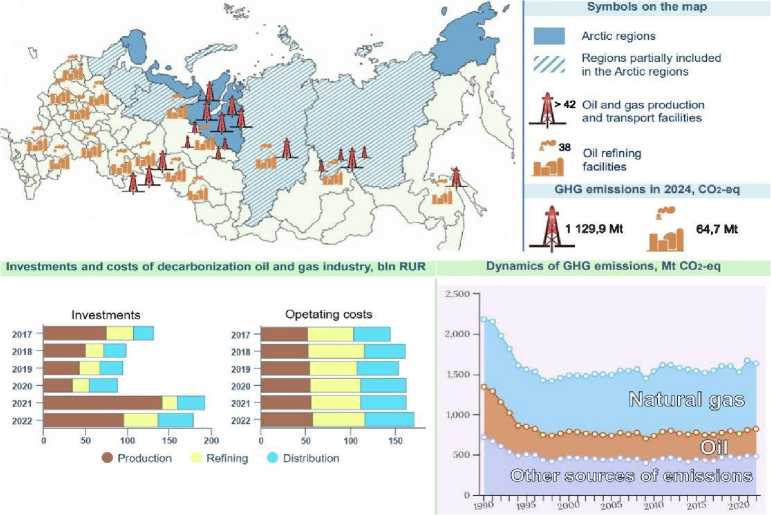
Fig. 1. Trends, emission sources, and decarbonization costs in Russia’s oil and gas sector16.
The majority of oil and gas extraction and transport facilities, identified by Climate TRACE as the largest sources of emissions, are concentrated in Russia’s Arctic region, which is the most vulnerable to climate change. The map in Figure 1 shows that the largest number of oil and gas industry facilities is located in the Siberian, Ural, and Volga Federal Districts, which account for the largest share of GHG emissions in Russia17.
Figure 1 illustrates the trends in investment and operating costs related to decarbonization in the oil and gas sector, based on data from Rosstat’s Russian Statistical Yearbook for 2018–2023. In 2022, the investment structure was dominated by measures for environmental protection and efficient resource use (47.5%), followed by measures for air protection (27.7%) and for the rational use of water resources (15.2%). Within the structure of operating costs, measures for environmental protection, wastewater collection and treatment accounted for 80.3%, while measures for air protection and climate change mitigation accounted for 12.2%. Thus, approximately 250 billion rubles are allocated annually to decarbonization measures in the oil and gas industry. Although no positive trend is observed in operating costs, there has been a marked increase in investment levels in the oil and gas production sector since 2021; this may be linked to the rise in emissions during 2021–2022 compared to previous years, necessitating appropriate measures to reduce emissions and address the resulting environmental damage18.
Research carried out in the study (Sheveleva, Cherepovitsyna, Danilin, 2024) showed that the majority of Russian oil and gas companies set specific targets for reducing GHG emissions in the medium and long term and are progressing towards them at the planned rate. However, an analysis of GHG emission trends for the companies examined in this study (Table 5) reveals fluctuations, a slowdown in the rate of emission reductions, and, in some cases, an increase in GHG emissions.
Table 5
Greenhouse gas emission trends in Russian oil and gas companies19
|
Indicator |
Total GHG emissions (Scopes 1 and 2) million tons of CO₂ equivalent |
Total GHG emissions (Scope 2) million tons of CO₂ equivalent |
||||
|
2021 |
2022 |
2023 |
2021 |
2022 |
2023 |
|
|
Gazprom Group |
243.28 |
213.53 |
209.55 |
13.80 |
11.11 |
11.33 |
|
PJSC Gazprom |
119.87 |
91.02 |
85.06 |
6.08 |
4.02 |
4.17 |
|
Production |
17.95 |
15.63 |
14.12 |
0.35 |
0.31 |
0.34 |
|
Transportation |
93.09 |
66.03 |
60.10 |
3.33 |
1.84 |
1.90 |
|
PJSC Rosneft |
54.20 |
55.80 |
62.47 |
18.50 |
16.10 |
14.68 |
|
PJSC Lukoil |
36.38 |
41.22 |
36.89 |
5.10 |
5.68 |
4.92 |
|
PJSC Novatek |
9.90 |
9.76 |
8.50 |
0.27 |
0.31 |
0.30 |
In this regard, it is of interest to examine the specific decarbonization strategies that Russian oil and gas companies are implementing under current conditions. The main ones are set out in Table 6. The research is based on information from the official websites, annual reports, and sustainability reports of Russian oil and gas companies.
Table 6
Main areas of decarbonization of Russian oil and gas companies20
|
Decarbonization priorities/company |
PJSC Gazprom |
PJSC Rosneft |
PJSC Lukoil |
PJSC Novatek |
|
Energy saving and energy efficiency |
Long-term strategy and program for energy saving and energy efficiency improvement |
Energy saving and energy efficiency improvement program |
Energy saving and energy efficiency improvement program |
Comprehensive program of energy saving measures |
|
Beneficial use of APG |
At least 95% Processing, generation of heat and electricity for internal needs, injection of APG into the gas cap |
By 2030 — 100% Reinjection of APG into the reservoir, storage |
By 2030 — 100% Construction and reconstruction of facilities for gas treatment, transportation, and processing |
By 2030 — 99% Delivery of APG to the main pipeline network and injection into the reservoir |
|
Reduction of methane |
8% reduction in methane |
Reduction to a level below 0.2%. |
Achieving nearzero methane |
Reduction of methane |
-
19 Source: compiled by the authors based on: Social Activity Report 2023. PJSC Gazprom. URL: https://www.gazprom.ru/sustainability/ (accessed 10 February 2025); Sustainability Report 2023. PJSC Rosneft Oil Company PJSC. URL: https://www.rosneft.ru/Development/reports/ (accessed 10 February 2025); Lukoil Group Sustainability Report 2023. PJSC Lukoil. URL: https://lukoil.ru/Sustainability/SustainabilityReport (accessed 10 February 2025); Sustainability Report 2023. PJSC Novatek. URL: https://www.novatek.ru/ru/esg/ (accessed 10 February 2025).
-
20 Source: compiled by the authors based on: Official website of PJSC Gazprom. URL: https://www.gazprom.ru/ (accessed 10 February 2025); Official website of PJSC Rosneft Oil Company. URL: https://www.rosneft.ru/ (accessed 10 February 2025); Official website of PJSC Lukoil. URL: https://lukoil.ru/ (accessed 10 February 2025); Official website of PJSC Novatek. URL: https://www.novatek.ru/ (accessed 10 February 2025); Social Activity Report 2023. PJSC Gazprom. URL: https://www.gazprom.ru/sustainability/ (accessed 10 February 2025); Sustainable Development Report 2023. PJSC Rosneft Oil Company. URL: https://www.rosneft.ru/Development/reports/ (accessed 10 February 2025); Lukoil Group Sustainable Development Report 2023. PJSC Lukoil. URL: https://lukoil.ru/Sustainability/SustainabilityReport (accessed 10 February 2025); Sustainable Development Report 2023. PJSC Novatek. URL: https://www.novatek.ru/ru/esg/ (accessed 10 February 2025).
emissions
emissions
through resourcesaving measures
Participant in the global oil and gas sector initiative “Guiding Principles on Methane Emissions”
emissions from oil and gas production by 2030
emissions by 4% by 2030.
Participant in the global oil and gas sector initiative “Guiding Principles on Methane Emissions”
Use of RES
Construction of several wind farms.
Implementation of solar power plant construction projects, including those designed to supply electricity to the company’s own facilities.
There is experience in working with geothermal resources; the possibility of developing this area is being considered.
Operation of windsolar power plants. Possibility of constructing wind farms to meet the company’s own electricity needs is being considered. Prospects for using solar power plants to supply energy to company facilities are being explored. Participation in projects to convert biomass into energy.
Construction of small-scale solar power plants for the company’s own consumption at industrial facilities (petrol stations and oil depots, on unused land at oil refineries and power stations). The main assets in the wind power sector in Russia are the Kola and Azov wind farms. In total, there are 4 WPPs, 1 small HPP, and 22 SPPs.
Installation of RES at telemechanics sites in areas remote from the main infrastructure. Implementation of a range of works under the WPP project on the Yamal Peninsula.
Development of a wind farm construction project on the Gydan Peninsula. Procurement of RES energy for internal consumption. RES accounts for 2% of total energy consumption.
Application of CC(U)S technologies
The possibility of applying CC(U)S technologies is being studied
The possibility of applying CC(U)S technologies is being studied
Development and implementation of “Huff and Puff” CO 2 injection technology. The project aims to intensify production and increase oil recovery from the reservoirs.
Projects for the long-term underground storage of CO2 on the Yamal and Gydan peninsulas have been developed.
Use / production of low-carbon fuels
Implementation of projects to develop competitive technologies in the hydrogen energy sector. Transition of the company’s own transport fleet to gas-engine fuel.
Improving the development and production of high-tech petroleum products and fuels. Gradual transition of the company’s own transport fleet to low-carbon alternatives.
Implementation of various projects for the production of low-carbon fuels (biodiesel; Teboil Green+).
Development of projects for producing neutral hydrogen.
Russian patents are obtained for large-scale low-carbon ammonia production technologies, including a patent for ammonia cracking to produce pure hydrogen.
Others (gas engine fuel (GEF) — compressed natural gas, liquefied natural gas (LNG), low-sulphur marine fuel, engine oils, lubricants)
Expanding the use of natural gas as GEF.
Implementation of projects for the accelerated development of the gas refueling network.
Retail sales of compressed natural gas; expansion of the refuelling network for environmentally friendly natural gas vehicle fuel.
Production of highly environmentally
Development of LPG (liquefied petroleum gas) production.
Expansion of LPG retail sales as motor fuel (127 filling stations). Production of low-sulfur fuel
Increasing LNG sales volumes on the domestic market, 14 LNG filling stations, expansion of the cryogenic filling station network.
friendly marine fuel with a sulphur content of no more than 0.1%.
Production of engine oils with low sulphate ash content.
with a sulfur content of no more than 0.5%. Development of energy-efficient lubricants production.
Decarbonization of Russian oil and gas companies in the current context: the impact of external and internal factors
The decarbonization of Russian oil and gas companies is driven by external and internal factors. Despite the escalating geopolitical situation, there have been no radical changes in decarbonization policy, as the vast majority of countries, including Russia, have already ratified the Paris Agreement and enshrined their climate goals in legislation. These commitments have become part of a long-term economic strategy: governments have incorporated emission reduction targets into national development plans, energy programs, and investment priorities.
Based on a content analysis of academic literature and the study (Romasheva, Cherepovitsyna, 2023), the key factors shaping the decarbonization strategies of Russian oil and gas companies have been identified and analyzed.
The authors classify external decarbonization factors as conditions beyond the control of individual companies that nonetheless significantly impact their efforts to reduce GHG emissions. The PEST analysis model was used to present the results of this analysis of external factors (Table 7).
The political and legal factors influencing decarbonization in Russia comprise a set of government decisions, regulatory acts, and policy guidelines that affect the process of reducing GHG emissions and the transition to a low-carbon economy. These factors create incentives and constraints for businesses, the public, and other stakeholders, determining the pace and direction of decarbonization, and are considered by the authors to be fundamental.
In Russia, the framework for regulatory and carbon-based regulation of GHG emissions is just emerging; while this presents a challenge, it also offers an opportunity to adopt and adapt best practices from countries that already possess established regulatory frameworks in this area. The foundational document for the regulatory framework governing GHG emissions is the 2021 Law “On Limiting Greenhouse Gas Emissions”. State accounting of GHG emissions is conducted through a GHG inventory and a GHG emissions registry. Constituent entities of the Russian Federation may implement experimental GHG emission regulation systems under the 2022 Law “On Conducting an Experiment to Limit Greenhouse Gas Emissions in Certain Constituent Entities of the Russian Federation”.
Table 7
External factors contributing to the decarbonization of Russian oil and gas companies21
|
Factor |
Essence of the factor |
Interpretation of the factors for Russian oil and gas companies |
|
1. Political and legal factors |
||
|
1.1 International treaties and agreements, including the Paris Agreement on Climate Change |
Regulate cooperation among countries on climate change and adaptation to its impacts, serve as a common prerequisite for decarbonization |
Russia ratified the Paris Agreement on Climate Change on October 4, 2019. As part of its commitments, Russia announced its intention to reduce greenhouse gas emissions by 30% by 2030 compared to 1990 levels. However, the implementation of these commitments and the specific measures to achieve the goals remain a subject of discussion |
|
1.2 Comprehensive climate policy |
Reflects the government’s position and serves as a guideline for industrial companies in developing decarbonization strategies |
Russia’s climate policy is based on the Climate Doctrine, with the priority goal of achieving a balance between greenhouse gas (GHG) emissions and their absorption by 2060. Key areas of focus include developing and implementing measures to adapt to a changing climate, as well as establishing regulatory and economic mechanisms to prevent GHG emissions. Russia’s climate policy has been criticised for the lack of clarity regarding its chosen priorities |
|
1.3 Comprehensive and coherent regulatory framework in the field of achieving carbon neutrality (strategic documents and legislation) |
Encompasses laws, subordinate acts, strategies, and standards aimed at reducing GHG emissions, establishes the institutional framework for decarbonization activities |
The regulatory framework in the field of achieving carbon neutrality in Russia continues to develop, the contents of some documents contradict each other in terms of fragmentation of goals and instruments, many aspects of regulation are still under development. It is expected that a large number of new regulatory acts will be adopted in the coming years |
|
1.4 Use of various fiscal instruments |
Includes a carbon tax, carbon markets/emissions trading systems (ETS), and taxes on conventional energy sources; provides incentives to reduce GHG emissions |
Energy taxes are not used in Russia as a means of reducing emissions. There is no carbon tax in Russia, although discussions are underway regarding its introduction. ETS pilot project is currently being implemented on Sakhalin. The system incentivizes companies to reduce emissions and seek innovative solutions. It is envisaged that the ETS will be implemented in other regions of Russia in the future |
|
1.5 Introduction of a cross-border carbon regulation (CBCR) |
Takes the form of additional charges on imported products based on their carbon intensity; influences corporate decarbonization efforts |
Imposition of CBCR on Russia by various states is under discussion and could have a significant impact on the economy; various response measures are being considered |
|
1.6 Tax, tariff, and penalty-based incentives |
Includes corporate tax reductions, accelerated depreciation, investment tax credits, property tax reductions or exemptions, tax subsidies, preferential rates, and penalties for exceeding permissible limits, thereby incentivizing companies |
Russia has introduced a set of measures primarily aimed at incentivizing the reduction of GHG emissions through the use of RES, the implementation of energy efficiency initiatives and increased use of APG. These measures: • tax credits and subsidies for entities utilizing RES; |
|
to implement specific decarbonization measures |
vehicle tax, preferential electricity tariffs, and tax deductions for electric vehicle;
incentives, subsidies, and grants for the purchase of energy-efficient equipment;
the green bond market, other measures. The scope of these measures is expanding alongside the evolution of legislation |
|
|
1.7 Provision of state support |
Involves provision of subsidies and grants, promotion of green bond issuance, facilitating decision-making regarding decarbonization strategies |
|
|
2. Economic factors |
||
|
2.1 Rise in CO₂ prices |
Determines the extent of a company’s interest in decarbonization activities (the higher the price, the more beneficial it is for the company) |
The impact of rising carbon prices on Russia will depend on a multitude of factors, including the pace and scale of global carbon regulation, as well as development of adaptation and climate policies by the Russian government and business sector |
|
2.2 Implementation of preferential lending programs for decarbonization projects |
Determines the feasibility of obtaining loans on more favorable terms (low interest rates, long repayment periods, grace periods, partial risk coverage) and enhances the effectiveness of decarbonization efforts |
In Russia, preferential lending programs aimed at reducing GHG emissions are currently under development. A number of major banks offer specialized loan products to finance environmental projects |
|
2.3 Refusal by financial institutions to lend to carbon-intensive companies |
Manifests itself in the complete cessation of funding for companies’ carbon-intensive projects; encourages the implementation of various decarbonization initiatives |
In Russia, there are no restrictions on the financing of carbon-intensive companies and projects |
|
3. Technological factors |
||
|
3.1 Maturity of a range of decarbonization technologies |
Determines the level of readiness of technologies aimed at reducing GHG emissions for widespread adoption by various companies; shapes the scale of development for specific decarbonization pathways across different countries |
Russia’s focus on developing traditional emission-reduction technologies, such as energy saving, improved energy efficiency, and the reduction of APG flaring, drives Russian companies to adopt these measures on a large scale |
|
4. Socio-cultural factors |
||
|
4.1 Greening of the oil and gas sector |
Involves stakeholders exerting pressure on companies to reduce GHG emissions, leading to a review of the company’s current strategy towards decarbonization |
The environmental movement in Russia is gaining momentum, with many people expressing concerns about environmental issues linked to the oil and gas industry. There is active public debate on the need to diversify the economy and reduce dependence on oil and gas exports. The environmental movement is expected to be stronger in the future |
|
4.2 Public interest and positive attitude towards various decarbonization initiatives |
Involves public support and understanding of the need to adopt new technologies and change the usual way of life; plays a critical role in the success of various decarbonization initiatives |
Growing interest in renewable energy and energy-efficient technologies in Russia indicates a desire to reduce dependence on fossil fuels |
|
4.3 Support from nonprofit organizations (NPOs) |
involves participation in initiatives aimed at reducing GHG emissions; has a positive impact on decision-making on |
Support for decarbonization in Russia from NGOs is an important but still emerging area. Rising awareness of climate change, increasing international |
|
decarbonization |
pressure, and the advancement of low-carbon technologies are creating favorable conditions for increased NGO activity in this field |
Carbon regulation is implemented through mandatory reporting by companies which, from the start of 2023, produce more than 150,000 tons of GHG emissions in CO₂-eq. per year (from 2025, more than 50,000 tons of CO₂-eq.). An administrative fine ranging from 10,000 to 500,000 rubles may be imposed for late submission of a report or for providing inaccurate data, depending on the legal form of the business entity.
In 2022, a pilot project for GHG emission quotas was launched in the Sakhalin Oblast: exceeding the emissions quota set individually for each organization results in a fine proportional to the excess emissions. The quota level remains fixed from year to year until the end of the experiment (in 2028).
Since 2022, a carbon unit registry has been in operation in Russia, which is an important step towards establishing a system for regulating and trading GHG emissions. This registry is crucial and has been created to account for carbon units generated as a result of climate projects in Russia. The registry contains data on climate projects that facilitate the absorption or reduction of GHG emissions, for the implementation of which carbon units can be obtained. The company may utilize the issued units itself or sell them to third parties.
There is also a set of government incentives for decarbonization in Russia, aimed at utilizing renewable energy sources, improving energy efficiency and increasing the utilization of associated petroleum gas; this makes these decarbonization measures a priority for industrial companies.
However, an analysis of political and legal factors has revealed a lack of unified guidelines and GHG emission reduction targets for companies, including those in the oil and gas sector; this leads to a lack of consistency in GHG reduction targets and in the selection of priority methods for achieving carbon neutrality.
Economic and social factors do not yet have a significant impact on the decarbonization process in Russia, but the influence of society, financial institutions, and NGOs on this process is expected to grow in the future. Technological factors play a significant role in the decarbonization of Russian oil and gas companies. These factors have their own specific characteristics, determined by the level of technological development in a particular area of decarbonization, geographical location, and the structure of the economy. In the fields of renewable energy, carbon capture, utilization and storage (CCUS), energy efficiency and energy storage, there is a certain lag behind global leaders; however, it is already becoming economically viable for Russian oil and gas companies to utilize solar and wind energy to meet their own operational needs.
Internal factors driving decarbonization are those that operate within specific companies and determine the trend towards decarbonization and the implementation of certain strategies. The authors identify the following factors: volume, structure, and quality of reserves (the predominance of hard-to-recover reserves); state participation; geographical distribution of assets; and GHG emissions dynamics (Table 8).
Table 8
Internal factors contributing to the decarbonization of Russian oil and gas companies22
|
Indicator |
PJSC Gazprom |
PJSC Rosneft |
PJSC Lukoil |
PJSC Novatek |
|
Hydrocarbon reserve volume |
Very significant |
Very significant |
Significant |
Significant |
|
Hydrocarbon reserve composition |
Predominance of natural gas reserves |
Predominance of oil reserves |
Predominance of oil reserves |
Predominance of natural gas reserves |
|
Prevalence of hard-to-recover reserves |
Yes |
Yes |
Yes |
Yes |
|
Asset geography |
Very extensive The Yamalo-Nenets Autonomous Okrug (YNAO) is a key region for gas production |
Extensive The majority of assets are concentrated in Russia (KhMAO, YNAO). New regions, such as the Arctic and Eastern Siberia, are being actively developed |
Extensive Main activities are carried out across four federal districts of the Russian Federation |
Concentrated The main deposits and licence areas are located in the Far North, in the Yamalo-Nenets Autonomous Okrug and the Krasnoyarsk Krai |
|
State participation |
Predominant |
Predominant |
None |
Insignificant |
|
Dynamics of GHG emissions (Table 5) |
There has been a decline; however, the rate of decline has slowed, due in part to a reduction in the volume of hydrocarbon production and transport |
Increase in Scope 1, decrease in Scope 2 |
Fluctuations in both Scope 1 and Scope 2 (increase in 2022 compared to 2021, decrease in 2023 compared to 2022) |
Reduction in Scope 1, fluctuations in Scope 2 (increase in 2022 compared to 2021, decrease in 2023 compared to 2022) |
The study reveals that all the companies under consideration aim to significantly reduce emissions in the medium and long term; however, each company has its own focus in terms of decarbonization, which is driven by internal factors. Based on an analysis of these factors, the authors suggest that:
-
• increases, fluctuations, and decreases in the rate of reduction of absolute emissions stimulate companies to intensify various decarbonization measures within their operations;
-
• significant hydrocarbon reserves encourage companies to implement decarbonization measures aimed at reducing Scope 1 and 2 emissions and to utilize traditional decarbonization methods (such as the beneficial use of APG and the reduction of methane leaks). At the same time, low reserves are driving the faster and more extensive implementation of projects involving alternative energy, low-carbon fuels, and
-
22 Source: compiled by the authors based on: Social Activity Report 2023. PJSC Gazprom. URL: https://www.gazprom.ru/sustainability/ (accessed 15 April 2025); Sustainability Report 2023. PJSC Rosneft Oil Company. URL: https://www.rosneft.ru/Development/reports/ (accessed 15 April 2025); Lukoil Group Sustainability Report 2023. PJSC Lukoil. URL: https://lukoil.ru/Sustainability/SustainabilityReport (accessed 15 April 2025); Sustainability Report 2023. PJSC Novatek. URL: https://www.novatek.ru/ru/esg/ (accessed 15 April 2025).
-
Scope 3 emission reductions;
-
• predominance of gas within the hydrocarbon reserve’s structure determines measures to reduce methane leaks and projects for producing natural gas-based fuels, whereas a predominance of oil and hard-to-recover reserves results in a reduction in the flaring of associated gas and the introduction of energy efficiency and energy-saving measures;
-
• broad geographical spread of assets enables the use of alternative energy sources to meet internal energy needs;
-
• significant state shareholding results in a dependence on political factors, as well as the opportunity to trial new technologies not previously used in the sector.
Furthermore, the most important internal factor in decarbonization is the company’s financial position and economic performance, which either create favorable conditions for decarbonization or limit its scale. At the same time, research into the financial aspects of decarbonization, specifically regarding the stimulation of domestic investment sources, reveals that the traditional capital-raising model, based predominantly on debt financing and budgetary subsidies, faces constraints in the context of high base rates and sanctions in external markets. Consequently, the mobilization of domestic investment resources, funds from institutional investors, and public-private partnership instruments are becoming particularly relevant. An analysis of decarbonization project implementation and external factors affecting the oil and gas sector indicates that mechanisms for tax incentives to encourage the reinvestment of profits into low-carbon technologies are insufficiently developed, as are the markets for green bonds and carbon credits in Russia.
Thus, both external and internal factors shape the specific characteristics of decarbonization in Russia’s oil and gas companies.
Conceptual framework for decarbonization of Russian oil and gas companies
Decarbonization of Russian oil and gas companies is a complex and unique challenge driven by both global trends (the Paris Agreement, the international community’s concern over rising GHG emissions) and the specific characteristics of the Russian economy, such as dependence on fossil fuels, infrastructure geared towards the extraction, transport, and processing of hydrocarbons, the absence of clear decarbonization targets, and the underdevelopment of a number of decarbonization technologies. Nevertheless, despite current geopolitical instability, decarbonization remains critical for Russian oil and gas companies for several reasons. Firstly, the global trend toward reducing carbon footprints is intensifying, directly impacting access to international markets and investors, for example in Asia, where environmental regulations are becoming stricter. Secondly, domestic regulation in Russia, including the low-carbon development strategy until 2050, incentivizes companies to modernize in order to avoid penalties and maintain competitiveness. Thirdly, the implementation of decarbonization measures improves energy efficiency and reduces operating costs, while also opening up new business opportunities, such as
SOCIAL AND ECONOMIC DEVELOPMENT
Natalya V. Romasheva, Diana M. Dmitrieva, Alexey M. Fadeev, Angelica A. Ordina … the production and sale of hydrogen.
Leading Russian oil and gas companies are actively implementing measures aimed at reducing methane emissions, improving energy efficiency, utilizing associated petroleum gas, and producing and using low-carbon fuels. In line with their strategic objectives, all these companies are exploring opportunities to produce various types of hydrogen and ammonia, and are forecasting market trends for low-carbon and zero-carbon fuels.
A number of companies (such as PJSC Lukoil) are actively participating in renewable energy projects and utilizing renewable energy to meet their own power needs. The other oil and gas companies examined in the study show limited activity regarding renewable energy use: they are implementing small-scale projects to develop renewable energy for internal consumption and are assessing the potential for applying renewable energy at production facilities.
As previously noted, the majority of Russian oil and gas extraction and transportation facilities are located in the North and the Arctic; considering that reducing greenhouse gas emissions is an ongoing challenge, a key objective for these companies is the further and more active implementation of various decarbonization measures, taking into account both external and internal factors.
Key principles underlying the decarbonization of oil and gas companies include a phased and realistic approach, technological neutrality, economic feasibility, and a well-developed regulatory framework.
Specific decarbonization strategies and technologies will vary depending on the geographic location, available resources, and specific operational characteristics of each company.
Conclusion
Against a backdrop of rising energy consumption, oil and gas companies need to adapt to the growing pressure of climate trends by enhancing their environmental responsibility. In this context, the decarbonization of oil and gas companies’ operations, both globally and specifically in Russia, is currently a subject of active discussion within academic and business spheres.
Despite the relevance of the issue, a vision for decarbonization is only taking shape within the academic community; consequently, there are some differences in the interpretation of this concept, the most common of which include: a process of reducing carbon intensity; a target state of a system with no GHG emissions; a stage in the energy transition; a comprehensive system of methods and approaches for reducing emissions.
The Russian oil and gas sector is characterized by significant potential due to large reserves and fields; however, the exploitation of these fields is complicated by their location in the Arctic — a region with a highly sensitive ecosystem. Russian oil and gas companies are already actively implementing decarbonization measures, but analysis revealed a lack of standardized guidelines and targets for GHG emission reductions, resulting in a fragmented approach to setting such goals across the industry.
A study of the influence of external and internal factors shaping the main trends in the decarbonization of Russian oil and gas companies has shown that, despite facing similar external conditions, their priority strategies for achieving carbon neutrality vary. The research identified the influence of internal factors (such as reserve volume, structure, and quality; state ownership; asset geography; and GHG emission trends) on the formulation and implementation of specific decarbonization strategies by Russian oil and gas companies. The authors recognize that this list of factors is not exhaustive and that the influence of other variables, as well as the interdependence of the factors examined, cannot be ruled out; furthermore, the study is subject to limitations regarding the sample size and data availability.
Future research could focus on a more detailed analysis of how individual factors influence the choice of decarbonization strategies and on developing decarbonization mechanisms for Russian oil and gas companies, taking into account their specific characteristics.
