
Кто такой политолог? Структура системы политологического образования на примере ведущих университетов России
Бесплатный доступ
В статье рассматривается структура бакалаврских программ по политологии в ведущих университетах России и их влияние на формирование профессиональной идентичности выпускников. С применением инструментов тематической кодировки учебных планов бакалаврских программ 7 ведущих по профилю университетов России с последующей их кластеризацией выявлены два доминирующих профиля образовательных траекторий – прикладной и специализированный политологический. Авторы показывают, что различия в институциональной специфике вузов формируют отличающиеся модели подготовки политологов, задавая вариативность профессиональных компетенций на рынке труда.
Похожие статьи в разделе Высшее образование. Университеты. Академическое обучение
Короткий адрес: https://sciup.org/170211804
IDS: 170211804
Who Is the Graduate of Political Science? The Structure of Political Science Education: A Case Study of Leading Russian Universities
The article examines the structure of bachelor's political science programs at leading Russian universities and their implications for the formation of graduates’ professional identity. Employing thematic coding methodology, authors analyze curriculum structures of seven top-ranked Russian universities, categorizing academic disciplines into distinct blocks including theory, methods, applied political science, and specialized political science disciplines. The research employed k-means clustering analysis, revealing two primary educational clusters. The study reveals that Russian political science education operates through a dual model responding to both academic community demands for fundamental training and labor market requirements for specialized practical skills. Universities with strong theoretical traditions prioritize research competencies and expert knowledge production, while institutionally specific universities orient toward government service and political consulting careers. As a result, although political scientists possess similar theoretical foundations, their professional competencies differ significantly based on the institutional characteristics of their educational programs. This diversity indicates political science education's adaptability to different labor market demands, from academic to governmental-administrative sectors. The research concludes that current differentiation represents an adaptive response rather than a systemic problem. Thus, the prospects for future development include legitimizing this diversity while upholding theoretical rigor and ensuring practical applicability. These findings enhance the understanding of how educational content shapes professional identity within contemporary Russian political science education.
Текст научной статьи Кто такой политолог? Структура системы политологического образования на примере ведущих университетов России
Введение . Принято считать, что институционализация политической науки в России началась с момента создания в 1955 г. профессионального сообщества – Советской ассоциации политической науки. За 70-летнюю историю (в 1991 г. преемницей стала Российская ассоциация политической науки) академическое сообщество политологов сформировало научные школы с уникальными теоретическими и методологическими традициями, исследовательские структуры и научные журналы с международным признанием.
Современное политологическое образование в России является неотъемлемой частью и результатом процесса институционализации отечественной политической науки: возникновение профильных кафедр, научных структур и диссертационных советов шло параллельно с открытием образовательных программ по политологии и набором студентов бакалавриата, магистратуры и аспирантуры, формированием профильных молодежных научных сообществ [Зарипов, Алексеев 2025; Кошкин 2024]. Так, на конец 2025 г. в России подготовка специалистов ведется по более чем 60 бакалаврским программам по политическим наукам. И если вопросы становления политологии как науки стали отдельным направлением исследований, то профильное образование в высшей школе, напротив, является скорее предметом экспертных и общественных дискуссий.
Существующие немногочисленные исследования политологического образования показывают, что оно влияет на формирование специфических профессиональных компетенций [Бронников, Цыбряева 2021], научных интересов, а также осуществляет социализацию обучающихся [Алексеев, Копылова, Помигуев 2022]. Разное отношение к тому, что представляет собой политология как направление обучения выражается, например, в неопределенности портрета «политолога» в медийной и общественной среде [Малинова 2015: 226]. Это сформировало перед отечественным образованием нетривиальную задачу: с одной стороны, социально-гуманитарный характер политологии предполагает освоение студентом дисциплин, связанных с политической теорией и категориями политической науки, с другой – специфика российской высшей школы предполагает, что результатом обучения должен стать выход на рынок труда специалиста с набором компетенций, перечисленных в Федеральном государственном образовательном стандарте (далее – ФГОС). Остается не до конца понятным, как университеты находят компромисс и везде ли выбранное решение, которое во многом формирует идентичность политолога, является одинаковым?
Подобный вопрос приобретает комплексный характер с учетом специфики знания, связанного с необходимостью регулярного пересмотра парадигм и подходов к анализу общественных процессов. Подобные обсуждения ведутся в отношении не только образования, но и самой политической науки. Как отмечает А.Ю. Мельвиль, «академическая наука не поспевает за публицистикой и, несмотря на обилие информации в информационно-новостном потоке, все еще мало предпринимается отстраненных попыток осмысления и концептуализации новой реальности» [Мельвиль 2024: 17]. Подобное он увязывает с «промежуточным» состоянием политологии, у которой временно отсутствуют крупные теоретико-методологические парадигмы, способствующие всеобъемлющей аналитической деятельности [Мельвиль 2024: 19]. Во многом подобной оценке созвучна позиция М.В. Ильина, согласно которому академическая рутина сосредоточивается на «ярких элементах» политической проблематики, тогда как «устойчиво воспроизводимые» структуры остаются вне поля зрения [Ильин 2024: 9].
Можно говорить, что дисциплины, объем и особенности их освоения на программах по политологии определяют знания и методы и, как следствие, формируют профессиональное мировоззрение выпускников-политологов. Этот перечень регламентируется ФГОС и нормативными актами Федерального учебно-методического объединения (далее – ФУМО) в сфере высшего образования по УГСН 41.00.00 «Политические науки и регионоведе-ние», которые разрабатываются совместно сообществом политологов и орга- нами государственной власти. В этой особенности заключается отдельный интерес – программы отражают позицию образования как бюрократического института, в котором сложилось устойчивое представление о направлении подготовки «Политология». Описанные документы представляют основные контуры профессии, но не объясняют в полной мере устройство политологического образования. Более того, по самим стандартам объем обязательной части – части, которая формирует прописанные во ФГОСе компетенции, – в программе должен составлять не менее 40%. В этой связи вновь возрастает значение конкретного университета, поскольку одинаковые по названию курсы могут реализовываться по-разному [Уразбаев 2024]. Поэтому особое внимание стоит уделить не просто анализу программ и общим тенденциям, но и их сравнению.
В рамках настоящего исследования предпринимается попытка преодолеть существующий барьер в определении портрета «политолога» с точки зрения структуры образовательных программ российских университетов. В качестве предмета эмпирического анализа были выбраны программы очного бакалавриата по направлению «Политология» как базового уровня высшего образования университетов из списка QS Rating 2025 г. по направлению Politics до 300-го места. В их число входят МГУ имени М.В. Ломоносова, МГИМО, НИУ ВШЭ, РУДН имени П. Лумумбы, СПбГУ, РАНХиГС и УрФУ имени Б.Н. Ельцина. QS Rating формируется на основании показателей академической репутации, репутации работодателя, числа цитируемых статей, индекса Хирша и международной исследовательской сети. Предполагается, что во многом именно эти ведущие университеты по направлению «Политология» своими показателями и стандартами образовательной деятельности определяют облик политологического сообщества в России и образ выпускников на рынке труда.
Методология . Собранные данные о содержании учебных планов были закодированы и классифицированы по группам. Для сравнительного анализа содержания образовательных программ была разработана система тематической кодификации учебных планов. Каждая из учебных дисциплин вручную относилась к одной из ранее выделенных категорий на основании ее названия и содержания рабочих программ. Кодировка проводилась авторами вручную, в результате все дисциплины были сгруппированы в несколько крупных блоков:
– общие навыки и компетенции: «Философия», «История России», «Иностранный язык» и т.д. – дисциплины, регламентированные ФГОС;
– теория: например «История политических учений», «Политическая философия» и т.д.;
– история;
– методы: блок включает в себя специализированные курсы по методам политологических исследований;
– международные отношения;
– прикладная политология: дисциплины, ориентированные на развитие компетенций в сферах GR и PR в политике, политического консалтинга, публичной политики и т.д.;
– смежные общественные науки: блок дисциплин из социальных наук, но не являющихся сугубо политологическими: «Социология», «Психология», «Религиоведение» и т.д.;
– специальные политологические дисциплины, интегрирующие теорию и методы, формирующие у обучающихся продвинутые политологические компетенции: «Сравнительная политология», «Политическая социология», «Политическая психология»;
-
– российская политика;
-
– прочие, не являющиеся сугубо политологическими, но дополняющие профильные курсы и развивающие универсальные компетенции.
На этапе первичной кодировки каждая из дисциплин учебного плана была отнесена строго к одной из указанных категорий (в спорных случаях – исходя из преобладающей тематики). На основе категоризации были рассчитаны количественные показатели, отражающие структуру содержания каждого из учебных планов. Для каждой образовательной программы определялась доля дисциплин каждого типа – процентное соотношение числа курсов, отнесенных к определенной категории. При расчете долей все учебные дисциплины учитывались равнозначно, независимо от их трудоемкости в зачетных единицах: доли отражают структуру набора дисциплин, а не распределение учебных часов.
В ходе кластеризации методом k -средних были выделены типологические группы образовательных программ по политологии относительно их содержательного профиля на основе наиболее представленных категорий долей предметов в программах [Lund, Ma 2021]. В результате анализа удалось выделить два ярко выраженных кластера: вузы с прикладной/междисциплинарной ориентацией (1) и вузы со специальной политологической ориентацией (2).
Результаты . Стремясь сформировать многогранный профиль и образ «политолога», современное российское политологическое образование уделяет внимание изучению как прикладных политологических дисциплин, развивающих навыки политического консалтинга [Кошкин, Жидких, Новиков 2018: 35], так и дисциплин, формирующих универсальные, общепрофессиональные и базовые компетенции, обеспечивающие их применимость в смежных профессиональных областях [Гукова, Бойко, Половнева 2021: 242]. Значимое место в рассматриваемой системе отводится обучению студентов навыкам методико-аналитической деятельности, включая математико-статистические методы анализа [Бронников, Цыбряева 2021: 135].
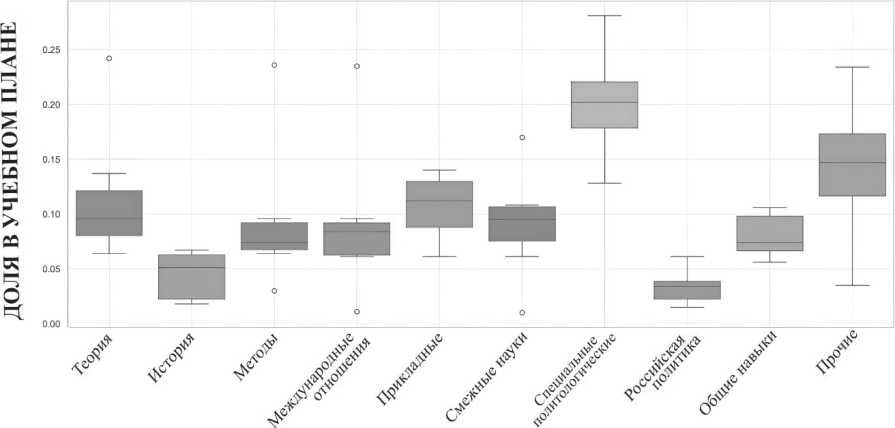
В рамках исследования для демонстрации содержания планов учебных дисциплин в программах по политологии построены «ящики с усами» ( Box Plot ), отражающие распределение долей предметов по сравниваемым образовательным программам. На рис. 1 представлена информация о результатах распределения долей учебных дисциплин в рассматриваемых университетах.
Результаты распределения демонстрируют, что доминирующая роль в учебных планах отводится блоку специальных политологических дисциплин (далее – спецдисциплины). Это можно объяснить многоуровневым характером политической науки, которая сочетает в себе различные направления анализа политического пространства – от политической психологии, политической социологии до политической географии. Ключевой особенностью предметов блока является их методологический плюрализм, позволяющий опираться в политологической деятельности на различные подходы – от неомарксизма, неофункционализма до постструктурализма [Попова 2011: 19]. Спецдисциплины выполняют роль связки между политической теорией и политической практикой, позволяя сопоставлять друг с другом различные элементы политического пространства и делать это, соединяя политико-философские основания с эмпирическими данными [Ильин 2001: 166]. Большинство курсов соответствует формату проектно-практического обучения в области политологии, ориентируя обучающихся на работу с различ-
РАСПРЕДЕЛЕНИЕ ДОЛЕЙ ПРЕДМЕТОВ В ПРОГРАММАХ ПОЛИТОЛОГИИ В СПБГУ, ВШЭ, МГУ, МГИМО, РАНХИГС, РУДН, УРФУ
ПРЕДМЕТЫ
Выполнено авторами в Python
Источник: составлено авторами
Рисунок 1. Распределение долей предметов программ политологии по вузам ными типами данных, подготовку академических исследований, аналитических записок и отчетов. Все это напрямую конвертируется в профессиональные компетенции и позволяет выпускникам работать в широком круге сфер – от академических исследований, аналитической деятельности до политического консалтинга.
С учетом автономии вузов каждый университет формирует собственные спецдисциплины, опираясь на кадровые и теоретико-методологические ресурсы своих политологических школ. Ориентируясь на список дисциплин из Примерной основной образовательной программы по направлению 41.03.04 «Политология», разработанной ФУМО, авторы отнесли к основным курсам блока следующие: «Политическая социология» (везде, кроме УрФУ), «Сравнительная политология» (присутствует во всех семи университетах), «Политическая психология» (везде, кроме СПбГУ), «Политическая культура» (СПбГУ, МГИМО, РАНХиГС, РУДН, УрФУ), «Политические коммуникации» (везде, кроме МГИМО и СПбГУ), «Политическая конфликтология» (СПбГУ, МГУ, РАНХиГС), «Избирательные системы и избирательный процесс» (МГИМО, МГУ, РАНХиГС, РУДН), «Политическая география» (везде, кроме МГУ, РАНХиГС и УрФУ).
Для выявления доминирующего блока дисциплин в каждом из университетов был использован кластерный анализ. В таблице 1 представлена информация о доминирующих предметах.
Полученные результаты показывают, что в учебных планах СПбГУ, МГУ имени М.В. Ломоносова, МГИМО, НИУ ВШЭ и РУДН имени П. Лумумбы спецдисциплины представлены заметно шире, чем другие блоки. Это согласуется с устоявшимся в академической литературе представлением о «большой четверке» ведущих политологических факультетов в России [Окунев 2016: 133]. Они, опираясь на свою мощную теоретико-методологическую и кадровую базу, имеют возможность читать обучающимся больше подобных курсов, отвечающих за фундаментальную подготовку политологов.
Таблица 1
Результаты кластерного анализа методом k -средних, N = 66*
|
Кластер 1 |
Кластер 2 |
|
|
кластер |
вузы с прикладной ориентацией |
вузы с специальной политологической ориентацией |
|
университеты |
РАНХиГС; УрФУ |
СПбГУ; РУДН; МГУ; МГИМО; НИУ ВШЭ |
|
преобладающие доли |
Прикладная политология (0,16) |
Специальные политологические дисциплины (0,21) |
Выполнено авторами в Python Источник: составлено авторами
Вместе с этим результаты демонстрируют доминирование прикладных политологических дисциплин в РАНХиГС и УрФУ. В РАНХиГС подобное объясняется институциональной спецификой образовательной организации: кафедра политологии, как и Академия в целом, традиционно ориентирована на взаимодействие с органами государственной власти и занимается подготовкой специалистов в сфере государственной службы [Тимофеева, Климова 2022: 278]. В свою очередь, УрФУ, как и практически вся уральская школа политических наук, ориентирован на устойчивую связь с региональной политической практикой, что определяется участием представителей политологического сообщества в электоральных кампаниях и политическом консалтинге. Это во многом и объясняет доминирование практикоориентированных курсов в учебных планах УрФУ [Фишман 2019: 61].
Для каждой образовательной программы была построена нормированная диаграмма с распределением дисциплин по описанным выше категориям (см. рис. 2), что позволяет рассмотреть их соотношение и разброс в учебных планах.
В результате мы видим, что при незначительной разнице во всех анализируемых вузах присутствуют все категории. В то время как в СПбГУ, МГУ, МГИМО, НИУ ВШЭ и РУДН доминирует формирование профессиональных аналитических компетенций, программы по политологии в УрФУ и РАНХиГС нацелены на подготовку управленческих кадров. При этом есть программы с доминированием специфических направлений. В МГУ, СПбГУ и МГИМО делается упор на теорию политической науки: в РУДН главным фокусом являются международные отношения, в НИУ ВШЭ широко представлены курсы по изучению различных методов исследования, в УрФУ – это политический консалтинг и региональная политика, в РАНХиГС – фокус на государственное управление как будущую сферу работы выпускников. Наименее представленными категориями являются «История» и «Российская политика». Это может быть связано с тем, что более углубленные курсы по российскому политическому контексту чаще предлагаются в магистерских программах, целенаправленно сфокусированных на изучении российской политики, а также в бакалаврских программах региональных вузов. В последнем случае это может объясняться более тесными связями университетов с региональными органами государственной власти как ключевыми заказчиками – работодателями. Несмотря на то что блок предметов «История» имеет небольшую долю в программе обучения, базовые курсы
НОРМИРОВАННОЕ РАСПРЕДЕЛЕНИЕ ДОЛЕЙ ПРЕДМЕТОВ ПО ВУЗАМ
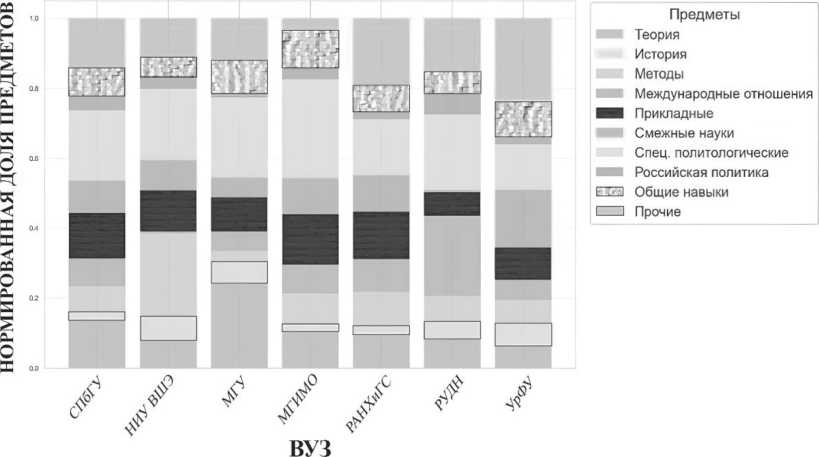
Выполнено авторами в Python Источник: составлено авторами
Рисунок 2. Нормированное распределение долей предметов программ
политологии по «Истории»/«Истории России» и курс «Основы российской государственности» были учтены в группе «Общие навыки», т.к. эти предметы регламентированы ФГОС и присутствуют в каждой образовательной программе высшего образования.
Дискуссия . Доминирование спецдисциплин в учебных планах подтверждает тезис о формировании у студентов целостного профессионального мировоззрения, основанного на синтезе теоретического знания и методико-аналитического инструментария. Это соответствует запросу на подготовку специалистов, способных не только к интерпретации политических процессов, но и к самостоятельному производству экспертного знания. Однако выявленное доминирование поднимает вопрос о балансе между фундаментальной подготовкой и узкопрофессиональными компетенциями. Несмотря на заявленную в образовательных стандартах ориентацию на формирование универсальных навыков, учебные планы по факту воспроизводят модель, в которой ядро профессиональной идентичности политолога конструируется вокруг владения специализированным понятийным аппаратом и методами исследования.
Кластеризация программ на две группы – со специальной политологической и прикладной ориентациями – отражает институциональное разнообразие и актуализирует проблему единства профессионального поля. Фактически наблюдается формирование двух различных моделей профессионализации: одна ориентирована на воспроизводство экспертного и академического сообщества и углубленную исследовательскую деятельность (кластер МГУ, СПбГУ, НИУ ВШЭ, МГИМО, РУДН), другая – на интеграцию в прикладные сферы государственного управления и политического консалтинга (кластер РАНХиГС, УрФУ). Подобная дивергенция может приводить к разному пониманию студентами своей идентичности как политолога, поскольку профессиональная идентичность формируется под сильным влиянием локальных институциональных контекстов и ресурсов конкретного вуза.
Проведенный анализ содержания образовательных программ выявляет особенности современного этапа развития политологического образования в России. С одной стороны, наблюдается стремление к формированию профессиональной идентичности через углубленное изучение различных дисциплин. С другой – очевидны разные подходы к узкопрофессиональной подготовке. Перспективы развития сложившейся ситуации связаны не с поиском универсальной модели, а с развитием вариативных образовательных стратегий. Речь идет о таком проектировании учебных планов, которое позволило бы сохранить фундаментальную теоретико-методологическую подготовку как основу профессионализма, но при этом обеспечить гибкую адаптацию содержания программ к запросам конкретных секторов политического рынка и региональной специфики. Это предполагает развитие логики, в которой университеты, опираясь на свои сильные стороны, формируют собственные образовательные модели, сочетающие общее ядро политологического знания с углубленной специализацией, востребованной на практике.
Заключение . Проведенное исследование демонстрирует работу дуальной модели профессиональной подготовки специалистов по направлению «Политология». С одной стороны, подтверждается доминирующая роль специальных политологических дисциплин, формирующих ядро профессиональной идентичности и обеспечивающих освоение комплекса теоретических и методических компетенций. С другой – выявленная в результате кластерного анализа дифференциация между вузами с фундаментальной научной ориентацией и университетами, ориентированными на прикладные траектории подготовки, свидетельствует о наличии разного понимания политолога как специалиста на рынке труда.
Сложившаяся ситуация является ответом системы отечественного образования на запросы со стороны академического сообщества в фундаментали-зации подготовки и на требования рынка труда в формировании узкопрофессиональных прикладных навыков. Учебные планы транслируют разные представления о профиле политолога и выступают инструментом профориентации, производя отличимые типы профессиональной идентичности уже на уровне бакалавриата. Подобная вариативность выступает в качестве индикатора адаптивности политологического образования к разным запросам рынка труда – от академических до государственно-управленческих. В целом, политолог обладает сопоставимым теоретическим минимумом знаний, но его профессиональные навыки существенно зависят от институциональной специфики образовательных программ.
Перспективы развития политологического образования видятся в легитимации сложившегося разнообразия. Для университетов научно ориентированного кластера это может означать усиление историко-теоретического блока и методов анализа данных. Для вузов прикладного профиля – углубление кооперации с экспертно-аналитическим сообществом и органами власти. Преодоление разрыва между академическим знанием и публичной сферой требует не отказа от фундаментальных основ, а их адаптации к задачам производства актуального экспертного знания о современной России.
Авторы осознают ограничения исследования, поскольку анализ бакалаврских программ по политическим наукам в 7 ведущих университетах России не позволяет в полной мере описать особенности структуры политологического образования во всей стране. Именно поэтому перспектива дальнейшего исследования заключается в комплексном изучении образовательных программ по политологии во всех российских университетах.
