
Methodological and Institutional Gaps in the Development Strategies of the Russia’s Arctic Regions
Журнал: Arctic and North @arctic-and-north
Рубрика: Social and economic development
Статья в выпуске: 64, 2026 года.
Бесплатный доступ
The article presents a comparative analysis of key federal and regional strategic documents defining the development trajectories of the regions of the Arctic Zone of the Russian Federation. The study is based on a systematic documentary analysis combined with comparative mapping of strategic goals, priorities, and indicators, as well as an assessment of natural resource management and environmental protection mechanisms, including provisions aimed at safeguarding the rights of the indigenous small-numbered peoples of the North. Particular attention is paid to the compliance of regional strategies with the principles of a risk-based forecasting approach and multi-level integration established by the Decree of the President of the Russian Federation No. 633 of November 8, 2021. The results reveal a common set of priorities related to sustainable territorial development, environmental and social security, and economic resilience, alongside persistent systemic gaps that hinder their effective implementation. The most significant shortcomings include insufficient coordination between federal and regional levels, absence of unified indicators and monitoring procedures, limited consideration of climate and environmental risks, and weak involvement of local communities and indigenous peoples in strategic planning processes. The authors emphasize that the implementation of the provisions of Decree No. 633 requires not only the formal adjustment of strategic documents but also the development of unified methodological approaches to goal-setting, KPI formation, and the organization of evidence-based monitoring. The study proposes the development of a unified system of indicators, strengthening of inter-level coordination, institutionalization of climate risk assessment, and expansion of mechanisms for the participation of indigenous peoples. The research is of an applied nature and is intended for use in public administration practice.
Короткий адрес: https://sciup.org/148334382
IDS: 148334382 | УДК: 332.1(985)(045) | DOI: 10.37482/issn2221-2698.2026.64.58
Текст статьи Methodological and Institutional Gaps in the Development Strategies of the Russia’s Arctic Regions
DOI:
The Arctic Zone of the Russian Federation (AZRF) is a territory of exceptional geopolitical, economic, and environmental significance. The region is rich in hydrocarbons and mineral resources, provides the state with strategic depth and influences national security, while simultaneously being home to unique and highly sensitive ecosystems (Goldin, 2014). Intensive development of its natural resource potential, combined with the growing impacts of climate change, creates a range of serious challenges: from environmental threats to technological and social complexities, including issues relating to the preservation of traditional ways of life and ensuring the rights of indigenous peoples of the North (Panikar, 2023).
In such circumstances, a key task of strategic management for the development of the AZRF is finding and maintaining a balance between economic development, environmental sustainability, and social well-being (Panikar, Shaparov, 2016). This task is addressed through a consistent, integrated, and long-term strategic planning system that defines a hierarchy of goals, a coordinated set of objectives, and a range of implementation tools (Sokolova, Trufanova, 2025). The effectiveness of such mechanisms requires a comprehensive set of documents that ensure the coordination of actions across all levels of governance and stakeholders — from the federal center to the constituent entities of the Russian Federation and the corporate sector (Podoplekin, Bestuzheva, 2014).
The legal and organizational foundations of the modern strategic planning system in the Russian Federation were legislatively enshrined in the Federal Law No. 172-FZ of June 28, 2014, “On Strategic Planning in the Russian Federation”1. This law introduced uniform principles for structuring a multi-level system of planning documents, defined the composition of strategic instruments and established regulations governing their development, implementation, and monitoring. Within its framework, a set of tools is being developed, such as strategic forecasts, concepts, doctrines, state programs, and territorial planning schemes, designed to ensure the continuity and consistency of strategic initiatives.
An important subsequent step was the approval of Decree of the President of the Russian Federation No. 164 of March 5, 2020, “On the Fundamentals of State Policy of the Russian Federation in the Arctic until 2035”2, which formed the basis for the priority development agenda of the Arctic Zone of the Russian Federation. This document outlined national interests and strategic priorities regarding the region’s socio-economic development, resource development, infrastructure modernization (including the operation and development of the Northern Sea Route), environmental safety, and strengthening the scientific and technological base.
However, the strategic landscape of the Arctic extends far beyond the documents mentioned above and includes numerous additional federal and regional strategies (Morozov, Kondral, 2014), state programs (including the State Program “Socio-Economic Development of the Arctic Zone of the Russian Federation”3), and territorial planning frameworks. This multitude of regulatory and policy documents is intended to provide comprehensive coverage of the region’s challenges and objectives, but simultaneously creates risks of fragmentation, duplication, and regulatory conflicts, as well as functional gaps in the implementation of initiatives.
The existence of a regulatory framework and policy documents does not guarantee the achievement of stated objectives. A key challenge is ensuring consistency and synergy between numerous strategic documents. Contradictions may arise in the formulation of targets (when inconsistent indicators are set for the same territories or sectors), in financing mechanisms (when resource allocation for state programs does not correspond to their targets), in the consideration of climate and environmental risks, and in the distribution of powers and responsibilities between federal agencies, constituent entities of the Russian Federation, and municipalities. All of this slows down the implementation of initiatives and reduces the efficiency of government spending.
Under these conditions, regular and systematic monitoring of the life cycle of strategic documents — from their development and approval to implementation stages, evaluation of achieved results, and introduction of adjustments — becomes crucial. Continuous monitoring makes it possible to identify systemic bottlenecks, assess the appropriateness of priorities in a rapidly changing external environment, and optimize the allocation of resources. Thus, monitoring transforms strategic planning from a static, formal process into an adaptive management mechanism capable of promptly responding to new challenges and ensuring sustainable development in the Arctic Zone (Zaikov, Kondratov, Kudryashova et al., 2019).
In this regard, a reasonable question arises: to what extent are the regional strategies of the Arctic Zone’s constituent entities aligned with the key priorities set out in federal documents (primarily in Decree No. 633)? The authors formulated the following research hypothesis: the practical institutionalization of federal priorities in regional strategies at the level of the Arctic Zone of the Russian Federation is fragmented in nature and is accompanied by methodological and resource gaps, which significantly reduces the effectiveness of state policy implementation in the region.
Research methodology
This article presents the results of a comparative analysis of strategic planning documents regulating the development of the Arctic Zone of the Russian Federation (Lipina, Almieva, Balezina et al., 2025). The aim of the study is to conduct a systematic assessment of the degree of consistency, comprehensiveness, and operational effectiveness of the current strategic framework for the AZRF. The methodological approach is based on a set of interdisciplinary analytical procedures applied to key federal and regional legislative acts (including Federal Law No. 172-FZ “On Strategic Planning in the Russian Federation”, Presidential Decree No. 164 “On the Fundamentals of State Policy of the Russian Federation in the Arctic until 2035”, relevant state programs, regional strategies, and territorial planning schemes). The provisions of Presidential Decree No. 633 “On Approval of the Fundamentals of State Policy in the Field of Strategic Planning in the Russian Federation” were used as the regulatory framework for comparing federal and regional documents. A comparison of the key areas outlined in the Decree made it possible to assess the extent to which federal priorities have been institutionally transmitted to the level of the constituent entities of the Arctic Zone of the Russian Federation. The following methodological tools were used: regulatory analysis, structural and content analysis of document texts, comparative analysis, and a matrix comparison technique, which allows for the visual identification of similarities, discrepancies, and gaps between documents.
The analysis procedure included the following stages: formalizing the set of documents — the objects of study — and developing a coding scheme for themes and categories of analysis, identifying analytical blocks and evaluation criteria, and linking them to measurability indicators (the presence of target indicators, baseline values, target timeframes, and funding sources); systematic content analysis of document texts, identifying provisions related to goals, priorities, objectives, implementation tools, monitoring mechanisms, and accountability for implementation; and matrix data aggregation to identify points of intersection, synergies, duplication, and regulato-ry/institutional conflicts.
The evaluation criteria included the internal coherence of the document (the logic linking aims, tasks and measures), vertical and horizontal consistency between planning levels, measurability and feasibility of target indicators, adequacy of the envisaged financing and accountability mechanisms, comprehensiveness of the integration of climate and environmental risks, and mechanisms for the engagement and protection of the rights of indigenous peoples. Data sources included official texts of regulatory acts and programs, accompanying methodological materials and regulatory documents, as well as publicly available statistical and analytical information at the time of the study.
The limitations of the methodology are primarily due to the nature of the source data: variations in terminology and levels of detail in regional documents, limited availability of accurate and comparable performance indicators for a number of programs, and a lack of alignment in the timeframes of individual legislative acts.
The scientific novelty of this study lies in its comprehensive, critically structured assessment of the Arctic strategic planning system using matrix and content-based analysis tools, which makes it possible not only to identify general policy objectives but also to systematically demonstrate the mechanisms underlying discrepancies, shortcomings and potential points of integration. The practical significance of the findings is evidenced by the substantiation of proposals for im-
SOCIAL AND ECONOMIC DEVELOPMENT
Svetlana A. Lipina, Nikita M. Kuprikov, Alexandra V. Lipina, Denis S. Kortunov proving the consistency of target indicators, strengthening coordination between levels of government, integrating climate and environmental risks into policy frameworks, and improving mechanisms for the participation of indigenous peoples.
The comparison of the documents is organized by thematic blocks: “goals/vision”, “priorities”, “tasks and measures”, “implementation tools and financing”, “monitoring and indicators”, “accounting for climate risks”, and “participation of indigenous peoples”. Taking into account the variability of formulations in regional strategies, the analytical section presents both typical and specific differences and approaches. For clarity, the results are aggregated into comparative matrices and accompanied by interpretive conclusions and recommendations.
Main section
In addition to comparing the federal and regional agendas, it is worth highlighting the differences between the previous and current federal strategies for the development of the Arctic region. The previous strategy was generally more focused on the operational and infrastructural development of the region: the emphasis was on ensuring resource extraction, establishing basic transport and logistics corridors, and strengthening the defense and security component. Environmental and social issues, adaptation to climate change, and mechanisms for integrating the interests of indigenous peoples were often fragmented and less detailed in terms of target indicators and implementation tools.
At the same time, a number of provisions of Presidential Decree No. 633, which have practical significance for regional policy, require separate assessment at the level of the constituent entities of the AZRF.
The current federal strategy (until 2035)4 sets out a broader and more multifaceted approach, maintaining priorities for the development of resource base and transport and logistics infrastructure (including the Northern Sea Route), while strengthening the emphasis on sustainable development, scientific and technological support, environmental safety, and adaptation to climate risks. The new strategy sets a longer planning horizon, introduces more detailed goals for coordination between levels of government, and contains targets aimed at integrating economic, environmental, and social indicators. It also makes a more explicit statement regarding the need to modernize governance institutions and to strengthen mechanisms for monitoring and evaluating the implementation of strategic measures. A comparison of the previous and current strategies reveals a trend toward expanding federal policy toward sustainability, science, and climate, but its practical implementation is hampered by insufficient vertical synchronization with regional documents and resource disparities. The geographical coverage of the regions of the Arctic Zone of the Russian Federation is shown in Fig. 1.
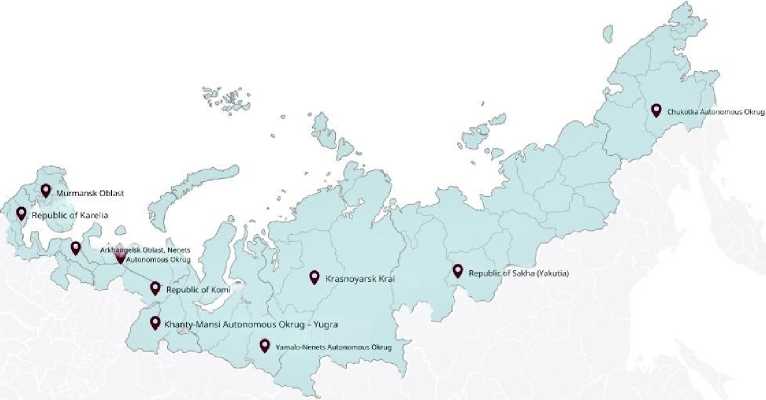
Fig. 1. Map of the Arctic Zone of the Russian Federation5.
Overcoming this gap requires systemic convergence: standardization of target indicators and monitoring methodologies, a mandatory procedure for assessing the alignment of regional strategies with federal priorities during their approval, and targeted funding for programs aimed at economic diversification and adaptation to climate risks. The inclusion of clear requirements to take into account the interests of indigenous peoples and to carry out environmental assessments of projects at the regional planning stage should become a mandatory element in aligning regional strategies with federal goals. In practice, the incorporation of these federal innovations into regional strategies is uneven. Regional documents tend to retain a pragmatic, locally oriented focus, with regional priorities centered on the development of key sectors (oil and gas production, minerals, fisheries), the development of port and municipal infrastructure, ensuring employment, access to healthcare and education, and support for the local economy and SMEs. This is logical from the perspective of regional economic reasoning; however, it means that many regional strategies either do not fully reflect the updated federal priorities for sustainable development and climate adaptation, or interpret them declaratively, without sufficient resource and institutional support.
For example, the strategic documents of the Chukotka Autonomous Okrug largely reflect previous priorities, while strengthening the social agenda; at the same time, there are limited measures to diversify the mining economy and insufficient elaboration of long-term mechanisms for sustainable development. In a number of regions, plans for the development of traditional industries seem economically controversial in terms of profitability and sustainability, and social measures are seen as fragmented and insufficiently supported financially and organizationally.
A comparison of the key characteristics of federal strategies and the challenges of their implementation at the regional level is presented in Table 1.
Table 1
Comparison of the federal AZRF strategies (previous/current) and the challenges of their implementation at the regional level6
|
Area |
Previous strategy — key features |
Current strategy (until 2035) — changes/additions |
Regions’ reaction / challenges of implementation |
|
Vision and goals |
Focus on rapid resource development and ensuring transport and logistics accessibility; short-/medium-term planning |
More comprehensive, longterm vision: economic development + sustainability, climate adaptation, and scientific and technological component |
Regional documents often retain a pragmatic, shortterm approach; federal “broad” goals are perceived as declarative |
|
Economy and resource development |
Main focus is on extraction (oil, gas, minerals), business expansion, job creation |
Preserving priorities of extraction, but adding diversification, sustainable resource use, and environmental impact assessment |
Regions are predominantly focused on their core industries; diversification is weak, projects in traditional industries often remain economically controversial |
|
Transport and logistics (NSR, ports) |
Active development of the NSR and port infrastructure as a priority for resource export |
Support for the NSR remains, but requirements for ecology, navigation safety, and infrastructure adaptation to climate change are added |
Regional plans support port/road development, but funding and planning for alignment with federal goals are often imperfect |
|
Environmental safety and climate |
Environmental aspects are fragmented; climate adaptation is not described in sufficient detail |
Stronger emphasis on environmental safety, risk management, and adaptation; risk assessment indicators are established |
Regional strategies often focus on environmental measures in a declarative manner; mechanisms for implementing and financing climate actions are poorly detailed |
|
Scientific and technical support |
Science — a service component (project support), limited R&D |
Identifying science and innovation as key factors for sustainable development and technological independence |
Regions have limited R&D budgets; implementation of federal scientific objectives requires centralized coordination and incentives |
|
Social policy and quality of life |
Social measures are aimed at supporting the population during development (housing, healthcare, employment) |
More systemic approach to sustainable living, infrastructure adaptation, and strengthening social protection |
Regional documents strengthen social support (for example, the Chukotka AO), but measures are often fragmented and underresourced |
|
Rights and participation of indigenous peoples |
The rights of indigenous peoples are mentioned, but mechanisms for participation and protection of rights are poorly regulated |
More explicit requirement to consider the interests of indigenous peoples and their participation in planning; recommendations for the preservation of traditions |
At the regional level, participation of indigenous peoples is uneven: formal consultations, insufficient integration into projects, and funding for the preservation of traditional economies |
|
Institutional management and monitoring |
Centralized control, limited mechanisms for inter-level coordination and monitoring of implementation |
Inclusion of requirements to improve coordination, a unified methodology for indicators and monitoring; strengthening of responsibility |
Regional strategies often do not use standardized indicators; there is no mandatory procedure for aligning regional plans with federal priorities |
|
Financing and economic instruments |
Project-based funding; significant role of large companies and government programs |
More balanced funding, mechanisms to support diversification and climate action; need for targeted resources |
Funding for regional initiatives is limited; budget is not aligned with sustainable development objectives; dependence on private capital |
|
Spatial planning and infrastructure projects |
Prioritization of project infrastructure (mines, ports, bases) |
The importance of taking into account infrastructure sustainability, integration of territorial plans, and environmental constraints is added |
Regional plans are economically feasible, but often fail to take into account long-term climate risks and environmental assessment requirements |
The structure of financial support for strategic initiatives in the AZRF regions deserves special attention. It is worth noting that most regional strategies rely primarily on budgetary sources of funding and federal state programs. Mechanisms for attracting extra-budgetary funds (publicprivate partnerships, special investment agreements, regional investment funds) are limited in scope, providing no details on the system for distributing financial responsibility. This confirms the existence of an institutional gap between the strategic objectives and the actual implementation mechanisms.
The results presented in Table 1 demonstrate the persistence of significant institutional and methodological gaps at the stage of implementing federal goals at the regional level, despite the formal expansion of the objectives and priorities of strategic planning in the Arctic Zone of the Russian Federation. The greatest gaps have been identified in the areas of environmental and climate policy, scientific and technical support, institutional management, and financing. In these areas, declarative formulations predominate, without sustainable implementation mechanisms. Infrastructure and social sectors demonstrate a relatively higher degree of coherence, but measures are often fragmented. Overall, the results confirm the need to unify strategic planning methodology and to strengthen coordination.
In the Republic of Sakha (Yakutia), the most notable achievements are in the transport and energy infrastructure sectors: modernization of the Northern Sea Route is approximately 70% complete, ports and navigation systems have been renovated, and cargo traffic has increased by 25%. However, these changes have produced almost no sustainable social effects, and the adaptation of infrastructure to permafrost thawing is progressing slowly7. Digital initiatives (permafrost monitoring, biomonitoring, digital archives of indigenous cultures) are approximately 60% complete, but many northern uluses still lack reliable communications, which hinders digital transfor- mation. Social projects are being implemented fragmentarily: only three of the ten planned support centers have been built, the population of the Arctic region has increased by only 5%, and migration outflow remains negative. Infrastructure projects create jobs and improve public services, but prove to be costly and unprofitable in the long term8 (Kovalenko, 2023). Ecology and tourism are the least funded sectors: environmental programs receive no more than 7% of investments, while transport and mining projects receive five times more. Ecotourism projects have shown an increase in visitor numbers (~15%), but have not produced a significant multiplier effect for local communities. In regional strategies, climate measures are more often of an applied and fragmented nature (cleaning up industrial sites, waste disposal).
In the Nenets Autonomous Okrug , there are examples of partial implementation of major initiatives, but they are accompanied by delays and doubts regarding their cost-effectiveness. The reconstruction of Naryan-Mar Airport is included in the plans, but has been postponed to 2027– 2030 due to problems with funding and the project’s level of readiness. The Indiga port project is viable for the NSR, but remains in its early stages, requiring approval from numerous agencies, significant private investment, and proven profitability. The Nenets Autonomous Okrug (NAO) has numerous initiatives (small refineries, local processing) that have never progressed beyond the conceptual stage due to a lack of investors and a limited market; without significant incentives and subsidies, these projects are unfeasible. Large-scale renewable projects are hampered by the high cost of technologies, logistics, and maintenance in Arctic conditions. Programs for deep diversification of SMEs are largely declarative in nature and are not accompanied by measures relating to sales, human resources and infrastructure.
The main systemic problem is the lack of alignment between federal and regional timeframes and indicators. The federal strategy sets long-term, unified targets (GRP growth, NSR volumes, investment, science, environmental protection, and support for indigenous peoples), while the regions formulate local, predominantly short- and medium-term goals (port modernization, gasification, housing, and healthcare). Quantitative indicators in the regions are either absent or non-standardized, and the documents are not aligned in terms of objectives and measures. As a result, individual projects predominate over systemic interregional initiatives, weakening the impact of federal measures and hindering sustainable development in the Arctic.
The Arkhangelsk Oblast, with its significant resource potential and complex social dynamics, demonstrates a persistent gap between the goals of its strategies and their implementation. The analysis compared two regional strategies: “Strategy for the Socio-Economic Development of the Arkhangelsk Oblast until 2030” (No. 278-ra/48 of December 16, 2008)9 and “Strategy for the Socio-Economic Development of the Arkhangelsk Oblast until 2035” (Law of the Arkhangelsk Ob- last No. 57-5-OZ of February 18, 2019)10. Thus, “Strategy 2030” set extremely ambitious goals (a 3.7-fold increase in GRP per capita, a 4-fold increase in productivity) with an emphasis on traditional sectors — the forestry industry (without a focus on deep processing), shipbuilding, and transportation. By 2019, approximately a third of the plan’s measures had been completed; the main reasons were erroneous pricing assumptions, a lack of flexible adjustment mechanisms, and weak alignment with industry programs and budgets. Strategy 2035 shifts the focus towards a “people-centric” approach, but changes in formulations are rarely accompanied by new management tools. Key systemic shortcomings of “Strategy 2035” include its declarative nature (many general statements without linking them to measurable targets, financing, and risk mitigation scenarios); demographic issues (the population has declined from ~1.3 million (2000) to ~1.1 million (2023), regional subsidies do not compensate for the economic drivers of outflow, salaries are below the Russian average, prices in remote areas are higher); passive investment policy (reliance on federal “megaprojects” (Belkomur, port) with weak efforts to improve the investment climate and support SMEs); infrastructure deficit (high depreciation of utility networks (60-70% in some municipalities), low density of paved roads — a fundamental barrier to development); environmental conflict (the dominance of city-forming pulp and paper mills hinders modernization and the transition to a more sustainable economy).
In these circumstances, a change in the management paradigm is required: clear, measurable goals; redistribution of resources in favor of basic infrastructure; transparent system of responsibility and political will for structural reforms, rather than reformulations. Federal approaches combine programs, public-private partnerships, and preferences; regions tend to rely on their own budgets and federal support, rarely establishing interregional financial mechanisms.
A practical example is the Murmansk Oblast : mixed funding and grant support for SMEs (up to 4 million rubles for creative projects) have produced a tangible effect in doubling tourist flow (from 350,000 to 670,000 people in 2020–2024) and commissioning social facilities. However, problems with purchasing power, outflow of the working-age population, and slow economic diversification persist11.
An analysis of the “Strategy for the Socio-Economic Development of the Krasnoyarsk Krai until 2030”12 reveals its ambitious nature and internal contradictions. The strategy proclaims a transition from a raw materials-based model to diversification and social focus through “new industrialization” and human capital development, but simultaneously provides for the large-scale exploitation of new oil, gas, and mineral deposits (Lipina, Almieva, Balezina, et al., 2025). Quanti-
SOCIAL AND ECONOMIC DEVELOPMENT
Svetlana A. Lipina, Nikita M. Kuprikov, Alexandra V. Lipina, Denis S. Kortunov tative indicators (production, housing stock) are clearly prioritized over qualitative transformations; mechanisms for reducing spatial and social polarization between the regional center and remote areas (logistics, high cost of living) are poorly developed. The population growth target appears overly optimistic given the migration outflow and the disproportionate funding allocated to the social sector and the fuel and energy complex.
The demographic crisis and inertia in the raw materials sector have led to a revision of strategies in the Komi Republic , including a shift in focus of the “Strategy of the Komi Republic — 2020”13 in the “Strategy of the Komi Republic — 2035”14. The “Strategy 2035” demonstrates a trend toward sustainable, people-centered development and a cluster-based approach: regions are divided into several priority areas (Southern, Central, Northern, etc.), which should mitigate inter-municipal disparities and redirect investments according to local advantages. Project management and clustering theoretically enhance the targeting of measures (Lipina, Almieva, Balezina et al., 2025). However, the institutional environment remains dominated by large resource monopolies, hindering the development of SMEs and non-resource innovations. Thus, 10 out of 13 major infrastructure and industrial projects (totaling approximately 956 billion rubles) are related to increasing oil and gas production; in the timber industry, 6 wood-processing projects (approximately 51 billion rubles) have been announced, but public information on their implementation is limited. The transport component (including the long-standing Belkomur project) remains critical, but implementation is delayed. The economic situation is complicated by the fact that, despite high nominal wages and “northern” allowances, prices and logistics costs are significantly higher than the national average, while real purchasing power and disposable income are unstable, which is accompanied by population outflow and reduces the effectiveness of declared migration growth targets. Besides, federal requirements for a unified monitoring system and a forecast- and riskbased approach are often not implemented at the regional level: monitoring remains fragmented and focused on reporting, which hinders comparability and control over the implementation of federal objectives (Lipina, Almieva, Balezina et al., 2025).
This section presents a comparative analysis of the previous and draft versions of the socioeconomic development strategy for the Yamalo-Nenets Autonomous Okrug (YaNAO). The strategy of 201915 and the draft of its update16 were used as source documents. The comparison was
SOCIAL AND ECONOMIC DEVELOPMENT
Svetlana A. Lipina, Nikita M. Kuprikov, Alexandra V. Lipina, Denis S. Kortunov conducted across key analytical areas: objectives, economic model, socio-demographic policy, infrastructure priorities, environmental agenda, institutional mechanisms and monitoring system.
The previous strategy (2019) primarily addresses the region’s development through hydrocarbon resource utilization and ensuring its fiscal sustainability. The main priorities are set in terms of energy production and exports, whereas social and quality-of-life parameters are regarded as secondary objectives. The draft of updated strategy retains the resource base as a strategic foundation, but demonstrates a shift in emphasis toward improving quality of life, human capital, and the sustainability of economic system. Nevertheless, this shift is primarily of a policy and val-ues-based nature. Ontologically, the region remains oil and gas-centric, and the transition to a different development model requires a more specific definition of the sources and mechanisms for transformation. The early strategy is dominated by a “revenue maximization” model with minimal transformation of the production structure. Diversification instruments are formulated fragmen-tarily and do not contain a consistent set of measures for developing processing and non-resource clusters. The draft strategy introduces more explicit provisions for stimulating local processing, supporting small and medium-sized businesses, and implementing innovative solutions, but lacks detailed financial and institutional support that would ensure the transition from declaration to implementation.
Both versions of the strategies recognize the importance of supporting the population in Arctic regions, ensuring access to housing and healthcare. The draft strategy places increased emphasis on human capital development and access to services in remote settlements. However, the proposed measures are often not accompanied by comprehensive estimates of the budgetary burden or mechanisms for the targeted redistribution of revenue from the fuel and energy sector, which calls into question their feasibility.
Transport corridors, power supply systems, and digital communications remain priorities in both versions. The draft strategy highlights the importance of digital infrastructure and adapting infrastructure to climate risks, but key capital-intensive projects require external financing and cross-level coordination, which are not sufficiently reflected in the implementation plan. An interesting feature of the new version of the strategy is the amendment to the draft version, which demonstrates a more systematic integration of climate risks and environmental sustainability objectives into the region’s agenda. At the same time, the implementation of environmental provisions depends on the regulation of large industrial producers and responsibility mechanisms, which are described in general terms in the draft and require formalization of standards and monitoring.
Overall, the comparison shows the persistence of the traditional institutional model based on interaction between the government and large extractive companies. The draft proposes the use of project management, digital tools, and expanded partnerships (including public-private partnerships), but does not provide a comprehensive mechanism for the redistribution of oil and gas revenues in favor of local processing and social investments. This creates a risk that the updat- ed goals will remain declarative. The new document expands the range of qualitative targets (standard of living, access to services, environmental indicators), which theoretically improves the focus of policy. In practice, there is a need to standardize metrics, to link KPIs to budgetary commitments, and to establish transparent reporting procedures and sanctions for non-compliance. While noting that the new version of the strategy of the Yamalo-Nenets Autonomous Okrug demonstrates a value shift toward sustainability and human development, it should be highlighted that the implementation of these goals is hampered by the lack of a clear financial and institutional mechanism. In order to improve the strategy’s effectiveness, it is necessary to:
-
• formalize mechanisms for the targeted redistribution of revenues from the fuel and energy sector;
-
• establish a “KPI — financing — responsibility” link for key projects;
-
• develop detailed plans for the processing industry and SMEs, including tax and investment incentives;
-
• introduce strict environmental requirements and a system of independent monitoring.
Without linking ambitious goals to sustainable funding sources and specific institutional measures, the updated strategy risks becoming a declarative document. Further research should focus on quantifying the budgetary requirements of the proposed initiatives, modelling scenarios for the redistribution of oil and gas revenues, and developing a methodology for the integrated monitoring of the strategy’s implementation.
The results of the analysis have been summarized and a comparative matrix (Table 2) is presented to assess the readiness of the constituent entities of the Arctic Zone of the Russian Federation to implement the federal development strategy.
Table 2
Institutional readiness of the regions of the Arctic Zone of the Russian Federation to implement the federal development strategy17
|
Region |
Compliance with federal strategy |
Availability of KPI and monitoring |
Involvement of indigenous peoples |
Budgetary funding |
|
Republic of Sakha |
2 |
1 |
2 |
2 |
|
Chukotka AO |
1 |
1 |
2 |
1 |
|
Yamalo-Nenets AO |
2 |
1 |
1 |
2 |
|
Nenets AO |
1 |
1 |
1 |
1 |
|
Arkhangelsk Oblast |
1 |
1 |
1 |
1 |
|
Murmansk Oblast |
2 |
2 |
1 |
2 |
|
Komi Republic |
2 |
1 |
1 |
2 |
Conclusion
The analysis demonstrates a systemic incompatibility between federal-level targets and regional strategic planning practices in the Arctic Zone of the Russian Federation. Federal documents set interregional, long-term indicators for sustainable development and risk management, while regional strategies remain primarily project- and operational-based, with a clear focus on local economic objectives and raw material advantages. As a result, there is a discrepancy in timeframes, indicator sets, and assessment methodologies, which reduces the overall consistency of forecasts and the accountability of the strategic planning system.
Particular concern is caused by the fragmented nature of monitoring, the lack of standardization in environmental KPIs, and the insufficient integration of predictive risk analysis into regional documents. Many strategies do not include quantitatively substantiated scenarios for key climate factors (permafrost, changes in ice cover, the state of coastal ecosystems), as well as clear mechanisms for assessing and allocating environmental risks. The absence of standardized procedures for engaging indigenous peoples and local communities further undermines the legitimacy and sustainability of decisions. Accumulated discrepancies give rise to practical risks, including an increased likelihood of conflicts of interest between economic participants, an increasing number of environmental incidents, and the ineffective use of limited budget funds. These risks are exacerbated by the accelerating transformation of the Arctic environment and the growth of economic activity in the region, making the need for institutional and methodological synchronization particularly urgent. In order to improve the effectiveness of strategic planning in the Arctic Zone of the Russian Federation, systemic measures are required, including:
-
• unification of the methodology for setting goals and indicators, linked to specific timeframes;
-
• mandatory inclusion of multi-level forecast and risk analysis (including scenarios for permafrost and marine ecosystems) in regional strategies;
-
• creation of regional modules of a unified federal system for monitoring ecosystems, infrastructure, and social indicators;
-
• formalization of procedures for consulting with indigenous peoples and consideration of their interests;
-
• mechanisms for the targeted redistribution of oil and gas revenues towards local processing and social investments;
-
• development of interregional financial instruments and public-private partnerships for the implementation of capital-intensive infrastructure projects;
-
• active involvement of the scientific community in the development of adaptation technologies and standardized sustainability indicators.
Implementation of these measures requires political will, institutional reforms, and resource provision; however, this coordinated approach ensures that regional plans comply with the requirements of Presidential Decree No. 633 and minimizes systemic risks. Future research should include modelling the budgetary impacts of proposed measures, developing methodologies for integrated monitoring, and assessing the social impacts of resource revenue redistribution mechanisms. Combining scientifically justified methodology, transparent institutions and viable sources of funding, strategic planning in the Arctic will be able to ensure the sustainable and socially responsible development of the regions.
