
Molecular Docking Analysis of Glycogen Synthase Kinase 3β with Metabolites from Solenopsis invicta
Journal: Journal of Stress Physiology and Biochemistry @jspb
Article in issue: 1 т.22, 2026.
Free access
In the present work, the venom and other contents were extracted from the Solenopsis invicta and analysed using LC- QTOF. These extracted samples were analysed in +Ve (positive) ionisation mode under a scan range of m/z 50-1000 for maximum metabolite coverage. 201 metabolites out of 412 were identified with their name, formula and molecular weight. Fourteen metabolites out of 201 from Solenopsis venom and one reference metabolite were selected for the docking against Glycogen Synthase Kinase 3-Beta Protein (GSK3ẞ/1l09). In GSK3ẞ, a phosphate ion held by residue Lys 205, Arg 180 and Arg 96 acquired the same position as the phosphate group of the phosphothreonine in activated p38γ, CDK2 or ERK2. So, these three residues were used for docking against fifteen metabolites. After analysing the docking result, we found that (E) -3-Decenol had a very low affinity for the substrate and netilmicin had the highest glide docking score (-12.48 Kcal/Mol). However, the thevetin acid was shown to have a good interaction by a hydrogen bond with residue Arg96A and Arg180A in protein. So, finally, we conclude that the thevetin acid showed more affinity towards GSK3ẞ protein than other metabolites.
Similar articles in the section Material bases of life. Biochemistry. Molecular biology. Biophysics
Short address: https://sciup.org/143185417
IDS: 143185417
Text of the scientific article Molecular Docking Analysis of Glycogen Synthase Kinase 3β with Metabolites from Solenopsis invicta
Nowadays, molecular docking is an essential tool in bioinformatics and structural molecular biology. The main goal of protein-ligand docking is to predict the predominant binding modes of a ligand with a protein of known 3D structure (Morris and Lim-Wilby, 2008). Several proteins target cells and cause disorders in the host body. The Glycogen Synthase Kinase 3 (GSK 3) Protein is an essential enzyme that deals with over 100 substrates. The GSK 3 shows the interaction with receptors and receptor-coupled signal transduction events and regulates two forms, GSK-3 ᾳ and GSK-3 ẞ, respectively. The GSK-3 mainly involves many common disorders, including psychiatric and neurological diseases, inflammatory diseases, cancers and other infections (Beurel et al. , 2015) . Recently, different metabolites have been used in pharmaceutical industries to cure various diseases. Primary and secondary metabolites play an essential role in the living organism, vital in the different pathways (Chinou, 2008). Ants are essential in the pharmaceutical and food industries due to their therapeutic and nutritional properties. It has been used to treat various diseases, including asthma, cancer, arthritis, and other microbial infections, in ethnic and modern medicine (Agarwal et al. , 2022). Recent biochemical and pharmacological investigations are increasingly providing evidence regarding the medicinal significance of ant species (Rastogi, 2011). The ants produce different types of primary and secondary metabolites. Liquid chromatography with tandem mass spectrometry (LC-MS) is used for qualitative and quantitative metabolomics studies (Xiao et al. , 2012). The LC-MS is mainly used to identify and quantify small molecule metabolites less than 1500 Dalton
MATERIALS AND METHOD
Collection and extraction of venom from Solenopsis invicta:
The present study was conducted on the fire ant. For the sample collection, first visit the place of the ant nest and shovel the upper portion of the mound in a bucket. Collected the ants from the garden area of Mulund East region and kept them in the laboratory of the
Department of Zoology, KET’s V.G. Vaze College Mulund East, and Mumbai 82. The Collected ants were identified up to the genus level using the taxonomic keys by B. Bolton (Holldobler and Wilson, 1990). The Collected ants were determined using a Stereo Microscope based on an identification key (Kadu, 2016). The collected ants separate from the mound by slowly flooding the bucket with water. It takes more time, and these ants raft on the surface. Put all the collected ants into hexane to separate their venom and other organic substances and keep them up to 24 hours in room temperature. Then collect the supernatant with the help of separating funnel from the sample for further experimentation.
Identification and Quantification of Metabolites by LC-MS:
LC-MS is a powerful tool to identify the different biochemical molecules in life science. Multiple LC-MS platforms, including LC-MS, LC-MS/MS, LC-TOF, LC-QTQF and LC-Orbitrap, have been used for toxicological testing (Lynch, 2017). In the present work, the venom and other contents were extracted from the Solenopsis invicta and analysed using LC- QTOF.
Preparation of CSK3ẞ and Ligands (Metabolites) for Docking:
In the present work, 14 metabolites from Solenopsis and one reference metabolite were selected for the docking against Glycogen Synthase Kinase 3-Beta Protein (GSK3ẞ/1l09). AutoDock Vina 4.2 software was used to optimise protein and ligands, such as adding atomic charges, making the protein more polar, modifying ligands through charge and rotatable bonds assignment and adding a residue set (Umesh et al., 2020). The macromolecule Glycogen Synthase Kinase 3-Beta Protein A chain was selected for docking. Before docking, polar hydrogen was added to the macromolecules and the partial atomic charges using AutoDock software. In GSK3ẞ a phosphate ion held by Lys 205, Arg 180 and Arg 96 aquired the same position as the phosphate group of the phosphothreonine in activated p38γ, CDK2 or ERK2 (ter Haar et al., 2001). So, Arg 96, Arg 180 and Lys 205 residues were added before grid formation. The 15 ligands were prepared for docking by adding Gasteiger charges, non-polar hydrogen was merged, and rotatable bonds were identified based on the nature of the ligand molecule.
Analysis of the AutoDocking of Macromolecule and Ligands:
The AutoDock Vina 4.2 software was used to analyse the docking result between 15 ligands and GSK3 ẞ protein. After completing the docking process, read the 15 dlg files and extract the binding energy and inhibition constant result. Protein-ligand interaction profiler software analysed the detailed docking results, including hydrogen bonds, hydrophobic interaction, salt bridges, and a jpg image of the interaction between macromolecule and ligand.
RESULTS AND DISCUSSION
Analysis of Metabolic Compounds from Solenopsis invicta by LC-MS.
LC-MS is a coupling of liquid chromatography and mass spectrometry. In the present work, ant venom was analysed by using LC-MS. The identification of metabolites from the poison Solenopsis invicta was done with the help of LC-QTOF. The extracted samples were analysed in +Ve (positive) ionisation mode under a scan range of m/z 50-1000 for maximum metabolite coverage. The QTOF-type mass spectroscopy (MS) device was used to analyse the venom sample. Five μl samples were used to analyse the metabolites under positive mode. 201 metabolites out of 412 were identified with their name, formula and molecular weight. 14 metabolites out of 201 compounds were selected as ligands for docking (Table No. 1). These fourteen metabolites are primarily used in pharmaceutical industries for making different drugs and medicines. So, it shows the tremendous medicinal value. However, the 15th compound, GSK3ẞ inhibitor ligand Elraglusib, was used as a reference molecule to study the properties against macromolecules (Huntington et al., 2023). LC-MS analysed these molecules' retention time and mass with their general formulas in Table No. 1. Netilmicin is derived from sisomicin, which is essential for its antibacterial activity, pharmacokinetic properties and therapeutic use (Campoli–Richards et al., 1989). Samandenone, thevatin acid, verimol B, hexyl glucoside, eseranine, nonate, guaioxide, traumatic acid, 4-phenylpyridine, n-acetyl 2,6- diethylaniline, 3-hydroxy tetradecanedioic acid, phenacetine and e-3 decenol are commonly utilized in pharmaceutical industries for making different drugs and medicine.
Interaction of ligands with GSK3ẞ:
We screened 15 ligands against A chain of glycogen synthase kinase 3- beta protein and identified three ligands with excellent docking scores. During the docking process, we selected Arg 96, Arg 180 and Lys 205 amino acids. These three amino acids held the phosphate ion, and at the same position, the phosphate group of phosphothreonine activated the p38γ, CDK2 or ERK2 (ter Haar et al. , 2001). The 15th compound, Elraglusib, has been used inhibitor of GSK3ẞ (Huntington et al., 2023). To study the interactive properties of metabolites, we dock the 15 ligands and analyse the result with the help of protein-ligand interaction profiler software (fig.1). In the present work, we found that (E) -3-Decenol had very low affinity for the substrate. The molecular docking study of the fifteen selected ligands and the target revealed that netilmicin had the highest glide docking score (-12.48 Kcal/Mol).
The other fourteen ligands Samandenone, thevatin acid, verimol B, hexyl glucoside, eseranine, nonate, guaioxide, traumatic acid, 4-phenylpyridine, n-acetyl 2,6-diethylaniline, 3-hydroxy tetradecanedioic acid, phenacetine, e-3 decenol and Elraglusib had -10.26 Kcal/Mol, -10.02 Kcal/Mol, -9.84 Kcal/Mol, -8.53 Kcal/Mol, -7.34 Kcal/Mol, -6.38 Kcal/Mol, -6.53 Kcal/Mol, -6.13 Kcal/Mol, -6.12 Kcal/Mol, -6.00 Kcal/Mol, -5.85 Kcal/Mol, -5.64 Kcal/Mol, -5.12 Kcal/Mol and -10.00 Kcal/Mol docking score respectively (Fig. 2). The three ligands including netilmicin, samandenone and thevetin acid were shows greater binding energy than the reference compound elraglusib (Table 2).
We analysed the ligand-protein structure for the residue interaction of a protein molecule with the ligand compound. We discovered that the three compounds form more hydrogen bonds with different residues in chain A of glycogen synthase kinase three beta protein. It includes netilmicin, thevatin acid, and eseranine had 9, 7 and 6 hydrogen bonds formed between the substrate.
The netilmicin form the nine hydrogen bonds with Tyr58A, Ile59A, Ile61A, Glu86A, Lys87A, Val88A, Asn92A and 111A (2) respectively. The thevetin acid forms the seven hydrogen bonds with Asn95A (2), Arg96A (2), Glu97A, Arg180A, Ser203A and eseranine forms six bond with residue Asn95A(2), Arg96A(2),
Glu97A, Arg180A and Ser203A respectively. The reference ligand elraglusib was shown the three-hydrogen bond with residue Asn95A, Arg96A and Ala204A.
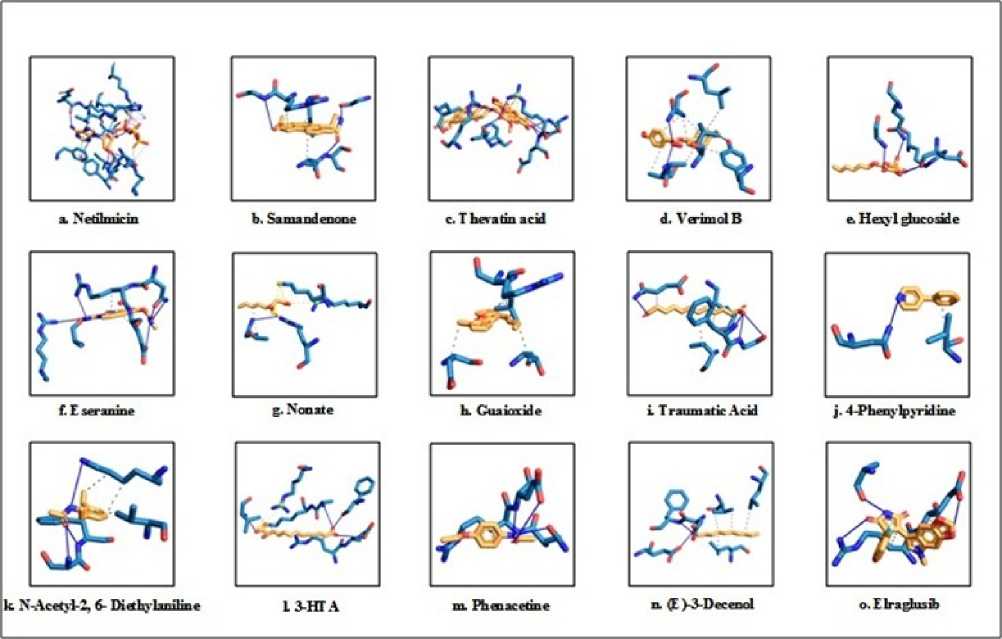
Figure 1. Result of Docking between metabolites and GSK3ẞ
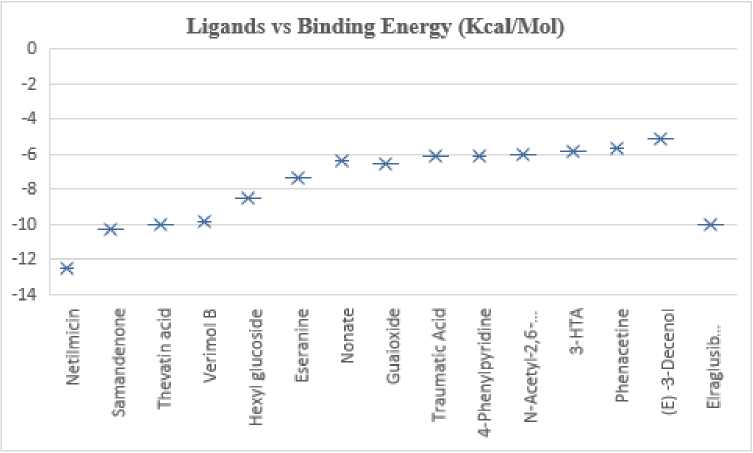
Figure 2. Binding energy of ligands against GSK3ẞ
Table 1: List of metabolites selected as ligands against GSK3 ẞ
|
S.N. |
Bioactive Compound |
Formula |
RT |
Mass (Dalton) |
|
1 |
Phenacetine |
C 10 H 13 NO 2 |
5.888 |
163.09 |
|
2 |
N-Acetyl-2,6- Diethylaniline |
C 12 H 17 NO |
9.580 |
191.13 |
|
3 |
(E) -3-Decenol |
C 10 H 20 O |
10.996 |
156.15 |
|
4 |
4-Phenylpyridine |
C 11 H 9 N |
11.674 |
155.07 |
|
5 |
Netilmicin |
C 21 H 41 N 5 O 7 |
11.843 |
475.29 |
|
6 |
Samandenone |
C 22 H 33 NO 2 |
11.988 |
343.25 |
|
7 |
Hexyl Glucoside |
C 12 H 24 O 6 |
12.598 |
264.15 |
|
8 |
Nonate |
C 9 H 16 O 4 |
13.834 |
188.10 |
|
9 |
Traumatic Acid |
C 12 H 20 O 4 |
13.772 |
228.13 |
|
10 |
3-Hydroxy Tetradecanedioic Acid |
C 14 H 26 O 5 |
15.961 |
274.17 |
|
11 |
Guaioxide |
C 15 H 26 O |
14.396 |
222.19 |
|
12 |
Thevatin A |
C 42 H 64 O 19 |
26.512 |
872.40 |
|
13 |
Verimol B |
C 18 H 20 O 5 |
21.597 |
316.13 |
|
14 |
Eseranine |
C 16 H 22 N 4 O 3 |
17.185 |
318.16 |
|
15 |
Elraglusib (Reference) |
C 22 H 13 FN 2 O 5 |
- |
404.30 |
Table 2: Analysis of metabolites found in Solenopsis invicta by LC-QTOF against GSK3ẞ
|
No. |
Compound |
Binding Energy (Kcal/Mol) |
Inhibition Constant(uM) |
No. of H Bond (Drug-Protein) |
Interaction with amino acid |
|
1 |
Netilmicin |
-12.48 |
0.000706 |
9 |
Tyr58A, Ile59A, Ile61A, Glu86A, Lys87A, Val88A, Asn92A, Arg111A(2) |
|
2 |
Samandenone |
-10.26 |
0.030 |
3 |
Gly176A, Gly210A, Ser236A |
|
3 |
Thevatin acid |
-10.02 |
0.045 |
7 |
Asn95A(2), Arg96A(2), Glu97A, Arg180A, Ser203A |
|
4 |
Verimol B |
-9.84 |
0.61 |
3 |
Asp90A, Asn95A, Tyr117A |
|
5 |
Hexyl glucoside |
-8.53 |
0.56 |
4 |
Arg220A, Asp260A, Gly262A, Gln265A |
|
6 |
Eseranine |
-7.34 |
4.20 |
6 |
Asn95A(2), Arg96A, Glu97A, Arg180A, Ala204A |
|
7 |
Nonate |
-6.38 |
20.99 |
1 |
Val214A |
|
8 |
Guaioxide |
-6.53 |
16.42 |
0 |
- |
|
9 |
Traumatic Acid |
-6.13 |
32.07 |
4 |
Phe67A, Gly68A(2), Glu97A |
|
10 |
4-Phenylpyridine |
-6.12 |
32.62 |
1 |
Asn213A |
|
11 |
N-Acetyl-2,6-Diethylaniline |
-6.00 |
39.81 |
3 |
Ser66A, Phe67A, Lys85A |
|
12 |
3-HTA |
-5.85 |
51.11 |
4 |
Glu97A, Phe201A, Ala204A, Val214A |
|
13 |
Phenacetine |
-5.64 |
73.58 |
4 |
Asn95A, Arg96A, Glu97A |
|
14 |
(E) -3-Decenol |
-5.12 |
176.97 |
3 |
Glu97A, Asp200A, Phe201A |
|
15 |
Elraglusib (Reference Compound) |
-10.00 |
0.46 |
3 |
Asn95A, Arg96A, Ala204A |
HTA= Hydroxy Tetradecanedioic Acid, LC-QTQF = Liquid Chromatography Quadrupole Time of Flight, H = Hydrogen, GSK3ẞ = Glycogen Synthase Kinase 3- Beta
The pattern of interaction between netilmicin, thevatin acid and eseranine with glycogen synthase kinase is complex, as shown in Fig. 1. The thevetin acid was shown that the exact interaction with residue Arg96A and Arg180A in protein. These two residues were containing the phosphate ions in GSK3ẞ. So, thevetin acid is the most suitable inhibitor as compared to netilmicin and eseranine. The Inhibition constant of all the ligands is shown in Table No. 2.
CONCLUSION
We isolated the venom from Sloenopsis invicta and analysed the metabolites by LC-MS. A total of 14 ligands were selected against Glycogen synthase kinase three beta protein (CSK3 ẞ). After analysing the docking result, we found that (E) -3-Decenol had a very low affinity for the substrate and netilmicin had the highest glide docking score (-12.48 Kcal/Mol). However, the thevetin acid was shown to have a good interaction by a hydrogen bond with residue Arg96A and Arg180A in protein. So, finally, we conclude that the thevetin acid showed more affinity towards GSK3ẞ protein than other metabolites.
CONFLICTS OF INTEREST
The authors declares that they have no potential conflicts of interest.
