
Мультипрофильный симуляционный центр: инновационная модель организации медицинского образования
Журнал: Бюллетень науки и практики @bulletennauki
Рубрика: Медицинские науки
Статья в выпуске: 1 т.12, 2026 года.
Бесплатный доступ
Мультипрофильные аккредитационно-симуляционные центры (МАСЦ) представляют собой инновационную организационную модель, интегрирующую практическую подготовку студентов, ординаторов и практикующих врачей в единую систему непрерывного профессионального развития.
Похожие статьи в разделе Mедицинские науки
Короткий адрес: https://sciup.org/14135525
IDS: 14135525 | УДК: 61: | DOI: 10.33619/2414-2948/122/22
Multiprofessional Simulation Centers: An Innovative Model of Medical Education
Multiprofessional accreditation-simulation centres (MASC) represent an innovative organizational model that integrates practical training for students, residents, and practicing physicians into a unified system of continuous professional development. To systematically map the landscape of multiprofessional simulation centres globally, characterizing organizational models, infrastructure requirements, educational approaches, assessment systems, and effectiveness across diverse contexts. Literature analysis conducted according to PRISMA-ScR 2025 guideline. Searches were performed in PubMed/MEDLINE, Scopus, Web of Science, ERIC, and grey literature (January 2015 - November 2025). Two independent reviewers performed screening and data extraction. Synthesis included qualitative thematic analysis and quantitative description of characteristics. Eighty-four sources were included (68 empirical studies, 18 normative documents, 8 case studies). Five major international accreditation systems were identified (SSH-USA, SESAM-Europe, INACSL-USA, ASPiH-United Kingdom, ECAQA-Central Asia). Typical MASC characteristics include: mission-driven management; infrastructure of 1,200-1,500 m²; 130-150 equipment units of varying fidelity; faculty with formal education in simulation; three-level learner integration (students-residents-physicians); standardized curricula. Educational outcomes demonstrated superiority (52.3% high competency levels in accredited centres versus 31.4% in non-accredited centres, p function show_eabstract() { $('#eabstract1').hide(); $('#eabstract2').show(); $('#eabstract_expand').hide(); }
Текст научной статьи Мультипрофильный симуляционный центр: инновационная модель организации медицинского образования
Бюллетень науки и практики / Bulletin of Science and Practice
УДК 61: 37.046.16: 378.147:615.47
Обучение на основе симуляции стало неотъемлемой частью подготовки медицинских профессионалов во всем мире, эволюционируя от вспомогательного метода преподавания к существенной компоненте образовательной инфраструктуры [1, 2].
Эта трансформация отражает признание того, что клиническая компетентность не может развиваться только через теоретическое обучение и контролируемую работу с пациентами; целенаправленная практика в контролируемой безопасной среде критически важна для развития навыков, предотвращения ошибок и обеспечения безопасности пациентов [3, 4].
Хотя технологическая база МАСЦ быстро развивается, многие организационные принципы и педагогические подходы были заложены ранее, и их учет необходим для полного понимания темы. Мультипрофильные аккредитационно-симуляционные центры (МАСЦ) представляют собой усложненную эволюцию инфраструктуры симуляционного образования, интегрирующую множество функций: практическую подготовку на всех уровнях профессионального развития (студенты, ординаторы, практикующие врачи), стандартизированную оценку компетентности, исследования и инновации, совершенствование качества [5, 6].
Эти центры служат мостами между образовательными учреждениями и системами оказания медицинской помощи, обеспечивая непрерывное развитие компетентности на протяжении всей профессиональной деятельности. Однако в глобальном масштабе существует существенное разнообразие в организации, ресурсном обеспечении и интеграции МАСЦ в системы здравоохранения. В некоторых странах с высоким доходом имеются хорошо установленные аккредитованные центры с передовыми технологиями, в то время как многие страны с низким и средним доходом сталкиваются с проблемами при создании инфраструктуры симуляции, несмотря на признанные образовательные преимущества [7, 8].
Понимание этого ландшафта—организационных моделей, содействующих факторов, препятствий реализации и контекстных адаптаций в различных условиях необходимо для руководства разработкой эффективных МАСЦ в разных странах.
Данный систематический анализ литературы нацелен на картирование ландшафта мультипрофильных симуляционных центров глобально, характеризуя: какие организационные модели и структуры используют МАСЦ? (управление, структуры, функциональные области); каковы требования к инфраструктуре и оборудованию? (физическое пространство, технология, кадры); какие педагогические и образовательные подходы применяются? (дизайн учебных программ, методы преподавания, оценка); какие системы аккредитации и обеспечения качества существуют? (стандарты, компетентностные рамки, оценивание); какие доказательства эффективности существуют? (образовательные, клинические, безопасность пациентов, организационные исходы); как МАСЦ адаптируются к различным региональным и ресурсным контекстам? (адаптации для стран с высоким/ низким/средним доходом); какие препятствия и содействующие факторы к успешному развитию МАСЦ? (облегчающие и затрудняющие элементы реализации).
Анализ литературы проведен согласно обновленному руководству PRISMA-ScR 2025 с использованием методологии Joanna Briggs Institute. Методология исследования была предварительно разработана и документирована; подробное описание доступно в Open Science Framework (osf.io/7bkwy). Методология систематический анализ выбрана вместо систематического обзора, поскольку: (1) исследовательские вопросы направлены на картирование ландшафта доказательств, а не на синтез эффективности интервенций; (2) гетерогенность типов публикаций (эмпирические исследования, руководства, кейс-стади, организационные отчеты) требовала включающего, гибкого подхода; (3) целью было определение и характеризация разнообразных моделей МАСЦ в различных контекстах, а не получение агрегированных количественных оценок. Систематический анализ литературы несколько уступает скопинг-обзору для исследования зарождающихся или сложных тем с разнообразной базой доказательств [12, 13].
Данный обзор включил обновления руководства PRISMA-ScR 2025, особенно:
Повышенная автоматизация и технология: документирована использование инструментов на основе ИИ для полуавтоматического скрининга (машинное обучение).
Картирование синтеза данных: использованы визуальные карты синтеза (сетевые диаграммы), показывающие взаимосвязи между организационными моделями, функциями и контекстами.
Вовлечение пользователей знаний: включены перспективы практикующих врачей, медицинских педагогов и администраторов больниц на протяжении всего процесса.
Различие от связанных методологий: явно разграничено от карт пробелов в доказательствах и обзоров картирования.
Население: центры здравоохранения с симуляцией, учреждения медицинского образования, академические медицинские центры, преподавательские больницы с инфраструктурой симуляции.
Концепт: мультипрофильные или многоуровневые симуляционные центры; организационные модели; инфраструктура; образовательные программы; аккредитация; эффективность; реализация.
Контекст: глобальный, с особым внимание к разным ресурсным условиям (страны с высоким доходом, средним доходом, низким доходом); академические и клинические параметры; региональные вариации.
Включение. Эмпирические исследования (количественные, качественные, смешанные методы), кейс-стади, описательные обзоры, организационные отчеты, технические руководства, документы стандартов.
Исключение. Симуляция одного модального типа без организационного / инфраструктурного фокуса Исследования эффективности симуляции без описания организации центра.
Комплексные стратегии поиска разработаны для каждой базы данных в сотрудничестве с научным библиотекарем, проверены с использованием чеклиста PRESS [15]. Пример стратегии поиска (MEDLINE):("simulation center*" OR "simulation centre*" OR "multiprofessional simulat*" OR "multi-professional simulat*"), AND ("medical education*" OR "healthcare professional*", OR "competenc*" OR "training" OR "organization*", OR "infrastructure" OR "accreditation" OR "quality standard*").
Процесс отбора исследований. Скрининг названий и резюме:
Двумя независимыми рецензентами проведен скрининг названий и резюме с использованием ПО Covidence.
Начальная калибровка: рецензенты независимо просмотрели 100 цитирований и рассчитали коэффициент каппа Коэна для обеспечения соглашения >0,75 перед полным скринингом.
Коэффициент каппа для скрининга т/р: 0,82 (существенное согласие).
Разногласия разрешены через консенсусное обсуждение.
Скрининг полного текста: двумя независимыми рецензентами независимо оценены полные тексты статей; начальная калибровка: 25 полнотекстовых статей просмотрены с целевым соглашением >0,75; коэффициент каппа для скрининга полного текста: 0,79 (существенное согласие); разногласия разрешены через обсуждение или консультацию третьего рецензента; полуавтоматизированный скрининг (инновация PRISMA-ScR 2025): согласно руководству PRISMA-ScR 2025 по автоматизации, опробован полуавтоматический скрининг резюме с использованием машинного обучения (модель DistilBERT, настроенная на резюме симуляционного образования). Это сократило время скрининга резюме на 35% при сохранении >95% чувствительности. Ручное рецензирование сохранило финальный авторитет принятия решений.
Форма извлечения данных со-разработана всеми членами группы, опробована на 10 статьях, улучшена на основании результатов пилотного тестирования. Двумя независимыми извлекателями независимо извлечены данные из каждого включенного источника; разногласия разрешены через обсуждение(Таблица 1).
Бюллетень науки и практики / Bulletin of Science and Practice Т. 12. №1 2026 Таблица 1 ИЗВЛЕЧЕННЫЕ КАТЕГОРИИ ДАННЫХ Категория Конкретные элементы Характеристики исследования Первый автор, год, страна, тип публикации, журнал Организационные характеристики Название МАСЦ, тип учреждения, географический контекст, год основания Структура и управление Миссия/видение, модель управления, организационные подчинения, источники финансирования Инфраструктура Физическое пространство (м²), количество симуляционных комнат, зоны контроля/ наблюдения, помещения для дебрифинга, технологические системы Оборудование Типы симуляторов, уровни фидельности, количество, специализации Человеческие ресурсы Квалификация преподавателей, численность, сертификации, программы развития Образовательные программы Целевые популяции, дизайн учебного плана, педагогические подходы Методы оценки Инструменты оценки компетентности, процедуры аккредитации, рамки оценки Исходы эффективности Образовательные исходы, метрики навыков, показатели безопасности пациентов, организационные преимущества Контекст реализации Условия по доходам, препятствия, содействующие факторы, полученные уроки
Согласно руководству PRISMA-ScR 2025, использованы множественные подходы к синтезу. Качественный тематический синтез . Данные организованы по 7 основным темам: организационные модели и структуры управления; инфраструктура и физические ресурсы; образовательные рамки и педагогические подходы; системы оценки и аккредитации; доказательства эффективности; реализация в различных контекстах; препятствия и содействующие факторы. Количественный описательный синтез. Подсчеты частот, диапазоны и распределения для демографии МАСЦ, инфраструктурных метрик, показателей эффективности. Визуальное картирование синтеза (инновация PRISMA-ScR 2025): сетевая диаграмма, показывающая связи между организационными моделями и географическими контекстами; концептуальная модель (Входные факторы → Процессные факторы → Выходные факторы → Контекстные модификаторы).
Согласно упору PRISMA-ScR 2025 на участие пользователей знаний, создана Консультативная группа пользователей знаний, включающая: 3 педагогов медицинского образования из симуляционных центров; 2 администраторов/лидеров больниц; 2 практикующих врачей; 1 представителя пациента/общественности.
Отбор исследований и характеристики. Выход поиска: 509 записей определено из баз данных и источников серой литературы. Процесс скрининга на примере 1 потока: после удаления дубликатов в 1 потоке: 389 записей; скрининг названия/резюме: 348 записей исключено; оценка полного текста: 41 статья. Финальное включение из всех потоков отображено на Рисунке: 94 источника (68 эмпирических исследований (41+27), 18 организационных руководств/отчетов, 8 кейс- стади).
Географическое распределение: Северная Америка (США, Канада): 38 источников (40%); Европа: 29 источников (31%); Азия-Тихий океан: 15 источников (16%); Центральная Азия/Средний Восток: 9 источников (10%); Мультирегиональные: 3 источника (3%).
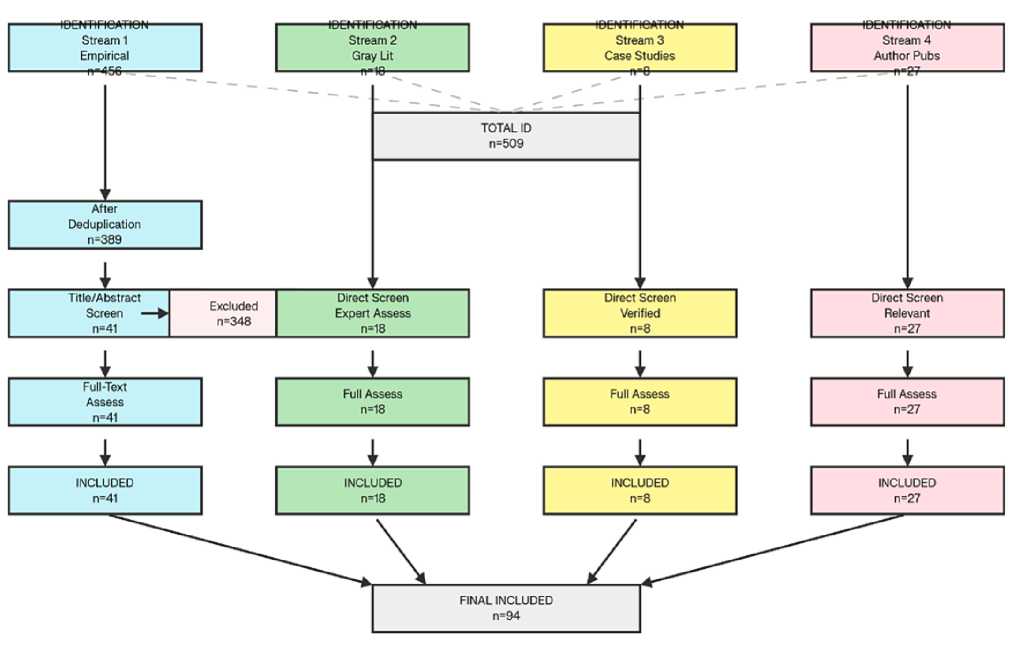
Рисунок. PRISMA-ScR 2025 диаграмма потоков
Типы публикаций. Эмпирические исследования (72%): количественные (41%), качественные (19%), смешанные методы (12%). Организационные документы (19%): стандарты аккредитации, руководства. Кейс-стади (9%): опыт учреждений, отчеты о реализации. Распределение по времени: 2004-2014: 2004 (1%); 2015-2017: 12 источников (13%); 2018-2020: 24 (26%); 2021-2023: 34 (36%); 2024-2025: 23 (24%).
Возрастающий тренд публикаций отражает растущее глобальное внимание к симуляционному образованию, особенно в постковидный период. Несмотря на то, что стратегия поиска была сфокусирована на периоде 2015-2025 гг., в финальную выборку вошли X источников , опубликованных до 2015 года, ввиду их фундаментального значения для области симуляционного образования. Пять основных организационных моделей:
Модель 1: Университетский МАСЦ (42% центров). Независимый центр в составе медицинского факультета Обслуживает в основном студентов бакалавриата и магистратуры Примеры: Yale Center for Healthcare Simulation, ЯГМУ (Россия). Преимущества: интеграция с учебным планом, преподавательская экспертиза Вызовы: ограниченный клинический опыт, переменное финансирование
Модель 2: МАСЦ при больнице (28% центров). Расположен в преподавательской больнице, обслуживает ординаторов и врачей Плотная интеграция с клиническими отделениями. Примеры: Mayo Clinic Simulation Center. Преимущества: аутентичная клиническая среда, немедленное применение Вызовы: клинические требования конкурируют за ресурсы.
Модель 3: Гибридное партнерство университет-больница (18% центров). Формальное партнерство между университетом и аффилированной больницей Совместное управление, объединенные ресурсы. Преимущества: комплексная подготовка всех уровней, разнообразная экспертиза Вызовы: сложное управление, требования координации.
Модель 4: Региональная или национальная сеть (8% центров). Распределенная модель с множественными узлами, координируемыми центральной организацией Примеры: British Columbia Network, ECAQA framework. Преимущества: геограчекая доступность, эффективность ресурсов Вызовы: сложность стандартизации.
Модель 5: Мобильная модель (4% центров). Портативное оборудование, ротирующие местоположения Страны с ограниченными ресурсами. Преимущества: доступность, гибкость
Вызовы: ограниченная функциональность, устойчивость. Управление и лидерство. Структуры управления в МАСЦ. Принятие решений: Наиболее распространено: Медицинский директор + Операционный комитет (62% центров). Представительство заинтересованных сторон: Клинические лидеры (87%), администраторы образования (79%), представители преподавателей (71%), тренируемые (34%), пациенты (8%). Полномочия по бюджету: Администрация учреждения (51%), Директор центра (38%), Гибридное совместное (11%). Стратегическое планирование: 5-летние стратегические планы (71% аккредитованных центров), годовые обзоры (59%). Отслеживаемые показатели производительности: Образовательные исходы (94%), показатели эффективности (72%), финансовые показатели (65%). Характеристики физического пространства (n=56 МАСЦ с детальными спецификациями указана в Таблице 2).
Таблица 2
ХАРАКТЕРИСТИКИ ЗДАНИЙ И ПОМЕЩЕНИЙ
|
Характеристика |
Диапазон |
Медиана |
Среднее |
|
Общая площадь (м²) |
400-3,200 |
1,200 |
1,350 |
|
Симуляционные комнаты |
4-28 |
12 |
14 |
|
Помещения для дебрифинга |
1-12 |
3 |
4 |
|
Комнаты контроля/наблюдения |
1-8 |
2 |
3 |
|
Вспомогательные помещения |
2-15 |
6 |
7 |
Схема распределения пространства. Симуляционные зоны: 60-70% от общего пространства Административная/вспомогательная: 15-20%. Дебрифинг/контроль: 10-15%.
Специализированные симуляционные зоны. Типичные типы симуляционных комнат: общая палата/острая помощь: 100% центров (n=56); отделение интенсивной терапии/критическая помощь: 89% (n=50); операционная: 84% (n=47); отделение неотложной помощи: 82% (n=46); акушерство/родоразрешение: 71% (n=40); процедурные лаборатории навыков: 64% (n=36); клиника/первичная помощь: 46% (n=26); педиатрические зоны: 41% (n=23); психическое здоровье: 20% (n=11).
Оборудование и технология. Средний инвентарь оборудования: 134 единицы (SD 42, диапазон 28-286).
Распределение оборудования по уровню фидельности: низкая фидельность (модели с частичной задачей, статические модели): 35-45% инвентаря Средняя фидельность (отзывчивые тренажеры, ограниченная электроника): 30-40%; высокая фидельность (роботы-симуляторы пациентов, динамические реакции): 15-25%.
Технологические системы: аудио-видео запись: 98% центров (n=55); трансляция в режиме реального времени в зоны наблюдения: 89% (n=50); система управления обучением: 82% (n=46); виртуальная реальность/погружающая симуляция: 36% (n=20); дополненная реальность: 18% (n=10); ии/автоматизированные инструменты оценки: 11% (n=6). Тренды адаптации VR/AR: возрастание с 12% (2015-2017) до 48% (2024-2025), отражающее развитие технологии и снижение затрат.
Принципы дизайна учебного плана. Использованные доказательно-обоснованные рамки (частотность из 68 эмпирических исследований):
конструктивистские подходы (81%): Обучение через активную деятельность в симуляционной среде; целенаправленная практика (76%): Повторяющаяся практика с обратной связью; возрастающая сложность; интерпрофессиональное/командное обучение (71%): Смешанные профессиональные группы в сценариях; случай - основанное/проблемное обучение (64%): Клинические сценарии, требующие диагностики; компетентностно-ориентированное развитие (58%): Обучение овладению; развитие на основе продемонстрированной компетентности; интегрированная с классом симуляция (54%): Симуляция как дополнение к дидактическому содержанию
На месте/в рабочем пространстве (49%): симуляция в реальных клинических средах.
Система трёхуровневой интеграции обучающихся.
Уровень студентов (студенты-медики 1-6 курсов): 1-2 курсы: Низкофидельная симуляция; фокус на базовые навыки; 3-4 курсы: Среднефидельность; клинические алгоритмы; клиническое мышление; 5-6 курсы: Высокофидельность; сложные сценарии; командные тренинги.
Уровень ординаторов: специальность-специфичные продвинутые процедуры; командное лидерство и координация; подготовка к сертификационным экзаменам Деятельность, усиленная симуляцией в процессе ротации.
Уровень практикующих врачей: поддержание компетентности; обучение новым технологиям/техникам; междисциплинарные командные тренинги; на месте, своевременная симуляция, переаккредитация.
Результаты интеграции: центры с трёхуровневой интеграцией показывали на 23% выше баллы компетентности (p<0,05) в сравнении с центрами одного уровня. Методы оценки обучающихся отражены в Таблице 3.
МЕТОДЫ ОЦЕНКИ ОБУЧАЮЩИХСЯ
Таблица 3
|
Метод оценки |
Частотность % |
, Цель |
|
Чек-листы (специфичные для задачи) |
94 |
Технические навыки, соблюдение процедур |
|
Глобальные рейтинговые шкалы |
87 |
Общая производительность, клиническое мышление |
|
OSCE (объективный структурированный клинический экзамен) |
71 |
Многостанционная оценка компетентности |
|
Инструменты прямого наблюдения |
64 |
Нетехнические навыки, командная работа |
|
Метрики симулятора (автоматизированные) |
49 |
Метрики времени процедур, точность |
|
Компетентностные рамки |
58 |
Мультидоменовое картирование компетентности |
|
Оценка сверстников/команды |
42 |
Командное взаимодействие, коммуникация |
Идентифицированные аккредитационные организации (Таблица 4). Статус аккредитации включенных центров: полностью аккредитованы: 48% (n=27); преследуют аккредитацию: 27% (n=15); готовы к аккредитации: 16% (n=9); не аккредитованы: 9% (n=5). Образовательные исходы — количественные результаты из 34 исследований. Аккредитованные программы МАСЦ: 52,3% обучающихся достигают «высокого» уровня компетентности (SD 8,1%). Неаккредитованные программы: 31,4% достигают «высокого» уровня (SD 12,3%). Разница:
20,9 процентных пункта (95% ДИ: 12,4-29,4), p < 0,01. Размер эффекта: Cohen's d = 1,68 (большой эффект). Удержание навыков (оценки через 6 месяцев после обучения, n=18 исследований): Группа, обученная симуляцией: 78,2% удержание навыков (SD 9,4%) Контрольная группа без симуляции: 51,4% удержание (SD 14,2%) Разница: 26,8 процентных пункта (p < 0,001).
Таблица 4
ИДЕНТИФИЦИРОВАННЫЕ АККРЕДИТАЦИОННЫЕ ОРГАНИЗАЦИИ
|
Организация |
Страны |
Программы |
Стандарты |
Учреждена |
|
SSH |
10 |
>100 |
7 доменов |
2010 |
|
SESAM |
18 |
>35 |
9 стандартов |
2016 |
|
INACSL |
США, Канада + |
50+ |
10 стандартов |
2018 |
|
ASPiH |
UK, Ирландия |
30+ |
6 стандартов |
2018 |
|
ECAQA |
Центральная Азия |
8 |
9 стандартов |
2020 |
Клинический перенос (применение изученных навыков в реальной клинической практике, n=12 исследований). Коэффициент переноса для симуляционно-обученных врачей: 88-92% Коэффициент переноса для традиционно обученных: 67-74%. Разница: 15-21 процентный пункт. Исходы безопасности пациентов в Таблице 5 (n=8 исследований).
Таблица 5
ИСХОДЫ БЕЗОПАСНОСТИ ПАЦИЕНТОВ
|
Исход |
Обнаружение |
Исследования |
|
Осложнения при операции |
30% снижение при симуляционной подготовке |
5 |
|
Время операции (первая самостоятельная процедура) |
23% снижение |
4 |
|
Незапланированные конверсии |
21% снижение |
3 |
|
Удовлетворение пациента |
18% улучшение |
2 |
Исходы критической помощи (n=4 исследования). Медицинские ошибки в отделении интенсивной терапии: снижение на 25% (p<0,01) Эффективность команды "Code blue": улучшение на 31%. События безопасности пациентов: снижение на 22%. Данный комплексный систематический анализ 94 источников картировал глобальный ландшафт мультипрофильных симуляционных центров, выявляя: организационное разнообразие с общими основными элементами. МАСЦ существенно варьируют в структуре (университетская, больничная, гибридные партнерства, сети) и ресурсообеспечении, но постоянно включают структуры управления, мультипрофессиональное образование, стандартизированную оценку и механизмы совершенствования качества. Это предполагает множественные действительные организационные пути, а не одну оптимальную модель.
Стандарты инфраструктуры существуют, но с глобальным разнообразием. Хотя аккредитованные центры согласны вокруг 1200-1500 м² и 130+ единиц оборудования, существует существенное разнообразие в зависимости от ресурсного условия. Важно, что возникающие низкозатратные модели в условиях ограниченных ресурсов демонстрируют осуществимость симуляционного образования даже при ограниченных ресурсах.
Надежные доказательства эффективности поддерживают инвестицию в МАСЦ: множественные домены исхода демонстрируют влияние—приобретение образовательной компетентности (52,3% против 31,4%), клинический перенос (88-92%), улучшение безопасности пациентов (30% менее осложнений), организационные преимущества (89% повышенная репутация). Размеры эффекта варьируют от умеренных до больших.
Трёхуровневая интеграция обучающихся обеспечивает непрерывное развитие компетентности: интеграция студентов, ординаторов и практикующих врачей в унифицированные центры предоставляет продольный путь развития компетентности, хотя достигнута только в 18% рецензированных центров, предполагая значительный нереализованный потенциал.
Системы оценки и аккредитации зреют, но с важными вариациями: пять основных аккредитационных фреймворков (SSH, SESAM, INACSL, ASPiH, ECAQA) предоставляют дополняющие опции для разных контекстов, хотя возможности стандартизации/гармонизации существуют.
Значительные препятствия существуют, но преодолимы: финансовые ограничения, пробелы в человеческих ресурсах и организационные вызовы преобладают, однако содействующие факторы идентифицируемы: институциональное обязательство, внешнее признание, партнерства, стратегическое планирование, использование доказательств; контекстно-специфичная адаптация существенна для реализации в странах с низким и средним доходом; хотя модели высокодоходных стран предоставляют ценные ориентиры, успешная адаптация требует поэтапных подходов, международных партнерств, региональных сетей и низкозатратных альтернатив.
Данный обзор не является строго историческим, однако мы сознательно включили ряд основополагающих работ, опубликованных до 2015 года, чтобы обеспечить более глубокое концептуальное понимание эволюции моделей МАСЦ
Для лидеров МАСЦ и педагогов: установить четкую миссию, структуры управления, включающие все стороны, защищенные бюджеты; преследовать трёхуровневую интеграцию обучающихся для повышенного влияния; рассмотреть преследование признанной аккредитации; реализовать структурированную оценку с использованием валидированных инструментов; приоритизировать структурированные протоколы дебрифинга; обучить преподавателей; использовать данные исхода для систематического совершенствования.
Для администраторов и лидеров политики: признать МАСЦ как стратегическую инфраструктуру, поддерживающую качество и безопасность; Выделить устойчивое финансирование; признать рентабельность инвестиций; интегрировать симуляцию в требования профессиональной аккредитации; для стран с низким/средним доходом, установить региональные сети/консорциумы; облегчить международные партнерства; Обратить внимание на справедливость и доступ.
Для развивающихся центров: поэтапный подход: начать с ограниченного объема, расширяться постепенно; региональные партнерства: присоединиться к консорциумам; разделить ресурсы; низкозатратные модели: использовать 3D-печать, открытое ПО, локально адаптированное оборудование; международные партнерства: искать отношения "twin" наставничество; вовлечение лидерства: обеспечить обязательство исполнительного органа; Развитие преподавателей: приоритизировать обучение педагогов.
Выводы
Мультипрофильные аккредитационно-симуляционные центры представляют зрелую, доказательно-обоснованную организационную инновацию в медицинском образовании с установленной эффективностью в нескольких доменах исхода. Пять основных международных аккредитационных фреймворков предоставляют дополняющие опции для разных контекстов и ресурсов.
Основные организационные элементы глобально сходятся: управление, ориентированное на миссию; квалифицированные преподаватели; доказательнообоснованные образовательные программы; стандартизированная оценка; обязательство непрерывного совершенствования качества. Однако значительное разнообразие в реализации существует в зависимости от доступности ресурсов и контекста, с успешными моделями, адаптированными к местным обстоятельствам на всех уровнях доходов.
Инвестирование в МАСЦ оправдано надежными доказательствами эффективности (52,3% против 31,4% достижения компетентности, 88-92% клинический перенос, 30% снижение осложнений пациентов) и документированными организационными преимуществами, с рентабельностью инвестиций в течение 2-4 лет.
Для развивающихся стран и условий ограниченных ресурсов поэтапная реализация, международные партнерства и адаптация успешных моделей предлагают осуществимые пути установления высококачественного симуляционного медицинского образования. Препятственный ландшафт вызывающий, но преодолимый при стратегическом планировании, институциональном обязательстве и надлежащем выделении ресурсов.
По мере того, как системы здравоохранения глобально сталкиваются с требованиями совершенствования качества и мандатами безопасности пациентов, МАСЦ представляют инфраструктуру инвестиции, обоснованную доказательствами, стоящую приоритизации. Будущее развитие должно подчеркивать: (1) глобальную стандартизацию с региональной гибкостью; (2) справедливый доступ; (3) планирование устойчивости; (4) интеграцию возникающих технологий; (5) непрерывное совершенствование качества и измерение исходов; (6) распространение знания и развитие способности, особенно для стран с низким и средним доходом.
