
Phytochemical diversity and medicinal properties of Ficus species: a review
Journal: Journal of Stress Physiology and Biochemistry @jspb
Article in issue: 3 т.21, 2025.
Free access
Genus Ficus , which is a member of the Moraceae family, includes more than a thousand species of vines, shrubs, and woody trees. Ficus species, generally known as fig trees or figs, are endemic to the tropics and a few species expand into the semi-warm temperate zones. Ficus species have traditional applications such as expectorants, mild laxatives, anthelmintic, hypoglycemic, and antihypertensive agents, as well as therapy for rheumatic illness, constipation, dysentery, and dyspepsia. Ficus species have several biological actions, including anti-hypertensive, hypoglycemic, neuroprotective, antioxidant, analgesic, antibacterial, and anti-inflammatory and some species show antidibetic properties.Several species, including F. religiosa, F. bengalensis, F.hispida, F. racemosa, F. curtipes, F. rumphi, and F. elastica , have strong economic potential and having potential medicinal uses. This present review aims to offer a comprehensive overview of the plant's phytochemical components and various medicinal properties.
Similar articles in the section Pharmacology. Therapeutics. Toxicology






Short address: https://sciup.org/143184728
IDS: 143184728
Text of the review article Phytochemical diversity and medicinal properties of Ficus species: a review
Based on all the information that is currently accessible, about 115 taxa (89 species and 26 infraspecific taxa) of Ficus have been recorded in india (Chaudhary et al., 2012) and Gujarat state 14 Ficus special recorded (Shah, 1978).
Ficus trees have high therapeutic value. For Hindus and Buddhists, it is a sacred tree. The "Nalpamaram" group includes four trees: F. racemosa, F. microcarpa, F. benghalensis, and F. religiosa (Athi, Ithi, Peral, and Arayal). Ficus show several medicinal properties.
Ficus is a tropical, deciduous, evergreen tree genus with over 800 species. This plant's bark, roots, leaves, fruit, and latex are used to cure a variety of ailments. Ficus bears a distinctive fruit that resembles an inverted flower. Ficus species include polyphenolic chemicals and flavonoids, which have high antioxidant capabilities and aid in the prevention and treatment of oxidative stress-related disorders, including neurological and hepatic diseases (Sirisha et al., 2010).
The interest in natural remedies and traditional medicine has led to research on plants traditionally used to treat diabetes (Perez et al., 2003). Traditional medicine, derived from plants, accounts for around 25% of current medications (Serraclara et al., 1998). Almost 800 plants may have the ability to prevent diabetes, according to surveys on world ethnobotanical information (Alarcon-Aguilara et al., 1998). Ficus plants (Moraceae family) have been traditionally employed in several ethnomedical cures (Ahmed and Urooj, 2009). The current review focuses on experimental research that uses various Ficus species parts, including bark, aerial roots, leaves, fruits, and roots, together with their bioactive components.
Phytochemical diversity of Ficus species
In the pharmacological and medical fields, phytochemicals—the bioactive components of plants— have a significant impact. Genus Ficus having very diverse phytochemicals like Phenolics, polyphenols, flavonoids, tannins, anthocyanins, coumarins, volatile components, glycosides, saponins, carotenoids, alkaloids, triterpenoids, and vitamins are among the phytochemicals found in the genus Ficus .
Biological activities of ficus species
Ficus species have been reported to exhibit a variety of biological activities based on their antioxidant profile and phytochemical content. The investigated Ficus plant species were found to exhibit anti-inflammatory, antibacterial, anti-ulcerogenic, mucoprotective, gastroprotective, antifungal, antiviral, antimalarial, and anti-parasitic properties as well as anticancer, hepatoprotective, hypo-glycemic, antitumor, antioxidant, anthelmintic, analgesic, and antimicrobial activity (Abdel-Hameed et al., 2014; Konyalιoğlu et al ., 2005). Ficus species have varying levels of antibacterial activity.
Medicinal Uses
Traditional medical practices have employed Ficus species as astringents, carminatives, stomachics, vermicides, hypotensives, anthelmintics, and antidysentery medications (Trivedi et al., 1996). Several Ficus species, including Ficus racemosa, Ficus glomerata, Ficus glumosa, Ficus carica, Ficus religiosa, and Ficus benghalensis, have long been used as herbal remedies for diabetic disorders. These species are known to regulate enzymatic activities, the rate at which carbohydrates are absorbed, insulin sensitivity, insulin secretion, hepatic glycogen synthesis, peripheral glucose uptake, and the body's antioxidant status (Deepa et al., 2018). By enhancing weight gain in male diabetic rats, these species' extracts also lessen oxidative stress (You et al., 2006). It has been discovered that F. benghalensis aqueous bark extract is effective in reducing the cholesterol levels of hypercholesterolemic rats (Aswar et al., 2008; Shukla et al., 2004). Because the roots of F. hispida have a higher quantity of flavonoids, methanolic extracts of the roots show anti ulcerogenic action. Because it contains antioxidants, the methanolic leaf extract of F. arnottiana has both mucoprotective and gastric antisecretory properties (Ao et al., 2008; Gregory et al., 2009). Traditionally, respiratory and skin ailments have been treated using almost all of the Ficus species that are part of the Moraceae family as folk medicine. Ficus species roots are useful in the treatment of gum disease and gout due to their anthelmintic properties. It has been discovered that the fruit of several Ficus species, including F. carica, F. hispida, F. microcarpa, and F.
sycomorus , can help with vomiting relief or improved digestion. Bark powder that has been dried out is useful for treating asthma and burns (Joseph & Raj, 2010). F. benjamina can treat bacterial or neoplastic conditions, but it cannot treat fungal infections (Mousa et al., 1992; Aswar et al., 2008). The bark of F. religiosa exhibits hypoglycemic activity and is used as an antiseptic, astringent, antidote, and treatment for gonorrhea, hemorrhage, paralysis, diarrhea, and bone fractures (Mazumder et al., 2009; Singh & Goel, 2009). Through various processes, it has also been used to treat inflammatory diseases, hemorrhoids, urinary tract infections, and liver abnormalities (Ahmed & Urooj , 2010)
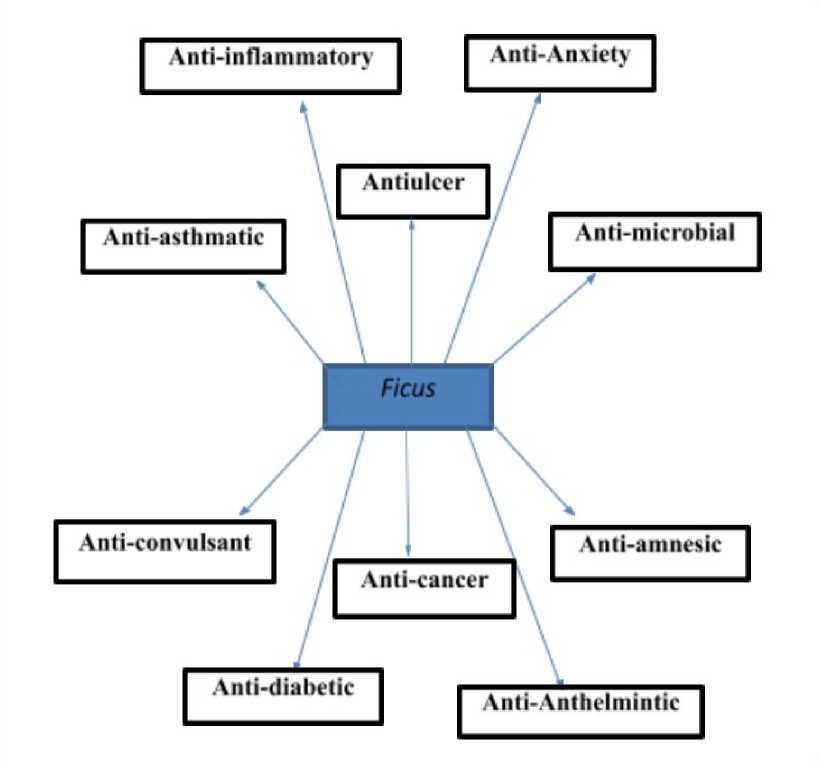
Figure 1. Various medicinal properties of Ficus species
Table 1. Phytochemical diversity of Ficus genus
|
Ficus Species |
Part |
Class |
Phytochemical compound |
Reference |
|
Ficus religiosa |
Bark |
Phytosterols |
Bergapten, bergaptol, lanosterol, β-sitosterol-d-glucoside, β-sitosterol, stigmasterol, |
Al-Snafi, 2017; Rajiv & Sivaraj, 2012 |
|
Flavonoids |
Leucocyanidin-3-O-β-glucopyranosid, leucopelargonidin-3-O-β-d-glucopyranoside, leucopelargonidin-3-O-α-l-rhamnopyranoside, lupeol, cetyl behenate, acetate and α-amyrin acetate |
|||
|
Polyphenols |
Tannin, wax, saponin, leucoanthocyanidin, leucoanthocyanin |
|||
|
Fruit |
Flavonoids |
Kaempferol, quercetin, and myricetin |
Grison-Pige et al., 2002; Makhija et al., 2010 |
|
|
Mixed compounds |
Undecane, tridecane, tetradecane, (e)-β-ocimene β-bourbonene, β-caryophyllene, germacrene, bicycle-germacrene, γ-cadinene and δ-cadinene, α-trans bergamotene,α-humulene, alloaromadendrene |
|||
|
Leaves |
Polyphenols |
Eugenol, 2-phenylethyl alcohol, and benzyl alcohol, hexenol, n-hexanol, phytol, benzyl alcohol |
Poudel et al., 2015; Baliyan et al., 2022 |
|
|
Mixed compounds |
Phenol, salicylaldehyde, phenylacetaldehyde, allyl caproate, linalool, n-nonanal, adipoin, methylcyclopentane, 2-dione, itaconic anhydride, catechol, coumaran, cinnamyl alcohol,α-eudesmol, α-cadinol, pentadecanal, palmitic acid and itaconic anhydride, |
|||
|
Ficus benghalensis |
Arial root |
Polyphenols |
Saponins, tannins, glucoside and flavonoids |
Aswar et al., 2008; Ahmed. et al., 2017 |
|
Sterol |
β-Sitosterol-α-d-glucose and mesoinositol |
|||
|
Ficus racemosa |
Leaves |
triterpenoids,tannins, kaempferol, rutin, arabinose, bergapten, pso-ralenes, flavonoids, ficusin, coumarin, phenolic gly-cosidesand, saponins |
Mandal et al., 1999; Baruah & Gohain, 1992; Deraniyagala et al., 1998; Din et al., 2002 |
|
|
Fruit |
β-sitosterol, gluanol acetate, hentriacontane, tiglic acid of taraxasterol, lupeol acetate,and α-amyrin acetate,gallic acid, ellagic acid |
Nguyen et al., 2001; Chandra et al., 1979; Merchant et al., 1979; Rao et al., 2008; Narender et al., 2008 |
||
|
Bark |
gluanol acetate, leucocyanidin-3-O-β-D-glucopyrancoside, leucopelargonidin-3-O-β-D-glucopyranoside, leucopelargonidin-3-O-α-L-rhamnopyranosideceryl behenate, lupeol acetate, α-amyrin acetate. |
Devmurari, 2010 |
||
|
Ficus microcarpa |
Arial root |
Terpenoids |
Friedelin, lupeol, oleanolic acid, ursolic acids |
Chiang & Kuo, 2002; Kalaskar & Surana, 2012 |
|
Leaves |
Flavonoids |
Catechin, epicatechin and isovitexin |
Table - 2. Medicinal properties of Ficus genus
|
Ficus species |
part |
Activity |
Reference |
|
Ficus religiosa |
Whole |
Antioxidant, antidiabetic activity and Antimicrobial activity |
Kirana et al., 2009 ; Joseph & Raj , 2010 |
|
Whole |
Anthelmintic activity |
Iqbal et al., 2001 |
|
|
Fruit |
Antitumor activity |
Mousa et al., 1992 |
|
|
Bark |
Anti-parasitic activity |
Iqbal et al., 2001 |
|
|
Ficus benghalensis |
Bark |
Antioxidant and hypolipidemic activity |
Geetha et al., 1994 |
|
Fruit |
Anticancer and antibacterial activity |
Sharma et al., 2007 |
|
|
Arial Roots |
Anti-inflammatory and analgesic activity |
Patil et al., 2009 |
|
|
Whole |
Anti-inflammatory and analgesic activity |
Patil et al., 2009 |
|
|
Ficus racemosa |
Whole |
Anticancer properties |
Khan & Sultana , 2005 ; Joseph, B. et al., 2010 |
|
Bark |
Hepatoprotective activity |
Joseph & Raj, 2010 |
CONCLUSION
Ficus species to manage many diseases. Additional research is required to determine the drug's precise mechanism, toxicological consequences and pharmacological activity. Since they are a great substitute for pharmaceuticals, particularly in developing nations. In this sense, species belonging to the genus Ficus ( Moraceae ) have the potential to treat diabetes, cancer and skin disease naturally and can be employed as an additive source in the biopharmaceutical and nutraceutical industries.
CONFLICTS OF INTEREST
The authors declare that they have no potential conflicts of interest.
