
Показатели благосостояния населения и продолжительности жизни для Архангельской области и ряда регионов: анализ, моделирование
Журнал: Арктика и Север @arcticandnorth
Рубрика: Северные и арктические социумы
Статья в выпуске: 64, 2026 года.
Бесплатный доступ
В работе применяются две модели регрессии, построенные по панельным данным из регионов ЦФО, ПФО. Основной фокус внимания в их приложении направлен на Архангельскую область. На предварительном этапе методом главных компонент с анализом корреляции переменных строились два сводных индикатора: уровня благосостояния и развития транспортной инфраструктуры. Они рассчитывались для каждого региона по статистике из ЦФО за ряд лет, взятых до пандемии. На следующем этапе строились две модели регрессии с переменной структурой. Роль зависимой переменной в модели 1 играет индикатор уровня благосостояния населения, а в модели 2 — ожидаемая продолжительность жизни при рождении (ОПЖ). Обе эти модели являются новыми; для Поморья приводится спецификация модели 1. Новизной является и то, что формализована связь агрегата по благосостоянию с показателями инфраструктуры, оцифровки экономики и ОПЖ. Модели позволили найти информативные факторные переменные, которые исследовались подробнее. Наконец, они применялись к двум регионам Арктической зоны РФ (АЗРФ) и ряду прочих. Подробнее исследованы факторы модели 1, значимо влияющие на уровень благосостояния: инфраструктурная переменная, показатели цифровой экономики, ОПЖ и др. Кратко описывается модель 2, хорошо работающая для многих регионов РФ. После сопоставления показателей Архангельской области и других регионов предлагается иллюстративный пример прогнозирования в 2019, 2020 гг. В обсуждении выявляются проблемные места региона и сделан краткий обзор работ по вопросам инфраструктуры, информатизации, инноваций и ОПЖ. Вероятно, может быть интересным и ряд параллелей, выявленных в развитии регионов. Аналогичным образом методологию исследования можно применить к другим территориям АЗРФ и лежащим вблизи них, а также к прочим. Итоги исследования могут быть полезны для органов власти, управляющих региональным развитием территорий АЗРФ или ряда других регионов.
Короткий адрес: https://sciup.org/148334175
IDS: 148334175 | УДК: [330.42+330.356+332](470.11)(045) | DOI: 10.37482/issn2221-2698.2026.64.332
Indicators of Population Welfare and Life Expectancy for the Arkhangelsk Oblast and Several Other Regions: Analysis and Modelling
The article uses two regression models, previously constructed using panel data from the Central Federal District (CFD) and the Volga Federal District (VFD). The main focus of their application is on the Arkhangelsk Oblast. At the preliminary stage, two composite indicators were developed using principal component analysis combined with correlation analysis of the variables: the level of welfare and the development of transport infrastructure. They were calculated for each region using statistics from the CFD covering a number of years prior to the COVID-19 pandemic. In the next stage, two regression models with variable structures were constructed. The dependent variable in Model 1 is the indicator of the population’s welfare, in Model 2 —the life expectancy at birth (LEB). Both of these models are new; the specification of Model 1 is provided for the Pomorye region. Another novel aspect is the formalization of the relationship between the aggregate welfare measure and indicators of infrastructure, the digitalization of the economy and life expectancy at birth. The models enabled the identification of informative factor variables, which were then examined in detail. Finally, they were applied to two regions of the Arctic Zone of the Russian Federation (AZRF) and a number of others. The factors in Model 1 that significantly influence the level of welfare were examined more closely: the infrastructure variable, digital economy indicators, life expectancy at birth, and others. Model 2, which functions well for many regions of the Russian Federation, is briefly described. Following a comparison of indicators for the Arkhangelsk Oblast and other regions, an illustrative example of forecasting for 2019 and 2020 is presented. The discussion identifies the region’s problem areas and provides a brief overview of work on infrastructure, digitalization, innovations, and LEB. A number of parallels identified in regional development may also be of interest. Similarly, the research methodology can be applied to other territories of the AZRF and neighboring areas, as well as to other regions. The findings of the study may be useful to the authorities responsible for managing the regional development of territories within the AZRF or a number of other regions.
Текст научной статьи Показатели благосостояния населения и продолжительности жизни для Архангельской области и ряда регионов: анализ, моделирование
DOI:
В соответствии с указом Президента РФ1, важнейшими ориентирами для страны и её регионов были названы повышение качества жизни и увеличение продолжительности предстоящей жизни населения (в частности, ожидаемой продолжительности жизни при рождении — ОПЖ). Для решения демографических проблем в Архангельской области реализуется национальный проект «Демография»2. Небольшой обзор работ по анализу и оценке демографической ситуации в регионах сделан в статье (Кузнецова, Васильева, 2023). Здесь также кратко описаны важные документы стратегического характера в регионах, полностью или частично лежащих в Арктической зоне Российской Федерации (АЗРФ): как сама стратегия, так и соответствующая программа по её реализации3. Одной из главных целей здесь является рост показателя ОПЖ в регионах.
В исследовании (Степанов, 2024) была описана модель регрессии, построенная автором по панельным данным из ПФО, которая связывает ОПЖ с рядом факторных переменных (экономических, медико-социальных и др.). Она хорошо работает и для многих других регионов; так, для двух областей СЗФО это показано в сообщении4 и аналогично — для ЦФО в (Степанов, 2024). После обработки данных 126 стран отчасти близкая ей модель создавалась в статье (Штунь, 2021).
Кроме того, в статье (Новиков, 2022) отмечалось, что «совместное и комплексное рассмотрение задач развития прибрежных арктических территорий в увязке с вопросами … улучшения социально-демографической ситуации и качества жизни населения, охраны окружающей среды» перспективно в проблематике развития АЗРФ. В этой связи стоит обратить внимание на другую модель, построенную по данным 17 областей ЦФО, взятых за 5 лет до недавней пандемии5; она получена в развитие результатов из (Степанов, Бобков, Шамаева и др., 2022). В ней зависимой переменной является агрегированная переменная сводного типа, которая характеризует уровень материального благосостояния населения (УБН) в региональном разрезе. Среди её факторных переменных были: сводная переменная по инфраструктуре, ряд показателей оцифровки деятельности организаций, ОПЖ для случая мужского пола и др.
Исходя из стратегической важности регионов, полностью или частично лежащих в АЗРФ, представляет интерес совместно применить эти модели, выбрав в качестве полигона Архангельскую область. В сопоставлении с ней полезно рассмотреть и другой регион, аналогичный по принадлежности к АЗРФ: Республику Карелию. А также два региона, граничащих с ними, и ещё несколько регионов из СФО, ДФО и др. Почти все эти регионы имели плотность населения, не сильно отличающуюся от аналогичной плотности в Поморье (табл. 4, см. ниже). При этом почти всегда, кроме карельского случая, доля этноса «русские» превышала 91,5%. В большинстве регионов, кроме тех, которые лежат восточнее Уральского горного хребта, температуры в январе или июле были близкими (в 2017, 2019 гг., исключая Приморье, где температуры почти равны поморским). Во многих случаях тип расселения по городам в них немного напоминает поморский случай: не слишком крупная по размеру столица региона, потом город, который по численности жителей в несколько раз меньше, а далее идут города, заметно убывающие по значениям этой численности. Также в семи регионах достаточно близка доля городского населения (выпадает вниз лишь Ленинградская обл.). Также была рассмотрена структура ВРП (табл. 3, см. ниже). Во всех восьми регионах доля сельского / лесного / рыбного сектора вносит в ВРП от 3,9 до 7,3%. Примерно одинаково развиты секторы строительства, энергетики (кроме двух регионов, выпадающих вверх), сектор торговли не превышает 16% (он выше в двух регионах ДФО), довольно хорошо развит транспортный сектор (немного выпадает лишь Костромская обл.). Также ИКТ-сектор часто лежит между 1,4 и 2,4%, вклад сектора с недвижимостью — между 7,5 и 11,5%, вклад научно-технического сектора — между 1,6 и 2,5% (выпадает вниз лишь Поморье), вклад сектора услуг вместе с показателями безопасности лежит между 8,8 и 14,5% (кроме Ленинградской и Вологодской областей). Наконец, в этих регионах неплохо развиты секторы образования и здравоохранения. А многие также имеют близкие значения душевого ВРП в 2019г.; то есть регионы похожи между собой по ряду своих свойств. Интересно, что и доля бедного населения в регионах немного отличалась в 2023 г.: от 8,7% для случая Костромской области до 10,2% для карельского случая (для ленинградских и томских жителей — 6,8% и 11,3%).
Это позволяет после сопоставления значений показателей выбрать ориентиры, близкие к реальности, применительно к Архангельской области. Затем, используя их, на численном примере показать, какие конкретные шаги могли бы привести в 2020 г. к небольшому росту её агрегированного показателя благосостояния и к росту ОПЖ в 2019 г. Этот пример носит чисто иллюстративный характер, а приращения выбраны так, чтобы поморский график за этот год прошёл бы почти параллельно ленинградскому графику.
Методологически похожим образом эти две модели можно применить к другим регионам из АЗРФ или расположенным поблизости: ЯНАО, ХМАО; Республикам Карелии и Коми; Тюменской, Томской и Иркутской областям; Красноярскому, Приморскому, Хабаровскому краям и др. Важно отметить, что обычно каждый российский регион уникален, поэтому такие рассуждения являются достаточно условными. Тем не менее, особенности разных регионов частично учитываются в моделях 1 и 2 через фиктивные переменные, входящие в их спецификации; поэтому значение константы в них часто отличается от региона к региону.
Целью исследования является описание результатов приложения двух моделей регрессии, созданных по панельным данным регионов Центральной России и Поволжья, в которых зависимыми переменными являются агрегированный показатель благосостояния населения и ОПЖ. Работа этих моделей, а также динамика их факторов рассмотрены на данных Архангельской области и ещё нескольких регионов России.
Новизна исследования заключается в применении улучшенной авторской модели по УБН к данным Росстата, собранным в Архангельской области и ряде других регионов РФ, с анализом влияния её факторных переменных на зависимую эндогенную переменную. Это улучшение заключается в учёте уточнённых официальных данных Росстата, что привело к небольшому изменению списка факторных переменных и всех b- коэффициентов модели, а также изменению некоторых лагов. В итоге несколько возросла её точность.
Также к этим регионам впервые применяется другая модель 2 с аналогичным анализом её факторов в этих регионах в случае ОПЖ. В итоге построен пример, иллюстрирующий работу моделей, а для поморского региона перечислен и ряд его узких мест. Описанная методология работы с данными может быть применена также к некоторым из регионов АЗРФ или к их соседям, а также ко многим прочим: из ЦФО, СЗФО, ПФО и др.
Работа модели 2 была проверена автором на значительном числе регионов РФ в периоды 2011–2019 и 2021–2023 гг. Для большинства, кроме тех, что лежат в Заполярье, в северной части ДВО или среди ряда южных регионов (СКФО и др.), результаты были удачными по точности. Модель 1, для случая с 8-ю регионами исследования, применялась следующим образом: сначала получались фактические значения зависимой переменной Вологодской обл. за 2018–2020 гг. для предыдущего её варианта, а фиктивная переменная из модели выбиралась так, чтобы точка-прогноз оказалась бы вблизи значения по факту6 (стр. 3, рис. 3). Затем для варианта модели 1 аналогичные операции выполнялись для Архангельской, Вологодской и Томской областей, Республики Карелии, Приморского и Хабаровского краёв в 2018–2019 гг.
Первая часть статьи посвящена описанию этапа, на котором была построена модель для агрегированного показателя уровня благосостояния населения (то есть ИИ УБН). Во второй её части описано применение этой модели к статистике, собранной в Поморье. Также здесь даются графики для нескольких регионов, два из которых частично лежат в АЗРФ, а также граничащих с ними. Третья часть статьи посвящена анализу факторных переменных, которые в рамках модели 1 могли бы повысить рассмотренный показатель качества жизни в этом поморском регионе, а также в значительном числе других регионов. В четвёртой части кратко рассмотрен показатель ОПЖ в региональном разрезе и описана модель 2, которая здесь применяется к ряду регионов АЗРФ и нескольких вблизи них, причём с фокусом внимания на Архангельскую область. Здесь же для случая Поморья предложен иллюстрирующий пример: в нём показано, насколько здесь увеличится показатель ОПЖ за 2019 г. и значение агрегированной переменной УБН за 2020 г., если улучшить ряд факторов из этих моделей, в основном, в предыдущие годы. Наконец, в последней части обсуждаются полученные результаты и перечисляются выявленные в этой области проблемные места.
Краткое описание этапа построения модели по УБН по данным из ЦФО
Сжато опишем модель по благосостоянию (то есть УБН), которое считается одним из направлений качества жизни населения. Сначала, согласно методологии (Айвазян, 2012), посредством свёртки совокупности переменных x 1 ,…, x p находился интегральный индикатор (ИИ) УБН; сами переменные перечислены в исследовании (Степанов, Бобков, Шамаева и др., 2022), в котором p = 15. Перечень переменных также приводится нами ниже (табл. 1); справа показан результат группировки переменных, сделанной в процессе применения методологии, как это будет описано далее.
Таблица 1
Список показателей для построения ИИ УЖН
|
№ |
Показатель (переменная) |
№ блока |
|
1 |
ВРП i за год t (на душу), который делился на число (ПМ i / ПМ РФ ), где i — номер региона *1) |
3 |
|
2 |
Розничный товарооборот с объёмом платных услуг в регионе (считается аналогично) |
3 |
|
3 |
ДД/ПМ — покупательная способность среднедушевых денежных доходов (ДД) |
3 |
|
4 |
Доля расходов ДХ на покупку продуктов питания (с затратами на ЖКУ и топливо), % |
2 |
|
5 |
Доля расходов на образование в домохозяйствах во всех их расходах на потребление, % |
3 |
|
6 |
Средний депозит физических лиц на RUR-счетах в СБРФ, в доле от ПМ |
3 |
|
7 |
Средняя обеспеченность населения общей площадью жилых помещений [м2/чел.] |
1 |
|
8 |
Ввод в действие общей площади жилых помещений в жилых домах на 1 тыс. населения |
1 |
|
9 |
Доля ветхого и аварийного жилья в суммарном жилфонде региона, в процентах |
1 |
|
10 |
Интегральный индикатор благоустройства жилого фонда региона -ИИ БЖ *2) |
1 |
|
11 |
Средняя обеспеченность населения личными легковыми автомобилями (на 1 000 чел.) |
3 |
|
12 |
Доля малоимущих — численность жителей региона со среднедушевыми ДД ниже ПМ, в % |
2 |
|
13 |
Индекс уровня финансовой обеспеченности домохозяйств региона (ДХ) *3) |
2 |
|
14 |
Коэффициент фондов Кф, рассчитанный по доходным группам с 10% богатых и бедных |
4 |
|
15 |
Доля домохозяйств (ДХ) региона c доступом к web -сети (среди всех ДХ) к концу года t |
2 |
-
* Примечания: 1) ПМ i, ПМ РФ — величины прожиточного минимума в IV -м квартале для i -го региона и РФ; 2) показатель ИИ БЖ считается по методологии (Айвазян, 2012) на основе комплекса показателей по благоустройству жилья, как это было описано в (Степанов, 2022) (это 1-я главная компонента в виде линейной комбинации удельной доли из общей площади жилого фонда, которая была оборудована к концу года водопроводом, канализацией, отоплением, горячим водоснабжением, ваннами / душем и сетевым газом / напольными электроплитами); 3) индекс ДХ по уровню их финансовой обеспеченности (табл. 1, стр. 13) получается расчётом по распределению ДХ, опубликованному в таблицах, полученных Росстатом опросами среди глав ДХ (по аспектам их финансового положения в году t )7.
Переменная ИИ УБН, имеющая агрегированный тип, рассчитывается по официальной статистике Росстата, собранной в 17 областях ЦФО за 5 лет8. Это выполнялось методами корреляционного и компонентного анализа, посредством их применения к данным с переменными x1,…,xp. Они образуют таблицу исходных данных с наблюдениями, в которой p столбцов, n строк (у нас n = 85). В результате этого этапа расчётов все показатели x1,…,xp (табл. 1) были разбиты на M блоков; одновременно находится весовой вклад для j-го блока ω , где j = 1,..,M9. Величина ωj берётся пропорциональной дисперсии переменной Yj и числу показателей рj из j-го блока, согласно формулам из (Айвазян, 2012). Переменная Yj является «блочным» ИИ УБН; обычно это 1-я главная компонента, найденная по матрице ковариаций переменных j-го блока: x1,…,xpj (они сначала сводились к одному и тому же масштабу). Эти веса используются при расчёте сводного показателя; сумма всех шу равна 1. Технология работы с данными здесь близка к той, что приводится в (Степанов, Бобков, Шамаева и др., 2022). Этап разбиения на блоки необходим из-за того, что набор переменных x1,…, xp обычно неоднороден, и поэтому метод главных компонент применяется в таких задачах в блочном виде. Иначе говоря, предполагается, что матрицу коэффициентов корреляции для всех p переменных можно приближённо заменить её блочно-диагональным аналогом (как и матрицу ковариаций) (Степанов, Бобков, Шамаева и др., 2022). В результате число блоков М = 4, а значения весов ω1,…,ω4 сначала были равны тем, что приведены в работе10. Однако в следующих публикациях Росстата 11 достаточно сильно изменились значения многих переменных уровня жизни (в его статистических сборниках), и после обработки этих уточнённых данных оказалось: ω1 = 0,24; ω2 = 0,2544; ω3= 0,373 и ω4 = 0,132. Поясним: блок 1 связан с жилищным фондом и обеспеченностью граждан жильём, с учётом его качества (здесь р1 = 4); блок 2 объединил показатели бедности (р2 = 4); блок 3 формируют показатели доходов: ВРП и проч. (р3 = 6); блок 4 содержит коэффициент фондов, после его нормировки (р4 = 1) (см. табл.1). Иначе говоря, значимость блока 4 с мерой социального расслоения по доходам возросла согласно ω4, вес ω3 блока с ВРП снизился, вес ω2 для жилищного блока изменился.
Веса а>; используются в определении «сводного ИИ» УБН (Айвазян, 2012; Степанов,
Бобков, Шамаева и др., 2022), обозначенного ниже как Y , а его оценка — как Y (t) . А именно:
для i-го набора наблюдений x1,…, xp над некоторым регионом страны величина Y находится в виде разности: y = 10 -
M
I j=1
^ - ( 10 - Y ) 2 , согласно (Степанов, Бобков, Шамаева и др., 2022).
Индекс i здесь, как и ниже, для упрощения записи не показывается. Под знаком корня стоит величина Y j — индикатор для j -го блока, или «блочный ИИ» (Айвазян, 2012). Он получен линейной свёрткой всех р j переменных x 1 ,…, x pj , сформировавших состав j -го блока, где 1 ≤ р j < p . Новые переменные Y j и Y по построению принимают значения из [0, 10], согласно (Айвазян, 2012). Так, значение Y = 10 соответствует гипотетическому региону (эталону), который мог бы иметь наиболее благоприятные значения для каждого из x 1 ,…, x p . Одновременно, если Y = 0, то это соответствует тому, что все x 1 ,…, x p могли бы оказаться наихудшими (уже для другого гипотетического региона). В итоге Y находится расчётом взвешенного расстояния Евклида между парой точек из пространства 4-D: (10,…,10)T — для эталонного региона и ( Y 1 , Y 2 , Y 3 , Y 4 )T, полученной расчётами по значениям переменных x 1 ,…, x p для i -го наблюдения. Ранее это наглядно иллюстрировалось в (Степанов, 2019) для варианта,
СЕВЕРНЫЕ И АРКТИЧЕСКИЕ СОЦИУМЫ
Степанов В.С. Показатели благосостояния населения и продолжительности жизни … в котором число блоков М = 3.
Исходным вектором наблюдений на этапе «построение модели» был набор значений x 1 ,…, x p для некоторой области ЦФО, взятых здесь в год t ϵ {2015,…,2019}. Каждая из этих переменных сначала сводилась к шкале [0,10] посредством простейшей операции линейного масштабирования. Кроме того, расчёт агрегированной переменной Y j для j -го блока выполняется по методологии (Айвазян, 2012) на основе небольшой модификации, сделанной в одной из формул компонентного анализа (Степанов, Бобков, Шамаева и др., 2022). Другими словами, если р j > 1, то величина Y j чаще всего есть 1-я главная компонента для всех р j переменных x 1 ,…, x pj или (намного реже) — некоторое её приближение (Степанов, Бобков, Шамаева и др., 2022; Айвазян, 2012). В нашем случае это имело место для блоков 1– 3, тогда как последний блок включает единственный показатель расслоения населения по доходам, рассчитанный по 10% группам (то есть «коэффициент фондов»)12,13 (Степанов, Бобков, Шамаева и др., 2022).
Методологически весьма похожий расчёт сделан по 10 другим показателям, чем x 1 ,…, x p ; они описывали развитие дорожно-транспортной инфраструктуры в регионе (Степанов, 2022). Эти инфраструктурные показатели также сформировали свои блоки. Эти блоки вместе с вариантом расчёта «весов» для регионов ПФО приводились в кратком сообщении14. Наибольший вес — около 0,47 — получил блок с густотой железных дорог общего пользования в регионе и аналогичных автодорог с твёрдым покрытием, долей дорог с таким покрытием улучшенного типа, а также густотой речных судоходных путей. Второй блок с весовым множителем около 0,3 включал автодороги регионального и межмуниципального значения, имевшие нормативный уровень, долю «асфальтированных дорог» и пропускную способность автодорог в регионе. Два других блока учитывают безопасность автодорог и обеспеченность населения автобусами общего пользования. В итоге для каждой области из ЦФО ежегодно рассчитывалась переменная агрегированного типа — индикатор развития дорожно-транспортной инфраструктуры, или ИИ ТИ. Он принимает значения из [0,10] и далее в спецификации модели выступает в роли факторной переменной X 1 .
Построение сводных и блочных ИИ в вышеописанных вариантах для УБН и ТИ с последующим рассмотрением их динамики с ростом отсчёта года t для того или иного региона позволяет построить наглядные графики типа рис. 5–7 из (Степанов, 2019). Изучая
СЕВЕРНЫЕ И АРКТИЧЕСКИЕ СОЦИУМЫ
Степанов В.С. Показатели благосостояния населения и продолжительности жизни … динамику блочных индикаторов Y j по t , можно обнаружить проблемные («узкие») места в списке показателей x 1 ,…, x pj данного блока. Это предлагалось в методологии из (Айвазян, 2012). К примеру, применительно к республике Крым это было сделано в (Степанов, 2019). Аналогичное было реализовано и для случая Архангельской области (результаты приводятся в «Обсуждении»).
Затем была реализована важнейшая идея, высказанная в (Айвазян, 2012). А именно: на основе эконометрических методов здесь предлагалось установить связь между ИИ УБН и комплексом переменных, прямо или косвенно зависящих от политики, проводимой в регионе и / или стране. Такой подход может быть интересен для органов управления регионом, если он принимался ими во внимание при разработке стратегии его развития. В итоге по таблице с панельными данными из ЦФО была создана регрессионная модель с переменной структурой и 14-ю факторами в её спецификации. Для неё оказалось, что значение нормированного коэффициента детерминации R2 adj ≈ 96,7% со стандартной ошибкой RMSE = 0,22 и ошибкой аппроксимации MAPE = 4,0(±3,2)% (где MAPE — от mean absolute percentage error (Карлберг, 2017)). Иначе говоря, эта модель регрессии объяснила высокую долю разброса Y вокруг среднего значения, найденного по всем областям ЦФО за эти 5 лет.
Результаты исследования и их обсуждение
Применение модели по благосостоянию к данным Архангельской области и др.
Архангельская область частично относится к АЗРФ, а развитие информационной инфраструктуры территорий из АЗРФ является одной из первостепенных задач (Куратова, 2023). Этот регион стратегически важен для руководства России из-за его геополитического и экономического положения (Кузнецова, Васильева, 2023). Применительно к данным из Архангельской области вышеописанную модель можно представить в виде:
Y ( t ) =- 8,834 + 0,364 X + 0,0285 X 2 + 0,072 X 3 + 0,14 X 4 -0,037 X 5 + 0,77 ( X 6) 0.5 + 0,139 X ,, (1)
где Y (t) — ИИ УБН за год t , созданный ранее посредством свёртки переменных x 1 ,…, x p ;
X 1 — инфраструктурный фактор по ТИ, найденный похожим путём и взятый с лагом τ = 1 год15,16 ( Степанов, 2022 );
X 2 — число ПЭВМ на 100 работников организации с доступом в сеть Интернет17 и с τ = 2 года;
X 3 — доля организаций региона, где в году t-4 использовались специальные программы (типа CRM,
СЕВЕРНЫЕ И АРКТИЧЕСКИЕ СОЦИУМЫ
Степанов В.С. Показатели благосостояния населения и продолжительности жизни … ERP , SCM - систем, или кратко: CES 18,19,20 ); здесь лаг τ = 4 года, а сам этот фактор взят в %; X 4 — доля организаций, в которых использовались RFID -технологии в году t - 2 21,22, в %;
X 5 — уровень дотаций для консолидированного бюджета региона: БП/ВРП — взятый в % за год t — τ , где БП — безвозмездные поступления в бюджет23 (то есть лаг τ = 2);
X 6 — переменная, которая считается по той части от душевого ВРП, которая относится к виду экономической деятельности «лесное, сельское хозяйство и рыбная отрасль» за год t ; она взята в соотношении с прожиточным минимумом (ПМ)24 населения рассматриваемого региона за год t ;
X 7 — ожидаемая продолжительность жизни при рождении младенца мужского пола (или ОПЖ м ) в предыдущий год до года t (то есть здесь τ = 1). Лишь X 6 входит в (1) синхронно с Y (t).
Показатели X 2 ,…, X 4 без учёта лагов также были рассмотрены в (Куратова, 2023; Акбердина, Наумов, Красных, 2023). Показатель ОПЖ м оказался информативнее по сравнению с ОПЖ на этапе анализа регионов, то есть в процессе создания модели регрессии с фиксированными эффектами (с 14-ю факторами). Это выяснилось так: при включении переменной ОПЖ м вместо фактора ОПЖ значимо возрастает коэффициент детерминации R2 , а также t -статистика Стьюдента для случая ОПЖ м становится значимой. Высокий разрыв значений ОПЖ среди мужского и женского населения России обусловлен комплексом причин (последствия войны 1941–1945 гг. и ряд прочих). Такой разрыв между полами негативно влияет на экономику и социальную сферу в регионах РФ.
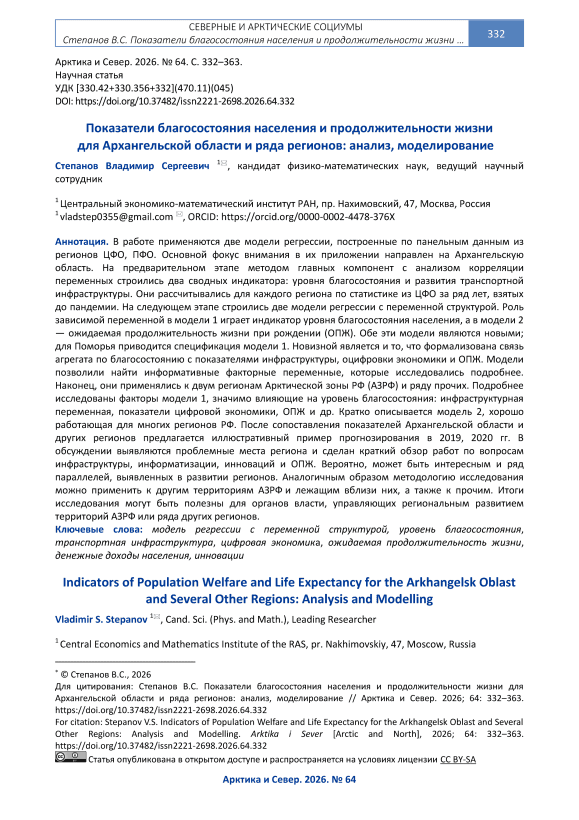
Работа модели (1) применительно к данным Архангельской области и Республики Карелии, а также двух граничащих с ними областей показана на рис. 1. Часть районов и городов этих регионов принадлежит к АЗРФ. Также здесь показаны фактические значения Y (t) в 2018–2019 гг., полученные по значениям переменных x 1 ,…, x p в регионе с последующим расчётом, как это было описано выше, совместно с исходными 85-ю наблюдениями. При получении оценки Y (t) после подстановки значений x 1 ,…, x p в (1) значения константы могут изменяться между регионами (то есть фактически использовалась модель с 14-ю переменными).
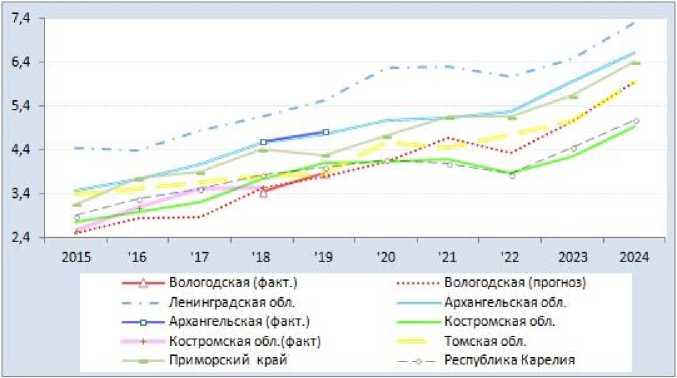
Рис. 1. Динамика ИИ УБН для 7 регионов СЗФО, ЦФО, СФО, ДФО25.
Также приводятся графики с оценками Y (t) для Приморского края и Костромской области. Хотя оба эти региона имеют плотность населения, превышающую поморский случай в 4 раза или чуть более, они по ряду свойств похожи на этот северный регион (о чём сообщалось во введении). Ещё показан график Томской области, передовой по инновациям. Однако природно-климатические условия проживания здесь считаются дискомфортными.
Из сравнения графиков следует, что оценки Y (t) по модели для Архангельской области и Приморского края ведут себя похожим образом в динамике по t . Интересно, что ряд населённых пунктов и 4 района из Приморья относятся к территориям Крайнего Севера. Очевидно, что с 2018 г. карельский график почти совпадает с его костромским аналогом.
Исследование факторов, влияющих на Y (t): Архангельская область и др.
Из значений коэффициентов эластичности в исходной модели, из которой потом получена формула (1), следует, что главный вклад внесли факторы ОПЖ м , X 1 , X 6 , а затем меры по оцифровке деятельности организаций: X 2 , CES , RFID . Далее рассмотрим факторы X 1 , X 2 , CES , RFID и ОПЖ. В табл. 2, столбцы 2–5, приводится динамика фактора X 1 для Поморья за 4 года вместе с шестью регионами из СЗФО, ЦФО и др. округов.
Таблица 2
Динамика ИИ ТИ для 7 регионов и индекс транспортной доступности в 2018 г. 26
|
Регион |
2015 |
2016 |
2017 |
2018 |
ИТД |
Ранг по ИТД |
|
1 |
2 |
3 |
4 |
5 |
6 |
7 |
|
Архангельская обл. |
3,0 |
3,0 |
3,0 |
3,0 |
7,0 |
62 |
|
Вологодская обл. |
4,13 |
4,09 |
4,54 |
4,56 |
11,2 |
33 |
|
Республика Коми |
4,1 |
4,04 |
4,07 |
4,02 |
7,03 |
61 |
|
Республика Карелия |
4,9 |
4,95 |
5,17 |
5,22 |
7,73 |
58 |
|
Костромская обл. |
3,78 |
3,78 |
3,756 |
3,77 |
13,0 |
17 |
|
Томская обл. |
3,66 |
3,62 |
3,78 |
3,76 |
7,57 |
59 |
|
Приморский край |
4,4 |
4,36 |
4,46 |
4,4 |
5,57 |
69 |
25 Расчёты автора на основе официальных данных из публикаций Росстата: Материалы сайта Федеральной службы государственной статистики РФ (Росстат), URL: (дата обращения: 11.08.2025) и их визуализация.
26 Расчёты автора приводятся в столбцах 2–5; в столбцах 6, 7 приводятся результаты других авторов.
В столбцах 6, 7 здесь приведён индекс транспортной доступности ( ИТД ) из (Лавриненко, Ромашина, Степанов и др., 2019) и его место за 2018 г. Слева здесь показаны значения X 1 для ряда регионов, лежащих вблизи Архангельской области и АЗРФ, и ещё двух регионов, немного похожих на Поморье по ряду свойств, а именно: в них наблюдаются почти одинаковые температуры воздуха зимой и летом; были близки значения душевого ВРП: карельский случай — 31-е место, поморский — 33-е и вологодский — 34-е место в России за 2019 г. Плотности населения в карельском и поморском случаях отличаются сравнительно мало, причём оба эти региона частично лежат в АЗРФ; показатели урбанизации — близкие: карельский случай — 79,2% городских жителей; поморский — 77,4%, а вологодский — 72,4%. В наиболее крупных городах этих регионов проживало: Петрозаводск — 279, Архангельск — 350, Череповец — 318 (тыс. жителей; в начале 2018 г.); в каждом из регионов было от 20 до 22 городских поселений. В двух самых крупных городах Поморья проживает 523 тыс. жителей, а в вологодском случае — 630 (в карельском случае было лишь 309). Потом, начиная с 4-го города, в этих регионах следуют небольшие городские поселения (от 38 тыс. или менее). Если площадь карельской территории поделить на число её сельских поселений, то получится примерно 2,1 тыс. км2, а если то же самое выполнить для Поморья, то получится 2,35 тыс. км2. Если сравнить отраслевую структуру ВРП в 2019 г. в этих трёх регионах, то она не слишком сильно отличается (табл. 4, см. ниже). Правда, в вологодском случае вовсе нет добывающей промышленности, но этот регион успешно компенсирует её отсутствие за счёт 4 секторов: обработки, строительства, торговли и научно-технического. Ещё из-за того, что сектор обработки сфокусирован здесь на металлургии, химической промышленности, производстве лекарств и др. (табл. 5, см. ниже), данный регион в 2018 г. существенно опередил Поморье по величине ИЦР, а также по его позициям. Наконец, по уровню инновационной активности Вологодская область с 2013 г. всё сильнее и сильнее отрывается от соответствующих поморских значений (рис. 6, см. ниже).
Так, Ленинградская область вместе с северной столицей имеют значение ИТД = 15,1 и стояли бы в табл. 2 на 7-м месте, а Поморье располагается среди аутсайдеров. Регион-эталон по 10 переменным, свёрткой которых находился этот ИИ ТИ, имеет значение X 1 , равное 10. Иначе говоря, в нём наблюдались бы самые благоприятные значения всех 10 переменных для рассмотренных в работе (Степанов, 2022) территорий статьи. А именно: его автодороги были бы в нормативном состоянии (или близком), привлекательной была бы густота автомобильных и железных дорог общего пользования, оптимально был бы развит водный транспорт и т. д.
Ранее отмечалось, что формализованный подход к исчислению того или иного ИТД важен для практических приложений (Лавриненко, Ромашина, Степанов и др., 2019). Здесь же даются ссылки на исследования по транспортной доступности территории. Она определяется как возможность достижения территории региона с использованием различных видов инфраструктуры. Другой обзор исследований в сфере транспортной инфраструктуры приводится в (Степанов, 2022). Однако в обеих статьях не учитывался морской транспорт, а в (Степанов, 2022) не принимался во внимание ещё и воздушный. Другое отличие этих двух работ заключается в методологии расчёта ИТД при сопоставлении с аналогичной в случае ИИ ТИ. Так, в (Лавриненко, Ромашина, Степанов и др., 2019) величина ИТД оценивается посредством учёта всех транспортных затрат, которые включают фактические расходы денежных средств и время в пути до данного региона. Причём они учитываются для разных видов транспорта и берутся для граждан, проживающих во всех регионах РФ. Методология расчёта величины ИИ ТИ основана на построении интегральных индикаторов из (Айвазян, 2012). Этот подход использует комбинацию метода главных компонент в сочетании с корреляционным анализом и поэтому он является достаточно универсальным. Например, он применялся Дао Май Хань (2007) — аспиранткой ЦЭМИ из Вьетнама — при моделировании внешней торговли для этой республики (рыбная отрасль). Список переменных в статье (Степанов, 2022) ограничивался лишь региональными данными Росстата; если бы на его сайте приводились ежегодные данные по воздушному и морскому транспорту, они бы также использовались при расчёте ИИ ТИ.
Поэтому, если рассмотреть приморский случай в табл. 2, то этот регион ДФО удалён от центральной части РФ. Из-за этого поездка в Приморье обойдётся среднему россиянину недёшево и будет длиться долго, отчего ранг ИТД = 69. С другой стороны, этот регион отличается тем, что там всего 74 сельских поселения на 164,7 тыс. км2 территории, а их соотношение равно 2,23, что лишь слегка меньше поморского случая. Однако территория Приморья лучше освоена в плане городов: в его столице 600 тыс. жителей, есть 3 города выше 100 тыс., 5 городов от 40 тыс. и т. д. Кроме того, из-за близости Японии (поэтому в Приморье доступнее по цене её надёжные автомобили, пусть и не новые) жители лучше обеспечены личным автотранспортом: 447 против 332 за 2019 г. Видимо, и поэтому состояние дорог здесь ближе к нормативам, а их густота — немалая. Ещё здесь есть много рек, большое озеро и развит водный транспорт; есть хорошая сеть железных дорог и т. д. Отсюда: X 1 ≈ 4,4–4,5 (это ИИ ТИ).
Если рассмотреть графики переменной X2 (с доступом к web-сети) для среднего значения по всем областям ЦФО за 9 лет совместно с аналогичными графиками для четырёх регионов СЗФО, Костромской и Томской областей, Приморского края, то можно увидеть следующее: костромской график очень близок к этому среднему, а томский аналог проходит намного выше: от 38 до 55 на 100 работников организаций (шт.) (рис. 2).
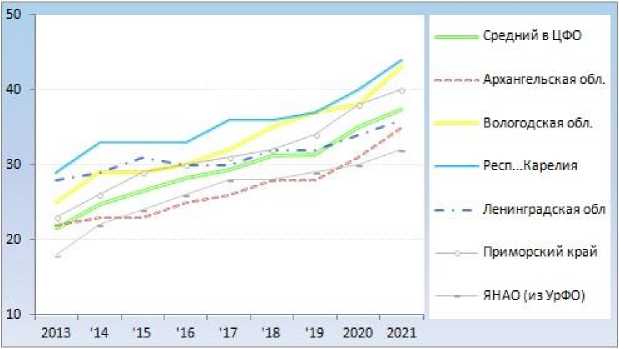
Рис. 2. Web-доступ в организациях из 6 регионов и средний уровень в ЦФО (штук ПЭВМ) 27.
Очевидно, что положение ЯНАО и Архангельской области было довольно слабым в период с 2013–2014 гг. по 2020 г. Эта переменная рассмотрена в регионах АЗРФ в (Куратова, 2023), где она обозначена как X 20 . А также немного ниже — в (Куратова, 2023), табл. 5, где она называется X 2 . Из приведённой информации и табл. 5 следует, что обеспечение каждых 100 работников компьютером с доступом к web- сети было узким местом Поморья, аналогично случаю ЯНАО. Попутно, по аспектам сети Интернет, можно отметить, что в организациях Поморья с 2016 г. практически не растёт использование этой сети. Более того, с 2015 г. здесь заметно снизился широкополосный доступ к ней при его сопоставлении со средним в ЦФО; это важно в разрезе сельских поселений Поморья. К этому среднему в 2013–2018 гг. был близок вологодский график, тогда как с 2015 г. его поморский аналог ежегодно отставал на 3–4%.
Если анализировать показатель CES в промежутке 2011–2019 гг., то можно увидеть, что в этом плане организации сравнительно мало варьировали в рассматриваемых регионах, причём часто доминировал график: для томских организаций или для среднего по ЦФО. В поморских организациях наблюдался временный спад использования CES в 2016–2017 гг. Однако после пандемии и начала спецоперации на Донбассе частота использования CES в семи регионах стала заметно отличаться, а поморские организации стали аутсайдерскими28.
В плане динамики использования RFID ситуация в Поморье более благоприятная (рис. 3). Однако отрыв от инновационной Томской области и среднего по России заметный.
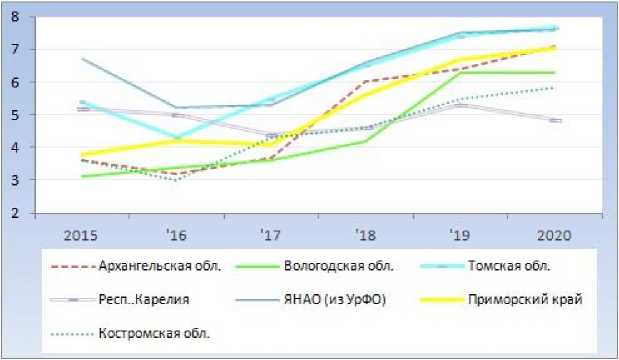
Рис. 3. Частота использования технологии RFID в регионах СЗФО и других округов; %29.
Отметим, что Томская и Ленинградская области почти всегда доминировали; у последнего региона показатель RFID за 2015–2020 гг. изменяется от 5 до 6,5%. Тем более это относится к экономически мощным регионам Западной Сибири: ЯНАО и ХМАО; в последнем случае доля RFID была выше, чем в ЯНАО. Для сравнения, доля RFID в организациях из некоторых стран Европы в 2018 г. была в % такой: для Венгрии, Дании, Румынии, РФ — по 7; Чехии и Великобритании — по 8; Латвии — 9; Литвы — 10; Франции — 11; Эстонии — 12 и т. д.30
Сопоставляя значения фактора X 6 для рассматриваемых регионов, можно увидеть, что ситуация в Поморье является вполне благополучной. Только по показателю X 5 с мерой дотаций бюджета оно уступает указанным областям и этому краю в 2015–2023 гг. Так, в 2017 г. поморское значение X 5 было 3,4%, тогда как у Приморья — 2,64%, Томской области — 2,3%. При сравнении уровня дотаций бюджетов из Приморья и Поморья за период 2013– 2021 гг. оказалось, что лишь в 2014 и 2018 гг. эта мера дотаций снижалась для Поморья. Однако в остальные 7 лет регион был дотационным в большей степени: примерно на 20%. Иначе говоря, консолидированный бюджет Поморья был обеспечен собственными средствами чаще всего хуже приморского. Тем не менее, в карельском и костромском случаях бюджетная обеспеченность была ещё хуже: значения X 5 были соответственно 5,27% и 3,97%. То есть слабее всех был обеспечен карельский бюджет и немного лучше него — костромской.
Далее приведём ряд сведений о показателе ОПЖ всего населения, близком к X 7 .
Исследование факторов, влияющих на ОПЖ: Архангельская область и др.
Анализировать возможные причины изменения ОПЖ в регионах РФ помогает модель, исходно созданная по 84 наблюдениям над регионами ПФО и оценённая в варианте
«сквозная регрессия». Это регрессионная модель с переменной структурой, имеющая лаги у ряда факторов; её константа изменяется от региона к региону в зависимости от изменения значений фиктивных переменных в этой модели. Позднее в список факторов вошли мера физической активности населения и инвестиции в здравоохранение, а объём выборки возрос: n = 112. Затем модель снова была улучшена: некоторые факторы заменились на другие, и теперь n = 140 (Степанов, 2024). Один из новых факторов лучше учитывает негативное влияние алкоголя и наркотиков, а среди прочих были коэффициент неестественной смертности (от внешних причин смерти), уровень урбанизации и др. То есть улучшение заключалось в увеличении объёма выборки панельных данных, небольшом изменении списка факторных переменных модели и значений некоторых их лагов. В результате показатель её качества возрос до R2 adj ≈ 97%; стандартная ошибка, или RMSE, = 0,29, а ошибка аппроксимации MAPE = 0,31(±0,22)% после расчётов по всем n наблюдениям.
Модель может быть полезной при разработке перечня мероприятий, направленных на рост ОПЖ во многих регионах страны. Так, для неё рассчитаны средние коэффициенты эластичности (Карлберг, 2017). Оказалось, что важнейшее значение для роста ОПЖ в регионах ПФО имеет снижение значений индекса Gini — меры социального расслоения по денежным доходам (ДД )31,32. Далее идёт заболеваемость алкоголизмом и наркоманией, после чего — показатель med(ДД)/ПМ33'34 (Степанов, 2024). При расчёте числителя дроби здесь используется медианный доход, то есть фактически учитывается распределение ДД по 8 стратам населения в текущем году t . Далее следуют показатель физической активности граждан и доля городских жителей; за ними расположены обеспеченность территории врачами и коэффициент внешней смертности. Рост величины med(ДД )/ ПМ вместе со снижением значений у Gini способствуют снижению уровня хронического стресса среди части граждан 35. Это сильно снизит объёмы потребления сигарет, алкоголя / наркотиков; к нему чаще склонны мужчины (Степанов, 2024; Степанов, Рыбкина, Орлова, 2023).
На основе этих результатов были проанализированы данные из Поморья и ещё 7–8 регионов. Это сделано примерно аналогично тому, что описано выше. Затем для модельного примера предлагается вариант со значениями показателей в этой области, перечисленными в нижеследующей таблице, в её строках 1–9. При применении модели 2 предположим, что значение фактора X7 из (1) станет немного выше, достигнув значения из строки 10. Работа модели 2 для Вологодской и Ленинградской областей проиллюстрирована в сообщении36.
Ниже приводится динамика ОПЖ в восьми регионах РФ за 10 лет до пандемии (рис. 4).
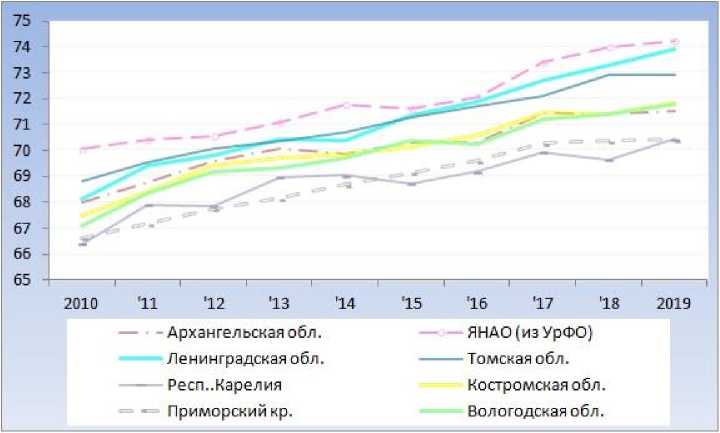
Рис. 4. Динамика ОПЖ в 8 регионах СЗФО, ЦФО, ДФО, Урала и Сибири; лет жизни37.
Очевидно, что в период 2010–2019 гг. доминантами сверху и снизу были графики ЯНАО и Приморского края вместе с Республикой Карелией. На рис. 4 видно, как график Ленинградской области изредка догонял график ЯНАО, а также то, что значения ОПЖ в Вологодской и Архангельской областях были очень близкими начиная с 2014 г. Также видно, что поморский тренд имеет явно меньший угол наклона при росте отсчёта года t , начиная с 2014 г. Фактические значения ОПЖ за эти годы для регионов АЗРФ и всей страны приводились в табл. 2 из (Проворова, Смиренникова, Уханова, 2024). Отсюда ясно, что значение ОПЖ выше среднего уровня всей страны наблюдается лишь для жителей ЯНАО в промежутке 2005–2019 гг. Одновременно для случаев Мурманской и Архангельской областей показатель ОПЖ был немного ниже российского уровня, а все прочие регионы АЗРФ отставали ещё сильнее. Это, в частности, связано с негативным воздействием сурового климата на здоровье населения, постоянно проживающего в регионах АЗРФ или вблизи от них (Проворова, Смиренникова, Уханова, 2024).
Наконец, после анализа серии графиков и вышесказанного, приведём пример.
Пример: модельное изменение факторов в Поморье с оценками для 2019, 2020 гг.
В табл. 3 показано, как позитивные изменения в рассмотренном комплексе факторных переменных обеих моделей могли бы способствовать улучшению значения ОПЖ в Архангельской области за 2019 г., а также его значения ИИ УБН в 2020 г.
Таблица 3
Пример с фактическими и прогнозными значениями для Архангельской области38
|
Факторные переменные |
Значения переменных в двух моделях |
||
|
Фактические |
Модельные |
||
|
1 |
2 |
3 |
|
|
1 |
Индекс Gini расслоения по доходам в 2019 г. |
0,364 |
0,359 |
|
2 |
Значение Ln ( med (ДД)/ ПМ ) в 2019 г. |
0,79 |
0,82 |
|
3 |
Контингент лиц с алкоголизмом в 2017 г. |
932,4 |
885,8 |
|
4 |
Заболеваемость алкоголизмом, наркоманией |
спад на 5% |
|
|
5 |
Объём выбросов СИЗ в атмосферу в 2016 г., кг/чел. |
спад на 3% |
|
|
6 |
Доля занятых с высшим образованием в 2018 г., % |
27,4 |
28,77 |
|
7 |
Физическая активность на 1 тысячу жителей, 2019 г. |
350,2 |
367,7 |
|
8 |
Коэффициент внешней смертности в 2019 г. |
120,5 |
115,7 |
|
9 |
Ln(BadWater ) — % проб некачественной воды (из сети) |
2,6734 |
2,5665 |
|
10 |
Рост переменной X 7 (ОПЖ для мужчин) в 2019 г., лет |
65,94 |
66,29 |
|
11 |
Индикатор транспортной инфраструктуры в 2019 г., балл |
3,0 |
3,06 |
|
12 |
ПЭВМ с Web -доступом на 100 работников, шт., в 2018 г. |
28 |
30 |
|
13 |
Показатель CES для организаций в 2016 г., % |
13,5 |
15,2 |
|
14 |
Использование RFID в организациях в 2018 г., % |
6,0 |
6,1 |
|
15 |
Мера дотационности бюджета региона в 2017 г., % |
3,24 |
3,175 |
|
16 |
Оценка Y (t) для ИИ УБН после подстановки в формулу (1) |
5,077 |
5,344 |
Таким образом, если бы в Поморье реализовать следующий комплекс мер: а) снизить индекс Gini в 2019 г. до среднего значения по Томской и Вологодской областям; б) на 5% уменьшить уровень алкоголизма; в) снизить на 4% логарифм от доли недоброкачественных проб воды, взятых в сети водоснабжения в 2017 г.; г) уменьшить на 3% логарифм объёма выбросов стационарных источников загрязнений (СИЗ) в атмосферу в расчёте на душу населения, то можно предполагать, что вследствие некоторых из этих действий коэффициент внешней смертности в Поморье снизится, например, на 4% (табл. 3, стр. 8). В результате реализации этих мер расчётное значение ОПЖ возросло бы здесь на 0,87% и в 2019 г. стало бы равным 72,54 вместо фактических 71,91 (лет жизни). Если предположить, что значение родственного показателя ОПЖ м вырастет в этой пропорции, то получится значение из строки 10 (табл. 3).
Перейдём теперь к моделированию переменной Y , или к оценке Y (t) , если бы в регионе удалось осуществить следующий комплекс шагов, а именно: а) фактор X 1 увеличить на 2%; б) фактор X 2 повысить до уровня Республики Саха (Якутия); в) фактор X 4 (или RFID) слегка увеличить; г) фактор X 3 ( CES ) поднять до уровня Мурманской обл.; д) переменную X 5 с мерой дотаций бюджета Поморья снизить на 2%, доведя её до приморского уровня (строка 15). Если значения из столбца 3 (табл. 3) подставить в формулу (1), то Y (t) получит значение (табл. 3, стр. 16), и график Поморья пройдёт примерно параллельно ленинградскому графику (рис. 1).
Как было сказано выше, этот пример имеет чисто иллюстративный характер.
Обсуждение результатов и выявление проблемных мест для Архангельской обл.
Проблемами пространственного развития в соответствии со стратегией России являются 39 : несоответствие между уровнем развития магистральной транспортной инфраструктуры и потребностями экономики и населения; наличие ограничений по этой инфраструктуре; слабая транспортная связанность регионов с центрами экономического роста; недостаточная степень интеграции различных категорий транспорта и др.
Исследование (Заколюкина, 2023) было посвящено анализу показателей, мешающих эффективному функционированию транспортной инфраструктуры как фактора роста экономики региона. В обзоре литературы приводится ссылка на связь индексов этой инфраструктуры и качества жизни (Заколюкина, 2023). Описываются работы с расчётами интегральных индексов инфраструктуры.
Важность развития транспортной инфраструктуры, а также улучшения логистики вместе с прогрессом цифровой экономики отмечалась в обзорной статье (Лёвина, Дубгорн, Фадеев и др., 2024). Для этого необходимо развивать сети сухопутных дорог, а также судоходные пути: по Северному морскому пути (СМП) и для речного водного транспорта. Всё это позволит эффективнее перемещать грузы и трудовые ресурсы (Лёвина, Дубгорн, Фадеев и др., 2024). Обычно цифровой экономикой называют ту часть продукции, которая получена в экономике на основе цифровых навыков и цифрового оборудования (оборудования для телекоммуникаций, а также hardware и software), а также применения цифровых товаров и услуг. Кроме того, в статье приводится ряд ссылок на соответствующие исследования.
В работе (Кузнецова, Васильева, 2024) был оценён уровень развития транспортной инфраструктуры территорий в двух частях АЗРФ, а также сделан обзор нормативно-правовых документов, влияющих на экономическую деятельность. Отмечено, что параллельно с СМП будет развиваться инфраструктура морских портов АЗРФ, формироваться цифровая подсистема. Так, среди перспективных проектов выделен план развития порта Архангельска и его транспортного узла, создание узла для логистики с целью перевалки контейнерных грузов. Также в (Кузнецова, Васильева, 2024), табл. 2 было показано, что предложенный индекс развития транспортной инфраструктуры в Поморье был минимальным среди регионов, входящих в указанные части АЗРФ за 2019–2021 гг. Это соответствует и данным табл. 1 (см. выше). Наконец, далее в табл. 6 (Кузнецова, Васильева, 2024) приводились различные коэффициенты: по Энгелю и др. С учётом того факта, что плотность населения в Архангельской области ниже, чем в Мурманской, а также того, что она несколько слабее карельского случая, исходя из данных этой табл. 6 можно сделать следующий локальный вывод: эти коэффициенты в Поморье были на нормальном уровне при сравнении с
СЕВЕРНЫЕ И АРКТИЧЕСКИЕ СОЦИУМЫ
Степанов В.С. Показатели благосостояния населения и продолжительности жизни … аналогами, имеющими близкие значения этой плотности: её автономного округа и Красноярского края. Также в табл. 7 этой работы приводятся данные по морским портам, причём Поморье находится здесь среди передовых регионов. К примеру, порт г. Архангельска является «большим», как и аналогичный мурманский порт; также у него имеется один важный плюс в виде наличия железнодорожной магистрали. Кроме того, в этих городах есть достаточно мощные воздушные порты, согласно (Кузнецова, Васильева, 2024), табл. 11–13. В итоге сделан вывод о том, что транспортная инфраструктура в Западной части АЗРФ способствует росту ВРП и улучшению условий жизни населения. Сейчас наблюдается недостаточный уровень транспортной обеспеченности в Поморье, что было объяснено в (Кузнецова, Васильева, 2024) особенностями размещения на территории, суровым климатом и низкой плотностью населения.
По нашим расчётам, относительно малое значение переменной ИИ ТИ (табл. 2, стр. 1) связано в Поморье с высокой долей местных, межрегиональных и межмуниципальных дорог, которые в 2015–2019 гг. находились в состоянии ниже нормативов, причём их качество было наихудшим в СЗФО. А также с тем, что по густоте сети железных дорог общего пользования этот северный регион также находится здесь на последнем месте. Кроме того, по доле дорог с твёрдым покрытием Поморье стоит на предпоследнем месте, опережая лишь вологодского аутсайдера, а по густоте этих дорог Поморье также находится позади многих; далее идут лишь Мурманская область и Республика Коми. Из других проблем Архангельской области в 2013–2019 гг. можно отметить рост уровня безработицы с 2016 г. (по рангам, рассчитанным по 85 регионам страны), а также несколько повышенный уровень бедности населения (на 24 месте в 2019 г., хотя он заметно снизился с 2015 г.). Многие её трудности лежат в области транспортной инфраструктуры и доступности территорий. Также в регионе высок уровень аварийного жилищного фонда, а в 2018 г. повышенной была и доля ветхого жилого фонда. Если рассматривать показатели благоустройства жилья в 2018 г. по всем регионам, то Поморье оказалось на 72 месте по обеспеченности домохозяйств (ДХ) водопроводом, а по централизованному отоплению — ещё ниже: 74 место. Также здесь было слабое 75 место по обеспеченности ДХ централизованным газом и / или напольными электроплитами. Да и по тройке других показателей — обеспеченности канализацией, ванной или душем, горячим водоснабжением — регион имеет низкие позиции: между 61 и 69. Наконец, здесь была сравнительно невелика доля хорошо образованного населения. Вероятно, это влияет на то, что web -доступ в ДХ снижался в динамике по t , а в сельских поселениях была слабой и доля широкополосного доступа в Internet. Заметим, что ранее в (Земцов, Демидова, Кичаев, 2022) с использованием методов эконометрики было выявлено, что web-доступ зависит от ДД и среднего возраста населения, уровня его образования, а применение ИКТ — от факторов доступа к глобальной web-сети и делового климата. Ещё Поморье отстаёт по инновациям.
В статье (Блинова, Былина, 2019) после исследования корреляционных связей переменных по выборке 78 регионов РФ за 2015 г. для случая сельского населения обнаружился один важный факт: показатели благоустройства жилых помещений имели высокие корреляции с ОПЖ. А ещё выше они были с фактором «густота автодорог общего пользования с твёрдым покрытием».
В (Богданова, Сабуров, Минчук и др., 2024) выполнен анализ основных направлений оцифровки регионального развития, которые способствуют инновационному развитию сельских территорий западной части АЗРФ (на примере Поморья и его автономного округа). В частности, учитывается развитие информационно-коммуникационной инфраструктуры, внедрение цифровых сервисов и формирование цифровых навыков у жителей. Подчёркнуто, что цифровая трансформация чаще позитивно будет влиять на ряд сфер жизни региона: экономику, состояние окружающей среды, социальную сферу, а также — на его органы управления. Особый акцент делается на рост качества жизни населения в связи с уровнем оцифровки территории. В приведённом здесь обзоре зарубежных работ говорится и о вероятном негативном влиянии на качество жизни (Богданова, Сабуров, Минчук и др., 2024). Ещё упоминается «Стратегия социально-экономического развития Архангельской области до 2035 г.», где есть и ряд аспектов по оцифровке общества.
Если взять 42 региона из верхней части рейтинга «Цифровая Россия» к окончанию 2018 г. 40 , опережающих Поморье по значениям индекса с аналогичным названием (ИЦР), и далее проанализировать их, то окажется следующее. После исключения двух столиц (Москва, Санкт-Петербург), которые сильно вырвались вперёд, для оставшихся территорий, включая Поморье, можно получить следующую диаграмму рассеяния (рис. 5).
ВРП в секторе "ИКТ, связь", тыс.руб., 2022г.
35 1 30 - ° « 25 - *
20 * * *
15 • • ♦• О • *
10 ‘ ‘ V > * -

0 1 2 3 4 5
Доля сектора "ИКТ, связь" в ВРП, 2022г., %
Рис. 5. Вклад ИКТ — сектора в экономику: Архангельская обл. и 40 регионов; тыс. руб.41
По оси ординат здесь показано, чему равен вклад сектора «ИКТ и связи» в величину валового регионального продукта (ВРП) в его душевом варианте за 2022 г. в тыс. руб. А по оси абсцисс отложено, какой была доля в ВРП у этого сектора экономической деятельности в данном году. Точки четырёх регионов здесь сильно выпадают из основной группы в виде
«облака точек с эллипсоидальной формой»: по две точки — сверху (ЯНАО, Мурманская область), а также — слева и ниже (ХМАО, Сахалинская обл.). Поморский регион помечен здесь ярко-красным цветом, а Самарская область из Поволжья — кружком розового цвета. Видно, что всё эллипсоидальное облако можно разбить на две подгруппы: 12 точек, лежащих справа и выше от этого кружка, и все остальные точки — левее и / или ниже. Между и вблизи точек этих двух областей лежат точки для регионов: ряд областей чернозёмной зоны ЦФО, Московская, Тюменская, Челябинская область, Республика Удмуртия и Приморский край. То есть положение точки Поморья по этим двум мерам уровня развития по «ИКТ и связи» было достаточно хорошим на фоне большого числа российских регионов за 2022 г.
Тем не менее, можно отметить, что среди 12 регионов из состава передовой по ИКТ подгруппы есть много таких, которые попадают в группу 1, сильнейшую по инновационному потенциалу (Нуреев, Симаковский, 2017). Да и по другому рейтингу инноваций 2018 / 2019 гг. большинство этих регионов вошли в список 14-ти лидеров страны (Абашкин, Абдрахманова, Бредихин и др., 2021). Также точки для некоторых таких инновационных регионов расположены неподалёку от розового кружка на рис. 5. Опираясь на это наблюдение, если взять 11 регионов этой подгруппы, исключив Калининградскую область, потом рассчитать среднее значение уровня инновационной активности за 2006–2023 гг.42 и, наконец, взять средние значения за 3 года, то получится график (рис. 6).
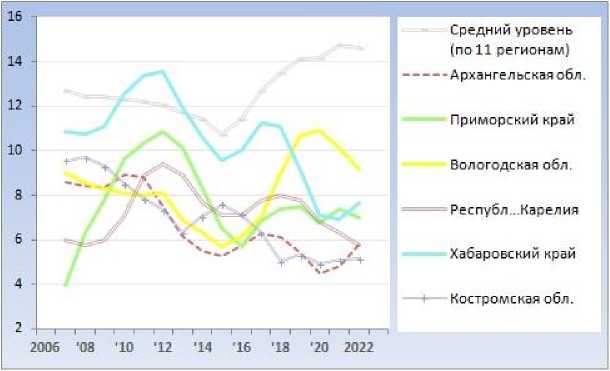
Рис. 6. Уровень инновационной активности организаций: динамика в ряде регионов, %43.
Заметим, что этот показатель был информативным и ранее входил в перечень факторов модели из работы (Степанов, Бобков, Шамаева и др., 2022). Здесь же для сравнения показаны средние значения, взятые со скользящим окном шириной в 3 года, ещё для нескольких регионов: Поморья, Приморья; Вологодской и Костромской областей; Республики Карелии и Хабаровского края. По ряду своих свойств Поморье отчасти близко к этим территориям России. Из этих графиков следует, что организации Поморья по уровню своей инновационной активности с 2012 г. стали отставать на фоне организаций из других регионов, связанных с рис. 6. Также можно заметить, что сильный спад уровня инноваций в Хабаровском крае после 2015 г., вероятно, негативно повлиял на динамику оценки края Y(t) на рис. 1. Так, в 2015-2018 гг. график для Y(t) в этом крае проходит вблизи от графика Поморья, однако хабаровский график Y(t) стал проходить в промежутке 2020-2023 гг. явно ниже: вблизи томского графика.
По мере приближения к красной точке Поморья на рис. 5, двигаясь сверху вниз по главной оси эллипса, чаще появляются точки регионов из группы 2, немного уступающей группе 1 по инновациям. Это были 4 региона из ЦФО, 5 регионов из ПФО, Тюменская и Омская области, Хабаровский край и др. А такие регионы, как Поморье, Красноярский и Приморский края, Республика Башкортостан, Ленинградская, Магаданская, Мурманская и Тверская области, относились к более слабой группе 3. Они требовали для роста инноваций сравнительно больших финансовых затрат и разработки специальных мер их господдержки (за 2011–2016 гг.). Кроме того, в передовую ИКТ-подгруппу из 12 регионов попали Томская и Вологодская области; обе они опережали Поморье по значениям ИЦР в 2017 и 2018 гг. При этом Томская область входит в группу 1 из (Нуреев, Симаковский, 2017), а Вологодская обл. — в группу 2. При интерпретации данных для Томской области, показанных выше, а также рис. 1–6, полезно помнить, что данный регион — устойчивый лидер рейтинга ВШЭ с 2015 по 2018 гг. из их доклада (Абашкин, Абдрахманова, Бредихин и др., 2021). Да и в рейтинге SMART он — на 4-м месте, а Поморье — в группе D: лишь на 70-м месте44.
Для повышения уровня инноваций в организациях Поморья, вероятно, могли бы быть полезны результаты из статьи (Toomsalu, Tolmacheva, Vlasov et al., 2019), в которой по 776 наблюдениям исследуются детерминанты инноваций для малых и средних предприятий, часть которых взята из некоторых стран ЕС. Здесь устанавливается, что более сильная конкуренция, инвестиции в технологии, а также оптимизация бизнес-процессов на предприятиях способствуют инновациям. Одновременно: изношенное или устаревшее оборудование, инертный персонал, слабо повышающий свою квалификацию и общий уровень знаний, а также финансовые и административные барьеры — всё это в той или иной степени мешает им.
Обсудим теперь схожесть динамики графиков переменной Y(t) (то есть оценки величины ИИ УБН) на рис. 1. В случае пары Поморье — Приморье её можно попытаться объяснить тем, что структуры ВРП у них в какой-то степени похожи (табл. 4); кроме того, в этих регионах оказались близкими значения ряда показателей: ВРП, по ИКТ и оцифровке экономики.
Таблица 4
Отраслевая структура ВРП: вклады для 8 регионов за 2019 г. (%) 45
|
Регион: область и др. |
Порядковый номер сектора экономической деятельности |
||||||||||||||
|
1 |
2 |
3 |
4 |
5 |
6 |
7 |
8 |
9 |
10 |
11 |
12 |
13 |
14 |
Плотность |
|
|
Ленинградская (22) |
4,4 |
0,6 |
28,9 |
6,7 |
9,1 |
9,7 |
13,6 |
0,7 |
9,2 |
2,5 |
5,9 |
2,1 |
3,6 |
3 |
22,4 |
|
Хабаровский край (25) |
5,8 |
6,0 |
9,4 |
2,7 |
5,6 |
15,0 |
15,0 |
2,4 |
8,7 |
1,7 |
12,2 |
4,2 |
5,2 |
2 |
1,7 |
|
Томская обл. (30) |
3,2 |
27,5 |
10,1 |
2,3 |
4,8 |
8,0 |
8,3 |
1,9 |
9,7 |
4,4 |
8,8 |
3,9 |
4,3 |
1 |
3,4 |
|
Приморский край (32) |
7,3 |
1 |
9,2 |
2,2 |
4,4 |
15,9 |
18,3 |
2,0 |
11,3 |
2,5 |
14,2 |
3,2 |
4,7 |
3 |
11,5 |
|
Архангельская (33) |
5,5 |
4,4 |
24,5 |
2,6 |
4,4 |
9,2 |
11,4 |
1,4 |
10,5 |
1,2 |
10,7 |
3,9 |
6,6 |
3 |
2,7 |
|
Вологодская (34) |
3,9 |
0,0 |
38,4 |
2,3 |
6,3 |
11,2 |
10,8 |
1,7 |
7,5 |
2 |
6,6 |
2,3 |
4,0 |
4 |
8,0 |
|
Республика Карелия (31) |
5,4 |
18,8 |
18,4 |
2,6 |
3,4 |
6,0 |
9,4 |
1,6 |
8,2 |
2 |
11,2 |
3,9 |
6,2 |
4 |
3,4 |
|
Костромская (69) |
6,7 |
0,1 |
22,9 |
8,2 |
4,4 |
12,5 |
6,4 |
2,4 |
10,1 |
1,6 |
10,6 |
4,7 |
5,4 |
4 |
10,5 |
Примечание: А) 1 — сектор «сельское и лесное хозяйство, рыбная деятельность»; 2 — добывающая промышленность; 3 — обрабатывающая промышленность (ОП); 4 — энергетика; 5 — строительство; 6 — сектор торговли; 7 — транспорт; 8 — сектор «ИКТ и связь»; 9 — недвижимость, аренда; 10 — научнотехническая деятельность и др.; 11 — услуги, безопасность; 12 — образование; 13 — здравоохранение, социальные услуги; Б) столбец 14 — группа инновационного потенциала из (Toomsalu, Tolmacheva, Vlasov et al., 2019) и 15 — плотность населения (на 1 января 2020г.); В) столбец 1, в скобках — место региона по величине душевого ВРП в 2019 г.
Хотя оба региона по инновационному потенциалу оказались в более слабой группе 3 (Нуреев, Симаковский, 2017), по уровню инновационной активности Приморье с 2010 г. стало превосходить Поморье (рис. 6). По-видимому, это связано с тем, что в структуре ОП в Приморье сильно доминируют машиностроительный сектор 9 (табл. 5), а также секторы 6 и 8.
Таблица 5
Структура «отгруженных товаров, работ, услуг» в секторе ОП, %, в 2019 г. 46
|
Регионы |
1 |
2 |
3 |
4 |
5 |
6 |
7 |
8 |
9 |
10 |
11 |
|
Архангельская обл. |
6,3 |
20 |
44,3 |
2,4 |
3,8 |
14,6 |
5,4 |
||||
|
Вологодская обл. |
7,7 |
5,4 |
19,4 |
2,0 |
58,4 |
||||||
|
Ленинградская обл. |
19,5 |
2,6 |
9,7 |
28,4 |
8,1 |
5,7 |
4,7 |
3,9 |
14,1 |
2,3 |
|
|
Республика Карелия |
12,7 |
16,6 |
47,5 |
2,7 |
2,7 |
6,3 |
3,4 |
6,7 |
|||
|
Костромская обл. |
8,6 |
21,9 |
4,5 |
3,7 |
2,1 |
18,9 |
13,8 |
21 |
|||
|
Приморский край |
20,2 |
4,2 |
5,5 |
2,8 |
1,8 |
46,4 |
3,6 |
10,8 |
|||
|
Томская обл. |
18,5 |
8,7 |
2,6 |
19,3 |
15,1 |
3,0 |
6,5 |
18,3 |
2,5 |
4,4 |
|
|
Хабаровский край |
11,5 |
3,8 |
15,9 |
2,8 |
36,8 |
23,5 |
3,8 |
Примечание: А) 1 — пищевое производство; 2 — деревообработка: ОП; 3 — целлюлозно-бумажное производство; 4 — нефтяное/кокс/рез./пластмасс. производство; 5 — мед.-химическое производство; 6 — неметалл. минер. производство; 7 — металлургия; 8 — электронн. / эл.-техн. производство; 9 — производство машин/обор.; 10 — производство мебели и др. изд.; 11 — ремонт, монтаж машин / оборудования. Б) если вклад был ниже 1,8%, в ячейках этой таблицы он не показывался (для упрощения).
Примерно то же можно сказать, сопоставляя данные Костромской области с аналогичными карельскими данными. Также из строк табл. 5 видно, что структуры ОП в Поморье, Костромской обл. и Республике Карелии немного похожи. Отчасти похожа и поморская структура. В этих трёх регионах очень мала доля сектора 4 (производство нефтепродуктов, кокса, резиновых и пластмассовых изделий). Вероятно, наряду с другими факторами, это способствует тому, что графики переменной Y (t) на рис. 1 имеют похожую динамику: с точностью до сдвига вдоль оси ординат. Однако благодаря лучшей динамике у RFID (рис. 3) и немного лучшей динамике ОПЖ (рис. 4), лучшему месту по величине ИЦР в 2017–2018 гг. и ещё более сильному инновационному потенциалу (табл. 4, столб. 14) поморский регион после пандемии слегка увеличил свой отрыв от двух указанных регионов.
Кроме того, важно обратить внимание на то, что переменную X 5 с дотациями нужно правильно интерпретировать. Уменьшение величины БП в бюджете региона напрямую не приводит к росту величины ИИ УБН. Смысл здесь в том, что если социально-экономическое положение в регионе улучшается, в связи с чем органы его управления начинают меньше заимствовать денежные средства в федеральном казначействе, то величина БП будет снижаться, а агрегированный показатель ИИ УБН впоследствии будет склонен к некоторому росту.
Если говорить про корректность использования модели 1, построенной по панельным данным с областями ЦФО, применительно к территориям из АЗРФ или вблизи них, то этот вопрос требует специального изучения. По-видимому, правильнее было бы взять совокупность регионов АЗРФ и / или близлежащих (либо взять часть из АЗРФ, которые лежат здесь целиком, а часть — частично) и создать базу панельных данных за 2015–2019 гг. вместе с 2022–2025 гг., а затем рассчитать по этой базе фактические значения Y по методологии, описанной выше и в публикациях (Степанов, Бобков, Шамаева и др., 2022; Айвазян , 2012; Степанов, 2022; Степанов, 2019). После этого построить модель панельной регрессии, используя найденные выше значения Y и собрав данные для кандидатов в список факторных объясняющих переменных. Для этого также весьма полезно изучить международный опыт.
Если кратко обсуждать аспекты, связанные с ОПЖ, то можно отметить следующее. Показатель ОПЖ часто используется в сопоставлениях стран (Штунь, 2021) или российских регионов (Степанов, 2024; Родионова, Копнова, 2020; Блинова, Былина, Русановский, 2020; Лопаева, Лопаева, 2022), а также при статистическом моделировании. Кроме того, этот показатель — важная часть индекса развития человеческого капитала, который популярен в различных сопоставлениях стран или регионов России. На практике показатель ОПЖ рассчитывается по таблице смертности на основе данных о численности и возрасте умерших лиц, полученных из ЗАГС; поэтому он характеризует уровень здоровья населения. Также ОПЖ играет роль одной из мер социально-экономических условий проживания населения (Штунь, 2021). В качестве факторов в моделях ОПЖ часто использовались: индекс Gini социального расслоения; доля жителей, потребляющих безопасную воду; употребление алкоголя взрослыми (после пересчёта к 95o); другие факторы, связанные с алкоголем; курение сигарет; объём выбросов CO2; разные индексы образованности жителей территории и многие др. (Степанов, 2024; Штунь, 2021; Amos, Smirnov, 2022; Владимирская, Колосницына, 2023; Перова, Корчемный, 2021; Родионова, Копнова, 2020; Блинова, Былина, Русановский, 2020).
В исследовании (Лопаева, Лопаева, 2022) делается вывод, что в странах мира: «смертность, в первую очередь, зависит от условий проживания и обстоятельств, которые провоцируются в основном … конфликтами и пониженным статусом социальной ответственности государства». Также здесь приводятся вклады для разных групп факторов по степени их влияния на показатель ОПЖ: согласно оценке ВОЗ и по мнению проф. Г.Э. Улумбековой.
Кроме того, западные учёные доказали положительный эффект от реализации комплекса мер, направленных на увеличение ОПЖ на территории (Nguyen, Li, Wang et al., 2023). Среди них: полный отказ от курения, лишь малое и редкое употребление алкоголя, достаточный уровень физической активности, снижение уровня стрессов, сбалансированная диета и др. Их реализация может сильно повысить показатель ОПЖ независимо от пола граждан, их этнической принадлежности и ряда других факторов. Отметим, что проблема снижения потребления табачных изделий особенно актуальна для населения АЗРФ из регионов, представленных в таблице в (Куратова, 2023). Например, распространённость курения среди взрослых жителей, за исключением трёх автономных округов с высокими доходами, была выше среднего уровня; исключение составляет также Карелия, где этот показатель равен среднему по России за первое полугодие 2025 г.47
Группа учёных, в основном из Гарвардского университета, ранее основательно исследовала влияние пяти факторов образа жизни на риск ранней смертности и продолжительность жизни населения для случая среднего жителя США в возрасте от 50 лет и привела свои результаты в (Li, Pan, Wang et al., 2018). Были рассмотрены случаи смерти от всех причин, а также из-за главных хронических неинфекционных заболеваний. Сначала по данным более 0,5 млн человек из 17 стран было выявлено, что около 60% случаев преждевременной смертности было приписано пяти показателям нездорового образа жизни: курение сигарет, избыточное потребление алкоголя, гиподинамия, несбалансированная диета и ожирение. Также была взята статистика за 40 лет по данным ≈ 79 тыс. американских медсестёр (на рубеже XX–XXI в.), а также, чуть позднее, для ≈ 44 тыс. медиков разного пола, аналогично за 30 лет. У каждого наблюдения фиксировалось 5 градаций изменения каждого фактора; к примеру: «никогда не курил», «ранее курил, но бросил», «от 1 до 14 сигарет в день», то же для «15–24 сигарет в день» и «от 25 сигарет в день». Затем были выбраны референтные значения у пациента с минимальным риском смертности для этих факторов: он «никогда не курил», потребляет «от 5 до 15 г алкоголя» в день, имеет «от 3,5 часов в неделю» физической нагрузки нужной интенсивности, его индекс массы тела — «от 23 до 25» (кг/м2), а индекс качества диеты — «оптимальный». Кроме того, для каждого из этих пациентов в национальной базе данных США был взят общий балл по здоровому образу жизни с 6 градациями: от 0 до 5. Затем авторы этого исследования обработали ≈ 42 тыс. случаев смерти среди этой популяции за 34 года наблюдений из официальной базы WONDER и затем рассчитали данные по продолжительности жизни. На основе использования мощного статистического пакета SAS и модели пропорциональных рисков Кокса они оценили отношение шансов и построили 95%-е доверительные интервалы для рассмотренных переменных. Они приводят несколько таблиц и ряд графиков, из которых ясно, каким образом разные сочетания градаций перечисленных пяти факторов влияют на риск преждевременной смертности у среднего гражданина США в возрасте от 50 лет. Это сделано для трёх вариантов: все причины смерти, смертность из-за новообразований и болезней системы кровообращения. Так, если пациент — американка 50 лет и все эти факторы принимают референтные значения, то она в среднем может выиграть благодаря такому образу жизни 14 лет с 95%-м доверительным интервалом (11,8; 16,2) относительно другого среднего жителя США, для которого каждый из 5 факторов имел наихудшую градацию. Также приводятся весьма полезные графики для каждого пола, которые показывают, на какое количество лет такой человек (в возрасте от 50 лет) в среднем сокращает свою жизнь из-за нездорового образа жизни (в зависимости от числа сигарет, выкуриваемых в день, объёма алкоголя, выпитого за неделю, уровня физической активности и др.). Очевидно, что после небольшой корректировки эти результаты были бы полезны при разработке мер профилактики в регионах АЗРФ, включая и многие другие территории.
Заключение
Объектом исследования выбрана Архангельская область, частично входящая в АЗРФ.
Методологической основой исследования является применение алгоритмов, взятых из двух разделов статистики: методов главных компонент и корреляционно-регрессионного анализа. Эти алгоритмы применялись к данным с панельной структурой, созданным по регионам Центральной России или Поволжья. Кроме того, используется методология анализа качества жизни из монографии С.А. Айвазяна (2012), в частности, при конструировании агрегированной переменной, являющейся мерой благосостояния населения. Две построенные модели регрессии применяются к статистике из Поморья и ещё нескольких регионов, собранной за ряд лет. Полученные результаты хорошо иллюстрируются.
Сделана попытка обосновать выбор регионов, с которыми сопоставляются значения ряда показателей Поморья. Также предложен иллюстрирующий пример, в рамках которого
СЕВЕРНЫЕ И АРКТИЧЕСКИЕ СОЦИУМЫ
Степанов В.С. Показатели благосостояния населения и продолжительности жизни … показано, какими мерами можно улучшить агрегированный показатель благосостояния за 2020 г., а также ожидаемую продолжительность жизни населения Поморья в 2019 г. В обсуждении приводится небольшой обзор работ по развитию транспортной инфраструктуры и информационных технологий в ряде регионов АЗРФ, а также по ожидаемой продолжительности жизни и её моделированию. Здесь же обращается внимание на инновационные аспекты развития и на прогресс западных учёных в направлении роста ОПЖ.
Впервые приводится спецификация модели 1, которая применялась к данным из Поморья, и анализируется динамика её важнейших факторных переменных. Среди них были инфраструктурная переменная, несколько показателей оцифровки в разрезе организаций, показатель человеческого капитала (типа ОПЖ) и др. Изучение динамики факторных и агрегированных переменных позволяет выявить ряд проблемных мест в Поморье по нескольким направлениям. Некоторые из таких мест ярко освещаются на диаграммах или графиках и сопоставляются с 7–8 регионами, похожими по ряду свойств на Поморье. Новизной является и то, что в формальном виде установлена статистическая связь между переменными дорожно-транспортной инфраструктуры, а также показателями оцифровки деятельности организаций с агрегированной переменной по благосостоянию. А также к вышеописанным данным впервые применена новая модель регрессии для ОПЖ. Обе модели позволили выявить наиболее сильно влияющие факторные переменные.
Самостоятельный интерес может представлять и методология анализа данных, которую можно использовать для других регионов из АЗРФ и / или расположенных вблизи от них, а также для прочих регионов, взятых из разных округов страны. Вероятно, может быть интересен и ряд параллелей, выявленных при анализе социально-экономического развития регионов. Итоги исследования могут быть полезны для органов власти, управляющих региональным развитием территорий АЗРФ и других регионов России, при разработке мероприятий по реализации их стратегических программ.
