
Potential contestants of plant species in rhizoremediation process
Journal: Journal of Stress Physiology and Biochemistry @jspb
Article in issue: 3 т.21, 2025.
Free access
The wild spectrum of plant species have potential natural remedies of the removal of the toxic components created by various process and ways were detoxify under rhyzoremediation process. The major toxic components are heavy metals like Cr, Cu, Co, Ni, Zn, Pb, Cd, and As. Cr, Cu, Co, Ni, Zn, Pb, Cd, and As, organic compounds, microplastics, pesticides, aromatic pollutants, and anthropogenic components are present in terrestrial and aquatic habitats, major threats to living organisms like plants, animals, and microbes. Roots are the primary contact to absorb these components in soils and water medium. A few plant species like Pteris vittata L., Eichhornia crassipes (Mart.) Solms, Chrysopogon zizanioides (L.) Roberty, Panicum maximum Jacq ., Festuca arundinacea Schreb., Cynodon dactylon (L.) Pers., Phalaris arundinacea L., Miscanthus giganteus J.M.Greef & Deuter ex Hodk. & Renvoize, Medicago sativa L., Pisum sativum L., Ricinus communis L., Trifolium alexandrinum L., and Salix alba L. have excellent rhizoabsorption capacity and detoxification by root absorption mechanisms. The heavy metals are very essential for the plant metabolic process, but at certain times their threshold concentration is beyond the tolerance limits. So these plant species keep their threshold limit within by rhizoremediation process. These plants intensely grow where there are high phytotoxicant chemicals present and gradually detoxify through the biomechanism in their plant body, consequently gradually reducing their intensity in the plant body as well as in the environment. More insight is needed to elucidate the precious mechanism and other microbial flora involved in this novel cleaning process in the nature.
Similar articles in the section Fruit growing
Short address: https://sciup.org/143184733
IDS: 143184733
Text of the review article Potential contestants of plant species in rhizoremediation process
Rhizoremediation is a type of bioremediation that involves the use of plant roots and their associated microorganisms to break down, remove, or neutralize contaminants from soil and water. The roots of plants release compounds that stimulate microbial activity, enhancing the degradation of pollutants like heavy metals, hydrocarbons, and pesticides.
This process is particularly useful in cleaning up contaminated environments in an eco-friendly and sustainable way. The process of expending terrestrial and aquatic plants to absorb, concentrate, and precipitate pollutants from contaminated water sources with low concentrations of contaminants in their roots is known as rhizofiltration. Acid mine drainage, agricultural runoff, and industrial discharge can all be partially treated via rhizofiltration. It can be used to elements that are mostly maintained in the roots, such as lead, cadmium, copper, nickel, zinc, and chromium (Chaudhry, 1998). Of these, the Lower molecular weight compounds can often be removed from the soil and released through leaves via evapotranspiration processes (phytovolatilization). Some of the non-volatile compounds can be degraded or rendered non-toxic via enzymatic modification and sequestration in planta (photodegradation, phytoextraction). Other compounds are stable in the plants and can be removed along with the biomass for sequestration or incineration.It is fortuitous that these aromatic plant compounds are structurally similar to many organic contaminants such as polychlorinated biphenyls , Polycyclic Aromatic Hydrocarbons and Polyhydridocarbyne, thereby providing a means to exploit natural processes in the rhizosphere for the remediation of contaminants (Holden and Firestone, 1997). It has been reported that plants can have more than 100 million miles of roots per acre, which suggests great potential for phytoremediation in natural environments (Boyajian and Carreira, 1997).
Rhizoremediation is a subset of phytoremediation that involves the interaction between plant roots and their associated rhizosphere microbes to degrade, stabilize, or remove contaminants from soil, water, or air. Various plant species are effective for rhizoremediation depending on the type of contaminant, environmental conditions, and soil properties. Below is a list of common plant species used in rhizoremediation for specific types of pollutants.Deteriorated growth of the species indicated at its sensitivity towards the particular stress; however, improved root growth under toxic concentration of the pollutants as was observed in some cases possibly illustrated the ability to tolerate the specific pollutant, either by bioaccumulation or efficient export and also the plasticity of the root architecture (Karlova et al., 2021) .This review article insight on a few plant species involved in the Rhizoremediation process and their precious mechanism are elaborated here.
This review articles were prepared by recent updated research informations from research communities. Thirteen excellent plant species were undertaken in the review processes and elucidated their rhiziremediations capabilities and role in nature cleaning of toxic materials into nornal materials and reuse by various organisms.The main aims of this review process is strength and weekness of plant species in rhizoremediation or phytoremediation processes as well as ecosystem roles.
Plant species, microbial communities, pollutant type, soil conditions, and environmental factors constitute a few of the variables that affect how effective rhizoremediation performs.Utilizing plant-microbe interactions, rhizoremediation is a promising method for cleaning up contaminated areas. Despite its drawbacks, improvements in agronomic practices and biotechnology may boost its effectiveness and applicability. Key findings from a number of studies are included below.
Pteris vittata
P. vittata , a hyper accumulator fern, can take up to 22,000 mg/Kg Arsenic from soil, making it an effective method for cleaning contaminated soils (L , 2001). Its hydroponical growth allows for the development of a root system essential for Arsenic (A) uptake (Natarajan et al. , 2011; Natarajan et al. , 2009; Singh and Ma, 2006) . First 10-20 cm of the underground tissue of adventitious and young roots are responsible for active absorption in water using low strength nutrition solution (Huang et al. , 2016; Poynton et al. , 2004; Stamps, 2007). Most studies have grown this plant on water supplemented with
Arsenic salts or other elements (Huang et al. , 2004; Kohda et al. , 2021; Song et al. , 2011; Wang JunRu et al. , 2002). Hydroponic growth of P. vittata requires about 4 weeks for experimental purposes. Several studies have reported arsenic and arsenate efflux from external medium to root cells, but a small details are known about As efflux from P. vittata (Su et al., 2008; Xu et al., 2007). While grown in soils P. vittata can secrete hydroxide ions, modify pH values and its limited increase in pH value and slight release of As after growth indicate reused for successive phytofiltration cycles this ferns. Reused ferns show better results than the first cycle of P. vittata (Marzi et al., 2021).
Low mobility of Pb from the roots to the shoots is indicated by the fact that the Pb concentrations in the roots of P. vittata were significantly higher than those in the shoots. Of all the fern species that were studied, P. vittata had the greatest levels of lead accumulation in its roots (5009.2 mg kg-1) and fronds (494.5 mg kg-1).On soil with exceptionally high Pb concentrations, it was the predominant fern species (5416.7, 14350, 25800 mg kg-1) (Grzegórska et al. , 2023). Different bioabsorption of hevy metals by root of P. vittata , in Fig.1.
it concluded that , for rhizoremediation, Pteris vittata is an excellent species, especially for arsenic-contaminated areas. It is a useful tool for cleaning up contaminated soils because of its capacity to tolerate other heavy metals and hyperaccumulate arsenic. Its eco-friendly, sustainable, and economical qualities make it a desirable choice for environmental rehabilitation projects, despite the fact that its application may be relatively specialized (particularly for arsenic). But as with any phytoremediation strategy, long-term effectiveness depends on managing plant biomass and disposing of contaminants efficiently.
Water hyacinth
Echhornia. crassipes, an invasive species, has been found to adsorb xenobiotics like cadmium, zinc, and chromium from contaminated water due to its larger root surface area (Srivastava et al., 2021). This plant has remarkable metal pollution phytoaccumulation capacities, with toxic metals like Cr, Cu, Co, Ni, Zn, Pb, Cd, and As bio concentrated in its root system. E. crassipes grows quickly and produces an outstanding amount of root biomass (Clavé et al , 2016). Large-scale effluent rhizofiltration has been achieved due to its biological traits and phenotype. The thioether 5 structure, similar to antioxidant santox or santanox, is used to make tarpaulin used in manmade ponds Fig .2 (Grison et al., 2018). E. crassipes roots also have the ability to eliminate impurities from aromatic structures. Root material works well for metallic elements biosorption and producing salts of metal carboxylate. Lignin, a major component of roots, can produce aromatic compounds, which can help retain aromatic pollutants (Grison et al., 2018).
The study reveals that E. crassipes from Sutlej River/Harike wetland contains significantly higher levels of toxic elements than other tropical rivers, indicating phyto-accumulation effects, which make them useful as rhizofilters due to their high concentration by (Srivastava et al. , 2019). The ability of E. crassipes to remove chromium from chromite mine effluent in Sukinda, India, was investigated by (Saha et al. , 2017). Over the course of 15 days, the plant successfully eliminated 99.5% of Cr (VI), lowered BOD by 50%, and decreased COD by 34%. E. crassipes showed a high capacity for Mo, Pb, and Ba accumulation in the Kemerovo region, with BCF values of 24,360 ± 3600, 18,800 ± 2800, and 10,040 ± 1400, respectively.
Water hyacinth is a biological agent that effectively reduces pollutants in wastewater by reducing organic and inorganic materials. Its hyper accumulator ability can reduce organic and inorganic matter by up to 80%. Using phytoremediation techniques, water hyacinth can reduce BOD and COD in agricultural wastewater by 7580% ((Ijanu et al., 2020; Novita et al., 2022; Polińska et al., 2021). Studies show that agro-industrial and domestic wastewater treatment using water hyacinth with a constructed wetland method reduces total suspended solid by 90% (Denisi et al., 2021; Valipour et al., 2015). However, its morphological stages influence its effectiveness. The properties of organic matter in wastewater from coffee processing can be determined by comparing the BOD and COD levels. When the BOD to COD ratio in coffee wastewater processing is greater than 0.1, it indicates that there is a high concentration of organic matter that decomposes easily in the wastewater (Novita et al., 2021; Novita et al., 2022). This wastewater falls into the biodegradable category since its BOD to COD ratio is 0.65. The biological approach, which uses aquatic plants like water hyacinth (Echhornia crassipes) and microorganisms, is advised for wastewater treatment when the typical ratio of BOD and COD > 0.1 (Novita et al., 2022; Saha et al., 2017). Water hyacinth is invasive species in some regions but it can effectively used in phytoremediation process unless its harmful effects on ecosystems.
Vetiver grass (Chrysopogon zizanioides)
The effectiveness of vetiver grass phytoremediation demonstrates that the experimental plot plants' roots accumulate more metal than the control plants'. The levels of root metal accumulation for Al3+, Cr6+, Fe3+, Zn2+, and Pb2+ were 342.97, 296.18,457.77, 133.73 and 21.54 mg/kg in the experimental plot and 233.78, 110.64, 311.08, 29.24 and 4.33 mg/kg in the control plot. Additionally, it has been noted that metal deposition is higher in the root than in the shoot, suggesting that the vetiver grass's roots are rhizofiltering. In the experimental plot with vetiver grass, metal accumulation in the shoot is higher (34.25, 23.80, 69.26, 10.06, and 0.44), whereas it is lower in the control plot (46.29, 56.72, 77.05, 21.86, and 7 correspondingly). Fe3+ > Al3+ > Cr6+ > Zn2+ > Pb2+ is the absorption capacity of the vetiver grassroot (Adhikary et al., 2022).The effectiveness of vetiver grass phytoremediation demonstrates that the experimental plot plants' roots accumulate more metal than the control plants'. The levels of root metal accumulation for Al 3+, Cr 6+, Fe 3+, Zn 2+, and Pb 2+ were 342.97, 296.18,457.77, 133.73, and 21.54 mg/kg in the experimental plot and 233.78, 110.64, 311.08, 29.24, and 4.33 mg/kg in the control plot. Additionally, it has been noted that metal deposition is higher in the root than in the shoot, suggesting that the vetiver grass's roots are rhizofiltering. In the experimental plot with vetiver grass, metal accumulation in the shoot is higher 34.25, 23.80, 69.26, 10.06 and 0.44, whereas it is lower in the control plot 46.29, 56.72, 77.05, 21.86 and 7 correspondingly). Fe 3+ > Al 3+ > Cr 6+ > Zn 2+ > Pb 2+ is the absorption capacity of the vetiver grass root (Adhikary et al., 2022).
(Mudhiriza et al. , 2015), reported vetiver has a higher capacity to neutralize 77% of nickel, 606 mg/L Pb, and 23,285 mg/L Zn (Aksorn and Chitsomboon, 2013; Srisatit and Sengsai, 2003), reported two plant species like Vetiveria nemoralis and Vetiveria zizanioides can extract 86% and 89% of the chromium from wetlands. In Vetiver sp., roots accumulated over 40% Cr, followed by Ni and Pb. In additions to rhzioremediation properties ,Vetiver grass is a perennial bunchgrass that is commonly grown for its vast root system, which makes it useful for soil conservation, and erosion reduction. The plant is particularly well-known for its aromatic roots, which are utilized in traditional medicine and the perfume industry.
Panicum maximum
In Hawaii, Panicum maximum shown to be an effective species for getting rid of the explosive RDX (1, 3, 5-trinitro-1, 3, 5-triazinane),according to(Paquin et al. , 2004). According to (Lamichhane et al. , 2012), molass increased P. maximum's phytoremediation of "RDX explosive" and caused RDX to mostly vanish in the root zone. Guinea grass ( P. maximum ) was investigated by (Fakayode and Onianwa, 2002) and in nearby of Lagos, Nigeria's Ikeja Industrial Estate. The quantities of Mn (0.94), Cd (0.83), Ni (0.90), and Pb (0.73) in the soil and grass were determined to be highly significant. In the P. maximum , the accumulation factors for Cr (23), Cd (34.1), Ni (23.4), and Mn (12.3) were higher than those for Pb (9.8), Zn (7.2), and Cu (8.7).
Despite its effectiveness, picloram is one of the herbicides that arouses most concern from the environmental point of view, because of its long persistence; it can be found up to three years after its application within an area(Penner, 1994). P. maximum might be particularly useful for the decontamination of areas with degraded pasture containing picloram residues, especially because these are easily managed grasses. The picloram is absorbed by the plant, but not degraded, and the plant biomass returns to the soil as mulch, it can be reabsorbed by species susceptible to its herbicidal action, thus promoting recontamination within the area (Nascimento et al. , 2015).
It observed that, due to its rapid growth, large biomass, and capacity to stabilize and absorb a variety of contaminants especially heavy metals Panicum maximum is a promising species for rhizoremediation. In tropical and subtropical regions, where soil pollutants represent significant risks to the environment and public health, it is especially well-suited for extensive remediation projects. The overall effectiveness of environmental cleanup initiatives can be enhanced by combining it with other plants and remediation methods.
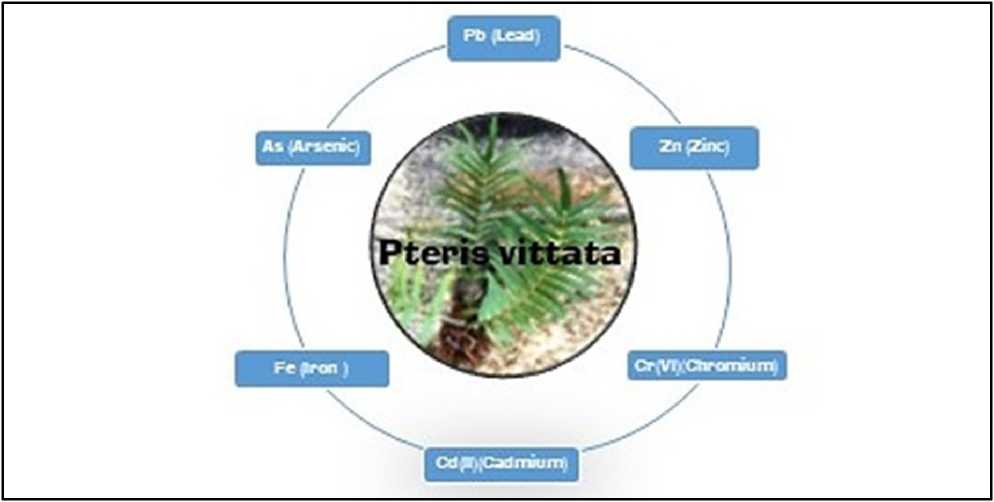
Figure 1. Heavy metal rhizofiltration/ phytoremediation of Pteris vittata
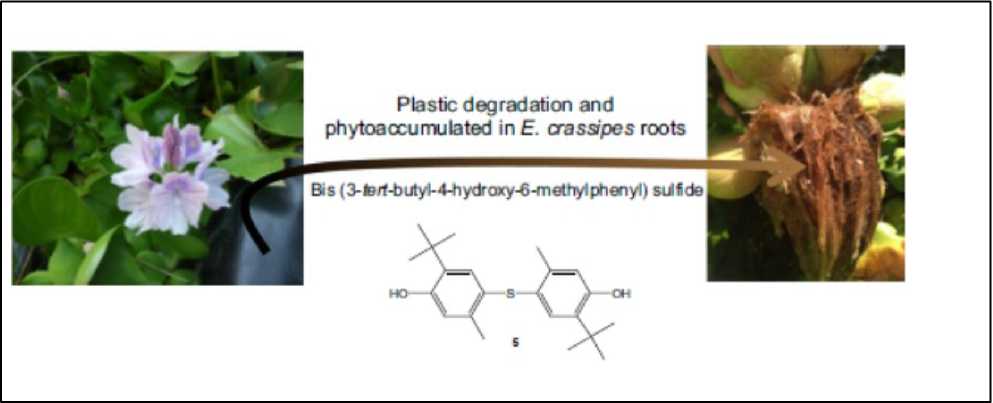
Figure 2. Tarpauline-biosorption of Thioether 5
Table 1. Metal ions absorption properties of Salix species
|
Different species of Salix |
Metal Ions |
Characters |
References |
|
Salix alba |
Mn and Pb |
Decreased concentration in a hydroponic environment |
Marius et al. (2017) |
|
Salix alba |
Cu, Zn and Mn |
highest level of heavy metal accumulation |
Popoviciu and Ticuţa (2018) |
|
S. planifolia , S. geyeriana, S. drummondiana |
Cd, Cu, Pb and Zn |
Concentration of metals collected in roots |
Meiman et al. 2012) |
|
S. viminalis x miyabeana, S eriocephala |
As |
As- the total amount of accumulation was higher. |
Puckett et al. (2012) |
|
S. Purpurea, S. alba, S. fragilis, S. japonica, S. nigra |
Cd, Co, Cr, Cu, Ni, Pb and Zn |
Usually, these metals' highest concentration |
Mleczek et al. (2009) |
|
S. Purpurea, S. alba, S. fragilis, S. japonica |
Cd, Co, Cr, Cu, Ni, Pb and Zn |
Other species performed well and Salix sps accumulated more. |
Mleczek et al. (2010) |
|
S. Purpurea, S. viminalis x miyabeana, S. Sachaliensis |
AS |
By amendment in soil with phosphate As accumulation increased |
Purdy and Smart (2008 |
|
S. Purpurea, S. eriocephala, S. Sachaliensis |
Zn, Mn, Fe, Cu and Al |
Zn, Fe and Al were accumulated more than populous |
Zalesny and Bauer (2007) |
|
S. geyeriana, S. monticola |
Mn and Zn |
Good for Mn resistance and better for phytostabilization |
Shanahan et al. (2007) |
|
S. geyeriana, S. monticola |
Cd, Mn and Pb |
When it comes to Cd accumulation, S. monticola is superior to S. geyeriana. |
Boyter et al. (2009) |
|
Salix sps |
Cd and Zn |
Compared to stems, leaves contained more of these metals. |
Pulford et al. (2002) |
|
S. nigra |
Mn, Ni and Fe |
It was found that basically every portion plant contained metals. |
Punshon et al. (2005) |
Festuca arundinacea and Cynodon dactylon
Rhizofiltration by F.arundinacea and C.dactylon focuses on using grass species to remove contaminants from water and soil. Both grasses are known for their extensive root systems, fast growth, and ability to tolerate various environmental stresses, making them ideal for phytoremediation applications. Trinitrotoluene (the explosive used in TNT explosives) can be removed from polluted soil through a novel technique called Nano phytoremediation, which was developed by (Jiamjitrpanich et al., 2012). This technique combines phytoremediation with nanoscale zero valent Fe (iron) (nZVI). In this study, the purple guinea grass was employed for nano-phytoremediation of soil contaminated with a TNT/nZVI ratio of 100 mg/kg TNT concentration, and it was shown that the remediation of the TNT had been finished in 60 days. (Albornoz et al., 2016) studied the amount of lead and zinc collected from contaminated soils in the F. arundinacea and C.dactylon were two species. The levels of lead and zinc in the root of C.dactylon in the contaminated soil were higher than the control soil. They were noticed that higher levels of lead and zinc in the grass root in contaminated soils, compared to the lead and zinc concentrations in sample in controlled conditions 551% and 258%, respectively. F. arundinacea has been widely used for metal separation and hydrocarbons degradation from polluted soils and sites.
(Albornoz et al., 2016) investigated the levels of zinc and lead in C. dactylon and F. arundinacea that were taken from polluted soils. When compared to the control soil, the polluted soil had greater amounts of lead and zinc in the C. dactylon root. In comparison to the lead and zinc concentrations in the sample under monitored conditions, which were 551% and 258%, respectively, it was shown that the grass roots in polluted soils had higher amounts of these elements. These researches were conducted in field and greenhouse scales. Most studies have been taken by greenhouses scale due to more controlling conditions and stresses. (Chen et al., 2003) used a greenhouse growth chamber designed for pyrene degradation in the rhizosphere of F. arundinacea and Panicum virgatum. 190 days of incubation found out 37.7% and 30.4% of pyrene was mineralized in the soil planted with F. arundinacea and P. virgatum, respectively. Two species of F. arundinacea and C. dectylon had been used in the (Soleimani et al., 2010) study to phytoremediation soils contaminated with nickel and lead. Results revealed that F. arundinacea roots had substantially greater levels of nickel and lead than those of other plants. Zinc concentrations differ between Brassica juncea and F. arundinacea species, and environmental stress influences the phytoremediation behaviour of plants. The primary processes for heavy metal deposits and hydrocarbon breakdown in F. arundinacea are rhizofiltration and rhizodegradation; each plant has its own special phytoremediation mechanisms by (Cunningham and Ow, 1996).
Rhizoremediation, which uses Festuca arundinacea , is a sustainable and eco-friendly method of cleaning up areas with contamination. It is a successful approach for reducing soil and water pollution because of its capacity to promote the microbial breakdown of pollutants as well as its root uptake of organic and heavy metal pollutants. To truly understand its potential and maximize its application in many remediation contexts, more research is necessary.
Reed Canary Grass (Phalaris arundinacea)
it is a tall, cool-season perennial grass known for its rapid growth and adaptability. It is both valued for its uses in phytoremediation, erosion control and biomass production and criticized for its invasiveness in certain regions. Reed canary grass is useful for phytoremediation of heavy metal-degraded soils. According to research, this species works well for treating Zn-contaminated soils, but it is insufficient for treating Cd, Cu, and Pb-contaminated soils (Baryla et al., 2009; Elbersen et al., 1998).According to (Rosikon et al., 2015), during the two years of the experiment, the amount of Cd in the biomass of reed canary grass varied between 0.0396 mg·kg-1 d.m. and 0.3365 mg·kg-1 d.m. While fertilizer in the form of municipal sewage sludge did not significantly improve the amount of Cd accumulated in biomass by reed canary grass, the addition of industrial sewage sludge during the first year of the processed higher amount of Cd concentration.
In the Miscanthus spp, the pattern of metal deposits was Zn > Cr > Pb. When miscanthus genotypes were exposed to comparable soil conditions, their phytoremediation capacity varied. The highest level of zinc accumulation was seen in M.× giganteus due to the larger mBCFs (0.3–0.9) and TFs (0.7–1.5), which were similar across species. According to a prior study, when gigantic reed and Miscanthus spp . were cultivated in heavy-metal-contaminated soil with full irrigation (950 mm) to combat water stress, their yields suffered (Barbosa et al. , 2015) biomass production. In comparison to the area of the highest pollution, the M. floridulus absorption capacity of Cr, Cu, and Ni increased by 67.88%, 79.17%, and 68.49%, respectively, in the area of the least contamination. Additionally, compared to the area with the least contamination, the physicochemical properties and enzyme activity were better (Wu et al. , 2022).
Strong tolerance to diseases, hazardous insects, and harsh environmental circumstances has been demonstrated by Miscanthus x giganteus. Its cultivation aids in carbon sequestration, cation exchange, and soil water retention, and it maintains high production even in nutrient-poor soils and harsh climates. Research has shown more and more over the last ten years that this species can provide biomass for bioenergy applications on soils contaminated with trace elements (Lutts et al., 2024). Trace element (TE) accumulation in Miscanthus grown in Poland, France, Serbia, and other parts of the world has been the subject of recent research (Grzegórska et al., 2023; Nurzhanova et al., 2019; Ranđelović, 2017). Any details regarding Mxg behavior in soils that are primarily contaminated by petroleum aliphatic hydrocarbons, apart from the initial experiment's conclusions. Research demonstrated that real soil tainted by petroleum refinery operations, with C10-C40 concentrations ranging from 5.1 to 8.6 g/kg, was unsuitable for Mxg cultivation due to the large reduction in photosynthetic efficiency and the severe inhibition of plant growth (Nebeská et al., 2021). In summary, Miscanthus × giganteus has great potential for rhizoremediation because of its strong root system and capacity to harbour microorganisms, which may assist in the degradation or stabilization of a variety of contaminants in polluted soils.
Leguminous Plants
Leguminous plants belong to the family Fabaceae ( Leguminosae ) and are well-known for their unique ability to fix atmospheric nitrogen through a symbiotic relationship with Rhizobium bacteria in their root nodules. This makes them incredibly valuable for improving soil fertility and promoting plant growth, especially in degraded or nutrient-poor soils. In the context of rhizofiltration, legumes are highly effective due to their ability to absorb and stabilize heavy metals and other pollutants from contaminated soils and water, while also enriching the soil with nitrogen.
Rhizofiltration by Leguminous Plants is particularly interesting because legumes form symbiotic relationships with nitrogen-fixing bacteria (Rhizobia) in their root nodules. This symbiosis not only improves soil fertility but also enhances the plant's ability to absorb and stabilize heavy metals and other pollutants from water and soil. (Trotsenko et al., 2024) studied the rhizofiltration of heavy metals in soil, they found out in comparison to control samples, the study indicated that peas (P. sativum) can successfully lower the amount of iron in soil, especially in the Ukrainian Forest Steppe. Peas were less successful in absorbing chromium, though, indicating that more study is required to provide a more thorough defence of pea-based phytoremediation. Xiong et al. (2018) found out that, in the vicinity of Medicago sativa, the Ricinus communis's height and stem circumference were impacted. M. sativa encouraged the growth and markedly enhanced its height and stem circumference of R. communis. R. communis, chlorophyll content of was more affected by higher levels of cadmium and zinc heavy metal pollution, however this effect was reduced by M. sativa. R. communis, oil content of fruits was considerably decreased by pollution, while unaffected by the oil content was the varying levels when M. sativa was there.
Another leguminous plant, Trifolium alexandrinum , commonly known as Berseem clover or Egyptian clover, is a fast-growing, annual forage legume. It is widely cultivated in the Mediterranean, Middle Eastern, and South Asian regions, especially in Egypt, India, and Pakistan, for its high-qualityfodder. (Ali et al. , 2012) were studied it rahizofiltration properties of heavy metal extraction. They found out that, effectively extracted heavy metals from simulated soil, with significant differences in concentration values between control and experimental plants. However, translocation of accumulated metals from roots to shoots was limited. Uprooting plants can overcome this limitation. T. alexandrinum offers advantages such as biomass production, short life cycle, environmental resistance, and multiple harvests in a single growth period, making it suitable for phytoremediation of toxic heavy metals.
According to the study, the doses evaluated determine how resistant T. pratense. seedlings are to Ag+ toxicity. T. pratense seedlings were shown to be extremely toxic to Ag+ doses of 70 mg L-1 Ag+, which affected their entire metabolism and caused permanent damage to plant organelles. Ag/Ag2O-NPs may be produced by the seedlings root system of. T. pretense as a metal exclusion response. Additionally, the study discovered that T. pratense. seedlings' better photosynthetic and antioxidative activity, lowering root surface strength, high genomic template stability, and moderate translocation ability increase their capacity to tolerate Ag+ poisoning. According to this study, applying larger plants on a larger scale such as T. pratense seedlings would help with quick detoxification of contaminated sites (Mo et al., 2020). In rhizoremediation, Trifolium alexandrinum has potential, particularly for the removal of heavy metals, the increase of soil fertility through nitrogen fixation, and the microbial interactions that promote soil health. However, more study needs to be done to determine its long-term efficacy in contaminated soils and to refine its function in extensive environmental cleaning.
Salix Species
Rhizofiltration is a type of phytoremediation that involves using plant roots to absorb, concentrate, and remove contaminants, particularly heavy metals, from water and soil. Tree species with extensive root systems are particularly effective in rhizofiltration because their roots can access and absorb pollutants over large areas.(Sandhi et al. , 2023), according to their study, contaminated harbor silt can be utilized to grow bioenergy crops, and Salix species have the ability to stabilize and store heavy metals with low transfer factors. As a result, terrestrial and other living things may have less access to heavy metals. The study also emphasized the significance of circular economy principles for biomass generation and waste material recovery in Sweden's forest sectors. Additionally, the study emphasized the possibility of increased zinc accumulation in polluted sediment for plant biofortification, namely in maize. In order to achieve the Sustainable Development Goals, this might support the bioeconomy and environmentally responsible, sustainable management.
By adding to the root zone with water and ammonium acetate extraction, (Vervaeke et al. , 2004) proved that Cu and Pb, but not Cd, were readily available in the root zone as compared to the bulk sediment. As the root zone's sediment was more aggregated and well-structured, it was more permeable to water flowing downward, which led to some metals leaching and markedly lower levels of Cd, Cu, and Pb overall. Salix alba L. Species had the greatest average quantities of heavy metals, as reported by (Popoviciu and Ticuţa, 2018): 8.89 mg/kg Cu, 43.94 mg/kg Mn, and 94.10 mg/kg Zn. These findings are inconsistent with hyper accumulation. The only S. alba with BAC higher than 1 for Zn (only as an average value) and Cu (in all samples have constant ) was S. alba. (Bajraktari et al., 2019) , studied , S. alba contains a variety of heavy metals. It is advised that lower the pollution load by S .
alba plantations since the various contaminants in the soil and water samples are higher than the maximum allowable level ( Table. 1). As willows follow being dominant vegetation in higher elevations and absorb even heavy metals, they are useful phytoremediation agents. In uninhibited mine sites across the world, they have shown to be very helpful. It is regarded as a hyper phytoextraction plant that needs a high rate of root-to-shoot translocation. Their rapid growth, high biomass, and high capacity for metal transfer make them valuable. According to (Wani et al. , 2020), they are also widely dispersed because of their highly developed root system, which frequently goes deep into the soil and accumulates heavy metals there.
Depending on the types of contaminants present, the conditions in the environment, and specific goals of the rhizoremediation project, several combinations of tree species might be applied. Their capacity to both absorb toxins through their roots and stimulate microbial activity that can break down or stabilize these pollutants is essential to their success.
CONCLUSION
In the plant-assisted bioremediation technique referred to as rhizoremediation, rhizosphere bacteria and plants interact to break down, reduce, or stabilize contaminants in soil and water. Environmental factors, microbial interactions, and plant species all affect the manner in which rhizoremediation works. V. nemoralis and V. zizanioides can extract 86% and 89% of the chromium from wetlands. In Vetiver sp., roots accumulated over 40% Cr, followed by Ni and Pb. P. vittata mainly removes arsenic compounds in soil , E. crassipes is growing in water bodies and removes heavy metals Cr, Cu, Co, Ni, Zn, and Pb, and roots also have the ability to eliminate impurities from aromatic compounds and plastic contaminants. In Chrysopogon zizanioide s, root metal accumulations are Al, Cr, Fe, Zn, and Pb . P. maximum has the ability to neutralize RDX from soils and other heavy metals like Cd, Ni, Pb, and Cu similarly. Trifolium alexandrium detoxification of silver toxicity in the soils. Festuca arandinaceae and Cynodon dactylon neutralize explosive material Trinitrotoluene (TNT) with 60 days in the soil sample by nanophytoremediation. Phalaris arundinacea and
Miscanthus giganeus absorb Cd and Zn by root systems. In leguminous plants, the heavy metals are stabilized in the soil; P. sativum heavily absorbs iron and chromium ions in the soil sample, and M. sativa roots absorb cadmium and zinc ions from the contaminated soil. These plants not only enhance soil and water quality but also contribute to the restoration of ecosystems affected by industrial activities. Their unique properties make them invaluable in bioremediation strategies aimed at mitigating environmental contamination. It gives ideas on which types of containments in the environments and types of plant species are recommended for the rhizo-remediation process.
CONFLICTS OF INTEREST
The author declares that there are no potential conflicts of interest.
