
Regional features of foreign labor quotas in Russia
Journal: Economic and Social Changes: Facts, Trends, Forecast @volnc-esc-en
Section: Social and economic development
Article in issue: 1 т.19, 2026.
Free access
This study focuses on the analysis of the foreign labor quota mechanism, which is legally regulated and enables a controlled influx of migrants. Unlike the patent system, foreign nationals arriving under quotas in response to requests from regional employers generally possess a higher skill level. The aim of the study is to assess the spatial and professional heterogeneity of the labor migrant quota system in Russia from 2017 to 2024. The findings revealed four groups of regions exhibiting varying degrees of need for foreign labor in local job markets and differing patterns of demand for it. Furthermore, we conducted a comparison of the professional and skill composition of quotas across these regional groups. Although a preliminary analysis of the quota structure indicates that most allocated slots are for skilled worker and specialist professions, a diversification of positions exists across regions. The group of regions characterized by a high intensity of foreign labor recruitment with unstable demand shows a need for workers in mining and construction, and a higher share of quotas for managers at various levels of structural divisions compared to other regional groups. For the group of regions with a high intensity of foreign labor recruitment and stable demand, a service-oriented focus in attracting international specialists is more typical. Conversely, groups with a low intensity of foreign labor recruitment, regardless of the nature of demand (stable/unstable), are characterized by an indistinct professional structure for such specialists. The obtained results demonstrate the potential of the quota system as a tool for actively managing the qualitative structure of labor migration, which can be used to improve quota allocation mechanisms in the context of labor shortages in local job markets.
Similar articles in the section Labour market. Employment
Short address: https://sciup.org/147253452
IDS: 147253452 | UDC: 331.556.4 | DOI: 10.15838/esc.2026.1.103.14
Text of the scientific article Regional features of foreign labor quotas in Russia
The growing shortage of labor resources, the consequences of the COVID-19 pandemic, the mobilization and “relocation” of part of the working-age population lead to an increase in the number of vacancies in all sectors and professional groups, which, in conditions of a shrinking labor supply, low unemployment, high staff turnover and stagnant wages, negatively affects the sustainable development of the economy, largely slowing the pace of economic growth. the growth of Russia (Tatarkin, Vasil’eva, 2015). At the same time, the situation is aggravated by the age structure of the working-age population. Thus, according to preliminary forecasts, by 2030 the number of people employed under the age of 40 may decrease by a quarter compared to 2020, and the share of Russians without secondary education tends to zero, while vacant low-skilled jobs remain and will be in demand in the foreseeable future (Monusova, 2021). This imbalance is exacerbated by the uneven development of various industries and territories, which creates challenges for the effective functioning of the regional economy.
In the context of attracting foreign workers to the labor market, it is important to emphasize that the study group accounts for a small proportion of the employment structure of the local, Russian population (Florinskaya, 2024). This, in turn, contradicts the results of opinion polls, in which the population expresses the opinion that migrants are present in large numbers in the country1, and the rhetoric of officials, which shows a kind of rejection of migrant workers (Mukomel’ et al., 2022). In addition, almost a third of Russians surveyed said that migrants are a source of additional injections into the economy according to VCIOM, more than half (57%) believe that thanks to foreign labor, the local population can receive a number of services at a more attractive price (for example, services in construction and repair). However, despite this, 50% of respondents believe that migrants should live in specially designated territories, and 78% of respondents believe that entry into Russia should be restricted2. An interesting feature is that the presence of migrants is most sensitively perceived by the least affluent segments of the population, primarily those who occupy vulnerable positions in the labor market. This group of the population perceives foreign labor migrants as direct competitors for similar jobs. At the same time, the most affluent segments of the population regard foreign labor as a factor in reducing the cost of goods and services they consume (Mukomel’, 2021).
The structure of professional skills and qualifications of foreign workers often does not meet the requirements of the modern labor market, especially in the segment of highly qualified specialists. This situation is compounded by the fact that the record low unemployment rate recorded in October 2023 (decrease to 2.9%)3 indicates that the demand for labor, significantly exceeding the supply, forces employers to accept applicants with lower qualifications than they require. In a number of macro-regions, there is a significant shortage of personnel caused by the introduction of new and expansion of existing restrictions on the work of foreigners on patents4. As a result, employers are forced to look for additional labor resources in already involved social groups such as students and pensioners, which indicates a systemic discrepancy between the qualitative structure of human capital and the needs of the economy5. This imbalance raises the question not only of quantitative replenishment of the shortage of personnel, but also of the need to form human resources with the required level of competencies and professional skills.
In this regard, the qualitative composition of migrants and the compliance of their competencies with the needs of the labor market are of particular importance in attracting foreign labor. The right of a foreign citizen to work in Russia is implemented through several institutionally different channels, the largest and most important of which are the patent system and work permit (Gubareva, 2021). These channels differ significantly in terms of the quality of incoming workers and their employment strategies in the domestic labor market. Foreign citizens from visa-eligible countries who have work permits are attracted to Russia through quotas, which in regulatory practice is a mechanism for targeted selection and regulation of foreign labor flows, since it allows setting its qualification parameters (Bedrina, Shaimardanov, 2010; Macaluso, 2022). Foreign migrants arriving under quotas are more likely to be more qualified and formally meet the stated needs of employers compared to categories entering the labor market through a patent.
Attracting qualified foreign labor is an urgent issue not only for the domestic, but also for the global labor market. Increased global competition for labor resources has led to a transformation of migration policy toward selective models aimed at foreign migrant workers – applicants with higher levels of education and qualifications (Macaluso,
2022). For example, such countries as Canada, Australia, and New Zealand use a points-based system: potential migrant workers are awarded points for their characteristics and competencies (work experience, qualifications, knowledge of the host country’s language, education, etc.), followed by admission to the labor market only for those who have scored a threshold number of points (Sumpton, Walsh, 2023). In the countries of the European Union (EU), a selective approach is implemented through the EU “blue card scheme”, which grants the right to live and work to specialists who meet certain criteria in terms of education, experience and employment (Titova, 2015). However, such supranational selective mechanisms do not always allow taking into account the differentiated employment needs of individual EU member states. In this regard, some countries, such as Austria, supplement existing mechanisms with their own, such as the “red-white-red card”, aimed at selecting migrant workers in scarce professions where high qualifications are not necessarily required (Besic et al., 2025). Thus, international practice demonstrates a wide range of instruments for regulating the qualitative component of foreign labor migration, which has its own characteristics depending on the characteristics of the host territory.
The work focuses on the analysis of visa migrants attracted by quotas to the Russian Federation, since it is through this channel that the regulated formation of the structure of foreign labor takes place. The aim of the study is to examine the functioning of the quota system for migrant workers in Russia, both in general and in terms of spatial and professional qualification features of quota allocation. The practical significance of the conducted research lies in the fact that the results can be taken into account when improving quota allocation mechanisms and matching them with the real needs of regional labor markets.
When considering the issues of attracting foreign labor to the labor market of the Russian Federation, it is necessary to take into account the specifics of legal regulation ( Tab. 1 ). For international migrant workers, there are several regimes that differ in visa status, the procedure for employment opportunities, duration and application mechanism, which are regulated by various regulatory legal acts. These differences have not only legal, but also socio-economic significance, since foreign citizens arriving in Russia for various reasons are accounted for by different departments. This, in turn, complicates the comprehensive statistical accounting of international migrants.
The quota mechanism in Russia applies to visa-eligible foreign citizens. It is important to understand that a work permit is the basis for legitimate employment in Russia, and a quota is a mechanism that allows you to regulate the labor market by setting a limit on foreign labor. The quota system is largely initiated by local employers, but it is still a manageable administrative tool. The annual quota campaign starts at the beginning of the year (each region has its own deadline), at the first stage, employers apply for the required number of specialists (Evtushenko et al., 2024). It is important to remember that to hire a foreign specialist next year, an employer should apply this year6. The need for foreign workers is determined by the executive authority of the RF constituent entities and is considered by an interdepartmental commission with the participation of representatives
Table 1. Basis for employment in Russia by foreign migrants*
Basis Definition Countries Validity period Order of receipt Patent A document confirming the right of a foreign citizen who arrived in the Russian Federation in a manner that does not require visa for temporary work Republics of Abkhazia, Azerbaijan, Moldova, Tajikistan, Uzbekistan 1–12 months Declarative character on behalf of a foreign citizen; to apply for a patent, it is necessary apply to the territorial body of the Ministry of Internal Affairs of Russia within 30 calendar days from the date of entry into the Russian Federation with a package of necessary documents. Work permit A document confirming the right of a foreign citizen who arrived in the Russian Federation in accordance with the procedure requiring visa for temporary work All visa countries 1 year The nature of the application from the employer; as a general rule, the employer (customer of works, services) has the right to attract and use foreigners for employment, including if they have permission to attract and use foreign workers. To obtain such a permit, it is necessary to apply to the federal executive authority in the field of internal affairs or its territorial body. Free access to labor market Exemption from the need to obtain work permits in the Russian Federation under the Treaty on the Eurasian Economic Union Republics of Armenia, Belarus, Kazakhstan, Kyrgyzstan For the duration of the employment contract Conclusion of employment agreement in accordance with the norms of labor law. * The basic forms are presented, with the exception of special modes. According to: On the Legal Status of Foreign Citizens in the Russian Federation: Federal Law 115-FZ, dated July 25, 2002. Konsultant Plus. Available at: (accessed: 11.09.2025); The Treaty on the Eurasian Economic Union, dated 05/29/2014, as amended on 05/25/2023, with amendments and additions that entered into force on 06/24/2024. Konsultant Plus. Available at: (accessed: 11.09.2025). of the tripartite commission for the regulation of social and labor relations of the subject, interested territorial executive authorities, including the territorial authorities of the Federal Migration Service, the Federal Tax Service, the Federal Service for Labor and Employment. The Commission may decide to grant the application in full or in part, or reject it completely. When making a decision, issues of national security, the balance of labor resources and the priority of employment of citizens of the Russian Federation are taken into account. By August 15, the constituent entities determine the final need based on the commission’s decisions, and by September 1, they send a justification to the Ministry of Labor and Social Protection of the Russian Federation7, where a draft quota is being prepared and submitted for government approval. In addition, the Ministry of Labor approves a quota reserve that regions can receive, if necessary, in excess of those approved for the regions. The annual quota volume includes a 30% reserve for each region in case of changes in the need for foreign workers during the year (Komarovsky, 2021).
After that, the migrant applies for a visa and can enter Russia, work for the declared employer in the declared position until the end of the quota and the visa period. It is the employer who fixes the quota, and the migrant has the right to work only within a specific company and a specific specialty. But it is also important to note that obtaining a quota does not oblige an employer to hire a foreign employee (Evtushenko et al., 2024).
According to various estimates, the duration of the full cycle from submitting an application to actual employment of a foreign citizen ranges from 4–6 months8 (Evtushenko et al., 2024) to one and a half years (the quota application is submitted 1 year before the start of registration for a foreign employee)9, which creates obstacles to responding quickly to changing labor market conditions.
Despite the fact that an employer has the opportunity to obtain a guaranteed employee of the required specialty and qualifications, nevertheless, the employment of foreigners under a patent is more common and preferable. For instance, according to the Ministry of Internal Affairs, more than half of employment contracts are issued on the basis of a patent (from 54% in 2021 to 61% in January – June 2023), while only 3–4% of foreign migrants use work permits, and from 36 to 42% work without permits10. The patent system is preferable due to the relative simplicity of the registration procedure (Ryazantsev, 2015) due to the absence of additional bureaucratic burden (Evtushenko et al., 2024), and this option of migrant employment does not require payment of a state fee (in the case of employment on the basis of a work permit, the employer pays a state fee of 12,000 rubles for each attracted foreigner)11.
A patent, unlike a work permit, provides a migrant with the opportunity not to be tied to a specific employer, which increases their labor mobility. However, an employer who relies on foreign labor is not immune from the departure of migrants who have received a patent to another employer, since they can offer more competitive working conditions12. For migrants themselves, the patent also carries risks, since unlike workers who come with a work permit, they do not have a preguaranteed place of employment and are forced to look for work on their own.
It is important to note that the composition of foreigners working under a patent and on the basis of a work permit is qualitatively different. For example, for foreigners who come for patents, there is no legally fixed requirement for any specific qualifications. Employment under a patent does not require a certain professional level from a foreign employee, which leads to the predominance of low-skilled migrants with insufficient education, mainly from Central Asian countries, and poses a serious challenge to the state and migration policy (Krasinets, 2020), while the quota system for foreign citizens with a work permit It involves the selection of specialists in specific professions and qualifications that meet the demands of the labor market and national interests. Visa-based foreign migrants arriving under a quota are always qualified labor, since qualifications are one of the main conditions for confirming the quota13. The qualifications of such international migrants can be very diverse: most of the quotas are directed to specialties in demand in industry, but there are also positions that include both managerial personnel (for example, in 2025 there was a position of chairman of the board of the Russian-German Chamber of Commerce), heads of industrial groups, chief geologists, and seamstresses, livestock fighters, etc. Accordingly, the remuneration of foreign workers varies depending on the intended position – from 20 to 380 thousand rubles per month14.
In addition, there is a special regime for foreign citizens that does not require such a lengthy procedure, as is the case with those migrants who are employed under a quota. For example, there are highly qualified specialists outside the quota system, who are registered according to a separate procedure15. The system for attracting highly qualified specialists has a simplified format, it does not require a quota, but, unfortunately, because of this, it is used as a tool for formal simplified temporary access of foreign citizens to the Russian labor market (Chudinovskikh, Kharaeva, 2020). Previously, the residence permit for this category of citizens had a three-year limit, but since 2023 there has been no such restriction. However, it is worth mentioning that highly qualified specialists rarely apply for a residence permit16, do not transport their families to the country, and prefer a temporary stay in the Russian Federation for the duration of their work (Mukomel’ et al., 2022).
Russia’s competitiveness as a host country has been declining in recent years, but despite this, Russia still remains one of the major centers of migration attraction. For instance, in 2024, it ranked 10th (7.6 million people)17 among the countries with the largest number of international migrants, whereas, for example, in 2020 (12 million people)18 and 2017 (11.7 million people)19 it was consistently in fourth place (after the United States, Saudi Arabia and Germany). As a percentage of the permanent population, the share of international migrants is small – in 2017 and 2020 it was 8.1 and 8%, respectively, and in 2024 – 5.3%20. We can conclude that the decline in migration volumes could be caused by external causes, such as the pandemic, political and economic changes after 2022.
Despite international statistics that have shown a decline in migration interest, domestic statistics recorded a record migration increase in 2024. This circumstance is due to a change in the methodology of data transmission from the Ministry of Internal Affairs to Rosstat in connection with the transition to electronic interaction between structures, which made it possible to more fully keep records of migrants. The statistically reported increase almost completely (by 95%) compensated for the natural decline of the population (596.2 thousand people), which is significantly higher than in previous years, when the increase offset 41% of the decrease a year earlier and 10% in 2022, and the last time net migration fully compensated for the decrease in 201721.
Every fourth foreign citizen who has indicated the reason for their arrival on the territory of the Russian Federation comes for the purpose of carrying out work. Such a visit is often temporary, when a migrant, having achieved an improvement in their financial situation22, leaves (Fig. 1). The influx of international migrants of foreign citizens for educational purposes ranges from 11.1–18.7% of all arrivals, although they are of considerable interest and the program documents set an indicator for an increase in this category of citizens by 2030 (Komlev, Kostyleva, 2025). International migrants who have arrived in the country and have received education here can potentially realize their labor potential in Russia. However, there may be another approach when branches of Russian universities that train qualified personnel are opened in the donor countries of migration resources (Grebenyuk, Aver’yanov, 2025), which will also change the qualitative composition of the foreign workforce in the country in the future.
Figure 1. The structure of the share of international migrants of foreign citizens aged 14 years and older due to reasons of change of residence, % of the number of international migrants who indicated the reason for migration
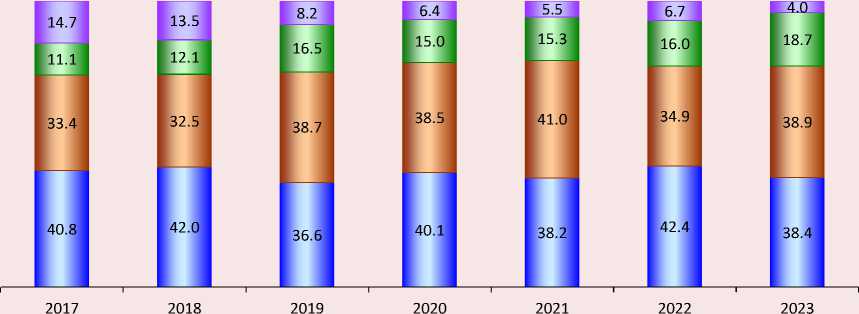
□ personal, family reasons □ because of work □ because of study □ other reasons
Note. The chart shows the three most common causes of migration among international migrants who have arrived, and all other causes of migration are included in the “other reasons” column.
Source: Statistical bulletin “Migration and population of the Russian Federation”.
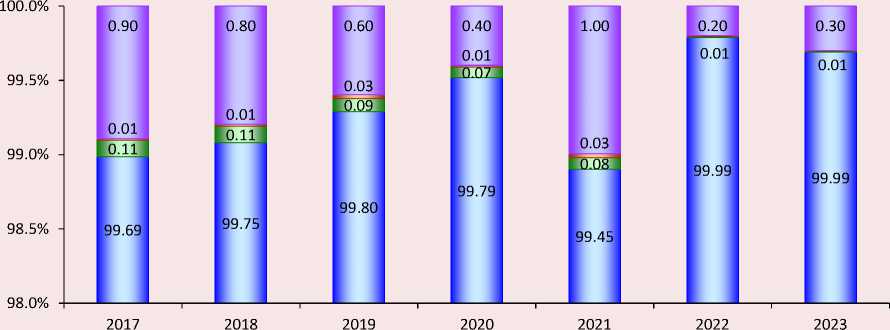
Figure 2. The structure of the share of international migrants of foreign citizens aged 14 years and older who left due to reasons of change of residence, % of the number of international migrants who indicated the reason for migration
□ returned after temporary absence □ personal, family reasons
□ because of work □ other reasons
The structure of departures of foreign migrants from the Russian Federation is strikingly different from the structure of arrivals. In the vast majority of cases, the reason for departure is the return after a temporary absence, which emphasizes the temporary nature of the stay of citizens of other states on the territory of the country and introduces an element of instability in the domestic labor markets ( Fig. 2 ).
The fluctuating ruble exchange rate makes international labor migration to Russia not as attractive as it used to be. For instance, since the second half of the 2010s, other countries with more competitive financial conditions have been applying for the entry of migrants from Central Asia23.
The countries of the Middle East, the Persian Gulf and East Asia are becoming new points of attraction, and in the near future only an increase in competition for labor from Central Asia is predicted (Grebenyuk, Aver’yanov, 2025). The growth of per capita GDP in neighboring countries, such as Kazakhstan and China, turn them into direct competitors of Russia for human capital. At the same time, traditional sources of labor migrants, primarily from Central Asian countries, are gradually losing their potential, which forces Russia to look for new directions to attract foreign specialists (Yumaguzin, Vinnik, 2023). The qualitative composition of incoming migration flows is also influenced by the fact that after 2020, the most educated and skilled migrants from Ukraine, Belarus and Moldova left the Russian labor market (Mukomel’ et al., 2022).
The situation is also aggravated by a series of amendments to migration legislation. In general, since February 2025, the supervision of violations in the field of migration has been tightened and the procedure for “expelling” migrants has changed: previously, the decision on deportation was made in court, whereas now the police service has received such powers24. In addition, since the beginning of 2025, the length of stay of visa-free migrants has been halved (90 days during the year, previously for six months)25, and in the spring of 2025, the list of fields of activity where migrants cannot work under a patent was expanded in a number of regions, which aggravated the situation on the labor market in some regions26. In addition, by 2025, limits on the employment of foreign migrants by type of economic activity have increased in some regions27. These innovations reflect only a part of the steps being taken, but they indicate a tendency to strengthen control over the flow of incoming international migrants, and are also aimed at reducing the number of migration offenses.
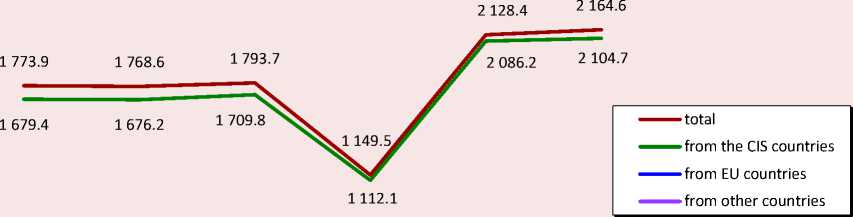
Traditionally, labor migrants from the CIS countries account for the majority of migration growth in Russia ( Fig. 3 ). In particular, in 2024, up to 80% of labor migrants were from Central Asia,
Figure 3. The dynamics of the number of foreign citizens who received permits to work in Russia during the year, thousand people
2017 2018 2019 2020 2021 2022
92.4 90.3 82.2 36.6 41.5 59.4
1.8 1.7 1.5 0.6 0.5 0.3
Source: Labor and Employment in Russia 2023; Labor and Employment in Russia 2021.
namely, the largest number of citizens entered from the republics of Tajikistan, Uzbekistan and Kyrgyzstan28. Representatives of these states work in Russia mainly under a patent (the Republic of Tajikistan, Uzbekistan) or in accordance with concluded agreements (the Republic of Kyrgyzstan) without registration of additional documents, as citizens of the Russian Federation.
China, Vietnam, India, Turkey, and Serbia became the largest suppliers of visa labor from nonCIS countries in the first quarter of 2023 (Shcherbakova, 2023). In addition, light industry and trade enterprises from Central Russia have begun to consider South Asia as a source of labor, and due to restrictions on migration flows from neighboring countries, some enterprises are exploring the possibility of attracting labor from Africa and Latin America29. An important characteristic of attracting foreign citizens on a visa is their qualifications, which, as a rule, meet the requirements of employers.
Citizens of EU countries have traditionally accounted for a small proportion of foreign workers in Russia. Labor resources from European countries may prefer employment in Western Europe and America, as these countries offer more favorable working conditions. But the opposite perspective is also possible here, since specialists from European countries have a higher labor price, which reduces the demand for European workers compared to labor resources from Central Asia. The decrease in the number of foreign labor migrants from these countries actually reduces the migration of
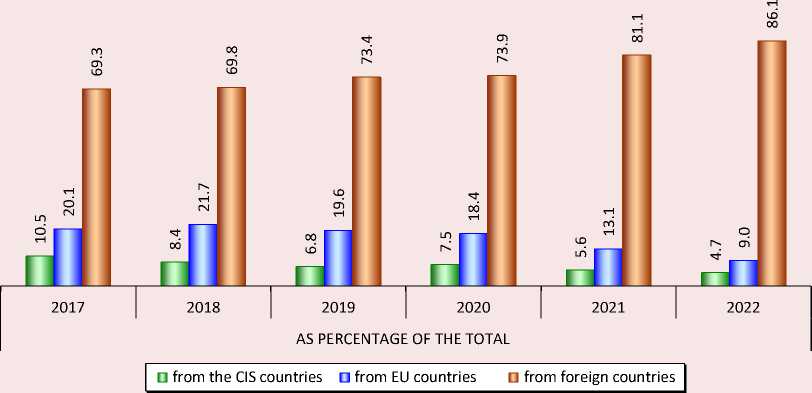
Figure 4. Number of foreign citizens – highly qualified specialists who had a valid work permit (at the end of the year), % of the total
Source: Labor and Employment in Russia 2023; Labor and Employment in Russia 2021.
highly qualified personnel to a minimum, since the majority of such specialists arrive in Russia from non-CIS countries.
The largest share of highly qualified foreign citizens with a valid work permit is in non-CIS countries (Fig. 4). A marked increase in the percentage of specialists from China (from 25.8 to 27.7%) and Turkey (from 20.0 to 34.1%) over the period 2017– 2022 indicates structural changes in the composition of migrants. These trends can be interpreted as evidence of an increased influx of highly qualified specialists from certain regions, which, in turn, reflects the adaptation of Russia’s migration policy to the current situation and the changing demand for skilled labor. At the same time, an increase in the share of highly skilled migrants may indicate the desire of employers to compensate for the shortage of specialists, indicating the need for more flexible management of migration flows, taking into account their qualitative characteristics.
Materials and methods
The information base of the study was official data from the Federal State Statistics Service, data from the Ministry of Internal Affairs, United Nations publications, as well as analytical reports and scientific research by leading Russian and foreign experts in the field of migration processes. In addition, the work uses an analysis of the regulatory framework regarding the need to attract foreign workers arriving in the Russian Federation on the basis of a visa by professional qualification groups for 2017–202430.
When analyzing migration processes, it is necessary to take into account that the availability and relevance of migration data are often limited (Ryazantsev, Pis’mennaya, 2019; Chudinovskikh, Stepanova, 2020). For example, statistical sources are updated at different frequencies, which leads to time gaps in the availability of information. In this regard, we chose the period from 2017 to 2024, as it combined available data on international migration from various open sources. However, in a number of cases where data from the collection “Labor and Employment in Russia” was used, which is updated every two years, the affected period was narrowed down to 2022. The complexity of accounting for international labor migration is also due to the fact that the category of citizens in question, depending on the country of origin, has different grounds for employment in the Russian Federation. All this variety of forms generates differences in statistical accounting.
The work focuses on the group of foreign labor migrants who arrive in Russia in accordance with the allocated quotas, that is, those citizens who have a work permit in Russia on a visa.
We carried out a grouping procedure to identify differences between the regions of Russia in terms of parameters characterizing the use of mechanisms for attracting foreign labor.
The criteria for selecting groups were indicators that were reduced to a relative form to exclude distortion associated with different regional scales.
-
1. An indicator of the intensity of attracting foreign labor (hereinafter referred to as the IAFL). It is calculated for all regions of the Russian Federation and represents the ratio of the total number of allocated quotas for attracting foreign labor for the period from 2017 to 2024 to the total number of employees for the same time period. To ensure comparability of results between regions, the values obtained were reduced to the format – the number of quotas per 1,000 employed people. The calculations made it possible to consider how actively the region uses quotas and how much weight these quotas have in the number of employed people in the region during the study period. The use of a total number was chosen because this method smooths out sharp fluctuations in values over the study period, and also allows assessing medium-term trends in the use of labor quotas (quotas are reassigned annually).
-
2. To analyze the variability of the need for foreign labor, the coefficient of variation in the volume of quotas was also calculated for the period 2017–2024 for each region separately. The calculated values allowed considering the nature of the demand, which could be stable (the number of allocated quotas remains approximately at the same level from year to year) or unstable (the number of quotas varies greatly). Thus, annual quota values for 2017–2024 were taken for each region, according to which the coefficient of variation was calculated.
In addition to the above characteristics, which reflect to a greater extent the quantitative side of the demand for foreign labor migrants, we attempted to consider the qualitative component, namely the diversity of professional qualification groups for which quotas were requested in the regions. In total, the analyzed regulatory documents (approved annually) identify 15 professional qualification groups, for which the Ministry of Labor and Social Protection of the Russian Federation allocates quotas. In this case, we also applied an approach in which we use the cumulative total for the study period for each of the professional qualification groups in each of the regions of the RF.
At the final stage, the regions were grouped by the IAFL values and coefficient of variation. To assess the relationship between the obtained groups and the structure of professional and qualification demand, we used the conjugacy table, calculated the chi-square and Cramer’s V criteria.
In this article, we have focused on analyzing the number of quotas, which is a limitation of our research. However, it is important to understand that quotas are not really involved jobs, but only potentially involved ones, they reflect administratively fixed quota decisions. At the moment, we do not have official data on which part of the allocated quotas has actually been implemented and which has remained unclaimed.
In addition, the use of cumulative totals, which gave us the opportunity to capture the long-term profile of demand for foreign labor, still hides changes within the time period under consideration. For example, in this format, we cannot consider what strategy the regions adopted to attract foreign labor during periods of instability, since the chosen time period immediately affected two major external shocks that significantly affected the parameters of international labor migration, namely the COVID-19 pandemic and the geopolitical crisis that began in 2022.
Despite the limitations, all the presented methods can demonstrate differences in the spatial heterogeneity of quota distribution and identify regions with different types of demand for foreign labor attracted through the quota mechanism.
Results
Turning to the analysis of Russia’s regions according to the selected IAFL indicators and the coefficient of variation, it is necessary to note a strong territorial differentiation. This is evidenced by the discrepancy between the average value of the IAFL index (2.22 per 1,000 employed) and the median value (0.35 per 1,000 employed), which is due to the presence of outliers in regions with high quotas (for example, in the Amur region there are more than 40.5 quotas per 1,000 employed). With regard to the coefficient of variation, there is also a strong spread of values from high, for example, in the Bryansk Region (more than 269.3%) and the Kabardino-Balkarian Republic (205.2%), to low in the Nenets Autonomous Area (0%) and in the Vladimir Region (8.1%). These observations lead us to the conclusions that the share of foreign citizens working under quotas varies greatly in the regions in the structure of the employed population, as well as that the need for foreign labor in some regions is sporadic. Based on this, the median rather than the average value was taken as the criterion
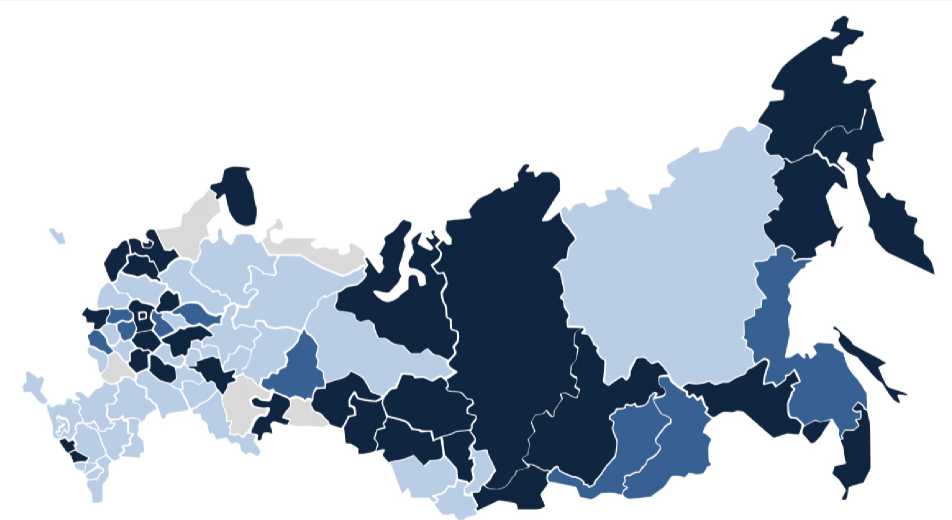
Figure 5. Grouping of regions according to the intensity of attracting foreign labor per 1,000 employed and the coefficient of variation
|
Group 1 |
Low intensity of attracting foreign labor per 1,000 employees combined with low coefficient of variation |
|
Group 2 |
Low intensity of attracting foreign labor per 1,000 employees combined with high rates of variation |
|
Group 3 |
High intensity of attracting foreign labor per 1,000 employees combined with low coefficient of variation |
|
Group 4 |
High intensity of attracting foreign labor per 1,000 employees combined with high rates of variation |
Source: own compilation.
for separation according to the IAFL indicator. In the case of the division of groups according to the coefficient of variation, a threshold value of 33%31 was adopted, which indicated a steady, not strongly fluctuating demand for foreign labor from year to year.
We identified four groups of regions as a result of comparing the subjects according to the parameters of the IAFL index and the coefficient of variation for the period under consideration ( Fig. 5 ).
Five regions of Russia belong to Group 1, namely the Nenets Autonomous Area, the Voronezh and Kurgan regions, as well as the Republics of Karelia and Bashkortostan. This group is characterized by a low intensity of attracting foreign labor per 1,000 employees, combined with low coefficient of variation, which indicates a stable and insignificant demand for foreign labor. In these regions, international migrants as a labor force make up an insignificant contingent in the local labor market and do not make a significant contribution to the economy.
The low intensity of attracting foreign labor combined with high coefficient of variation is typical for 38 regions of the country, they were assigned to the 2nd group by us. They are characterized by episodic, irregular, but still weak demand for foreign labor. It is likely that in the 1st and 2nd group of regions, employers either do not experience an acute shortage of personnel, or they compensate for it through other channels, for example, through migrants who come to work under a patent, foreign citizens who do not need to obtain special permits to work in Russia, internal migrants, including pendulum and shift migrant workers. It is important to note that, despite the presence of pronounced external shocks (a pandemic, an aggravation of the geopolitical situation), in the analyzed time period, the regions from the 1st and 2nd groups demonstrated stable use of the quota mechanism, and the coefficient of variation in these subjects remained within stable values, which may indicate a well-established practice in terms of attracting foreign labor force.
Group 3 and group 4 are characterized by high rates of intensity of attracting foreign labor relative to the local population. The group of 3 (9 subjects) is characterized by a consistently high need to attract international migrants, which may indicate the dependence of the labor market of these subjects on their labor. This includes mainly industrial and infrastructural centers in the regions of central Russia (Kaluga, Kursk, Vladimir, Tula, Kostroma regions) and the regions of Siberia and the Far East (Sverdlovsk Region, Republic of Buryatia, TransBaikal and Khabarovsk territories).
The 4 groups (33 regions) are characterized by the episodic nature of attracting foreign labor. This group of regions includes those subjects that are large industrial centers (Kemerovo, Chelyabinsk, Nizhny Novgorod regions, etc.) and remote northern territories (Yamal-Nenets and Chukotka autonomous areas, Murmansk Region, etc.) specializing in mining and manufacturing industries, regions with large infrastructure projects, as well as large urbanized and metropolitan regions (Moscow, Moscow, Leningrad, Yaroslavl regions, etc.). In this case, the combination of high demand for labor, as well as the cyclical nature of the large projects being implemented, explains both the intensive and episodic use of quotas.
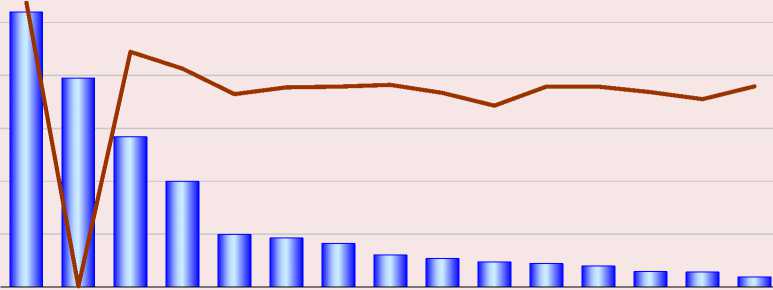
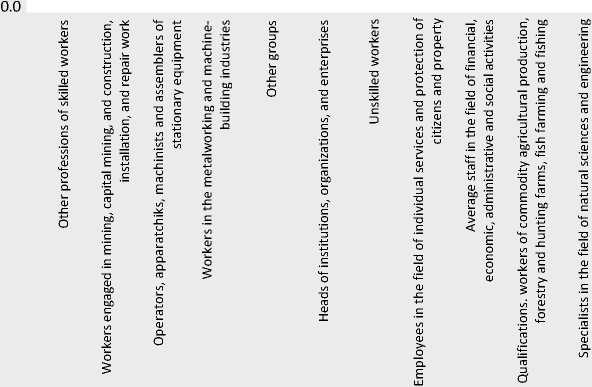
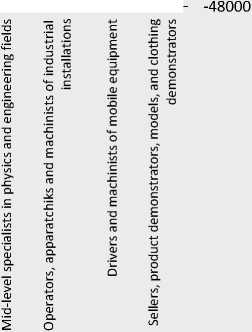
The Ministry of Labor and Social Protection of the Russian Federation regularly establishes, in addition to the total number of quotas for regions, a list and number of professional qualification groups for issuing work permits ( Fig. 6). The largest number of quotas in 2024 were allocated in such professionally qualified groups as other professions of skilled workers of large and small industrial enterprises (26% of the total share of professionally qualified groups), workers employed in mining, capital mining, construction, installation and repair work (19.7%) operators, apparatchiks, machinists and fitters who assemble stationary equipment (14.2%), workers in the metalworking and machine-building industries (10.0%). The least represented categories of workers are salesmen (1.0%), drivers and machinists of mobile equipment (1.4%), operators, apparatchiks and machinists of industrial installations (1.5%). In general, the distribution demonstrated that even despite the predominance of “working” specialties in the structure of professions, these are still jobs that require qualifications and a certain specialization.
Figure 6. Distribution of the need to attract foreign workers arriving in the Russian Federation on the basis of a visa by priority professional qualification groups in 2017–2024, % and people
15.0
10.0
25.0
20.0
-8000
-18000
-28000
5.0
■ ■ 2024 ^^^^в Dynamics, 2017 to 2024
-38000
According to: Government Decree on determining the need to attract foreign workers arriving in the Russian Federation on the basis of a visa, including priority professional qualification groups, and on approving quotas for 2017, 2018, 2019, 2020, 2021, 2022, 2023 and 2024. Garant. Available at:
In 2024, the most pronounced trends to increase quotas were observed in such professionally qualified groups as other professions of skilled workers (by 105%, or by 20,765 people compared to 2017), operators, apparatchiks, machinists and assemblers of stationary equipment (by 65%, or by 8,790 people), workers in the metalworking and machine-building industries (by 44%, or by 4,734 people). The reasons for the increase in quotas were the lack of necessary personnel in the regions, the introduction of imported equipment, as well as the need to attract additional labor for major projects such as the construction of the Power of Siberia gas pipeline and the gas processing cluster in Ust-Luga32. It is important to mention that in 2025, two new professional qualification groups were allocated, namely specialists in the field of biological, agricultural sciences and healthcare, as well as mid-level specialists and support staff of natural sciences and healthcare. The largest reduction in allocated quotas by 2024 is observed for such qualification and professional groups as workers employed in mining and construction and installation works (decreased by 47,779 people, or 61% compared to 2017), skilled workers in commercial agricultural production, forestry and hunting, fish farming and fisheries (by 53%, or 4,202 people), drivers and machinists of mobile equipment (by 54%, or 2,622 people).
We have found that the regions differ significantly from each other in terms of IAFL indicators and coefficient of variation, and assumed that the composition of professional qualification groups also differs within the groups of regions. As a result of combining the data on the selected groups and the number of quotas in the professional qualification groups, we found that there is a statistically significant relationship between the variables under consideration (chi-square criterion – 75877.017a, degrees of freedom – 42, asymptotic significance (two-sided) – 0.000). The assessment of the strength of the connection confirms the existence of a connection, but the strength of the connection between the variables is insignificant (Phi – 0.290, approximate significance – 0.000; Cramer’s V – 0.168, approximate significance – 0.000).
When analyzing the quota distribution structure by professional qualification groups within the groups of regions, some differences become noticeable ( Tab. 2 ). For instance, in the first group of regions, the largest shares of quotas fall on workers employed in mining, capital mining, construction, installation and repair work (30.6%) and other professionally qualified groups (17.6%). A special feature of these regions is the higher proportion of heads of institutions, organizations and enterprises and their structural divisions (9.9%, while in other groups the proportion ranges from 4.6 to 6.2%). This may indicate that there is a large proportion of foreign companies in these territories that prefer to hire compatriots for these positions (Komarovsky, 2021). Another difference between this group of regions is a significantly lower proportion of other professions of skilled workers in large and small industrial enterprises – 7.2%, while in other groups it ranges from 19.9 to 30.5%.
In the second group of regions, mining and construction workers account for the largest shares of quotas (28.7%), other professions of skilled workers in large and small industrial enterprises (21.6%), as well as other professionally qualified groups (16.7%).
Other skilled workers in industrial enterprises (30.5%), workers engaged in mining, capital mining, construction, installation and repair work (16.1%), and operators, apparatchiks, machinists and assemblers of stationary equipment (7.9%) are among the top three in terms of shares in the 3rd a
Table 2. Distribution of professional qualification groups within regional groups *, 2017–2024, %
|
Name of the professional qualification group / group of the subject |
Group 1 (low IAFL combined with low coefficient of variation) |
Group 2 (low IAFL combined with high coefficient of variation) |
Group 3 (high IAFL combined with low coefficient of variation) |
Group 4 (high IAFL combined with high coefficient of variation) |
|
Drivers and machinists of mobile equipment |
1.9 |
1.4 |
1.5 |
2.3 |
|
Other professions of skilled workers in large and small industrial enterprises |
7.2 |
21.6 |
30.5 |
19.9 |
|
Other professional qualification groups |
17.6 |
16.7 |
5.8 |
5.7 |
|
Qualified workers in commercial agricultural production, forestry and hunting, fish farming and fishing, with a market orientation |
1.9 |
3.2 |
2.3 |
2.8 |
|
Unskilled workers, common to all sectors of the economy |
2.6 |
2.2 |
3.7 |
2.6 |
|
Operators, apparatchiks and machinists of industrial installations |
0.9 |
0.5 |
3.6 |
1.6 |
|
Operators, apparatchiks, machinists and assemblers of stationary equipment |
5.8 |
4.4 |
7.9 |
9.1 |
|
Sellers, product demonstrators, models, and clothing demonstrators |
0.0 |
1.1 |
2.4 |
0.2 |
|
Employees in the field of individual services and protection of citizens and property |
7.2 |
3.4 |
5.1 |
2.5 |
|
Workers in the metalworking and machine-building industries |
6.4 |
5.2 |
5.2 |
9.8 |
|
Workers engaged in mining, capital mining, construction, installation, repair and construction work |
30.6 |
28.7 |
16.1 |
32.2 |
|
Heads of institutions, organizations and enterprises and their structural divisions (services) |
9.9 |
6.2 |
4.6 |
4.7 |
|
Specialists in the field of natural sciences and engineering |
3.0 |
2.3 |
1.1 |
2.6 |
|
Mid-level specialists in physical and engineering fields of activity |
2.9 |
1.0 |
1.2 |
2.0 |
|
Mid-level staff in the field of financial, economic, administrative and social activities |
1.9% |
2.0% |
8.8% |
1.8% |
|
* 100% by column. Source: own compilation. |
||||
group of regions. A special feature of this group of regions is a very small, but still larger share of sales quotas than in other groups of subjects (2.4%, in the rest from 0 to 1.1%) and average staff in the field of financial, economic, administrative and social activities (8.8% vs 1.8–2.0%, respectively).
The 4th group of subjects is characterized by quotas in the mining and construction sector (32.2%), for the category of skilled workers of large and small industrial enterprises (19.9%), workers in the metalworking and machine-building industries (9.8%), as well as operators, apparatchiks, machinists and fitters assembling stationary equipment (9.1%). This is due to the fact that some of the regions represented actively employ foreign workers to implement major investment projects, such as the Power of Siberia gas pipeline, the Amur Gas Chemical and Amur Gas Processing complexes, the gas processing and gas chemical cluster in the village of Ust-Luga, etc.33
Table 3 shows which regions receive the majority of migrants of each qualification. The corresponding analysis shows that the 4th and 3rd groups of regions are “dragging over” the bulk of all quotas. In group 4, almost all professional groups have high shares. Representatives of the service sector account for the least quotas here, namely sellers (20.7%) and average staff in the field of financial, economic, administrative and social activities (43.6%), while in the 3rd group, on the contrary, a focus on the service sector becomes noticeable (72.3% of all sellers, product demonstrators, models and clothing demonstrators, and almost half (43.6%) of the total average staff in the field of financial, economic, administrative and social activities).
The 1st and 2nd groups of regions show low shares in all professional qualification groups, which may be due to low values in terms of the intensity of attracting foreign labor in general.
Table 3. Distribution of professional qualification groups by region groups*, 2017–2024, %
|
Name of the professional qualification group / group of the subject |
Group 1 (low IAFL combined with low coefficient of variation) |
Group 2 (low IAFL combined with high coefficient of variation) |
Group 3 (high IAFL combined with low coefficient of variation) |
Group 4 (high IAFL combined with high coefficient of variation) |
|
Drivers and machinists of mobile equipment |
0.4 |
2.8 |
14.1 |
82.7 |
|
Other professions of skilled workers in large and small industrial enterprises |
0.1 |
4.2 |
26.9 |
68.8 |
|
Other professional qualification groups |
1.2 |
11.5 |
18.0 |
69.3 |
|
Qualified workers in commercial agricultural production, forestry and hunting, fish farming and fishing, with a market orientation |
0.3 |
5.0 |
16.0 |
78.7 |
|
Unskilled workers, common to all sectors of the economy |
0.4 |
3.4 |
25.7 |
70.5 |
|
Operators, apparatchiks and machinists of industrial installations |
0.2 |
1.2 |
35.7 |
62.8 |
|
Operators, apparatchiks, machinists and assemblers of stationary equipment |
0.3 |
2.2 |
17.7 |
79.8 |
|
Sellers, product demonstrators, models, and clothing demonstrators |
0.0 |
7.1 |
72.3 |
20.7 |
|
Employees in the field of individual services and protection of citizens and property |
1.0 |
4.8 |
32.3 |
61.9 |
|
Workers in the metalworking and machine-building industries |
0.3 |
2.5 |
11.6 |
85.5 |
|
Workers engaged in mining, capital mining, construction, installation, repair and construction work |
0.5 |
4.3 |
10.8 |
84.5 |
|
Heads of institutions, organizations and enterprises and their structural divisions (services) |
0.9 |
5.6 |
18.5 |
75.0 |
|
Specialists in the field of natural sciences and engineering |
0.6 |
4.2 |
8.8 |
86.4 |
|
Mid-level specialists in physical and engineering fields of activity |
0.7 |
2.4 |
13.0 |
83.9 |
|
Mid-level staff in the field of financial, economic, administrative and social activities |
0.3 |
2.6 |
53.5 |
43.6 |
|
* 100% per line. Source: own compilation. |
||||
Discussion and conclusions
The analysis confirmed the presence of spatial heterogeneity in the need for foreign labor in the regions within the quota system. A comparative analysis of the quota structure by occupational qualification groups within each typological group confirmed a statistically significant relationship between the type of region and the composition of required professions. In this context, it is important to add that the foreign labor force acts as a tool to fill the personnel deficit, and is also a mechanism for adapting to modern challenges of labor demand.
The 1st group includes regions with low and stable demand for foreign labor. The main volume of quotas here falls on mining and construction professions and other professional qualification groups. A distinctive feature is the relatively high proportion of managers in the quota structure and the minimal participation of industrial workers. The 2nd group of regions includes subjects in which there is a low demand for foreign labor combined with a changing number of quotas from year to year. Here, foreign workers are most often employed in the construction and industrial sectors. The regularity of quotas in the face of external shocks indicates the existence of proven mechanisms for the use of migrant labor, although their contribution to the economy remains insignificant. It is possible that patent migrants or internal labor migrants, including shift workers and pendulum labor migrants, are used in the 1st and 2nd group of regions as a tool to fill the deficit in regional labor markets.
The 3rd group includes those regions where there is a high intensity of attracting foreign labor and there is a steady demand for such workers. It is noteworthy that there is a greater participation of representatives of the service sector and admi- nistrative middle staff than in other groups of regions, which indicates an expansion of migration demand beyond the exclusively manufacturing sectors. High intensity, but occasional demand for foreign labor is typical for the 4th group of regions. This includes large industrial, metropolitan and northern territories involved in large-scale infrastructure projects. These regions accumulate a significant share of all quotas for almost all professional groups, with the exception of the service sector.
Thus, the quota system is a kind of reflection of the structural needs of the regional economy for personnel with specific competencies. In turn, insufficient attention to the migration processes of visa foreigners does not allow its effective use in solving issues on the labor market, despite the fact that it allows you to manage the quality of the workforce. It is important to note that it is the quota system that is formed according to the stated needs of employers and provides for a preliminary assessment of qualifications, allowing better management of the qualification profile of foreign workers and making the labor market more controlled compared to the patent system. Foreign specialists attracted by the quota are requested for the specific needs of the region in advance, and it is impossible to replace them promptly, unlike those who work under a patent. In addition, the quota of foreign labor becomes part of government long-term planning, since its involvement is taken into account when drafting relevant regulatory documents long before arrival in Russia. In the era of active reform of migration legislation, the results obtained in the article will allow paying attention to the issue of quotas for foreign labor, which can later be used in legislative initiatives in the field of labor market development and migration regulation.
