
Scientific, Technological and Economic Potential of the Arkhangelsk Oblast. Part I
Журнал: Arctic and North @arctic-and-north
Рубрика: Social and economic development
Статья в выпуске: 64, 2026 года.
Бесплатный доступ
The relevance of the research of the scientific, technological and economic potential of the Arkhangelsk Oblast is determined by a number of factors. Firstly, the Arkhangelsk Oblast plays a key role in ensuring Russia’s national security in the Arctic zone. Secondly, the region has significant potential for the development of mining, forestry, shipbuilding, fisheries and tourism. At present, the Arkhangelsk Oblast is characterized by substantial reserves of natural resources, including forests, minerals and water resources. However, their use requires a rational approach to prevent environmental problems. Thirdly, the presence of scientific and educational centers creates favorable conditions for the generation and implementation of new technologies. The region’s scientific institutions are actively involved in developing innovative projects, but their integration into the region’s economy requires increased interaction between the scientific community and the business sector. Innovative projects and start-ups in the fields of technology and ecology demonstrate the potential for further development. Over the past decade, the dynamics of the gross regional product and gross value added of the Arkhangelsk Oblast have shown positive trends, reflecting changes in key sectors of the region’s economy. Industrial production is an important part of the Arkhangelsk Oblast’s economy, accounting for more than 40% of the region’s total gross regional product. The main industrial areas are timber production, shipbuilding, and energy sector. The development of these industries contributes to strengthening economic stability and creating jobs. The financial performance of enterprises in the Arkhangelsk Oblast over the past decade reflects complex and contradictory trends in the economic development of the region. In recent years, the Arkhangelsk Oblast has experienced positive growth in investment in fixed assets. A key project in the field of scientific and technological development is the construction of a world-class scientific and educational campus “Arctic Star”. The implementation of this project will strengthen the cooperation chains between science, education and business, as well as increase the contribution of science to the economy of the agglomeration.
Короткий адрес: https://sciup.org/148334384
IDS: 148334384 | УДК: 330.341.1(470.11)(045) | DOI: 10.37482/issn2221-2698.2026.64.94
Текст научной статьи Scientific, Technological and Economic Potential of the Arkhangelsk Oblast. Part I
DOI:
The relevance of this topic is driven by rapid technological advances and global competition, making it particularly important to identify and effectively utilize the scientific, technological, and economic potential of regions.
∗ © Muraev I.G., Sushko O.P., 2026
Arktika i Sever [Arctic and North], 2026; 64: 94–112.
This work is licensed under a CC BY-SA License
It is evident that each region possesses unique, historically established areas of competence, sector-specific characteristics, resource bases, and, consequently, its own competitive advantages. The Arkhangelsk Oblast, with its rich natural resources and strategic geographic location, demonstrates complex development dynamics in its economic sectors. In recent years, both stable trends and new challenges have emerged, requiring adaptation and innovative solutions. The Arkhangelsk Oblast is increasingly demonstrating progress in the development of Russia’s Arctic region, it possesses high investment potential. A sustainable model of socio-economic development has been formed in the region, offering a number of competitive advantages: a convenient geographical location, a well-developed railway network and a seaport operating all year round. Arkhangelsk plays a key role in transport services for the Northern Sea Route and in supplying the Arctic territories, as it provides the shortest route to the center of the country. Severodvinsk is a leader in shipbuilding and production of marine equipment for the Arctic. One of the largest diamond-bearing provinces in Europe is situated within the region. Arkhangelsk is a university center that trains qualified personnel for work in the region. The Arkhangelsk Oblast also demonstrates strong positions in science and polar medicine. Currently, three clusters operate in the region: shipbuilding, forestry, and social services. Two additional clusters — biotechnology and fishing — are at the development stage.
The Ministry of Economic Development of the Russian Federation has proposed an initiative to create eight regional “support zones” as the basis for the reindustrialization of the Arctic1. This could become a new model for developing the region’s potential and focusing efforts on growth areas, taking into account the rational use of both human and financial resources. In this context, it is important to outline the region’s scientific and technical potential, which, based on a comprehensive assessment of interrelated resources and capabilities, will determine the territory’s ability to develop, implement, and utilize new technologies for achieving socio-economic development.
Research object and methods
The research object is the potential of the Arkhangelsk Oblast. The aim of this work is to provide a comprehensive assessment of the current state of the Arkhangelsk Oblast and to identify areas for developing its potential and key competencies for the reindustrialization of the Arctic. To achieve this aim, the following objectives were set: to study the region’s natural resources and their impact on the economy; to assess the role of scientific institutions in innovative development; to analyze existing and prospective projects; and to propose recommendations for improving the investment climate and stimulating growth.
Methodological approaches based on economic theory, regional economics, economic geography, theories of territorial-production complexes and related disciplines are applied to pro- vide a theoretical and conceptual basis for the transformation of the region. The economic potential of a region can be assessed using various methods, each of which has its own characteristics and advantages. Traditionally, the economic potential of regions has been estimated by analyzing a range of indicators (Fig. 1).
Gross regional product (GRP), which reflects the total volume of output produced in the region. This indicator is widely used to assess the overall level of economic activity and to compare production volumes across constituent entities of the Russian Federation.
Demographic structure of the population, including an analysis of age structure, employment rates, and education. This indicator provides an assessment of the region’s labor force potential and production capacity.
Level of infrastructure development, including the availability and quality of transport, energy and social infrastructure. This indicator is taken into account when assessing the region’s ability to attract investment and support business development.
о
|
Resource potential, including an analysis of the region’s natural resources, such as land, water, minerals, forests and |
\ |
|
agricultural land. Analysis of this indicator is important for assessing the long-term sustainability of the region’s |
|
|
development. |
о
Developments in analytical technologies and increasing availability of data have introduced new approaches to assessing economic potential, allowing for a more detailed and comprehensive analysis.
-
Fig. 1. Assessment of the economic potential of regions.
One of the most common approaches is the analysis of the gross regional product and its dynamics, which reflects the total value of goods and services produced in a region over a given period and enables an assessment of the overall level of economic development. Another important method is the analysis of the regional economic structure, including the distribution of employment by industry and the degree of production diversification. Regions with more diversified economies tend to be more resilient to economic shocks. It is also necessary to take into account the region’s investment climate, including the level of investment in fixed capital, infrastructure and innovation. High levels of investment indicate favorable business conditions and potential for further economic growth. Finally, assessing the region’s human capital, including the level of education, skills, and health of the population, is a significant factor determining its economic potential. Regions with a highly skilled workforce are generally more attractive to investors and have greater opportunities for the development of high-tech industries. Economic assessment is also an important component. A wide variety of methods can be used to analyze economic potential (Fig. 2).
|
Method of aggregate regional resources |
• is based on an analysis of all available resources of the region: natural, human, financial and industrial |
|
Multiplier method |
• is used to assess the impact of changes in individual sectors on the region’s economy. It takes into account how changes in one industry may affect other sectors of the economy. |
|
Method of comparative analysis |
• involves comparing the region’s development indicators with similar indicators in other regions, which makes it possible to identify competitive advantages and weaknesses |
|
Method of analysis of production factors |
• assessment of the use of production factors (land, labor, capital, entrepreneurship) to determine their efficiency |
|
Method of assessment based on production factors |
• analysis of the use of land, labor, capital and entrepreneurial activity in the region |
|
Method of analysis of the region’s economic structure |
• analysis of the structure of the region’s economy, that is, the share of various sectors in the economy |
-
Fig. 2. Methods for analyzing the economic potential of regions.
Modern methods include: method of integrated assessment, method of indicator systems, analytical methods involving the use of GIS, development scenario modelling, and others.
Various methods were used to study the scientific, technological, and economic potential of the Arkhangelsk Oblast and to identify its development areas. Their comprehensive application provided an overview of the region’s potential and identified opportunities for its further development.
Review of scientific research
Many researchers have studied the potential of the Arkhangelsk Oblast, beginning with M.V. Lomonosov, who saw the future of Russia in the development of the northern territories. In particular, Professor M.K. Sidorov examined the potential for the development of maritime transport and fisheries in the region, emphasizing the need to modernize port infrastructure and introduce new technologies into the fishing industry. His works served as the basis for several strategic development plans for the region during the Soviet period. Another researcher, A.I. Ivanov, focused on the study of the forest resources of the Arkhangelsk Oblast and their sustainable use. He proposed a set of measures for reforestation and wood processing aimed at minimizing the negative impact on the environment and increasing the efficiency of the forest industry. Professor
A.V. Plastinin actively researched the development of the forestry sector (Plastinin, Skvortsov, Su-shko, 2022; Skvortsov, Plastinin, Sushko, 2022).
V.F. Bogachev and N.P. Veretennikov (Bogachev, Veretennikov, 2020) presented the integrated aspects of economic management in Russia’s Arctic regions. The characteristics of the competitiveness of the economies of the Arkhangelsk and Murmansk Oblasts are analyzed in the works of M.N. Bogdanova (Bogdanova, 2019). T.I. Barasheva (Barasheva, 2022) proposed a “methodological approach to studying budget potential using the example of northern regions”. The methodological approach developed by the author comprises groups of indicators characterizing the financial security of regions and reflecting the quality of budgetary management. During the testing of this methodology, calculations were made of an aggregate integral index assessing the level of budget potential utilization in the regions, as well as its components — the individual integral indices (Barasheva, 2022). P.V. Druzhinin and M.V. Moroshkina (Druzhinin, Moroshkina, 2018) described the economic development of the European North in their research article, subsequently assessing its impact on the environment. N.G. Duplenko and E.A. Golushko (Duplenko, Golushko, 2020) analyzed regional asymmetries in the development of the digital economy in Russia’s North-Western Federal District. Researcher R.V. Badylevich (Badylevich, 2020) presented an analysis of the level of economic security in the regions of the Arctic zone of the Russian Federation, based on economic security indicators.
A.G. Koryakov, S.G. Basalov and D.N. Baranov (Koryakov, Basalov, Baranov, 2017) demonstrated in their study that the Arkhangelsk Oblast, despite its rich natural resources and strategic geographic location, experiences complex dynamics in the development of its economic sectors. In recent years, both stable trends and new challenges have been observed, requiring adaptation and innovative solutions.
Scientists K.S. Zaikov, A.A. Spiridonov, A.M. Fadeev (Zaikov, Spiridonov, Fadeev, 2024), and V.N. Lazhentsev (Lazentsev, 2024) explored opportunities for developing the potential of the Arctic and the North. A.S. Vasilyeva (Vasilyeva, 2021) examined the key macroeconomic indicators of the Arkhangelsk Oblast.
Researchers A.A. Mustafaev, N.D. Naydenov, and T.A. Naydenova (Mustafaev, Naydenov, Naydenova, 2023) in their article, published in the journal “Arctic and North”, investigated the ways, methods and approaches for developing the full economic potential (production and consumer) of the agro-industrial complex in the northern regions. The authors identified trends and prospects for socio-economic, environmental, infrastructural, demographic, and market transformations in the agro-industrial complex of the northern regions.
A.M. Onyakova (Onyakova, 2019) analyzed the prospects for developing the mineral resources of the Arkhangelsk Oblast, including the further development of the diamond mining industry, the launch of titanium deposit development, and the opening up of new deposits of bauxite, manganese, and other minerals. The implementation of these projects will create new jobs,
SOCIAL AND ECONOMIC DEVELOPMENT
Igor G. Muraev, Olga P. Sushko. Scientific, Technological and Economic Potential … increase tax revenues, and ensure sustainable socio-economic development of the region. Particular attention is paid to environmental safety during mineral resource exploitation.
The works of O.V. Tolstoguzov (Tolstoguzov, 2022) demonstrate that the structural transformations of the economy of north-western Russia, particularly in the context of recent decades, are inextricably linked to the evolution of the institutional environment. Institutions, by setting the “rules of the game”, determine incentives for economic behavior, innovation, and investment. Imperfections in the institutional structure, whether due to ineffective regulation, corruption, or weak property rights protection, inevitably hinder the development of promising sectors and exacerbate structural imbalances.
-
I.I. Tuchina (Tuchina, 2017) justified that innovation development in the region is primarily linked to the modernization of traditional sectors: forestry, shipbuilding, and mining. The introduction of new technologies in wood harvesting and processing improves production efficiency and reduces the negative impact on the environment. In shipbuilding, the focus is on the development and construction of ice-class vessels, which are in demand for Arctic exploration. Mining stimulates innovation in geological exploration and mineral processing. In addition to traditional sectors, the development of new industries, such as information technology, biotechnology and renewable energy, represents a promising area. Creating a favorable climate for innovation, supporting small and medium-sized innovative enterprises, and developing scientific and educational infrastructure are essential conditions for the successful development of an innovative economy in the Arkhangelsk Oblast.
The study by V.A. Tsukerman and E.S. Goryachevskaya (Tsukerman, Goryachevskaya, 2022; Tsukerman, 2013) in the journal “Arctic and North” presented the results of an analysis of the innovation potential of Russia’s Arctic regions. The researchers concluded that foreign potential assessment methods are not suitable for determining the innovation potential of Russia’s Arctic regions. In turn, Russian methodologies do not provide an objective assessment of the Arctic regions’ innovation potential. Therefore, the researchers developed a potential assessment methodology based on the calculation of specific indicators rather than absolute ones. Using this methodology, the potential was calculated and Russian regions were ranked over a ten-year period (2011, 2013, 2017 and 2020). In our view, this methodology, combined with other methods, can be applied to the assessment of regional potential.
K.I. Sergeeva and O.S. Zakoretskaya (Sergeeva, Zakoretskaya, 2016) consider that small businesses play a critically important role in the economy of the Arkhangelsk Oblast, acting as a catalyst for innovation, a creator of jobs and a driver of economic growth. Entrepreneurship in the region contributes to economic diversification, reducing dependence on large industrial enterprises.
According to E.A. Guzenko (Guzenko, Chirkov, 2023), a region’s level of development is determined by the standard of living of its population. An assessment of public health, using the Arkhangelsk Oblast as a case study, is presented in the work of researchers D.O. Dushkova, V.S.
Tikunov and O.Yu. Chereshnya (Dushkova, Tikunov, Chereshnya, 2019). An analysis of the region’s labor force has also been carried out in other studies (Sushko, 2014; Sushko, Telegin, 2015; Mu-raev, Sushko, 2024).
Other researchers have also studied the potential of the Arkhangelsk Oblast (Orlov, Za-kateev, 2023; Pavlenko, Podoplekin, 2015). Their works cover a wide range of areas: from the study of natural resources such as forests, minerals, and waterways to an analysis of the region’s socio-economic development and its cultural heritage. Particular attention has been paid to exploring the potential of forest resources as a renewable source of raw materials for the pulp and paper industry and wood processing (Serova, 2016; Litovchenko, 2016). Mineral reserves, including diamonds, oil, and gas, are also being studied to assess their industrial potential and to develop strategies for efficient extraction and processing.
In recent years, many scientific studies have focused on innovative technologies and alternative energy sources, which will become promising areas for the region’s economic growth. Issues relating to the conservation of the unique Arctic environment and the sustainable development of the northern territories are also being actively studied. Scientists of the Northern (Arctic) Federal University named after M.V. Lomonosov (NArFU) are conducting research in the fields of Arctic technologies, renewable energy, and the development of new materials, which opens up prospects for diversifying the region’s economy and attracting investment (Sushko, Kaznin, Babkin, 2017).
Research resultsSet of elements of scientific, technological, and economic potential of the Arkhangelsk Oblast
Despite external socio-economic and political challenges and fluctuations, the economy of the Arkhangelsk Oblast is demonstrating steady growth. The growth of the gross regional product (GRP) in the Arkhangelsk Oblast is driven by a number of factors, including the implementation of major investment projects, the development of forestry industry, shipbuilding, and transport infrastructure. An important part of the region’s scientific and technical potential is the work of the Northern (Arctic) Federal University named after M.V. Lomonosov, which trains specialists in 96 fields of study, serving not only the Arkhangelsk Oblast, but also neighboring regions. Scientific research is carried out by the Federal Center for Integrated Arctic Research of the Ural Branch of the Russian Academy of Sciences.
A key component of the Arkhangelsk Oblast’s economic potential is the development of natural resources, in particular deposits of diamonds and other minerals. The Arkhangelsk Oblast has the only diamond-bearing province in Europe, which demonstrates that science and technology can ensure efficient production. The development of the scientific and technological potential of the region is also linked to the activities of the Plesetsk Cosmodrome, which is important for both national security and the socio-economic development of the Arkhangelsk Oblast. The cosmodrome’s activities support the development of related industries (mechanical engineering, electronics, telecommunications), and contribute to the advancement of science and education in the region. A key factor is the significant scientific potential concentrated in universities and research institutes. They are engaged in advanced research in fields such as shipbuilding, forestry, medicine, and biotechnology. These developments, supported by qualified specialists, form the basis for the introduction of innovative technologies into all sectors of the economy.
The region’s economic potential is determined by a diverse structure including shipbuilding, logging and wood processing, fisheries, and a service sector specializing in logistics and tourism. This contributes to the creation of new jobs, increased tax revenue for the budget, and an improved quality of life for the region’s population.
The interrelationship between scientific and technological progress and the region’s economic potential creates a synergistic effect that facilitates the effective resolution of socioeconomic challenges in the Arkhangelsk Oblast and strengthens its position within the Russian economy. “Investing in the development of science and technology, supporting innovative enterprises, and creating a favorable investment climate are fundamental conditions for realizing this potential and ensuring the region’s sustainable long-term growth” (Vasilyeva, 2021).
The set of elements comprising the region’s scientific, technological and economic potential covers a wide range of aspects: from its rich natural resources, such as forests and minerals, to its well-developed infrastructure, including facilities and transport links that connect the region with the rest of the country and the world.
Economic performance of the Arkhangelsk Oblast
The economy of the Arkhangelsk Oblast makes a significant contribution to the overall economic potential of the North-Western Federal District. The region’s core industries are the forestry complex, shipbuilding, and mineral extraction, including oil and gas. These sectors account for a significant share of the gross regional product (GRP), emphasizing their key role in the region’s economic structure.
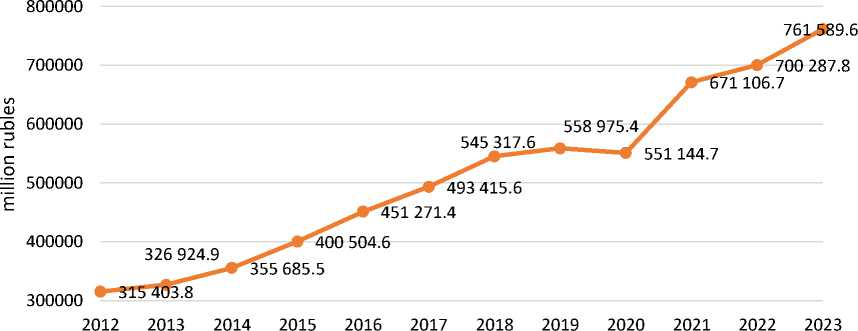
Over the past ten years, the GRP of the Arkhangelsk Oblast has more than doubled (Fig. 3). In 2021, the GRP of the Arkhangelsk Oblast exceeded 700 billion rubles, indicating positive economic growth trends in the region. This growth in the region’s GRP is driven by increased productivity in key sectors, such as manufacturing and mining. A.S. Vasilyeva notes that “in recent years, there has been a trend toward growth in all key socio-economic indicators. One of the most important is the gross regional product (GRP). From 2008 to 2018, this indicator for the Arkhangelsk Oblast increased by 2.8 times” (Vasilyeva, 2021).
-
Fig. 3. Gross regional product (at current basic prices)2.
During the decade under review, fluctuations in GRP were observed, reflecting changes in key economic sectors such as forestry, shipbuilding, and energy. In particular, the period 2014– 2016 was characterized by a decline in the Arkhangelsk Oblast’s GRP growth rate, which was linked to the deterioration of the macroeconomic situation in the country and a fall in prices for export goods. A second decline in the region’s GRP development occurred in 2020 due to the pandemic. The pandemic primarily affected the service sector and subsequently impacted manufacturing sectors. The shutdown of enterprises, as well as disruptions in the supply of raw materials and components, led to a decrease in production volumes in the Arkhangelsk Oblast and an increase in production costs. Furthermore, declining consumer demand also had a negative impact on manufacturing sectors. The Arkhangelsk Oblast’s gross regional product (GRP) growth rate over the past five years has averaged 5–8% per year, confirming positive trends in the region’s economic development.
Thus, the growth of the Arkhangelsk Oblast’s GRP demonstrates sustainable economic development and increasing competitiveness. Future prospects are linked to the implementation of new investment projects, the development of innovative industries, and the efficient use of its natural resources.
An analysis of gross value added (GVA) in the Arkhangelsk Oblast for the period from 2013 to 2024 (Fig. 4) reveals the key trends and factors influencing the region’s economic development. During the period under review, there were phases of both growth and decline, driven by changes in the structure of the economy, external shocks and the implementation of regional development programs. At the beginning of the period, from 2013 to 2016, GVA demonstrated moderate growth due to the development of the forestry complex, shipbuilding, and mining. However, economic sanctions and the fall in oil prices in 2014–2015 had a negative impact on growth rates, leading to a slowdown in economic activity. Between 2017 and 2020, the region’s economy stabilized and gradually recovered. This was facilitated by the implementation of major investment projects in the timber processing sector and the development of transport infrastructure. The COVID-
19 pandemic in 2020 disrupted economic dynamics, causing a decline in activity in several sectors, particularly in services and tourism. In recent years, from 2021 to 2024, the economy of the Arkhangelsk Oblast has shown signs of recovery and adaptation to the new conditions. Despite this, there are still risks associated with geopolitical instability and the need for technological modernization in key sectors. The region’s further development will depend on the effective implementation of the socio-economic development strategy and on attracting investment into innovative sectors of the economy.
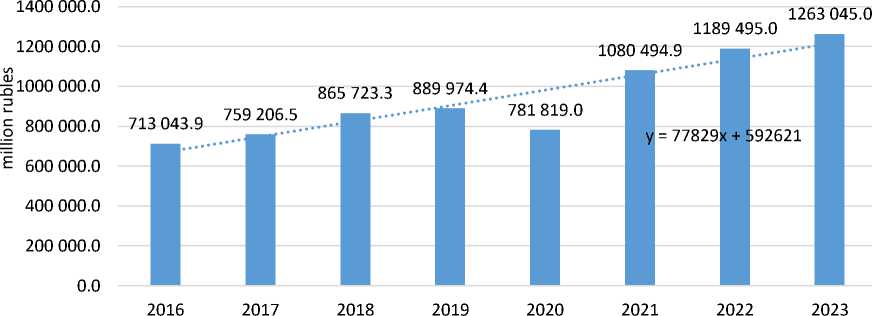
Fig. 4. Dynamics of gross value added (at basic prices) in the Arkhangelsk Oblast3.
The structure of the gross regional value added (GRVA) of the Arkhangelsk Oblast reflects the complex interaction of various sectors of the economy, each of which contributes to the region’s overall economic performance. Traditionally, industrial sectors primarily linked to the use of natural resources, namely the forestry industry (Fig. 5), play a key role in shaping GRVA. Industrial production plays a significant role in the economy of the Arkhangelsk Oblast, accounting for over 40% of the region’s total GRP. The main industrial sectors include the production of forest products, shipbuilding and the energy sector. The development of these industries contributes to economic stability and job creation.
provision of other education, communal, social and healthcare and personal services social services
agriculture, hunting and forestry
fishing 2%
2%
education 5%
8%
mining 1%
manufacturing 19%
public administration and military security; social insurance 10%
real estate transactions
J 8%
production and distribution of electricity, gas and water 5%
financial activities 0%
transport and communications 18%
wholesale and retail trade i 12%
construction 5%
hotels and restaurants
1%
Fig. 5. Structure of gross regional value added in the Arkhangelsk Oblast (at current basic prices) in 20134.
However, in recent years, there has been a trend toward economic diversification and an increasing share of other sectors in the structure of the Arkhangelsk Oblast’s GRVA. In particular, the share of mining (from 1% to 5%), construction, transportation and communications, and the service sector is growing, driven by investment projects, infrastructure development, and increased consumer demand. The extraction of minerals, particularly diamonds and bauxite, will remain an important source of revenue for the region in the long term. Nevertheless, dependence on global commodity prices makes the region’s economy vulnerable to external shocks. Consequently, economic diversification and the development of other sectors are becoming priority objectives for ensuring the region’s sustainable development.
The share of certain sectors in the Arkhangelsk Oblast has declined more significantly by 2024–2025 (construction — from 5% to 3%, trade — from 8% to 5%), due to a number of factors, including reduced investment in modernizing production facilities, increased competition from other regions and countries, and changes in the demand structure (Fig. 6). An increase in the share of the manufacturing sector has a positive impact on the region’s economic development, as this sector is one of the main sources of jobs and tax revenue. This trend is driven by a number of factors, including the introduction of modern technologies and innovative solutions.
Public administration and military security; social security 11%
Health and social services activities 5%
Education 5%
Activities in the field of culture, sports, leisure and entertainment 1%
Provision of other types of services 0%
Agriculture, forestry, hunting, fishing and fish farming 5%
Mining operations 5%
Administrative activities and related additional services
2% Professional, scientific and technical activities
2%
Manufacturing industries 20%
Services for living in own home
Real estate transactions
Real estate operations activities 8%
Financial and insurance activities
0%
Information and communication activities 2%
Transportation and storage 10%
Provision of electric energy, gas and steam; air conditioning 3%
Water supply; ction sanitation, waste collection and disposal, pollution control activities 1%
Activities of hotels and catering establishments
1%
Wholesale and retail trade; repair of motor vehicles and motorcycles
8%
Fig. 6. Gross regional product (at current basic prices) of the Arkhangelsk Oblast in 20245.
Thus, the dynamics and structure of the Arkhangelsk Oblast’s GVA are constantly changing, reflecting shifts in the economic environment, technological progress, and the investment activity of enterprises. The region's further development will depend on its ability to adapt to new challenges and make effective use of its competitive advantages.
When examining the dynamics of the Arkhangelsk Oblast’s financial indicators for the period from 2013 to 2024, it is important to note the heterogeneity of the region’s economic development, determined by both national trends and specific factors influencing the region’s economy. The Arkhangelsk Oblast is experiencing a downward trend in the number of registered organizations (Fig. 7). This negative trend reflects changes in the region’s economic structure. One of the key factors contributing to the reduction in the number of organizations is the trend towards optimizing business processes and consolidating assets. In an effort to improve efficiency and competitiveness, enterprises are undergoing restructuring, which often takes the form of mergers or acquisitions. This process, although leading to a reduction in the number of legal entities, can strengthen the position of large and stable enterprises. Negative economic factors, such as market volatility, fluctuations in demand, and changes in the regulatory framework, can lead to the closure of small and medium-sized businesses experiencing difficulties adapting to new conditions. Furthermore, competition from large companies creates additional pressure on small businesses, often forcing them to exit the market.
From 2013 to 2024, the share of SMEs in the Arkhangelsk Oblast remained unchanged, at 5% of the total number of entities in the region (Fig. 7). Despite the implementation of various support programs and initiatives aimed at developing small and medium-sized businesses in the region, the stagnation of this percentage indicates the presence of problems. Probably, the current measures are not sufficiently effective or do not meet the current requirements of the business sector.
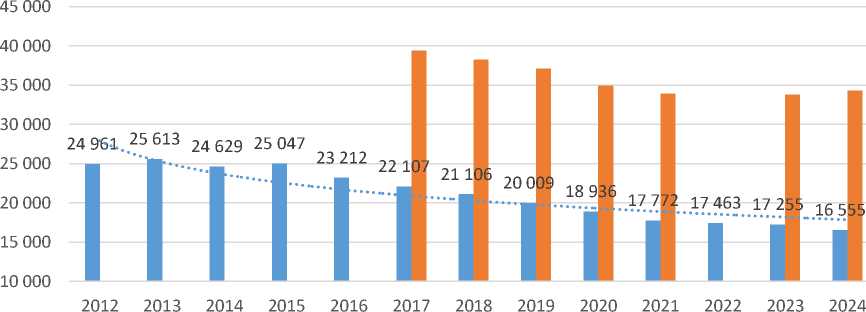
■ number of organizations
■ Number of SME entities
Fig. 7. Dynamics of the number of organizations in the Arkhangelsk Oblast6.
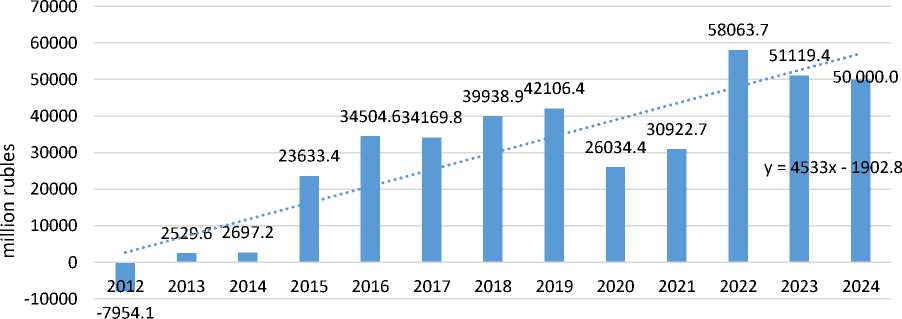
Against the backdrop of a declining number of registered organizations in the Arkhangelsk Oblast, an analysis of enterprises’ financial indicators reveals positive trends. The financial performance showed constant fluctuations between 2013 and 2024, indicating the challenging situation faced by enterprises in the Arkhangelsk Oblast (Fig. 8). An analysis of the financial results of enterprises in the region allows identifying trends in the development of the Arkhangelsk Oblast’s economy (Fig. 8).
-20000
Fig. 8. Net financial results of organizations in the Arkhangelsk Oblast (excluding small businesses)7.
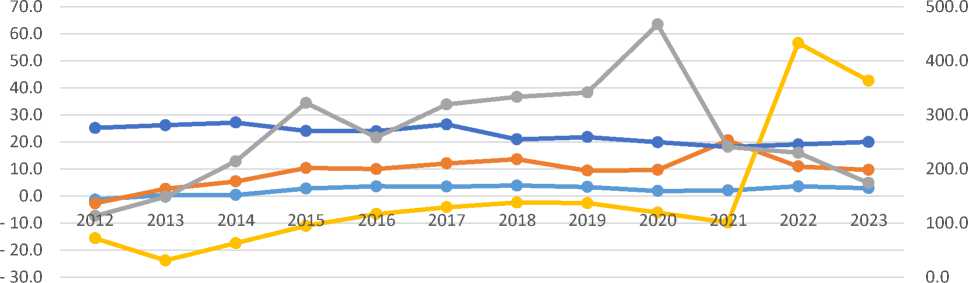
An analysis of return on assets, product profitability, current liquidity ratio, equity ratios, and working capital ratios shows more noticeable fluctuations than the financial result (Fig. 9). Examining the trends in financial performance across each sector makes it possible to identify more
Rosstat. URL: (accessed 11 April 2025).
Ibid.
precisely the factors influencing the region’s economic development and to develop targeted support measures for enterprises facing difficulties.
—•—Return on assets of organizations (excluding small businesses)
—•—Profitability of goods, products, works, and services sold (excluding small businesses)
—•—The coefficient of provision of own working capital (excluding small businesses)
—•—Coefficient of autonomy (excluding small businesses)
—•—Current liquidity ratio (excluding small businesses)
Fig. 9. Key financial indicators of the Arkhangelsk Oblast (excluding small businesses)8.
Overall, the financial performance of enterprises in the Arkhangelsk Oblast over the ten-year period reflects complex and contradictory trends in the region’s economic development, which is confirmed by a comparison with other regions of the North-Western Federal District. Consequently, the analysis of enterprise performance confirms the need for further development of the innovation infrastructure.
