
Симуляционное обучение в хирургической подготовке врачей: опыт и инновационные подходы
Журнал: Бюллетень науки и практики @bulletennauki
Рубрика: Медицинские науки
Статья в выпуске: 1 т.12, 2026 года.
Бесплатный доступ
Традиционная модель обучения хирургов «увидел - сделал - научил» более не соответствует современным стандартам безопасности пациентов. Симуляционное обучение, основанное на принципах преднамеренной практики (Deliberate Practice), является фундаментальным компонентом современного медицинского образования.
Похожие статьи в разделе Патология. Клиническая медицина

Короткий адрес: https://sciup.org/14135527
IDS: 14135527 | УДК: 616-089.819:377 | DOI: 10.33619/2414-2948/122/23
Simulation Training in Surgical Education: Experience and Innovative Approaches
The traditional surgical education model ("see one, do one, teach one") no longer meets contemporary patient safety standards. Simulation training, based on the principles of deliberate practice, is a fundamental component of modern medical education. To conduct a comprehensive analysis of the current state of surgical simulation training, summarize data on the efficacy of various training formats, including the development of Non-Technical Skills (NTS) and economic profitability, and identify promising future directions for simulation technologies in CIS countries. A systematic narrative review of domestic and foreign literature (2003-2025) was performed. Various training formats (dry-lab, wet-lab, VR technologies) were analyzed, and indicators of proven efficacy were examined, including the skill transfer coefficient, Return on Investment (ROI), and the impact on non-technical skills. The combined approach (dry-lab → VR → wet-lab) provides optimal training, achieving a skill transfer coefficient in clinical practice of up to 88.9%. A 91.7% increase in surgeon confidence and a 58.3% reduction in operative time were noted. Simulation has proven effective in developing NTS and demonstrates a positive ROI due to reduced complications. Simulation infrastructure is actively being developed in CIS countries.
Текст научной статьи Симуляционное обучение в хирургической подготовке врачей: опыт и инновационные подходы
Бюллетень науки и практики / Bulletin of Science and Practice
УДК 616-089.819:377
Современная хирургия характеризуется стремительным технологическим развитием и повышением требований к качеству практической подготовки специалистов. Традиционная модель обучения "see one, do one, teach one" ("увидел - сделал - научил") более не соответствует современным стандартам безопасности пациентов и качеству медицинской помощи [1].
В этом контексте симуляционное обучение становится не просто дополнительным инструментом, а фундаментальным компонентом медицинского образования [2].
За последнее десятилетие произошла значительная эволюция симуляционных технологий — от простых фантомов до комплексных виртуальных симуляторов с обратной связью [3].
Особую актуальность приобретает систематизация накопленного опыта, доказательство экономической эффективности и определение перспективных направлений развития симуляционного обучения в хирургии. Цель данного обзора — провести комплексный анализ современного состояния симуляционного обучения в хирургии, обобщить данные об эффективности различных форматов тренинга, включая формирование нетехнических навыков, проанализировать организационные проблемы и определить перспективные направления развития симуляционных технологий в странах СНГ. Успех симуляционного обучения базируется на фундаментальных педагогических и психологических концепциях.
Теория преднамеренной практики (Deliberate Practice) К. Андерса Эрикссона [22]: Симуляция предоставляет идеальную среду для преднамеренной практики — целенаправленного повторения заданий, находящихся за пределами текущих возможностей обучающегося, с немедленной, структурированной обратной связью и возможностью коррекции ошибок. Это критически отличает симуляцию от пассивного наблюдения или обучения в реальной клинике.
Концепция кривой обучения (Learning Curve): Использование симуляторов позволяет пройти начальную, наиболее сложную и опасную часть кривой обучения хирургическому вмешательству в безопасной среде, без риска для пациента. Это способствует стандартизации выполнения процедур до достижения необходимого уровня компетентности. Модель мастерства Дрейфуса (Dreyfus Model): Симуляционное обучение обеспечивает структурированный путь перехода специалиста от уровня «новичка» (действует по строгим правилам) к «компетентному» (начинает определять приоритеты и планировать) и, в конечном итоге, к «эксперту» [23].
Методологической основой исследования послужил систематизированный нарративный обзор отечественной и зарубежной литературы, посвященной симуляционному обучению в хирургии. Включены рандомизированные контролируемые исследования (РКИ), систематические обзоры, мета-анализы, когортные исследования и авторитетные монографии, опубликованные в рецензируемых журналах, а также официальные отчеты и документы симуляционных центров и министерств здравоохранения. Исключены тезисы конференций и неопубликованные материалы.
Проведен тематический анализ для категоризации различных форматов обучения и синтез количественных данных для оценки доказанной эффективности (коэффициент переноса навыков, ROI, показатели NTS).
Объектом анализа послужили: dry-lab, wet-lab, виртуальные симуляторы (VR-технологии), гибридные подходы, а также экономические аспекты и формирование нетехнических навыков. Исторически симуляционное обучение в хирургии прошло несколько этапов развития (Таблица 1).
Таблица 1
ЭТАПЫ РАЗВИТИЯ СИМУЛЯЦИОННОГО ОБУЧЕНИЯ В ХИРУРГИИ
|
Период |
Доминирующие технологии |
Характерные особенности |
|
До 2000 г. |
Простые фантомы, механические тренажеры |
Отсутствие стандартизации, эпизодическое использование. Появление первых тренажеров для лапароскопии в 90-х гг. |
|
2000-2010 гг. |
Компьютерные симуляторы, базовые VR-системы |
Появление объективной оценки, начало интеграции в curriculum. |
|
2010-2020 гг. |
Высокореалистичные симуляторы, комплексные wet-lab |
Стандартизация программ, доказательство эффективности (эра мета-анализов). |
|
2020-2025 гг. |
Гибридные системы, AI-интеграция, телесимуляция |
Персонализация обучения, удаленный доступ, аналитика big data, NTS-тренинг. |
Современный этап характеризуется интеграцией искусственного интеллекта для персонализации обучения и развития адаптивных образовательных траекторий [4].
В данном разделе представлены ключевые результаты анализа эффективности различных симуляционных форматов, включая технические, нетехнические и экономические показатели.
Dry-lab (муляжи, фантомы, механические тренажеры) — это фундамент обучения, наиболее эффективный для отработки базовых моторных навыков: наложение швов, работа с хирургическими инструментами, основы лапароскопии [6].
Основные преимущества: доступность, низкая стоимость и возможность многократного использования [5].
Wet-lab (обучение на биологических тканях) критически важен для формирования сложных хирургических навыков, требующих реалистичной плотности тканей, наличия кровотока и отработки гемостаза [7, 8].
Виртуальные симуляторы (MedVision Simulator, LapSim, ArthroSim) обеспечивают объективную оценку координации, точности и скорости, позволяя проводить стандартизированную оценку компетенций [9, 10].
Наиболее эффективной признана комбинированная модель: dry-lab → VR-симуляция → wet-lab [11].
Бюллетень науки и практики / Bulletin of Science and Practice Т. 12. №1 2026
Такой подход обеспечивает высокие показатели переноса навыков: исследования демонстрируют, что коэффициент переноса лапароскопического интракорпорального шва в реальную практику достигает 88,9% [12].
Эффективность симуляционного обучения оценивается по следующим ключевым параметрам (Таблица 2). Мета-анализы подтверждают, что симуляционное обучение значительно улучшает хирургические навыки по сравнению с традиционным обучением (p < 0,001) [15, 24].
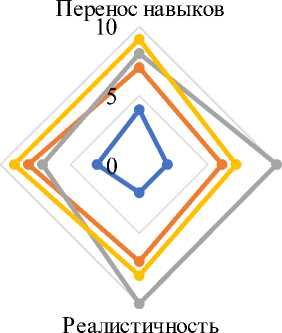
ЭФФЕКТИВНОСТЬ ФОРМАТА ОБУЧЕНИЯ
Оценка NTS
Стоимость
Таблица 2 ПАРАМЕТРЫ ОЦЕНКИ ЭФФЕКТИВНОСТИ СИМУЛЯЦИОННОГО ОБУЧЕНИЯ
|
Параметр |
Методы оценки |
Доказанная эффективность |
|
Технические навыки |
Время выполнения, количество ошибок, оценка по OSATS |
Сокращение времени операций на 58,3% [13] |
|
Перенос навыков в практику |
Опросы, наблюдение в клинике, РКИ |
Коэффициент переноса 88,9% [12, 34] |
|
Уверенность хирургов |
Анкетирование, шкалы самооценки |
Повышение уверенности у 91,7% [13] |
|
Безопасность пациентов |
Анализ осложнений (РКИ) |
Снижение числа осложнений на 25-30% [14] |
Таблица 3
|
Формат обучения |
Перенос навыков |
Стоимость |
Реалистичность |
Оценка NTS |
|
Dry-Lab |
4 |
2 |
2 |
3 |
|
VR-Симуляция |
7 |
6 |
7 |
8 |
|
Wet-Lab |
8 |
10 |
10 |
7 |
|
Комбинированный |
9 |
7 |
8 |
9 |
—•— Dry-Lab —VR-Симуляция —Wet-Lab —Комбинированный
Рисунок 2. Оценка эффективности симуляционного обучения
Эффективность для различных хирургических специальностей. Симуляция доказала свою эффективность во многих областях хирургии [25]:
Лапароскопия: VR-тренажеры (LapSim) являются золотым стандартом для освоения базовых моторных навыков.
Кардиохирургия: симуляторы позволяют отрабатывать анастомозы на пульсирующих моделях (Wet-lab) и принимать решения в сценариях сердечно-легочного шунтирования.
Бюллетень науки и практики / Bulletin of Science and Practice Т. 12. №1 2026
Нейрохирургия: используются тактильные VR-системы для освоения микрохирургических манипуляций и навигации.
Эндоскопия: компьютерные тренажеры (GI-Mentor) позволяют отрабатывать диагностическую и лечебную эндоскопию.
СРАВНИТЕЛЬНАЯ ЭФФЕКТИВНОСТЬ СИМУЛЯЦИОННЫХ ТЕХНОЛОГИЙ
В РАЗЛИЧНЫХ ХИРУРГИЧЕСКИХ СПЕЦИАЛЬНОСТЯХ
Таблица 4
|
Специальность |
Навыки/Процедуры |
Наиболее эффективные форматы симуляции |
Уровень доказательности |
|
Лапароскопия |
Базовые моторные навыки, интракорпоральное шитье |
VR-тренажеры (LapSim), Dry-lab |
Высокий (РКИ, мета-анализы) |
|
Кардиохирургия |
Наложение анастомозов, сердечно-легочное шунтирование |
Wet-lab (пульсирующие модели), Высокофидельные манекены |
Средний (когортные исследования) |
|
Нейрохирургия |
Микрохирургические манипуляции, навигация |
Тактильные VR-системы, Гибридные фантомы |
Средний (серии случаев) |
|
Эндоскопия |
Диагностическая/лечебная эндоскопия, полипэктомия |
Компьютерные тренажеры (GI-Mentor, BronchSim) |
Высокий (РКИ) |
Инвестиции в симуляционные центры демонстрируют положительный показатель рентабельности инвестиций (ROI) [28]. Экономия достигается за счет: снижения числа интра-и послеоперационных осложнений (сокращение затрат на их лечение); сокращения времени операций, что повышает пропускную способность операционных; уменьшения необходимости супервизии на поздних этапах обучения, высвобождая время опытных хирургов.(Таблица 5).
Таблица 5
ЭКОНОМИЧЕСКИЕ ФАКТОРЫ И ПОКАЗАТЕЛИ ROI СИМУЛЯЦИОННОГО ОБУЧЕНИЯ
|
Категория потока |
Фактор |
Описание воздействия на ROI |
Результат / Экономия |
|
Инвестицио нные затраты (вход) |
Закупка и обслуживание оборудования |
Прямые капитальные затраты (симуляторы, фантомы, Wet-lab) и операционные расходы (расходные материалы). |
Требуют значительных начальных инвестиций. |
|
Инвестицио нные затраты (вход) |
Обучение и сертификация персонала |
Затраты на подготовку инструкторов, владеющих методиками дебрифинга. |
Обеспечивает эффективность использования симуляционного центра. |
|
Финансовая выгода (выход) |
Снижение интра- и послеоперацио нных осложнений |
Экономия средств за счет уменьшения затрат на лечение осложнений, повторные операции и компенсации. |
Снижение числа осложнений на 25-30% [14] |
|
Финансовая выгода (выход) |
Сокращение времени операций (Throughput) |
Повышение квалификации хирургов ведет к более быстрым и эффективным операциям, что увеличивает пропускную способность операционной. |
Сокращение времени операций до 58,3% [17] |
|
Косвенная выгода (выход) |
Эффективность супервизии |
Уменьшение времени, необходимого опытным хирургам на контроль ординаторов в реальной операционной. |
Высвобождение времени высокооплачиваемых |
Бюллетень науки и практики / Bulletin of Science and Practice Т. 12. №1 2026
|
Категория потока |
Фактор |
Описание воздействия на ROI |
Результат / Экономия |
|
специалистов для более сложных задач. |
|||
|
Косвенная выгода (выход) |
Удержание персонала и имидж клиники |
Повышение удовлетворенности молодых специалистов качеством обучения и престиж клиники. |
Положительное влияние на HR-метрики и привлечение пациентов. |
|
Итоговый показатель |
Рентабельность инвестиций (ROI) |
Общее финансовое соотношение между сэкономленными/заработанными средствами и первоначальными затратами. |
Положительный ROI при системном, долгосрочном использовании центра [15] |
Современная хирургия требует не только отличных технических, но и нетехнических навыков (NTS). Симуляция с использованием высокофидельных манекенов и командного дебрифинга является идеальным инструментом для отработки [27, 28]:
Принятие решений: в сценариях критических кровотечений или анафилактического шока. Работа в команде (Teamwork): координация действий всего персонала операционной. Лидерство и коммуникация: четкое распределение ролей и обмен информацией в стрессовой ситуации.
Успешное внедрение симуляционного обучения требует создания специализированной инфраструктуры и методической базы. Оптимальный симуляционный центр должен быть многопрофильным и включать : площадь 1200-1500 м² с зонами для dry-lab, wet-lab и VR-тренингов;130-150 единиц оборудования различной фидельности; системы видеофиксации и анализа выполнения манипуляций.
Ключевым элементом является подготовка преподавательского состава, владеющего методиками дебрифинга для предоставления целенаправленной обратной связи [16].
Эффективная интеграция в образовательный процесс предполагает разработку стандартизированных программ и объективной системы оценки компетенций [17].
В странах СНГ отмечается активное развитие симуляционной инфраструктуры. В Кыргызстане в 2025 году открыт первый симуляционный центр в системе здравоохранения на базе Республиканской клинической инфекционной больницы .
Аналогичные центры созданы в Казахстане, Узбекистане и других странах региона [29].
Этот опыт подтверждает системную необходимость перехода от традиционной модели обучения к симуляционной для подготовки хирургических кадров, соответствующих международным стандартам. Несмотря на очевидные преимущества, внедрение симуляционного обучения сталкивается с рядом вызовов: высокая стоимость: закупка и обслуживание высокофидельных симуляторов и wet-lab оборудования требует значительных инвестиций; «симуляционный разрыв» (Simulation Gap): разрыв между возможностями тренажеров и непредсказуемой реальностью клинической практики (например, анатомическими вариациями, нештатными ситуациями); сопротивление преподавателей: консервативно настроенные преподаватели могут сопротивляться переходу от традиционного формата обучения к симуляционному и дебрифингу; недостаток валидированных инструментов: отсутствие единых, валидированных инструментов оценки для некоторых сложных технических и нетехнических навыков.
Дальнейшее совершенствование симуляционного обучения связано с цифровизацией и персонализацией: интеграция искусственного интеллекта (AI) и Big Data: Использование AI для анализа видео выполнения процедур, автоматической оценки качества, предоставления персонализированных рекомендаций и предиктивной аналитики успеваемости [18, 30]; телесимуляция (Telesimulation): Удаленное проведение тренингов и консультаций, что особенно актуально для обширных географических регионов стран СНГ и повышения доступности обучения для удаленных клиник [19]; серьезные игры (Serious Games) и геймификация: Применение игровых механик (баллы, рейтинги, соревнования) для повышения вовлеченности обучающихся и поддержания интереса к многократной практике.
На основе проведенного обзора сформулированы следующие рекомендации для ключевых заинтересованных сторон в области медицинского образования: для ВУЗов и руководителей образовательных программ; интегрировать симуляционное обучение в учебный план как обязательный, оценочный компонент, а не как дополнительную активность; разработать стандартизированные протоколы тренинга, основанные на принципах Deliberate Practice (многократное повторение до достижения критериев мастерства) [31].
Для организаторов симуляционных центров: при подборе оборудования отдавать предпочтение гибридным и комбинированным моделям (dry-lab + VR), обеспечивающим максимальный перенос навыков; обязательно включать в программы тренинг нетехнических навыков (NTS) с использованием высокофидельных сценариев и структурированного дебрифинга; обеспечить регулярное повышение квалификации преподавателей по методике дебрифинга.
Для министерства здравоохранения стран СНГ: разработать национальные стандарты для симуляционных центров, включая требования к минимальной фидельности оборудования и квалификации персонала; сформировать программы финансирования для закупки и обслуживания дорогостоящего оборудования, а также для развития телесимуляции для удаленных регионов.
Заключение
Симуляционное обучение стало неотъемлемым компонентом современной хирургической подготовки, доказав свою эффективность в формировании как технических, так и нетехнических навыков. Комбинированный подход, интегрирующий различные форматы обучения, обеспечивает оптимальные результаты. Дальнейшее развитие связано с цифровизацией, персонализацией обучения, преодолением организационных проблем и укреплением международного сотрудничества в области симуляционных технологий. Развитие симуляционных центров в странах СНГ создает основу для подготовки высококвалифицированных хирургических кадров, соответствующих современным международным стандартам.
