
Social Policy of Mining Companies as an Institution for the Development of Rural Areas in the Arctic Zone of the Russian Federation
Journal: Arctic and North @arctic-and-north
Section: Social and economic development
Article in issue: 61, 2025.
Free access
This study examines the social policy of mining companies in rural areas of the Arctic zone of the Russian Federation, which forms the institution of corporate social responsibility. The aim of the study is to describe this institution, i.e. the set of mechanisms used by the enterprise to interact with its operating environment (authorities and population), the process of forming the object of interaction and directions. The novelty of the research is determined by the voluntary nature of corporate social responsibility, i.e. the absence of a direct regulatory institutional environment. The social policies of JSC Severalmaz (Arkhangelsk Oblast) and LLC LUKOIL-Komi (Republic of Komi) are selected as the object of the study. The research methods include dynamic horizontal analysis of socio-economic indicators for 2012–2023, case method and content analysis. The data sources are corporate reports, official notes on the websites of companies and municipalities for 2023. The collected data was quantitatively assessed and systematized in terms of the areas of social initiatives, geography of implementation, and beneficiaries. Based on the analysis of social activities, it was found that the focus areas differ in the administrative center, where “social sphere” and “education and science” predominate, and rural settlements, where corporate activities depend on development disparities. Among the formal mechanisms for participation in solving problems, agreements, cooperation contracts and grant support prevail. At the same time, informal mechanisms are actively used: targeted assistance and employee initiatives. Social responsibility policy tends towards the “strategic” type, where measures with both long-term and short-term effects are implemented. As a result, mining companies are becoming a significant part of the development of rural areas in the Arctic zone of the Russian Federation, which determines the emergence of the institution of corporate social responsibility. The data obtained will serve as a basis for the development of social policies by corporations and municipal authorities.
Similar articles in the section Dynamics of the economy. Economic movement
Short address: https://sciup.org/148332689
IDS: 148332689 | UDC: [330.342.146:622.2](985)(045) | DOI: 10.37482/issn2221-2698.2025.61.125
Text of the scientific article Social Policy of Mining Companies as an Institution for the Development of Rural Areas in the Arctic Zone of the Russian Federation
DOI:
Companies play an important role in the socio-economic development of regions and territories of their operation, which is confirmed by their inclusion in various regional and federal
∗ © Yakusheva U.E., 2025
This work is licensed under a CC BY-SA License strategies, such as the Strategy for Spatial Development 1. For the Arctic Zone of the Russian Federation (hereinafter referred to as the AZRF), extractive companies are not only a growth driver, but also a primary factor in regional development [1, Shelomentsev A.G., Doroshenko S.V., Dzhabiev V.V. et al., pp. 13–14; 2, Minaev Yu.N.; 3, Agarkov S.A., Ivanova M.V.]. However, the activities of extractive companies are most critical for rural settlements in the Arctic. Due to the remoteness of municipalities from each other, low population density and its uneven distribution [4, Korchak E.A., p. 123], as well as difficult climatic conditions for effective agriculture [5, Samarina V.P., Skufina T.P.], resource enterprises are the main driver of growth and often the only basis for the existence of a municipal entity. At the same time, there are about 16 municipal okrugs and districts (20% of all municipal formations in the AZRF) where only the rural population lives 2 [6, Yakusheva U.E., Maksimov A.M., Malygina M.V., p. 191]. The importance of partnership between business, the rural population and the authorities is identified as one of the principles for achieving the goals of the Strategy for the Sustainable Development of Rural Areas of the Russian Federation for the Period until 2030 3. However, the most interesting aspect to consider is the social impact created in the process of this interaction, as well as the formation of a mechanism as a result of the company’s implementation of social policy within the framework of corporate social responsibility (hereinafter referred to as CSR). The dichotomy of CSR lies in the company’s performance of some of the social functions initially assigned to the state, and in this case, to municipal authorities, limited in budget formation due to “centralization” and the transfer of the bulk of taxes to the regional and federal levels [7, Lytkina T.S., Yaroshenko S.S., pp. 106, 116]. This situation serves as a prerequisite for the formation of an institution in the form of corporate social responsibility within rural settlements, often to ensure the viability of the rural area.
Thus, the purpose of this article is to analyze the institution of corporate social responsibility of mining companies as an element of the socio-economic development of rural municipalities in the Arctic zone of the Russian Federation. In this study, the analysis of the CSR involves the identification of a set of predominant areas of corporate social activities, the tools used by the company to build interactions within the territory of its presence, and the mechanisms of participation in decision-making on the implementation of social policy. For a number of reasons, the social activities of JSC Severalmaz, a diamond mining company in the Arkhangelsk Oblast and a subsidiary of ALROSA Diamond Company, and LLC LUKOIL-Komi 4, which operates in the Komi Republic and the Nenets Autonomous Okrug and is a subsidiary of PJSC LUKOIL, were chosen as the object of study. Firstly, the companies have a long history of development. JSC Severalmaz has been actively mining diamonds at the M.V. Lomonosov deposit since 1994. The deposit’s reserves, consisting of six kimberlite pipes, are estimated at 194 million carats, making it the largest in the European part of Russia 5. LLC LUKOIL-Komi has been operating since 2001 and extracts hydrocarbon resources at deposits in the Timan-Pechora province of the Komi Republic 6. Secondly, the companies’ activities are concentrated in municipalities, some of which are entirely rural. For example, Severalmaz operates in the Primorskiy Municipal District of the Arkhangelsk Oblast, and LUKOIL-Komi — in several municipalities of the Komi Republic, including the Ust-Tsilemskiy Municipal District. Thirdly, the companies adhere to sustainable development policies and corporate social responsibility principles, have documents such as the “Sustainable Development and Corporate Social Responsibility Policy of JSC Sev-eralmaz” 7 and the “Sustainable Development Policy of the LUKOIL Group” 8, and openly publish information about their events on their official websites, which allows identifying patterns of their social activity.
Theoretical framework
A considerable number of studies by both domestic and foreign researchers are devoted to issues of corporate social responsibility [8, Frederick W.C.; 9, Greening D.W., Turban D.B.; 10, Sar-butts N.]. However, it is worth noting the limited number of works addressing aspects of organizational behavior, the portrait of a socially responsible company with the identification of key areas of influence, the mechanism of building communications, and the process of CSR institutionalization. This phenomenon can be explained by the still uncertain interpretation of social responsibility in domestic literature: there are neither clear identification criteria, nor defined implementation mechanism, etc.
Among the studies of international researchers on the systematization and classification of CSR styles and policies, it is worth noting the works of S. Zadek, A. Carroll, and W. Visser. S. Zadek developed a mechanism for implementing companies’ social programs based on the relationship between the stage of development of a social problem and organizational learning. This process was described by the author as “civil learning”, as a result of which the organization can choose any of five models of behavior in response to the need to solve social problems of the region: defensive, rule-following, managerial, strategic, or being a responsible citizen [11, pp. 125-132]. A similar concept was proposed by W. Visser, who made an analysis of companies’ activities in 60 countries and identified five stages of CSR: defensive, when the company relies only on current legislation;
promotional, characterized by the use of social activity to increase attractiveness in the market; strategic, involving the engagement of stakeholders; charitable, implying respect for the interests of the municipality; and universal (transformative), when the company seeks to give back more than it took [12]. All of the stages and strategies outlined above are, in turn, a detailed version of A. Carroll's pyramid with four levels of corporate responsibility: economic, legal, ethical, and philanthropic [13, p. 499] (see Fig. 1).

Responsibilities
Defensive
Defensive
Ethical Responsibility
Philanthropy
Promotional
Strategic
Charitable
Systemic
Managerial
: Strategic
Com piliance
evolution of CSR as institute of regional development
Civil
complinee with the law the basic level of CSR
the focus of social policy aimed at employees
apply as marketing too focus on stakeholders expectations balance within social initiatives for employees and locals
-
■ being a good citizen
-
■ predominance of philanthropic activities
-
■ create values for external environment
Fig. 1. Correlation of CSR styles and models 9.
The institutional aspect of a company’s involvement in social issues is reflected in the studies of M. Porter and R. Kramer. The authors identified four main reasons for applying CSR practices: reputation support, moral legitimacy, permission to operate from one of the actors, and sustainable policy. However, CSR practices are based on the conflict of regional development institutions, rather than their interaction. The authors propose implementing CSR activities with a focus on the problems of the region and its residents [14]. The legitimate side of CSR considers issues of influencing public opinion through four strategies: information campaigns targeting stakeholders, manipulative influence on them, changing public expectations, and changing perceptions while maintaining current activities [15, Piedade L., Thomas A.; 16, Moir L.; 17, Rai G., Hooda K.].
-
H. Jenkins identified the phenomenon of “false dependence” when describing the interaction model between a mining company and its region of operation. False dependence occurs when a company is the main driver of economic growth and at the same time actively creates the illusion of contributing to the sustainable development of the region where it operates [18, p. 26]. L. Shen, K. Muduli, and A. Barve identified a list of 63 practices that influence the successful implementation of green supply chains for the mining industry, demonstrating the complexity and hierarchical nature of this process [19].
A large block of Russian studies is focused on describing CSR practices without any systematization of the activities carried out by companies [20, Potravnyy I.M., Gassiy V.V., Chernogradskiy
V.N., Postnikov A.V.; 21, Nefedyeva E.I., Gavrisenko D.M.]. Among the studies of domestic researchers on the mechanisms of interaction and directions of CSR, the studies of B.S. Bataeva should be highlighted. The author identifies the following models of interaction: “city-factory”, characteristic of single-industry towns, “bargaining” and “voluntary-compulsory” corporate social activity, and outlines the steps for creating a regional concept of CSR [21, p. 27]. The main beneficiary of CSR in Russia is a company’s employee. Russian companies are typically focused on quick results; this is reflected in the internal orientation of CSR activities: employee incentives, health support, and social assistance to employees’ families. This motive is most clearly expressed in a quote from one of the respondents to the study by O.V. Rogacheva: “A person works, goes on vacation, gets some rest and treatment, and then works better and treats the organization itself like a family” [23, p. 355]. It is precisely the focus on achieving quick and visible results that determines the low popularity of environmental programs, especially among small and medium-sized businesses. Moreover, environmental issues are not a priority for the public or the authorities, and therefore do not constitute institutional pressure on the company. In general, the characteristic features of CSR practices in Russia include disorder, public distrust of business, uncertainty in the business environment, collectivism in the implementation of corporate social activities, and a predominance of initiative on the part of employees. These features are shaped not only by current legislation, but also by the cultural and cognitive force of regulation [24, Bataeva B.S., Cheglakova L.M., Melitonyan O.A., pp. 35–50].
In relation to the CSR practices in the AZRF, the issue of interaction with the indigenous peoples of the North, Siberia, and the Far East of the Russian Federation has been discussed in sufficient detail [25, Samsonova I.V., Neustroeva A.B., Pavlova M.B.], as well as an assessment of individual company CSR costs without territorial differentiation among the regions and municipalities of the Arctic [26, Gavrilyeva T.N., Yakovleva N.P., Boyakova S.I., Ivanova M.A., pp. 127–128]. Moreover, the authors note that companies’ activities in terms of creating social effects are institutional in nature and are based on concluded agreements.
Thus, when considering social responsibility, most studies focus either on a regional perspective or on the activities of a company in several regions. At the same time, the institution of CSR in rural areas remote from the administrative center is described rather poorly, and in rural municipalities of the AZRF is practically ignored.
Methodological framework of the study
The study aims to describe the formation and implementation of corporate social responsibility policies by JSC Severalmaz and LLC LUKOIL-Komi in rural areas of the AZRF (Primorskiy Municipal District and Ust-Tsilemskiy Municipal District) and consists of two stages:
-
• socio-economic characteristics of municipal formations to identify the main development trends;
-
• compiling a profile of the social activities of JSC Severalmaz and LLC LUKOIL-Komi through a quantitative assessment of CSR activities and identifying mechanisms for participating in addressing development imbalances.
The following indicators were used for the socio-economic characteristics:
-
• demographic characteristics: population size, natural and migration growth/decline;
-
• standard of living: average number of employees, average monthly wages, number of health care facilities, number of public service facilities, and area of residential premises per person;
-
• economic sustainability: area under cultivation crops, agricultural production index, crop production index, livestock production index, number of retail and catering facilities. Indicators related to agricultural activity characterize the ability to ensure the viability and sustainability of the territory.
The selection of this set of indicators allows for a clear presentation of the main imbalances in the municipality’s development and is limited by the published data. The data collection period was from 2012 to 2023. The source of the data was the Rosstat Database of Indicators of Municipalities of the Russian Federation. In addition, reports and presentations of district heads, as well as decisions of the Council of Deputies for 2023, were reviewed to identify problems based on the qualitative characteristics of the municipality’s development.
When compiling the profile of companies’ social activity, the concept of “corporate social responsibility” was used, allowing for a focus on activities “beyond the law”. Corporate social responsibility is defined as “the activities of a law-abiding company in relation to the citizens of any territorial entity, aimed at providing social benefits to citizens and leading to improved quality of life, preservation of biodiversity, reduction of negative impacts, and comprehensive development of a given territorial entity” [27, Yakusheva U., pp. 64–65]. Only those activities that the company carried out voluntarily and that were not mandatory under current legislation were selected as actions. This approach allows us to focus on the synergistic effects created as an additional factor in the development of rural areas. The collected activities were categorized by beneficiary group, geography, and focus of their implementation. The following CSR areas were used: “Culture”, “Sports”, “Education and Science”, “Mass Events”, “Healthcare”, “Ecology”, and “Social Sphere”. Each area included both infrastructure projects and public events. The “Social Sphere” area included all activities that could not be integrated into other events: targeted support for vulnerable groups, kindergarten renovations, summer camp funding, creation of parks and public gardens, etc. For quantitative calculations, events that lasted several months were counted for each month and summed up in the final calculation. On the one hand, this increases the number of activities in the area under consideration, but on the other hand, it allows for the long-term nature of corporate social initiatives to be taken into account, which increases the effect for stakeholders. The logical criterion for calculation was the principle of the presence of an effect and its volume for a single stakeholder.
The data collection period was 2023, broken down by month. The sources of data were corporate reports for 2023 (annual, accounting, and sustainability reports), news items on the official websites of Severalmaz (350 items) and LUKOIL-Perm (60 items); news items on the official websites of municipalities (250 items). Some data was verified on the official websites of third-party organizations or events. The limitations of the study include the researcher’s subjective interpretation of the activities carried out and partial access to data on the organization’s activities, in particular with regard to financial expenditures. Therefore, the number of events was used as a metric for measuring CSR.
Results and discussion
An analysis of the socio-economic situation of the municipalities under consideration revealed a number of imbalances, which were then compared with the CSR activities carried out. Thus, for the Primorskiy Municipal District (see Table 1), natural population decline is a significant negative development trend, despite the municipality’s population growth. This is explained by its proximity to the regional administrative center, Arkhangelsk, where some residents purchased houses during the COVID-19 pandemic. The Ust-Tsilemskiy Municipal District is characterized by natural population decline and a decrease in the number of workers. Furthermore, both municipal districts had seen a reduction in cultivated areas and a slight decrease in agricultural production indices, reflecting a decline in economic activity in these territories.
Table 1
Matrix of socio-economic development of the Primorskiy Municipal District and Ust-Tsilemskiy Municipal
District for the period 2012–2023
|
Indicator |
Primorskiy Municipal District |
Ust-Tsilemskiy Municipal District |
||||||
|
2023 |
Absolute change |
Increase rate, % |
Dynamics of change |
2023 |
Absolute change |
Increase rate, % |
Dynamics of change |
|
|
Population size, people |
28 793 |
2 507 |
9.5 |
increase |
10 478 |
-2 178 |
-14 |
decrease |
|
Natural growth/decline, people |
-166 |
-174 |
-2 175 |
decrease |
-64 |
-80 |
-500 |
decrease |
|
Migration growth/decline, people |
281 |
412 |
-307 |
sinusoidal |
-54 |
263 |
-64 |
sinusoidal |
|
Number of employees, people |
7 198 |
280 |
4 |
sinusoidal |
2 146 |
-377 |
-16.5 |
decrease |
|
Wages, rub. |
76 505.2 |
52 402.1 |
217 |
increase |
60 296.9 |
36 162.5 |
150 |
increase |
|
Area of cultivation crops, ha |
1 584.9 |
-88.8 |
-5 |
sinusoidal |
138.69 |
-503 |
-78 |
decrease |
|
Agricultural production index, % |
99 |
-6.6 |
-6.3 |
sinusoidal |
95.1 |
-8.8 |
-8 |
stable |
|
Crop production index, % |
99.8 |
1.1 |
1.1 |
stable |
73.1 |
-29.1 |
-28 |
sinusoidal |
|
Livestock production index, % |
95.6 |
-23.9 |
-20 |
decrease |
110.3 |
5.3 |
5 |
sinusoidal |
|
Retail and catering facilities, units |
265 |
-43 |
-14 |
decrease |
324 |
-25 |
-7 |
stable |
|
Health care facilities, units |
29 |
- 1 10 |
-3.3 |
stable |
26 |
-29 |
-7 |
stable |
|
Public service facilities, units |
35 |
22 |
169.2 |
increase |
35 |
3 |
9 |
sinusoidal |
10 The data was calculated since 2014 due to the lack of indicators in the Municipal Statistics Database for 2012.
|
Residential premises, m2/pers. |
44.2 |
9.2 |
26.1 |
increase |
35.77 |
7.6 |
26.8 |
increase |
A review of reports by heads and meetings of municipal deputies showed that, in addition to the above-mentioned imbalances, there are problems with transport accessibility, a lack of space for educational, healthcare and cultural institutions, as well as their poor material and technical equipment 11, 12.
Further consideration of the CSR framework in relation to the areas of social activities carried out in the region (see Tables 2 and 3) reveals that the primary focus is on supporting various segments of the population and public associations (the “Social Sphere” area), as well as the development of science and education. The combined weight of the three leading areas (for Severalmaz, “Sports” is third, and for LUKOIL-Komi, it is “Culture”) reaches 67%, demonstrating the companies’ targeted contribution to the development of regions. At the same time, most of Severalmaz activities are focused on the internal environment: employees and their families. For example, the company provides additional payments to employees on parental leave, pays for a second-class or first-class ticket to and from their holiday destination 13 and provides additional medical insurance. An analysis showed that Severalmaz’s total contribution to the development of the Arkhangelsk Oblast exceeded 50 million rubles in 2023 and 150 million rubles from 2020 to 2023 14. According to the explanatory notes to the accounting balance sheet, charitable expenses for 2023 amounted to 53.241 million rubles, while social expenses — 6.9 million rubles. Severalmaz employs approximately 1,300 people, 90% of whom are residents of the Arkhangelsk Oblast, and the company’s total tax contributions to the regional budget exceeded 3 billion rubles. Another company, LUKOIL-Komi, is actively implementing infrastructure projects related to construction of hospitals, renovation of premises for educational institutions, and preservation of cultural sites. For example, the company was a financial partner in the renovation of the roof of a kindergarten in the village of Denisovka, the replacement of 240 windows in the Secondary School No. 1 in Nizhniy Odes, the construction of a sports complex with a swimming pool in the village of Yarega, the renovation of lecture halls and the purchase of equipment for the Ukhta State Technical University worth more than 45 million rubles , the construction of a children’s playground and sports ground in the village of Novikbozh at a cost of 20 million rubles, etc. 15 Summarizing the data obtained, in the regional context, Severalmaz has a “managerial” style of working with social problems in accordance with the classification of S. Zadek or “strategic” style according to W. Visser; LUKOIL-Komi tends towards the “strategic” type according to S. Zadek and the “charitable” type according to W. Visser [11; 12]. As a result, the companies are not yet “responsible citizens”, i.e. they do not try to give back to society more than they have taken, but the institution of CSR is not used as a measure of protection against public attacks. Both companies have neglected the aspect of participation in the development and support of the local economy, which makes it impossible to describe their behavior as “civic” or “transformative” in the regional context.
Table 2
Social activity areas of JSC Severalmaz in the Arkhangelsk Oblast in 2023 (units)
|
Direction |
Period, months 2023 |
|||||||||||
|
Jan. |
Feb. |
Mar. |
Apr. |
May |
Jun. |
Jul. |
Aug. |
Sept. |
Oct. |
Nov. |
Dec. |
|
|
Culture |
- |
1 |
- |
2 |
4 |
2 |
4 |
- |
- |
1 |
1 |
- |
|
Sports |
5 |
4 |
5 |
2 |
5 |
4 |
2 |
3 |
3 |
8 |
3 |
7 |
|
Education and science |
1 |
2 |
2 |
2 |
3 |
4 |
4 |
6 |
4 |
8 |
6 |
4 |
|
Mass events |
- |
- |
- |
- |
- |
2 |
3 |
3 |
1 |
1 |
1 |
1 |
|
Healthcare |
1 |
1 |
2 |
2 |
1 |
1 |
1 |
1 |
1 |
1 |
1 |
1 |
|
Social sphere |
3 |
1 |
2 |
4 |
6 |
3 |
2 |
6 |
5 |
8 |
7 |
9 |
|
Ecology |
3 |
3 |
3 |
3 |
3 |
3 |
3 |
3 |
3 |
3 |
3 |
3 |
Table 3
Social activity areas of LLC LUKOIL-Komi in the Komi Republic in 2023 (units)
|
Direction |
Period, months 2023 |
|||||||||||
|
Jan. |
Feb. |
Mar. |
Apr. |
May |
Jun. |
Jul. |
Aug. |
Sept. |
Oct. |
Nov. |
Dec. |
|
|
Culture |
- |
2 |
- |
1 |
1 |
1 |
1 |
4 |
4 |
5 |
3 |
5 |
|
Sports |
- |
1 |
2 |
- |
- |
- |
1 |
3 |
4 |
- |
3 |
3 |
|
Education and science |
- |
- |
1 |
3 |
1 |
3 |
3 |
4 |
3 |
4 |
2 |
- |
|
Mass events |
- |
- |
- |
1 |
- |
1 |
4 |
1 |
1 |
1 |
2 |
1 |
|
Healthcare |
- |
- |
- |
- |
- |
- |
1 |
- |
2 |
1 |
- |
18 |
|
Social sphere |
2 |
- |
- |
- |
- |
- |
2 |
4 |
3 |
4 |
2 |
- |
|
Ecology |
1 |
1 |
1 |
1 |
1 |
2 |
4 |
1 |
1 |
2 |
1 |
1 |
An analysis of the social activity profile by municipality revealed that companies are focused not only on creating social value in the areas where they operate (which account for about 50% of all social activities implemented), but also in other municipalities, including administrative decisionmaking centers: the cities of Arkhangelsk, Ukhta, Usinsk, and Pechora. This fact can be explained by the specifics of the shift work method: some employees live in cities, which ultimately drives companies to participate in improving the quality of life in the areas where their employees live. However, the broad geographical coverage of CSR across the entire region potentially reduces the role of the company in the development area due to budget constraints.
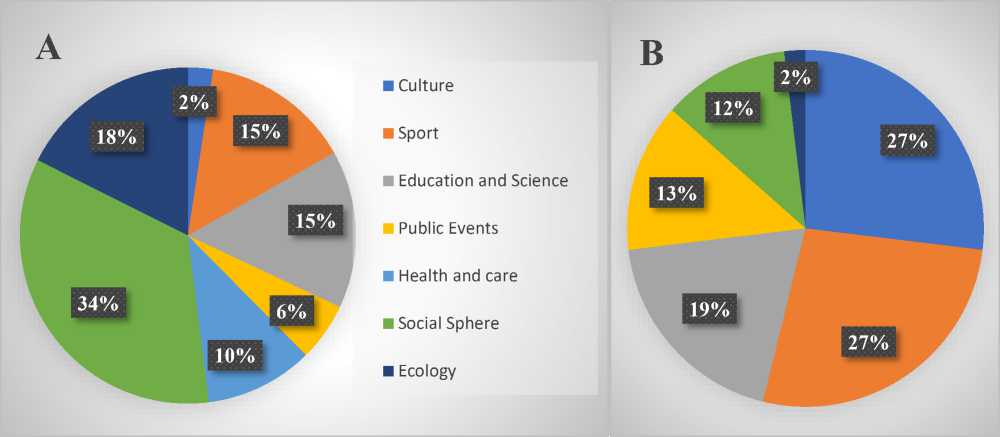
The author’s analysis of the dominant areas of social activities carried out by extractive companies in rural settlements in the Arctic zone made it possible to form a CSR profile with distinctive characteristics for each municipality (see Fig. 2).
B
34%
19%
6%
27%
10%
A
■ Culture
■ Sport
■ Education and Science
I ■ Public Events г ■ Health and care
■ Social Sphere
■ Ecology
27%
2%
18%
2%
15%
15%
12%
13%
Fig. 2. Structure of social activities conducted in 2023: a) JSC Severalmaz in the Primorskiy Municipal District, b) LLC LUKOIL-Komi in the Ust-Tsilemskiy Municipal District, % 16.
Almost 100 social initiatives were implemented in the Primorskiy Municipal District, with the leading areas being “social sphere”, “ecology”, and “education and science”. These areas primarily involve long-term programs, such as research of vegetation, sand, and rocks, river stocking, and local community support. An example from the “social sphere” category is the initiative to finance school meals in remote and hard-to-reach areas of the Primorskiy Municipal District, where since 2018, around 58 students received free meals annually. In 2023, the cost of this support amounted to approximately 1 million rubles 17. LUKOIL-Komi implemented over 50 social events in the Ust-Tsilemskiy Municipal District, focusing primarily on “culture”, “education and science”, and “sports”. It is worth noting that most of these activities were carried out through a grant competition organized by the LUKOIL Charitable Foundation and the support of local non-profit organizations. For example, in the 2023 project competition, the total funding amounted to 5 million rubles, distributed among 19 winners from the Ust-Tsilemskiy Municipal District. Participants were able to purchase materials and equipment for kindergartens and music schools, as well as to begin renovating a 100-square-meter former printing house to create a 50-seat theater 18. There is a practice of funding grant applications outside of the competition, which also increases the amount of support for rural communities. Companies are most active in conducting social events in the second half of the year (70% of social activities), which is explained by the large number of festive events to which the activities are timed, and the policy of budget savings in the first half of the year. Other examples of social initiatives shaping the institution of corporate social responsibility in rural communities are presented in Tables 4 and 5.
Table 4
Examples of CSR activities implemented by Severalmaz in 2023 in the Primorskiy Municipal District (Arkhangelsk Oblast)
|
Description |
Effects created |
Beneficiaries |
Area |
|
Christmas ski race was organized in January among employees across nine age and gender groups; the winners received commemorative prizes. |
33 employees participated; reduction in sickness rates |
employees |
sport |
|
Opening of the community center in the village of Laiskiy Dok, where the company co-financed the renovation through the state program “Integrated Rural Development”. A 75-seat auditorium was built; sound and computer equipment, a LED screen, etc. were purchased. |
total project funding — 69.2 million rubles; preservation of cultural traditions |
local community |
culture |
|
Financial assistance was provided to two creative groups from the Lyavlenskiy rural community center for participation in the “For the Glory of the Fatherland!” festivalcompetition in the Ustyanskiy municipal district. |
preservation and dissemination of cultural capital |
local community |
culture |
|
The company purchased and donated paintings depicting front-line soldiers to the Primorye Museum of Folk Arts and Crafts; the book “Scorched by War” was presented to the Primorskiy District Central Library. |
preservation of cultural heritage, fostering patriotism |
local community |
culture |
|
Presents to the kindergarten for participating in the illustration exhibition held at the Uemskaya School. |
10 people received commemorative prizes; development of human capital |
children |
social sphere |
|
The men’s team took part in the Primor-skiy District Men’s Volleyball Championship at the sports complex in the village of Vaskovo. |
reduction in sickness rates, improvement of work performance |
employees |
sport |
|
The company organized a darts tournament to celebrate National Athlete’s Day. The winners received commemorative prizes. |
approximately 78 people participated in the event; reduction in stress and sickness rates |
employees |
sport |
|
The company renovated the facility and donated it to the Primorskaya Sports School, where school participants can change clothes before physical activities. |
reduction in sickness and injury rates |
schoolchildren |
sport |
|
At the request of employees, the company repaired and replaced shower stalls in dormitories for shift workers. |
reduction in sickness and injury rates |
employees |
social sphere |
Table 5
Examples of CSR activities implemented by LUKOIL-Komi in 2023 in the Ust-Tsilemskiy Municipal District (Komi Republic)
|
Description |
Effects created |
Beneficiaries |
Area |
|
Providing presents to veterans as part of their honoring ceremony in the hall of the Ust-Tsilemskiy Cultural Center named after T.G. Shish-elova. |
15 people received commemorative prizes; preservation of generational continuity |
local community |
culture |
|
Participation in organizing the military field training “Northern Fortress-2023” at the Cadet Secondary School named after Hero of Russia V.N. Nosov. |
reduction of social tension |
local community |
public event |
|
Co-financing of the trip of the VIA “Original Copy” to participate in a creative event. |
4 participants received support; development of local talent |
local community |
culture |
|
Sponsorship and organizational support for the concert “Oh, the Frontline Road!” for GPW veterans at the Ust-Tsilemskiy Cultural Center named after T.G. Shishelova. |
preservation of generational continuity, preservation of traditions |
local community |
culture |
|
Participation in the fishing competition as part of the “Hunter's Festival”. |
approximately 74 people participated in the event; reduction of social tension |
local community |
public event |
|
The Church of St. Nicholas the Wonderworker was insulated and covered with siding. |
preservation of cultural sites |
local community |
culture |
|
Thanks to financial support, a memorial sign to GPW participants was installed 5 km from the village of Ust-Tsilma, which features 13 names of village natives. |
preservation of generational continuity, fostering patriotism |
local community |
culture |
|
The company provided presents to the winners and runners-up of the classic style cross-country ski race, where 43 participants from the rural settlements of Ust-Tsilma and Ko-roviy Ruchey competed over distances from 0.5 to 10 km. |
26 people received commemorative prizes; reduction in sickness and injury rates |
schoolchildren |
sport |
|
Provided assistance in purchasing food for the parents of 20 departed SMO participants |
reduction of social tension |
local community |
social sphere |
|
The company presented New Year’s gifts to children from kindergartens in the villages of Chukchino, Ste-panovskaya, Zamezhnaya, Ust-Tsilma, and Koroviy Ruchey. |
45 children received presents; reduction of social tension |
children |
social sphere |
The difference in the types of social activities supported in rural municipalities determines the specific nature of CSR: a focus on generating “tangible” effects for Severalmaz versus creating value for LUKOIL-Komi at the request of stakeholders. This conclusion is most clearly confirmed by an analysis of CSR beneficiaries (see Figure 3).
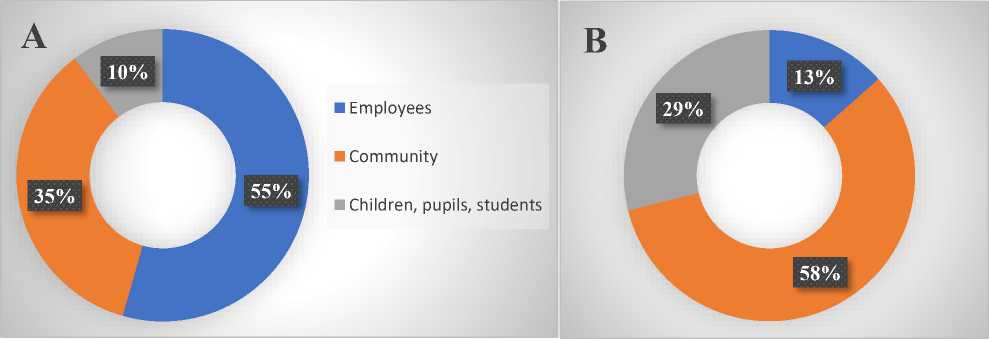
Fig. 3. Social activity of companies in 2023 in terms of beneficiaries of the effects: a) Severalmaz in the Primorskiy Municipal District, b) LUKOIL-Komi in the Ust-Tsilemskiy Municipal District 19.
-
19 Source: compiled by the author.
Severalmaz has demonstrated a focus on internal corporate activities and value creation within the company, which is why approximately 54% of beneficiaries are company employees. This policy is explained by the company’s need to achieve rapid results and see outcomes in the short term. Moreover, the focus of CSR on the internal environment allows the company to minimize the risks of its activities, which are significantly increased when interacting with the local community. Overall, the company maintains a balance between internal and external beneficiaries. A significant proportion of beneficiaries of CSR of LUKOIL-Komi are the local community, represented by local creative groups, veterans, and residents of the district. Activities targeting this group primarily focus on cultural events and public celebrations, which ultimately have the effect of reducing social tension and preserving cultural traditions. It is worth noting that the company is also actively involved in supporting children, who account for about 28% of beneficiaries, which implies participation in the formation of labor resources and the preservation of labor potential. Social initiatives aimed at creating value for the external environment account for 86.5%, indicating that LUKOIL-Komi is actively involved in the development of the rural municipality. Differences between the predominant areas of CSR activities at the regional and municipal levels are explained by the companies’ adaptive policies regarding territorial issues.
The analysis of CSR activities in terms of areas of focus and beneficiaries, compared with the identified disparities in the development of municipal entities, shows that companies are actively involved in supporting local culture, building social infrastructure (primarily LUKOIL) and educational programs. No measures aimed specifically at increasing the birth rate have been identified on the part of companies, which may serve as a recommendation for expanding the range of social activities. The relevance of this area is also confirmed by the national projects “Demography” and “Family” 20. However, companies are actively involved in supporting the health and medical care of both employees and the population by creating healthcare infrastructure and promoting a healthy lifestyle, which also indirectly impacts natural growth. Another aspect that has been neglected among CSR activities is support for agriculture as an alternative type of economy for building the long-term viability and sustainability of the region.
The development of CSR practices among mining companies in rural areas of the AZRF is presented in Figure 4 and consists of the tools used by companies to analyze ongoing processes, the mechanisms used to participate in solving regional problems, and the prevailing areas of social activity.
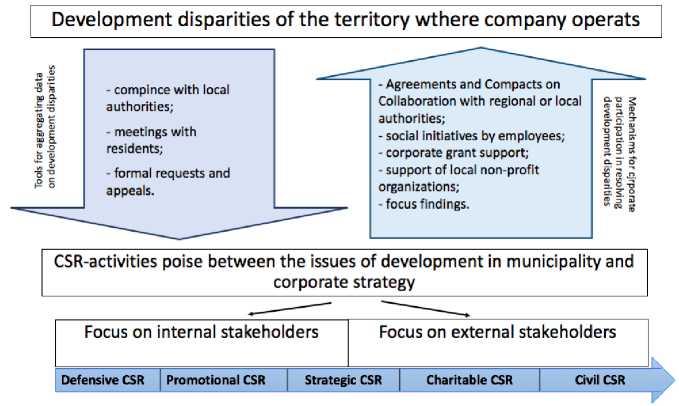
Fig. 4. Implementation of the socially responsible company practice in AZRF rural areas 21.
It should be noted that, specifically for rural areas, CSR practices have most often been implemented through cooperation agreements, which imply a more formal approach. The closer a municipality is to the administrative center of regional decision-making, the more diverse the company’s mechanisms for contributing to the mitigation of imbalances. These agreements are regional in nature, and their implementation has become institutionalized. Thus, in 2016, a Cooperation Agreement was signed between the Arkhangelsk Oblast Government and PJSC Severalmaz, with additional agreements in 2022 and 2023 22. It is noteworthy that in 2017, the company also signed a framework agreement with the Arkhangelsk City Administration 23, and an “Agreement for Participation in the Comprehensive Socio-economic Development of the Municipality” was concluded with the Primorskiy Municipal Formation 24. Furthermore, PJSC Severalmaz has had a cooperation agreement with Northern (Arctic) Federal University since 2014. The Komi Republic has had an agreement with PJSC LUKOIL since 2006 and annual supplementary agreements since 2011. An agreement with the Ust-Tsilemskiy Municipal District had already been signed with the subsidiary LLC LUKOIL-Komi since 2003 25. LUKOIL-Komi also signed agreements with public organizations of the Ust-Tsilemskiy Municipal District, Komi Voytyr and Rus Pechorskaya, and LUKOIL — with the Ukhta State Technical University in 2002 26. As a result, the issue of using financial resources within the framework of agreements falls on the shoulders of non-profit organizations or government bodies and depends on those problems that are of an institutional nature, i.e., those that are recorded in reports or statements and serve as indicators of the activities of local government bodies. In addition to institutionalized mechanisms for the participation of companies in the development of rural areas (cooperation agreements and involvement of NPOs), practices such as organizing targeted assistance at the request of residents or personal participation of company activists in charitable events are actively used. In this regard, companies have developed, to varying degrees, such communication tools as meetings with residents and participation in public discussions on municipal development issues. For example, LUKOIL-Komi representatives actively attend public events and organize meetings with residents of rural communities. During one of the meetings, a bus was donated to transport residents from the village to the city at the request of local people 27.
Summarizing the data presented above, it should be noted that companies adapt by combining the rules of the institutional environment and their own interests, which is reflected in the analysis of beneficiaries and is expressed in the formation of a strategic style of corporate behavior in the companies’ territories of presence, according to both S. Zadek’s and W. Vesser’s classifications [11; 12]. This results in a “win-win” situation, where not only internal corporate goals are achieved, but also the quality of life of the municipality’s population is improved, and the social performance indicators of the authorities are fulfilled. A distinctive feature of companies’ operations in the rural areas of the AZRF is their focus on creating value within the territory of their presence, where activities are aimed at addressing issues that are particularly important for the municipal formation: creating a comfortable environment, equipping cultural centers, preserving culture, and supporting children and schoolchildren. At the same time, the CSR institution is focused on creating long-term effects for the external environment and is practically the only driver of development in rural settlements in the Arctic. It should be noted that in this context, the “legitimized power of norms” [28] identified by W. Scott is applied, when “an organization carries out socially responsible activities, despite their financial impact, because they (the activities) have emerged as common social values that organizations must legitimately pursue” [29, Laine M., Tregidga H., Unerman J. et al., p. 157]. S. Zadek called this process “organizational learning”, where a company adapts to the norms and demands of society [11, pp. 127-130]. In other words, the institution of CSR is focused on the expectations of the local community and is used to level out imbalances in territorial development. Among the risks for rural areas, vulnerability and emerging dependence on the company’s presence should be highlighted.
Thus, the analysis revealed that extractive companies in Arctic rural settlements actively combine targeted support for the local community and participation in solving a number of regional problems, focusing on long-term measures. The implemented social policy, which involves organizing space not only for the work and life of company employees, allows rural communities to address social issues by redirecting limited budget funds to other problems. This ultimately leads to the development of a CSR institution that is significant for the rural areas of the AZRF.
Conclusion
Based on quantitative and qualitative research methods, it was established that companies play an important role in the development of rural areas of the AZRF through the implementation of social initiatives within the framework of corporate social responsibility. As a result of analyzing social activities of JSC Severalmaz in the Primorskiy Municipal District of the Arkhangelsk Oblast and LLC LUKOIL-Komi in the Ust-Tsilemskiy Municipal District of the Komi Republic for 2023, the following conclusions were formulated regarding the formation and implementation of the CSR institution:
-
• the focus of CSR in the area of operation is a combination of administrative tasks assigned to regional and municipal authorities, the expectations of local residents, and the company’s goals;
-
• the mechanisms used by the company to participate in solving local problems include both formal mechanisms (agreements and grant applications), which represent an attempt to legitimize the CSR institution, and informal mechanisms (initiatives by company activists, targeted assistance at the request of citizens);
-
• the leading overall focus of impacts at the municipal level is “sports”, which is explained by the universal involvement of both company employees and local residents. However, companies have neglected the aspect of supporting the local economy, which could potentially reduce its sustainability if the company leaves the region. There is also a lack of direct participation in programs to increase the birth rate;
-
• social initiatives are carried out primarily in the second half of the year due to the specific nature of spending;
-
• companies tend not only to generate effects at the location of mineral extraction, but also carry out social initiatives in the area where their head office and/or administrative center is located;
-
• the style of social policy pursued by companies is strategic and combines the creation of both short-term and long-term impacts.
As a result, extractive companies essentially navigate between the existing perceptions of various actors, where the specificity of the CSR in rural areas of the AZRF emerges as a product of the agreement between the interests of three parties: municipal authorities, the population, and the company itself. This fact determines the chosen communication tools, decision-making mechanisms, and areas of activity. Due to the legitimacy achieved by the three local actors, the voluntary social activity of extractive companies is becoming a significant institution for the development of rural settlements in the Arctic, which should be taken into account in the strategies of municipal formations as one of the main components of the development of these territories.
