
Soil and anthropogenic climate change
Journal: Bulletin of the V.V. Dokuchaev Soil Science Institute @byulleten-esoil
Article in issue: 127, 2026.
Free access
Among global issues of the 21st century are: 1) anthropogenic climate change, 2) under- and mal-nourishment, 3) water scarcity and eutrophication, 4) dwindling biodiversity, 5) soil degradation and desertification, etc. Most of these and other issues are caused and exacerbated by land misuse, and inappropriate practices of soil / crop / water mismanagement. Thus, agriculture must be transformed to be a part of the solution by producing more from less, reducing losses, and increasing use efficiency of inputs. Soil is the largest reservoir of C stock in the terrestrial biosphere and contains 2400 PgC to 1-m depth compared with 850 PgC in the atmosphere and 620 PgC in trees and woody perennials. Soils and ecosystems have been the source of greenhouse gases (GHGs) since the onset of agriculture because of deforestation, biomass burning, draining of wetlands, soil degradation, and inputs of agro-chemicals and energy-based inputs. Soils of agro-ecosystems can be transformed from a source to a sink of atmospheric CO2 by adoption of site-specific proven and best management practices. Upscaling C-farming can address food and nutritional security and advance Sustainable Development Goals of the United Nations.
Similar articles in the section Agriculture in general
Short address: https://sciup.org/143185625
IDS: 143185625 | UDC: 631.4 | DOI: 10.19047/0136-1694-2026-127-62-71
Почвы и антропогенное изменение климата
К глобальным проблемам XXI в. относятся: 1) антропогенное изменение климата, 2) недостаток и истощение запасов питательных веществ, 3) нехватка воды и эвтрофикация, 4) сокращение биоразнообразия, 5) деградация почв и опустынивание и т. д. Большинство этих и других проблем вызваны и усугубляются нерациональным использованием земель и некорректными методами управления почвенными и водными ресурсами, и выращивания сельскохозяйственных культур. Таким образом, сельское хозяйство должно быть преобразовано, чтобы способствовать решению проблемы, обеспечивая большие объемы производства с привлечением меньшего количества ресурсов, сокращая их потери и повышая эффективность использования. Почва является крупнейшим резервуаром углерода в наземной биосфере и содержит 2 400 млрд т С (Пг С) в метровом слое, в то время как его содержание в атмосфере составляет 850 млрд т, а в деревьях и древесных многолетниках – 620 млрд т. Почвы и экосистемы являются источником парниковых газов с момента зарождения сельского хозяйства из-за вырубки лесов, сжигания биомассы, осушения болот, деградации почв, а также применения агрохимикатов и энергоносителей. Почвы агроэкосистем могут быть преобразованы из источника в поглотитель атмосферного CO2 путем внедрения проверенных и оптимальных методов управления, адаптированных под конкретные территории. Развитие углеродного земледелия может решить проблемы продовольственной и алиментарной безопасности и способствовать достижению целей устойчивого развития Организации Объединенных Наций.
Text of the scientific article Soil and anthropogenic climate change
World soils contain about 2400 PgC to 1-m depth, comprising of soil organic C (SOC) of 1550 PgC and soil inorganic C (SIC) of ~850 PgC. Whereas SOC stock is more in soils of humid regions, SIC stock is more in soils of arid and semi-arid regions. Soils of agroecosystems have lost 25 to 75% of their original SOC stock because of plowing, drainage of wetlands, arable farming, and grazing of livestock. Estimates of historic C loss from soil vary widely but may range from 78 PgC to 135 PgC (Lal, 2018). Soil C loss is aggravated by degradation processes including accelerated erosion by water and wind, salinization, decomposition, leaching, and elemental imbalance. Because of the historic C loss, soils of the agro-ecosystems and other managed land uses are depleted of their soil C stock. Thus, these depleted and degraded soils have a C sink capacity that can be harnessed by adopting practices which create a positive soil C budget. Similarly to sequestration of SOC, SIC can also be sequestered by formation of secondary carbonates and leaching of biocarbonates. Thus, the objective of this article is to deliberate land use and soil / crop / water management practices which increase productivity and lead to sequestration of SOC and SIC in soil.
SOIL CARBON DYNAMICS
Soil, a living body and a highly dynamic entity, has the largest terrestrial biodiversity. As a living entity, soil health and its management leads to provisioning of several ecosystem services (i. e., food, feed, fuel, water quality and renewability, source of biodiversity, gaseous exchange, moderation of climate). However, heart of soil health is its soil C stock – specifically the SOC stock. The SOC stock has several fractions comprising of labile or reactive, intermediate or moderate labile, and passive fraction with a long mean residence time (MRT). The labile fraction is prone to mineralization and makes soil a source of CO 2 under aerobic conditions and CH 4 under anaerobic conditions. Transformation of soil N pool by nitrification / de-nitrification leads to emission of N 2 O especially in soil receiving input of nitrogenous amendments as compost / manure / cover crop or by use of chemical fertilizers. In comparison with CO 2 , the global warming potential (GWP) 25–28 for CH 4 and 265 for N 2 O (IPCC, 2024). Gaseous emission is caused by plowing, biomass burning, soil drainage, input of fertilizers and manure, intensive grazing, etc.
GLOBAL WARMING EFFECTS ON INCREASED MINERALIZATION OF SOIL CARBON STOCK
The current and projected global warming is likely to have strong effects on natural and managed ecosystems. The soil C stock, both SOC and SIC but especially SOC, is vulnerable to increase in rate of mineralization of SOM. Impact of increase in temperature or miner- alization is often described by the Q10 factor (rate of increase for a 10 °C increase) which may range from 2–18. The rate of increase also depends on soil properties and and its environment such as soil type, landscape, slope direction (north facing vs. south facing), quality of SOM, microbial community, and the current temperature and moisture regimes ((Dai et al., 2017; Leirós et al., 1999; Ren et al., 2023). In general, it is widely believed that 1 °C increase in temperature may cause a loss of over 10% in SOM stock in temperate climates and about 3% in tropical eco-regions.
Changes in temperature and moisture regimes can also lead to drought and thus shift in flora and fauna. For example, the new record of drought and warmth in the Amazon in 2023 was attributed to regional and global climatic features (Espinoza et al., 2024). Increase in dry season length and temperature extremes over Brazil have caused savannization of Amazon due to climate change (Bottino et al., 2024). The impact on agro-ecosystems is leading to change in agronomic yield and total agricultural production: some negative and some positive (Yuan et al., 2024). These changes are attributed to alterations in use efficiency of inputs (e. g., fertilizers, irrigation) which can decrease with increase in temperature. Indeed, plant growth and its physiological functions are being strongly affected by the challenges of global warming, and this effect necessitates identification of strategies to adapt to anthropogenic climate change (Seth, Sebastian, 2024). Short and longterm warming events affect photosynthesis and thus growth and yield of crops (Bemacchi et al., 2023) and also the nutritional quality of food. Thus, global warming may have severe adverse effects of food and nutrition security and thus on human health and wellbeing. Based on a study in China, Lee et al. (2024) outlined the pathways by which climate change is and will affect food security in China. Food security, water scarcity, droughts and degradation of overall environment are a major threat to world peace and stability. Food security can also be jeopardized by an animal crisis caused by pollution, deforestation and global warming (Kaiho, 2023). Thus, there is a strong need to develop a coordinated and long-term strategy for adaptation and mitigation of climate change.
Soil degradation and global warming are mutually-reinforcing processes. Over and above the known processes of soil degradation
(physical, chemical, biological), modern warfare is a major factor of degradation by cratering, compaction, churning, contamination, pollution and other degradative processes whose adverse effects can persist for generations. Indeed, war destroys nature. Some anthropogenic activities which lead to emission of GHGs are outlined in Figure 1 and Table 1.
Table 1. Some examples of gaseous emission from anthropogenic activities
|
Strategy |
Action |
Reference |
|
Methane |
i) Rice paddies ii) Livestock |
Sahil et al. (2024); Chatterjee et al. (2025) Kaiho et al. (2023); Sejian et al. (2017) |
|
Nitrous Oxide |
i) Fertilizer ii) Biomass burning |
Ussiri and Lal (2013) Lal (1984) |
|
Carbon Dioxide |
Farm operations Fossil fuel combustion |
Ussiri and Lal (2017) Abram et al. (2025) |
Carbon sequestration in soil (both SIC and SOC) depend on transfer of plant-biomass to form humus and secondary carbonates. Capture and injection of CO 2 into stable rock strata or at the ocean floor is called geo-engineering (Massarveh et al., 2024). Atmospheric CO 2 can also be used as the feed stock for industrial uses and manufacture of numerous goods including synthetic fuel, plastic and cement (Fig. 2).
Carbon sequestration as secondary carbonates is sequestration of SIC (Du et al., 2024). Adoption of conservation agriculture is an important strategy especially when used in conjunction with residue mulch and cover cropping (Lorenzetti, Fionini, 2024).
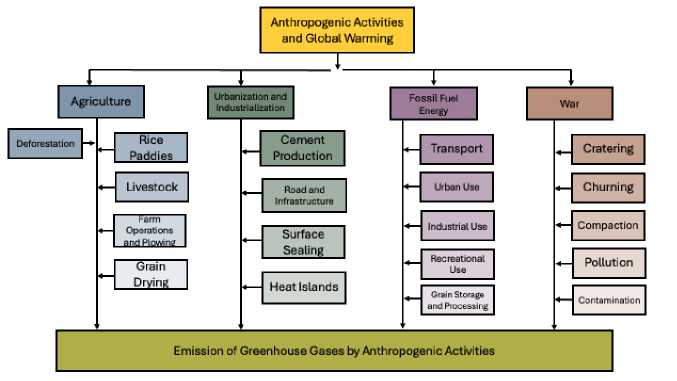
Fig. 1. Some anthropogenic activities which lead to emission of greenhouse gases leading to global warming.
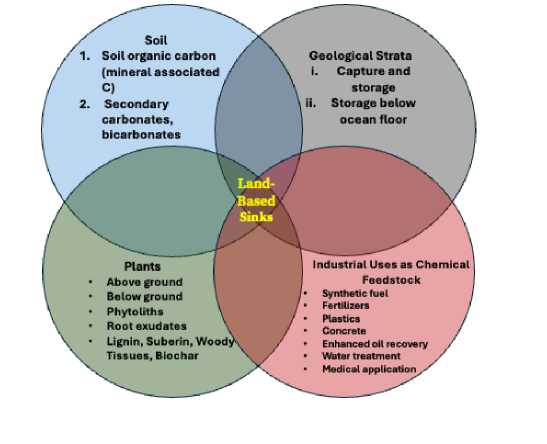
Fig. 2. Some examples of technological innovations of C capture and sequestration.
MITIGATIVE STRATEGIES OF ANTHROPOGENIC CLIMATE CHANGE
The Paris Accord of 2015, AAA initiative of 2016, and many others have focused on policy and strategy to limit global warming. Achieving carbon neutrality by 2050 for each country is being deliberated, but not yet implemented. Adoption of bio-energy along with carbon capture and deep storage in stable geologic strata is an option to meet the carbon neutrality target. Rather than an individual country, Zhou et al. (2024) emphasized the importance of a global system of C neutrality for climate mitigation.
The C neutrality pledge (Paris Accord 2015) is a pertinent strategy to limit global warming to 2 °C. For example, China’s C neutrality can individually mitigate global warming by 0.48 °C and 0.40 °C which account for 14% and 9% of the global warming over long-term under the shared socioeconomic pathway (Longhui et al., 2021). Also in China, Lu et al. (2023) documented that combining ambitious regional action (China’s 2060 net zero goal) with global CO 2 removal may be a critical pathway to limit global warming to below 2 °C.
CARBON SEQUESTRATION IN TERRESTRIAL ECOSYSTEMS AND CARBON FARMING
Transfer of atmospheric CO 2 into land-based sinks where it can stay for a long time without escape into the atmosphere is called “carbon sequestration”. Some processes of C sequestration in land-based sinks are listed in Figure 2. Sequestration of C in soils of agroecosystems can be facilitated by Carbon Farming. This approach implies growing carbon in land as a commodity (or a crop) which can create another income stream for farmers. Trading of C credits is an option when the market is developed and appropriate protocol created. In the meantime, however, land managers can be rewarded as payments for ecosystem services @ US $50 per of CO 2 eq which is the social value of soil carbon. The payment for ecosystem services can be facilitated by enacting Soil Health Act at state, national and international level.
CONCLUSION
Anthropogenic climate change is a global issue. It is caused by emissions from fossil fuel, deforestation, and agricultural activities such as plowing, in-field burning of biomass and use of fertilizers and other chemicals. Soils of agroecosystems are depleted of their C stock and thus have a carbon sink capacity. Sequestration of atmospheric CO2 in soil involves that of soil organic carbon as humus and soil inorganic carbon as secondary carbonates. The process of soil carbon sequestration can be facilitated by adoption of site-specific best management practices, also called as carbon farming. Farmers and land managers should be rewarded for carbon sequestration according to the social value of carbon which can be as much as US$50 per Credit of CO2eq. Transforming agriculture from a problem to be the part of a solution for improving the environment and adaptation / mitigation of climate change can be accomplished by enacting Soil Health Act at state, national and international level.
