
Сравнительная оценка коммерческих наборов бактериофагов и перспективы их применения для лечения пациентов с ортопедической MRSA-инфекцией
Журнал: Гений ортопедии @geniy-ortopedii
Рубрика: Оригинальные статьи
Статья в выпуске: 2 т.32, 2026 года.
Бесплатный доступ
Введение. Фаготерапия представляет собой многообещающий подход к решению проблемы устойчивости возбудителей ортопедической инфекции к антибиотикам. Стафилококки являются ведущими этиотропными агентами имплантат-ассоциированной инфекции, при этом 15 % штаммов S. aureus являются метициллин-резистентными (MRSA). На фармацевтическом рынке РФ присутствуют препараты бактериофагов, в которых концентрация активных в отношении инфекционного агента фагов напрямую влияет на их эффективность. Цель работы - сравнительная оценка активности коммерческих наборов бактериофагов в отношении метициллин-резистентных Staphylococcus aureus, выделенных от пациентов с ортопедической инфекцией.
Похожие статьи в разделе Хирургия. Ортопедия. Офтальмология
Короткий адрес: https://sciup.org/142247830
IDS: 142247830 | УДК: 617.3-022.7:615.281 | DOI: 10.18019/1028-4427-2026-32-2-197-204
Comparative Evaluation of Commercial Bacteriophages and Prospects for Their Application in the Treatment of Orthopedic MRSA-Infection
Introduction Phage therapy is a promising approach to addressing the problem of antibiotic resistance in orthopedic infection pathogens. Staphylococci are the leading etiotropic agents of implant-associated infections, with 15 % of S. aureus strains being methicillin-resistant (MRSA). Bacteriophage preparations are available on the Russian pharmaceutical market, and the concentration of phages active against the microbial agent influences their effectiveness. The objective was to compare the activity of commercial bacteriophage kits against methicillin-resistant Staphylococcus aureus isolated from patients with orthopedic infections. Material and methods Clinical strains of S. aureus (n = 25), consecutively isolated from patient biomaterial in 2025 were examined. Identification was performed using MALDI-TOF MS, and antibiotic susceptibility assessed according to EUCAST v.15. Phage lytic activity was evaluated using meat-peptone agar and a five-point scale with the strain sensitivity to a specific drug determined as sensitive, weakly sensitive, or resistant. Statistical analysis was performed using IBM SPSS Statistics v.26.Results The S. aureus strains included in the study were resistant to cefoxitin. Of the MRSA strains tested, the majority (76 %) were sensitive to PBP 1. A larger number of strains (60%) were classified as "weakly sensitive" to PBP 3. There were less variations in "non-susceptible" cultures, with only one strain demonstrating resistance to the three bacteriophage preparations. A comparative analysis of antistaphylococcal drugs from various manufacturers revealed differences in the activity against clinical MRSA isolates. There were 84 % isolates being sensitive to PBP 4 and 36 % to PBP 5. One isolate was resistant to the phages tested. Discussion The differences in the activity of commercial phages could be associated with the composition of the resulting preparations, which had lower affinity for strains isolated from patients in other regions. Given the wide geographical distribution of patients with orthopedic infections hospitalized in federal centers, the ability to choose bacteriophages from a wide range of commercial kits available on the market increases the likelihood of their successful use. Conclusion Commercial drugs presented on the Russian market were characterized by different lytic activity against clinical strains of MRSA, with Pyophag® and Staphylophag® exhibiting greater activity.
Текст научной статьи Сравнительная оценка коммерческих наборов бактериофагов и перспективы их применения для лечения пациентов с ортопедической MRSA-инфекцией
Антибиотики с момента их открытия в начале XX века произвели революцию в медицинской практике, позволили взять под контроль и вылечить многие инфекционные заболевания [1]. Широкое применение антибактериальных препаратов стимулировало развитие адаптивных механизмов устойчивости среди бактерий [2–4]. Всемирная организация здравоохранения признала устойчивость бактерий к антибиотикам одной из десяти главных угроз общественному здравоохранению [5]. Необходимость поиска альтернативных методов лечения, которые могут эффективно бороться с бактериальными инфекциями, является одним из приоритетов современной системы здравоохранения [6].
Возрастающее количество ортопедических операций, сопровождающихся установкой различных металлоконструкций, приводит к соответствующему увеличению числа инфекционных осложнений, связанных с имплантатами. Частота инфекций, связанных с ортопедическими имплантатами, достигает 0,3–5,0 % при всех видах операций (погружной остеосинтез, эндопротезирование суставов) [7]. Золотым стандартом лечения пациентов с перипротезной инфекцией считается хирургическое удаление инфицированных имплантатов и длительное лечение антибиотиками, активными в отношении выделенных возбудителей. Однако проблемы, связанные с устойчивостью патогенов к антибиотикам и сохранением биопленок на поверхности имплантатов, часто приводят к рецидивирующим или трудно поддающимся лечению инфекциям, что создает серьезную угрозу здоровью и жизни пациентов [8].
Лечение с использованием бактериофагов представляет собой многообещающий подход к решению проблемы антибиотикорезистентности бактерий [9–11]. Активность фагов определяется возможностью реализации всех стадий их жизненного цикла, включая адсорбцию, проникновение генетического материала в клетку, репликацию генетического материала, сборку фаговых частиц и лизис бактерии [12]. В отличие от антибиотиков широкого спектра действия, которые могут воздействовать на значительный спектр бактерий, фаги высокоспецифичны, обычно нацелены только на один вид или даже на определенный штамм бактерий [12]. Специфичность фагов представляет как сильные стороны, так и проблемы в их терапевтическом применении [13, 14]. Преимуществом является конкретное нацеливание на патогенные бактерии с сохранением полезной микробиоты человека. Однако такая специфичность требует точного микробиологического заключения для выбора активного фага, что делает назначение более сложным в сравнении с антибиотиками широкого спектра действия [15].
В настоящее время на фармацевтическом рынке РФ присутствуют разнообразные препараты бактериофагов, в том числе для местного и/или системного применения. Концентрация активных в отношении инфекционного агента бактериофагов в препарате напрямую влияет на его эффективность [16] и более широкие спектры активности, позволяющие снизить разнообразие фагов в коктейлях с сохранением суммарного диапазона действия, для терапевтических бактериофагов это является предпочтительным свойством [17, 18]. Особый интерес представляет сравнительный анализ литической активности отечественных препаратов бактериофагов в отношении штаммов стафилококков, выделенных от пациентов с ортопедической инфекцией.
Цель работы — сравнительная оценка активности коммерческих наборов бактериофагов в отношении метициллин-резистентных Staphylococcus aureus , выделенных от пациентов с ортопедической инфекцией.
МАТЕРИАЛЫ И МЕТОДЫ
Выделение культур S. aureus выполняли проспективно в 2025 г. из биоматериала пациентов с перипро-тезной инфекцией и/или остеомиелитом в соответствии с международными стандартами микробиологических исследований. Видовую идентификацию выполняли методом MALDI-TOF MS с использованием системы FlexControl и программного обеспечения MBT Compass 4.1, Score ≥ 2,0. Чувствительность клинических изолятов к антибактериальным препаратам изучали в соответствии с требованиями EUCAST v.15.
По заключению локального комитета по этической экспертизе клинических и экспериментальных исследований данная работа основана на микробиологическом анализе свойств восприимчивости патогенов, что не является предметом рассмотрения в этическом комитете.
В исследовании оценена чувствительность MRSA ( n = 25) к пяти отечественным препаратам бактериофагов (ПБФ):
-
— ПБФ 1 — Пиофаг® (Микроген, Нижний Новгород, ИМП РУ ЛП-№ (002513)-(РГ-RU) МЗ РФ),
-
— ПБФ 2 — Пиобактериофаг® (Микроген, Уфа, ИМП РУ № ЛС-002031 МЗ РФ),
-
— ПБФ 3 — Секстафаг® (Микроген, Пермь, ИМП РУ № ЛС-001049 МЗ РФ),
-
— ПБФ 4 — Стафилофаг® (Микроген, Нижний Новгород, ИМП РУ № Р N001973-01 МЗ РФ);
-
— ПБФ 5 — Стафилофаг® (Микроген, Пермь, ИМП РУ № Р N001973-01 МЗ РФ).
Оценку литических свойств ПБФ выполняли на мясо-пептонном агаре (МПА). Для этого бактериальную взвесь (0,5 по МсF) ватным тампоном наносили на МПА и через 10 минут на поверхность агара дозатором наносили 10 мкл ПБФ в дубликатах. Чашки инкубировали при 37 ° С. Через 24 часа оценивали активность ПБФ по пятибалльной шкале в соответствии с методическими рекомендациями «Рациональное применение бактериофагов в лечебной и противоэпидемической практике» (2023 г.) и в зависимости от полученных результатов определяли степень чувствительности штамма к действию определенного препарата: чувствителен, слабо чувствителен и устойчив.
Статистический анализ различий данных в исследуемых группах восприимчивости и коммерческих препаратов выполняли с помощью непараметрического параметра критерия Краскела – Уоллиса в программе IBM SPSS Statistics Version 26. В случае выявления статистически значимых различий при анализе активности трех препаратов бактериофагов для попарного сравнения групп (post-hoc анализ) применяли критерий Данна (Dunn's test) с поправкой на множественные сравнения. С учетом множественных сравнений использовали меньший критический уровень значимости, который рассчитывался по формуле: p = 1 – 0,951/n, где n — количество производимых сравнений. Для данного исследования статистически значимыми считали значения p < 0,017.
РЕЗУЛЬТАТЫ
Все включенные в исследование штаммы S. aureus ( n = 25) характеризовались устойчивостью к це-фокситину (MRSA). Тестируемые препараты бактериофагов были активны в отношении большинства клинических изолятов MRSA, выделенных от пациентов с ортопедической инфекцией, однако при сравнении ПБФ были выявлены различия (табл. 1, рис. 1).
Таблица 1
Оценка антибактериальной активности препаратов бактериофагов в отношении метициллин-резистентных S. aureus
|
Отношение к ПБФ |
Тестируемые препараты |
||||||
|
ПБФ 1 |
ПБФ 2 |
ПБФ 3 |
р |
||||
|
абс. |
% |
абс. |
% |
абс. |
% |
||
|
Чувствительны |
19 |
76 |
11 |
44 |
8 |
32 |
0,01 |
|
Слабо чувствительны |
5 |
20 |
11 |
44 |
15 |
60 |
0,01 |
|
Нечувствительны |
1 |
4 |
3 |
12 |
2 |
8 |
0,05 |
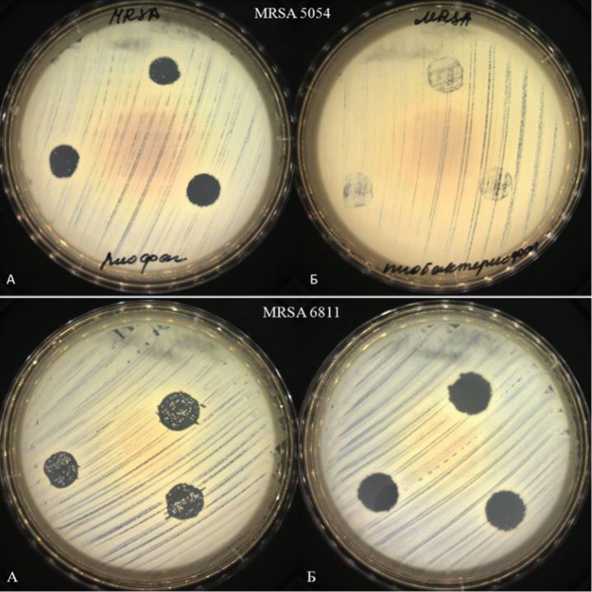
Рис. 1. Фотографии чашек Петри с зонами полного и частичного лизиса культур MRSA: А — ПБФ 1, Б — ПБФ 2
Из протестированных штаммов MRSA наибольшее количество (76 %) были чувствительны к препарату ПБФ 1 ( p = 0,004 — попарное сравнение с ПБФ 2). Для остальных градаций чувствительности зарегистрирована обратная тенденция, — большее количество штаммов (60 %) были отнесены к группе «слабо чувствительны» к ПБФ 3 ( p = 0,003 — попарное сравнение с ПБФ 1, p = 0,009 — общее). Доли «нечувствительных» культур отличались меньше, при этом только один штамм демонстрировал устойчивость ко всем трем тестируемым препаратам бактериофагов.
Сравнительный анализ антистафилококковых препаратов различного производства также показал отличия в их активности против клинических изолятов MRSA, выделенных от пациентов в нашем Центре (табл. 2, рис. 2). Доля изолятов, чувствительных к препарату ПБФ 4, составила 84 %, а к ПБФ 5 — 36 % ( p = 0,008). При этом один изолят был не восприимчив к тестируемым фагам.
Таблица 2
Оценка активности антистафилококковых препаратов в отношении метициллин-резистентных S. aureus
|
Отношение к ПБФ |
Тестируемые препараты |
||||
|
ПБФ 4 |
ПБФ 5 |
р |
|||
|
абс. |
% |
абс. |
% |
||
|
Чувствительны |
21 |
84 |
9 |
36 |
0,008 |
|
Слабо чувствительны |
3 |
12 |
15 |
60 |
0,004 |
|
Не чувствительны |
1 |
4 |
1 |
4 |
0,899 |
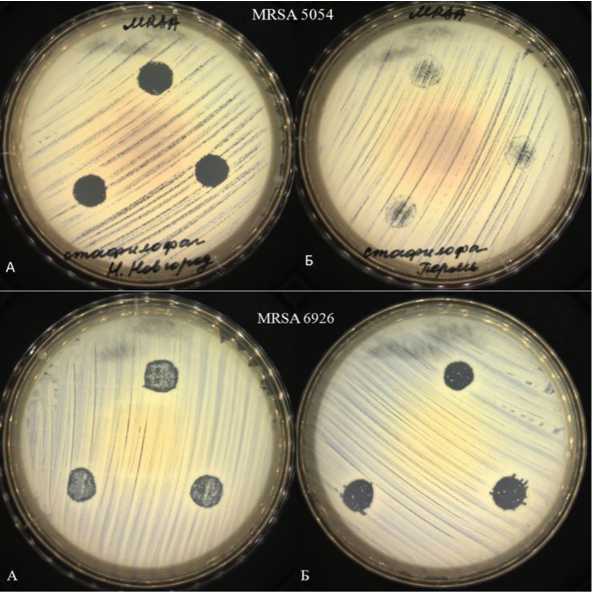
Рис. 2. Фотографии чашек Петри с зонами полного и частичного лизиса культур MRSA: А — ПБФ 4, Б — ПБФ 5
ОБСУЖДЕНИЕ
Наличие механизмов резистентности к антибиотикам у возбудителей инфекционных заболеваний ухудшает прогноз исхода заболевания, удлиняет сроки лечения и значимо увеличивает расходы системы здравоохранения [1]. В нашем исследовании 2024 г. показано, что в течение 12-летнего периода в 33 % случаев возбудителями ортопедической инфекции были S. aureus , из них доля метициллин-резистент-ных штаммов S. aureus не снижалась ниже 15 % на протяжении всего изученного периода [19]. В работах А.В. Цискарашвили с соавт. [20] и А.В. Соколовского с соавт. [21] также было установлено, что наиболее частыми возбудителями перипротезной инфекции были S. aureus , — 32 % и 38 % соответственно.
Способность S. aureus противостоять широкому спектру антибактериальных препаратов делает его идеальным объектом для исследований с использованием бактериофагов. В последние годы подходы к отбору, производству и доставке фагов значительно расширились, а усовершенствование технологий их получения позволяет проводить персонализированную фаговую терапию. В травматологии и ортопедии в ряде клинических случаев показан многообещающий потенциал фагов против MRSA [22]. Е.А. Фёдоров с соавт. продемонстрировали, что добавление раствора коммерческого стафилококкового бактериофага (6 мл на 40,0 г сухого вещества полиметилметакрилата) с дальнейшим введением его по дренажу или пункционно в перипротезную область в течение 10 дней увеличивает эффективность одноэтапного лечения стафилококковой перипротезной инфекции тазобедренного сустава с 69 % до 96 % [23]. T. Ferry et al. регистрировали улучшение состояние трех пациентов с хронической перипротезной инфекцией после использования фагового коктейля в сочетании с антибиотиками [24]. Аналогичные результаты представлены в работе C. Ramirez-Sanchez et al., в которой авторы описали успешное лечение пациентов с MRSA-инфекцией коленного сустава путем внутрисуставного введения фагового коктейля [25]. Разнообразие методов использования свидетельствует о безопасности применения бактериофагов, что являются их значимым преимуществом в сравнении с антибиотиками. Однако для успешной фаготерапии необходимо четкое определение чувствительности конкретного возбудителя к определенному препарату бактериофагов (к конкретной партии коммерческого набора), что обеспечит элиминацию патогена и профилактику развития резистентности бактерий к бактериофагу.
В нашем Центре чувствительность к фагам определяют для всех выделенных штаммов MRSA, используя различные коммерческие препараты. При лечении пациентов с перипротезной инфекцией, вызванной возбудителем чувствительным к имеющимся фагам, после завершения операции устанавливают дренаж из полости сустава. По дренажу в перипротезную область в течение трех-пяти дней ежедневно вводят по 20 мл препарата бактериофагов, затем дренаж перекрывают для увеличения времени экспозиции фагов. После завершения фаготерапии дренаж удаляют. В соответствии с клиническими рекомендациями, все пациенты с перипротезной инфекцией также получают высокодозную, этиотропную антибактериальную терапию, так как бактериофаготерапия не отменяет назначение антибиотиков, а осуществляется совместно в составе комплексного лечения. В обзоре 2023 г. [26] описаны результаты исследований совместного применения литических бактериофагов и антибиотиков в отношении инфекций, вызванных резистентными штаммами S. aureus . Авторы подчеркивают, что во многих случаях комбинированное введение фага и антибиотика приводит к значительному снижению роста численности бактерий, в то время как обратный антагонистический эффект встречается значительно реже [26]. На результаты лечения может влиять последовательность введения терапевтических агентов, наилучшие результаты регистрируют в случаях, когда фаготерапия предшествует антибиотикам [27]. Также установлено, что применение бактериофагов может менять профиль чувствительности бактерий к антибактериальным препаратам и, как следствие, ведет к включению препарата в схему лечения [28].
Кроме того, понимание фармакокинетики (ФК) и фармакодинамики (ФД) фагов имеет решающее значение для оптимизации терапевтической эффективности в клинических условиях [29]. Однако достижение всестороннего понимания ФК/ФД для фаговой терапии представляет собой сложную задачу из-за наличия трехсторонних взаимодействий между фагами, бактериями и человеком. Поскольку практически каждая комбинация фаг – бактерия – пациент может демонстрировать уникальный профиль ФК/ФД, разработка стандартизированных моделей, применимых в различных клинических ситуациях, остается сложной задачей. До настоящего времени не существует валидированного подхода к клиническому использованию фаговой терапии, что требует проведения сравнительных клинических исследований или накопления и анализа данных реальной клинической практики использования бактериофагов при лечении пациентов с ортопедической инфекцией.
Выполненное нами сравнительное исследование активности коммерческих наборов бактериофагов в отношении клинических штаммов MRSA, выделенных от пациентов с ортопедической инфекцией, показало высокий уровень литических свойств входящих в состав препаратов фагов. Особенно важно отметить различный уровень антибактериального действиях наборов, произведенных на разных территориальных производствах. В работе И.М. Пчелина с соавт. отмечено, что поиск активных бактериофагов, планируемых для использования в качестве противомикробных средств, вероятно, следует проводить в местообитаниях, географически приближенных к популяциям патогенных бактерий [30]. По-видимому, различия в активности коммерческих наборов могут быть связаны с составом полученных препаратов, обладающих меньшей тропностью к штаммам, выделенным от пациентов другого региона. Однако поиск активных фагов, скорее, необходим при назначении персонализированной фаготерапии с подбором конкретного бактериофага против определенного штамма возбудителя. С учетом широкой географии проживания пациентов с ортопедической инфекцией, госпитализируемых в Федеральные Центры, возможность выбирать бактериофаги из широкой линейки представленных на рынке коммерческих наборов увеличивает вероятность успешного их применения.
ЗАКЛЮЧЕНИЕ
Представленные на рынке отечественные коммерческие препараты бактериофагов характеризовались различной литической активностью в отношении метициллин-резистентных S. aureus , выделенных от пациентов с ортопедической инфекцией. Пиофаг® и Стафилофаг® (Н. Новгород) показали высокую эффективность в сравнении с другими протестированными препаратами. В травматологии и ортопедии применение фаготерапии следует рассматривать как один из перспективных методов борьбы с инфекциями, вызванными резистентными к антибиотикам возбудителями, совместно с принятыми методами лечения после обязательного исследования восприимчивости патогена к препаратам бактериофагов.
