
Stress-induced impacts on antioxidant potential and production of photosynthetic pigments of Gymnema sylvestre (Retz.) R. Br. ex Sm.
Journal: Journal of Stress Physiology and Biochemistry @jspb
Article in issue: 2 т.21, 2025.
Free access
Gymnema sylvestre is a perennial woody climber belonging to the family Apocynaceae. The leaves and roots of the plant have medicinal properties and are used in the Ayurveda system of medicine to treat various diseases. It is an important medicinal plant mainly for its antidiabetic properties and also it possess anti-inflammatory, anti-microbial and anti-oxidant activities. In this study the effect of stress signals in the pigment production and anti-oxidant potential assessed. The experiment was conducted in a poly house with twelve replications of each treatment. The different stress signals were Zinc sulphate, Sodium nitroprusside, Salicylic acid, Jasmonic acid and Squalene. The present study reveals an idea about the effect of stress signals in antioxidant activity and pigment production. The fresh leaf samples of treated plants were collected for pigment estimation. The leaf samples of treated plants were collected, dried and extracted in methanol and this methanolic extracts were used for analysis of anti-oxidant activity. A variation in both the parameters observed in different treatments.
Similar articles in the section Pharmacology. Therapeutics. Toxicology
Short address: https://sciup.org/143184724
IDS: 143184724
Text of the scientific article Stress-induced impacts on antioxidant potential and production of photosynthetic pigments of Gymnema sylvestre (Retz.) R. Br. ex Sm.
Gymnema sylvestre is slow slow-growing plant belonging to the family Apocynaceae. It is found ideally in tropical and subtropical humid climates and is common in hills of evergreen forests. It is a perennial woody climber and generally requires support for growth. Historically, the leaves of Gymnema sylvestre were used to treat diabetes and other diseases, while the flowers and bark were used for diseases related to tuberculosis Kirtikar and Basu 1975). It is used to lower blood pressure, tachycardia or arrhythmias, hypolipidemia, weight loss, stomach problems, constipation, water retention, and liver diseases. It can also be utilized to lower serum cholesterol, triglycerides, and blood sugar levels hypoglycemic or antihyperglycemic), as well as to treat eye problems. It has anti-inflammatory properties, smooth muscle relaxant, cataract prevention, dental caries and as anticancer agent Thakur et al. , 2012).
MATERIALS AND METHODS
The vegetatively propagated plants of Gymnema sylvestre Retz.) R.Br. ex Sm. for the experiments were collected from Kottakkal Arya Vaidyasala Medicinal Garden. It was maintained in a polyhouse. Stress signals of three different categories included mineral salts -Zinc sulphate and Sodium nitroprusside, elicitors -Salicylic acid and Jasmonic acid and mineral feeder-squalene. The concentrations of the stress chemicals were, Sodium nitroprusside- SNP 0.1mM SNP1), SNP0.3mM SNP2) and SNP 0.5mM SNP 3), Zinc sulphate -ZS 1mM ZS 1 ), ZS 5mM ZS 2) and ZS 9mM ZS 3), Salicylic acid – SA 1mM SA1), SA 5mM SA2) and SA 9Mm SA3) and Squalene –SQ 1µM SQ1), SQ 3µM SQ2), SQ 5µM SQ3). Methanol was used as the extraction solvent. For pigment estimation, Di Methyl Sulphoxide DMSO) was the solvent.
Application of stress
The mode of application is foliar spray in the early morning and the frequency of application was once in a week. After a period of 90 days the leaves were collected and shade dried and made powder.
Extraction
Methanolic extracts were prepared using soxhlet extraction method 2g of dried powder of Gymnema sylvestre leaf was placed in a thimble, connected to a flask containing the extraction solvent. The powder was dissolved in 200 ml methanol. After complete extraction it is concentrated in a water bath and the final volume is 50ml.
Leaf pigment estimation
Leaf pigment contents estimated according to the method of Hiscox and Israelstm 1978). Fresh leaf samples were washed in distilled water and blotted with filter papers. 0.25 g fresh leaf sample was weighed and put it in a tube containing 7 ml DMSO. Incubated for 1 hour at 600 C and the supernatant were collected. The absorbance was read at 470, 646, 663 and 750 nm against the solvent blank DMSO using UV- VIS Spectrophotometer. Pigments present in the extract was calculated as microgram pigment per gram fresh weight using the formula
Chlorophyll a = 20.12 (Акз - At5o} -2.69 { AH5- A-5o} X volume fresh weight of the sample
Chlorophyll b = 22.9{A«5 -A7so}-4 68 {А«з-А-so} X volume tresh weight of the sample
Carotenoids = 1000 {Aa-o}+3.27 {Chi a- Chi b} X volume fresh weight of the sample X 229
Chlorophyll a + b = 20.12 {Ан5 - A-50) 8.02{ А«з- A-50) X volume fresh weight of the sample
Anti-oxidant activity
The DPPH radical quenching activities of methanolic extract of Gymnema sylvestre leaf was assessed using the method developed by Chang et al. 2002).180 μl of different samples of methanolic extracts were taken. This was added to 60 μl of DPPH 0.1 mM) solution and the system was kept for 10 minutes in dark. After incubation, the absorbance of the samples at 517 nm was measured using methanol as a blank using UV- VIS Spectrophotometer. In the same way, standard samples were also run with control being the DPPH in methanol and standard as known concentration 50µl) of antioxidant ascorbic acid. The DPPH radical inhibition percentage was calculated as stated in the below formula. % Inhibition = ODc - ODt / ODc) × 100 Wherein, ODc = control optical density and ODt = test sample optical density.
RESULTS AND DISCUSSION
Results of Leaf pigment estimation
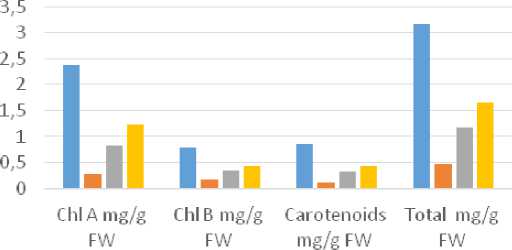
In the sodium nitroprusside treated samples SNP
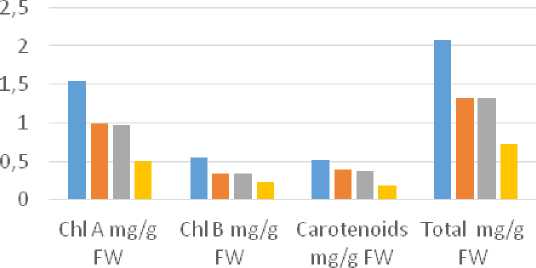
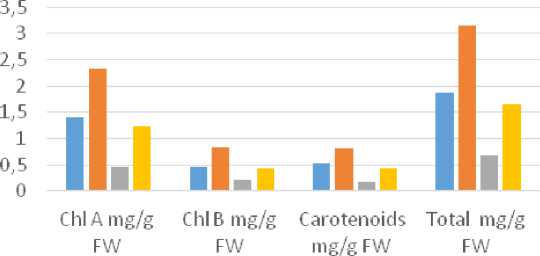
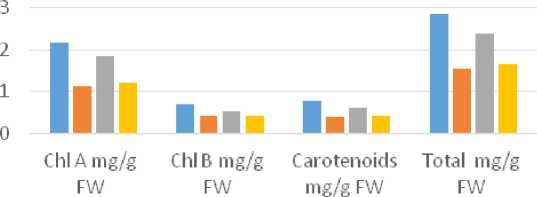
0.1mM and SNP 0.5mM there is considerable increase in pigment production Figure 1). In the samples treated with Zinc sulphate none of them showed improved pigment production Figure 2). In the leaves of plants treated with different concentration of Salicylic acid show increased concentrations of all the pigments when compare with control Figure 3). In the case of Jasmonic acid treatment lower concentration 50µm concentration showed an increase in all pigment contents and 100µm treatment given the maximum result in total pigments Figure 4). When squalene is applied, its lower concentration of concentration 1µM and higher concentration 5µM shows increased pigment concentration. The result obtained for 5µM was similar to that of control Figure 5).
Of the all obtained data Jasmonic acid of 100µM gave a total pigment content of 3.1630 which is recorded highest in this study.
Results of Anti-oxidant activity
While assessing the anti-oxidant activity in the present study maximum percentage of inhibition of free radicals observed in samples treated with Sodium nitroprusside 0.5mM concentration that is 79.81± 0.44
Figure 6). Salicylic acid 5mM treated samples are coming next to this with percentage of inhibition 66.26 ±.54 Figure 8). All other treatments under the study also showed increased anti-oxidant activity. More than 50% of inhibition observed in SA 1 mM 51.68±0.6137), SA 5mM 66.26±0.54, JA 100 µM 63.91±0.44, JA 150 µM 57.96±0.49, SQ 50.74±0.41.
SODIUM NITROPRUSSIDE
SNPl ISNP2 HSNP3 I CONTROL
Figure 1: Sodium nitroprusside- SNP 0.1mM SNP1), SNP0.3mM SNP2and SNP 0.5mM SNP3)
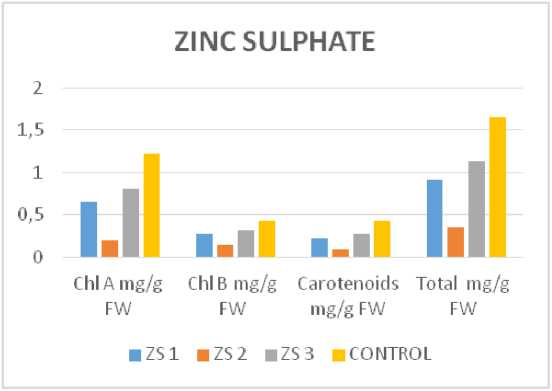
Figure 2: Zinc sulphate -ZS 1mM ZS 1), ZS 5mM ZS 2) and ZS 9mM ZS 3)
SALICYLIC ACID
■ SAI ISA2 HSA3 ■ CONTROL
Figure 3: Salicylic acid - SA1 mM SA1), SA 5mM SA2)and SA 9Mm SA3)
JASMONIC ACID
■ JAI BJA2 I JAS ■ CONTROL
Figure 4: Jasmonic acid – JA50 µM JA1), JA100 µM JA2) and JA 150 µM SJ3)
SQUALENE
■ SQ1 BSQ2 ■ SCB I CONTROL
Figure 5: Squalene – SQ 1µM SQ1), SQ 3µM SQ2), SQ 5µM SQ3)
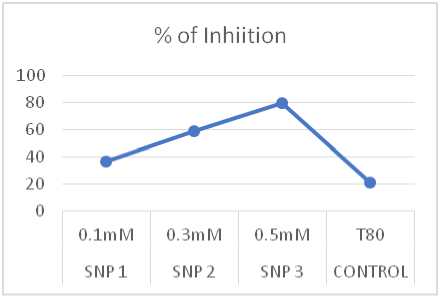
Figure 6: Sodium nitroprusside- SNP 0.1mM SNP1), SNP0.3mM SNP2and SNP 0.5mM SNP3)
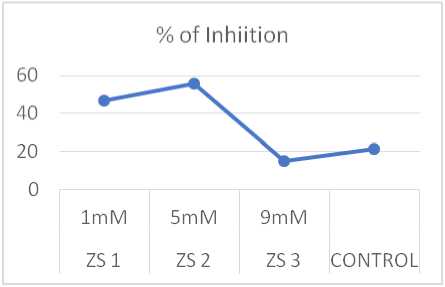
Figure 7: Zinc sulphate -ZS 1mM ZS 1), ZS 5mM ZS 2) and ZS 9mM ZS 3)
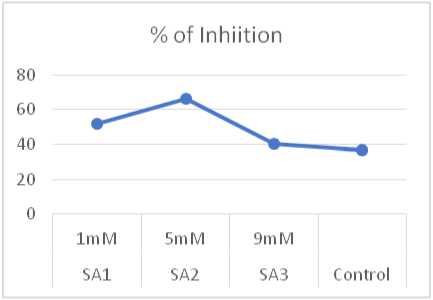
Figure 8: Salicylic acid - SA1 mM SA1), SA 5mM SA2)and SA 9Mm SA3)
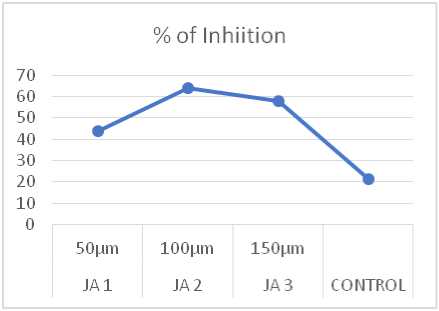
Figure 9: Jasmonic acid – JA50 µM JA1), JA100 µM JA2 and JA 150 µM SJ3)
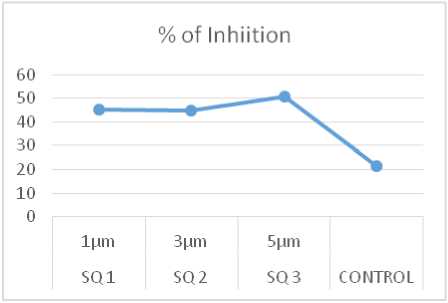
Figure 10: Squalene – SQ 1µM SQ1), SQ 3µM SQ2), SQ 5µM SQ3)
CONCLUSION
Stress signal of various concentrations was applied to the selected medicinal plant Gymnema sylvestre and its effects on the antioxidant potential and pigment production were analysed. In the Jasmonic acid treatment, 50µm concentration showed more pigment contents and 100µm treatment shows an increase in all the pigments except chlorophyll. The leaves of plants treated with different concentration of Salicylic acid show increased concentrations of all the pigments when compare with control. Leaf samples treated with Sodium nitroprusside of the concentration 0.1mM shows an increase in all the pigment content. The pigment content in leaf samples treated with squalene of concentration 1µM and 5µM shows increased pigment concentration. Increased concentration of pigments correlates with the higher absorption of light energy and enhanced photosynthetic rate of the plants.
In the present study maximum percentage of inhibition of free radicals observed in samples treated with Sodium nitroprusside 0.5mM concentration that is 79.81± 0.44. Salicylic acid 5mM treated samples are coming next to this with a percentage of inhibition 66.26 ± 0.54. All other treatments under the study also showed increased anti-oxidant activity. In the concentration of 0.5mM Sodium nitroprusside treated samples showed maximum effect in the anti-oxidant activity. Gymnema sylvestre is popularly considers as a medicinal plant for its anti-diabetic properties. Present study reveals that applying specific concentrations of stress signals its anti- oxidant potential can be enhanced. Antioxidants help treat a wide range of illnesses in humans, such as cancer, heart disease, diabetes, and inflammatory conditions by lowering oxidative stress in cells.
ACKNOWLEDGMENT
We are thankful to the University of Calicut, PG and Research Department of Botany, St. Joseph’s College, Autonomous), Devagiri, Kozhikode, Department of Botany, Farook College Autonomous), Kozhikode RUSA 2.0 and DBT Star College scheme for providing facilities and the helps rendered during this research work.
CONFLICTS OF INTEREST
The authors declare that they have no potential conflicts of interest.
