
Теоретико-методологические основы исследования устойчивого развития энергетики
Журнал: Вестник Витебского государственного технологического университета @vestnik-vstu
Рубрика: Экономика
Статья в выпуске: 2 (56), 2026 года.
Бесплатный доступ
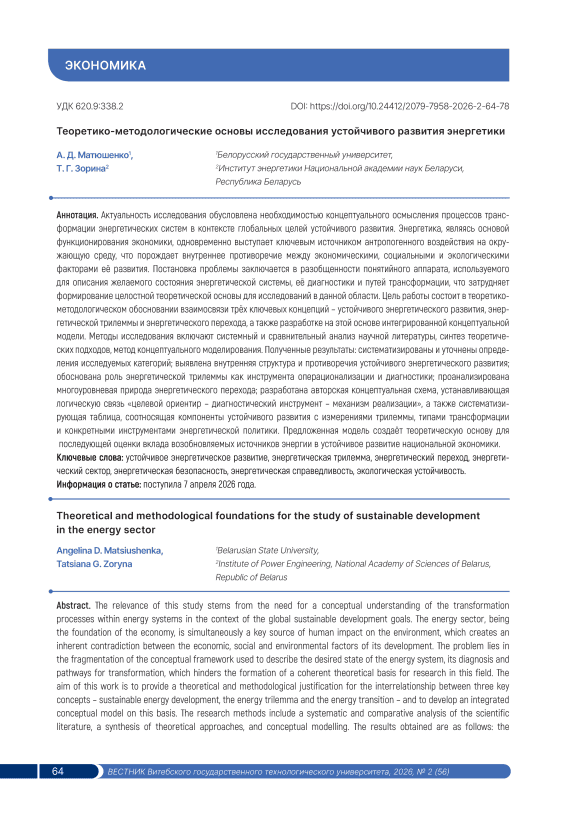
Актуальность исследования обусловлена необходимостью концептуального осмысления процессов трансформации энергетических систем в контексте глобальных целей устойчивого развития. Энергетика, являясь основой функционирования экономики, одновременно выступает ключевым источником антропогенного воздействия на окружающую среду, что порождает внутреннее противоречие между экономическими, социальными и экологическими факторами её развития. Постановка проблемы заключается в разобщенности понятийного аппарата, используемого для описания желаемого состояния энергетической системы, её диагностики и путей трансформации, что затрудняет формирование целостной теоретической основы для исследований в данной области. Цель работы состоит в теоретико - методологическом обосновании взаимосвязи трёх ключевых концепций – устойчивого энергетического развития, энергетической трилеммы и энергетического перехода, а также разработке на этой основе интегрированной концептуальной модели. Методы исследования включают системный и сравнительный анализ научной литературы, синтез теоретических подходов, метод концептуального моделирования. Полученные результаты: систематизированы и уточнены определения исследуемых категорий; выявлена внутренняя структура и противоречия устойчивого энергетического развития; обоснована роль энергетической трилеммы как инструмента операционализации и диагностики; проанализирована многоуровневая природа энергетического перехода; разработана авторская концептуальная схема, устанавливающая логическую связь «целевой ориентир – диагностический инструмент – механизм реализации», а также систематизирующая таблица, соотносящая компоненты устойчивого развития с измерениями трилеммы, типами трансформации и конкретными инструментами энергетической политики. Предложенная модель создаёт теоретическую основу для последующей оценки вклада возобновляемых источников энергии в устойчивое развитие национальной экономики.
Короткий адрес: https://sciup.org/142248949
IDS: 142248949 | УДК: 620.9:338.2 | DOI: 10.24412/2079-7958-2026-2-64-78
Theoretical and methodological foundations for the study of sustainable development in the energy sector
The relevance of this study stems from the need for a conceptual understanding of the transformation processes within energy systems in the context of the global sustainable development goals. The energy sector, being the foundation of the economy, is simultaneously a key source of human impact on the environment, which creates an inherent contradiction between the economic, social and environmental factors of its development. The problem lies in the fragmentation of the conceptual framework used to describe the desired state of the energy system, its diagnosis and pathways for transformation, which hinders the formation of a coherent theoretical basis for research in this field. The aim of this work is to provide a theoretical and methodological justification for the interrelationship between three key concepts – sustainable energy development, the energy trilemma and the energy transition – and to develop an integrated conceptual model on this basis. The research methods include a systematic and comparative analysis of the scientific literature, a synthesis of theoretical approaches, and conceptual modelling. The results obtained are as follows: the definitions of the categories under study have been systematised and refined; the internal structure and contradictions of sustainable energy development have been identified; the role of the energy trilemma as a tool for operationalisation and diagnosis has been substantiated; the multi-level nature of the energy transition has been analysed. Original conceptual framework has been developed, establishing a logical link between ‘target benchmark – diagnostic tool – implementation mechanism’, as well as a systematic table correlating the components of sustainable development with the dimensions of the trilemma, types of transformation and specific energy policy instruments. The proposed model provides a theoretical basis for the subsequent assessment of the contribution of renewable energy sources to the sustainable development of the national economy.
