
The Fertility Paradox and Eco-technological Management in Cotton Agroecosystems
Журнал: Бюллетень науки и практики @bulletennauki
Рубрика: Сельскохозяйственные науки
Статья в выпуске: 10 т.12, 2026 года.
Бесплатный доступ
Soils considered favorable and fertile, beneficial to cotton, are actually detrimental to it. Under the so-called "fertility paradox," increasing the mineral and fertilizer content of the soil transforms it into a favorable environment not only for the cotton agroecosystem itself but also for cotton pests. This study examined the economic and biological benefits of implementing control measures based on the "sweet trap" method—an alternative to chemical pesticides—to overcome this paradox. The article concludes by demonstrating that this innovative approach will reduce the material costs associated with the use of chemical insecticides in cotton cultivation and will also prove more effective from an ecological, economic, and biological perspective.
Короткий адрес: https://sciup.org/14139265
IDS: 14139265 | УДК: 631.95 | DOI: 10.33619/2414-2948/131/34
Парадокс плодородия и экотехнологическое управление в хлопковых агроэкосистемах
Почва, рассматриваемая как благоприятная и плодородная и будучи полезной для хлопчатника, на самом деле также наносит ему вред. В условиях так называемого «парадокса плодородия» увеличение содержания минералов и удобрений в почве превращает ее в благоприятную среду не только для самой хлопковой агроэкосистемы, но и для вредителей хлопчатника. В рамках данного исследования были изучены экономические и биологические преимущества внедрения мер борьбы, основанных на альтернативном методе «сладкой ловушки» вместо химических средств, для преодоления этого парадокса. В конце статьи доказывается, что этот инновационный подход позволит снизить материальные затраты, связанные с использованием химических инсектицидов при выращивании хлопка, а также окажется более эффективным с экологической, экономической и биологической точек зрения.
Текст научной статьи The Fertility Paradox and Eco-technological Management in Cotton Agroecosystems
Бюллетень науки и практики / Bulletin of Science and Practice
UDC 631.95
It should first be noted that, at present, various control measures are employed not only within the cotton agroecosystem but also across many other crops and agricultural systems in general, with the aim of increasing productivity. However, although these measures may appear successful in the short term, their long-term application gives rise to numerous adverse consequences. Foremost among these, as indicated in the title of the present article, is the so-called "fertility paradox." The essence of this phenomenon can be explained by several factors. Both farmers and other smallholders apply various fertilizers to their soil and undertake a range of agrotechnical measures in order to obtain higher and healthier yields. However, contrary to expectations, these measures often lead to more serious problems and economic losses. The principal cause of these problems lies in excessively fertile soil and the pests that it attracts. Specifically, soil enriched with nutrients stimulates the vegetative development of the cotton plant, but at the same time creates a more favorable and nutrientrich environment for the pests present in the field. When confronted with this situation, farmers typically resort first to chemical control measures. As a result, the use of chemical pesticides raises the toxicity level of the soil and, moreover, eliminates entomophages along with the target pests. This, in turn, gives rise to ecological, biological, and economic losses alike. As a consequence of this paradox, those who seek to render their soil more fertile and their yields greater and healthier encounter precisely the opposite outcome. Without an investigation into the underlying causes, this flawed strategy is repeated in subsequent years, leading to even greater economic damage. In order to prevent such losses, it is undoubtedly necessary to break the chain of the "fertility paradox" [4, 5].
The most effective way of breaking this paradox is to escape the closed cycle created by chemical control. To this end, the primary objective is the manipulation of biodiversity and the exploitation of the instinctive behavior of pest insects. In this regard, it is advisable to plant "trap" crops—species that are sweeter, more nectar-rich, and more highly attractive than cotton—along the borders of cotton fields or between individual cotton plots, so as to form what might be described as a protective boundary. Studies show that the cotton bollworm and plant bugs, even when present within the same ecosystem as cotton, are attracted more strongly and more rapidly to maize and alfalfa than to cotton. These pests adapt to and colonize such plants more readily than they do cotton [1].
By means of this method, pests are drawn away from the cotton plant's developmental stages and removed from the field by aggregating on the aforementioned nectar-bearing plants instead, without causing damage to the cotton crop [2].
Thus, this method protects the entire cotton-growing area from chemical contamination and from economic and bio-ecological damage, simply by redirecting the target of pest attraction to an alternative plant.
Materıals and methods
The primary aim of this study is to examine the chain of the "fertility paradox" and modern eco-technological control methods, as well as to prove, on the basis of current scientific literature, that the "nectar trap" method is more effective for the cotton agroecosystem. This study is of a review nature. Scientific transparency was maintained throughout the search process, and articles on the subject from various years were examined. In addition, the research was conducted more efficiently through the use of Boolean operators (AND, OR). Chronologically, the study encompasses the most recent research on the subject. The historical range covers articles related to the topic published from 1991 to the present. First, the keywords and abstracts of the retrieved materials were analyzed. Ecosystems not relevant to the study, as well as unrelated control methods, were excluded. This
"filtering" method is of significant importance to the study, as it saves time for a more in-depth reading of the necessary materials.
Particular attention was paid to the quantitative and qualitative indicators and analyses of the collected materials. To determine whether the study yields consistent results across different geographical regions, articles from various countries were collected, and a final conclusion was reached regarding the breaking of the "fertility paradox" chain.
Analysis of the obtaıned results
As a result of the empirical study and on the basis of data obtained from authoritative scientific databases, it has been proven, under four headings, that the use of modern eco-technological methods is more effective for breaking the "fertility paradox" in the cotton agroecosystem. Regarding the quantitative dynamics of pest and entomophage populations under intensive agrotechnical impact: the control methods currently in use—chemical pesticides and nitrogen-based fertilizers applied to increase the fertility of cotton fields—promote more rapid growth and greater succulence in the cotton plant, which in turn leads to the attraction of phytophagous insects. The empirical study shows that, during periods of increasing pest population dynamics in the field, the high-dose chemical pesticides employed destroy entomophages to a greater extent than phytophages. As a result, the natural balance is disrupted, the number of entomophages in the field declines sharply, and, moreover, resistance to the pesticides used develops among the pests. In the following planting season, the pest population becomes twice as large as the entomophage population. The natural cycle and trophic relationships are entirely disrupted as a consequence of the improper and untimely application of chemical control [3].
This situation, in turn, recreates the "fertility paradox" in the following year through increased fertilization, which, year after year, gives rise to an ecological crisis in the soil. The results are presented in Figure 1.
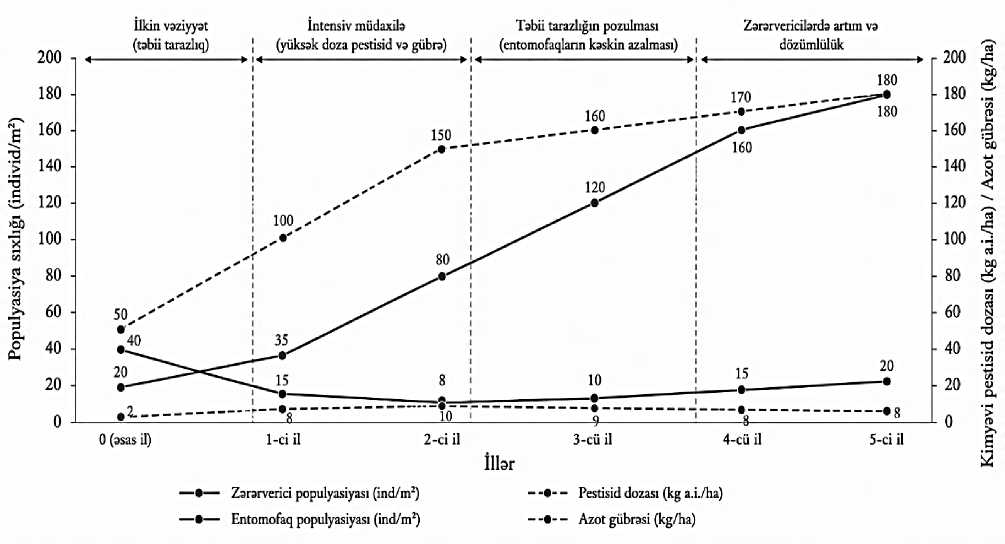
Figure 1. The impact of pesticide and fertilizer use on the cotton agroecosystem over various years [3]
Бюллетень науки и практики / Bulletin of Science and Practice Т. 12. №10 2026
The working principle of the "nectar trap" method—also known as "trap cropping"—involves planting nectar-bearing plants around cotton fields. This method relies on specific stimuli and volatile organic compounds (VOCs) released by these plants, as well as the synergistic effect of kairomones.
It is well established that insects continually search for the most favorable sources of food for feeding and oviposition. When nectar-rich plants are planted around the periphery of a cotton agroecosystem, insect colonies are naturally attracted to them upon detecting the specific volatile compounds they emit. These plants constitute an ideal food source, as they offer a high concentration of soluble sugars alongside an optimal balance of amino acids. This can be illustrated by example. In an experiment conducted by Shelton and Badenes-Perez (2006), the cotton bollworm ( Helicoverpa armigera ) was studied. Although this insect is normally attracted to cotton, it was confirmed that when a border of maize was planted around the periphery of the cotton field, the insects were attracted to the maize rather than the cotton itself [4].
In another experiment conducted by Parajulee et al. (2019), observations were made on the tarnished plant bug ( Lygus pratensis ). When alfalfa was planted between the rows of cotton as a "nectar trap," the plant bugs were attracted to the alfalfa instead of the cotton, perceiving it as a more favorable morphological refuge and a source of higher-sugar food. Consequently, 'nectar trap' plants assist cotton plants in passing through their critical vegetative phase mo re successfully by manipulating the feeding and oviposition instincts of pests, drawing them away from the cotton [5].
Optimal placement of trap plants and agrotechnical control for the cotton aphid ( Aphis gossypii ). One of the most widespread pests in cotton fields is the cotton aphid. In addition to sucking out the cotton plant's sap, this pest renders it more susceptible to disease. This organism has weak flight capabilities and is very small. Given these characteristics, the correct spatial and temporal placement of 'nectar trap' plants is essential.
Research conducted by Toledo-Hernández et al. (2021) revealed that sunflower ( Helianthus annuus ) and mustard ( Brassica juncea ), planted 10–14 days prior to cotton sowing, function as an initial biological barrier against the cotton aphid within the cotton field [6].
Aphids are attracted to these nectar-rich plants. Likewise, when marigold ( Tagetes erecta ) is planted between every eighth row of cotton, aphids show a marked preference for this plant. Furthermore, these plants create an ideal opportunity for the proliferation of parasitoid wasps — the natural entomophages of the cotton aphid—within the field [7]. Figure 2 shows the aphids present in the cotton field.
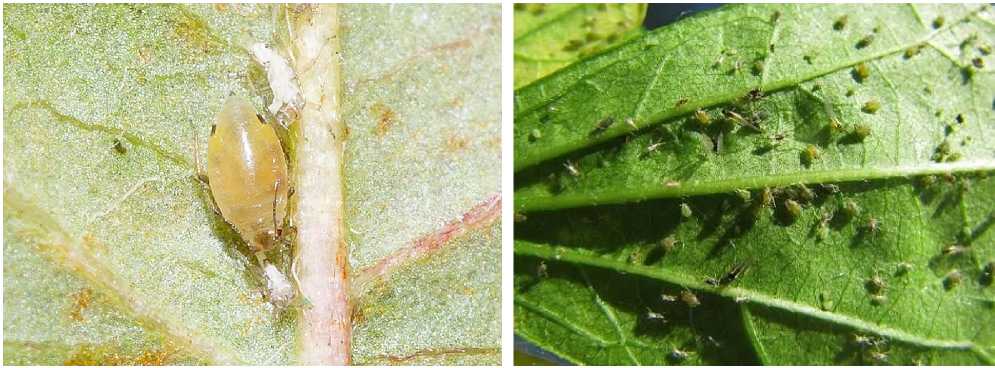
Figure 2. Cotton aphid ( Aphis gossypii ) in the cotton agroecosystem [7]
Thus, through this type of planting arrangement, pests are drawn to accumulate in a separate area rather than migrating into the cotton field, and biological balance is restored without the need for chemical intervention. Economic efficiency of eco-technological management and its prospects for agroecological sustainability. The biological measures employed to overcome the "fertility paradox" in cotton fields provide incentives not only from an ecological standpoint but also from an economic one. At a time of diminishing natural resources, the costs incurred through chemical control measures sharply reduce the net returns obtainable from cotton. However, the "nectar trap" method applied in the field is capable of reducing seasonal expenditure by approximately 40–60%. It likewise reduces farmers' expenditure on pesticides, fertilizers, and labor. Numerous experiments conducted in recent years have shown that nectar-bearing plants integrated into the cotton field should not be regarded as a cause of cotton output loss. On the contrary, by preserving the existing cotton agrocenosis and sparing farmers additional expenditure, this approach can increase overall net income by 15–22% by the end of the year [8].
Table explains in detail how this increase in profit through the biological method has evolved over the years. The table sets out the increase in profit resulting from the enhanced application of biological management in cotton-growing areas of Turkey [10].
Table
INCOME AND EXPENSES OBTAINED THROUGH BIOLOGICAL MANAGEMENT METHODS
IN DIFFERENT YEARS
|
Years |
Management system |
Net Profit growth (USD/ha) |
Profit growth (%) |
|
2020 |
Biological management (BEAM +100% N) |
290.97 |
22 |
|
2020 |
Biological management (BEAM +15% N) |
360.54 |
27 |
|
2020 |
Biological management (BEAM +0% N) |
310.12 |
23 |
|
2021 |
Biological management (BEAM +15% N) |
290.56 |
- |
|
2022 |
Biological management (BEAM +15%N) |
137.24 |
- |
A comparable increase in profit is expected when the 'nectar trap' method is applied in the same manner. This is because, in both methods, ecological balance is restored spontaneously, the use of pesticides is sharply reduced, and soil fertility is preserved. From an ecological perspective, this method also allows the soil biotope to remain healthy. In addition, groundwater is spared from excessive pesticide use and remains uncontaminated [9]
Conclusion
In the course of this study, the problem of the "fertility paradox," arising from the intensive use of chemical and agrotechnical control measures in cotton fields, was systematically analyzed. It became evident that the methods currently in use increase soil fertility in order to obtain higher yields from the cotton plant; however, this simultaneously attracts pests to the field in numbers exceeding the norm. As a result, chemical control measures are subsequently employed. This, in turn, destroys not only the pests but also the entomophages, thereby drawing farmers deeper into the "fertility paradox." The results of the study demonstrate that the principal means of escaping this paradox is the "nectar trap" method—namely, the planting, at the correct time and in the correct spatial arrangement, of plants more nectar-rich than cotton, such as alfalfa, maize, sunflower, and mustard. Through this eco-technological method, the costs incurred are reduced to a minimum, ecological balance is preserved naturally, and, furthermore, a higher return (15–22%) is achieved in the cotton field compared with control measures carried out using other methods.
