
A New Opportunity for 50+: An Empirical Study on Employment of People Over 50 in the Republic of Serbia
Journal: International Journal of Management Trends: Key Concepts and Research @journal-ijmt
Article in issue: 2 vol.4, 2025.
Free access
This paper explores the challenges and opportunities related to the employment of people over 50 years of age in the Republic of Serbia, relying on contemporary demographic, social, and market indicators. In light of current trends of population aging and shrinking labor force, the study aims to identify barriers, motivations, and potentials for the workforce activation of this age group. Primary data were collected through a structured questionnaire on a sample of 200 respondents from various regions of Serbia and analyzed using descriptive statistics, SWOT analysis, and comparisons with best practices in the region (Croatia, Slovenia, Montenegro, North Macedonia). The results indicate a significant willingness among older individuals for retraining and participation in flexible work arrangements, alongside dominant barriers such as age-based discrimination and lack of digital skills. The paper also examines existing government active employment policies, with a focus on their application, visibility, and effectiveness. It concludes that integrating people aged 50+ into the labor market requires a strategic approach combining training, subsidies, combating ageism, and enhancing digital literacy. The study provides a foundation for formulating recommendations for policymakers and local actors in the field of employment.
Similar articles in the section Labour market. Employment
Short address: https://sciup.org/170211457
IDS: 170211457 | UDC: 331.5‑053.85(497.11) | DOI: 10.58898/ijmt.v4i2.32-51
Text of the scientific article A New Opportunity for 50+: An Empirical Study on Employment of People Over 50 in the Republic of Serbia
Demographic changes in the Republic of Serbia, as in most European countries, are marked by a pronounced trend of population aging. According to the Statistical Office of the Republic of Serbia (2025), the share of people over the age of 50 has been steadily increasing over the past decade, while the working-age population is declining. This demographic shift creates significant socio-economic challenges, particularly in terms of labor market dynamics, pension sustainability, and healthcare expenditures (Eurostat, 2024; WHO, 2002).
The aging of the workforce presents both challenges and opportunities. On one hand, older workers often possess rich work experience, strong work ethic, and institutional knowledge that can contribute to organizational stability and productivity (Becker, 1964; Tanaka, 2021). On the other hand, individuals over 50 frequently face barriers when attempting to retain or re-enter employment.
-
*Corresponding author: pavlepocuc2906@gmail.com
q ® © 2025 by the authors. This article is an open access article distributed under the terms and conditions of
the Creative Commons Attribution (CC BY) license .
These include widespread age-related stereotypes, reduced access to professional development opportunities, lower digital literacy, and a scarcity of flexible work arrangements tailored to older employees (ILO, 2023; Bosnić, 2025; Andersson, 2020).
This paper aims to empirically examine the attitudes, experiences, and employment potential of individuals aged 50 and above in Serbia. Using a quantitative survey-based approach supplemented by secondary data analysis, the study explores key determinants of labor market inclusion for older persons. Particular focus is placed on mapping perceived obstacles, identifying motivating factors for continued employment, and assessing the effectiveness of current state measures and retraining programs.
The findings are intended to contribute to evidence-based policymaking by offering actionable insights for decision-makers, employers, and institutions responsible for social and labor policy. In the context of global efforts to promote active aging and social inclusion, this research provides a foundation for developing targeted strategies that can enhance the employability, economic security, and societal contribution of older individuals in Serbia and beyond.
Literature Review
Theoretical Foundation
The theoretical underpinning of this study lies at the intersection of three core frameworks:
Active Aging Concept
As articulated by the World Health Organization (WHO, 2002), active aging aims to optimize opportunities for health, participation, and security in order to enhance quality of life as people age. The framework underscores the necessity of policies that support continued employment, voluntary engagement, and lifelong learning to combat social exclusion and economic dependence.
Human Capital Theory
Becker’s (1964) theory posits that individual productivity depends on the accumulated stock of knowledge, skills, and health—human capital. For workers aged 50+, employability becomes contingent upon continued access to training and adaptability to technological advancements (Becker, 1964; OECD, 2021).
Inclusive Labor Market Policies
The theoretical framework of this paper is based on contemporary concepts of active aging, human capital theory, and principles of inclusive employment policy. Active aging, as defined by the World Health Organization (WHO, 2002), involves creating conditions that allow older people to remain active participants in society through work, volunteering, and education. The goal is to ensure quality of life in later years, including economic contribution to the community.
Human capital theory (Becker, 1964) emphasizes the importance of continuous investment in knowledge and skills throughout one’s working life. For older workers, it is necessary to ensure access to lifelong learning and digital literacy as key employability factors.
Modern inclusive employment policies increasingly focus on eliminating discriminatory practices and encouraging participation of all age groups, especially through subsidizing employment, tax incentives, and mentoring programs within organizations.
International Examples of Good Practice
Experiences from other countries can serve as a guide for formulating sustainable employment policies for people aged 50+. Some of the most relevant examples include:
-
• Germany implemented the “Perspective 50 plus” program between 2005 and 2015, covering over 400,000 older unemployed individuals. The program included financial support for employers, career counseling, and individualized training plans.
-
• Sweden is known for high participation of older people in the labor market. Through legal frameworks and flexible work models, such as reduced working hours while retaining benefits, older workers remain active longer.
-
• Japan, with one of the oldest populations in the world, systematically promotes the so-called “senior economy” — particularly through reintegration of workers over 60. Employers are required to provide work opportunities up to age 65, with additional incentives for engagement beyond that age.
-
• France and Italy run subsidized retraining programs and tax incentives for companies employing older workers, supported institutionally through national employment agencies.
Lessons Learned
The diverse approaches of these countries underscore several common elements critical to successful integration of older persons into the labor market:
1. Legislative protection against age discrimination and the right to work beyond traditional retirement age; 2. Financial and institutional support mechanisms for both employers and employees; 3. Promotion of flexible work models, including remote work and reduced working hours; 4. Culture of lifelong learning and adaptability to technological changes; 5. Regional and sector-specific customization of interventions.
The translatability of these models to the Serbian context depends on the political will, administrative capacity, and cultural readiness to adopt long-term strategies for active aging and inclusive labor market policies.
Regional Best Practices in Employing People Over 50
Western Balkan countries face similar demographic challenges as Serbia — increasing shares of older populations, lower labor activity among older persons, and a pronounced need for their integration into the labor market. While institutional responses vary, some countries have launched effective and targeted measures:
-
• The Croatian Employment Service (HZZ) runs the “50+” program aimed at increasing employment of older people through employer subsidies, training, and advisory services. According to the HZZ report (2024), over 2,000 older persons found jobs through this program, with 42% retaining employment for more than 12 months.
Program by the Croatian Employment Service (HZZ)
-
• Subsidies for employers hiring workers over 50, especially those long-term unemployed;
-
• Access to vocational retraining , including ICT competencies and sector-specific workshops;
-
• Individualized career counseling , helping candidates navigate the labor market and prepare for interviews;
-
• Monitoring and mentorship , aimed at improving retention.
This program illustrates that targeted financial and advisory support , paired with employer education and public campaigns, can significantly reduce barriers for older individuals re-entering the workforce.
-
• Slovenia implements a comprehensive “Active Aging until 2030” strategy, including tax relief for employing people over 55 and work training programs within public administration. By the end of 2023, participation of persons over 55 in the labor market increased by 12% (Ministry of Labour, 2023).
-
• Tax incentives for companies employing individuals over 55;
-
• State-funded training and education programs , including digital upskilling, languages, and vocational requalification;
-
• Intersectoral collaboration between the Ministry of Labour, social partners, and municipalities;
-
• Public employment initiatives that encourage inclusion of older persons in public sector roles, particularly in mentoring and support functions.
-
• By the end of 2023, participation of persons aged 55–64 in the labor market increased by 12% , with a notable rise in part-time and flexible job arrangements (Ministry of Labour, Family, Social Affairs and Equal Opportunities, 2023). Moreover, Slovenia’s implementation of agefriendly certification for employers has encouraged the private sector to develop internal HR practices tailored to older workers.
-
• Slovenia’s approach emphasizes not only the economic dimension of active aging, but also its social value , aiming to enhance quality of life and reduce dependence on public welfare systems.
These models demonstrate that successful employment of people aged 50+ is achievable through a combination of political will, fiscal measures, and social campaigns that change public and employer attitudes.
-
• North Macedonia and Montenegro : Emerging Initiatives
-
• Public-private partnerships focused on lifelong learning and employability of vulnerable groups;
-
• EU-funded projects, such as those under the Instrument for Pre-accession Assistance (IPA) , targeting older jobseekers in rural and deindustrialized regions;
-
• Local employment councils experimenting with community-based employment models , integrating retraining, microfinance, and entrepreneurship support.
For example, in North Macedonia, the "Skills for the Future" project (2023–2025) has introduced reskilling boot camps for unemployed individuals aged 45+, including programs in hospitality, digital marketing, and personal services. Preliminary evaluations indicate that over 35% of participants over age 50 found employment within six months of completion (UNDP North Macedonia, 2024).
Human Resource Management Strategy for an Age-Diverse Workforce
In modern organizations, the workforce is becoming increasingly diverse—not only in terms of gender, culture, or education, but also in age composition. Effective human resource management (HRM) in such an environment requires a strategic approach that recognizes the distinct needs, motivations, and work habits of employees from different generations. Multigenerational teams represent a potential competitive advantage, but only if they are successfully integrated through inclusive policies and adaptive managerial practices.
Contemporary HR management must develop an intergenerational integration strategy based on three essential pillars:
-
1. Understanding generational characteristics and values – For example, younger employees (Generations Y and Z) tend to value flexibility, digitalization, and rapid career growth, while older employees (Generation X and Baby Boomers) prioritize stability, security, and interpersonal relationships (Parry & Urwin, 2017).
-
2. Adapting leadership and motivation styles – Leaders should employ a combination of transformational and situational leadership, recognizing the unique needs of each age group (Northouse, 2022).
-
3. Fostering knowledge exchange – Mentorship and intergenerational learning programs enable knowledge transfer between experienced and younger employees, promoting organizational cohesion and innovation (Kulik et al., 2016).
Creating a workplace that values the contributions of all age groups enhances employee satisfaction, reduces turnover, and improves overall performance. A key challenge lies in reducing age-related biases and stereotypes, which requires ongoing manager training on age diversity management principles and the promotion of a culture of equal opportunity (OECD, 2020).
The proposed human resource management strategy for an age-diverse workforce is based on an integrative approach that combines intergenerational collaboration, flexible organizational models, and inclusive policies . The primary goal of this strategy is to create a work environment in which employees of all age groups can maximize their contribution to organizational goals while enhancing their personal satisfaction and professional growth.
Based on international evidence, the following key components of an effective HR strategy have been identified:
-
1. Intergenerational mentoring and reciprocal learning – The European Agency for Safety and Health at Work (EU-OSHA, 2020) emphasizes that organizations implementing mutual learning programs demonstrate higher innovation and long-term stability.
-
2. Flexible work models – According to the International Labour Organization (ILO, 2021), flexible arrangements such as part-time work, remote work, and adjusted schedules enhance productivity and reduce turnover among older workers.
-
3. Managerial training in age-diversity management – OECD research (2020) confirms that structured managerial training in age diversity management improves teamwork and reduces generational tensions.
-
4. Health and psychological support programs – The World Health Organization (WHO, 2022) stresses the importance of well-being programs for preventing stress and maintaining the mental health of employees over 50.
This strategy has the potential to foster sustainable workforce inclusion , greater intergenerational solidarity, and a reduction in the economic costs associated with turnover and early retirement.
Research Methodology
For the purpose of this study, a mixed-method approach was applied, combining the analysis of secondary data from the Statistical Office of the Republic of Serbia with primary research conducted through a structured questionnaire. The survey was carried out in July 2025 on a sample of 200 respondents aged 50 and above. Key variables considered included gender, educational attainment, previous work experience, duration of unemployment, and willingness to engage in further training. Research Results and Analysis
The survey was administered in July 2025, encompassing 200 individuals aged over 50 from diverse regions across Serbia. The questionnaire collected data on demographics, education, health status, labor market experience, readiness for retraining, and employment history.
Questionnaire Description
To obtain primary data necessary for the empirical investigation of employability among persons aged 50+, a structured questionnaire was developed as the main data collection instrument. The questionnaire was designed to capture both quantitative and descriptive data essential for analyzing barriers, potentials, and needs of this demographic within the labor market context.
The questionnaire aimed to collect information on:
-
• Current employment status,
-
• Willingness to retrain or pursue further education,
-
• Personal perceptions of age-based discrimination,
-
• Awareness of and access to government employment policies,
-
• Interest in flexible forms of employment (e.g., remote work, part-time work),
-
• Digital skills and engagement with modern work environments.
It consisted of five thematic sections:
-
1.
-
2.
-
3.
Demographic Data
Work Experience and Skills Retraining and Training Labor Market Experience Attitudes Toward Work
The questionnaire was anonymous and voluntary, distributed via local social welfare centers, pensioners’ associations, and online platforms accessible to digitally literate respondents. Of 250 questionnaires distributed, 200 were validly completed and returned.
Reliability was tested through a preliminary pilot study involving 20 respondents, yielding a Cronbach’s alpha coefficient of 0.81 for the overall scale, indicating satisfactory internal consistency.
Results
Research Results
A total of 200 respondents aged over 50 participated in the study, with the objective of identifying their sociodemographic profiles, labor market experiences, levels of digital and professional skills, attitudes toward retraining and flexible work arrangements, as well as their perceptions of age-based discrimination. The findings were analyzed across several interrelated domains.
1. Basic Demographic Data
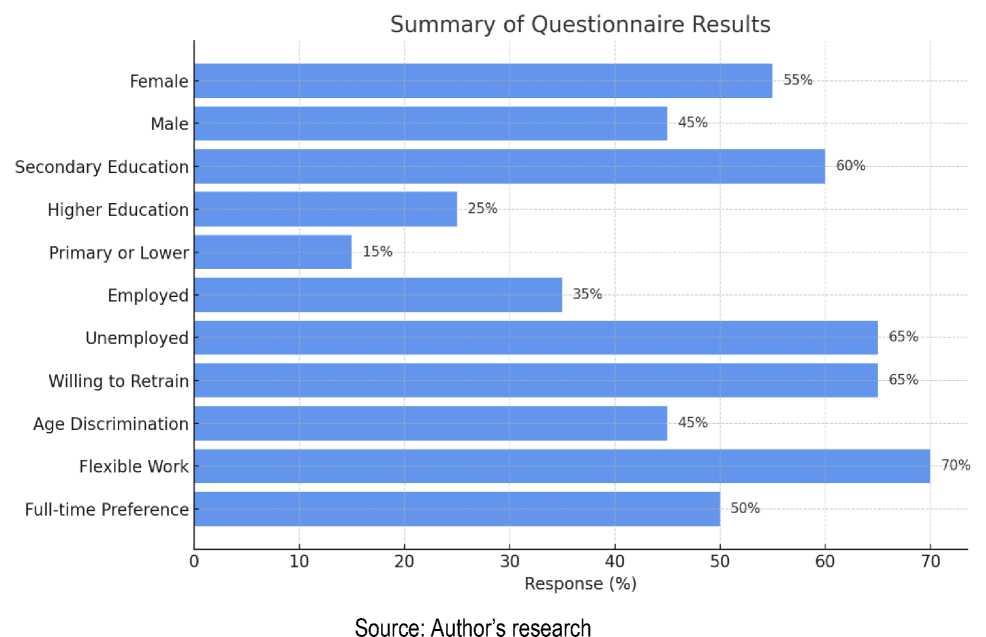
The sample structure shows a slight majority of women (55%), while men account for 45% of respondents. This distribution reflects broader demographic trends in Serbia, where women make up a larger share of the older workforce — primarily due to higher life expectancy and lower labor market participation among older men.
In terms of age distribution, the majority of participants (70%) fall within the 50–60 age group, while 30% are over 60. This indicates that the study primarily includes individuals who are still within the potentially active working age, yet already face risks of marginalization in the labor market.
Regarding educational attainment, 60% of respondents have completed secondary education, reflecting generational cohorts that entered the workforce during an industrial era dominated by manual and technical occupations. Furthermore, 25% hold a university degree, suggesting the presence of a significant number of qualified individuals with potential for knowledge transfer. The smallest group (15%) consists of individuals with only primary education, representing a particularly vulnerable category due to limited access to modern employment opportunities.
When examining employment status, the data reveal a concerning imbalance — only 35% of respondents are employed, while 65% are unemployed. This highlights serious barriers to the reintegration of older individuals into the labor market. Contributing factors include employer bias, outdated skills, reduced mobility, and health-related challenges.
2. Work Experience and Digital Skills
Analysis of work experience shows that half of the respondents (50%) have more than 20 years of professional experience, while 30% have between 11 and 20 years. This demonstrates a strong base of accumulated knowledge and work discipline, which represents valuable human capital often underestimated by employers.
However, challenges emerge in the area of digital literacy. Only 40% report possessing basic digital skills, 35% report partial competence, and 25% have no digital skills at all. This means that one in four individuals over the age of 50 has limited ability to use modern technologies, significantly reducing employability.
This finding aligns with European Commission data (Digital Economy and Society Index, 2023), which indicate that older workers in Central and Eastern Europe display the lowest levels of digital literacy within the EU. These results underscore the need for systemic digital education programs specifically targeted at older generations.
3. Retraining and Interest in Training Programs
The data reveal a strong willingness among older adults to learn and improve professionally. When asked about readiness for retraining, 65% responded affirmatively, indicating high motivation and openness to change. Meanwhile, 20% were undecided and 15% expressed reluctance.
This finding challenges the common stereotype that older workers are resistant to change. On the contrary, most respondents demonstrate adaptability and interest in skill development, provided they receive appropriate institutional and financial support.
In terms of preferred training content, computer literacy courses are the most in demand (60%), followed by professional workshops (45%), foreign language courses (30%), and entrepreneurship programs(20%).
These results highlight the need for the development of targeted lifelong learning programs focused on digital and entrepreneurial competencies, supported by flexible, subsidized models tailored for older adults.
4. Labor Market Experience
The most frequently identified employment barriers include:
• Lack of job opportunities (50%)
• Age discrimination (45%)
• Outdated knowledge and skills (40%)
• Insufficient training opportunities (35%)
• Health-related problems (30%)
5. Work Attitudes and Employment Preferences
These indicators reveal that the barriers are not merely individual but structural in nature — as the labor market does not provide enough inclusive opportunities for older individuals. Consequently, there is a need for active labor market policies that promote subsidized employment, mentorship, and flexible working conditions to enhance inclusion and reduce discrimination.
When analyzing work attitudes, the results indicate that older individuals are largely open to modern, flexible employment models. A total of 70% of respondents stated they would accept flexible work arrangements, such as part-time work, remote work, or temporary contracts. Meanwhile, 20% were undecided, and only 10% rejected such arrangements.This demonstrates a high level of adaptability and pragmatic understanding of the changing labor market dynamics among older adults.
Regarding preferred employment forms, 50% of respondents still favor full-time employment, 30% prefer part-time arrangements, 15% would opt for freelance or short-term work, and 5% for selfemployment.
Interestingly, despite openness to flexibility, half of the respondents still value job stability and security, reflecting the work culture of generations accustomed to structured and predictable employment systems.
Summary Interpretation and Policy Implications
The overall results reveal the existence of an active but underutilized potential among older workers . They possess significant professional experience, motivation for learning, and readiness to adapt, yet face systemic barriers that limit their participation in the labor market.
Low levels of digital competence and high unemployment rates call for strategic interventions — particularly through inclusive employment policies, digital skill development programs, employer incentives, and the promotion of age-diverse workplace cultures.
Encouragingly, two-thirds of respondents express a strong willingness to engage in retraining and lifelong learning. This represents a solid foundation for the development of a national active ageing strategy , aimed at extending employability and improving the social inclusion of older adults in Serbia.
Table 1: Summary of Questionnaire Results
|
Question |
Response (%) |
|
Gender – Female |
55% |
|
Gender – Male |
45% |
|
Secondary Vocational Education |
60% |
|
Higher Education |
25% |
|
Primary or Lower Education |
15% |
|
Employed |
35% |
|
Unemployed |
65% |
|
Willingness to Retrain |
65% Yes |
|
Experienced Age Discrimination |
45% Yes |
|
Acceptance of Flexible Work |
70% Yes |
|
Preferred Employment Type |
Full-time: 50% |
Source: Author’s research
Discussion
The empirical findings of this study provide a comprehensive insight into the labor market challenges and opportunities faced by individuals aged 50 and above in Serbia. Several key patterns emerge from the data that warrant deeper interpretation and contextualization within the broader discourse on active aging, inclusive employment, and lifelong learning.
Low Employment and Recent Job Losses
At the time of the survey, only 35% of respondents were actively employed , while the remaining 65% were either unemployed or had opted for early retirement. This figure significantly deviates from the EU average labor force participation rate for the 55–64 age group, which stands at over 60% (Eurostat, 2024). A substantial portion of the unemployed respondents had lost their jobs within the past five years, primarily as a result of corporate restructuring, automation, and sectoral decline , particularly in manufacturing and public utilities. These trends reflect the vulnerability of older workers to structural economic changes , and the lack of tailored transition programs to support them.
Retraining Interest vs. Program Access
Encouragingly, 65% of respondents expressed willingness to engage in retraining or further education, especially for occupations in administration, healthcare support, social services, and light technical trades. However, only 18% had ever participated in formal upskilling or retraining initiatives, indicating a significant disconnect between motivation and access. This gap can be attributed to several factors:
-
• A lack of age-appropriate training formats , both in content and delivery;
-
• Limited outreach and poor targeting of public employment services ;
-
• Psychological barriers and internalized ageism , where individuals doubt the value or feasibility of learning in later life (Kadefors & Hansez, 2022).
This discrepancy underscores the importance of developing accessible, modular, and blended learning programs tailored to the cognitive and logistical needs of older adults (OECD, 2021).
Age-Based Discrimination and Labor Market Exclusion
A particularly concerning finding is that 45% of respondents reported experiencing age-based discrimination during job application processes. This aligns with global data on workplace ageism and confirms that age continues to be a significant barrier to employability, despite legal protections. Employers may harbor implicit biases that older workers are less productive, resistant to change, or more expensive due to healthcare costs — perceptions that are not empirically grounded (Posthuma & Campion, 2009).
Moreover, these attitudes often override the benefits that older employees bring , such as reliability, work ethic, and institutional knowledge. The results call for stronger enforcement of antidiscrimination legislation , but also for proactive employer education campaigns to shift the narrative around aging and work.
Digital Skills and the Technological Divide
The research indicates that only 24% of respondents rated their digital skills as satisfactory or good , while a majority (58%) acknowledged a need for further training to remain competitive. This digital divide represents a critical barrier in an increasingly digitized economy and workplace. Without adequate ICT competencies, older workers are systematically excluded from a wide range of job opportunities — from online job applications to remote work settings and digital tools in traditional sectors (European Commission, 2023).
These findings reinforce the central tenets of human capital theory (Becker, 1964), which posit that sustained investment in skills is essential across the life course. Public and private stakeholders should therefore invest in basic and intermediate digital training programs that are flexible, free or subsidized, and designed in age-sensitive formats.
Openness to Flexible Work Arrangements
One of the most positive findings is the high level of acceptance of flexible work models , with over 70% of respondents open to part-time, remote, or freelance work . This suggests that nonstandard forms of employment could play a key role in re-integrating older persons into the workforce. Flexible models provide:
-
• Adjusted workloads and hours for individuals with health or family responsibilities;
-
• Opportunities for phased retirement or gradual reintegration;
-
• A means of maintaining engagement without full-time burdens.
Countries like Sweden and the Netherlands have shown that institutional support for flexible work leads to higher retention of older workers and greater job satisfaction (OECD, 2021). In Serbia, however, such options are still underdeveloped or culturally underutilized, and require legislative and infrastructural support to become a viable mainstream option.
Limited Awareness of Government Measures
Only 21% of respondents were aware of existing government support programs aimed at persons over 50. This low awareness suggests not only weak outreach strategies by institutions but also a broader communication deficit between policy designers and target beneficiaries. Without adequate dissemination of information through trusted local channels — such as social services, municipalities, NGOs, and media — policy uptake remains marginal .
This lack of awareness further highlights the importance of intersectoral cooperation and grassroots mobilization in reaching marginalized older adults, especially those in rural or economically depressed regions. Additionally, employment counselors and case managers must be trained to proactively guide older jobseekers toward appropriate services, subsidies, and training opportunities. Synthesis and Policy Implications
Taken together, the findings illustrate a complex but promising landscape for improving employability among older persons in Serbia. The latent motivation, high degree of adaptability, and openness to learning among this group suggest that, with the right interventions, labor market participation could be significantly increased. However, this requires:
-
• Redesigning vocational education and training (VET) systems to accommodate lifelong learning;
-
• Incentivizing employers through tax credits or co-financing schemes for hiring and retaining older workers;
-
• Implementing information campaigns to raise awareness and combat ageist stereotypes;
-
• Expanding flexible employment policies and digital upskilling infrastructure.
By drawing from both international and regional best practices, Serbian policymakers can create a more age-inclusive labor market that not only addresses demographic challenges but also fosters greater social cohesion and economic resilience.
SWOT Analysis of Employability for Persons Aged 50+ in Serbia
SWOT analysis is a strategic tool used to assess internal strengths and weaknesses, as well as external opportunities and threats that influence a particular phenomenon—in this case, the employment of individuals over the age of 50 in the Republic of Serbia. This analysis enables the identification of key factors that may contribute to improving the labor market position of this vulnerable group, as well as barriers that must be overcome for their better integration.
Strengths refer to the internal qualities that individuals over 50 bring to the workplace, such as extensive professional experience, a high level of work ethic, responsibility, and loyalty. These attributes often make them valuable assets for employers, especially in mentoring or advisory roles.
Weaknesses represent limitations that hinder their employability. The most common include lower levels of digital literacy, health-related constraints, inflexibility toward new work arrangements, and reduced motivation due to prolonged unemployment or negative labor market experiences.
Opportunities encompass external factors that can enhance the position of this age group, including the development of retraining and continuing education programs, a growing demand for flexible forms of work, and shifts in public awareness that affirm the value of older workers.
Threats are external challenges that may further complicate employment prospects, such as widespread age discrimination, insufficient institutional support, rapid technological changes that widen the generational gap, and the demographic decline of the working-age population.
The insights gained from this analysis can serve as a foundation for developing targeted employment policies, strengthening active labor market measures, and promoting positive practices among employers.
SWOT Analysis of Employing People Over 50 in Serbia
Table 2: Swot analyisis
|
Strengths |
Weaknesses |
|
Extensive professional experience |
Low digital literacy |
|
High responsibility and dedication |
Health limitations |
|
Stability and loyalty to employers |
Lack of flexibility in working hours |
|
Opportunities
|
Threats
|
Source: Author’s research
Textual Summary of SWOT Analysis
The analysis of strengths, weaknesses, opportunities, and threats related to the employment of individuals over the age of 50 in Serbia reveals a complex environment in which this population navigates the labor market.
Among the key strengths are extensive professional experience, a high level of responsibility and commitment, as well as stability and loyalty to employers. Older workers often possess valuable mentoring capacities and transferable skills that can contribute to the development of younger colleagues and the organization as a whole.
On the other hand, there are significant weaknesses , the most prominent being low digital literacy, health limitations that may reduce work capacity, and a lack of flexibility in accepting diverse work arrangements. In addition, prolonged unemployment within this demographic can result in decreased motivation to re-enter the labor market.
In terms of opportunities, there are numerous possibilities to improve the position of older workers. These include the development of retraining and upskilling programs, the growing use of flexible work arrangements, and increased awareness of the importance and value of older employees. Moreover, intergenerational cooperation may enhance integration and knowledge transfer across age groups.
However, several major threats persist that may hinder employment prospects for this age group. Widespread age discrimination and insufficient institutional support represent key challenges. The demographic decline of the working-age population and rapid technological changes further complicate the situation, requiring ongoing adaptation by both older workers and employment systems.
Overall, the SWOT analysis underscores the need for a strategic approach that capitalizes on existing strengths and opportunities while addressing weaknesses and threats through integrated policies and programs aimed at supporting the employment of individuals aged 50 and over.
State Measures to Promote Employment of Persons Aged 50+ in Serbia
Recognizing the growing demographic pressures and the untapped potential of older workers, the Government of the Republic of Serbia has initiated a range of strategic and operational measures aimed at encouraging the employment, retraining, and professional reintegration of individuals aged 50 and above. These interventions align with the broader European framework on active aging and the national strategies for employment and social inclusion. Below are the key state-led mechanisms currently in place:
1. Employment Subsidies for Employers
Through the National Employment Service (NES) , Serbia implements financial incentive programs that support companies in hiring older unemployed individuals. These subsidies partially or fully cover salary costs, social security contributions, or training expenses for a limited period (typically 6–12 months). The primary objective is to reduce the perceived risk and financial burden for employers, thereby increasing their willingness to recruit older candidates.
In 2024, the NES reported that over 3,000 individuals aged 50+ were employed through subsidized schemes, with the majority retained beyond the subsidy period, suggesting long-term benefits (NES Annual Report, 2024).
2. Retraining and Lifelong Learning Initiatives
The Ministry of Labour, Employment, Veteran and Social Affairs actively funds and coordinates programs designed to enhance the employability of older adults through targeted education . These initiatives focus particularly on:
• Digital literacy (basic computer use, internet navigation, MS Office tools),
• Sector-specific skills (e.g., accounting, tourism, care work),
• Entrepreneurial training for self-employment.
3. Support for Flexible Work Arrangements
Programs are delivered in cooperation with accredited training providers, local governments, and civil society organizations. Despite available funding, participation rates remain modest due to limited outreach and logistical constraints , underscoring the need for more tailored, community-based delivery models.
In line with contemporary European trends, the Serbian government has begun to promote flexible employment models that better suit the health and lifestyle circumstances of older adults. This includes:
• Part-time contracts with proportional benefits,
• Remote or hybrid work options, especially for administrative and consulting roles,
• Seasonal and project-based employment schemes.
4. Legal and Institutional Protection Against Age Discrimination
Although not yet widespread, pilot initiatives within public institutions and donor-funded projects have shown positive impacts on retention, productivity, and job satisfaction among older employees. Future labor legislation reforms are expected to further institutionalize flexibility as a right, not an exception .
Serbia has enacted a solid legal framework aimed at combating age-based discrimination:
• The Law on the Prohibition of Discrimination (2009) explicitly identifies age as a protected characteristic.
• The Labour Law (revised 2018) prohibits differential treatment during hiring, promotion, or dismissal based on age.
5. Strategic Partnerships with International Organizations and NGOs
The Commissioner for the Protection of Equality serves as an independent body handling complaints and promoting anti-discrimination standards. However, enforcement remains uneven, and many older individuals are unaware of their rights or reluctant to report abuse , highlighting the need for stronger awareness campaigns and accessible complaint mechanisms.
Serbia actively cooperates with global and regional bodies in the development and implementation of aging-related employment programs. Examples include:
-
• The ILO’s Decent Work Agenda , which supports intergenerational inclusion,
-
• UNDP’s active aging pilot programs in rural municipalities,
-
• Collaboration with EU-funded projects focusing on social innovation and the silver economy.
Local NGOs — such as Red Cross Serbia and Caritas — also play a key role by delivering psychosocial support, pre-employment counseling, and digital literacy workshops tailored to older adults. Support for Self-Employment and Social Entrepreneurship
Acknowledging that traditional employment may not always be attainable or desirable, the government promotes entrepreneurial alternatives for older persons. Through the NES and Ministry of Economy, individuals over 50 can access:
-
• Start-up grants (usually ranging from €2,000 to €5,000),
-
• Business planning workshops and mentorship ,
-
• Microloans and tax relief for newly registered sole proprietors.
Additionally, social entrepreneurship is increasingly recognized as a viable model, especially in rural areas and for vulnerable populations. Projects in fields like community care, local crafts, and organic farming have shown particular promise for the older workforce.
Policy Outlook and Challenges
While these state measures represent a meaningful step toward a more inclusive labor market , their impact is currently limited by:
-
• Low public awareness and visibility,
-
• Bureaucratic procedures that deter employer participation,
-
• Insufficient targeting of programs in economically depressed or rural areas,
-
• Lack of systematic evaluation and longitudinal tracking of outcomes.
To enhance the effectiveness of these efforts, Serbia should consider:
-
• Developing a National Strategy on Active Aging and Employment with specific targets and monitoring tools;
-
• Integrating employment and health policies to address holistic needs of older workers;
-
• Expanding local partnerships to bring services closer to beneficiaries;
-
• Launching nationwide campaigns to challenge ageist attitudes and celebrate the contributions of older workers.
In sum, while progress is evident, much remains to be done to unlock the full potential of individuals aged 50+ in Serbia’s labor market . With strategic investment, inclusive policies, and cultural transformation, this demographic can play a central role in sustaining economic growth and social stability in the decades to come.
Recommendations to Improve Employment for Persons Aged 50+
In light of the research findings and in alignment with international best practices, the following set of strategic and operational recommendations aims to enhance the inclusion and employability of persons aged 50 and above in Serbia. These measures seek to address both systemic and individual-level barriers through coordinated, evidence-based, and socially responsible policies.
1. Expand Retraining and Lifelong Learning Programs
• Significantly increase public investment in adult education, particularly in programs focused on digital literacy, communication skills, and sector-specific technical competencies.
• Develop modular, accessible training formats (e.g., hybrid or short-cycle courses) in cooperation with universities, vocational training centers, civil society organizations, and private providers.
• Establish local Lifelong Learning Centers across municipalities, with personalized learning plans and counseling services adapted to the specific needs of older adults.
• Promote Recognition of Prior Learning (RPL) mechanisms to validate the experience and informal skills of older individuals and integrate them into new employment paths.
2. Encourage Flexible Work Practices
• Support the expansion of telecommuting, job sharing, project-based contracts, and reduced-hour schedules as viable and productive options for older workers.
• Encourage employers to implement age-friendly workplace adaptations, such as ergonomic equipment, flexible break times, and personalized workloads.
• Amend labor legislation to further facilitate flexible employment models, especially for persons over 55, including phased retirement schemes.
3. Combat Age Discrimination and Raise Awareness
• Launch nationwide media campaigns emphasizing the positive contributions of older workers and dispelling stereotypes about their productivity or adaptability.
• Introduce legal provisions mandating anti-ageism training for HR professionals and management in medium and large enterprises.
• Strengthen the enforcement of the Law on Prohibition of Discrimination, by increasing monitoring capacities and sanctioning non-compliance in the recruitment and workplace environments.
• Offer incentives such as tax deductions or public recognition for companies that maintain age-diverse workforces.
4. Strengthen Institutional Support
• Modernize employment offices with dedicated older adult services, including tailored job search assistance, reskilling guidance, and psychological support.
• Establish public-private partnerships to create sectoral employment pathways specifically designed for workers aged 50+, in health care, tourism, public services, agriculture, and crafts.
• Institutionalize mentorship programs, where experienced workers nearing retirement mentor younger employees, ensuring intergenerational knowledge transfer and increased professional value.
5. Foster Intergenerational Cooperation
• Promote the creation of mixed-age teams within organizations to encourage collaboration, diversity, and innovation, improving overall company culture.
• Organize joint team-building events, innovation labs, and workshops where younger and older employees exchange ideas and learn from each other.
• Support intergenerational entrepreneurship initiatives, offering joint financing and training for teams composed of older and younger entrepreneurs.
6. Promote Health and Wellbeing at Work
• Implement workplace programs focused on occupational health, ergonomics, and stress prevention, ensuring that older workers can remain productive and safe.
• Provide on-site or subsidized health screenings, preventive care, and mental health support tailored to older adults.
• Encourage employers to adopt Work Ability Index (WAI) monitoring tools to proactively adapt roles and environments based on health trends.
7. Increase Accessibility of Employment Information
• Ensure all public and private job platforms are accessible to older users, including simplified interfaces, offline support, and personalized help.
• Encourage digital literacy education not only for job applications, but for daily navigation of labor-related services (e.g., e-Government portals, e-learning platforms).
• Develop targeted job portals or employment hubs featuring offers tailored to 50+ candidates, with filters for flexible jobs, mentorship roles, or second careers.
8. Financial Incentives for Employers
-
• Introduce or expand wage subsidies, tax deductions, and co-financing programs for employers hiring and retaining older employees.
-
• Award annual recognition to inclusive employers , showcasing them as examples of good practice through government and chamber of commerce platforms.
-
• Reduce employer contributions for social security when hiring workers over 55, particularly in sectors with high labor shortages.
•
Strategic Impact
These recommendations are designed to be mutually reinforcing , combining labor policy reform, cultural transformation, and institutional capacity-building. Their implementation would:
-
• Reduce unemployment and poverty among older adults.
-
• Contribute to sustainable pension and healthcare systems .
-
• Enhance intergenerational solidarity and social cohesion.
-
• Improve human capital utilization in the context of demographic aging and labor shortages.
A coordinated and well-funded implementation plan — supported by national and local governments, international partners, employers, and civil society — is essential for realizing the long-term benefits of active aging in Serbia's labor market.
Conclusion
The employability of individuals over the age of 50 in the Republic of Serbia represents a multidimensional socio-economic challenge, requiring a holistic, evidence-based, and cross-sectoral policy response. The findings of this research demonstrate that older workers possess untapped potential, characterized by strong work ethics, valuable professional experience, and a pronounced readiness to remain active in the labor market through reskilling and adaptation to modern work formats, such as parttime and remote work. This population should not be seen merely through the lens of age-related limitations, but rather as a strategic labor resource whose full inclusion can generate substantial societal and economic benefits.
Despite these strengths, older job seekers are confronted with numerous persistent barriers. Structural discrimination, widespread stereotypes about reduced productivity, insufficient access to continuing education, and inadequate digital literacy support hinder their employment prospects. The lack of targeted and integrated public policies exacerbates these challenges, leaving many individuals marginalized and excluded from economic participation.
The SWOT analysis conducted in this study highlights a dual reality: while internal weaknesses such as declining health or outdated technical skills are evident, they are counterbalanced by critical strengths — particularly in terms of reliability, experience, and workplace loyalty. These attributes, if recognized and leveraged properly, can enhance organizational performance and workforce stability.
Existing government measures — such as those provided by the National Employment Service (NES), including employment subsidies and legal protections — mark an important step in the right direction. However, their fragmented implementation and low public visibility significantly reduce their effectiveness. What is required is a comprehensive national strategy that places older workers at the center of labor and social policy reforms.
Key recommendations include the expansion and modernization of retraining programs with a strong digital focus, the establishment of local lifelong learning and career support centers, and enhanced cooperation between government institutions, non-governmental organizations, and the private sector. Incentives for employers who hire and retain older workers should be strengthened through tax relief, reduced payroll contributions, and co-financing of workplace adaptations. Moreover, a broad public awareness campaign should aim to counter ageism and promote positive images of active aging and intergenerational cooperation in the workplace.
Furthermore, international and regional best practices — such as Germany’s “Perspective 50+,” Slovenia’s active aging strategy, and Japan’s senior employment model — offer valuable lessons that can inform the Serbian context. Adopting proven models of labor market inclusion for older individuals, while respecting local socio-economic realities, could significantly increase both employment rates and quality of life among this population.
In conclusion, the 50+ workforce must be recognized as a valuable component of Serbia’s human capital — one that can meaningfully contribute to national productivity, intergenerational solidarity, and the sustainability of pension and health systems. Ensuring decent work for all, regardless of age, is not only a social imperative but also a condition for long-term economic resilience in the face of demographic aging. An inclusive labor market is a precondition for inclusive development.
Study Limitations
Although there is substantial international evidence supporting the benefits of multigenerational HR practices, most studies have been conducted in highly developed economies such as OECD and EU countries. This limits the direct applicability of findings in contexts with different socioeconomic and cultural frameworks. Furthermore, most research relies on quantitative methods, while qualitative aspects—such as the lived experiences and perceptions of older employees—remain underexplored. Future studies should include comparative analyses across different national contexts and examine the impact of digital transformation on intergenerational relations .
Conflict of interests
The authors declare no conflict of interest.
