
Age Composition of the Hyalomma detritum Tick Population in the Nakhchivan Autonomous Republic of Azerbaijan
Journal: Bulletin of Science and Practice @bulletennauki
Section: Естественные науки
Article in issue: 6 т.12, 2026.
Free access
In the Nakhchivan Autonomous Republic, Hyalomma detritum adults are characterized by a single peak of activity. This activity coincides with the presence of adult ticks in lowland and foothill areas from the first ten days of May until the end of August. Adult Hyalomma detritum disappear in September. Larvae and nymphs emerge by the end of August and September. Both previously active individuals and newly molted individuals overwinter. Ticks that became active before hibernation expend a significant portion of their nutrient reserves. Some differences in the physiological age of males and females emerging from hibernation are observed. Males were found to be more emaciated than females. Differences in the physiological age of ticks within the same active season in different years are greater than those between different seasons within the same year.
Similar articles in the section Articulata
Short address: https://sciup.org/14138225
IDS: 14138225 | UDC: 595.7 | DOI: 10.33619/2414-2948/127/15
Возрастной состав популяции клещей Hyalomma detritum в Нахчыванской Автономной Республике Азербайджана
В Нахчыванской АР для имаго Hyalomma detritum характерен один пик активности, причем эта активность совпадает для взрослых клещей в низинных и предгорных районах с первой декады мая до конца августа. Взрослые Hyalomma detritum в сентябре исчезают. До конца августа и в сентябре появляются личинки и нимфы. Зимуют как особи, уже находившиеся в активном состоянии, так и свежеперелинявшие. Клещи, активизировавшиеся до ухода на зимовку, расходуют значительную часть запасов питательных веществ. Наблюдаются некоторые различия в физиологическом возрасте самцов и самок, вышедших после зимовки. Самцы оказались более истощенными по сравнению с самками. Различия в физиологическом возрасте клещей одного сезона активности за разные годы больше, чем таковые разных сезонов одного года.
Text of the scientific article Age Composition of the Hyalomma detritum Tick Population in the Nakhchivan Autonomous Republic of Azerbaijan
Бюллетень науки и практики / Bulletin of Science and Practice
UDC 595.7
The study of the age structure of natural populations of ixodid ticks is of practical importance for predicting their abundance and for developing control measures aimed at their suppression.
The investigation of the age structure of ixodids is carried out by determining the physiological age of unfed ticks. The physiological age of unfed adult ixodid ticks, unlike that of blood-feeding dipteran females, does not reflect the number of completed gonotrophic cycles, but rather the depletion of reserve nutrient stores in the organism of the starving individual [1].
At present, a method developed by Balashov is widely used, which allows for the identification of morphophysiological changes occurring in the digestive and excretory systems of unfed ticks on histological sections. Based on the state of nutritional reserves in the bodies of unfed ticks, the author distinguishes four main degrees of depletion, using the following criteria: the degree of filling of intestinal diverticula with digestive cells, the amount of hemoglobin and hematin inclusions in digestive cells, and the degree of loading of the Malpighian vessels [2, 3].
Using this method, the physiological age and age composition of unfed adults of Ixodes ricinus L., Ixodes persulcatus P. Sch., and Dermacentor pictus Herm. have been determined [5-9, 11].
Materials and Methods
The material for this study consisted of spring and autumn collections of adult (imago) Hyalomma detritum ticks, captured in natural habitats during 2024–2025. Sampling was conducted using the flagging method at the beginning of the activity period (early May) and at the end of the activity period (late August).
The permanent monitoring station was located in the lowland and foothill zones of the Nakhchivan Autonomous Republic. The study area represents a shrub-dominated semi-desert and mountain-steppe landscape typical of the region’s geographical zones. For many years, this territory has been used as pastureland. The herbaceous cover is characterized by typical steppe and mountainsteppe vegetation. The terrain includes both lowland and mountainous relief with slopes of varying exposure, at an altitude of approximately 600–1600 m above sea level. The climate is characterized by warm, dry summers and cold winters with little snowfall.
In the studied grazing areas, flocks of sheep are managed by local entrepreneurs, and cattle, sheep, and goats belonging to residents of nearby villages are also present. Potential hosts of ticks at the station include cattle, horses, sheep, goats, donkeys, dogs, cats, hares, large gerbils, thin-toed and yellow ground squirrels, small rodents, and grass snakes. During the study period, 158 male and female specimens of H. detritum were dissected and examined using histological sections. Dissection procedures followed the general methodological recommendations of E. N. Pavlovsky [4].
For fixation, Carnoy’s solution and Bouin–Duboscq mixtures were used. Prior to embedding in paraffin, specimens were passed through methyl butyrate and methyl benzoate with celloidin. Paraffin blocks were sectioned at a thickness of 7 μm. The sections were stained with azocarmine according to Heidenhain. The amount of reserve nutrients was assessed visually (at 280× magnification) based on the size of digestive cells in the midgut wall, the presence of hemoglobin and hematin granules, and the degree of filling of Malpighian vessels. For reliability, an average of approximately 20 microscopic fields was examined per individual.
The continuous nature of irreversible processes underlying age-related changes in ixodid ticks results in blurred transitions between age groups; therefore, the boundaries between them are considered conditional. Based on four main degrees of starvation-induced depletion observed in natural populations of ixodid ticks, a modified version of this methodology was applied for determining the physiological age of ixodids [1-3, 8].
Within each main age category, transitional stages between typical characteristics were distinguished. Specimens exhibiting transitional features between main age groups were designated as I–II, II–III, and III–IV. This classification system allows for a more precise representation of the depletion of reserve nutrients in actively feeding (host-seeking) ticks.
For more accurate age determination, the posterior branches of the intestine were examined, as these structures more reliably reflect the utilization of reserves and epithelial senescence. In ixodid ticks, as in argasid ticks, this intestinal region provides a more precise indication of physiological age and energy reserves necessary for survival.
Among the collected active ticks, individuals corresponding to the first degree of depletion were absent, which confirms previous observations regarding the inactivity and inability to attach to hosts in ticks that have not completed post-molt maturation [1].
Ticks with a slit-like intestinal lumen surrounded by digestive cells containing numerous hemoglobin inclusions and a small number of diffusely distributed hematin granules were classified as stage II of depletion. In these individuals, the accumulation of guanine spherites in the Malpighian vessels was minimal or absent (Figure 1).
Stage III depletion included ticks with a markedly expanded intestinal lumen. Their digestive cells contained only single hemoglobin granules, while the amount of hematin was significantly increased and diffusely distributed in the cytoplasm. The accumulation of guanine spherites in the Malpighian vessels was more pronounced (Figures 2–3).
Stage IV depletion, corresponding to long-term starved and severely exhausted individuals, was characterized by collapsed intestinal walls, digestive cells lacking hemoglobin inclusions, and substantial accumulation of hematin within the cytoplasm (Figures 4–5).
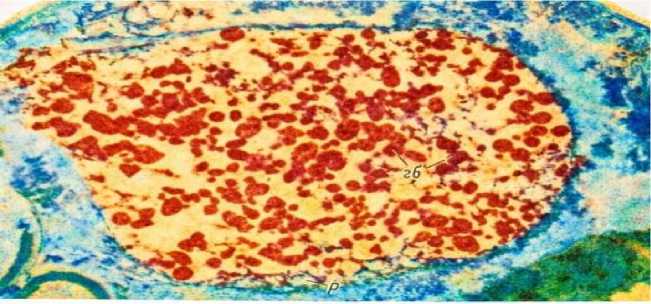
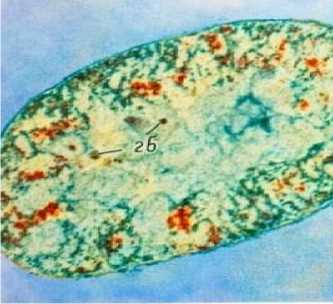
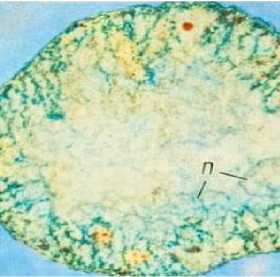
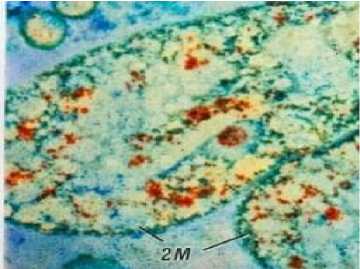
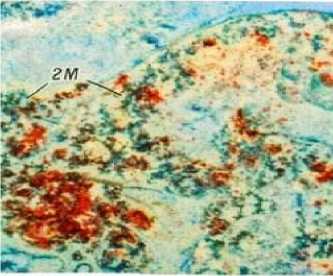
Figure. Hyalomma detritum
Results and Discussion
Period of species activity. As shown in Table, the majority of the May collections consisted of individuals in the I–III and III degrees of depletion [10].
Most of these are apparently individuals that molted in autumn but became active only after overwintering. A portion of the ticks active in spring had molted in the second half of summer and may already have experienced a short period of autumn activity.
A small part of the “spring” population consists of individuals with III–IV and IV degrees of depletion. These likely molted from nymphs and became active in the previous spring or at the beginning of the second half of the previous summer, and by the time of overwintering had expended most of their stored nutritional reserves.
The majority of these severely depleted ticks are males, which apparently consume their nutritional reserves more rapidly compared to females, which were mostly at II–III degrees of depletion.
The rate of depletion of nutritional reserves in ticks prior to overwintering is likely influenced by weather conditions in autumn during the post-molting period, as the degree of depletion of ticks during this period varied across years.
Autumn activity period of the species. Working with H. detritum , we occasionally recorded host attacks and feeding on sheep during the pre-winter period. The average number of feeding ticks per sheep during the autumn activity season was 6 individuals, whereas in spring it reached 15.
The overwintering of engorged females, based on our observations in their natural biotopes, occurs successfully, and upon completion of overwintering, the females lay viable eggs in spring and early summer. We began studying the physiological age of unfed ticks prior to overwintering at the end of the autumn period, when only sporadic attacks of this species on sheep were recorded. This made it possible to determine the degree of depletion of unfed ticks that are destined to overwinter if they fail to find hosts.
Table
PHYSIOLOGICAL AGE OF TICKS H. DETRITUM AT THE BEGINNING AND END OF THE PERIOD OF ACTIVITY IN NATURE FOR 2024–2025
Time to pack up Total opened Degree of exhaustion
I II III III-IV IV
|
abs |
% |
abs |
% |
abs |
% |
abs |
% |
abs |
% |
||
|
2024 |
|||||||||||
|
5-10 V |
41 |
8 |
19,5 |
20 |
48,7 |
11 |
26,8 |
2 |
4,8 |
— |
— |
|
5 XI |
33 |
13 |
39,3 |
15 |
45,4 |
5 |
15,1 |
— |
— |
— |
|
|
2025 |
|||||||||||
|
10 V |
35 |
1 |
2,8 |
9 |
25,7 |
15 |
42,8 |
5 |
14,2 |
5 |
14,2 |
|
10X |
46 |
1 |
2,0 |
18 |
36,7 |
22 |
44,8 |
5 |
10,2 |
— |
— |
It was found that unfed females entering overwintering differed considerably in their nutrient reserves: some had only just completed post-molting development, whereas others had almost completely exhausted their reserves (Table). According to data obtained over two years of observations, autumn collections were dominated by ticks at depletion stages II–III and III. It was also evident that a larger proportion of males were more strongly depleted than females. We assume that the spring population of active ticks consists of individuals that are somewhat older than those in the autumn population. This basic pattern of seasonal changes in age structure is superimposed by more pronounced variations, which are likely determined by fluctuations in abiotic factors, primarily weather conditions.
When comparing our data on the physiological age of unfed adults of H. detritum with other species from the central zone of the European part of the former USSR [3], it was established that the spring population of H. detritum in the Nakhchivan Autonomous Republic is not more heterogeneous than, for example, D. marginatus in the Moscow region.
In contrast, when comparing ticks from the autumn populations of these two species, the differences are much less pronounced.
Conclusions
In the Nakhchivan Autonomous Republic, Hyalomma detritum adults exhibit a single peak of activity. This period of activity is consistent for adult ticks in both lowland and foothill regions, occurring from the first decade of May until the end of August. Adult Hyalomma detritum disappear in September. Ticks overwinter both as individuals that were already in an active state and as freshly molted specimens. Individuals that became active before entering diapause consume a substantial portion of their nutritional reserves; consequently, overwintered adults differ significantly in their levels of stored nutrients. Some differences are observed in the physiological age of males and females emerging after overwintering. Males appear to be more depleted compared to females. This pattern is also evident among males that molted under natural conditions prior to overwintering. Differences in the physiological age of ticks within the same seasonal activity period across different years are greater than those observed between individuals from spring and autumn periods within a single year. Cross-sections of the midgut wall in ticks at different degrees of depletion: 1 – II physiological age, ×400; 2–3 – III physiological age, ×280; 4–5 – IV physiological age, ×280. I – intestinal cells; II – digestive cells, P – reserve cells, hb – hemoglobin inclusions, hm – hematin inclusions.
