
Археоботанические исследования курганов Туак-Оба 1 и 2 близ с. Мироновка Белогорского района Республики Крым
Журнал: Краткие сообщения Института археологии @ksia-iaran
Рубрика: Естественнонаучные методы в археологических исследованиях
Статья в выпуске: 281, 2025 года.
Бесплатный доступ
Изученная курганная группа Туак-Оба, состоящая из двух курганов, расположена в Белогорском районе Республики Крым. Погребальный комплекс Туак-Оба 1 датирован последней четвертью IV в. до н. э. Курган 2 относится к эпохе бронзы (первая половина III – конец II тыс. до н. э. calBC). В верхней части кургана обнаружены погребения лошадей, относящиеся к скифскому горизонту насыпи. Из каждого кургана для спорово-пыльцевого анализа отобрано по 10 образцов. Учет концентрации пыльцы позволил оценить сохранность погребенной почвы и установить этапы подсыпок в кургане 2. Курган 1 сооружен единомоментно. Спорово-пыльцевые спектры погребенной почвы указывают на существование более влажных условий (по сравнению с современными) и на произрастание разнотравно-злаковых степных фитоценозов в окрестности курганов на момент их сооружения. Наличие в спектрах спор копрофильных грибов свидетельствует об использовании территории для выпаса скота, микроугля – о степных пожарах, а спор Glomus и цист Pseudoschizaea – об эрозии, возникающей как следствие указанных процессов. Анализ морфотипов микроугля образца, отобранного под каменной выкладкой скифского времени кургана 2, позволяет предположить разведение погребального костра в окрестности курганов и перенос золы на вершину кургана после захоронения лошадей. Большая доля пыльцы насекомоопыляемых растений (Dipsacaceae) в кургане Туак-Оба 1 может быть объяснена летним сезоном сооружения насыпи.
Похожие статьи в разделе Предыстория. Доисторические остатки, артефакты, древности



Короткий адрес: https://sciup.org/143185522
IDS: 143185522 | DOI: 10.25681/IARAS.0130-2620.281.352-368
The Archaeobotanical Studies of the Tuak-Oba 1 and Tuak-Oba 2 Burial Mounds near the Mironovka Village in the Belogorsk District of the Republic of Crimea
The Tuak-Oba burial mound group consisting of two burial mounds is located in the Belogorsk district, the Republic of Crimea. The Tuak-Oba-1 funerary assemblage is dated to the last quarter of the IV century BC. Burial mound 2 is dated to the Bronze Age (first half of the III – end of the II millennia calBC). The upper part of the burial mound yielded horse burials dating to the Scythian horizon of the mound. To perform pollen analysis, 10 samples were selected from each burial mound. The estimation of the pollen concentration made it possible to assess preservation conditions of the buried soil and determine the stages of earth filling in burial mound 2. Burial mound 1 was constructed with no subsequent additions. The pollen spectra of the buried soil suggest that when the mounds were built the conditions were more humid (compared with the modern conditions) and mixed grasses and gramineous plant associations grew near the kurgans. The presence of coprophilous fungal spores in the spectra means that the area was used for animal grazing; the presence of microcharcoal suggests steppe fires, while the presence of Glomus spores and Pseudoschizaea cysts points to erosion caused by the said processes. The analysis of the morphotypes of the microcharcoal sample selected beneath stone piles of the Scythian period in burial mound 2 suggests that the funeral bonfire was made near the burial mounds and that the resulting ash was then carried to the top of the mound after the burial of horses. A greater percentage of the pollen from entomophilous plants (Dipsacaceae) at Tuak-Oba 1 can be explained by the season when the mound was constructed, which is summer.
Текст научной статьи Археоботанические исследования курганов Туак-Оба 1 и 2 близ с. Мироновка Белогорского района Республики Крым
На территории Крымского полуострова расположено большое количество курганов, сооруженных в эпоху энеолита – бронзы и содержащих погребения различных археологических культур, в том числе более поздних. Нередки и курганы с одиночными погребениями скифской и кеми-обинской культуры (см., например: Гаврилов , 2010).
Курганная группа Туак-Оба расположена на первой надпойменной террасе левого берега реки Биюк-Карасу у с. Мироновка Белогорского района Республики Крым. Обнаружена по следам ограбления кургана Туак-Оба 1 в 2016 г., в этот же год были проведены первые разведочные мероприятия на месте расположения памятника. В 2018, 2020 и 2021 гг. обе насыпи были исследованы экспедицией историко-археологического музея-заповедника «Неаполь Скифский» под руководством Ю. П. Зайцева и И. И. Шкрибляк при поддержке Российского фонда фундаментальных исследований (проект № 20-09-00456 А «Археологические исследования царского скифского кургана Туак-Оба в Предгорном Крыму»). Предварительная информация о результатах раскопок публиковалась в 2021 и 2024 гг. ( Шкрибляк , 2021; 2024).
Высота кургана 1 до начала раскопок составила 5,1–5,2 м, в восточной части фиксировалась длинная грунтовая просадка от вершины кургана до полы, впоследствии она была сопоставлена с дромосом, подведенным к центральному погребальному сооружению с востока. В центре кургана обнаружен каменный склеп трехчастной конфигурации, состоящий из проталамоса (привходовая камера склепа), таламоса (склеп с уступчатым перекрытием) и расположенного над таламосом небольшого четырехугольного помещения – верхней камеры. Основная гробница была неоднократно ограблена, внутри обнаружено деформированное каменное ложе, детали каменного алтаря и разрозненные мелкие находки: золотые и серебряные бляшки, фрагменты костяной инкрустации, разбитая лепная курильница. На выходе из склепа, в проталамосе, на полу зафиксировано еще некоторое количество уцелевшего инвентаря: низка стеклянных полихромных бус с серебряной каплевидной подвеской, бронзовые наконечники стрел, золотые нашивные бляшки. На полу верхней камеры, не подвергшейся ограблениям, полностью сохранился поминальный инвентарь: железная жаровня с комплектом кулинарных приспособлений, несколько десятков железных копий и дротиков, книдская и синопская амфоры. Погребальный комплекс кургана 1 датирован по инвентарю последней четверти IV в. до н. э.
Курган 2 располагался к западу от кургана 1, его восточная пола смыкалась с западной полой кургана 1. Высота кургана 2,5–2,7 м.
Исследование кургана 2 велось в границах единого раскопа с насыпью кургана 1. На поверхности каменной наброски были найдены 20 погребений лошадей, расположенных в четыре линии, ориентированные по оси запад – восток. Погребения относятся к скифскому горизонту насыпи, они составляли вместе с каменным склепом кургана 1 единую погребально-поминальную площадку.
Основа кургана 2 представляет собой грунтово-каменную конструкцию эпохи энеолита – раннего бронзового века, которая впоследствии была досыпана и достроена. Основное погребение раннего кургана было совершено в каменном ящике на древней дневной поверхности. Ящик был засыпан и заложен несколькими слоями известнякового бута, которые сформировали вокруг своеобразное каменное кольцо. Погребение датировано в ИИМК РАН по кости усопшего – 3010–2500 calBC (1σ). После досыпки кургана двумя этапами – в первой и второй половинах II тыс. до н. э. – в него было впущено еще несколько погребений срубной археологической культуры в грунтовых ямах с невыразительным инвентарем – лепными нелощеными горшками баночной формы. Для погребений получены методом радиоуглеродного датирования следующие даты: 1950–1750 calBC (1σ),1535–1300 calBC (1σ), 1410–1230 calBC (1σ). Даты калиброваны в программе OxCal v4.4.4 (Bronk Ramsey, 2021). Более детальное описание курганов, погребальных конструкций и инвентаря будет представлено в отдельной публикации.
История изучения курганов с применением естественнонаучных методов насчитывает многие десятилетия. Бóльшая часть исследований связана с привлечением специалистов-почвоведов, что совершенно логично, учитывая, что курганы представляют собой в основном земляные насыпи. Однако применение археоботанических методов (спорово-пыльцевой и фитолитный анализы) может позволить реконструировать растительность, существовавшую на момент сооружения насыпи, и/или выявить конструктивные особенности насыпи (см., например: Casparie et al. , 1980; Barczi et al. , 2009; Михаревич и др. , 2020; Kurbanova et al. , 2020).
Цель данного исследования – показать возможности, ограничения и особенности спорово-пыльцевого анализа при изучении курганов на примере Туак-Оба 1 и 2.
Материалы и методы
Проанализировано 10 образцов из кургана Туак-Оба 1 (рис. 1: а ):
№ 1 – погребенная почва под телом кургана (западный борт сектора 2), с четкой ровной верхней границей;
№ 2–9 – отобраны в северном борту сектора 4:
№ 2 – погребенная почва, верхняя граница нечеткая;
№ 3–8 – грунт из курганной насыпи:
№ 9 – грунт из-под каменной выкладки;
№ 10 – грунт над каменной выкладкой (западный борт сектора 4).
В кургане Туак-Оба 2 также отобрано 10 образцов (рис. 1: б ):
№ 1–3 – погребенная почва;
№ 4–6 – из курганной насыпи;
№ 7 и 8 – из-под и над каменной выкладкой середины II тыс. до н. э.;
№ 9 и 10 – из-под и над каменной выкладкой скифского времени.
Для понимания того, как состав растительности отражается в спорово-пыльцевых спектрах, в окрестности курганов отобрана поверхностная проба современной почвы (верхние 0,5–1 см) – образец № 11 (на всех диаграммах).
Палинологический анализ . Из отобранного грунта пыльца и споры в лабораторных условиях выделялись согласно стандартной сепарационной методике
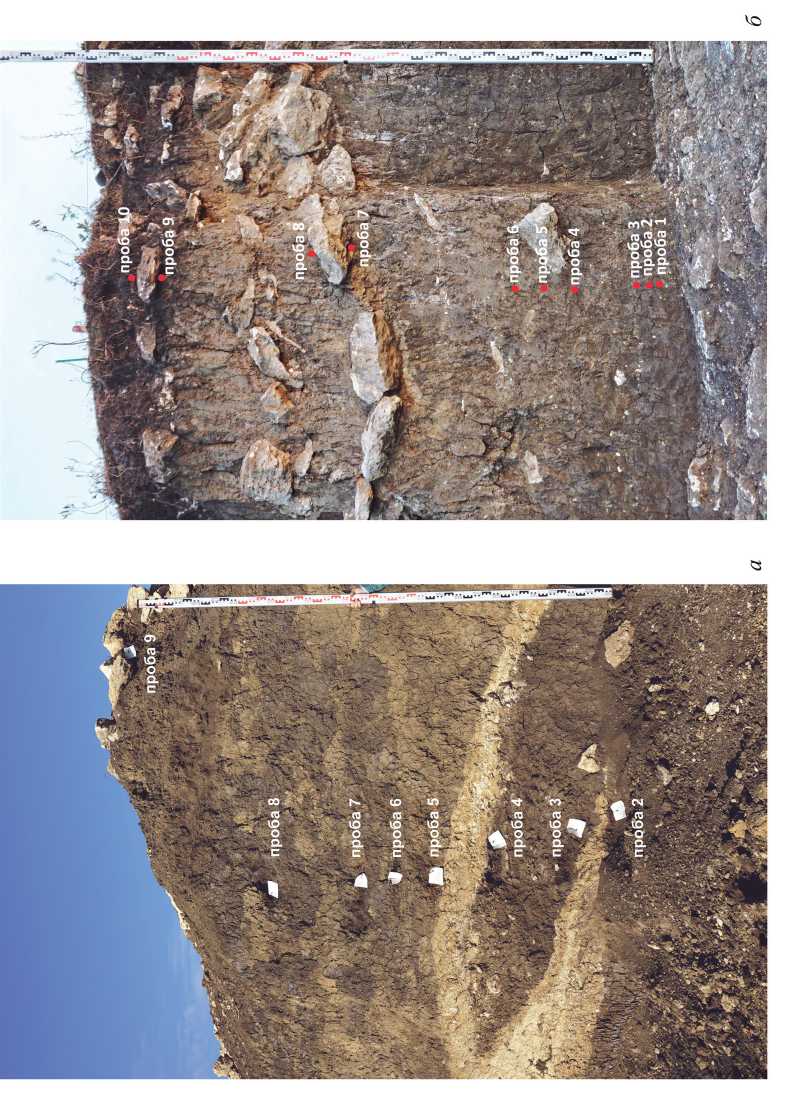
Рис. 1. Место отбора образцов в курганах Туак-Оба 1 ( а ) и Туак-Оба 2 ( б )
В. П. Гричука (Пыльцевой анализ…, 1950. C. 32–35). Образцы (50 г) обрабатывались 10 %-ной соляной кислотой (горячим способом) и 10 %-ным раствором щелочи, промывались дистиллированной водой через сито 250 мкм. Для удаления минеральной фракции использовалась тяжелая жидкость (раствор йодистого кадмия и йодистого калия). Полученный осадок промывался дистиллированной водой и исследовался под микроскопом. Концентрация пыльцы определялась с использованием таблеток, содержащих споры Lycopodium clavatum ( Stockmarr , 1973). При микроскопировании учитывались не только пыльцевые зерна и споры, но и непыльцевые палиноморфы (споры грибов и микроугли). Для расчета процентной доли пыльцы за 100 % принималась сумма пыльцевых зерен древесных и травянистых растений. В каждом образце подсчитано не менее 300 пыльцевых зерен. Диаграммы построены в программе Tilia 2.6.1 ( Grimm , 2019).
Антракологический анализ. В образце № 9 кургана Туак-Оба 2 проведен не только подсчет микрочастиц угля, что во многих случаях является частью спорово-пыльцевого анализа, но и выполнен анализ морфотипов, что позволяет определить основной тип источника угольных частиц. За основу выделения мофротипов взята стандартная классификация углей ( Mustaphi, Pisaric , 2014), основанная на выделении 27 основных типов, которые делятся на несколько классов: А – преимущественно остатки листьев (и некоторые анатомические фрагменты древесины); B – преимущественно древесина с элементами остатков трав; С – хвоя; D – остатки трав; E – аморфный материал и остатки семян; F – фрагменты корней; G – остекленевшие (витрифицированные) фрагменты. Для анализа также были использованы фотографии различных морфотипов, полученные из растений лесной зоны Евразии ( Feurdean et al. , 2023; Feurdean , 2021). В том же образце, который прошел пробоподготовку для спорово-пыльцевого анализа (№ 9), проанализировано 400 фрагментов микроугля.
Результаты
Палинологические спектры всех образцов характеризуются доминированием злаков (Poaceae) и низкой долей пыльцы древесных пород (2,8–8,7 %), наибольшее разнообразие которых наблюдается в поверхностной пробе (рис. 2: а ). На диаграммах, согласно кластерному анализу, выделены пыльцевые зоны.
Спорово-пыльцевые спектры зон А и B диаграммы Таук-Оба 1 близки по составу. Зона А охватывает 8 образцов, спектры которых отличаются большей долей злаков, меньшей долей астровых (Asteroideae и Cichorioideae) и маревых (Chenopodioideae) (рис. 1). Концентрация пыльцы в изученных образцах невысокая (рис. 1). Наименьшая концентрация отмечается в образце № 2 (всего 5245 шт./г). Во всех образцах присутствуют аскоспоры и большое количество микроугля (рис. 2: б ), который максимальных значений достигает в № 7 и 8 образцах (более 100 000 шт./г). В состав спектров образцов № 4, 8 и 9 входят споры копрофильных грибов: Coniochaeta , Podospora , Sporormiella и Sordaria t . В образце 9 концентрация этих спор достигает 6000 шт./г, основная доля приходится на Coniochaeta. Кроме того, во всех образцах, кроме № 3 и 4, отмечаются микроскопические цисты водоросли Pseudoschizaea , концентрация которых в образце № 5 достигает более 2000 шт./г.
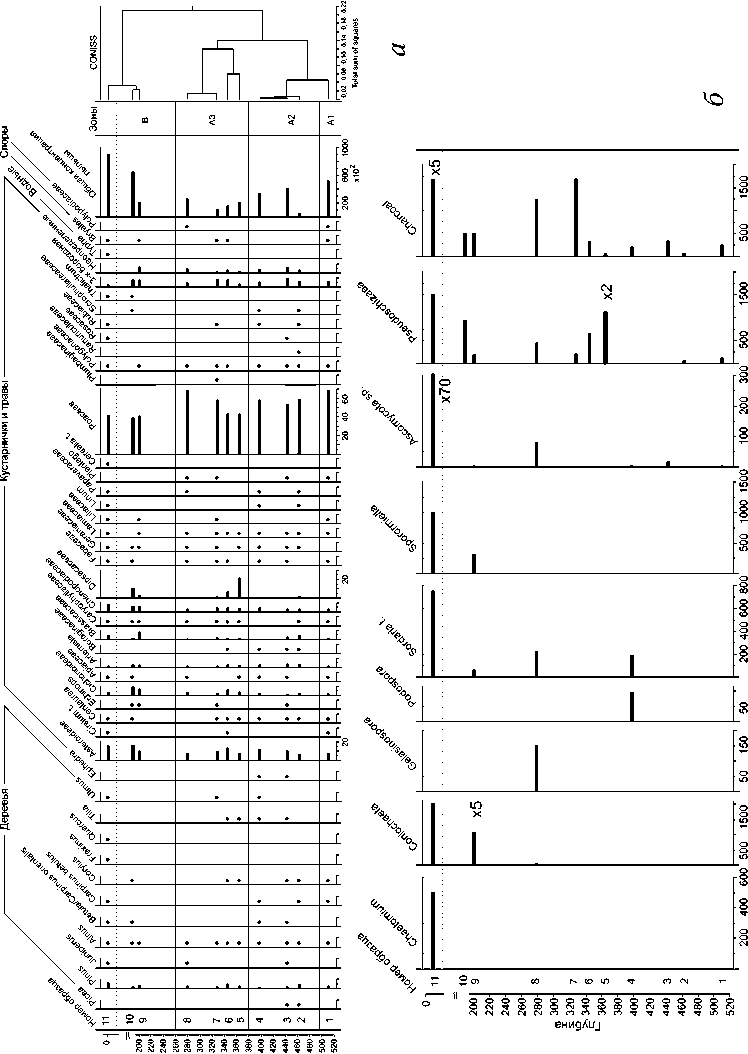
Рис. 2. Результаты спорово-пыльцевого анализа в кургане Туак-Оба 1 а – спорово-пыльцевая диаграмма; б – диаграмма непыльцевых палиноморф внидЛщ
На спорово-пыльцевой диаграмме кургана Туак-Оба 2 также выделены две зоны (рис. 3: а ). Зона А объединяет 2 нижних образца погребенной почвы и отличается от зоны B большей долей злаков и меньшей долей маревых (Chenopodioideae). Образец № 3 хотя и отобран из погребенной почвы, но относится к подзоне В1, как и остальные образцы курганной насыпи. Концентрация пыльцы более низкая, чем в кургане Туак-Оба 1. Аскоспоры и микроугли присутствуют во всех образцах (рис. 3: б ), но, как и в случае с пыльцой, в меньшей концентрации, чем в первом кургане. Максимальная концентрация микроуглей отмечается в образце № 9 (более 200 000 шт./г). Споры копрофильных грибов ( Coniochaeta (рис. 4: а ), Podospora , Sporormiella и Sordaria t .) отмечены в образцах 1, 2, 3, 8, 9 и 10, достигая в образце № 9 максимальных значений (1800 шт./г). В этом же образце присутствуют обожженные комки пыльцы (рис. 4: б ) и споры Gelasinospora (рис. 4: в ). Микроскопические цисты водоросли Pseudoschizaea наличествуют в образцах 3, 5, 8 и 9. Образец № 9 характеризуется максимальным разнообразием непыльцевых палиноморф (рис. 3: б ).
Поверхностная проба современной почвы отличается от образцов из курганов наибольшей концентрацией пыльцы (89 700 шт./г) и непыльцевых палиноморф, что объясняется лучшей сохранностью.
По результатам изучения микроуглей в образце № 9, отобранном под каменной выкладкой скифского времени в кургане Туак-Оба 2, установлено преобладание морфотипа B3 (55 %); 28 % относится к морфотипу B1 (рис. 4: д, е ), еще 9 % – D2; 4 % принадлежат типу А3 и по 2 % просмотренных фрагментов – или к типу B2 (рис. 5), или не были отнесены к какому-либо морфотипу.
Обсуждение
Палинологические спектры с небольшой долей пыльцы древесных пород характерны для степной и лесостепной зон ( Новенко и др. , 2017). Село Миро-новка Белогорского района расположено в лесостепи, граничащей со степной частью Крыма ( Cordova et al. , 2011), поэтому спектр образца поверхностной пробы не противоречит данным по современной растительности изучаемого района.
Почва – сложный природный объект, в котором пыльца и споры (в зависимости от конкретных почвенных и растительных условий) могут разрушаться под воздействием химических и биологических факторов, перемешиваться в результате жизнедеятельности почвенных организмов и перемещаться вниз по профилю (см., например: Dimbleby , 1957; Havinga , 1967; Hall , 1981; Holloway , 1989; Davidson et al. , 1999; Lebreton et al. , 2010). В подавляющем большинстве случаев почвы содержат разновозрастные образования; ценность любого анализа будет зависеть от временного разрешения, требуемого для анализа, и временного периода, представленного комплексом ( Davidson et al. , 1999). Исключение – погребенная почва (ПП), которая в результате перекрывания дневной поверхности мощным слоем грунта исключается из многих процессов. В таком случае верхний слой ПП (1–2 см) будет ценным источником информации, изучение которого может позволить реконструировать растительность, существовавшую непосредственно в период начала сооружения насыпи. ПП может сохраняться не только под насыпью, но и в самом теле кургана в случае формирования
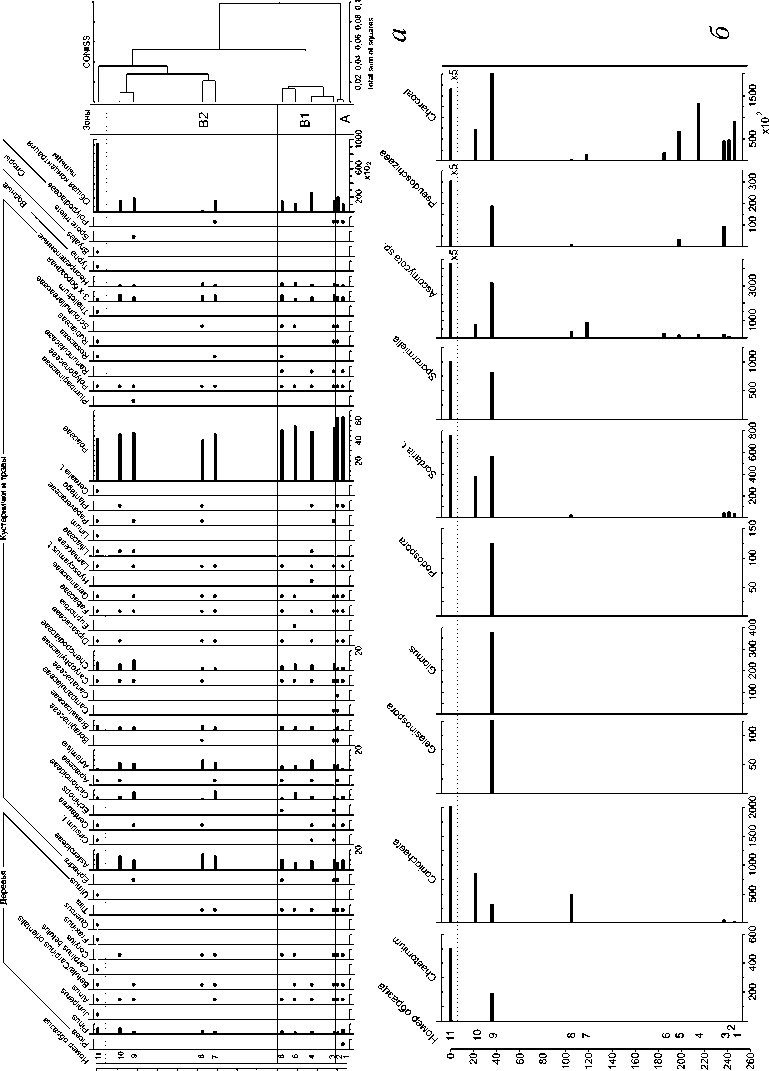
Рис. 3. Результаты спорово-пыльцевого анализа в кургане Туак-Оба 2 а – спорово-пыльцевая диаграмма; б – диаграмма непыльцевых палиноморф енидАщ внидЛщ
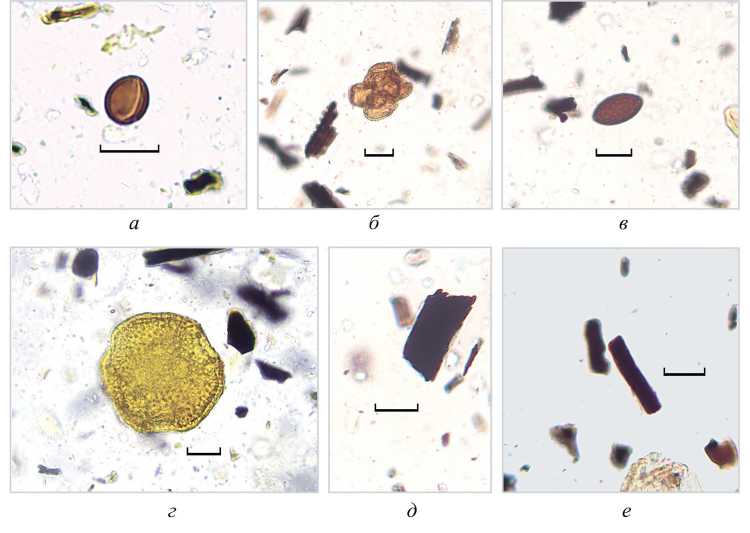
Рис. 4. Микрофотографии пыльцы и непыльцевых палиноморф а – Coniochaeta; б – комок пыльцы Brassicaceae; в – Gelasinospora; г – Dipsacaceae; д, е – микроугли, морфотип В1. Масштабный отрезок 15 мкм разновременных слоев насыпи. Хорошим индикатором присутствия ПП является высокая концентрация пыльцы (Dimbleby, 1985. С. 71–88). Однако следует учитывать случаи, когда верхние сантиметры ПП могут изыматься или нарушаться при подготовке места погребения или сооружении конструкций.
Реконструкция растительности и особенности строительства. В обоих курганах отобраны образцы из погребенной почвы, следовательно, можно попытаться восстановить палеообстановку в первой половине III тыс. и последней четверти IV в. до н. э. Придерживаясь хронологического порядка, следует рассмотреть в первую очередь спорово-пыльцевые спектры Туак-Оба 2. Верхний образец погребенной почвы (№ 3) отличается от двух нижних более низкой концентрацией и больше схож с вышележащим образцом из насыпи (рис. 3: а ). Это может указывать или на нарушение верхнего слоя ПП при сооружении погребального ящика, или о попадании грунта насыпи в этот образец при пробоотборе, что наиболее вероятно, так как ПП не имела четкой границы и спорово-пыльцевой спектр схож с вышележащим образцом № 4. Концентрация пыльцы в образцах зоны А (№ 1 и 2) соответствует нормальному распределению в почве, т. е. в верхнем слое концентрация выше, чем в нижележащем. Таким образом, для реконструкции растительности в первой половине III тыс. до н. э. можно использовать образец № 2. В районе строительства кургана Туак-Оба 2
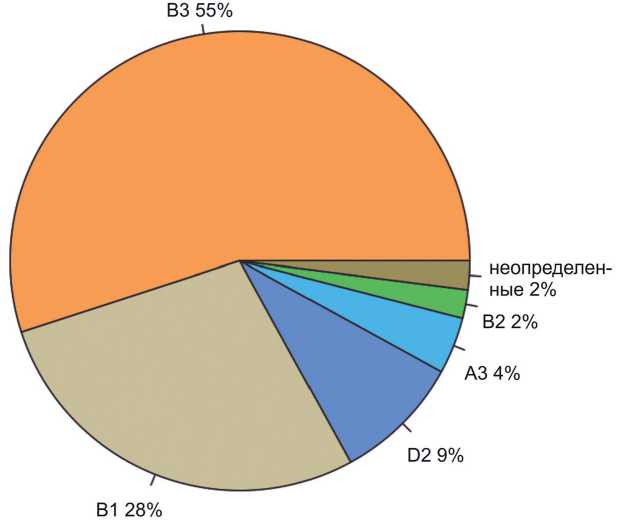
Рис. 5. Распределение морфологических типов микроугля в образце № 9 из кургана Туак-Оба 1
на момент его сооружения преобладала разнотравно-злаковая степь, однако с большей долей злаков (Poaceae) и меньшей долей маревых (Chenopodiaceae) в отличие от современной растительности. Последнее свидетельствует о существовании более влажных условий более 4500 лет назад. Данное предположение не противоречит результатам спорово-пыльцевого анализа донных отложений Азовского моря ( Матишов и др. , 2018) и почвы, изученной на Крымском полуострове ( Cordova, Lehman , 2005).
По археологическим данным, курганная насыпь возводилась как минимум в три приема (два раза в бронзовом веке и один раз в скифское время), следовательно, ПП, как отмечалось выше, может присутствовать и в самой насыпи кургана. Образец № 4 (рис. 3: а ) выделяется повышенной концентрацией пыльцы, что вероятно указывает на период, когда эта поверхность стояла открытой, так как должен был успеть сформироваться растительный покров. Стратиграфически граница насыпи не прослеживается. Возможно, это из-за того, что поверхность кургана стояла открытой относительно непродолжительное время (несколько лет). Если предположение верно, в таком случае подсчет концентрации пыльцы является дополнительным инструментом для выделения этапов строительства насыпи.
Проба № 7, отобранная под каменной выкладкой второго этапа строительства (во второй половине II тыс. до н. э.), значительно превышает по концентрации пыльцы следующий образец, отобранный над камнями и относящийся к следующему этапу строительства кургана. Спорово-пыльцевые спектры образцов № 4 и 7 схожи и занимают промежуточное положение по доле злаков и маревых между современным образцом и ПП (№ 2). Если сделанные предположения верны, то, вероятно, каменные выкладки делались не сразу после насыпки и/или досыпки кургана.
Третий этап строительства также маркирует каменная выкладка, под которой погребены лошади скифского времени. Спорово-пыльцевые спектры и концентрация образцов (№ 9 и 10), отобранных под и над камнями, сходны, свидетельствуя о том, что растительный покров не успел сформироваться, прежде чем были уложены камни. Высокая концентрация микроугля в образце № 9 (рис. 3: б ) неслучайна. Согласно классификации, установлено, что с большой долей вероятности морфологические типы A3, B1, B2, B3, в сумме дающие 89 % от всех определений, принадлежат к фрагментам тканей древесины. И лишь мор-фотип D2 (9 %) интерпретируется как фрагменты листьев трав. Следовательно, в спектре микроуглей изученного образца преобладают фрагменты древесины (рис. 5). Учитывая расположение памятника в степной/лесостепной зоне, что исключает попадание большого количества древесных остатков случайным образом, можно предположить разведение погребального костра на вершине кургана. Однако отсутствие зафиксированных археологически прокаленных поверхностей, следов и пятен гари в границах раскопа показывает, что, возможно, в ходе погребальной церемонии на стороне (например, по кругу насыпи) могли зажигать крупные костры. Последнее могло входить в программу обширной поминальной тризны – традиционной при погребении элиты скифских племенных объединений, подразумевавшей употребление значительного количества вина, мяса и принесение человеческих и животных жертв. Таким образом, можно говорить о намеренном перенесении золы на вершину кургана Туак-Оба 2 после захоронения лошадей.
Интересно отметить, что в этом же образце (№ 9) присутствуют копрофиль-ные аскоспоры (рис. 3: б ) и обожженные комки пыльцы энтомофильных растений (рис. 4: б ), что указывает на использование навоза в качестве топлива и/или в ритуальных целях. В пользу последнего можно привести пример факта наличия навоза в нескольких курильницах скифских погребений III–II вв. до н. э. (левобережье Нижнего Днестра) ( Бабенко и др. , 2025а).
Среди непыльцевых палиноморф в образце № 9 также обнаружены споры пирофильного гриба Gelasinospora (рис. 3: б ; 4: в ), который является индикатором локальных пожаров ( Blackford et al. , 2006; Li et al. , 2024), споры Glomus и цисты водоросли Pseudoschizaea. Наличие в образце этих таксонов может свидетельствовать об усилении эрозионных процессов ( Pantaléon-Cano et al. , 2003; Morellon et al. , 2016; Li et al. , 2024). Последнее указывает, возможно, на то, что камни поверх углей были выложены не сразу. Можно предположить, что в таком виде курган мог стоять до следующего вегетационного периода.
В кургане Туак-Оба 1 два образца, отобранные из ПП, значительно отличаются по концентрации пыльцы. Образец № 2, характеризующийся низкими значениями (рис. 2: а), указывает на нарушение верхнего слоя ПП при строительстве каменного склепа, тогда как спорово-пыльцевой спектр образца № 1, наиболее вероятно, отражает природные условия, существовавшие до сооружения кургана. Следовательно, как и в современное, в скифское время в районе курганов Туак-Оба доминировала разнотравно-злаковая степь. Однако бóльшая доля злаков и меньшая доля маревых в образце из ПП, по сравнению с поверхностной пробой, может свидетельствовать о более влажных условиях, существовавших до сооружения кургана (последняя четв. IV в. до н. э.), что не противоречит литературным данным (Матишов и др., 2018).
Отсутствие пиков концентрации пыльцы в изученных образцах кургана Ту-ак-Оба 1 (кроме ПП) свидетельствует о единомоментном строительстве курганной насыпи без больших перерывов. Это же относится и к сооружению каменной выкладки.
Сезон погребения. При изучении могильников установить сезон погребения удается крайне редко. В некоторых случаях можно использовать анализа ростовых слоев в зубном цементе животных (см., например: Прилепская, Энговатова, 2021). На сезон погребения могут иногда указывать растительные компоненты курильниц, сосудов или амулетных мешочков (Бабенко и др., 2021; 2025а; 2025б). Еще более редкие случаи – определение сезона по органогенной (навозной) прослойке, обнаруженной в кургане (Бабенко, 2022). Однако есть возможность установить месяцы, в которых, наиболее вероятно, было совершено погребение, по спорово-пыльцевым спектрам самой курганной насыпи. В кургане Туак-Оба 1 определить сезон сооружения кургана может позволить большая доля пыльцы растений-представителей ворсянковых (Dipsacaceae) (рис. 4: г) в образцах № 5, 6 и 10 (рис. 2: а). Высокая доля пыльцы насекомоопыляемых растений в спектрах может быть связана как с присутствием навоза в образцах, о чем свидетельствует наличие спор копрофильных грибов и комков пыльцы, так и являться следствием попадания в почву цветущих растений при сооружении насыпи кургана. В образце № 5 доля пыльцы ворсянковых составляет 22 %, а при этом отсутствуют споры копрофильных грибов (рис. 2: а, б). Следовательно, можно предположить, что большая доля пыльцы этого таксона, вероятнее всего, связана с попаданием цветущих растений во время сооружения насыпи. В Белогорском районе произрастает 8 видов растений семейства Dipsacaceae (Определитель высших…, 1972 С. 457–460). Пыльцевые зерна этих растений схожи , поэтому определение до вида не представляется возможным. Основная часть видов (89,5 %) цветет в июне – августе (Там же. С. 457–460), следовательно, курган был насыпан в летнее время.
Выпас и степные пожары. Присутствие в образцах спор копрофильных грибов, которые прорастают на помете травоядных ( Krug et al. , 2004), указывает на использование об использовании территории в районе курганов для выпаса скота. Высокая концентрация микроугля в почве является, вероятнее всего, свидетельством природных или антропогенных пожаров (Степные пожары…, 2015). Данное предположение основывается на анализе поверхностной пробы, в которой присутствуют копрофильные аскоспоры, а концентрация микроуглей достигает 825 600 шт./г. В этой пробе, как и в других образцах, встречается обожженная пыльца. Наличие в образцах цист водоросли Pseudoschizaea свидетельствует об усилении эрозионных процессов, возникающих в нашем случае, вероятно, из-за выпаса и/или пожаров.
Заключение
Проведенный спорово-пыльцевой анализ образцов из курганов Туак-Оба показал необходимость подсчета концентрации пыльцы для оценки сохранности ПП и ее выявлению в насыпи кургана. Особенно это важно при изучении памятников на территории, где не было резких изменений в фитоценозах и спорово-пыльцевые спектры отличаются незначительно. Все изученные спектры указывают на произрастание разнотравно-злаковых степных фитоценозов в окрестности курганов начиная с эпохи бронзы и заканчивая современными условиями. Незначительное отличие заключается лишь в соотношении доли пыльцы злаков и маревых, отражающее более влажные условия на момент сооружения курганов (по сравнению с современными). Концентрация пыльцы в образцах из Туак-Оба 2, сооруженного в эпоху бронзы, значительно ниже, чем в Туак-Оба 1, даже в ПП. Это указывает на разрушение пыльцевых зерен со временем.
Каменными выкладки укладывались, вероятнее всего, не сразу после сооружения и/или достраивания курганной насыпи. Исключение составляет каменная выкладка над курганом Туак-Оба 1, что, возможно, объясняется принадлежностью погребенного к скифской элите.
Отбор образцов из насыпи кургана целесообразен даже при ее единомоментном сооружении. Случайное попадание цветущих энтомофильных растений иногда может стать источником информации о сезоне сооружения насыпи. Большая доля пыльцы ворсянковых, выявленная при изучении образцов из кургана Туак-Оба 1, указывает на возведение курганной насыпи в летние месяцы.
При учете непыльцевых палиноморф в спорово-пыльцевых спектрах можно не только получить данные об использовании территории для выпаса скота, но и определить ритуальные практики (например, разведение погребального костра, следы которого не были зафиксированы во время раскопок). Анализ мор-фотипов микрочастиц угля указывает на использование древесного топлива. В представленной работе удалось установить, что высокая концентрация микрочастиц угля под каменной выкладкой скифского времени в кургане Туак-Оба 2 неслучайна, так как преобладание остатков древесного топлива на кургане не могло появиться вследствие степных пожаров, которые нередки и в наше время.
