
Burial of a Warrior in the Pazyryk Mound at Khankharinsky Dol, Altai
Journal: Archaeology, Ethnology & Anthropology of Eurasia @journal-aeae-en
Section: The metal ages and medieval period
Article in issue: 1 т.53, 2025.
Free access
This article presents the findings of excavations of mound 46 at the Khankharinsky Dol cemetery on the left bank of the Inya River, 1–1.5 km southeast of the Chineta village in the Krasnoshchekovsky District of the Altai Territory (northwestern Altai). Inside the mound, there was a burial of a male, placed in a crouched position on his right side, with his head oriented toward the east. Along the northern wall of the grave, the burial of a horse was found, oriented in the same direction. The most interesting funerary items were an iron dagger, an iron pickaxe, and decorated belt plaques made of horn. Parts of a horse harness included iron ring bits, a horn girth buckle, and a block. Analysis of the funerary rite and artifacts allows us to attribute the mound to the Pazyryk culture, and tentatively date it to the late 5th to 4th centuries BC. The fact that the dagger and the pickaxe were real weapons rather than replicas, and that the horse was buried, suggests that the man was a professional warrior, possibly a high-ranking one. Another sign of this are the decorated horn belt plaques, known to be endowed with important socio-cultural meaning among the Central Asian nomads.
Similar articles in the section Prehistory. Prehistoric remains, artefacts, antiquities
Short address: https://sciup.org/145147249
IDS: 145147249 | DOI: 10.17746/1563-0110.2025.53.1.090-098
Text of the scientific article Burial of a Warrior in the Pazyryk Mound at Khankharinsky Dol, Altai
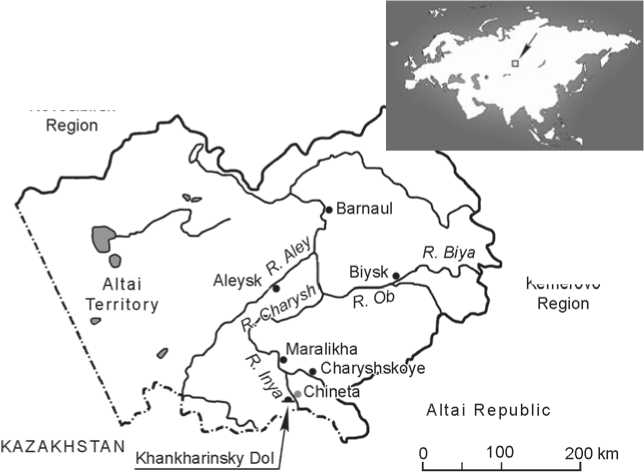
The Khankharinsky Dol mound cemetery has been studied for over twenty years by the Krasnoshchekovo Archaeological Expedition from the Altai State University. This site is a part of the Chineta archaeological microdistrict located near the village of Chineta in the Krasnoshchekovsky District of the Altai Territory (northwestern Altai). The cemetery is in the eastern part of the second floodplain terrace on the left bank of the Inya River (left tributary of the Charysh River), 1–1.5 km southeast of the village of Chineta (Fig. 1). Over forty burial mounds of the Scythian-Saka period have been excavated at the site. This article describes some preliminary results of studying mound 46 at the Khankharinsky Dol cemetery, which belonged to the Pazyryk culture of the Altai.
Description of the funerary rite
Mound 46 was discovered in the central part of the cemetery, in the second chain of burial mounds located to the west of the first chain. The diameter of the stone mound, composed mainly of one or two layers of small and medium-sized stones, was 8.75 m along the N-S and 8.5 m along the W-E line. The height of the stone structure was 0.35 m. Together with the soil layer the height reached 0.5 m (Fig. 2). There were almost no stones in the central part of the mound owing to soil subsidence into the grave. Along the circumference of the burial mound, a stone circle-crepidoma was identified, which had significant gaps in some areas. A sub-rectangular grave measuring (at the level of the ancient horizon) 2.30 × 1.90 × × 2.28 m (depth is given from the zero benchmark) was under the mound. It contained the remains of a male
Novosibirsk
Fig. 1 . Location of the Khankharinsky Dol cemetery.
Kemerovo
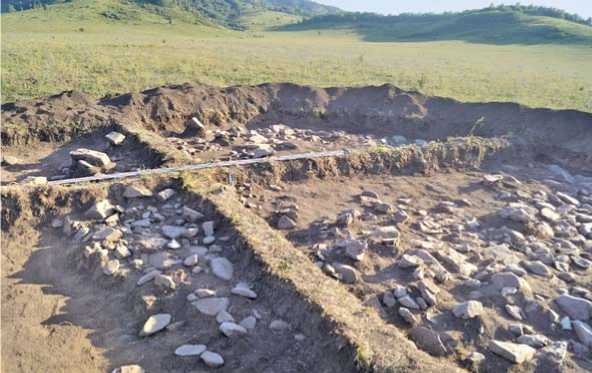
Fig. 2 . Burial mound 46 after removal of the mound.
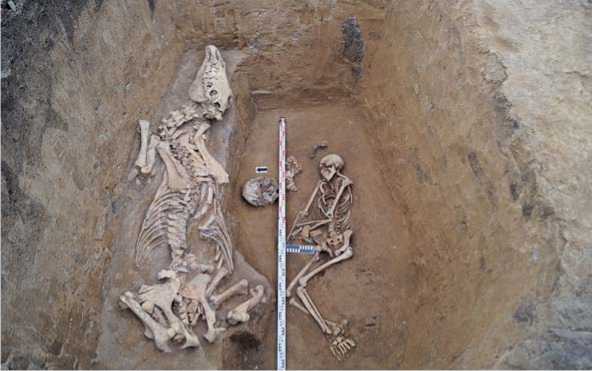
Fig. 3 . The grave in mound 46.
An accompanying burial of a horse was along the northern wall of the grave on a clay shelf. The animal was placed on its stomach with its legs bent, and was oriented with its head toward the east. A horn girth buckle and block were found in the area of the horse’s ribs.
Chronology and attribution of the burial goods
The burial goods comprise different types of items. Two rectangular horn belt plaques (Fig. 4) are of particular interest. The front sides of both plaques are decorated with fish scale ornamentation. The first plaque is 8.2 cm long, 4.4 cm wide at one end, and 5.3 cm wide at the other end, and near the wide end has a 1 × 1 cm subsquare hole with one rounded side. In addition, four of five holes at the edges and one hole in the center of the plaque for attaching the item have survived. The second plaque is 8.5 cm long, 4.6 cm wide at one end, about 6 cm wide at the other end, and also has three holes near the narrow end and two holes near the wide end for attachment.
Plate buckles made of horn (bone) are quite rare in the burial mounds of the
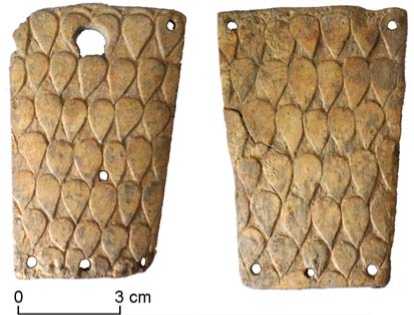
Fig. 4 . Horn belt plaques.
Scythian period in the Altai Mountains. For example, they were found in mound 1 at the Ala-Gail-3 cemetery (Kubarev, Shulga, 2007: 110, fig. 25, 6 , 7 ) and mound 17 at the Yustyd XII cemetery (Kubarev, 1991: 86, fig. 21, 1 , 2 ). In addition, items of this type were discovered in mound 30 at the Chineta II cemetery located in the same valley as Khankharinsky Dol (Dashkovskiy, Shershneva, 2020: 51, fig. 8, 9). According to experts in this area, at the final stage of the Pazyryk culture in the Altai, metal belt fittings were replaced mostly by wooden and leather items, and in rare cases, by horn items (Kubarev, Shulga, 2007: 102). Scholars have also mentioned that horn
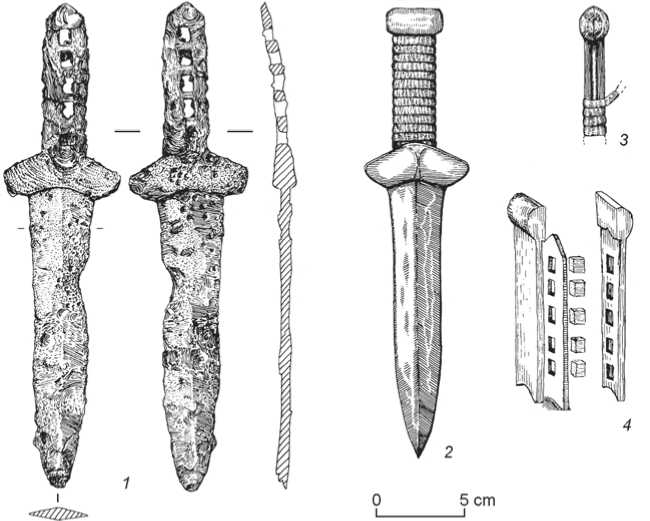
Fig. 5 . Iron dagger ( 1 ), reconstruction of the dagger ( 2 ), and fastening of its handle in the sheath ( 3 , 4 ).
plate buckles were more typical of the belt sets of ancient nomads of Tuva and Mongolia. Such plaques were covered with high-quality artistic carving (Semenov, 2003: Pl. 110; Kubarev, 1991: 86; Grach, 1980: 35, fig. 35, 10 , 11 ; Volkov, 1978: 105, fig. 3, 8 ; Tseveendorj, 1978: 111, fig. 3, 24 ; Mandelshtam, 1983: 27, fig. 2, 9 ).
Importantly, mound 17 at Yustyd XII, mound 1 at Ala-Gail-3, and mound 30 at Chineta II were dated to the 4th–3rd centuries BC. Noteworthy is also the fact that in mound 30 at Chineta II, a male 40–50 years of age was buried in an extended supine position with his head oriented toward the west and without any burial goods, except for plate buckles (Dashkovskiy, Shershneva, 2020). Although such items have been discovered at Scythian sites in the Altai Mountains, they were not typical of the Pazyryk culture, but rather reflect the interaction of nomads of various ethnic groups in the region.
Some scholars suggested an alternative interpretation of the function of horn (bone) plaques, considering them to be part of plate armor (Novgorodova, 1975: 225; Saveliev, Hudiakov, 1984: 71; Troitskaya, 1983: 34). According to E.A. Novgorodova, the small number of such finds may be explained by the rarity of such armor in Central Asia in the mid-1st millennium BC (1975: 225). However, further research and discovery of paired horn plaques in the belt area of those buried in Khankharinsky Dol and Chineta II indicate that these were items associated with belts.
Items of weaponry include an iron dagger and a pickaxe. The dagger has a diamondshaped blade in cross-section, heart-shaped crossguard, and handle pointed at the top (Fig. 5). The total length of the item is 27.5 cm; the blade is almost 17 cm long and 3.6 cm wide; the handle is 8.5 cm long. There are five subsquare holes on the handle for attaching wooden overlays with pins. Two overlays could possibly have had a bar-shaped pommel at the top, as shown in the reconstruction (Fig. 5, 3 , 4 ). The dagger probably was stored originally in a wooden sheath, since remains of wood decay were found on and under it.
Iron combat daggers are relatively rare at Pazyryk sites. They are usually 27–40 cm long (Kubarev, 1987: 54–59; Kubarev, Shulga, 2007: 74–78; Surazakov, 1989: 40). At a certain stage of studying the nomadic weaponry, it was suggested that all iron daggers from the Pazyryk burials were combat daggers (Kubarev, 1987: 56). However, accumulation of new evidence has made it possible to correct this point of view. Replicas of daggers and pickaxes made of iron have occurred in burials even at the late stage of development of this culture (Kubarev, 1992: 57; Surazakov, 1989: 49). Out of over sixty Scythian mounds that the current author studied at Khankharinsky Dol and Chineta II, only two (in addition to the one under discussion) contained combat daggers: mound 25 at Khankharinsky Dol yielded a bimetallic dagger, and mound 29 at Chineta II had an iron dagger (Dashkovskiy, 2021: 126–127). Iron combat daggers have been well studied using the evidence of the Kamenka and Bystryanka cultures of the Altai (Likhacheva, 2020: 118–133; Mogilnikov, 1997: 36–47; Shulga, Umansky, Mogilnikov, 2009: 148, fig. 108; Shulga, 2003: 54; and others).
To the best of our knowledge, in the Scythian cultures of the Altai, there are no complete parallels to the dagger from mound 46 at Khankharinsky Dol. However, daggers similar to the one under consideration in some morphological features are known from the materials of the Pazyryk, Kamenka, Staroaleyka, and Bystryanka cultures. For example, a slotted handle appeared both on real combat bimetallic and iron daggers, and on bronze replicas (Surazakov, 1989: 39–51; Kubarev, 1987: 54–65; 1991: 73–77; Likhacheva, 2020: 232–237; and others). Noteworthy are also five sub-quadrangular holes on the handle. Similar morphological features appeared on the dagger from mound 8 at Maltalu IV (Kubarev, 1992: 56, fig. 18, 3 ). According to V.D. Kubarev, this was a replica similar in size to a real dagger. Notably, the length of this item was 27 cm, that is, it was slightly smaller than the dagger under consideration. The dagger from mound 46 at Khankharinsky Dol can be tentatively dated to the 4th century BC.
The second weapon is a battle iron pickaxe with remains of a wooden shaft (Fig. 6). Its length is 18.3 cm; the internal diameter of the socket is 3.1 cm. The pickaxe has a striking part rounded in cross-section with a flattened, expanding butt in the form of an axe. The diameter of the striking part is 1.3 cm; the width of the rounded end of the butt is 3.6 cm. According to some scholars, the carriers of the Pazyryk culture made real battle pickaxes mostly
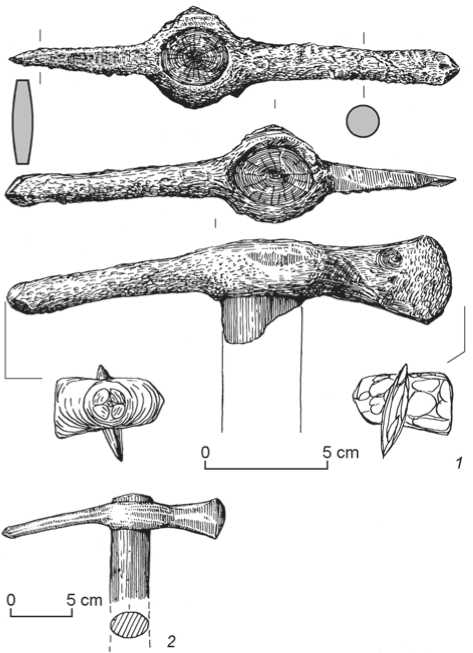
Fig. 6 . Iron pickaxe ( 1 ) and its reconstruction ( 2 ).
of iron (Kubarev, 1991: 79). In order to identify the item as a replica or as a real battle pickaxe, not only is its size important (Surazakov, 1989: 51; Kubarev, 1992: 65), but also its weight (Kiryushin, Stepanova, 2004: 58). The discovery of heavy bronze pickaxes has made it possible to identify some of these as real weapons. In total, there have been slightly over ten iron and bronze battle pickaxes found in the burial mounds of the Pazyryk culture (Ibid.: 60). The iron pickaxe from mound 22 at the Barburgazy I cemetery is relatively similar to that of mound 46 at Khankharinsky Dol. It also has a hatchet-shaped butt, but it is slightly longer and more inclined (Kubarev, 1992: 64–65, fig. 21, 1 ). The item from mound 9 at the Kosh-Tal cemetery (Surazakov, 1993: 42, fig. 31, 1 ) is also similar to the one under consideration. Poorly preserved iron hatchet-shaped war hammers were also found in mounds 8 and 23 at Maltalu IV (Kubarev, 1992: 65, pl. XLVIII, 4 , LXVII, 5 ). Such finds also occurred at the sites of the Scythian period in Tuva (Grach, 1980: 198, fig. 60, 1 ; Kyzlasov, 1979: 73, fig. 59, 3 ; Semenov, 2003: Pl. 32, 25 , 26 ; and others). For example, a pickaxe similar to the one under consideration was discovered in mound 28 at Suglug-
Khem I (Semenov, 2003: Fig. 32, 25 ). V.A. Semenov dates such artifacts from Suglug-Khem I and II to the 2nd century BC. He holds to the viewpoint that the sites of the Pazyryk culture, including those excavated in the Pazyryk locality and on the Ukok plateau, need to be dated to a much “younger” period, that is to the 2nd century BC (Ibid.: 76–81, pl. 107). Semenov cites a series of radiocarbon dates for the cemeteries of Suglug-Khem I and II, which correlated with the archaeological evidence fairly well, and indicates the period of the 5th–3rd centuries BC. However, he believes that these dates, like those previously obtained for the cemeteries of the Pazyryk culture of the Altai, cannot be used to establish the chronology of the sites (Ibid.: 79–80).
War hammers with a hatchet-shaped butt, but with a faceted striker, are known from the Saka burials in the Pamir, in particular mound 1 at Alichur II. B.A. Litvinsky designated hatchet-shaped war hammers as “pickaxe-hatchets”, and emphasized their wide occurrence in the Scythian period in the Black Sea region, the North Caucasus, the Kama region, Central Asia, Northern China, and Southern Siberia (1972: 120–125, pl. 43, 5 ). Bronze and iron pickaxes, similar in type to the item from Alichur II, were found at the Karas cemetery near Pyatigorsk and in a Sind grave on the Taman Peninsula near the Tsukur estuary (Krupnov, 1960: 205; Melyukova, 1964: 68). Wedge-shaped war hammers, including those with hatchet-shaped butts, are quite widespread in the materials of the Ananyino culture, but these are made mainly of bronze (Zbrueva, 1952: 104–106). The item from burial 18 at the Ananyino cemetery (Ibid.: Pl. XXII, 11 ) is of particular interest. Litvinsky considered it to be one of the closest parallels to the war hammer from Alichur II, although he mistakenly believed that it was made of iron, whereas in fact the item was made of bronze.
An war hammer with a wedge-like striking part and a hatchet-shaped butt from mound 1 at Alichur II was dated to the late 5th–4th century BC (Litvinsky, 1972: 123). Iron pickaxes with hatchet-shaped butts from the burial complexes of the nomads in the Altai Mountains were usually dated to not earlier than the 4th century BC (Kubarev, 1992: 66) or, taking into account bronze replicas of items of this type, to the 5th–3rd centuries BC (Surazakov, 1989: 53–54). The item from mound 46 at Khankharinsky Dol may also be classified as a war hammer and dated to the late 5th–4th century BC.
The horse equipment consisted of an iron bit, horn girth buckle and block (Fig. 7). The bit consisted of a set of two-piece links each ending in a single ring (Fig. 7, 1 ). The length of one link was 11.1 cm; the length of the other link was 10.2 cm; the diameter of the ring ends was 2.9 and 3.4 cm, respectively. Such bits have been found in large quantities at the Pazyryk sites in different areas of the Altai, including its northwestern part (Dashkovskiy, 2023: 28–32; Kubarev, 1991: 42–44; Kubarev, Shulga, 2007: 270, fig. 4, 11–18 ; Shulga, 2015: 93–97; Kiryushin, Stepanova, 2004: 45–46; and others). They appeared here in the 6th century BC, and were used throughout the entire period of the Pazyryk culture (Surazakov, 1989: 25; Kubarev, 1992: 32; Shulga, 2015: 96).
The sub-rectangular, plate-shaped girth buckle, without a hole for the free end of the girth strap, with a hook-shaped pin perpendicular to the frame, was made of horn (Fig. 7, 3 ). The length of the item was 7 cm; the width at the top with the pin was 3.7 cm; the width at the bottom was 3 cm. A suboval hole 1.7 cm long and 0.7 cm wide was in the lower part. According to the classification proposed by P.I. Shulga, the buckle belonged to type 1, variant 1. Shulga mentioned that 28 well-preserved buckles out of 105 items of
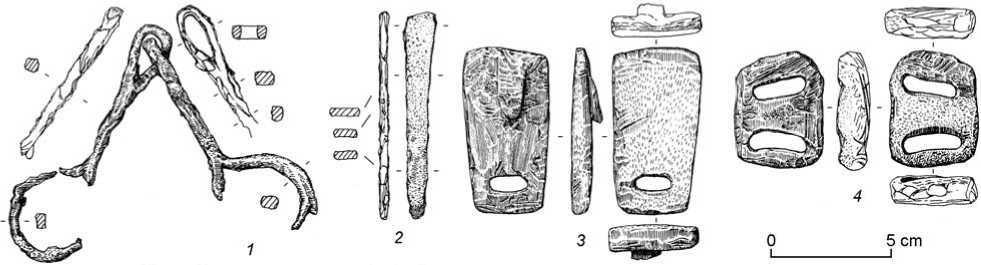
Fig. 7 . Iron bit ( 1 ) and knife ( 2 ), horn girth buckle (3) and block ( 4 )
this type have survived from burial mounds of the Pazyryk culture (2015: 124–125). After excavations of burial mounds of the Scythian period in the Chineta archaeological microdistrict, there have already been found over 30 such artifacts. Buckles from mound 32 at the Kastakhta cemetery (Stepanova, 1987), elite mounds of Tuekta I, Bashadar II, and Katanda (Rudenko, 1960: 354–355, pl. XXII, 6 , XLI, 6 , LXV, 6 ; etc.), and other locations are relatively similar to the items from Khankharinsky Dol.
The sub-rectangular girth block with rounded corners made of horn has two sub-parallel oval holes (Fig. 7, 4). The length of the item is 4.9 cm; the width is 3.7 cm. Such blocks, combined with horn girth buckles with a hook-shaped pin, were relatively common at the early stage of the Pazyryk culture (Shulga, 2015: 116–128) and probably continued to be used in the later period of its development (Ibid.: 311, fig. 80, 81). The block from mound 32 at Kastakhta, where a similar girth buckle was also found (Stepanova, 1987), is the most similar to the block under consideration. Such items have appeared among the material evidence from the Ulandryk I (mound 15) (Kubarev, 1987: 235, pl. XXXIV, 4 ), Uzuntal I (mound 2) (Savinov, 1993: 6, fig. 6, 7), and Borotal I (mound 99) cemeteries (Kubarev, Shulga, 2007: 234, fig. 39). In most cases, horn girth buckles and blocks of this type have been found in burial mounds dated to the 5th (second half of the 5th) to 4th centuries BC.
The iron knife can be classified as a straight laminar knife without a distinct handle or pommel. Its length was 8.6 cm, and its maximum width was 1.4 cm. Such knives were widespread throughout the entire period of the Pazyryk culture (Surazakov, 1989: 16–23; Kiryushin, Stepanova, 2004: 72–76; Kubarev, 1987: 52–54; 1991: 69–70; 1992: 53–54; and others).
Social attribution
Previous study of the weaponry set from the burial mounds of the Pazyryk culture has showed that their nomadic society was highly militarized (Kocheev, 1990, 1998; Dashkovskiy, 2005; and others). This is confirmed by a high percentage (up to 70 %) of weapons of various types in the male burials, with this figure reaching 73 % for the most socially active age group (20–35 years of age). Various injuries caused by weapons were observed on the bones of some of the buried males. A large share of cenotaphs (7–8 %) also suggests high military activity. Considering the presence of weaponry, 5–6 % of them can be associated with structures built in honor of fallen warriors whose bodies were not able to be buried. In addition, a significant amount of cenotaphs date back to the periods of important historical events (the campaigns of Alexander the Great, etc.), which had serious military and political ramifications. The analysis of the funerary rite and burial goods, as well as socio-typological modeling, have made it possible to identify a specific group of professional warriors—members of the retinue—in the military hierarchy of the Pazyryk society (Dashkovskiy, 2003: 57–59; 2005). Most likely, they were mounted warriors, which is evidenced by accompanying burials of horses in addition to weaponry.
Military retinues existed in different historical periods among many peoples of Southern Siberia and Central Asia, including the Sagly people, Sakas, Tagarians, Xiongnu, Turkic people, Uighurs, Kyrgyz, Mongols, etc. (Grach, 1980: 46–48; Kulemzin, 1980: 166; Hudiakov, 1986: 166; Vladimirtsov, 1934: 87–96; Kradin, 1996: 81–82; and others). They were usually based on personal ties between warriors and leaders, rather than on traditional clan-tribal relations. The military retinue could include representatives of both the elite and lower social groups who had proven themselves in the art of war (Dashkovskiy, 2003: 59).
Considering that combat daggers, pickaxes (war hammers), and shields are extremely rare in the Pazyryk burials, the discovery of two real, not imitated, weapons—an iron dagger and pickaxe—in mound 46 at the Khankharinsky Dol cemetery clearly indicates the special social status of the buried male. Most likely, he was a professional warrior and member of the retinue during his lifetime. Ancient nomads had a tradition of supplying particularly distinguished deceased warriors with combat weaponry (Kubarev, 1981: 32–33). Moreover, the two decorated belt plaques made of horn, which are a fairly rare find for the Pazyryk burials, also emphasize the status of the deceased. It is no coincidence that belts had a special semantic load, reflecting the social status and ideological views of the nomads of Central Asia (Dobzhanskiy, 1990: 60–72). The following observation may indirectly confirm its significance in the Scythian period. A certain pattern was noticed when studying burial grounds of that time in the northwestern Altai. Burials of males over 45 years of age, made according to the canons of the funerary rite, usually contained no socially marking items. The reason may be that people of that age were already excluded from the active social life of the
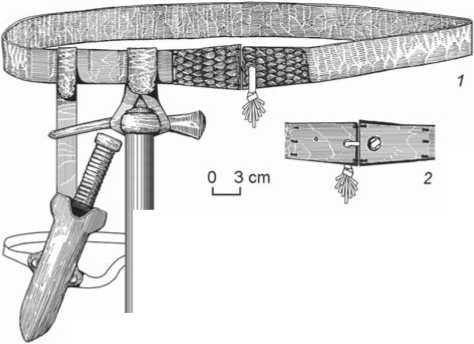
Fig. 8 . Reconstruction of the belt with location of the horn plaques, dagger, pickaxe ( 1 ), and fastening features of the belt on the inside ( 2 ).
group. Nevertheless, a nomad would probably retain the right to be buried with his belt, which reflected his place in the social organization of nomads. Be that as it may, in mound 31 at Chineta II, only two horn belt plaques were present as the accompanying goods in the burial of an elderly male (40–50 years of age). The study of mound 46 at Khankharinsky Dol has made it possible to reconstruct the belt of a nomad and identify the location of the horn plaques, iron dagger, and pickaxe on it (Fig. 8). Such a belt undoubtedly demonstrated the special status of the buried male warrior.
Finally, it is worth noting once again that the accompanying burial of a horse also reflected the position of the deceased in the social system of the nomads. Although archaeologists consider horse burials an important marker of the funerary rite in the Pazyryk culture, this component was observed in only about 37 % of the burials, which is precisely associated with the social and property status of the deceased and his family (Tishkin, Dashkovskiy, 2003: 144–150). In the burial mounds of the Pazyryk culture, which were studied at the Khankharinsky Dol cemetery, accompanying horse burials appeared much more often than in other areas of where this rite was used. Moreover, the share of such burials there was significantly higher than at other Pazyryk sites in the northwestern Altai. Along with the presence of prestigious and socially important things, including imported items, this circumstance has allowed the current authors to propose the identification of the so-called regional elite of the nomads in one of the areas of the Pazyryk culture, which includes the northwestern group of sites in the Charysh River basin, with the elite burial complex in the valley of the Sentelek River (the cemetery of the Urochishche Balchikovo-3) and necropolises of Khankharinsky Dol and Chineta II (Dashkovskiy, Meikshan, 2015; Dashkovskiy, 2022).
Conclusions
Research has revealed that mound 46 at Khankharinsky Dol belonged to the Pazyryk culture of the Altai, and could be preliminarily dated to the late 5th–4th century BC. The presence of real combat weaponry (an iron dagger and battle pickaxe), which is extremely rare for the sites of this culture, suggests that the buried male was most likely a professional warrior and had special military merits. In addition, decorated horn belt plaques confirm the non-ordinary social status of the deceased. The accompanying burial of a horse with elements of riding equipment (the girth buckle and block made of horn, and the iron bit) testifies not only to the cultural affiliation of the burial mound, but also to the social and property status of the buried nomad.
