Business intelligence in the function of business improvement
Journal: Ekonomski signali @esignali
Article in issue: 2 vol.20, 2025.
Free access
The purpose of this paper is also to present a general theoretical overview of knowledge, technologies and tools in the field of business intelligence, based on the evolution of relevant literature, with the aim of systematically describing each of the technologies with the possibilities of application in companies in Serbia. In this context, the introductory part of the research explains the concepts, terms, functions and methods of business intelligence and business intelligence systems. The orientation of the research is towards technology and sophisticated business intelligence tools, and research into which key factors and elements are important for the successful implementation of business intelligence tools, methods and techniques in organizations in Serbia, as well as the related examination of the current state of the tools market in the world and Serbia. Research indicates that if there is one key to the survival of business systems and companies in an increasingly competitive world, it is the ability to respond quickly to changing business conditions, which require lightning-fast detection, analysis and reaction. In this sense, the above-mentioned needs require: comprehensive, accurate, and timely information. For the aforementioned reasons, business intelligence in the world, including in our environment, is developing more and more rapidly every day. Based on the latest research in the world and references from the most competent authors in the field of business intelligence, the theoretical foundations of the business intelligence process and intelligent decision-support systems have been defined, through a systematic analysis of business improvement. Research indicates that the best business intelligence model in times of economic crisis and recession is one that will help organizations achieve a competitive advantage, while being inexpensive. For this purpose, there has been increasing talk recently about OSBI (Open Source Business Intelligence).
Similar articles in the section Management
Short address: https://sciup.org/170211628
IDS: 170211628 | UDC: 005.94:004.9; 005.332.8 | DOI: 10.5937/ekonsig2502165D
Poslovna inteligencija u funkciji unapređenja poslovanja
Svrha ovog rada je i da se predstavi opšti teorijski pregled znanja, tehnologija i alata u oblasti poslovne integracije, zasnovan na evoluciji relevantne literature, sa ciljem sistematskog opisivanja svake od tehnologija sa mogućnostima primene u preduzećima u Srbiji. U tom kontekstu, uvodni deo istraživanja objašnjava koncepte, termine, funkcije i metode poslovnih informaцija i poslovnih informaцija sistema. Istraživanje je usmereno ka tehnologiji i sofisticiranim alatima poslovne inteligencije, kao i istraživanju u kojima su ključni faktori i elementi važni za uspešnu primenu alata, metoda i tehnika poslovne inteligencije u organizacijama u Srbiji, kao i u vezi sa ispitivanjem trenutnog stanja tržišta alata u svetu i Srbiji. Istraživanja pokazuju da ako postoji jedan ključ za opstanak poslovnih sistema i kompanija u sve više konkurentnom svetu, to je sposobnost da se brzo reaguje na promenljive uslove poslovanja, koji zahtevaju munjevito brzo otkrivanje, analizu i razmatranje. U tom smislu, gore navedene potrebe zahtevaju: sveobuhvatne, precizne i pravovremene informacije. Iz gore navedenih razloga, poslovna integracija u svetu, uključujući i naše okruženje, razvija se sve brže i brže svakim danom. Na osnovu najnovijih istraživanja u svetu i referenci najkompetentnijih autora iz oblasti poslovne inteligencije, definisani su teorijski temelji procesa poslovne inteligencije i inteligentni sistemi za podršku odlučivanju, kroz sistematsku analizu unapređenja poslovanja. Istraživanja pokazuju da je najbolji poslovni model inte-lligence u vreme ekonomske krize i recesije je onaj koji će pomoći organizacijama da postignu konkurentsku prednost, dok je jeftin. U tu svrhu, u poslednje vreme se sve više govori o OSBI (Open So-urce Business Intelligence).
Text of the scientific article Business intelligence in the function of business improvement
When we talk about business intelligence, we mainly mean: knowledge, techniques, programs, and established processes that help to gain an easier understanding of a company's operations. From the aspect of business decision-making, business intelligence is the process of collecting significant internal and external data and transforming it into information and useful new knowledge needed by organizations when making business decisions. However, despite the above advantages, according to research, methods, techniques, and tools of intelligence are used in only 48% of companies in Serbia, while most companies have not yet integrated this technology into business processes. The concept of business intelligence implies the creation of higher-quality information, the ability to access only certain, necessary information [Denic et all 2023]. This is followed by the opinion that with business intelligence, companies or organizations can collect, analyze and display large amounts of data in a transparent manner, enabling faster and more informed decision-making (Chaudhuri et al., 2011). Based on research in practice from the aspect of business excellence (McGonagle & Vella, 2002;
Tools, methods and techniques of business intelligence
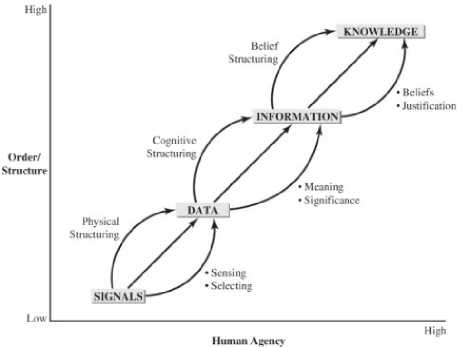
Business intelligence methods, techniques and tools help in obtaining information about available data and their use in the development of innovative business strategies of enterprises [Denic et all 2024]. Research shows that if business intelligence is applied qualitatively, the amount of unnecessary information will be reduced and the quality of information will be increased [Caldeira M.M., Ward J. M. 2002]. Based on the literature, it can be concluded that business intelligence includes processes, technologies and tools that help in the transformation of data into information, information into knowledge and knowledge into plans for managing the enterprise. In this sense, research shows that today more than 42% of enterprises and organizations in Serbia are considering the possibility of launching king are: quality (65%), completeness (18%), timeliness (13%), and price (5%) [Kielstra, P. 2007]. In this regard, the following figure (Figure 1) presents Cho's characteristic graphic representation of the dependence of the structure of information data and knowledge, or human perception [Choo, C.W. 2006].
projects to import business intellige- nce in the future, but without clearly defined strategies or plans. In this regard, enterprises and business systems in Serbia have a wide range of
Figure 1. Cho's graphical representation of data, knowledge information [Choo C.W. 2006].
includes, among other things, business information and analysis used in the context of key business processes, management and decision-making, and support activities that lead to improved business performance. According to the results of the research by the author Kielstra, the most important attributes of business information needed for decision-ma-
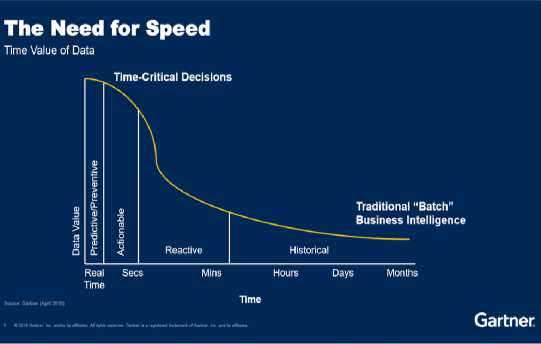
Figure 2. Value of information depending on time [Gartner]
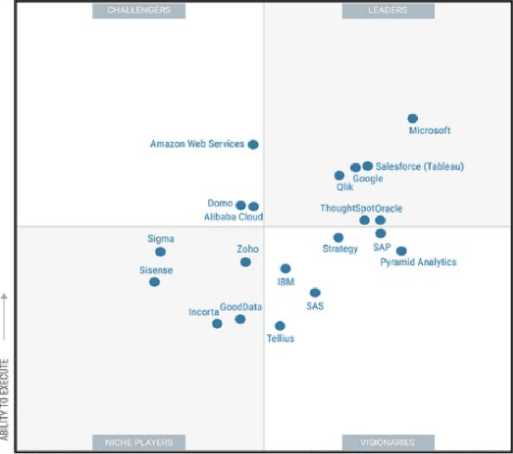
The results of research in practice show that BI systems have opened a completely new chapter in the way of data analysis and business decisionmaking. In this context, the literature states that a properly designed BI solution for data integration enables the management of large amounts of data, adaptability to changing requirements and provides a unified view of data from different sources, which brings valuable insights to companies or organizations (Chia, A. 2023). In practice, different types and types of business intelligence tools can be found in use. In this sense, visual tools and interactive analyzes that allow users to independently explore data and identify patterns and insights that contribute to better business efficiency are a novelty (Zheng, J.G 2018). Research indicates that company or - ned authors emphasize that regardless of location, the process includes a set of components that support different phases of the BI process - from data collection, integration and storage to their analysis and vi- sualization using BI tools and presentation of information to users to support business decision-making (Pratt and Yasar, 2024). Another in a series of studies, which indicates the enormous growth of the amount of data, is a study conducted by Gartner, where 47% of respondents qualified data growth among the three biggest challenges of modern management. The following figure 3 pre- sents a characteristic Gartner view for the year 2025.
Figure 3: Gartner's quadrant for analytics and business intelligence platforms
COMPLYT (NESS OF VISON
As Ы Mar Ж5
for further analysis (Collins,A. 2023). Research indicates that there are several techniques that help solve problems with bad data. Some of them are: "data mining", ETL, data cleaning, data profiling, data management, etc. The Extract, Tran-form, Load (ETL) process is a traditional integration technique that involves extracting data from multiple sources, transforming it into an appropriate format, and loading it into a data warehouse. In that context, it is stated that this process ensures accuracy and con-
Today, business managers have access to appropriate tools based on intelligent systems, artificial intelligence - neural networks, expert systems, genetic algorithms, fuzzy systems, etc., which help management and decision-making bodies of companies in complex business processes [Loshin, D. 2019]. Some authors state that BI tools clean and integrate data to create a unified and coherent set of data that is suitable sistency of data and reduces the time required for data transfer between systems (Chia, A. 2023). However, the Extract, Load, Transform (ELT) process is a more modern approach in which data is first loaded into a data warehouse and then filtered and transformed according to the specific requirements of analytical applications. According to the aforementioned author, this process provides greater flexibility, as the transformations are performed wit- hin the data warehouse. ELT is often faster than ETL, but requires more specialized knowledge to set up and maintain (Chia, A. 2023).
Research methodology
To achieve the goals of this paper, a research framework is proposed that combines different research methods, thus including quantitative and qualitative research methods.
Research results
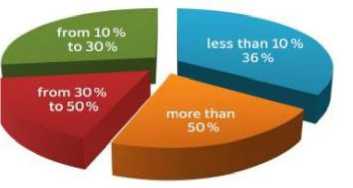
The results of research into companies and business systems in Serbia indicate that they are increasingly encountering problems in their operations that arise due to: lack of quality information for the needs of the management and decision-making process, insufficient operational support, poor analytical data processing, poor data organization, and the like. Research shows that large companies in Serbia are leaders in the application of business intelligence, with 78% of them having a formalized strategic approach to the development of these solutions. The latest research shows that 40% of major decisions are not made based on facts, but on the manager's feelings [Denic et all 2018]. However, despite the fact that the latest research in the world indicates that, for example, out of 43 American companies that participated in the research, 46% achieved 100% or less return on investment, 34% between 101% and 1000%, and 20% around 1001% and more, they are still not applied to the necessary and sufficient extent in SMEs in Serbia. The data shows that more than 70% of companies and business systems in Serbia still do not use artificial intelligence.
Discussion of results
The results show that regarding the existence of strategies for introducing business intelligence in medium-sized enterprises, the percentage is 68%, while only 25% of small enterprises have developed strategies for the implementation of AI, which indicates limited resources and a lack of expertise in smaller organizations. If the above figures are presented as a return on investment period, the situation is as follows: 49% of enterprises recovered their BIS investments in one year or less, 32% in a period of one to three yearcent of enterprises in the EU used artificial intelligence technologies in 2024. In our environment, the largest application was recorded in the information, communications and professional sectors, where as many as 60% of companies use AI. The
Figure 4. How many decisions made by managers are based on data [Denić N. & Misic M. 2022]