
Creative Cities: Opportunities and Challenges for the Historic City of Ouro Preto, Minas Gerais (Brazil)
Journal: Creative Industries R&D @creativejour
Section: ЭКОНОМИКА И УПРАВЛЕНИЕ В КРЕАТИВНЫХ ИНДУСТРИЯХ | ECONOMICS AND MANAGEMENT IN CREATIVE INDUSTRIES
Article in issue: 1 (2), 2025.
Free access
In view of the initiative to attempt to apply for inclusion in the UNESCO Creative Cities Network in the category of Popular Arts and Crafts, to assist planning and management processes, this study aimed to understand and analyze the potential and challenges for a city within the creative areas of the UNESCO Creative Cities Network: Popular Arts and Crafts, Media Arts, Cinema, Design, Gastronomy, Literature, Music and Architecture. The research methodology was based on surveys conducted as a result of the Municipal Creative Economy Plan of Ouro Preto. The initiatives identified in each district of Ouro Preto were reorganized within the thematic axes of the eight creative areas. Subsequently, one point was assigned to each identified initiative and, through this survey, partnerships were identified. Based on the interviews conducted for the study, weaknesses were identified that point to the challenges that the city must face to stand out on the world stage as a Creative City. The analysis of the data indicated for the highlighting of the axes architecture, gastronomy and popular arts and crafts. The challenges were related to infrastructure, such as transportation and health, and difficulty in promoting, collecting resources and managing tourist activities.
Similar articles in the section Production and services according to economic sectors
Short address: https://sciup.org/14134262
IDS: 14134262 | UDC: 338.48-44(815.1-21) | DOI: 10.7868/S3033671625020023
Сеть креативных городов ЮНЕСКО: проблемы и возможности для исторических городов (кейс оценки для города Ору-Прету, штат Минас-Жерайс, Бразилия)
В свете инициативы по подаче заявки от муниципалитет Ору-Прету на включение в Сеть творческих городов ЮНЕСКО в категории народных искусств и ремёсел для содействия процессам планирования и управления, наше исследование было направлено на понимание и анализ потенциала и проблем для города в рамках творческих сфер Сети творческих городов ЮНЕСКО: народные искусства и ремёсла, медиаискусство, кино, дизайн, гастрономия, литература, музыка и архитектура. Методология исследования базировалась на опросах, проведённых в ходе реализации плана «Муниципальная креативная экономика Ору-Прету». Инициативы, идентифицированные в каждом районе Ору-Прету, были реорганизованы в восемь тематических творческих сфер – «векторов». Впоследствии каждой идентифицированной инициативе присваивался один балл, и через этот опрос были выявлены партнёрства. На основе проведённых в ходе исследования интервью были выявлены недостатки, указывающие на проблемы и возможности, с которыми город должен столкнуться, чтобы выделиться на мировой сцене как «Творческий Город». Анализ данных указал на выделение векторов архитектуры, гастрономии и народных искусств и ремёсел. Проблемы были связаны с инфраструктурой, такой как транспорт и здравоохранение, а также трудностями в продвижении, использовании ресурсов и управлении туристической деятельностью.
Text of the scientific article Creative Cities: Opportunities and Challenges for the Historic City of Ouro Preto, Minas Gerais (Brazil)
Public policy legal frameworks rely on the involvement of multiple countries to strengthen international agreements, national laws, and municipal strategies that foster creativity, culture, and innovation in cities. In this context, the United Nations Educational, Scientific and Cultural Organization (UNESCO) established an international initiative in 2004 called the “Creative Cities” program, which recognizes cities as creative hubs by integrating them into the Creative Cities Network (UCCN – UNESCO Creative Cities Network).
The UNESCO Creative Cities Network encompasses eight creative domains: gastronomy, crafts and folk art, design, film, literature, media arts, music, and architecture. The idea of a creative territory, where the concept of the creative city is born, can be described as an urban area “capable of continuously transforming its socioeconomic structure, based on the creativity of its inhabitants and on an alliance between its cultural singularities and its economic pursuits” (Reis, 2009, p. 3).
Landry and Bianchiui (1995) describe the creative city as a concept of a more vibrant, connected, tolerant, interactive, and appealing city that aims to preserve the history and culture of its people and embraces innovation. Furthermore, Vivant (2012, p. 10) states that “the strength of the city is connected to its creative dimension, demonstrated by its cultural and artistic dynamism, which is the only force capable of countering the impacts of disinvestment resulting from industrial decline”.
The follow-up and monitoring of creative activities in urban centres encourage actors to consider economic, urban, and social policies focused on revitalizing central areas and the outskirts of the city. This type of policy was created in Europe starting in 1980, focusing primarily on planning centred around cultural and creative industries as a substitute for traditional economic development (Markusen; Gadwa, 2010). In this context, the role of governmental organizations at both federal and state levels is essential. However, it is at the municipal level where the nuances of the creative economy become more prominent. That is, a location’s creative potential is influenced by its history, culture, physical layout, and operational conditions. (Sachs, 2008). For example, UNESCO’s Creative Cities programme acknowledges and promotes cities that leverage creativity as a driver of sustainable development. Additionally, numerous countries and cities implement particular laws and action plans to foster sectors like arts, design, media, gastronomy, and other creative industries.
Legal frameworks play a key role in shaping and reinforcing public policies that foster the development of creative cities, supporting economic growth, social inclusion, and cultural preservation. In response to emerging demands, creative tourism has developed in urban centers, focusing on specialized creative activities. This form of economic activity seeks to provide tourists with authentic experiences through interaction and learning about local customs, as well as encouraging the consumption of regional products (Richards, 2011).
In Brazil, legal frameworks supporting the establishment of these cities include Law No. 13,089/2015, the Statute of the Metropolis, and Law No. 13,278/2016, the Legal Framework for Cities. Additionally, the National Culture Plan promotes valuing culture and creativity as drivers of urban growth. These laws foster a supportive setting for developing creative cities by encouraging innovation, cultural expression, and Sustainability. In Ouro Preto, Complementary Law No. 218/2024 was enacted to create the
Municipal Secretariat for Economic Development, Innovation, and Technology, which includes the Directorate of Creative and Solidarity Economy among its responsibilities.
As of now, ten Brazilian cities have been designated as UNESCO Creative Cities: Belém (PA), Belo Horizonte (MG), Brasília (DF), Curitiba (PR), Fortaleza (CE), Florianópolis (SC), João Pessoa (PB), Salvador (BA), along with Paraty (RJ) and Santos (SP). These latter two are not capitals but are also recognized by UNESCO as creative cities. The activity surrounding art and culture can play a pivotal role in regional and urban development, provided it is well-organized and supported by public policies that aim to enhance different sectors of the creative economy.
Rodrigues’s (2004) model integrates key ideas on social innovation across three dimensions: social actors (individuals and groups), organizations, and institutions. The first dimension emphasizes empowering social actors to enhance quality of life and find purpose in work. The second dimension focuses on how social innovation practices are organized, as these require management and governance to address legal, normative, and economic considerations.
In the development and execution of public policies, there is still no universal reference to foster consensus among politicians, managers, civil society leaders, and cultural entrepreneurs. A similar issue exists in academic research. Despite notable progress, key challenges remain in defining the lines between art, culture, and industry, integrating new technologies, and positioning products within business environments (UNCTAD, 2010).
Creative cities can vary from small cities impacting only local cultural industries to large cities that act as gateways to international markets (UNESCO, 2013). Economically, in the short term, there is a rise in demand for goods and services with local features, which encourages long-term development and fosters industrial growth with an emphasis on innovation skills (Bille; Schulze, 2006).
Ouro Preto is renowned for its culture and heritage, recognized internationally for its artistic and architectural significance, its role in Brazil’s history, and its colonial baroque architecture. Given these qualities, the city is applying for a UNESCO Creative City status. To secure this title, Ouro Preto is currently working to make its candidacy official in the category of Popular Arts and Crafts. The bid was announced at a ceremony at the end of January 2025, which also marked the signing of the Municipal Plan for the Creative Economy (PMEC-OP), a pioneering milestone in the state. The development of the plan resulted from collaborative efforts between the Secretariat of Economic Development, Innovation and Technology, the Federal University of Ouro Preto (UFOP), and local leaders.
In this context, the study aimed to answer the question: what are the potential and challenges faced by Ouro Preto regarding the eight creative areas defined by the UNESCO Creative Cities Network? The research’s goal was to identify Ouro Preto’s strengths and weaknesses in these creative areas, considering its objective of becoming a UNESCO Sustainable City.
The study highlights the importance of diagnoses during the planning phase, as they help understand the current situation by identifying challenges, strengths, and opportunities for improvement. Diagnoses provide precise and relevant information that guides the development of future strategies and actions, enabling efficient planning and resource allocation based on actual needs. It helps prevent potential impacts of planned actions by ensuring they are suitable for the context and supports the justification of projects or interventions through aiding in resource allocation processes.
-
2. Theoretical Framework
Understanding the tourist destination as part of a broader system—one influenced by economic, political, social, cultural, and environmental relations— constitutes the starting point for this framework, since tourism is simultaneously constituted by and constitutive of these relations and is subject to the influences of its surrounding environment (Pimentel & Carvalho, 2014; Pimentel & Pimentel, 2012). The environment of the tourism system comprises ecological, economic, social, and cultural subsystems and, although external to the system, it conditions its functioning—knowing these specificities is strategic for its management (Pimentel & Pimentel, 2012; 2015).
-
2.1. Tourist destination as a system
We depart from the understanding that tourist destinations are systems, in which factors present both in the system’s environment and in the destination itself condition planning and management, with the structure of the tourism market serving as the analytical reference for the environment and the notion of system situated within municipal public management (Pimentel & Carvalho, 2014). Once identified, these factors make it possible to explain, understand, and intervene in the destination’s functioning, catalyzing possibilities for growth, organization, and development (Pimentel & Carvalho, 2014). Consequently, a framework is proposed that distinguishes external and internal factors conditioning decisions and actions at the local level, with direct consequences for the possibilities for action, the use of resources, and the markets to be reached (Pimentel & Carvalho, 2014).
-
2.2. Environments (macro, meso, and micro) and conditioning factors
Destinations are positioned within an interdependent global macroenvironment, marked by asymmetries in the distribution of resources and flows, which unequally influence the potential and performance of tourism systems (Pimentel & Carvalho, 2014). Analytically, the environment impacts destinations at different scales (macro, meso, and micro), potentially constraining or enhancing their performance depending on the configuration of relationships and resources available (Pimentel & Carvalho, 2014; Pimentel & Pimentel, 2012). This multiscalar reading reinforces the need to adjust the system to the limitations and potentialities of the environment to guide planning and management (Pimentel & Pimentel, 2012).
-
2.3. Governance and policy instruments in tourism
Since the 1990s, the tourism policy literature has shifted its focus from government to governance, with implications for actor relations, the State’s capacity for action, the choice of instruments, and even the definition of policy problems (Hall, 2011). The notion of “policies as theories” makes visible that intervention instruments derive from theoretical constructs of governance, guiding how the State acts and which indicators and tools it privileges (Hall, 2011).
Internally to the destination system, organizational determinants stand out, such as: the number and diversity of tourism organizations; organizational networks (interactions, agreements, institutionalization of actions); and the existence/quality of a destination management organization (executive capacity, management of production, promotion and distribution, internal communication, technology, hospitality) (Pimentel & Pimentel, 2012;
Moreover, product diversification, the adoption of new technologies, and the formation of partnerships are pathways that strengthen competitiveness and sustainability, provided they are accompanied by effective communication with the external environment and strategic alliances (Pimentel & Pimentel, 2012). In addition, local/regional policies and networks broaden the participation of actors with less influence and balance interests in favor of sectoral sustainability, while continuous monitoring of the macroenvironment is an essential management task (Pimentel & Pimentel, 2012; Pimentel & Carvalho, 2014;
Conceptually, governance has two broad meanings: (i) a contemporary adaptation of the State to its political-economic environment—often called “new governance”—which includes the participation of private actors and the use of “soft” norms, multilevel arrangements, deliberation, and experimentation; and (ii) a theoretical depiction of the State’s role in coordinating socioeconomic systems, involving steering capacity and coordination/networks (Hall, 2011). Based on the balance between public authority and self-regulation, and on the relations between actors and modes of steering (hierarchical ↔ non-hierarchical), a typology is structured with four frameworks: hierarchies, markets, networks, and communities (Hall, 2011).
In markets, the State substitutes regulatory mechanisms with financial incentives, education, and stimuli to self-regulation, although market failures and the limits of this form of governance demand a revision of instruments (Hall, 2011). In networks, public-private partnerships and policy communities coordinate resources and interests, offering a “third way” between hierarchy and market, but facing dilemmas of capture and closure (Hall, 2011). In communities, emphasis falls on citizen participation and social capital, valuing local scales and deliberative processes—a recurrent theme in tourism planning since the 1980s (Hall, 2011). It is necessary to emphasize that the mode of governance precedes and conditions the selection of policy instruments (regulatory, incentives, networks, participatory mechanisms) and that the typology helps to map choices and implementation gaps across jurisdictions and over time (Hall, 2011).
Understanding the tourist destination as a system (with operational, internal, and macro environments), the external and internal conditioning factors
(market structure, networks, destination management organization, technology, partnerships), and the governance typology (hierarchies, markets, networks, and communities) yields an analytical framework to position the destination within its environment and infer possibilities for collective action, the most coherent instruments, and implementation risks (Pimentel & Pimentel, 2012; Pimentel & Carvalho, s.d.; Hall, 2011). This synthesis (Figure 1) guides alignment among context (macro/meso/micro), organizational arrangements, and governance for destination planning and management in line with its constraints and potentialities (Pimentel & Carvalho, s.d.;
-
3. Method and Procedures
The methodology is classified as descriptive, employing both qualitative and quantitative approaches, based on Lakatos and Marconi (2001) and Prodanov and Freitas (2013). Regarding the technical procedures, we chose bibliographic research and case study methods. Consequently, this work involved a systematic review of data from the CEIP-OP, using qualitative metasynthesis. A systematic review is a data collection technique that involves extensive bibliographic searches to explore existing knowledge on a subject (Briner; Denyer, 2012). Qualitative metasynthesis is a form of systematic review that aims to compile qualitative research evidence, helping to identify issues that require further exploration or discussion (Alencar; Almouloud, 2017).
-
4. Object and Field of Study
Ouro Preto is a municipality in southeastern Brazil, within Minas Gerais state. As of the 2022 Brazilian Demographic Census, it has 74,821 residents and a demographic density of 60.06 inhabitants per km², with a GDP per capita of R$ 127,232.37 (IBGE, 2022). Figure 1 illustrates the distribution of its 13 districts: Ouro Preto (districts), Amarantina, Antônio Pereira, Cachoeira do Campo, Engenheiro Correia, Glaura, Lavras Novas, Miguel Burnier, Rodrigo Silva, Santa Rita de Ouro Preto, Santo Antônio do Leite, Santo Antônio do Salto, and São Bartolomeu.
-
5. Development and Analysis
-
5.1 Potentialities for the historic city of Ouro Preto, Minas Gerais, concerning the distribution of UNESCO creative fields for Creative Cities This topic presents and discusses the results of the CEIP-OP systematic review, highlighting the potential for the inclusion of Ouro Preto in the UNESCO Creative Cities. It is based on the distribution of UNESCO creative fields by district of Ouro Preto, as shown in Table 1, according to the CEIP-OP.
-
Based on the surveys conducted for Ouro Preto’s Municipal Plan for the Creative Economy, a spreadsheet was created to organize initiatives in each district. These initiatives are categorized within the eight creative areas defined by the UNESCO Creative Cities Network: Crafts and Popular/Folk Arts, Media Arts, Cinema, Design, Gastronomy, Literature, Music, and Architecture. One point was attributed for each identified initiative added at the end, to recognize the most prevalent in the city overall and highlight potential opportunities. The study’s interviews revealed various weaknesses reported by participants. These challenges were grouped into categories: Urban Infrastructure, Logistics, Creativity, and Innovation. These categories highlight the key issues the city must address to elevate itself as a prominent Creative City on the global stage.
According to data from the Ministry of Tourism (2015), the city of Ouro Preto is one of 65 tourism-inducing destinations in Brazil, and, according to data from the Minas Gerais Tourism Conservatory, it is among the four most sought-after destinations by tourists in Minas Gerais.
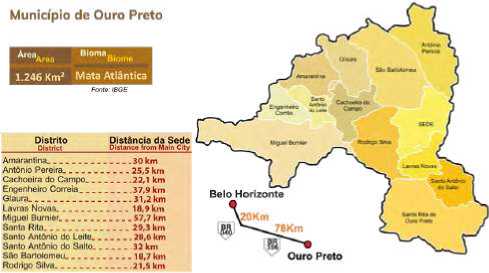
Figure 1 – Districts of Ouro Preto
Source:
Table 1 – Distribution of UNESCO creative fields by district of Ouro Preto
|
District |
Crafts and Folk Art |
Media Arts |
Cinema |
Design |
Gastronomy |
literature |
Music |
Architecture |
Total |
|
Amarantina |
1 |
1 |
- |
- |
- |
- |
- |
1 |
3 |
|
A. Pereira |
1 |
- |
- |
- |
- |
- |
1 |
1 |
3 |
|
Campo Waterfall |
1 |
1 |
- |
- |
1 |
- |
- |
1 |
4 |
|
Engineer Correia |
1 |
- |
- |
- |
1 |
- |
- |
1 |
3 |
|
Glaura |
- |
- |
- |
- |
1 |
- |
- |
- |
1 |
|
Lavras Novas |
1 |
- |
- |
- |
1 |
- |
- |
1 |
3 |
|
Miguel Burnier |
1 |
1 |
- |
1 |
1 |
- |
1 |
1 |
5 |
|
Santa Rita |
1 |
- |
- |
- |
1 |
- |
- |
- |
2 |
|
Santo Antônio do Leite |
1 |
- |
- |
- |
1 |
- |
- |
1 |
3 |
|
Santo Antônio do Salto |
1 |
1 |
- |
- |
1 |
- |
- |
1 |
4 |
|
Saint Bartholomew |
1 |
- |
- |
- |
1 |
- |
1 |
1 |
4 |
|
Rodrigo Silva |
1 |
- |
- |
1 |
1 |
- |
- |
1 |
4 |
|
Municipal Seat |
1 |
1 |
1 |
1 |
1 |
1 |
1 |
1 |
7 |
|
Total |
12 |
5 |
1 |
3 |
11 |
1 |
4 |
11 |
- |
According to the study, the districts that scored the most in relation to the diversity of creative axes were the Municipal Seat (main town), with seven axes, followed by Miguel Burnier with 5 axes São Bartolomeu, Santo Antônio do Salto, Rodrigo Silva and Cachoeira do Campo with 4 axes and the district that scored the least was Glaura, with 1 axis. The study also pointed to the predominance of three axes: handicrafts and popular/folkloric art, gastronomy and architecture.
The study revealed that the Headquarters district had the highest diversity, with seven axes, followed by Miguel Burnier with five. São Bartolomeu, Santo Antônio do Salto, Rodrigo Silva, and Cachoeira do Campo each had four axes, while Glaura scored the lowest with just one. The research also highlighted three main axes: handicrafts and popular/folkloric art, gastronomy, and architecture.
In gastronomy, almost all districts were found to have traditional restaurants and food products such as cachaça, jelly, jabuticaba ice cream, dulce de leche, jams, guava paste, and sheep’s cheese. Notably, the Santo Antônio do Salto Culture and Culinary Festival is a key gastronomic event in Ouro Preto’s calendar, held annually in the Santo Antônio do Salto district every third Sunday of August. During the festival, local community delicatessens showcase typical dishes, complemented by concerts, stalls, and local handicraft displays.
Regarding music, efforts connected to civic bands, especially the Santa Cecília de Rodrigo Silva Musical Society, were noted. Founded by a group of railroad workers on November 22, 1901, the Santa Cecília Society aims to promote, develop, and spread musical art and culture of bands at the highest level. It functions independently of political, religious, philosophical, or racial beliefs.
The design axis encompasses design-driven Creative Industries like architecture, interiors, fashion, textiles, jewelry, accessories, interaction design, urban design, and sustainable design (UNESCO, 2014). Among these, three districts notably specialize in jewelry manufacturing, primarily using silver and topaz, specifically Miguel Burnier, Rodrigo Silva, and Sede, as shown in Figure 2.

Figure 2 – Silver ring with Imperial Topaz, surrounded by cut and natural Topaz gems
Source: Ana Júlia Portela. URL:
2022/06/07/topazio-imperial-a-preciosidade-de-ouro-preto/
Within the handicraft sector, many initiatives focus on creating embroidery, crochet, and bamboo baskets, as shown in Figure 3. Particular attention is given to soapstone handicrafts in Cachoeira do Campo and Santa Rita, as well as silver jewelry and imperial topaz jewelry.
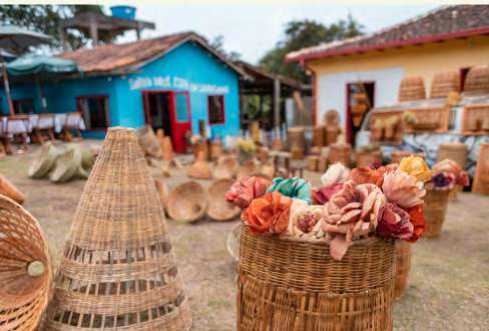
Figure 3 – Handicrafts in bamboo trees
Photo: Marcelo Shishito (2024).
In Popular and Folkloric Arts, notable events include the Teatro dos Bonecos [Puppet Show] (Dona Zeca) in Rodrigo Silva, Congado in Glaura, Devotional Carpets at the districts, and the “Festa de São Gonçalo e Cavalhadas,” held in September in Amarantina. This celebration, of Portuguese origin, honors São Gonçalo and depicts the historical battle between Moors and Christians. It has been recognized as intangible heritage of Ouro Preto since 2011 (Ouro Preto, 2025, p. 35). The prominent local handicrafted goods and folk arts support Ouro Preto’s candidacy for UNESCO’s Creative City designation in the category of Popular Arts and Crafts.
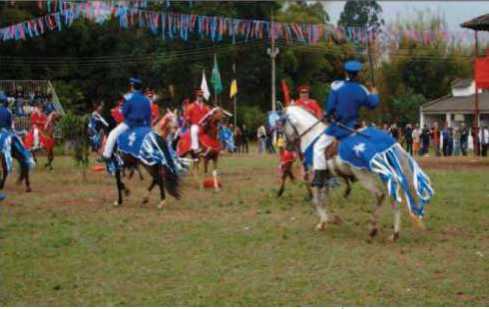
Figure 4 – Horseback riding in Amarantina
Source: SMPDU Collection (2008).
The importance of the survey carried out by the PMEC-OP is highlighted, as recognition of creative and cultural activities brings several benefits to society and potential for promoting regional development. Among these benefits, the valorization of cultural identity, the generation of jobs and income, contributing to local economic development, and the stimulation of tourism decentralization stand out.
Moreover, cultural activities foster innovation and social development by boosting creativity, dialogue, and inclusion, thereby making society more diverse. Recognizing these activities also strengthens the creative economy, particularly in sectors with growth potential. In education and training, supporting culture and creative pursuits enhances informal learning, skill development, and community bonds. Additionally, valuing cultural and creative activities helps preserve local traditions, promotes community identity, respects diversity, and supports the vitality of intangible cultural values.
-
5.2 . Challenges for the historic city of Ouro Preto, Minas Gerais, concerning to Creative Cities
-
5.2.1 Urban infrastructure
In the urban infrastructure sector, several interviewees from different districts reported a lack or scarcity of public transportation and inadequate healthcare. It is important to note that urban infrastructure is crucial for the development and success of tourism in a city or region. It helps ensure visitors enjoy a comfortable, safe, and accessible experience, which is vital for their satisfaction and loyalty. For residents, it is a fundamental right. As stated in the Brazilian Constitution of 1988, it guarantees everyone’s right to dignified living conditions, supporting their well-being, health, safety, and quality of life. The Constitution also mandates that cities promote their inhabitants’ welfare by providing essential services, including basic sanitation, transportation, housing,
This topic presents and discusses the results of the CEIP-OP systematic review, indicating categories that represent the weaknesses that point to the challenges to be overcome for the inclusion of Ouro Preto in UNESCO’s Creative Cities. Table 02 lists factors that, according to the perspectives of the interviewees in the PMEC-OP, can interfere in the process of innovation and creativity in Ouro Preto. The categories infrastructure, logistics, innovation and creativity were selected and applied to facilitate the understanding of the considerations reported in relation to the study proposal.
Table 2 – Challenges for the inclusion of Ouro Preto in the list of Creative Cities, according to interviews with the residents of the districts
|
Categories |
Reported challenges |
|
Urban infrastructure |
|
|
Logistics |
|
|
Creativity |
|
|
Innovation |
|
public lighting, health, and education—fostering a more accessible, safe, and sustainable urban environment for all.
Tourism is a socio-spatial activity that can significantly impact the urban landscape. Sotratti (2014, p. 41) states that “usually allied to economic or even political interests, activities of a tourist nature impose themselves on local interests, creating delimited territories or even clearly perceived territorialities”. The analysis shows that while the historic center of Ouro Preto Headquarters benefits from public and private investments aimed at heritage preservation and attracting tourists, the surrounding neighborhoods and districts face a different reality. These areas suffer from a lack of municipal attention and have inadequate urban infrastructure. To address these issues, urban planning focused on human scale could be a solution, enabling citizens to take an active role in public spaces and ensuring the city fulfills its residents’ needs, aligning with Jacobs’ (1970; 2011) principles.
Another common concern among respondents relates to the impacts of mining. According to the 2022 Demographic Census (IBGE 2022), the industrial sector, mainly driven by mining, is the primary contributor to the municipality’s GDP. It is followed by the public sector—including administration, health, education, defense, and security—and the service sector, particularly tourism-related activities. Given the municipality’s heavy reliance on mining, developing economic strategies to stimulate growth and reduce mining’s impacts will be a major challenge for Ouro Preto as a Creative City.
Within the logistics category, only a few tourist advertisements were noted, along with challenges in managing social networks and a lack of institutional coordination. According to Christopher (1997; p.34), logistics can be defined as:
The process of strategically managing the procurement, movement, and storage of materials, parts, and finished goods (and related information flows) across the organization and its marketing channels, so as to maximize present and future profitability through low-cost order fulfillment.
When a city does not invest in promoting its attractions, it loses potential visitors. As a result, fewer people learn about its landmarks, culture, events, and services, which decreases the flow of tourists and the economic and cultural benefits they can bring. Similarly, if the city cannot effectively manage its networks, it misses opportunities to engage its target audience. On the other hand, a lack of coordination can lead to disorganization, resource waste, and an unclear or unreliable image for the city. According to Landry (2013) and Reis (2012), for a city to be truly creative, it requires a broad and intricate interconnectedness involving all its stakeholders. For the author, the development of a creative city is driven by people and their connections across physical, social, cultural, and economic dimensions. Because of this, the ability to coordinate all relevant agents and sectors is a critical management factor. According to the interviewees, this requires increased planning and investment in Ouro Preto, especially in terms of governance.
Creativity can be seen as the act of connecting skills and abilities to produce something new and different from the norm, thereby enhancing what already exists (Amabile, 2012). In the context of the study, the creativity category revealed complaints about disorderly tourism and conflicts over land use, as interviewees noted that the interests of mass tourists seeking entertainment do not align with the local residents’ desire for tourism centered around appreciating local culture. These concerns were mainly raised in the district of Lavras Novas.
Lefebvre (2002, 2011) argues that the city, under the dominance of the capitalist mode of production, is both produced and reproduced as a place of consumption and, at the same time, as a consumption of place, fostering tensions, contradictions, and degradation of social relations within the city. Urban life involves encounters, confrontations of differences, and reciprocal recognition (LEFEBVRE, 2011); after all, most individual needs are rooted in the local context, where real solutions can ultimately arise. In this context, creativity can serve as a solution for generating ideas that promote reorganizing tourism activities to meet both economic demands and the needs of the local population. This perspective considers the city not just as a place of residence and coexistence, but as an entity that is continuously evolving through relational, procedural, and holistic means (Mac-Allister, 2004; Hail; Carrieri, 2012). It underscores the idea that the whole is contained within the parts, and the parts are integral to the whole, emphasizing that this complexity arises from the relationships between parts through a dynamic and interdependent process.
The variety of agents and social activities in urban spaces can lead to the alternation and overlap of different territorial claims. This transforms the territory into a dynamic space of competing forces where shared, opposing, and conflicting interests intersect. These interactions shape various ways different social groups use and claim the territory (Cifelli, 2010).
In the case of Ouro Preto, according to the interviewees, the massification of tourism may have triggered touristification processes associated with the consumption of space and the commodification of places. This includes many of the cities in Brazil listed as Cultural Heritage by the National Historical and Artistic Heritage Institute - IPHAN and recognised as World Heritage of Humanity by the United Nations Educational, Scientific and Cultural Organization – UNESCO. Regarding this, D’Ovidio and Cossu (2017) highlighted an example of how social groups evaluate the production of public services in creative cities, advocating for greater local artistic participation in urban governance. From these analytical perspectives, it can be inferred that evaluations of public services and the city’s creativity are connected to assessments of innovative measures, as long as they occur naturally.
It is important to clarify that creativity should not be mistaken for innovation. Creativity involves generating ideas that can lead to positive changes, whereas innovation relates to implementing those ideas. In this way, creativity precedes innovation. According to Richards and Duif (2018), creativity – focused on developing a space – refers to efforts to conceive actions that improve places. Concerning innovation, challenges include difficulties in writing development projects, limited targeted training courses, and the lack of hotels and inns in districts to support tourism. It is also noted that standardizing professional qualification programs aims to improve the quality of the national tourist offer, which is crucial for making the country more competitive in the international market (PNT, 2003 p.9).
It is concluded that local development is linked to the social organization capacity of a group of actors, whose ability to exercise autonomy in decisionmaking leads to mobilization, generating ideas and alternative development initiatives (SACHS, 2008). It results from coordinated actions across multiple dimensions—economic, social, cultural, political, and environmental—and involves various actors, whether public or private, present in the area. In essence, an integrated perspective on these dimensions and the participation of diverse social actors must be considered when designing public policies for local development. Additionally, new commercial interactions produce economic benefits for the local community and contribute to tourists’ experiences and knowledge accumulation (Ashton, 2013).
-
6. Concluding Remarks
The study found that Sede (main town) had the most diverse creative axes, with seven, followed by Miguel Burnier with five, and São Bartolomeu, Santo Antônio do Salto, Rodrigo Silva, and Cachoeira do Campo, each with four. Glaura had the fewest, with just one axis. The main axes identified were handicrafts, popular and folkloric art, gastronomy, and architecture. This supported the application for UNESCO’s Creative City status in the category of Popular Arts and Crafts.
The PMEC-OP study highlighted challenges that Ouro Preto must address to become a UNESCO Creative City. Among these, urban infrastructure issues stand out, such as inadequate public transportation and subpar healthcare, particularly in peripheral districts, which impact both residents and tourists. Additionally, the economy’s heavy reliance on mining presents difficulties in diversifying and strengthening other sectors. In terms of logistics, the city struggles with promoting tourism, managing social networks, fundraising, and institutional coordination— key factors for attracting and engaging visitors. Regarding creativity, concerns exist over disorderly tourism and conflicts over land use, especially in districts like Lavras Novas, where mass tourism endangers local culture. The proliferation of tourism also leads to processes of touristification and commodification of spaces, potentially harming community authenticity and well-being.
The study emphasizes that the sustainable development of Ouro Preto relies on effective social organisation, with public and private actors working together in coordination. To progress, it is essential to invest in training, enhance infrastructure, and promote more participatory management to ensure growth that is balanced, sustainable, and respectful of local traditions.
The survey ultimately emphasizes that embracing and valuing cultural activities in UNESCO Creative Cities can benefit Ouro Preto by enhancing local identity, creating jobs, promoting decentralized tourism, fostering social innovation, preserving traditions, and supporting sustainable development. These initiatives help elevate cultural appreciation, strengthen community bonds, and boost regional economic growth. Moreover, the importance of research to measure the representation elements of each thematic axis by locality is emphasized, for more suitable district planning.
