
Development of approaches to monitoring territorial tourism systems in the context of economic transformation
Journal: Modern Problems of Service and Tourism @spst
Article in issue: 3 т.19, 2025.
Free access
The study addresses the development of approaches to monitoring territorial tourism systems in the context of increased economic instability and transformation. The relevance of the study is determined by the need to adapt the methodological apparatus to new challenges, including geopolitical changes, sanctions pressure, and the digitalization of socioeconomic processes. A critical study of existing monitoring systems applied at the federal and regional levels was conducted, which revealed the systematic limitations: static nature, fragmentation, focus on retrospective data, and the inability to promptly reflect qualitative changes, such as the transformation of consumer behaviour and redistribution of tourist flows. To obtain a comprehensive assessment, an expert survey method was used with the involvement of 22 specialists in the field of tourism management. Based on the expert assessment, the characteristics were systematized and the strengths and weaknesses of various types of monitoring systems were identified (primary operating systems, secondary aggregation platforms, state accounting systems, indirect monitoring, and synthetic analytical systems). The study substantiates the need to move from disparate methods to a comprehensive approach integrating diverse data sources and analytical tools. The main conclusion underscores the need to develop a synergetic monitoring concept based on mutual compensation of the limitations of individual systems, enabling the creation of a multidimensional, dynamic, and relevant information base.
Similar articles in the section Production and services according to economic sectors
Short address: https://sciup.org/140313867
IDS: 140313867 | UDC: 338.48 | DOI: 10.5281/zenodo.17746415
Развитие подходов к мониторингу территориальных туристских систем в условиях трансформации экономики
Статья посвящена проблеме развития подходов к мониторингу территориальных туристских систем в условиях трансформации экономики. Актуальность исследования определяется необходимостью адаптации методологического аппарата к новым вызовам, включая геополитические изменения, санкционное давление и цифровизацию социальноэкономических процессов. Проведен критический анализ существующих систем мониторинга, применяемых на федеральном и региональном уровнях, который выявил их системные ограничения: статичность, фрагментарность, ориентацию на ретроспективные данные и невозможность оперативного отражения качественных изменений, таких как трансформация потребительского поведения и перераспределение туристских потоков. Для получения комплексной оценки использовался метод экспертных оценок с привлечением 22 специалистов в области управления туризмом. На основе оценок экспертов систематизированы характеристики и выявлены особенности различных типов систем мониторинга: первичных операционных систем, вторичных агрегирующих платформ, систем государственного учета, косвенного мониторинга и синтетических аналитических систем. В исследовании обоснована необходимость перехода от разрозненных методов к комплексному подходу, интегрирующему разнородные источники данных и аналитические инструменты. Основной вывод заключается в необходимости разработки синергетической концепции мониторинга, основанной на взаимной компенсации ограничений отдельных систем, позволяющей создать многомерную, динамичную и релевантную информационную базу.
Text of the scientific article Development of approaches to monitoring territorial tourism systems in the context of economic transformation
Article History
Received 11 October 2025
Accepted 30 November 2025
Disclosure statement
No potential conflict of interest was reported by the author(s).
This work is licensed under the Creative Commons Attribution 4.0 International (CC BY-SA 4.0).
To view a copy of this license, visit
STATE REGULATION OF THE TOURISM SPHERE IN THE MODERN CONDITIONS OF TRANSFORMATION OF THE RUSSIAN AND WORLD TOURISM SERVICES MARKET
ГОРБАТОВА Алена Алексеевна,
РАЗВИТИЕ ПОДХОДОВ К МОНИТОРИНГУ ТЕРРИТОРИАЛЬНЫХ ТУРИСТСКИХ СИСТЕМ В УСЛОВИЯХ ТРАНСФОРМАЦИИ ЭКОНОМИКИ
Статья посвящена проблеме развития подходов к мониторингу территориальных туристских систем в условиях трансформации экономики. Актуальность исследования определяется необходимостью адаптации методологического аппарата к новым вызовам, включая геополитические изменения, санкционное давление и цифровизацию социально- экономических процессов. Проведен критический анализ существующих систем мониторинга, применяемых на федеральном и региональном уровнях, который выявил их системные ограничения: статичность, фрагментарность, ориентацию на ретроспективные данные и невозможность оперативного отражения качественных изменений, таких как трансформация потребительского поведения и перераспределение туристских потоков. Для получения комплексной оценки использовался метод экспертных оценок с привлечением 22 специалистов в области управления туризмом. На основе оценок экспертов систематизированы характеристики и выявлены особенности различных типов систем мониторинга: первичных операционных систем, вторичных агрегирующих платформ, систем государственного учета, косвенного мониторинга и синтетических аналитических систем. В исследовании обоснована необходимость перехода от разрозненных методов к комплексному подходу, интегрирующему разнородные источники данных и аналитические инструменты. Основной вывод заключается в необходимости разработки синергетической концепции мониторинга, основанной на взаимной компенсации ограничений отдельных систем, позволяющей создать многомерную, динамичную и релевантную информационную базу.
Дата поступления в редакцию: 11.10.2025 г.
Дата утверждения в печать: 30.11.2025 г.
Introduction
The current stage of the economic development of Russia can be characterized by significant instability and dynamism, driven by a combination of external and internal factors, including geopolitical changes, sanctions pressure, restructuring of international logistics and financial chains, accelerated digitalization of social processes. These macroeconomic shifts have a multifaceted and often contradictory impact on regional socioeconomic systems, among which regional tourism systems are the most vulnerable. Considering this, effective management of tourism development at the regional level is becoming virtually impossible without reliable tools for timely and overall assessment of its status. Existing monitoring tools are demonstrating their insufficient development to adequately reflect the complexity of territorial tourism systems in this new reality. Traditional indicator systems are often fragmented, focused on static assessments, and do not fully account for the specifics of transformation processes. In this regard, there is an urgent need to develop a theoretical and methodological basis for monitoring territorial tourism systems, capable of capturing qualitative changes and systemic interrelations in conditions of increased uncertainty.
The existing methodological framework for monitoring territorial tourism systems, while possessing a number of undeniable advantages, demonstrates its inadequacy in the face of increased dynamism and instability. The methodological gap associated with the lack of comprehensive tools capable of accounting for qualitative transformations and regional specifics underpins the relevance of this study. The purpose of this article is to conduct an analysis of existing systems of monitoring of territorial tourism systems, and identify key features, advantages, and limitations based on expert assessment.
Methods
To conduct the study and address the objectives, a set of complementary methods was used to provide a comprehensive analysis of the problem of monitoring territorial tourism systems. The methodological basis of the work was a systemic and structural-functional approach, which allowed for the examination of the territorial tourism system as a holistic, complex entity, identifying its key elements and the interrelations between them. This provided the theoretical basis for developing the monitoring concept.
An important stage of the study involved conducting an expert assessment. A sample of 22 experts, including government representatives, analysts, and researchers, specializing in tourism management, assessed existing monitoring systems across a number of criteria, such as data completeness, update frequency, source reliability, and analysis flexibility. This allowed to identify the main features of current monitoring approaches.
Results and Discussions
The degree of scientific elaboration of the described problem is at a fairly high level in terms of general approaches to assessment and management in the field of tourism, including the integration of economic, social, and environmental aspects [6, 10, 11, 23], however, with regard to the tasks of monitoring tourism systems in unstable conditions, taking into account regional differentiation, there is a significant methodological gap [2, 15, 19, 20]. In the works of such Russian scholars as Rassokhina T. V. [24], Kruzha-lin V. I., Menshikova T. N., Kruzhalin K. V. [13], Zvereva A. A. [39], the issues of strategic planning for the development of tourist territories based on a system of statistical indicators and monitoring of sustainable development of tourist destinations through the assessment of indicators adapted to domestic conditions [24, 26] were studied in detail. International scientific thought, represented by the works of such scientists as Schianetz K., Kavanagh L., Liu, C., Zhang, R., Wang, M., Xu, Y. [16, 28], made a significant contribution to the understanding of tourism as a complex socioeconomic system and to the development of methods for assessing the sustainable development and management of tourism. A critical analysis of existing approaches reveals a number of systemic limitations [17, 38]. Firstly, many methodologies are focused on economic or infrastructural indicators, ignoring social, environmental and institutional aspects [8, 18, 32]. Secondly, static assessment models prevail, which are unable to track rapid dynamics and record the moment ofthe system’s transition to a new qualitative state [5, 34, 36]. Third, insufficient attention has been paid to the development of differentiated indicator systems that take into account the significant differences in tourism specialization, resource potential, and level of socioeconomic development among Russian regions [12]. Existing monitoring systems used at the federal and regional levels often mechanically aggregate departmental statistical data, failing to provide a comprehensive picture.
Particular attention to defining the conceptual framework of territorial tourism and recreation systems was given in the works of Soviet scholars in the field of recreational geography: V. S. Preobrazhensky [22], I.V. Zorin, V. A. Kvartalnov [37], and Yu. A. Vedenin [33]. According to the concept developed within the framework of the Russian school of recreational geography, the territorial tourism and recreation system (hereinafter referred to as TTRS) was interpreted as a complex socio-geographical entity. Its structure includes five main, functionally interconnected elements: a natural-cultural framework (a set of natural-cultural complexes); an infrastructure complex (engineering and technical structures); service personnel; an economic entity; and recreationists (vacationers). The most important characteristics of such systems were their functional and territorial integrity.
Currently, the scientific community is guided by various approaches to defining the concept of a “territorial tourism and recreation system” (Table 1):
The tourism sector is among the most receptive to innovation in information technology [3, 14, 29]. The need for relevant information products for management structures determines the importance of collecting,
Table 1. Classification of approaches to defining the concept of a “territorial tourism and recreation system”
|
Approach |
Representatives |
Characteristic |
|
Systemic-structural |
Preobrazhensky V.S., Zorin I. V., Vedenin Yu.A. |
TTRS - social and geographical entity possessing functional and territorial integrity and consisting of five elements: a natural-cultural framework, an infrastructure complex, service personnel, an economic entity, and a contingent of recreational visitors. |
|
Geosystemic |
Durovich A.P., Kopanev A.S |
TTRS is an integral element of territorial public systems (TPS), which are understood as spatial combinations of all components and spheres of social activity [27]. |
|
Functional |
Sharygin M.D., Stolbov V. A. |
TPS includes the following subsystems: natural resource, production, population and settlement, economy, and infrastructure. Being integrated into a TPS, a TTRS is a complex, multifaceted entity that can include elements of all functional subsystems of a TPS [30]. |
|
Destinationbased |
Ritchie J., Zrouch G., Buhalis D. |
TTRS is identified with a tourist destination. The emphasis shifts to managing a competitive tourism product, the structure of which includes key elements: attractions (sights), services (accommodation, food), accessibility (transportation), support services and infrastructure, as well as hospitality and management [4, 25]. |
|
Clusterbased |
Porter M., Jackson J., Murphy P. |
This approach interprets the TTRS as a tourism and recreation cluster - a geographic concentration of interconnected enterprises and organizations in the tourism industry (hotels, tour operators, transport companies, and related service providers). The primary focus is on synergistic effects, cooperation, innovation, and increasing the competitiveness of the territory through network interactions between cluster participants [9, 21]. |
storing, and processing relevant data. Tourism monitoring is a crucial strategic planning and operational management tool for government agencies, providing objective and systematic information for informed decision-making. Based on monitoring data, authorities can accurately assess the capacity and utilization of regional tourism and recreational resources, forecast tourist flows, and identify areas for improving recreation and tourism policies. This not only enables the efficient use of budgetary finds, but also promptly responds to emerging issues, ensuring tourist safety and preventing negative impacts on ecosystems. Ultimately, systematic monitoring aims to maximize the positive socioeconomic impact of tourism, increasing revenues, creating new jobs, and improving the region’s image while minimizing associated risks, thereby promoting sustainable and balanced regional development over the long term.
The concept of “monitoring” (derived from the English word “monitor” meaning “to follow,” derived from the Latin word “monitor” meaning “to remind, to warn”) has acquired the status of a general scientific and interdisciplinary category, taking root in various areas of public activity. In essence, it is defined as the process of continuously monitoring the dynamics of an object or process to determine the degree to which it meets specified target parameters. A key feature of monitoring, distinguishing it from one-time diagnostic procedures, is its systemic nature, which involves conducting measurements at regulated intervals based on a standardized system of metrics and indicators that ensure the comparability and representativeness of the obtained data over time [7].
Afanasyev V. V. and Nikitina T. A. define monitoring as a specially organized, systematic, and regular observation of the state of specific objects, phenomena, or processes for the purposes of their assessment, control, and forecasting, carried out using a relatively stable and standardized set of indicators. Its key semantic characteristics include, firstly, the systematic nature of the observation and assessment process, as well as control over the nature of ongoing events and the prevention of undesirable development trends, and, secondly, its targeted nature and subject-specific focus, that is, its application to clearly defined objects to solve specific problems. It is emphasized that the key importance of monitoring lies in its connection with indicators that anticipate and preempt specific events, which allows it to be viewed as a holistic, independent scientific and practical phenomenon, on the basis of which corrective measures are developed [1].
According to A. M. Slinkov and T. V. Ignatova, existing scientific approaches to defining the essence of monitoring can be divided into unidimensional and multidimensional. Unidimensional approaches, emphasizing the understanding of monitoring as observation, research, and data collection While justified from an etymological point of view, the use of simple methods of monitoring or tracking significantly impoverishes its perception, leaving the multifaceted nature of this phenomenon out of focus. While multidimensional approaches, which are a compilation of several one-dimensional definitions and include components such as analysis, evaluation, dissemination of information, and forecasting, in most cases fail to integrate them into a logical, holistic system, which prevents the development of a comprehensive understanding of monitoring [31].
By generalizing the presented terms and adapting them to the context of the recreational and tourism sector, we can define the monitoring of territorial tourism systems as a comprehensive, systematic, and continuous activity of collecting, processing, analyzing, and interpreting heterogeneous data on the state, dynamics, and external relations of a territorial tourism system in order to assess its sustainability, effectiveness, and competitiveness for the implementation of strategic and operational management. The monitoring object is the territorial tourism system, considered as a complex of interconnected elements (natural and cultural and historical sites, tourism infrastructure, human resources, and governing bodies) within a defined geographic area.
The purpose of monitoring territorial tourism systems (hereinafter referred to as TTS) is to form an information base for making management decisions aimed at the balanced and sustainable development of the TTS [35].
Data sources and analytical systems for monitoring TTS:
-
• Primary operational systems that record data directly at the point of its generation in near real time;
-
• Secondary aggregation platforms that collect data from diverse primary sources, cleanse, standardize, and aggregate it for ease of subsequent analysis;
-
• State accounting systems - centralized systems for collecting mandatory reporting, the activities of which are regulated by law;
-
• Indirect monitoring systems allow for the assessment of the state and dynamics of tourist attractions through the analysis of secondary indicators of recreational and tourist activity (digital traces, data on anthropogenic impact, banking transaction dynamics, etc.)
-
• Synthetic analytical systems, which use data from all previous types of systems to obtain new knowledge about tourist attractions (forecasts, integrated assessments).
To develop a comprehensive understanding of the methodological support for monitoring territorial tourism systems, an analysis of the tools used was conducted, during which a classification of the main assessment methods was conducted, presented in Table 2.
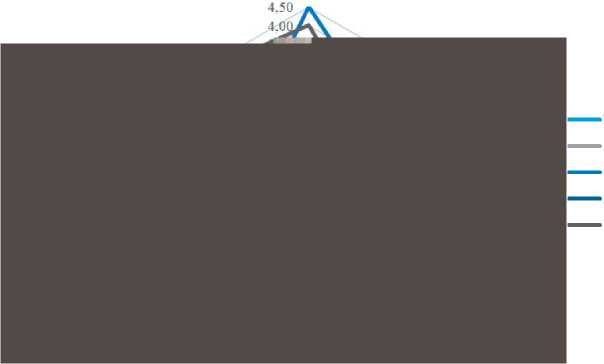
To identify the strengths and weaknesses of existing territorial tourism system monitoring systems, an expert assessment method was used. The study sample consisted of 22 experts. The selection criteria included professional experience directly related to tourism management, as well as scientific publications or practical experience in the field of monitoring territorial recreational and tourism systems. Thus, the sample included representatives of state and municipal authorities, analysts from consulting and research organizations, and academic researchers whose research focuses on assessing recreational and tourism potential. Each expert was asked to rate the data sources and analytical systems for territorial tourism monitoring on a scale of 1 to 5 (where 5 is the highest score) based on the following criteria: data completeness, frequency of updates, reliability of sources, verifiability, technological complexity, and analytical flexibility. The results of the expert assessments are presented in Fig. 1.
In addition to assigning scores, experts were asked to formulate a rationale for the scores assigned to each criterion. Table 3 provides a summary of each criterion.
Table 2. Classification of the main methods for monitoring territorial tourism systems
|
Group |
Purpose |
Method |
|
Statistical and economic-mathematical methods |
Quantitative assessment of the current state, identification of trends, forecasting |
Descriptive statistics methods |
|
Correlation and regression analysis |
||
|
Factor and cluster analysis |
||
|
Econometric modeling |
||
|
Cartographic and GIS methods |
Spatial analysis of territorial tourism systems, assessment of territorial relationships and loads |
Thematic mapping methods |
|
Spatial analysis in GIS |
||
|
Buffer zone analysis |
||
|
Sociological and marketing methods |
Assessment of the quality of the tourism product, study of opinions, motivations, and satisfaction of tourists, analysis of the image of the territory |
Questionnaires and surveys |
|
In-depth interviews and focus groups |
||
|
Content analysis |
||
|
ABC analysis and benchmarking |
||
|
Complex and integrated assessment methods |
Consolidation of disparate indicators into unified indicator systems for the overall assessment of the sustainability, competitiveness, and effectiveness of territorial tourism systems |
Development of key performance indicator systems |
|
Construction of integrated indices |
||
|
Point assessment and rating method |
Data completeness
Primary operational systems Secondary aggregation platforms Government accounting systems Indirect monitoring systems Synthetic analytical systems
Fig. 1. Results of expert assessments of existing territorial tourism monitoring systems
The expert assessment, the results of which are systematized in Table 3, clearly demonstrates that none of the existing types of monitoring systems is universal, and each has a unique combination of advantages and limitations. For example, primary operational systems lead in data update frequency but are inferior in comprehensiveness, while state accounting systems, conversely, ensure regulatory comprehensiveness and reliability, but are strictly regulated and inflexible. The key conclusion is that effective monitoring of territorial tourism systems in today’s environment cannot rely on a single data source and requires a synergistic approach based on the integration of various systems to mutually compensate for their weaknesses and maximize analytical potential.
Conclusions
The analysis confirmed a significant methodological gap in monitoring territorial tourism systems in the context of increased economic instability and transformation. Existing monitoring systems, which rely primarily on traditional statistical indicators and government records, demonstrate limited effectiveness. Their key shortcomings include their static nature, fragmentation, reliance on retrospective analysis, and inability to quickly reflect qualitative changes, such as shifts in consumer behavior or the redistribution of tourist flows. This renders them unsuitable for timely management decision-making in a dynamic environment.
To address this problem, the study substantiates the need to implement a comprehensive monitoring approach that integrates diverse data sources and analytical methods. The proposed approach involves a combination of primary operational systems, secondary aggregation platforms, government statistical data, indirect monitoring systems (analysis of digital footprints and banking transaction data), and synthetic analytical systems. This synthesis overcomes the limitations of each individual source and ensures a multidimensional, dynamic, and relevant assessment of the state of the territorial tourism system.
The results of the expert assessment revealed differentiated characteristics of existing monitoring systems. State accounting systems demonstrate the greatest reliability and regulatory certainty, but they are inferior in flexibility and timeliness. Primary operational and indirect monitoring systems provide high data update rates and analytical flexibility, but suffer from fragmentation and require additional verification procedures. Synthetic analytical systems, while possessing the greatest potential for forecasting and scenario modeling, are most dependent on the quality and representativeness of the source data.
Table 3. Characteristics of existing monitoring systems for territorial tourism systems, identified based on the results of expert assessments
|
Criterion / System Type |
Primary operational systems |
Secondary aggregation platforms |
Government accounting systems |
Indirect monitoring systems |
Synthetic analytical systems |
|
Data completeness |
Completeness in a narrow subject area. Raw data, non-aggre-gated |
Selective. Data aggregated and standardized for comparison |
Completeness is ensured by law for all reporting organizations |
Data is fragmented but informative |
Determined by the model’s objectives. Data is borrowed and combined |
|
Update frequency |
Frequently in real time |
Periodic (monthly, quarterly). Dependent on collection and processing cycles |
Regulated, linked to reporting cycles |
Inconsistent, on-demand, or as part of a specific study |
Dependent on updating the source data. May be a onetime update |
|
Source reliability |
Data source – direct process operator |
Dependent on the reliability of the primary sources and the aggregation methodology |
Data has official status |
Requires verification of representativeness |
Conditional. Dependent on the reliability of the source data |
|
Verification possibility |
Direct verification through access to source data |
Verification through reconciliation with primary sources |
Through official requests and reconciliation with published reports |
Verification through experiment repetition or sample expansion; |
Requires verification of the algorithm and all input data |
|
Technological complexity |
Hardware integration, stream processing |
Storage of large data sets, parsing, ETL processes |
Scalability, security, standardization |
Dependent on the method, may require specialized equipment |
Machine learning, mathematical modeling, GIS |
|
Analysis flexibility |
Data structured for specific operational tasks |
Sufficient at an aggregated level |
Analysis within the strict framework of approved indicators and formats |
High when solving a specific, narrow problem |
Enables forecasting and scenario modeling |
Therefore, to improve the effectiveness of tourism management, it is necessary to develop and implement adaptive monitoring systems based on the integration of diverse data types and analytical methods. A promising direction for further research is the formalization of procedures for verifying data from non-tra-ditional sources, as well as the development of adaptive indicator systems that take into account regional specifics and are capable of recording the transition of the territorial tourism system to a new qualitative state.
