
Доктринальные основы формирования учения о целях уголовного наказания
Журнал: Вестник Восточно-Сибирского института Министерства внутренних дел России @vestnik-vsi-mvd
Рубрика: Уголовно-правовые науки (юридические науки)
Статья в выпуске: 2 (117), 2026 года.
Бесплатный доступ
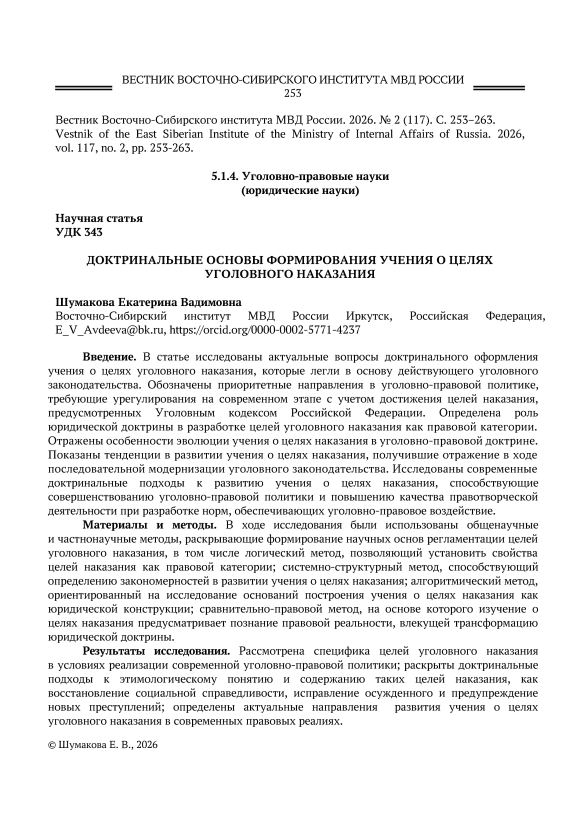
Введение. В статье исследованы актуальные вопросы доктринального оформления учения о целях уголовного наказания, которые легли в основу действующего уголовного законодательства. Обозначены приоритетные направления в уголовно-правовой политике, требующие урегулирования на современном этапе с учетом достижения целей наказания, предусмотренных Уголовным кодексом Российской Федерации. Определена роль юридической доктрины в разработке целей уголовного наказания как правовой категории. Отражены особенности эволюции учения о целях наказания в уголовно-правовой доктрине. Показаны тенденции в развитии учения о целях наказания, получившие отражение в ходе последовательной модернизации уголовного законодательства. Исследованы современные доктринальные подходы к развитию учения о целях наказания, способствующие совершенствованию уголовно-правовой политики и повышению качества правотворческой деятельности при разработке норм, обеспечивающих уголовно-правовое воздействие. Материалы и методы. В ходе исследования были использованы общенаучные и частнонаучные методы, раскрывающие формирование научных основ регламентации целей уголовного наказания, в том числе логический метод, позволяющий установить свойства целей наказания как правовой категории; системно-структурный метод, способствующий определению закономерностей в развитии учения о целях наказания; алгоритмический метод, ориентированный на исследование оснований построения учения о целях наказания как юридической конструкции; сравнительно-правовой метод, на основе которого изучение о целях наказания предусматривает познание правовой реальности, влекущей трансформацию юридической доктрины. Результаты исследования. Рассмотрена специфика целей уголовного наказания в условиях реализации современной уголовно-правовой политики; раскрыты доктринальные подходы к этимологическому понятию и содержанию таких целей наказания, как восстановление социальной справедливости, исправление осужденного и предупреждение новых преступлений; определены актуальные направления развития учения о целях уголовного наказания в современных правовых реалиях. Выводы и заключения. Сформулированы выводы о том, что одним из ключевых направлений в реализации уголовно-правовой политики, имеющих особую значимость на современном этапе, является установление целей наказания, определяющих его назначение и исполнение; в основу формирования действующей системы целей наказания была положена разработанная теория полезности возмездия и всеобщего страха перед наказанием; значимую роль в формировании учения о целях уголовного наказания играет разработанная теория предупреждения преступлений; восстановление социальной справедливости как цель наказания представляет собой компенсацию причиненного личности, обществу, государству преступлением вреда путем лишения или ограничения прав, соответствующего характеру, общественной опасности, обстоятельствам совершения деяния и личности виновного; цель исправления осужденного реализуется в правоприменительной деятельности путем устойчивого изменения сознания, воли и поведения лица к социальным и правовым нормам, исключающим вероятность рецидива преступлений; цель предупреждения совершения новых преступлений подлежит реализации в виде информационно-превентивного воздействия путем повышения качества законодательного оформления, адекватизации мер при назначении наказания.
Короткий адрес: https://sciup.org/143185911
IDS: 143185911 | УДК: 343
Doctrinal foundations for the formation of the doctrine of the goals of сriminal punishment
Introduction.This article examines current issues in the doctrinal formulation of the doctrine of the purposes of criminal punishment, which form the basis of current criminal legislation. Priority areas in criminal law policy requiring regulation at the present stage are identified, taking into account the achievement of the purposes of punishment stipulated by the Criminal Code of the Russian Federation. The role of legal doctrine in the development of the purposes of criminal punishment as a legal category is determined. The features of the evolution of the doctrine of the purposes of punishment in criminal law doctrine are reflected. Trends in the development of the doctrine of the purposes of punishment, reflected in the consistent modernization of criminal legislation, are shown. Modern doctrinal approaches to the development of the doctrine of the purposes of punishment are examined, contributing to the improvement of criminal law policy and enhancing the quality of lawmaking in the development of norms ensuring criminal law impact. Materials and Methods.The study utilized general and specific scientific methods to reveal the formation of the scientific foundations for regulating the purposes of criminal punishment, including: a logical method, which allows for the establishment of the properties of the purposes of punishment as a legal category; a systemic-structural method, which helps to identify patterns in the development of the doctrine of the purposes of punishment; an algorithmic method, which focuses on the study of the foundations for constructing the doctrine of the purposes of punishment as a legal construct; and a comparative legal method, which provides the basis for studying the purposes of punishment to understand the legal reality, leading to the transformation of legal doctrine. The Results of the Study. The article examines the specifics of the goals of criminal punishment in the context of the implementation of modern criminal law policy; reveals doctrinal approaches to the etymological concept and content of such goals of punishment as the restoration of social justice, the correction of the convicted person, and the prevention of new crimes; and identifies current directions in the development of the doctrine of the goals of criminal punishment in modern legal realities. Findings and Conclusions.The following conclusions have been formulated: one of the key areas in the implementation of criminal-legal policy, which is of particular importance at the present stage, is the establishment of the purposes of punishment that determine its appointment and execution; the developed theory of the usefulness of retribution and the general fear of punishment was taken as the basis for the formation of the current system of punishment purposes; the developed theory of crime prevention plays a significant role in the formation of the doctrine of the purposes of criminal punishment; the restoration of social justice as the purpose of punishment is compensation for the harm caused to an individual, society, and the state by a crime through deprivation or restriction of rights corresponding to the nature, social danger, circumstances of the act and the personality of the perpetrator; the goal of correction of a convicted person is realized in law enforcement activities through a sustainable change in consciousness, will and behavior of a person towards social and legal norms that exclude the likelihood of recidivism; the goal of preventing the commission of new crimes is subject to implementation in the form of informational and preventive influence by improving the quality of legislative design and adequacy of measures when assigning punishment.
