
Economic and Geographical Factors Influencing Tourism Development in the Mangystau Region
Journal: Бюллетень науки и практики @bulletennauki
Section: Социальные и гуманитарные науки
Article in issue: 8 т.12, 2026.
Free access
This article examines the economic and geographical factors influencing tourism development in the Mangystau Region of Kazakhstan. The study focuses on the region’s strategic location on the Caspian Sea, its distinctive desert and coastal landscapes, cultural and historical heritage, transport accessibility, settlement patterns, infrastructure conditions, investment potential, and regional economic specialization. The research shows that Mangystau’s tourism potential is shaped by the interaction of natural, cultural, infrastructural, and socio-economic resources. The region has significant opportunities for the development of coastal tourism, ecological tourism, pilgrimage routes, cultural tourism, and adventure tourism. At the same time, several constraints continue to limit the full realization of this potential, including insufficient infrastructure, seasonality of demand, uneven service quality, limited accessibility of remote attractions, and the need for stronger marketing and investment mechanisms. The article argues that sustainable tourism development in Mangystau requires an integrated approach combining economic diversification, spatial planning, environmental protection, community participation, and the modernization of tourism infrastructure. Effective use of the region’s economic and geographical advantages can strengthen its competitiveness, increase tourist flows, create employment opportunities, and support the integration of Mangystau into national and international tourism markets.
Short address: https://sciup.org/14138891
IDS: 14138891 | UDC: 338.48 | DOI: 10.33619/2414-2948/129/27
Text of the scientific article Economic and Geographical Factors Influencing Tourism Development in the Mangystau Region
Бюллетень науки и практики / Bulletin of Science and Practice
UDC 338.48
In recent years, tourism has become one of the most dynamic sectors of regional development. For many territories, it is no longer viewed only as a form of recreation or leisure, but also as an important instrument of economic diversification, employment creation, cultural promotion, and territorial branding. This is especially relevant for regions that possess rich natural and cultural resources but are still searching for new ways to strengthen their competitiveness beyond traditional sectors of the economy.
Mangystau Region is one such territory. Its geographical location on the Caspian Sea, proximity to international transport routes, desert and coastal landscapes, sacred sites, and deep historical memory create a strong basis for tourism development. The region is often perceived as a remote and harsh desert area. However, this image does not fully reflect its real tourism potential. Mangystau is a territory of contrasts: sea and desert, cliffs and valleys, sacred underground mosques and modern urban infrastructure, ancient caravan routes and contemporary transport corridors. These contrasts make the region attractive for different types of tourists, including those interested in nature, history, pilgrimage, photography, adventure, and cultural experiences.
The economic-geographical position of Mangystau plays a particularly important role in this process. The region is connected to the Caspian Sea, borders several countries through maritime and land routes, and is located near important transport corridors linking Kazakhstan with the Caucasus, Central Asia, Russia, and Iran. This position creates opportunities not only for domestic tourism but also for international and cross-border tourism. At the same time, geographical advantages alone do not automatically guarantee successful tourism development. They must be supported by infrastructure, investment, qualified personnel, effective marketing, environmental protection, and coordinated regional planning. Therefore, the study of economic and geographical factors influencing tourism development in Mangystau is important both theoretically and practically. From a theoretical point of view, it helps to understand how location, natural resources, cultural heritage, transport accessibility, and regional specialization shape tourism systems. From a practical point of view, it allows for identifying the strengths and weaknesses of Mangystau as a tourism destination and formulating directions for sustainable development.
The purpose of this article is to analyze the main economic and geographical factors that influence tourism development in the Mangystau Region and to identify the opportunities and limitations associated with the formation of a competitive regional tourism product.
Research Methods
The study is based on a qualitative and analytical research design. The main methodological approach is economic-geographical analysis, which makes it possible to examine the relationship between the spatial position of the region, its natural and cultural resources, transport accessibility, infrastructure, and tourism development opportunities.
The research also uses descriptive and comparative methods. The descriptive method was applied to characterize the main tourism resources of Mangystau, including coastal areas, sacred sites, geological landscapes, natural attractions, and cultural heritage objects. The comparative method helped to assess the relationship between the region’s tourism potential and the existing limitations that affect its practical realization.
A systemic approach was also used in the study. Tourism is considered not as a separate activity, but as a complex system that includes natural resources, cultural heritage, transport, accommodation, food services, local communities, public administration, investment, and marketing. This approach is important because the quality of a tourism product depends not only on individual attractions, but also on the coordination of many actors and services.
The information base of the study includes academic literature on economic geography, tourism development, hospitality, and regional tourism systems. The article also uses regional studies devoted to Mangystau’s tourism potential, sacred geography, cultural heritage, and natural landscapes. Special attention is paid to works that describe the historical and symbolic meaning of Mangystau, including interpretations of the region’s name and its sacred places.
This combination of methods allows the article to identify the key economic and geographical advantages of Mangystau, reveal the main barriers to tourism development, and propose directions for strengthening the region’s tourism competitiveness.
Geographical location refers to the position of any point or area on the Earth’s surface in relation to other interacting objects and territories. In academic geography, several key dimensions of geographical location are distinguished.
First, economic-geographical location (EGL) describes the position of a territory in relation to elements of social production, as well as its spatial relationship to regions, countries, and economic systems. Second, physical-geographical location reflects the position of a given object or region in relation to natural features that shape its environmental characteristics, regardless of whether the object lies within or outside a particular natural area. Third, mathematical-geographical location refers to the placement of a geographical object within a system of geographic coordinates on the Earth’s surface.
In addition, ethnocultural location defines the position of a territory relative to cultural-geographical systems of varying scales and to key centers of spiritual and cultural development. Closely related is the concept of geopolitical location, which describes a territory’s position relative to centers of economic and military power, as well as political, economic, and religious groupings. This can be further divided into: (i) political-geographical location, reflecting a country’s position on the political map in relation to concentrations of social and political forces; and (ii) military-geographical location, indicating proximity to centers of military power or potential conflict zones. Another important dimension is ecological-geographical location, which characterizes a region’s position relative to environmentally favorable or unfavorable areas. Finally, transport-geographical location refers to the accessibility of a territory through transport networks, the intensity of transport flows, and the overall comfort and efficiency of travel.
The importance of economic-geographical and geopolitical positioning in territorial development is widely acknowledged. The concept of “positional pressure” (or “location pressure”), introduced by Rodoman, highlights the fundamental role of spatial positioning in geography. These spatial characteristics function as integral categories that allow for the assessment of a region’s place within broader geo-economic and geopolitical systems.
In the context of contemporary post-industrial development—characterized by globalization, integration processes, innovation diffusion, and increasing economic mobility—the traditional components of economic-geographical location (such as transport, industrial, and recreational positioning) are complemented by new dimensions. These include financial-geographical, innovation-geographical, and agglomeration-based location factors, which are becoming increasingly significant in shaping regional competitiveness.
Economic-geographical location possesses several key properties. First, it is inherently historical, evolving over time under the influence of multiple factors. Second, it has a potential (probabilistic) character, meaning that while it creates opportunities for development, it does not determine outcomes in advance. Third, it has a distance-related (logistical) dimension, enabling optimization of spatial interactions and transport flows.
Both economic-geographical and geopolitical conditions exert a strong influence on the structure, direction, and intensity of a region’s external socio-economic relations. According to the classical definition by N. N. Baransky, economic-geographical location can be understood as “the system of spatial relations of enterprises, settlements, areas, regions, and countries to external objects that are economically significant to them.” In other words, it represents a position within economic space defined by relationships to natural resources, human-made environments, and population distribution [1].
From the perspective of tourism development, economic-geographical factors operate in two main ways. On the one hand, they act as attraction factors, drawing tourists to specific destinations. On the other hand, they function as enabling conditions, shaping the infrastructure and systems necessary for tourism development. The diversity of economic structures, technological systems, and spatial organization across countries generates interest among business travelers and professionals, thereby contributing to the growth of business and industrial tourism.
Moreover, economic-geographical factors play a crucial role in supporting international tourism through the development of infrastructure, the expansion of accommodation capacity, and the improvement of transport and communication systems. The material base of tourism evolves through both extensive growth (the expansion of facilities such as hotels, resorts, and transport networks) and intensive development (modernization, technological innovation, and service quality improvements). These transformations enhance both the efficiency and competitiveness of tourism systems.
Transport infrastructure, in particular, is a critical determinant of tourism development. Advances in science and technology have significantly improved the speed, safety, capacity, and comfort of transportation, thereby facilitating greater mobility and expanding tourism flows.
Key economic and geographical factors influencing international tourism include:
-
1. The economic-geographical position of the destination relative to major tourist markets and transit routes;
-
2. The level of economic development of both the destination and tourist-generating countries;
-
3. The availability of qualified personnel to support tourism services;
-
4. The price level of tourism-related goods and services, including accommodation, transport, and catering;
-
5. The level of development of internal and external transport connections.
Within this framework, the Mangystau region possesses significant tourism potential due to its unique geographical position, rich natural landscapes, and concentration of cultural and historical heritage sites. Notably, 43 historical and cultural sites in the region are included in the national program “Sacred Geography of Kazakhstan,” including 15 of national importance and 28 of regional importance.
The etymology of the name “Mangystau” remains debated. One widely accepted interpretation associates it with the phrase “thousand winter camps” (мың қыстау), reflecting its historical role as a nomadic settlement area. Other hypotheses link the name to tribal designations or ancient Turkic linguistic roots. According to Koyshybaev (1985), four main interpretations exist, while [9] suggests that the term may also be associated with the meaning “mountain of spirits” or “mysterious mountains,” reflecting the region’s deep cultural and spiritual significance.
According to the regional scholar Serikbol Kondybay, one of the most compelling interpretations of the toponym Mangystau is linked to mythological concepts associated with “monstrous beings.” In Turkic and Mongolian mythological traditions, the term “mangysh” (or mangys, mangus) refers to dragons or powerful mythical creatures. In Mongolian mythology, these beings are typically portrayed as purely malevolent, whereas in Turkic traditions they possess a dual nature, embodying both destructive and protective characteristics [9].
Kondybay further argues that among the Oghuz-Turkmen tribes historically inhabiting Mangystau, the Salyr (or Salor) clan played a significant role. This tribe continues to exist as a major component of the modern Turkmen ethnic structure. Moreover, parallels have been identified between the Salor groups of Turkmenistan and Turkic-speaking Salyr communities in China’s Qinghai province, suggesting possible historical and genetic linkages. Within this context, it is believed that the Oghuz tribes referred to the Karatau range as “Mangyshtag,” a name derived from earlier mythological narratives. Legends of dragons and heroic encounters with such creatures are present in both Turkmen and Kazakh folklore, including narratives related to figures such as Aynazar Batyr.
From this perspective, the name Mangystau can be interpreted as a calque (loan translation) rooted in earlier mythological traditions, meaning “the mountain of the mangys (dragon)” or, metaphorically, “the mountain of the dragon.” This interpretation reflects not only linguistic evolution but also the deep symbolic and cultural layers embedded in the region’s historical geography [9].
From a contemporary development perspective, tourism in the Mangystau region represents one of the most promising sectors of the regional economy. Current strategic priorities for tourism development focus on several key growth points. These include:
-
1. coastal tourism along the Caspian Sea;
-
2. ethnic, cultural, and ecological tourism;
-
3. pilgrimage tourism to sacred sites such as Beket-Ata and Shopan-Ata.
The region’s economic-geographical characteristics — combined with its unique natural landscapes, rich historical heritage, extended beach season, and proximity to major tourist-generating countries — create favorable conditions for sustainable tourism development. A particularly important advantage of Mangystau is its strategic location at the intersection of major international transport corridors, including the TRACECA corridor (Transport Corridor Europe–Caucasus–Asia) and the North–South transport corridor. The region borders five countries: Russia, Azerbaijan, and Iran via the Caspian Sea, Turkmenistan to the south, and Uzbekistan to the east. Its internal borders extend 319 km, while external borders reach 1,173 km, including 810 km of maritime boundaries.
Based on expert assessments, three primary zones of tourism development have been identified. First, the coastal tourism zone stretches from Aktau to the Kuryk ferry complex, covering approximately 63 km. This area is particularly advantageous due to its developed infrastructure, including transport accessibility, medical facilities, urban amenities, and an international airport capable of handling all types of aircraft. Second, the region offers substantial opportunities for ethnic, cultural, and ecological tourism, supported by the presence of approximately 362 sacred sites and over 13,000 historical monuments under state protection. Recognizing this unique heritage, local authorities submitted an application to UNESCO in 2017 for the establishment of the Mangystau Geopark and its inclusion in the UNESCO Global Geoparks Network.
Third, pilgrimage tourism to sacred sites such as Beket-Ata and Shopan-Ata continues to grow steadily. This growth is closely linked to improvements in transport and access infrastructure, which have enhanced connectivity to these remote spiritual destinations.
Overall, Mangystau possesses a range of attractive features for both domestic and international tourists. The development of recreational activities in the region contributes not only to economic growth but also to the resolution of key social issues, including job creation, improvement of living standards, preservation of cultural heritage, and strengthening of intercultural dialogue. Furthermore, tourism encourages collaboration between government institutions, civil society, and private enterprises in environmental protection and sustainable development.Given its rich natural and cultural heritage, Mangystau has strong potential to become a major recreational destination both nationally and internationally. However, achieving this objective requires a comprehensive and systematic assessment of the region’s recreational potential. Such an assessment should address both the opportunities and constraints of tourism development, as well as support the formulation of spatial planning and economic strategies. A comprehensive evaluation is essential to provide an objective understanding of the region’s tourism capacity and to determine the competitiveness of tourism products in both domestic and global markets. Among various approaches, one of the most widely applied methods involves assessing the suitability of natural and territorial parameters for recreational use. Importantly, such evaluations must consider both the perspectives of tourism planners and the expectations of tourists. Recreational assessment is inherently a social category, as it is based on analyzing both actual and potential perceptions of leisure conditions. The effectiveness of tourism is determined by the ability to combine multiple activities within a single destination, which underscores the importance of an integrated approach to resource evaluation. In this regard, identifying the relative importance of individual components within a natural complex is critical for delivering high-quality tourism services [7].
Following the conceptual clarification of tourism, tourism activity can be defined as the set of services provided by enterprises, organizations, institutions, or individual entrepreneurs aimed at satisfying the needs of visitors for travel, recreation, and excursions. Tourism services represent purposeful actions within the service sector, aligned with the objectives of tourism and the characteristics of tourism products, while adhering to universal ethical standards. Tourism services are distinguished from tangible goods by four key characteristics: intangibility, inseparability of production and consumption, variability, and perishability. These features define the specificity of tourism as a service-based industry and highlight the importance of quality management and customer experience (Figure 1).
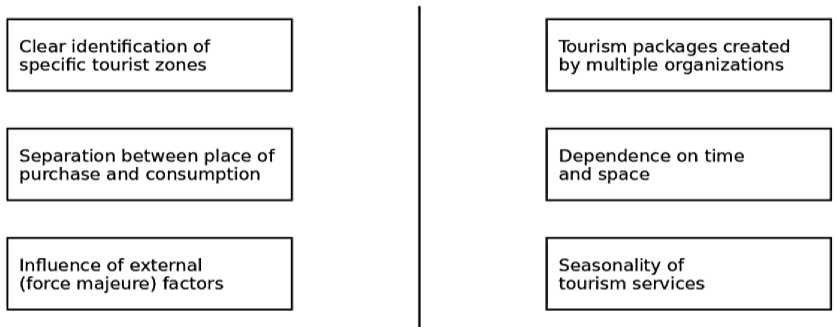
Figure 1. Distinctive Characteristics of Tourism Services
Бюллетень науки и практики / Bulletin of Science and Practice Т. 12. №8 2026
The formation of a tourism product is a complex, multi-component process that directly depends on the coordinated provision of services by numerous enterprises involved in serving individuals during travel and leisure activities. These include transport companies, catering and food service providers, accommodation facilities such as hotels, as well as excursion, educational, entertainment, sports, and resort organizations. Each of these actors contributes to the overall value chain of the tourism product, shaping the quality and experience of tourism services (Figure 2).
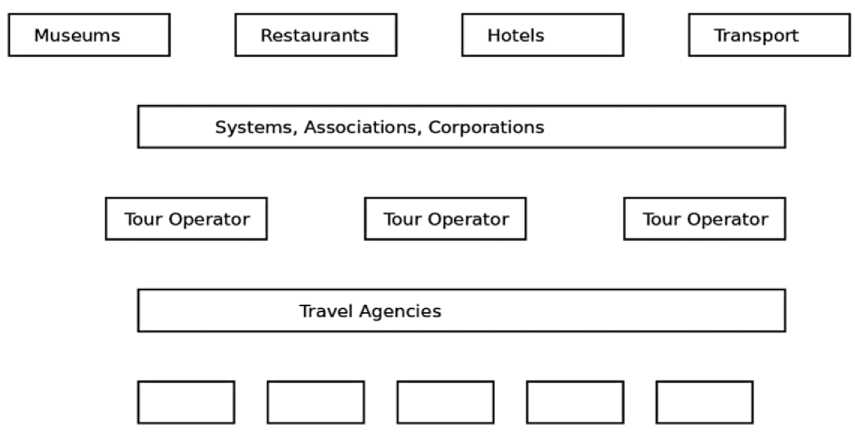
Figure. 2. Structural model of tourism product formation
A substantial tourism potential embedded within large regional systems constitutes one of the key characteristics of a functioning tourism system. This is because its structural components — natural, cultural, and infrastructural — serve as primary attractors, stimulate travel demand, and ultimately activate the entire tourism system [3].
When examining Mangystau, the question arises: what defines its tourism potential? It is widely acknowledged that nearly two-thirds of Kazakhstan’s historical, cultural, and architectural monuments are concentrated in this region. Many of these sites are not only regionally significant but also comparable to the finest examples of national architectural heritage. Scholars consistently emphasize that the sacred Mangyshlak Peninsula hosts unique spiritual landscapes capable of capturing global attention due to their distinctiveness.
At present, several key heritage sites in Mangystau — such as the Shakpak-Ata underground mosque and the Sisem-Ata necropolis — have been nominated under various categories for inclusion in the UNESCO World Heritage List. This growing recognition highlights the increasing urgency of developing tourism as a mechanism for presenting Mangystau’s unique attractions to the global community.
At first glance, Mangystau may appear as a harsh desert environment characterized by arid conditions, strong winds, and dust storms. However, this perception is misleading. The peninsula also contains lush oases, flowering valleys, and dramatic canyons, offering a striking contrast between desolation and natural beauty. Today, Mangystau is increasingly framed as a destination for both tourism and adventure.
The region offers a diverse portfolio of attractions: visitors can relax on the golden beaches of Golubaya Bay, descend into the Karagiye Depression — the deepest point in the CIS region — or explore the Tamshaly and Saura gorges, where freshwater springs emerge from steep cliffs. The Karatau mountain range and the Zhygylgan canyon showcase extraordinary geomorphological formations shaped by wind and water over millennia. Particularly notable is the Aktau mountain system, where white limestone ridges, interspersed with red jasper and quartz formations, create visually striking landscapes.
Seasonal phenomena further enhance the region’s appeal. During spring rainfall, fossilized remains such as shark teeth, ancient turtles, and prehistoric flora can be discovered—evidence of the region’s geological past as part of the ancient Tethys Ocean. In addition, Mangystau hosts several protected areas, including the Ustyurt State Nature Reserve and the Kendirli-Kayasan conservation zone. The region’s biodiversity is significant, with approximately 70% of Kazakhstan’s bird species and one-third of its mammals represented [2].
Tourism and hospitality are inseparable components of a unified service ecosystem. While tourism refers specifically to travel-related activities, hospitality represents a broader concept encompassing the satisfaction of both tourists’ and general consumers’ needs [6]. In essence, hospitality provides the infrastructure and service environment that enables tourism to function effectively.
Hospitality, traditionally understood as kindness and generosity toward guests, has evolved into a complex global industry employing millions of professionals. It integrates multiple sectors, including accommodation, food services, entertainment, transportation, and event organization. As such, it forms a comprehensive system designed to meet diverse consumer expectations.
The rapid expansion of tourism has led to the emergence of specialized sectors, including souvenir production and tourism-oriented goods manufacturing. This diversification has resulted in the formation of a distinct tourism-service complex, characterized by strong interconnections between various industries.
According to Brymer, the hospitality industry can be understood as a collective system of entrepreneurial activities specializing in guest services, encompassing food provision, accommodation, transportation, and recreation. Similarly, Webster defines it as a sector grounded in principles of generosity and service excellence [5].
The rapid growth of tourism is driven by several key factors:
Rising income levels, allowing consumers to allocate more resources to leisure and travel. In developed economies, tourism expenditures now rank second only to housing costs.
Urbanization and environmental pressures, which increase demand for recreation in natural and less polluted environments.
Expansion of leisure time, enabling individuals to engage in travel activities more frequently.
In developed countries, tourism behavior has become structured: extended vacations are often spent abroad, weekends are used for domestic excursions, and evenings are dedicated to urban leisure activities. This pattern has significantly contributed to the growth of domestic tourism markets.
Hospitality is deeply rooted in cultural traditions. In ancient Greece, the concept of xenia (guestfriendship) governed the relationship between host and guest, reflecting moral obligations and social status [4]. Similarly, in Kazakh culture, hospitality is not merely etiquette but a fundamental social value shaped by nomadic traditions.
Historically, refusing food or shelter to a traveler was considered a grave moral failure among Kazakhs. Guests were welcomed with generosity, and failure to uphold hospitality norms resulted in social disapproval. Traditions such as erulik — a welcoming practice for new settlers — illustrate the enduring importance of communal support and social cohesion.
Mangystau’s tourism potential lies at the intersection of unique natural landscapes, rich cultural heritage, and deeply rooted traditions of hospitality. While its physical environment may initially appear challenging, its diversity, authenticity, and symbolic significance position it as a highly competitive destination in the global tourism market.
The integration of tourism and hospitality industries, supported by strategic development and international recognition (e.g., UNESCO nominations), provides a strong foundation for sustainable growth. Ultimately, Mangystau represents not only a geographic space but also a cultural and experiential system capable of delivering meaningful and transformative tourism experiences.
Results and Discussion
Economic-geographical position as a tourism advantage
The economic-geographical position of Mangystau is one of the main factors shaping its tourism potential. The region is located on the eastern coast of the Caspian Sea and has access to important maritime and land connections. Its position near international transport corridors gives it strategic importance not only for trade and logistics, but also for tourism.
Mangystau’s location creates opportunities for the development of several types of tourism at the same time. Coastal areas support beach and recreational tourism. Desert landscapes and geological formations create conditions for adventure and ecological tourism. Sacred sites and underground mosques form the basis for pilgrimage tourism. Historical monuments and oral traditions strengthen the cultural identity of the region and make it attractive for educational and cultural routes.
However, the region’s location also creates certain difficulties. Many tourist sites are located far from urban centers and require long-distance travel through desert areas. This increases the importance of road quality, safety, navigation, visitor information, and service infrastructure. Therefore, the geographical position of Mangystau should be understood not only as an advantage, but also as a planning challenge.
Natural and cultural resources of Mangystau
Mangystau is one of the most distinctive regions of Kazakhstan in terms of natural and cultural heritage. Its landscapes include the Caspian coast, desert plateaus, canyons, cliffs, valleys, salt flats, underground mosques, necropolises, and sacred places. Such diversity allows the region to offer a wide range of tourism experiences.
The tourism image of Mangystau is strongly connected with places such as the Ustyurt Plateau, Karagiye Depression, Sherkala Mountain, Torysh Valley of Balls, Tuzbair Salt Flat, Bozzhyra, Shakpak-Ata, Beket-Ata, Shopan-Ata, and other sacred and natural sites. These places are not only visually attractive; they also carry historical, spiritual, and symbolic meanings. For this reason, tourism in Mangystau should not be limited to sightseeing. It should be developed as an experience that connects landscape, history, local memory, and cultural interpretation.
The sacred geography of Mangystau is especially important. The region contains a large number of sacred sites and historical monuments, many of which are connected with pilgrimage traditions, oral history, and local identity. This gives Mangystau a strong competitive advantage compared with destinations that rely only on natural landscapes.
At the same time, the fragile nature of many landscapes requires careful management. Desert ecosystems, sacred sites, and geological formations can be easily damaged by uncontrolled tourism flows, off-road driving, waste, and unregulated construction. Therefore, the development of tourism in Mangystau should be based on the principles of sustainability and respect for local heritage.
Infrastructure and accessibility
Infrastructure is one of the decisive factors in transforming tourism potential into a real tourism product. Even the most attractive destination cannot become competitive if tourists face difficulties with access, safety, accommodation, food, information, and basic services.
Mangystau has several important infrastructure advantages. Aktau is a regional center with an airport, accommodation facilities, urban services, and access to the Caspian coast. The Kuryk port and transport corridors also strengthen the region’s connectivity. These factors create a foundation for tourism growth.
However, the main challenge is the uneven distribution of infrastructure. While Aktau and coastal areas have relatively better conditions, many remote destinations still lack sufficient roads, signage, visitor centers, sanitation facilities, emergency services, and digital information. This limits the ability of tourism companies to organize safe and comfortable routes and reduces the quality of the visitor experience.
For this reason, tourism infrastructure in Mangystau should be developed not only in large urban or coastal zones, but also along key tourist routes. Small-scale infrastructure, such as road signs, rest areas, eco-toilets, waste collection points, mobile communication coverage, QR information boards, and local guide services, can significantly improve the quality of tourism without damaging the natural environment.
Tourism product formation and hospitality
Tourism is not created by attractions alone. A destination becomes competitive when attractions are combined with services, routes, interpretation, hospitality, transport, accommodation, food, safety, and emotional experience. In this sense, the tourism product is always a result of cooperation between many actors.
The uploaded article correctly emphasizes that tourism services have specific characteristics: they are intangible, depend on time and place, are influenced by external factors, and are often created by several organizations together. The figure on page 6 also shows that tourism product formation involves museums, restaurants, hotels, transport, tour operators, travel agencies, and other service providers.
This idea is especially relevant for Mangystau. A tourist route to Bozzhyra, Sherkala, Tuzbair, or Beket-Ata is not only a visit to a place. It includes transportation, guiding, storytelling, food, safety, photography stops, accommodation, communication with local residents, and emotional impressions. If one element is weak, the whole tourism experience becomes weaker.
Hospitality is another important advantage of the region. In Kazakh culture, hospitality is not simply a service standard; it is a social value rooted in nomadic traditions. For Mangystau, this cultural feature can become part of the tourism brand. Local food, guest traditions, yurt experiences, storytelling, and community-based tourism can make the region more authentic and attractive for visitors.
Main limitations of tourism development
Despite its strong potential, Mangystau faces several limitations that slow down tourism development.
First, tourism demand remains seasonal. Coastal tourism is mainly concentrated in the warm period, while many desert and adventure routes depend on weather conditions. This creates uneven income for tourism businesses and local communities.
Second, infrastructure in remote areas remains insufficient. Many attractive destinations are located far from Aktau and require better roads, safety systems, visitor information, and service points.
Third, service quality is uneven. Some tourism companies and guides provide high-quality experiences, while others lack professional training, language skills, environmental awareness, or customer service standards.
Fourth, marketing and digital promotion are still not fully developed. Mangystau is visually powerful and highly suitable for social media promotion, but the region needs a more systematic destination brand, multilingual information, digital maps, official route descriptions, and integrated promotion in domestic and international markets.
Fifth, environmental risks are increasing. Popular sites can suffer from uncontrolled vehicle movement, waste, and overcrowding during peak periods. Without proper management, tourism may damage the very resources on which it depends.
Sustainable development priorities
Sustainable tourism development in Mangystau should be based on balance. The region needs tourism growth, but this growth must not destroy natural landscapes, sacred sites, or local cultural values. Therefore, future development should focus on several priorities.
The first priority is infrastructure improvement along key routes. This includes roads, signage, visitor facilities, safety systems, and digital navigation.
The second priority is community involvement. Local residents should not remain only observers of tourism development. They should become active participants through guest houses, local food services, guiding, handicrafts, transport services, and cultural interpretation.
The third priority is environmental protection. Sensitive landscapes need visitor management, waste control, route regulation, and awareness campaigns.
The fourth priority is professional training. Guides, tour operators, accommodation providers, and service workers need regular training in hospitality, languages, safety, first aid, storytelling, and sustainable tourism standards.
The fifth priority is destination branding. Mangystau should be promoted not only as a place of beautiful landscapes, but as a unique region where the Caspian Sea, desert, sacred geography, nomadic culture, and adventure tourism meet.
Conclusion
The tourism development of the Mangystau Region is strongly influenced by its economic and geographical position, natural landscapes, cultural heritage, transport accessibility, and regional economic structure. The region’s location on the Caspian Sea, its connection with international transport corridors, and its proximity to neighboring countries create important opportunities for tourism growth. At the same time, its sacred sites, desert landscapes, geological formations, coastal areas, and traditions of hospitality give Mangystau a distinctive identity in the tourism market. The study shows that the tourism potential of Mangystau is not only a matter of natural beauty or historical monuments. It also depends on how these resources are connected through infrastructure, services, routes, marketing, investment, and local participation. In this sense, the main task is not simply to attract more tourists, but to create a well-organized and sustainable tourism system. Mangystau has the potential to become one of Kazakhstan’s most recognizable tourism destinations. However, this requires coordinated action. Public authorities, universities, tourism companies, local communities, and investors should work together to improve infrastructure, protect fragile landscapes, develop professional services, and promote the region in national and international markets. Sustainable tourism development in Mangystau should combine economic diversification, spatial planning, environmental responsibility, cultural heritage preservation, and community-based initiatives. If these directions are implemented consistently, tourism can become not only a source of income but also a mechanism for preserving regional identity, creating employment, strengthening local pride, and integrating Mangystau more actively into the global tourism space.
