
Effect of SiO₂ and Al₂O₃ nanoparticles on the aggregate stability, structure formation, and strength of cementitious materials
Journal: Nanotechnologies in Construction: A Scientific Internet-Journal @nanobuild-en
Section: Construction materials science
Article in issue: 3 Vol.18, 2026.
Free access
Introduction. The use of SiO2 and Al2O3 nanoparticles opens new possibilities for controlling the structure of cementitious materials. However, their influence on the aggregative stability of the coagulation structure and on the strength, characteristics has been insufficiently studied. This study established the effect of SiO2 and Al2O3 nanoparticles on the relationship between aggregative stability, early-age structure formation kinetics, and the strength of cementitious materials. Materials and Methods. Three cementitious systems based on Portland cement CEM I 42.5 were investigated: a reference system with a superplasticizer (Sika®ViscoCrete® 20 HE), as well as systems with the addition of SiO2 nanoparticles (dav = 10 nm, 0.01% by cement mass) and Al2O3 nanoparticles (dav = 50 nm, 0.1% by cement mass). The kinetics of early structure formation were evaluated by plastic strength using a cone plastometer. Aggregative stability was determined by compression rheometry using an Instron 5982 testing machine. The phase composition was established by X-ray diffractometry. The microstructure of the specimens was studied by scanning electron microscopy. Compressive strength was recorded after 1 and 28 days. Results. It was found that Al₂O₃ nanoparticles most significantly accelerate the process of early coagulation-crystallization structure formation in cementitious materials (the exponent of the kinetic equation is 1.13 without a change in the controlling process), increase aggregative stability by a factor of 2–3, but reduce plastic deformation. SiO2 nanoparticles maximally accelerate the hydration process (degree of hydration 93% after 28 days of hardening) while forming low-basic hydrosilicates. The 28-day compressive strength of cementitious materials modified with SiO2 and Al2O3 nanoparticles was 92.7 MPa and 96.4 MPa, respectively, which is significantly higher than that of the reference system (51.1 MPa). Discussion. The twofold increase in strength is attributed to different mechanisms: for SiO2 nanoparticles – their high pozzolanic activity and accumulation of high-strength cementitious phases; for Al2O3 nanoparticles – an increase in the aggregative stability of the coagulation structure, which ensures the formation of a homogeneous crystallization structure without major defects. Conclusion. Complex modifiers based on SiO2 and Al2O3 nanoparticles enable targeted control of both the hydration activity and structural homogeneity of cementitious materials, providing a strength increase of up to 1.9 times.
Similar articles in the section Glass industry. Ceramics. Cement and concrete
Short address: https://sciup.org/142248064
IDS: 142248064 | DOI: 10.15828/2075-8545-2026-18-3-279-290
Text of the scientific article Effect of SiO₂ and Al₂O₃ nanoparticles on the aggregate stability, structure formation, and strength of cementitious materials
Original article
Славчева Г.С., Артамонова О.В., Бритвина Е.А., Бабенко Д.С., Закатов А.Б. Влияние наномодификаторов SiO2 и Al2O3 на агрегативную устойчивость, структурообразование и прочность цементных систем. Нанотехнологии в строительстве. 2026;18(3):279– 290. – EDN: XLRUTV.
The industrial implementation of nanotechnology has provided qualitatively new opportunities for controlling the structure and properties not only of nanostructures [1–6] but also of macroscale objects such as construction composites, which also possess nanoscale structural levels [3–16]. The literature analysis allows several key research directions regarding the effect of nanoparticles on the concrete properties to be identified: controlling the mechanisms of hydration and structure formation [1–3], developing methods for the synthesis and dispersion of nanoparticles [4, 17–20], and creating materials with unique functional properties (self-sensing, self-healing) [21–25].
The most versatile effects in property regulation are achieved using SiO2 and Al2O3 nanoparticles, which is
Nanotechnologies in construction
Нанотехнологии в строительстве
2026; 18 (3): 279–290
Nanob
CONSTRUCTION MATERIALS SCIENCE
logically determined by their crystallochemical similarity to the phase-forming components of cementitious materials [1]. Studies [1, 7–16] propose a mechanism for the influence of these nanomodifiers on the hydration process. It has been shown that SiO2 nanoparticles exhibit high pozzolanic activity and a pronounced nucleation effect. Optimal dosages in most cementitious materials lie in the range of 0.5–3% by weight of cement. Al2O3 nanoparticles, at dosages of 0.5–2% by weight of cement, are particularly effective in enhancing early-age strength and forming an aluminum-enriched C–S–H layer [8–10, 14–16]. These effects are associated with the dissolution of Al2O3 and the accelerated formation of the ettringite. Combined nanoadditives based on SiO2 together with Al2O3 make it possible to combine pozzolanic activity, the nucleation effect, and specific chemical effects, ensuring high early and long-term strength, reduced water absorption, and increased corrosion resistance [7].
A less investigated issue is the effect of nanoadditives on the spatial-geometric modification of the structure, the control of its homogeneity characteristics, and, ultimately, on the mechanical properties of the material.
The significance of this problem for the structure formation of cementitious materials under nanomodification is determined by the following. The development of strength in cementitious materials is governed by the transition from a coagulation structure with reversible strength-related contacts to a crystallization structure with strong, irreversible intergrowth and overgrowth contacts. This process begins with the formation of a spatial structural network, which undergoes rapid strengthening as the concentration and dispersity of the solid phase increase during the hydration of clinker minerals. As a result, all types of defects and inhomogeneities of the coagulation structure are “inherited” during the formation of the crystallization structure and become irreversibly fixed within it, leading to a reduction in the material’s performance properties. Consequently, to enhance the strength of cementitious materials, it is necessary to create, already at the early stages of structure formation, the prerequisites for forming a maximally homogeneous structure free from major defects. Of primary importance here is the aggregative stability of the coagulation structure of cementitious materials – its ability to preserve the spatial structural network under external mechanical actions that are inevitable in manufacturing processes (e.g., during transportation, placement, etc.).
This article is devoted to the study of the influence of complex modifiers based on SiO2 and Al2O3 nanoparticles on the relationship between the aggregative stability of the coagulation structure and the characteristics of the crystallization structure and strength of cementitious materials.
The research involved:
-
• Establishing the effect of complex nanomodifiers on the early-age structure formation kinetics of cementitious materials.
-
• Evaluating the effect of complex nanomodifiers on the aggregative stability of the coagulation structure of viscoplastic cementitious materials under mechanical loading.
-
• Determining the effect of complex nanomodifiers on the phase composition, hydrate phase structure, and strength of the crystallization structure of hardened cementitious systems.
MATERIALS AND METHODS
Three types of cementitious materials were studied, as presented in Table 1.
The following raw components were used in the systems: Portland cement (C) CEM I 42.5 manufactured by “EUROCEMENT GROUP” (Russian State Standard GOST 31108–2016); a polycarboxylate ether-based superplasticizer (SP) of the brand Sika®ViscoCrete® 20 HE; and tap water (W) (Russian State Standard GOST 23732–2011). Two types of complex additives based on nanoparticles (NP) were used for modification: (1) NP SiO2 (dav ~ 10 nm) + SP, and (2) NP Al2O3 (dav ~ 50 nm) + SP. The nanoparticles were synthesized using the sol-gel method, which is described in detail in [17–20]. The superplasticizer was used to stabilize the resulting nanosized sols. The water-cement ratio (W/C) for each system was selected to maintain a normal consistency of the cement paste.
The mixtures were prepared in a “MATEST-E095” mixer by mixing the dry components with the solution for 3 minutes.
The kinetics of early-age structure formation were assessed by measuring the plastic strength using a self-developed cone plastometer (Fig. 1).
Table 1. Mixture proportioning of the cementitious systems
|
No. |
Components |
System ID |
Addictive proportioning |
W/C |
|
|
SP, % solution volume |
NP, % mass cement |
||||
|
1 |
Cement, water, superplasticizer (reference) |
C–W–SP |
0.2 |
– |
0.33 |
|
2 |
Cement, water, superplasticizer, SiO2, |
C–W–SP–SiO2 |
0.2 |
0.01 |
0.27 |
|
3 |
Cement, water, superplasticizer, Al2O3 |
C–W–SP–Al2O3 |
0.2 |
0.1 |
0.30 |
Nanotechnologies in construction
Нанотехнологии в строительстве
2026; 18 (3): 279–290
CONSTRUCTION MATERIALS SCIENCE
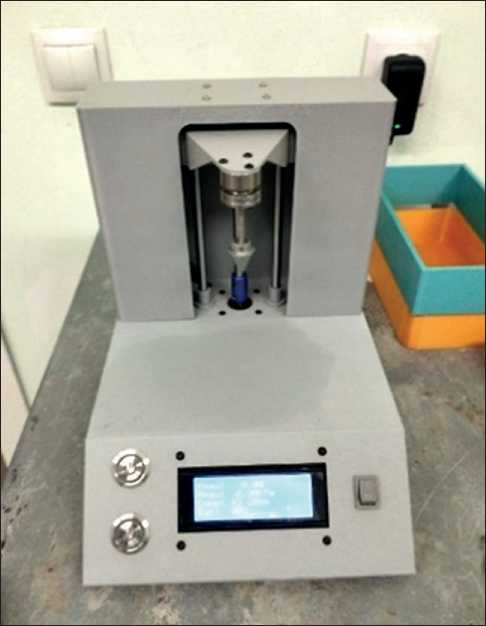
Fig. 1. Self-developed cone plastometer
The operating principle of the plastometer is based on determining the plastic strength from the load required to penetrate a metal cone with a given apex angle into the test material to a specified depth. For the experimental investigations, the cementitious mixture was placed immediately after mixing into 10 molds (a = 100 mm, b = 150 mm, h = 60 mm). In each mold, one measurement was taken between the time of placement and 100 minutes at 10-minute intervals.
Based on the data obtained, kinetic curves of plastic strength Ppl = f(τ) were constructed. The experimental results were processed as follows. The primary experimental kinetic curves of plastic strength were described formally using the kinetic equation:
Ppi = (& ■ T)n , (1)
where Ppl is the plastic strength (kPa), τ is the setting time (min), k is the rate constant of hydration process (kPa¹/ⁿ·min–¹), and n is the exponent of the equation, reflecting the change in the rate-determining hydration process.
The logarithm of Equation (1) was taken to obtain an equation of the form:
1п(Рпл) = n ■ ln(fc) + n ■ In (r) . (2)
Nanob
The plastic strength as a function of time was plotted in double logarithmic coordinates. The n-value for each system studied was calculated using the least squares method. The early-stage cement hydration process is complex, involving multiple parallel and coupled reactions. Therefore, it is useful to introduce the terms “rate-determining process” and “rate-controlling process”. The rate-determining process is the parallel process that contributes most to structure formation and, consequently, to the increase in plastic strength at a given stage. This process may consist of several sequential steps, the slowest of which is the rate-controlling process. When the kinetic exponent n > 1, the rate-determining process is the chemical hydration reaction. When n < 1, the kinetics are controlled by diffusion of components into the reaction zone.
The aggregative stability of cementitious systems in the viscoplastic state was studied using squeeze rheometry with an INSTRON 5982 testing system. Immediately after preparation of the cementitious mixture, cylindrical specimens with dimensions R = h0 = 25 mm were fabricated. These were placed between two smooth plates of the INSTRON 5982 system, the diameter of which matched the specimen size. The tests were conducted at a constant loading rate of 0.5 N/s. During the experiment, load–displacement (P–∆) curves were recorded. At the inflection points of the curves, corresponding to (1) the onset of deformation and (2) the onset of loss of continuity, the values of structural strength and plastic strength were determined using the relationship:
p a= , kPa. (3)
These values were adopted as criteria for the aggregative stability of the cementitious systems. The structural strength σ0, determined at the first inflection point of the P–∆ curve, characterizes the ability of the viscoplastic mixture to withstand load without deforming. The plastic strength σpl characterizes the ability of the viscoplastic mixture to withstand load and deform without loss of continuity. As an additional criterion, the relative deformation of the mixture layer up to the point of loss of continuity, ∆pl (mm/mm), was evaluated.
The compressive strength of hardened cement pastes was evaluated by testing specimens of size 5 × 5 × 5 cm after 1 and 28 days of curing under normal conditions (t = 20 ± 2 °C, RH = 100%) using an Instron Sates 1500HDS testing machine. Each series consisted of six specimens, and the within-series coefficient of variation of the test results did not exceed 7%.
The following physicochemical methods were used to investigate the structure of the cementitious systems. The qualitative composition of the synthesized nanoadditives,
Nanotechnologies in construction
Нанотехнологии в строительстве
2026; 18 (3): 279–290
Nanob
CONSTRUCTION MATERIALS SCIENCE
as well as the phase composition of the nanomodified cement stone, was studied using powder X-ray diffractometry (ARL X’TRA diffractometer, CuKα radiation, λ = 1.541788 Å). The experimental data were processed using the PDWin 4.0 software package [26]. The degree of hydration of the cementitious systems was calculated from the content of the alite phase (3CaO·SiO2 (C3S)) by comparing their diffractograms with that of a pure cement clinker sample [27]:
^/i(^3^) = (1 — ^mod/^о) x 100%, (4)
where Imod is the intensity of the diffraction maximum at d = 2.75 Å of the C3S phase for samples of different compositions (by additive type) and different cement hydration times, and I0 is the intensity of the diffraction maximum at d = 2.75 Å of the C3S phase of the original cement.
The microstructure of the cementitious systems was characterized by scanning electron microscopy (SEM, Phenom XL, accelerating voltage = 15 kV, pressure = 0.10 Pa) using fractured specimens of hardened cement paste.
RESULTS
Early Structure Formation Kinetics
The experimental curves of plastic strength (Ppl) evolution over time for the cementitious systems (Fig. 2a) exhibit similar patterns and have three typical stages:
-
1. Change in Ppl at a constant rate;
-
2. A plateau where the increase in Ppl slows down;
-
3. An acceleration of the increase in Ppl.
The time for each stage depends on the type of nanoparticle. The most intensive increase in plastic strength is characteristic of the C–W–SP–Al2O3 system, while the slowest increase is observed for the C–W– SP–SiO2 system. This is determined by the nature of the rate-determining process of early structure formation and its rate-controlling stage, as evidenced by the n-values of the plastic kinetic equations for plastic strength (Fig. 2b).
For the C–W–SP system, the n-values of the plastic kinetic equation is 1.05 up to 50 minutes, indicating a chemical reaction. After 60 minutes, the process becomes controlled by diffusion of components into the reaction zone, with n = 0.60.
For the C–W–SP–SiO2 system, the n-values of the plastic kinetic equation is 1.09 up to 60 minutes, indicating a chemical reaction. After 70 minutes, the process becomes controlled by diffusion of components into the reaction zone, with n = 0.43.
For the C–W–SP–Al2O3 system, the n-values of the plastic kinetic equation remains unchanged throughout the entire test duration (100 min) and corresponds to a chemical reaction, with n = 1.13.
Investigation of Aggregative Stability
The squeezing tests produced two types of curves: «relative displacement ∆ – time τ» (Fig. 3a) and «load P – relative displacement ∆» (Fig. 3b). Three main zones can be identified on the ∆ – t curves:
-
• «Placing phase», the structure maintains stability;
-
• «Perfect plastic response phase», viscoplastic fluid without damaged structure;
-
• «Plastic fluid» with damaged structure.
On the P – ∆ curves, load drop peaks are observed, which correspond to the onset of loss of structural continuity, i.e., the beginning of structure failure. These points correspond to the beginning of the structure failure zone on the ∆ – t curves.
Interpretation of the obtained curves shows that the C–W–SP and C–W–SP–SiO2 systems have lower values of structural strength σ₀ and plastic strength σpl, as well as larger plastic deformations ∆pl, compared to the C–W– SP–Al2O3 system (Table 2).
Based on the squeezing tests, the influence of complex nanomodifiers on the aggregative stability of cementitious systems under load was established. The introduction of nanomodifiers increases aggregative stability. For these systems, the values of structural strength σ₀, which characterize the ability of the viscoplastic mixture to withstand load without deforming, are 2–3 times higher than those of the unmodified system. The C–W–SP–Al2O3 system exhibits the highest aggregative stability but shows a reduced ability to deform without loss of structural continuity. The use of the SiO2-based nanomodifier has practically no effect on the plastic deformation capacity.
Microstructural Characteristics and Strength
According to XRD data, the phase composition of the investigated cementitious systems is characterized by the following features (Fig. 4).
For the C–W–SP system, the main hydrate phases are tobermorite like phase (4CaO•5SiO2•5H2O) and C–S– H (I) phase of variable composition (xCaO•SiO2•zH2O). Small amounts of high basic hydrosilicate phases (2CaO•SiO2•H2O) and Ca(OH)2 are also detected.
For the C–W–SP–SiO2 system, low basic calcium hydrosilicate phases (xCaO•SiO2•zH2O) and high basic calcium hydrosilicate phases (2CaO•SiO2•0.5H2O, 2CaO•SiO2•H2O) are observed. The portlandite phase (Ca(OH)2) is absent. Apparently, a reaction occurs between Ca(OH)2 and the active SiO2 nanoparticles, forming calcium hydrosilicates. This is consistent with reports by other authors [7, 9, 13, 14].
The C–W–SP–Al2O3 system exhibits the greatest diversity of hydrate phases. This suggests that Al2O3, being thermodynamically more stable, reacts more slowly, creating concentration gradients and allowing numerous
Nanotechnologies in construction
Нанотехнологии в строительстве
2026; 18 (3): 279–290
Nanob
CONSTRUCTION MATERIALS SCIENCE
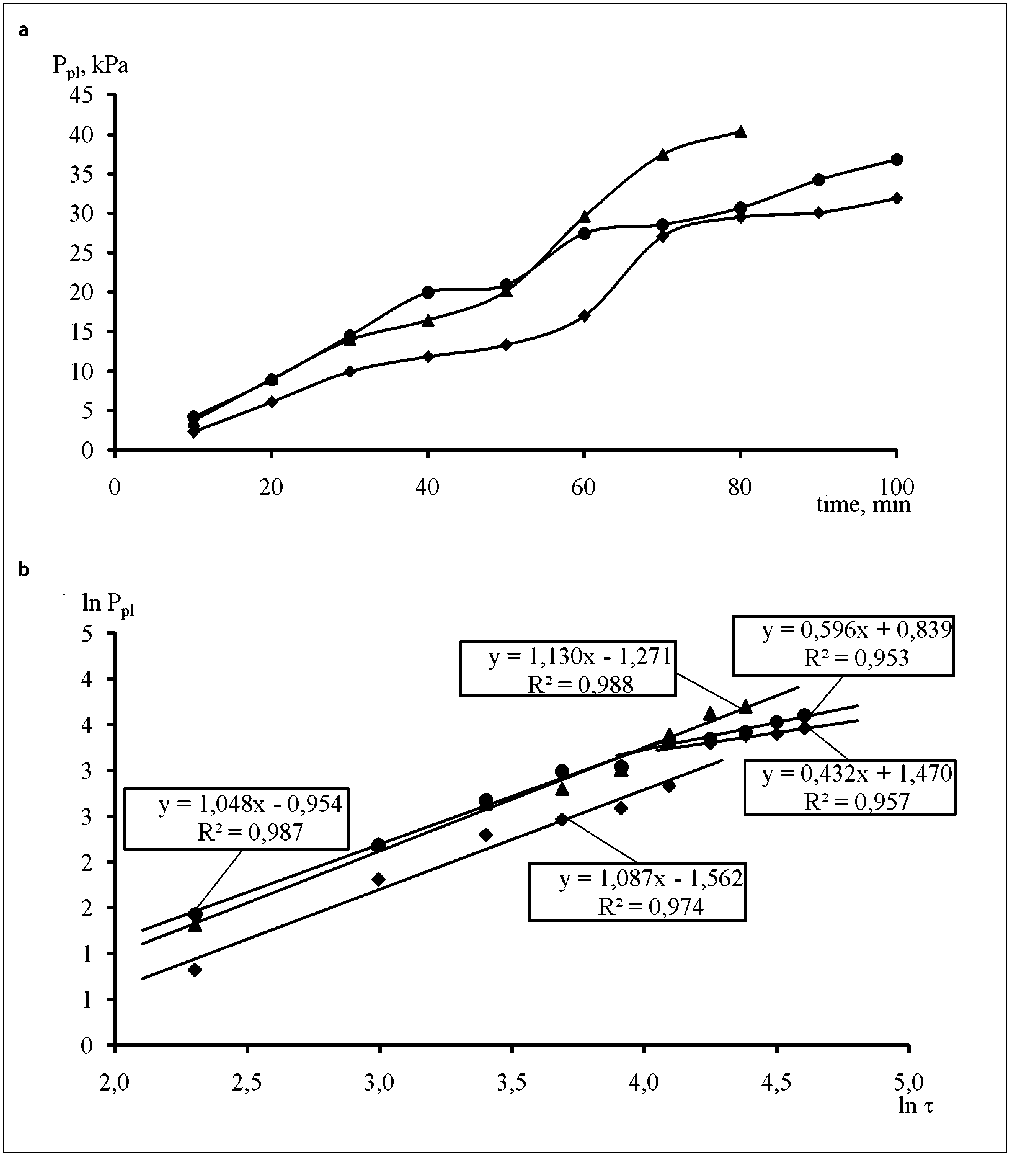
Fig. 2. Kinetics of early structure formation of cementitious systems: (a) experimental kinetic plastic strength curves;
(b) plastic strength kinetic curves in logarithmic coordinates.
Legend: • – C–W–SP; ♦ – C–W–SP–SiO2; ▲ – C–W–SP–Al2O3.
intermediate and metastable phases (calcium hydroaluminates of varying basicity) to crystallize. The main newly formed phases in the cement stone are Al(OH)3, CaO•Al2O3•2SiO2•4H2O, 5CaO•2SiO2•H2O, and
(CaO)х•SiO2•zH2O. Small amounts of CaO•Al2O3•
8.5H2O and CaO•Al2O3•6SiO2•6H2O are also detected.
SEM analysis revealed the following microstructural features of the cementitious materials (Fig. 5):
Nanotechnologies in construction
Нанотехнологии в строительстве
2026; 18 (3): 279–290
Nanob
CONSTRUCTION MATERIALS SCIENCE
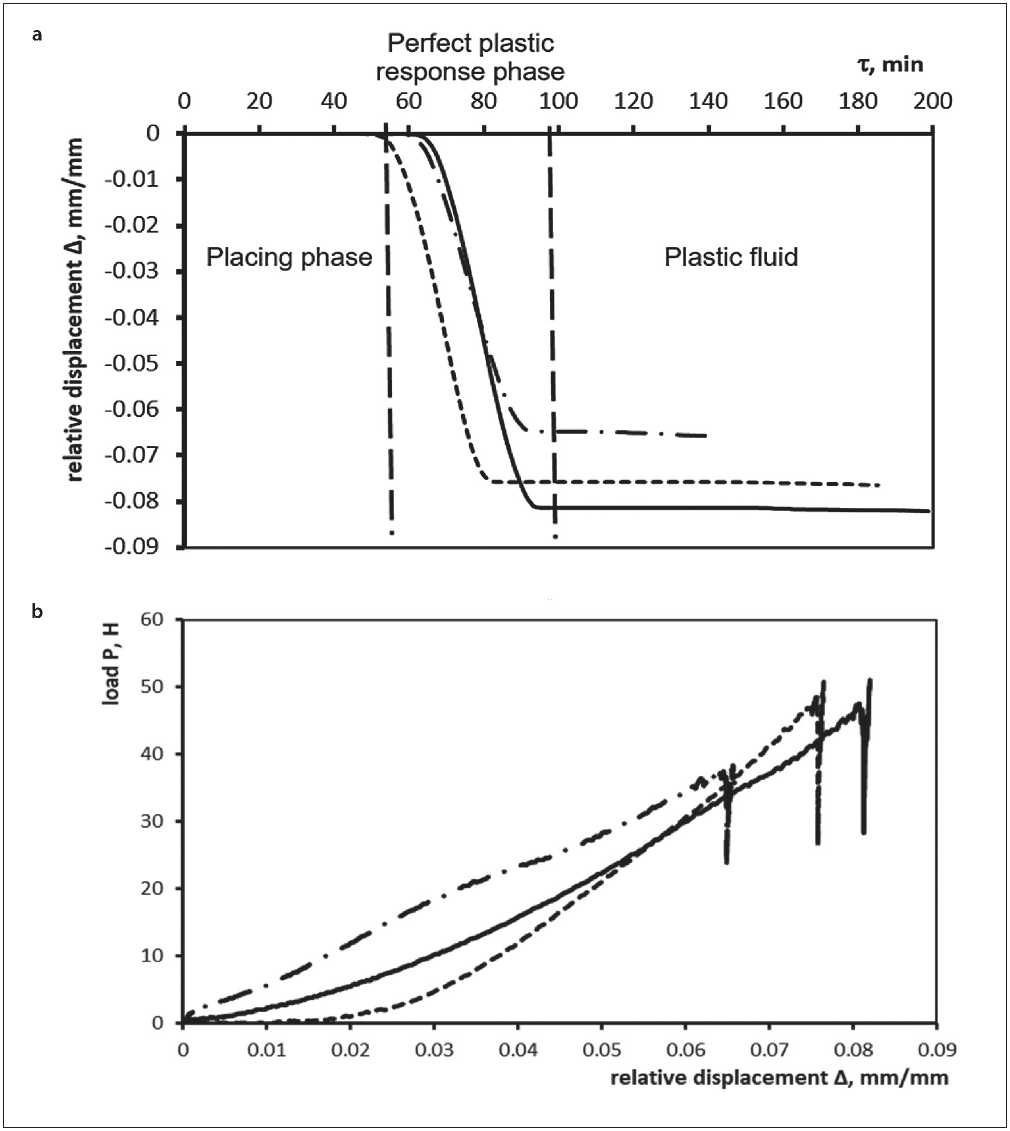
Fig. 3. Tested cement pastes experimental results fresh cement paste: (а) «relative displacement Δ – time τ»;
(b) «load P – relative displacement Δ».
Legend: - - - C–W–SP; ___ C–W–SP–SiO2; – • – C–W–SP–Al2O3
-
1. In the reference C–W–SP system, a homogeneous structure with an amorphous-crystalline appearance is formed.
-
2. In the C–W–SP–SiO2 system, an amorphous-crystalline structure is also formed, but it is denser and
-
3. In the C–W–SP–Al2O3 system, a highly homogeneous, dense, and predominantly amorphous structure is formed.
more crystallized, with inclusions of small, platy C–S–H crystals.
Nanotechnologies in construction
Нанотехнологии в строительстве
CONSTRUCTION MATERIALS SCIENCE
2026; 18 (3): 279–290
Nanob
Table 2. Aggregative stability criteria of the cementitious materials
|
System ID |
Structural strength σ₀, kpa |
Plastic strength σpl, kpa |
Relative deformation, Δpl, mm/mm |
|
C–W–SP |
0.9 |
48.5 |
0.075 |
|
C–W–SP–SiO2 |
1.7 |
47.5 |
0.080 |
|
C–W–SP–Al2O3 |
2.1 |
37.8 |
0.065 |
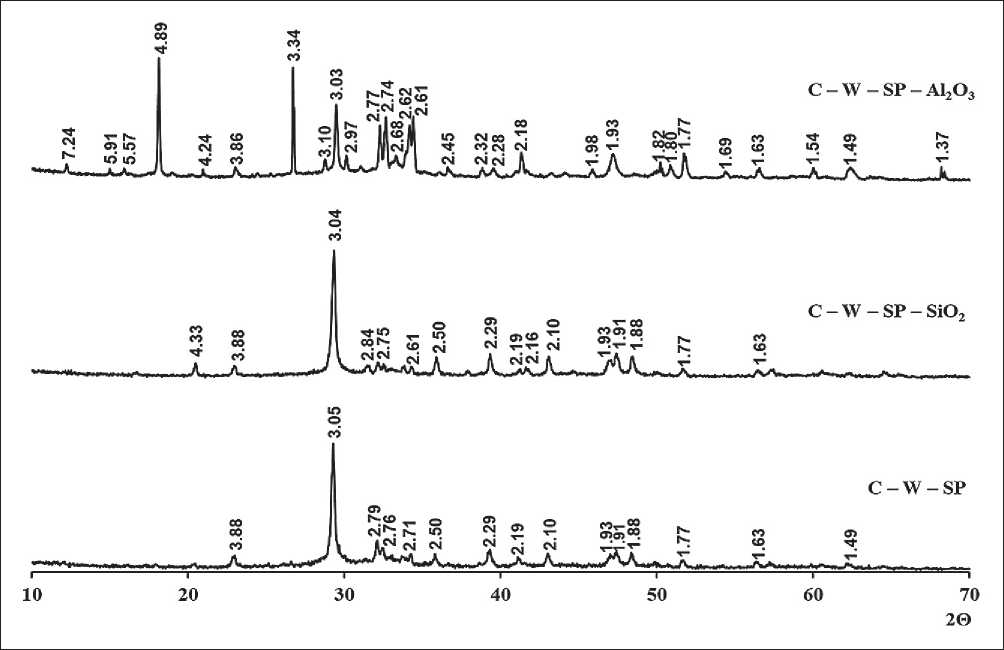
Fig. 4. X-ray diffractogram patterns of cementitious materials.
Legend: xCaO • SiO2 • zH2O (d = 5.60, 3.07, 2.97, 2.80, 2.28, 2.15); 4CaO • 5SiO2 • 5H2O (d = 4.22, 3.14, 3.05, 2.11, 1.92, 1.84 ); 2CaO • SiO2 • 0.5H2O (d = 2.87, 2.77, 2.67, 2.50, 2.58, 1.98, 1.81, 1.62); 2CaO • SiO2 • H2O (d = 4.32, 3.82, 3.04, 2.84, 2.70, 1.90, 1.80, 1.66); CaO • Al2O3 • 2SiO2 • 4H2O (d = 8.97, 7.90, 6.61, 5.10, 3.97, 3.90); 5CaO • 2SiO2 • H2O (d = 5.42, 3.98, 3.79, 3.31, 3.02, 2.92); Al(OH)3 (d = 4.85, 4.37, 4.32, 2.45, 2.42, 2.39)
The complex nanoadditives investigated significantly accelerated the hydration and hardening processes (Table 3). The compressive strength of the nanoparticle-modified cementitious materials was 2.5–3 times higher after 1 day of curing and 1.8–1.9 times higher after 28 days compared to the reference system without nanoparticles.
DISCUSSION
Kinetic of the early structure formation (setting) process showed that the effectiveness of the additives is determined by differences in the mechanisms of the initial stages of structure formation (see Fig. 2). For the system containing the Al2O3-based nanomodifier, the n-values of the plastic kinetic equation is higher than for the C–W– SP and C–W–SP–SiO2 systems. The value n = 1.13 corresponds to a chemical reaction (see Table 3). Throughout the entire setting time (0–100 min), no change in the rate-determining process is observed. For the C–W–SP and C–W–SP–SiO2 systems, the rate-determining process also corresponds to a chemical reaction during the period from 0 to 50 min. After 50 min, a change occurs from a chemically controlled to a diffusion-controlled process, which is governed by the rate of water diffusion to the cement grains. Thus, in the presence of Al2O3 par-
Nanotechnologies in construction
Нанотехнологии в строительстве
CONSTRUCTION MATERIALS SCIENCE
2026; 18 (3): 279–290
Nanob
Table 3. Characteristics of structure formation and hardening of the cementitious systems
|
System ID |
n-values of the plastic kinetic equation |
Degree of hydration, % (28 days) |
Compressive strength, R , MPa b |
||
|
τ 0–50 min |
60–100 min |
1 day |
28 days |
||
|
C–W–SP– |
1.05 |
0.60 |
62 |
20.3 |
51.1 |
|
C–W–SP–SiO2 |
1.09 |
0.43 |
93 |
64.1 |
9.7 |
|
C–W–SP–Al2O3 |
1.13 |
68 |
51.1 |
96.4 |
|
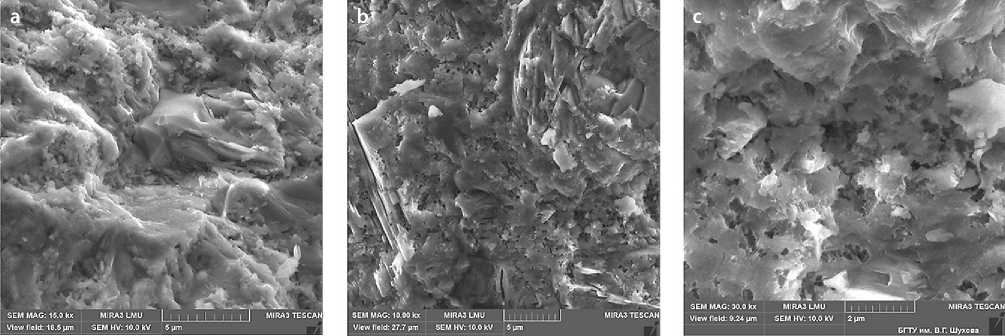
Fig. 5. SEM-photo of the cementitious materials after 28 days hardening : a) C–W–SP–; b) C–W–SP–SiO2; c) C–W–SP–Al2O3
ticles, the early stage of coagulation-crystallization structure formation is accelerated, which may be due to the removal of diffusion barriers and an increase in the active interfacial area between the reacting phases.
Based on the obtained data, it can be stated that the introduction of nanomodifiers enhances the aggregative stability of the primary coagulation structure of the cementitious systems. At the same time, the Al2O3-based nanomodifier accelerates the formation of the crystallization structure during the early structure formation stage.
The most significant effect of the SiO2-based nanomodifier is that, due to the increase in the active interfacial area at the very beginning of the structure formation process, the rate of cement hydration increases sharply. Consequently, the high strength values of the hardened cement paste are directly related to the realization of the hydration potential of the cement minerals and the accumulation of hydrate phases. The increase in strength is also influenced by the presence of predominantly low-basic calcium hydrosilicate (xCaO•SiO2•zH2O) in the structure and the absence of the low-strength portlandite phase Ca(OH)2.
The effect of the Al2O3-based nanomodifier on the strength development of cementitious systems is associated with an increase in the strength and stability of the primary coagulation structure, which promotes a more homogeneous distribution of hydrate phases within the crystallization structure (see Fig. 5). As a result, despite comparable degrees of cement hydration in the C–W–SP (Dh = 62 %) and C–W–SP–Al2O3 (Dh = 68%) systems, the strength of the Al2O3-modified system is 1.9 times higher than that of the unmodified system. The positive contribution to strength of the aluminate and aluminosilicate phases detected in the cement stone structure should also not be excluded.
CONCLUSION
The introduction of complex nanomodifiers accelerates the early coagulation-crystallization structure formation of cementitious systems, which may be attributed to the removal of diffusion barriers and an increase in the active interfacial area between the reacting phases. This effect is particularly pronounced in the presence of Al2O3 particles.
Nanomodified cementitious systems exhibit enhanced aggregative stability under loading. For these systems, the structural strength σ₀, which reflects the load a viscoplastic mixture can bear without deforming, is 2–3 times higher than that of the unmodified system.
The nearly twofold increase in strength of the nanomodified cementitious systems is associated with two
Nanotechnologies in construction
Нанотехнологии в строительстве
2026; 18 (3): 279–290
Nanob
CONSTRUCTION MATERIALS SCIENCE
factors. In the case of SiO2 nanoparticles, this is due to the preferential formation and increased content of high-strength, low-basic hydrate phases. The introduction of Al2O3 nanoparticles does not significantly affect the degree of cement hydration but enhances the aggregative stability of the coagulation structure of the cementitious system and its ability to preserve the spatial structural network under external mechanical loading. As a result, already at the early stages of structure formation, the prerequisites are created for forming a maximally homogeneous structure free from major defects, which ultimately determines its strength.
