
Examining Artificial Intelligence Literacy among Music Students in Higher Education: A Causal-Comparative Approach
Журнал: International Journal of Modern Education and Computer Science @ijmecs
Статья в выпуске: 5 vol.18, 2026 года.
Бесплатный доступ
This study analyzes the artificial intelligence (AI) literacy levels of music education students and explores how future music educators perceive and integrate AI tools within creative and instructional contexts. The research group consisted of 143 students enrolled in music education programs from different faculties, such as Education, Fine Arts, and Conservatory. Participants were selected through a purposeful sampling technique, ensuring inclusion of individuals likely to encounter AI in educational and performance settings. The study employed a causal-comparative (ex post facto) design, which enables examination of naturally existing groups differing in characteristics such as prior exposure to or familiarity with AI technologies. Quantitative data were analyzed to compare students’ AI literacy levels across demographic variables, including gender, type of high school graduated from, academic achievement level, and prior knowledge of AI. However, it was determined that the artificial intelligence literacy level of music teacher candidates who have knowledge about artificial intelligence programmes and use artificial intelligence programmes in music education is significant. Results indicated that students’ AI literacy levels were at a medium level. No significant differences were found in AI literacy by gender, type of high school graduated from, academic achievement, or frequency of internet use. However, significant differences were observed among students from different faculties, as well as among those who had prior knowledge of AI programs, used AI applications in music and music education, and used them more frequently. These findings suggest that direct engagement with AI tools contributes to higher literacy levels.
Короткий адрес: https://sciup.org/15020683
IDS: 15020683 | DOI: 10.5815/ijmecs.2026.05.01
Текст научной статьи Examining Artificial Intelligence Literacy among Music Students in Higher Education: A Causal-Comparative Approach
Today, it is inevitable that technology is encountered almost everywhere. In particular, the development of technology and the existence of products that emerge in the continuation of this development have made it possible to use technology in every period of life. In the middle of the 20th century, the concept that emerged and will probably be used more actively in every part of life after a few decades is artificial intelligence. Artificial intelligence, one of the important substructures of computer science, is a concept that has been frequently studied since the second half of the 20th century. Artificial intelligence technology has enabled machines to imitate and develop human-specific abilities, and thanks to this feature, it has become a frequently preferred technology in different fields [1]. It is difficult to date
This work is open access and licensed under the Creative Commons CC BY 4.0 License.
the beginning of any movement, but the Dartmouth Summer Research Project in 1956 is generally accepted as the event that launched artificial intelligence as a research discipline [2,3]. At a 1956 conference of high-level scientists, John McCarthy, Marvin Minsky, Claude Shannon, Allen Newell and Herbert Simon proposed to investigate the possibilities of implementing computer programmes equipped with intelligence, and the term Artificial Intelligence was coined [4,5].
Artificial intelligence is a difficult term to define even for experts due to its interdisciplinary nature and evolving capabilities [1,6]. [7] defines AI as the science and engineering of making intelligent machines, especially computer programs, [8] defines it as the field of science and engineering concerned with the computational understanding of what is commonly referred to as intelligent behaviour and the creation of artefacts that exhibit such behaviour, [9] defines AI as an analytical tool that collectively attempts to mimic life and facilitates solving problems that are difficult or impossible to solve, while [10] define it as systems that improve themselves by taking advantage of their experience. It is seen that the diversity regarding the definition of artificial intelligence is mainly due to two aspects. These are the different focal points of AI functionality and different interpretations of intelligence [1].
Artificial intelligence technology is constantly being updated and widely used in various fields [11], and we communicate and interact with these technologies knowingly or unknowingly [12]. Today, artificial intelligence has rapidly established itself as a transformative force in a wide range of sectors, including medical education, practice and research [13], and education [14]. Rapid developments in AI technologies have had a profound impact on many areas, including the economy, politics, science, and education [15]. However, AI technologies have played an important role in education, improving learning, teaching, assessment, and educational management [16]. Artificial intelligence in education has great potential to improve learning, teaching, assessment and educational management by automatically evaluating intelligent tutoring systems, chatbots, robots and all kinds of digitalised artefacts that support and enhance education, providing students with more personalised and applicable learning, encouraging teachers to understand students’ learning process, and providing machine-assisted queries and immediate feedback anytime, anywhere [17]. In addition, [18] stated that AI applications in education have a wide impact on personalised learning, classroom monitoring, student performance, sentiment analysis and decision evaluation.
The emergence of computers has supported the development of today’s modern electronic music technology; electronic music technology has developed rapidly and the field of technological innovation has gradually expanded with its entry into the field of music appreciation and creation [19]. Artificial intelligence-supported music education can offer individuals the opportunity to improve their performance and better understand their musical abilities while teaching them to play instruments. While AI-supported music education can provide a personalised education process for individuals learning to play an instrument, it can accelerate the musical development of individuals by designing a curriculum according to their abilities and needs. Artificial intelligence-supported music education technology can analyse the performances of individuals and reveal their mistakes. In this direction, individuals can correct their mistakes by receiving feedback on correct techniques and practical methods [20], and increase their motivation by suggesting musical works suitable for individuals’ interests and skills [21]. [22] stated that the application of artificial intelligence in music education plays an auxiliary role in the teaching of teachers, can show the course content more clearly for students, and thus students can concentrate more.
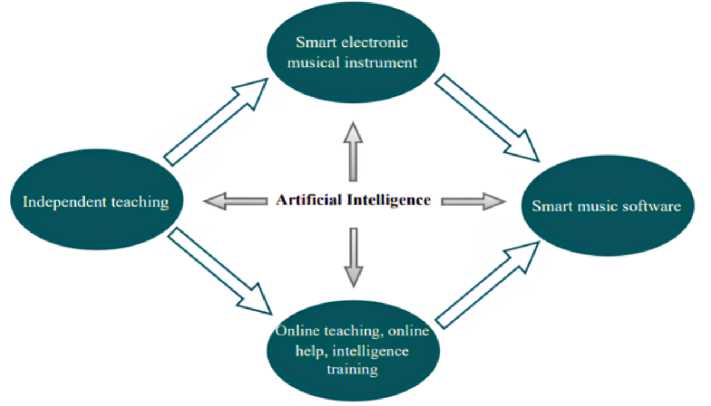
Fig. 1. The relationship between artificial intelligence and music education [23].
Fig. 1 illustrates the multifaceted relationship between artificial intelligence (AI) technologies and music education applications. It demonstrates how AI supports personalized learning, provides individual performance feedback, and facilitates creative music production. As AI continues to merge with music education, its influence on traditional teaching concepts and methods is expanding. These developments indicate the emergence of diverse trends that may shape the future of music education [23].
Focusing on music education, there are applications that enable the use of artificial intelligence in music education [24]. Some of these are ‘Solfeg.io’, which teaches music theory and instrument playing skills to individuals, “Yousician”, guitar, bass guitar, electric guitar, ukulele and piano, “Aiva”, artificial intelligence-based music creation, “Trala” violin education, “Vanido” are a few artificial intelligence-supported applications developed for voice and vocal education.
When the national and international literature is taken together, there are still limited studies focusing on music education students or music teachers though many studies examine Artificial intelligence literacy in general. This research aims to fill this gap by examining Artificial intelligence literacy competencies and suggesting adjustments and improvements, also focusing on current educational strategies. Based upon this gap, this study aimed at determining the artificial intelligence literacy levels of students studying music in higher education. In this context, answers to the following sub-problems were sought:
• How are the artificial intelligence literacy levels of music education students?
• Does the artificial intelligence literacy of music education students differ significantly according to demographic variables (gender, high school graduated from, faculty of study, academic achievement, daily internet use)?
• How is the artificial intelligence literacy of music department students who have knowledge about artificial intelligence programmes?
• How is the artificial intelligence literacy of students who use artificial intelligence programmes used in music and music education?
2. Methodology2.1. Rationale for the study groups
What is the level of artificial intelligence literacy of music education students according to the frequency of using artificial intelligence programmes?
This study employed a quantitative causal-comparative (ex post facto) research design. The purpose of this design is to examine possible cause-and-effect relationships between independent variables that cannot be manipulated (such as gender, faculty type, and use of artificial intelligence programs) and a dependent variable (artificial intelligence literacy). Since the study aims at determining whether artificial intelligence literacy levels differ according to preexisting demographic characteristics, the causal-comparative design was considered appropriate. Data were analyzed using descriptive statistics, independent samples t-tests, and one-way ANOVA to identify significant group differences.
In causal-comparative research, investigators try to determine the causes or consequences of differences that already exist between or among groups of individuals. Because this research examines conditions that are already present, it is considered a form of associational research, along with correlational studies. Ex post facto research is a method of identifying possible antecedents of events that have already occurred and therefore cannot be controlled or manipulated by the researcher [25]. Researchers can report only what has happened or what is happening by holding factors constant through careful sampling [26].
This method can serve as an alternative to experimentation to test hypotheses about cause and effect when manipulation is unethical or impractical. Since both the effects and the presumed causes have already occurred and are studied retrospectively, causal-comparative research is called ex post facto (Latin for “after the fact”). It contrasts with experimental research, where researchers deliberately create differences between groups and compare their performance on dependent variables. In such studies, grouping variables may represent characteristics that cannot or should not be manipulated (e.g., gender, teaching style, or previous exposure). In summary, causal-comparative research examines existing group differences to understand their causes or effects, especially when experimental manipulation is not possible or ethical [25,26,28,29].
The study group consisted of 143 students enrolled in music education programs across different faculties, including the Faculty of Education, the Faculty of Fine Arts, and the Conservatory. Participants were selected using the purposeful sampling technique, which involves the intentional selection of individuals who possess specific characteristics relevant to the research objectives. In this study, participants were chosen because they were enrolled in music education programs and were therefore considered representative of a population likely to encounter emerging technologies such as artificial intelligence (AI) in both creative and instructional contexts. Table 1 presents the demographic characteristics of the participants, indicating a balanced distribution in terms of gender, type of high school graduated from, academic achievement level, and level of knowledge regarding AI technologies.
Purposeful sampling was considered appropriate for this research due to its alignment with the causal-comparative (ex post facto) design, which typically involves examining naturally existing groups that differ on key characteristics of interest rather than manipulating variables experimentally. By selecting participants who share a common educational background but vary in their prior exposure to or familiarity with AI tools, this approach enables meaningful comparison of differences in AI literacy among subgroups.
As noted by [26] and [27], sampling in causal-comparative research often relies on non-random and purposive selection to identify pre-existing groups that differ on the independent variable while controlling for confounding factors. In turn, the use of purposeful sampling in this study ensured efficient access to a relevant and information-rich group of participants, facilitating the examination of naturally occurring variations in AI literacy among music education students and contributing to a deeper understanding of how future music educators perceive and integrate AI technologies within their professional practice.
Table 1. Demographic characteristics of the students.
|
Gender |
Size |
Ratio % |
Department of Study |
Size |
Ratio % |
|
Female |
91 |
63.6 |
Music Education Faculty |
41 |
28.7 |
|
Male |
52 |
36.4 |
Faculty of Fine Arts |
34 |
23.8 |
|
Conservatory |
68 |
47.6 |
|||
|
Total |
143 |
100 |
Total |
143 |
100 |
|
Graduated School |
Size |
Ratio % |
Academic Success |
Size |
Ratio % |
|
Fine Arts High School |
40 |
28.0 |
Unsatisfactory |
9 |
6.3 |
|
Anatolian High School |
88 |
61.5 |
Avarage |
47 |
32.9 |
|
Other |
15 |
10.5 |
Good |
87 |
60.8 |
|
Total |
143 |
100 |
Total |
143 |
100 |
|
Using Artificial Intelligence Programmes Used in Music/Music Education |
Size |
Ratio % |
Knowledge about the Artificial Intelligence Programme |
Size |
Ratio % |
|
Yes |
24 |
16.8 |
Yes |
63 |
44.1 |
|
Partially |
90 |
62.9 |
Partially |
30 |
21.0 |
|
No |
29 |
20.3 |
No |
50 |
35.0 |
|
Total |
143 |
100 |
Total |
143 |
100 |
|
Frequency of Internet Use |
Size |
Ratio % |
Frequency of Using Artificial Intelligence Programme |
Size |
Ratio % |
|
0-60 Minutes |
15 |
10.5 |
Never |
66 |
46.2 |
|
61-120 Minutes |
43 |
30.1 |
Sometimes |
31 |
21.7 |
|
121-180 Minutes |
35 |
24.5 |
All the Time |
46 |
32.2 |
|
181-240 Minutes |
23 |
16.1 |
|||
|
241 Minutes and above |
27 |
18.9 |
|||
|
Total |
143 |
100 |
Total |
143 |
100 |
When Table 1 is analysed, 52 (36.4%) of the prospective teachers were male and 91 (63.6%) were female. Forty-one of them (28.7%) graduated from music teaching, 34 of them (23.8%) from fine arts faculty and 68 of them (47.6%) from conservatory. Among the music teacher candidates, 40 (28%) graduated from Fine Arts High School, 88 (61.5%) from Anatolian High School, and 15 (10.5%) from other high schools. When the academic achievements of the students are analysed, it is seen that 9 (6.3 %) of the students were poor, 47 (32.9 %) were average and 87 (60.8 %) were good. It was determined that 63 (44.1%) of the students answered yes, 30 (21%) partially and 50 (35%) of the students answered no to having knowledge about artificial intelligence programmes. It was determined that 24 students (16.8%) answered yes, 90 students (62.9%) partially and 29 students (35%) answered no to the use of artificial intelligence programmes in music education. Among these students, 15 people (10.5%) used the internet between 0-60 minutes, 43 people (30.1%) used the internet between 61-120 minutes, 35 people (24.5%) used the internet between 121-180 minutes, 23 people (16.1%) used the internet between 181-240 minutes, and 27 people (18.9%) used the internet 241 minutes or more. Finally, when the frequency of students’ use of artificial intelligence programmes is examined, it is seen that 66 (21.7%) responded never, 31 (21.7%) sometimes and 46 (32.2%) always.
2.2. Data Collection
2.3. Data Analyses
2.4. Ethical Considerations
Ethical approval was obtained from the Kafkas University Social Sciences and Humanities Research and Publication Ethics Committee (Decision No: 59, dated 09/07/2024). In carrying out this study, the researchers recognized the importance of addressing ethical concerns related to data privacy of participants. These issues are particularly critical in educational research involving artificial intelligence, where the handling of sensitive student data and the assurance of equitable outcomes require careful attention.
2.4.1. Data Privacy
3. Results3.1. Findings on Artificial Intelligence Literacy Levels of Students Receiving Music Education in Higher Education
In the study, data were collected through Google Form. Data collection tool “Artificial Intelligence Literacy” developed by [30] and adapted into Turkish by [11] and “Demographic Information Form” created by the researchers were used.
Artificial Intelligence Literacy Scale: The scale consists of 12 items and four sub-dimensions. In the reliability analysis of ‘Artificial Intelligence Literacy’ adapted into Turkish by [11], Awareness; 0.72, Use; 0.74, Evaluation; 0.76, and Ethics; 0.72 values were obtained for the sub-dimensions of the scale in the calculation of Cronbach ’s Alpha internal consistency coefficient. For the overall total reliability of the scale, a coefficient of 0.85 was calculated. The items in the scale were scored from 1 to 7. A seven-point Likert scale consisting of “Strongly Disagree” and “Strongly Agree” options was used in the scale. Since the 2nd, 5th and 11th items from the scale were “negative items”, they were reversed during the analysis. The overall total reliability coefficient of the “Artificial Intelligence Literacy Scale” of this study was determined as a = 0.79.
Normality distribution was examined in the analysis of the data. In the normality distribution analysis, the values for the overall total of the AI literacy scale; Kurtosis .017 and Skewness -.269, for the sub-dimensions; Awareness; Kurtosis -.081 and Skewness .145, Use; Kurtosis .042 and Skewness .111, Evaluation; Kurtosis -.617 and Skewness .041, and Ethics; Kurtosis -.091 and Skewness -.747, respectively. Data are normally distributed when these statistics fall between -1 and +1; -1.5 and +1.5; -2.0 and +2.0 [9,16,41]. In the analysis of the data, t-test for independent groups and analysis of variance (ANOVA) test were performed.
To protect participant privacy, several measures were implemented. All students participating in the study provided informed consent, which clearly outlined how their data would be used, stored, and shared, ensuring that participants fully understood their rights regarding confidentiality. Personal identifiers were removed from all datasets through anonymization, preventing the identification of individual students and preserving their privacy. In addition, secure data storage protocols were followed, including encryption and restricted access to authorized personnel only, thereby minimizing the risk of unauthorized access.
In this part, the collected data were subjected to statistical analyses appropriate for a causal-comparative (ex post facto) design. Descriptive statistics were first computed to summarize the overall levels of artificial intelligence literacy among music education students. Subsequently, inferential analyses including independent-samples t-tests and one-way ANOVA were conducted to examine whether significant differences existed across demographic variables such as gender, high school type, faculty of study, academic achievement, and experience with artificial intelligence programs. The results obtained from these analyses are presented as follows.
Table 2. Students’ artificial intelligence literacy levels.
|
Items |
n |
̅ |
SD |
|
|
1 |
I can distinguish between smart devices and non-smart devices. |
143 |
6.06 |
1.50 |
|
2 |
*I don’t know how Artificial Intelligence technology will help me. |
143 |
4.03 |
2.00 |
|
3 |
I can define the artificial intelligence technology used in the applications and products I use. |
143 |
4.29 |
1.88 |
|
4 |
I can skillfully use artificial intelligence applications or products to help me in my daily work. |
143 |
4.05 |
1.88 |
|
5 |
*Learning to use a new AI application or product is often difficult for me. |
143 |
4.45 |
1.79 |
|
6 |
I can use artificial intelligence applications or products to improve my work efficiency |
143 |
4.77 |
1.85 |
|
7 |
After using an AI application or product for a while, I can evaluate its capacity and limits. |
143 |
4.95 |
1.70 |
|
8 |
I can choose the most appropriate one from a variety of AI applications or products for a given task. |
143 |
4.65 |
1.79 |
|
9 |
I can choose the appropriate one among the various solutions offered by AI. |
143 |
4.88 |
1.62 |
|
10 |
I always follow ethical principles when using AI applications or products. |
143 |
4.92 |
1.67 |
|
11 |
*I never pay attention to privacy and information security issues when using artificial intelligence applications or products. |
143 |
4.87 |
1.98 |
|
12 |
I am always careful not to misuse artificial intelligence technology. |
143 |
5.13 |
1.85 |
|
Total |
143 |
4.75 |
1.79 |
|
Table 2 presents the mean artificial intelligence literacy level of the students, which is at a medium level with a rate of 4.75.
-
3.2. Findings Regarding the Gender and Artificial Intelligence Literacy of Music Education Students in Higher Education
-
3.3. Findings Regarding the High School Graduated from and Artificial Intelligence Literacy of Music Education Students in Higher Education
Table 3. t-Test results according to the gender of the students.
|
Scale and Sub-dimensions |
Gender |
N |
̅ |
SD |
df |
t |
p |
|
Artificial Intelligence Literacy Scale Total |
Female |
91 |
55.84 |
11.89 |
141 |
-1.605 |
.11 |
|
Male |
52 |
59.15 |
11.79 |
||||
|
Awareness Sub-dimension |
Female |
91 |
14.14 |
3.17 |
141 |
-1.115 |
.26 |
|
Male |
52 |
14.78 |
3.58 |
When the artificial intelligence literacy levels of the students are analysed in Table 3, no significant difference was found in the general total and other sub-dimensions of the artificial intelligence literacy scale according to the gender variable (p>.05). According to this result, it can be said that the artificial intelligence literacy levels of male and female students are similar to each other.
Table 4. One-Way ANOVA analysis results of prospective teachers’ artificial intelligence literacy according to high school variable.
High School
When the artificial intelligence literacy levels of the students are analysed in Table 4, no significant difference was found in the general total and other sub-dimensions of the artificial intelligence literacy scale according to the high school graduated from (p>.05). According to this result, it can be said that the artificial intelligence literacy levels of students graduating from Fine Arts High School, Anatolian High School and other high schools are similar to each other.
-
3.4. Findings Regarding the Faculty of Higher Education and Artificial Intelligence Literacy Levels of Music Education Students
-
3.5. Findings Regarding the Faculty of Higher Education and Artificial Intelligence Literacy Levels of Music Education Students
Table 5. One-Way ANOVA analysis results of prospective teachers’ artificial intelligence literacy according to the variable of faculty of study.
|
Scale and Subdimensions |
T.S |
df |
M.S |
Faculty of Study |
n |
_ ̅ |
SD |
F-Values |
p-Values |
|
|
Artificial Intelligence Literacy Scale Total |
B.G |
1062.986 |
2 |
531.493 |
Music Education |
41 |
59.21 |
12.74 |
3.893 |
.02* |
|
W.G |
19115.671 |
140 |
136.541 |
FFA |
34 |
60.11 |
11.15 |
|||
|
Total |
20178.657 |
142 |
Conservatory |
68 |
54.20 |
11.26 |
||||
|
Total |
143 |
57.04 |
11.92 |
|||||||
|
Awareness Subdimension |
B.G |
53.638 |
2 |
26.819 |
Music Education |
41 |
15.00 |
3.27 |
2.464 |
.08 |
|
W.G |
1523.971 |
140 |
10.886 |
FFA |
34 |
14.91 |
3.67 |
|||
|
Total |
1577.608 |
142 |
Conservatory |
68 |
13.73 |
3.11 |
||||
|
Total |
143 |
14.37 |
3.33 |
|||||||
|
Usage Subdimension |
B.G |
46.192 |
2 |
23.096 |
Music Education |
41 |
13.78 |
3.88 |
1.511 |
.22 |
|
W.G |
2140.171 |
140 |
15.287 |
FFA |
34 |
13.85 |
3.80 |
|||
|
Total |
2186.364 |
142 |
Conservatory |
68 |
12.67 |
3.97 |
When Table 5 is examined, a significant difference was found in the overall total, evaluation sub-dimension and ethical sub-dimension scores of the artificial intelligence literacy scale according to the faculty of graduation variable (*p<.05). According to this result, it was concluded that the artificial intelligence literacy levels of the students studying in the Faculty of Fine Arts were higher than those of the students studying in other faculties in the general total and evaluation sub-dimension. When the table was analysed, it was found that the artificial intelligence literacy levels of the students studying in music teaching were higher in the ethical sub-dimension of the artificial intelligence literacy level scale. It can be said that the artificial intelligence literacy levels of students graduating from Anatolian high school and other high schools are similar to each other.
Table 6. One-Way ANOVA analysis results of prospective teachers’ artificial intelligence literacies according to academic achievement variable
When the artificial intelligence literacy levels of the students are analysed in Table 6, no significant difference was found in the general total and other sub-dimensions of the artificial intelligence literacy scale according to the academic achievement variable of the students (p>.05). According to this result, it can be said that the students studying in music departments are similar to each other in their artificial intelligence literacy according to their academic achievement level.
-
3.6. Findings on Internet Usage Frequency and Artificial Intelligence Literacy Levels of Music Education Students in Higher Education
-
3.7. Findings Regarding the Artificial Intelligence Literacy Levels of Music Department Students Who Have Knowledge about Artificial Intelligence Programmes
Table 7. One-Way ANOVA analysis results of prospective teachers’ artificial intelligence literacies according to internet usage frequency variable
|
Scale and Subdimensions |
T.S |
df |
M.S |
F-Values |
p-Values |
|
|
Artificial Intelligence Literacy Scale Total |
B.G |
559.014 |
4 |
139.754 |
.983 |
.41 |
|
W.G |
19619.643 |
138 |
142.171 |
|||
|
Total |
20178.657 |
142 |
||||
|
Awareness Sub- |
B.G |
84.567 |
4 |
21.142 |
1.954 |
.10 |
|
W.G |
1493.041 |
138 |
10.819 |
When the artificial intelligence literacy levels of the students are analysed in Table 7, no significant difference was found in the general total and other sub-dimensions of the artificial intelligence literacy scale according to the frequency of internet use of the students (p>.05). According to this result, the frequency of internet usage of students studying in music departments has no effect on their artificial intelligence literacy.
Table 8. One-Way ANOVA analysis results regarding artificial intelligence literacy levels of music department students who have information about artificial intelligence programmes
When the artificial intelligence literacy levels of music department students who have knowledge about artificial intelligence programmes are examined in Table 8, a significant difference was found in the general total and other subdimensions, except for the ethical sub-dimension of the artificial intelligence literacy scale (*p<.05).
-
3.8. Findings Regarding the Artificial Intelligence Literacy Levels of Music Department Students Who Have Knowledge about Artificial Intelligence Programmes
-
3.9. Findings Related to Artificial Intelligence Literacy Levels of Music Department Students According to the Frequency of Use of Artificial Intelligence Programmes
Table 9. One-Way ANOVA analysis results of artificial intelligence literacy of students using artificial intelligence programmes used in music and music education
|
Scale and Subdimensions |
T.S |
df |
M.S |
Using AI Programmes |
n |
_ ̅ |
SD |
F- Values |
p-Values |
|
|
Artificial Intelligence Literacy Scale Total |
B.G |
2054.835 |
2 |
1027.418 |
Yes |
24 |
64.20 |
11.71 |
7.936 |
.00* |
|
W.G |
18123.822 |
140 |
129.456 |
No |
90 |
54.35 |
12.13 |
|||
|
Total |
20178.657 |
142 |
Partially |
29 |
59.48 |
8.17 |
||||
|
Total |
143 |
57.04 |
11.92 |
|||||||
|
Awareness Subdimension |
B.G |
94.203 |
2 |
47.101 |
Yes |
24 |
16.08 |
4.04 |
4.445 |
.01* |
|
W.G |
1483.406 |
140 |
10.596 |
No |
90 |
13.86 |
3.30 |
|||
|
Total |
1577.608 |
142 |
Partially |
29 |
14.55 |
2.19 |
||||
|
Total |
143 |
14.37 |
3.33 |
|||||||
|
Usage Sub-dimension |
B.G |
211.671 |
2 |
105.835 |
Yes |
24 |
15.75 |
3.69 |
7.503 |
.00* |
|
W.G |
1974.693 |
140 |
14.105 |
No |
90 |
12.46 |
3.98 |
|||
|
Total |
2186.364 |
142 |
Partially |
29 |
13.72 |
2.96 |
In Table 9, the level of artificial intelligence literacy of students using artificial intelligence programmes used in music and music education differed significantly in the general total and other sub-dimensions, except for the ethical sub-dimension (*p<.05).
Table 10. One-Way ANOVA analysis results of artificial intelligence literacy of music department students according to the frequency of use of artificial intelligence programmes
In Table 10, the level of artificial intelligence literacy of students using artificial intelligence programmes used in music and music education differed significantly in the general total and other sub-dimensions, except for the ethical sub-dimension (*p<.05).
4. Conclusion
It was seen that the artificial intelligence literacy levels of music students were at a medium level. No significant difference was found in the artificial intelligence literacy levels of music students in the artificial intelligence literacy scale general total and other sub-dimensions according to gender variable (p>.05). According to this result, it can be said that the artificial intelligence literacy levels of male and female students are similar to each other. In this direction, when the literature is examined, [31] did not find significant differences in the artificial intelligence literacy levels of Turkish pre-service teachers, [32] did not find significant differences in K-12 teachers’ readiness for technological pedagogical content knowledge and attitudes towards artificial intelligence education, and [33] did not find significant differences in pre-service preschool teachers’ attitudes towards artificial intelligence. However, [34] found a significant difference according to gender and in favour of male students in his research on high school and university students. In addition, [35] found that the artificial intelligence literacy levels of male students were higher than those of female students in the study in which they looked at how the artificial intelligence literacy levels of secondary school students were. In this direction, it is thought that male individuals may have higher artificial intelligence literacy levels due to the advancement of technology and more active use of technology.
No significant difference was found in the total and other sub-dimension scores of the artificial intelligence literacy scale of music students according to the high school variable (p>.05). According to this result, it can be said that the artificial intelligence literacy levels of students graduating from Fine Arts High School, Anatolian High School and other high schools are similar to each other. [36] did not find significant differences in the digital literacy levels of vocational school students, [37] did not find significant differences in the digital literacy levels of pre-school teacher candidates, [38] did not find significant differences in the digital literacy levels of students studying in vocational schools according to the type of high school they graduated from. In this direction, it is thought that digital literacy is important for individuals to use digital tools correctly, effectively and safely, to access and synthesise digital information and that it has an important place within the scope of artificial intelligence literacy level. Looking at the literature, it was found that there were no significant differences in the high school type variable that students graduated from according to both artificial intelligence literacy levels and digital literacy levels.
A significant difference was found in the overall total, evaluation sub-dimension and ethical sub-dimension scores of the artificial intelligence literacy scale according to the faculty variable (*p<.05). According to this result, it was concluded that the artificial intelligence literacy levels of the students studying in the Faculty of Fine Arts were higher than those of the students studying in other faculties in the general total and evaluation sub-dimension. In addition, the artificial intelligence literacy levels of the students studying in music teaching were higher in the ethical sub-dimension of the artificial intelligence literacy level scale. [39] found that the artificial intelligence literacy levels of prospective Turkish teachers were high, however, [40] could not detect significant differences in the digital literacy levels of prospective classroom and social studies teachers. In this direction, it is foreseen that the presence of technology-supported courses in the faculties where students are studying may create differences in their artificial intelligence literacy levels, digital literacy levels and their situations towards technology literacy courses.
According to the academic achievement variable of the students, no significant difference was found in the general total and other sub-dimensions of artificial intelligence literacy levels of the students (p>.05). According to this result, it can be said that students studying in music departments are similar to each other in artificial intelligence literacy according to academic achievement level. [41] stated that being digitally literate is important in the music education process in terms of providing different education and teaching methods, active learning, reaching the right information, providing depth and permanence in the information to be reached, using the appropriate material in the lesson, providing online control and feedback, and using music programmes. [42] stated that the use of information communication technologies in the music education process will facilitate music education and increase student motivation with the active use of technology in the lessons, [43] stated that the use of information communication technologies in music teaching eliminates spatial and temporal barriers, supports the process of knowledge creation in a new interactive cooperation climate, increases student motivation, concentration and understanding.
There was no significant difference in the general total and other sub-dimensions of the artificial intelligence literacy scale according to the daily internet usage frequency of the students (p>.05). According to this result, the frequency of internet usage of students studying in music departments has no effect on their artificial intelligence literacy. [44] found that there was no effect of daily internet usage time on digital literacy levels of prospective primary school teachers. However, [45] found that students who use the internet for 241 minutes or more daily have higher positive attitudes towards artificial intelligence than students who use the internet for 61-120 minutes. In addition, [46] found in his research on university students that the digital literacy levels of students with more daily internet usage time were higher than those of students who never use the internet. In this direction, no significant difference was found in the artificial intelligence literacy levels of music education students in this study, but when other studies in the literature are examined, it is seen that students who spend more time on the internet daily have both higher attitudes towards artificial intelligence and higher digital literacy levels.
A significant difference was found in the general total and other sub-dimensions of the artificial intelligence literacy scale of music department students who had knowledge about artificial intelligence programmes, except for the ethical sub-dimension (*p<.05). [38] found that the artificial intelligence literacy levels of Turkish teacher candidates who follow the news about artificial intelligence are higher than the students who do not follow the news. The development of artificial intelligence technology has led to developments in almost all fields and music education has been one of these fields. It is predicted that artificial intelligence, which offers an individualized educational environment, will be used in many areas of music education in the future.
The level of artificial intelligence literacy of the students using artificial intelligence programmes used in music and music education differed significantly in the general total and other sub-dimensions, except for the ethical subdimension (*p<.05). Likewise, according to the frequency of use of artificial intelligence programmes, the level of artificial intelligence literacy of the students was found to be significantly different in general total and other subdimensions, except for the ethical sub-dimension (*p<.05). In the age of technology we live in, it is thought that artificial intelligence can provide individuals with a personalised education and training environment and help and improve the traditional education system of individuals. [47] included artificial intelligence-supported chatbots in piano lessons in music schools and found that they achieved better results on student performance than students enrolled in traditional courses. [48], in their research on artificial intelligence-supported piano teaching, found that especially individuals who are new to piano have a high degree of correction of errors during performance and this rate is higher than that taught by the traditional method. [49] found that artificial intelligence-based music system and smart software applications disrupted traditional teaching situations in the music-assisted teaching system they developed based on artificial intelligence technology. In this direction, it is thought that music education supported by artificial intelligence technologies can support traditional teaching situations and contribute to the development of students in all areas of music education.
-
4.1. Limitations and Suggestions for Future Research
This study presents several limitations that should be taken into account when interpreting the findings. Firstly, although the sample size (n = 143) is considered sufficient for basic statistical analyses, it limits the generalisability of the results. In addition, the participants were selected using the purposeful sampling technique among music students studying in three different faculties. In this direction, future research should aim to include a larger and more diverse sample to strengthen the external validity of the findings. Although AI-supported music education tools (e.g., Yousician, Trala, Solfeg.io) were mentioned in the introduction of the study, they were not directly used as data collection instruments or in the data analysis phase. The inclusion of these applications in the research context stemmed from the idea that artificial intelligence tools have diversity and educational potential. However, in future studies, AI-supported applications can be incorporated more directly to examine students’ educational experiences and to evaluate their potential effects on music learning and performance outcomes.
All the Declarations and StatementsAuthor Contributions Statement
Hüseyin Yılmaz – Conceptualization, Methodology, and Supervision: Proposed the core research idea, developed the overall research framework, and supervised the research process.
Yakup Açar – Investigation, Resources, and Writing - Original Draft: Conducted data collection, contributed to literature review, and prepared the initial manuscript draft.
Ömer Üçer – Data Curation, Formal Analysis, and Visualization: Performed statistical analyses, managed data processing, and contributed to the visualization and interpretation of findings.
All authors have read and agreed to the published version of the manuscript.
Conflict of Interest Statement
The authors declare no conflict of interest.
Funding Declaration
No external funding was received for this research.
Data Availability Statement
The data supporting the findings of this study are available from the corresponding author upon reasonable request.
Ethical Declarations
The study was conducted in accordance with the 1964 Declaration of Helsinki and approved by the Institutional Review Board of Kafkas University.
Acknowledgments
The authors would like to thank all participants who contributed to this study.
Declaration of Generative AI in Scholarly Writing
The authors used AI-assisted tools (Gemini and ChatGPT) solely for language editing, grammar checking, and translation purposes.
Abbreviations
The following abbreviations are used in this manuscript:
AI – Artificial Intelligence
ANOVA – Analysis of Variance
SD – Standard Deviation
AppendixAppendix A. Artificial Intelligence Literacy Scale Items
The scale used in this study was originally developed by Wang et al. (2022) and adapted into Turkish by Çelebi et al. (2023). The English version of the items is presented below.
|
Items |
© © So re 2 Я © 55 |
© So re и 2 |
© So re 2 're -Я © |
© Z |
© < 're -Я © © co |
© © Z |
© © < я 55 |
|
|
Awareness |
||||||||
|
1 |
I can distinguish between smart devices and non-smart devices. |
|||||||
|
2 |
*I don’t know how Artificial Intelligence technology will help me. |
|||||||
|
3 |
I can define the artificial intelligence technology used in the applications and products I use. |
|||||||
|
Usage |
||||||||
|
4 |
I can skillfully use artificial intelligence applications or products to help me in my daily work. |
|||||||
|
5 |
*Learning to use a new AI application or product is often difficult for me. |
|||||||
|
6 |
I can use artificial intelligence applications or products to improve my work efficiency |
|||||||
|
Evaluation |
||||||||
|
7 |
After using an AI application or product for a while, I can evaluate its capacity and limits. |
|||||||
|
8 |
I can choose the most appropriate one from a variety of AI applications or products for a given task. |
|||||||
|
9 |
I can choose the appropriate one among the various solutions offered by AI. |
|||||||
|
Ethics |
||||||||
|
10 |
I always follow ethical principles when using AI applications or products. |
|||||||
|
11 |
*I never pay attention to privacy and information security issues when using artificial intelligence applications or products. |
|||||||
|
12 |
I am always careful not to misuse artificial intelligence technology. |
|||||||
|
* (R) indicates reverse-coded items. |
||||||||
