
Factors Affecting the Needs of Learning English for Medical Purposes of Medical Students at Tay Nguyen University of Vietnam
Journal: International Journal of Modern Education and Computer Science @ijmecs
Article in issue: 6 vol.17, 2025.
Free access
At Tay Nguyen University in Vietnam, the English for Medical Purposes (EMP) course is tailored to address the specific language learning needs of medical students. Despite its aims, the course exhibits various limitations that hinder both teaching and learning processes. This cross-sectional descriptive study was conducted among medical students in the Faculty of Medicine and Pharmacy, encompassing cohorts from 2017 to 2022, to assess the interest levels and influencing factors related to learning EMP. A total of 258 students participated in the survey, revealing that only 31% expressed a preference for learning EMP. The study identified several key factors impacting the learning of EMP, including future career prospects, the learning environment, study materials, students' self-study habits, and specific teaching activities for medical purposes. This research provides valuable insights for both students and educational administrators at Tay Nguyen University, facilitating the development of effective strategies to enhance the efficiency and quality of EMP education.
Similar articles in the section Education
Short address: https://sciup.org/15020057
IDS: 15020057 | DOI: 10.5815/ijmecs.2025.06.03
Text of the scientific article Factors Affecting the Needs of Learning English for Medical Purposes of Medical Students at Tay Nguyen University of Vietnam
English for Medical Purposes (EMP) is crucial for medical students and staff to access and update diagnostic and treatment regimens, medical research, and techniques. Consequently, EMP has garnered significant attention from medical students, lecturers, and educational managers.
Numerous studies globally have explored the needs and influencing factors of learning EMP, providing recommendations to enhance EMP education. For instance, a qualitative study was conducted on 50 students from the Faculty of Medicine and Pharmacy from Biskra, highlighting how lecturers, learners, and training programs impact EMP learning needs and quality, thus identifying challenges students face in accessing EMP [1].
Earlier studies documented on "English for Medical Specialties" emphasized the importance of reading skills over other language skills, such as writing, speaking, and listening for medical students [2]. In Asia, there was evidence among nursing students studying in South Korea, underscoring the significance of EMP courses in their academic and professional development [3].
In Vietnam, a recent study at Can Tho University of Medicine and Pharmacy showed that 73.45% of students consider EMP very important, with 50% planning to continue their EMP practice [4]. Similarly, previous findings indicated that over 80% of anesthesiology and resuscitation students expressed a desire to study EMP for various purposes, mainly to read specialized documents [5].
Despite several medical universities in Dak Lak, Vietnam, there has been no research on the EMP learning needs and influencing factors for medical students. This study aims to understand these factors at Tay Nguyen University, contributing to proposals for improving EMP teaching and learning.
2. Literature Review 2.1. English for Medical Purposes and Its Features
English for Medical Purposes (EMP) is a specialized branch of English for Specific Purposes (ESP), aimed at teaching English to healthcare professionals, including doctors, nurses, and dentists [6, 7]. According to Dudley-Evans (1998), EMP focuses on developing specific skills necessary for medical contexts, such as medical reporting, research preparation, and briefing meetings [8].
The necessity of continuously updating medical knowledge has made English indispensable in the medical field. Consequently, there is a growing awareness and demand for EMP among healthcare students and professionals. This demand has led to the development of specialized training centers and programs worldwide, despite early challenges in creating suitable curricula.
Several studies have investigated the needs and factors influencing EMP learning. For instance, the Iranian Journal of Applied Language Studies highlights the importance of reading skills for medical students, with listening, writing, and speaking skills deemed less critical [2]. Similarly, earlier studies in Vietnam found that over 50% of students used EMP primarily to read specialized documents and were inclined to prioritize improving listening and speaking skills after studying EMP in parallel [4].
Furthermore, EMP learning is closely tied to students' future career goals. The literature has classified learners' motivations into internal and external factors, with attitudes affecting cultural integration and orientations influenced by professional benefits [9]. Moreover, a study revealed that over 80% of students consider EMP essential for their careers [16]. Similarly, research at Nguyen Tat Thanh University found that 70.15% of pharmacy students recognize the importance of EMP for their future careers [10].
Effective EMP courses require attention to educational facilities, student attitudes, and needs analysis [12]2 -15]. A body of research and documents underscores the role of technology in simulating real situations for students and suggests that modern approaches and quality facilities are crucial for teaching EMP in non-English-speaking countries [16].
The development of educational ideology has led to changes in teaching methodologies, with a focus on analyzing learners' needs. Therefore, the fundamental document recommends that EMP curricula should be tailored based on learners' specific requirements, highlighting the differences and diversity between native and non-native English speakers studying medicine [17].
Despite the proactive role of learners in accessing EMP, students may not always know their exact needs or goals. Therefore, EMP education also aims to guide and enhance students' learning to meet societal demands.
-
2.2. Factors Affecting the Needs of Learning EMP
Research in 2014 noted that globalization and educational integration have increased the demand for EMP, particularly in Asian universities [18]. According to "English as a Global Language" , factors influencing EMP learning can be categorized into external and internal factors [19]. External factors include the globalization of medical knowledge and the resulting demand for EMP materials. Internal factors stem from students' motivations and self-study habits [9].
Based on these aspects, several studies have identified key factors affecting EMP learning, including:
-
a. Students' attitudes and needs towards EMP
-
b. Self-study factors and learning strategies
-
c. Facilities and materials at schools
-
d. Teaching and application methods
-
2.3. Related Studies
Our research design incorporates these factors to survey and interview students about their EMP learning needs.
In Vietnam, a cross-sectional study on anesthesiology and resuscitation students found that over 80% preferred EMP for various purposes, with 50% focusing on reading specialized documents. Students also valued exchange programs and interactive lessons [5]. Moreover, a study at Nguyen Tat Thanh University showed that 70.15% of pharmacy students consider EMP vital for their careers [10]. In addition, a study at Can Tho University identified that students prioritize listening and speaking skills after EMP courses [4].
Internationally, an extant study on EMP learners at Transilvania University of Brasov (2020) analyzed the motivations affecting learning strategies, emphasizing the need for innovative training programs [9]. Furthermore, a doctoral thesis highlighted the importance of EMP for medical students in Algeria, with 90% recognizing its significance for their future careers [1]. In non-English-speaking countries, a report at Sultan Agung Islamic University revealed that students prioritize EMP for reading medical documents and listening to lectures [10].
These studies underscore the importance of tailoring EMP programs to specific student needs and contexts. Our research at Tay Nguyen University aims to explore factors affecting EMP learning and provide recommendations to improve EMP education quality.
Objectives:
• Determine the interest in EMP among medical students at Tay Nguyen University.
• Assess the needs for EMP skills for future studies and careers.
• Identify factors affecting EMP learning needs.
3. Methodology
3.1. Research Design3.2. Participants and Sampling
The study was conducted at Tay Nguyen University in Buon Ma Thuot City, Dak Lak Province, Vietnam, from January 2023 to August 2023. Before collecting data using the questionnaire, the participants were explained about the purpose and significance of the study and agreed to participate voluntarily. In addition, five investigators were trained to have the skills to collect and synthesize information after interviews while ensuring the necessary confidentiality of the participants. For quantitative research, the sample size is calculated using the formula for determining a proportion of a population:
This study employed a cross-sectional quantitative approach along with qualitative research methods.
n = Z 1- a/2
P (1-P ) d2
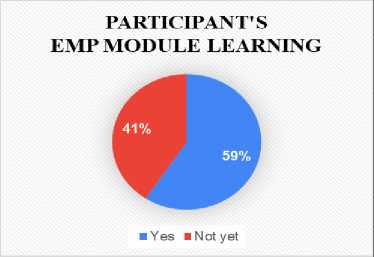
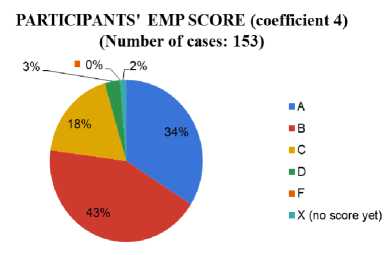
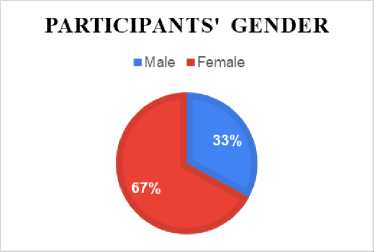
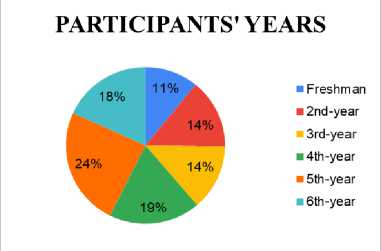
Fig. 1. The background information of participants
Where n represents the required sample size, Z 1-a /2 = 1.96 with a statistical significance level α=0.05 ; d represents the desired margin of error, which is 0.05; P =0.8 is the proportion of students who like EMP in the previous study on 167 students of the emergency resuscitation department by Nguyen Hung Hoa and colleagues in 2015. Applying the formula, we get ≈ 246 students. To reserve for about 10% of cases of sample loss, the actual sample size required is 246 + 246 x 10% ≈ 270 students.
After using random sampling, we selected 270 students, and there were 258 medical students from the first to sixth years of the full-time program at Tay Nguyen University who agreed to participate in the quantitative research. The number of female students surveyed was higher than that of male students. The distribution of students by year was as follows: 28 first-year, 37 second-year, 35 third-year, 48 fourth-year, 63 fifth-year, and 47 sixth-year students. Among them, 153 students had taken the EMP module, accounting for 59.3% of the surveyed population. Of these 153 students, 118 who received grades A and B in the EMP module participated in the survey, representing 77.1% of the sample. Notably, no student failed the EMP module.
From the quantitative research, 12 students were selected for the qualitative one, of which each course had 02 students. Research samples will be classified into 3 clusters, as follows:
-
- Freshman and second-year students: they are subjects who have not studied EMP in the curriculum of Tay Nguyen University;
-
- Third-year and fourth-year students: they are subjects who are studying or have just completed the EMP module in the curriculum of Tay Nguyen University;
-
- Fifth-year and sixth-year students: they are subjects who apply EMP after learning the EMP module in the curriculum of Tay Nguyen University.
* Sampling criteria for each cluster are as follows
-
- Freshman and second-year students: 01 student per course has not been exposed to EMP, and 01 student per course has been exposed to EMP through any means of communication;
-
- Third-year and fourth-year students: there is 01 student per course who only studies and practices EMP in the EMP module of Tay Nguyen University, and 01 student per course who practices EMP outside of the EMP module of Tay Nguyen University;
-
- Fifth-year and sixth-year students: there is 01 student per course who does not apply EMP in learning, and there is 01 student per course who applies EMP in learning.
-
3.3. Data Collection and Analysis
The researchers sent the link of a questionnaire on Google Forms to participants. They responded to the questionnaire voluntarily from May 18th to 26th, 2023. Then, the data were analyzed by SPSS 20. Qualitative variables
-
3.4. Questionnaire
From the information collected from the survey, 12 lists of students were created according to the criteria mentioned above, then randomly selected 01 student in each list. If the selected student does not agree to participate in the interview, other students will continue to be randomly selected from the list until there is 01 student in each list who agrees to participate in the interview.
are presented as frequencies and percentages. Quantitative variables will be presented as mean ± standard deviation (if normally distributed). Qualitative research information will be recorded directly through interviews and fully and honestly cited in the research results.
The questionnaire consisted of 24 items categorized into 2 clusters: needs and factors affecting the needs of learning EMP. The questionnaire includes 3 items designed to elicit the background information summarized in the preceding section, as well as the following: interest in EMP, needs of learning EMP, and factors affecting the needs of learning EMP. The participants were asked to rate each item on a five-rating scale by the 5-point Likert scale in terms of their agreement with the scales of use in ascending order, ranging from 1 (strongly disagree), 2 (disagree), 3 (no comment), 4 (agree), and 5 (strongly agree).
The questionnaire clearly stated the purpose of this study. It was piloted to make sure it was appropriate for the research’s goal and to ensure its validity. After revising the questionnaire, the link to the questionnaire will be sent to all participants. To test the reliability of the questionnaire, a scale test was run; the result indicated that the instrument is reliable for collecting data (α = 0.9441).
Table 1. Reliability Statistics of the Questionnaire
Cronbach’s Alpha Number of Items
.9441 24
4. Results and Discussion 4.1 . The Percentage of Interest in English for Medical Purposes of Medical Students, Tay Nguyen University
Results from Table 2 show that students who love EMP account for 31% of the students surveyed. More specifically, the group of students who have experienced clinical practice has a preference rate of 31.1%, while the group who have not experienced clinical practice has a favorability rate of 30.8%. In addition, the percentage of students who love EMP increases gradually over the school years, with an exceptionally high percentage of students who love EMP in the fifth and sixth years. This shows that the group of students who have experienced clinical practice has a higher interest rate than those who have not experienced clinical practice, and that experiencing clinical practice impacts the level of interest in EMP. However, the percentage of students surveyed is significantly lower than the previous study on 167 anesthesia and resuscitation students, with a percentage of more than 80%. The author explained, "The more students come into contact with specialized fields and with patients, the higher the needs of learning EMP. Specifically, the level of interest in EMP among first- and second-year students is 84-85%, while third-year students are 94% and fourth-year students are nearly 100%" [5]. Accordingly, it can be hypothesized that the need to use EMP of Tay Nguyen University’s Medical students has not been stimulated, and the students themselves have not realized the importance of EMP in both study and work.
It can be seen that the percentage of interest in the group of students who have studied or are studying EMP is higher than that of those who have not studied EMP. In addition, the percentage of students who love EMP increases with their scores, showing that having studied EMP and scores are also motivating factors for students to love EMP.
Table 2. The level of students' interest in EMP (n = 258)
|
Variable |
Number of survey cases |
Number of favorite cases |
||
|
Number of choices |
Percent (%) |
|||
|
In total |
258 |
80 |
31.0 |
|
|
Sex |
Male |
85 |
24 |
28.24 |
|
Female |
173 |
56 |
32.37 |
|
|
Learn EMP? |
Learned or learning not learn yet |
153 105 |
50 30 |
32.68 28.57 |
|
A (8.5 – 10.0) |
52 |
20 |
38.46 |
|
|
Score of EMP module |
B (7.0 – 8.4) |
66 |
21 |
31.82 |
|
(in group of students who learned and are |
C (5.5 – 6.9) |
28 |
8 |
28.57 |
|
learning) |
D (4.0 – 5.4) |
5 |
0 |
0 |
|
(n = 153) |
F (<4.0) |
0 |
0 |
0 |
|
X (no score yet) |
2 |
1 |
50.0 |
|
|
Freshman |
28 |
10 |
35.71 |
|
|
2nd-year |
37 |
10 |
27.03 |
|
|
Level |
3rd-year 4th-year |
35 48 |
10 11 |
28.57 22.91 |
|
5th-year |
63 |
19 |
30.15 |
|
|
6th-year |
47 |
20 |
42.55 |
|
|
Experience clinical practice? |
Yes Not yet |
193 65 |
60 20 |
31.09 30.77 |
-
4.2 Needs of Learning English for Medical Purposes of Medical Students at Tay Nguyen University
Accordingly, when assessing student attitudes based on how many hours per week students spend using foreign medical documents, it shows that the average student only spends a modest number of 1.17±0.094 hours per week using them (Table 2). This data, combined with the student's interest rate in EMP above, is similar to a previous study of EMP learning motivation, showing that the internal motivation of learning EMP of each student is not satisfied and can be explained by the reasons that students have not had the opportunity to put EMP on their course into clinical practice, and the lecturer cannot cover the entire learning situation of the students [9].
Table 3. The number of hours per week that students spend using English medical documents (n = 258)
|
Time |
n |
% |
Mean (hours) |
Std. Deviation |
|
From 0 – lower than 1 hour |
113 |
43.80 |
||
|
From 1 – lower than 2 hours |
86 |
33.33 |
||
|
From 2 – lower than 3 hours |
34 |
13.18 |
1.17 |
0.094 |
|
From 3 hours above |
25 |
9.69 |
||
|
Total |
258 |
100 |
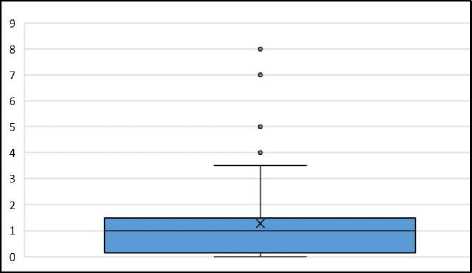
In Figure 1 , we can see that the average is 0.83 and the standard deviation is 1.36, suggesting that students who have not experienced clinical practice invest in EMP, but the number of students investing in EMP is not high because the data is mainly concentrated below the mean, with the median and 1st quartile both being 0.This shows that more than half of the students who have not experienced clinical practice do not spend time using EMP. The middle range is only 1, which shows that the dispersion of the data is not large, but the maximum value of 7 shows the presence of outliers.
However, the maximum value is 8, which is much higher than the quartile score of 3, indicating the presence of high outliers. The average of 1.28 and the standard deviation of 1.55 also show that the time spent by students who have gone to the clinic to invest in EMP is higher than the time spent by students who have not yet gone to the clinic to invest in EMP.
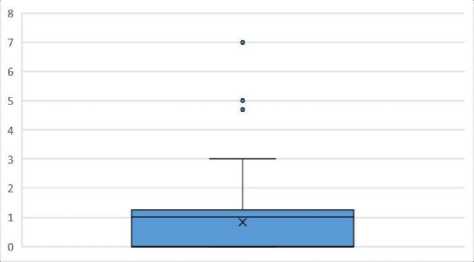
Fig. 2. Time of students who have not experienced clinical practice investing in using English for Medical Purposes (hours per week) (n=65)
|
Min |
0 |
|
Max |
7 |
|
1st quartile |
0 |
|
Medium |
0 |
|
3rd quartile |
1 |
|
Middle range |
1 |
|
Mean |
0.83 |
|
Std. deviation |
1.36 |
|
Min |
0 |
|
Max |
8 |
|
1st quartile |
0.2 |
|
Medium |
1 |
|
3rd quartile |
1.5 |
|
Middle Range |
1.3 |
|
Mean |
1.28 |
|
Std. deviation |
1.55 |
Fig. 3. Time students who have experienced clinical practice investing in using English for Medical Purposes (hours per week) (n = 193)
Via Figure 2 and Figure 3 , it is shown that there is a difference in the time spent by students who have not experienced clinical practices and those who have invested in EMP as follows:
-
- Increased investment in time: the median value increased from 0 (group that has not experienced clinical practice) to 1 (group that has experienced clinical practice), showing that after experiencing clinical practice, students spend more time learning EMP. In addition, the average value increased from 0.83 to 1.28, also reflecting an increase in time investment in learning EMP.
-
- Data dispersion: The standard deviation increased from 1.36 to 1.55, showing that the dispersion of time invested
in learning EMP after experiencing clinical practice is larger, meaning there is a larger difference in investment time between the two groups of students.
-
- Change in value range: 1st quartile point increased from 0 to 0.2 and 3rd quartile point increased from 1 to 1.5, showing that the value range of time invested in learning EMP has increased after students experienced clinical practice.
These differences show that after students start clinical practice, they tend to invest more time and have a larger difference in time invested in learning EMP. This may reflect an awareness of the importance of mastering EMP in clinical learning.
Table 4 shows that the biggest need for students to use EMP in their studies is "Wanting to access more EMP documents" accounting for 75.2%. The highest demand for EMP in future jobs is "looking for well-paid jobs, dynamic working environments abroad" accounting for 59.3%.
In addition, we can see that all the options for learning purposes and future plans surveyed have an above-average selection rate, indicating that students are interested in both academic and career aspects that EMP brings. However, in the study, the biggest need of medical students is "Wanting to access more EMP materials" with a selection rate of 75.2%, whereas the need for future work, "Looking for a well-paid job with a dynamic working environment abroad" accounts for 59.3%. This also shows that medical students at Tay Nguyen University tend to hone their skills to use documents for the purpose of future careers. This result is similar to a previous research in which students showed a pattern of interest in skills to use documents [5]. Unlike research at Karadeniz University of Technology in Türkiye, it shows that more than 80% of students agree that: "EMP is an indispensable part of their future career" [20]. Research at Nguyen Tat Thanh University in Vietnam shows that "70.15% of students agree that EMP is very important for their future career" [10]. This can be explained by the fact that currently, students are aware of the importance of EMP for academic purposes and future work, but do not have enough motivation to maintain their study of EMP in their future careers.
Table 4. Medical students’ needs of using English for Medical Purposes in their studies and future jobs (n = 258)
SDA=strongly disagree; DA= disagree; NC= no comment; A= agree; SA=strongly agree
|
Criteria |
1 |
Level of agreement (%) 2 3 4 |
5 |
||
|
In study |
|||||
|
Using English skills well in listening, speaking, reading and writing |
0.8 |
3.9 |
24.0 |
54.7 |
16.7 |
|
Wanting to communicate in English regularly with lecturers |
1.2 |
6.6 |
41.9 |
43.4 |
7.0 |
|
Wanting to access more EMP documents |
1.2 |
0.8 |
22.9 |
51.9 |
23.3 |
|
In future work |
|||||
|
Regularly using English in future work |
0.4 |
1.9 |
38.8 |
45.7 |
13.2 |
|
Communicating in English with patients and foreign colleagues |
1.2 |
4.2 |
42.3 |
40.3 |
12.0 |
|
Looking for well-paid jobs, dynamic working environments abroad |
1.2 |
4.7 |
34.9 |
40.3 |
19.0 |
Figure 4 shows the number of students who want to improve the corresponding skill and the importance of that skill to students. We can see that the two English skills in need of learning after studying the EMP module are Listening and Speaking (both accounting for 67.97%) , showing that they are the two skills that students are most interested in. The skill with the lowest choice is Grammar, with a rate of 37.91%. Meanwhile, the opinion “None” has the lowest score (3.27%), which may indicate that most students want to improve at least one skill in EMP. This result is similar to research at Can Tho University of Medicine and Pharmacy: “The skills students want to learn the most after completing the EMP module are listening and speaking skills with a rate of 42.34%, followed by translation and reading comprehension at 26.61% and 25.4% respectively” [4]. These results are of high value in supporting the improvement of English skills in teaching EMP.
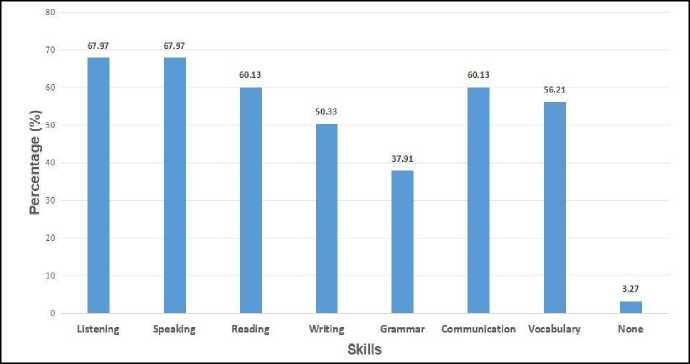
Fig. 4. Proportion of students with English skills that students need in their studies after taking the English for Medical Purposes course (n = 153)
-
4.3 Factors Affecting the Needs of Learning English for Medical Purposes of Medical Students, Tay Nguyen University
In Table 5 , we see that in factors related to some EMP teaching activities, the criterion with the highest agreement among students is “Lecturers teaching the EMP module need to have a medical background” with an agreement rate of 59.3%. This shows that factors related to teaching are important in promoting the needs of learning EMP among medical students at Tay Nguyen University. However, research has not yet clarified the characteristics of this factor such as teaching methods, learning materials, or lecturers’ skills and knowledge. Therefore, it is possible to specify and expand this issue in further studies. Two criteria, “Specialized lecturers fully introduce foreign learning and research materials for the subject” and “Lecturers regularly update medical information and specialized knowledge for lessons through foreign documents,” both have quite high selection rates, 49.2% and 49.6% respectively.
Regarding factors of learning environment and learning materials, it can be seen that the criterion with the highest agreement rate is “Students can search for EMP materials at the library” accounting for 49.6%. The referenced document argues that the use of technology and multimedia materials in teaching EMP can significantly improve students’ learning experiences. The author also emphasizes that integrating technology in the classroom and rich resources allows for creating a more attractive and dynamic learning environment [8]. Thus, both domestic and foreign educators in EMP have been interested in improving the learning environment and materials; however, there is not enough time, and currently, there are not many specific studies about this issue, so research on this issue can be expanded in further studies. In addition, cultural barrier is also an interesting factor regarding the EMP learning environment that potentially affects the needs of learning EMP of medical students; however, it is not mentioned and can be considered in future work.
When it comes to factors of students’ self-study, three criteria with a high agreement rate are “Spending a lot of time self-studying EMP (30 minutes or more per day)” (59.3%), “Preparing for the lessons: looking up and practicing new words” (58.2%), and “Regularly updating specialized knowledge” (60.8%). Thereby, it shows that medical students are enthusiastic and desire to learn and update their medical knowledge through EMP. However, the criterion “Spending a lot of time self-studying EMP (30 minutes per day or more)”, with an agreement level of 59.3%, contradicts the rate of liking EMP among medical students described above. This shows that students’ needs of spending time self-studying EMP is higher than their actual actions and attitudes. This result tends to be similar to the research results on “Motivation and strategies for learning EMP” and is named by the authors as the phenomenon of “behavior that does not meet the needs of desire” [9]. This shows that students themselves still have internal motivation to study and want to improve their EMP for their own purposes. However, this internal motivation is not motivated by external motivations (social needs, future career orientation, etc.).
When discussing how factors of future work impact students’ needs of learning EMP, the percentage of students agreeing on each factor is high, showing that they are aware of the importance of English and EMP and want to apply it to their future jobs. Furthermore, students realize that English will open up many job opportunities in their future. The factor with the highest percentage of students agreeing is “Looking for a well-paid job with a dynamic working environment abroad” with an agreement rate of 59.3%, showing that students are aware of the importance of having a good job, a dynamic working environment, and the opportunity to work abroad while using EMP.
Table 5. Factors affecting the needs of learning English for Medical Purposes (n = 258) SDA=strongly disagree; DA= disagree; NC= no comment; A= agree; SA=strongly agree
|
Criteria |
Level of agreement (%) |
||||
|
1 |
2 |
3 |
4 |
5 |
|
|
Factors related to some EMP teaching activities |
|||||
|
Medical lecturers regularly update medical information and knowledge for lessons through |
31 |
93 |
380 |
39.5 |
101 |
|
foreign documents |
|||||
|
Lecturers create medical communication situations in English regularly |
3.5 |
9.7 |
48.5 |
34.5 |
3.9 |
|
Specialized lecturers fully introduce foreign learning and research materials for the subject |
4.2 |
8.1 |
38.4 |
37.6 |
11.6 |
|
The time of the EMP module is enough for me to use EMP effectively while studying |
7.0 |
15.1 |
44.6 |
26.7 |
|
|
specialized subjects |
|||||
|
Lecturers teaching the EMP module needs to have medical background |
4.7 |
2.7 |
33.3 |
41.5 |
17.8 |
|
Factors of learning environment and learning materials |
|||||
|
Medical students can search for EMP documents at the library |
3.1 |
9.3 |
38.0 |
39.5 |
10.1 |
|
Library staff provide good support in searching for documents |
3.5 |
9.7 |
48.5 |
34.5 |
3.9 |
|
Students can access the school's Internet to search for documents and do exercises |
4.2 |
8.1 |
38.4 |
37.6 |
11.6 |
|
The classroom is clean and the teaching equipment works well |
7.0 |
15.1 |
44.6 |
26.7 |
6.6 |
|
Factors of student’s self-study |
|||||
|
Participating in academic activities of the EMP club |
1.9 |
3.5 |
50.8 |
38.0 |
5.8 |
|
Participating in group study activities to do exercises and practice English skills |
1.6 |
5.0 |
42.3 |
44.6 |
6.6 |
|
Spending a lot of time self-studying EMP (30 minutes or more per day) |
1.9 |
3.1 |
35.7 |
47.7 |
11.6 |
|
Preparing for the lessons: looking up and practicing new words |
1.9 |
4.3 |
35.7 |
51.2 |
7.0 |
|
Regularly updating specialized knowledge |
1.2 |
2.3 |
35.7 |
49.2 |
11.6 |
|
Factors of future work |
|||||
|
Regularly using English in future work |
0.4 |
1.9 |
38.8 |
45.7 |
13.2 |
|
Communicating in English with patients and foreign colleagues |
1.2 |
4.2 |
42.3 |
40.3 |
12.0 |
|
Looking for well-paid jobs, dynamic working environments abroad |
1.2 |
4.7 |
34.9 |
40.3 |
19.0 |
Table 6. Summary of factors affecting the needs of learning English for Medical Purposes of medical students, Tay Nguyen University (n = 258)
|
Criteria |
Mean |
Std. Deviation |
|
Factors of future work |
3.66 |
0.80 |
|
Factors of learning environment and learning materials |
3.59 |
0.89 |
|
Factors of student’s self-study |
3.56 |
0.76 |
|
Factors related to some EMP teaching activities |
3.38 |
0.92 |
-
4.4 Collecting New Opinions from Medical Students about the Difficulties Encountered in the Process of Learning English for Medical Purposes of Medical Students, Tay Nguyen University
In group interviews among 12 selective medical students, the research team has collected a number of difficulties affecting the process of learning EMP of students based on the following difficulty criteria:
Difficulty 1: Difficulties in the learning environment
-
- 8/12 students said: "Tay Nguyen University has tried to provide maximum equipment to create the best learning environment for students. However, currently in some lecture halls, the number of projectors is not guaranteed in both quantity and quality.”
-
- 10/12 students commented: "Medical English Club plays a very important role in stimulating the needs and enthusiasm of medical students in studying EMP. However, the activities of the clubs are rarely linked together and have not expanded within the medical student community at Tay Nguyen University, so not many students know about them and have the opportunity to learn and put EMP into practice.”
-
- There was also an opinion that: "The ideal learning environment should also include opportunities for students to interact and learn from the real environment. However, in fact, during both theoretical lessons and clinical practice, students are still not exposed to and apply EMP to their own studies.”
Difficulty 2. Difficulty with learning materials
-
- All students participating in the interview agreed that: "Tay Nguyen University should provide various kinds of learning materials such as textbooks, lectures, specialized reference materials in EMP to help students access knowledge quickly and effectively.”
-
- The current situation at Tay Nguyen University showed that: "The demand for EMP documents of medical students is very large, but the number of documents in the library is not enough to meet their demands. In addition, the documents on EMP at the libraries are not synchronized with the EMP classes at Tay Nguyen University."
Difficulty 3. Difficulty in the student’s self-study
-
- 6/8 students who have taken the EMP module said: "The difficulties in their ability to self-study come from the lack of learning goals and effective learning methods for themselves. In addition, the ability to self-study depends on each individual's orientation, so lecturers cannot cover all students and thereby provide effective general learning methods for all students.”
-
- There was an opinion that: "Currently, my English level is still not good, not to mention that learning and reading foreign documents is extremely difficult and not applicable in my learning process. Instead, I can even need available documents or documents that have been translated by others so you can read and learn, without having to practice additional EMP or English skills."
Difficulty 4. Difficulties in applying EMP in studying specialized subjects
-
- Students who have been exposed to EMP before shared that: "After studying the EMP module, they have not been given specific instructions on reading foreign documents. Most of them have to learn on their own via different sources such as guidance from senior students, social networks, or from subject lecturers and doctors. The applicability after studying the EMP module is not high and does not create interest for students, even if they have or have not had contact with EMP before."
-
- The majority of students said: “ Medical lecturers have tried to integrate Medical English into the curriculum and lectures, but the majority of students are still passive and not confident enough in their General English proficiency and EMP to put it into practice. Furthermore, in addition to being used in specialized courses, in fact, at clinical training hospitals for medical students, there is no mandatory requirement to use English and specialized English during the clinical practice.”
Difficulty 5. Other difficulties besides the above criteria
When asked about the suitable time to start learning EMP, both students who have and have not studied EMP have the answers: "Medical students should study EMP systematically early (before experiencing clinical practice and in parallel with basic medical science modules such as: anatomy, physiology,... and specialized courses such as: internal medicine, surgery, obstetrics, pediatrics,...)", for the following reasons:
-
- "Basic medical subjects can now use EMP to look up documents, make presentations, and participate in extracurricular activities such as academic clubs, international integration programs, etc."
-
- "Learning EMP early also helps students orient their learning methods and update trends and regimens in clinical practice."
-
- "Learning from the early years of the Medical program combined with General English also helps students create the habit of using English, stimulating students to apply English in life."
In addition to the difficulties and limitations that were mentioned via the interview and survey, as stated in the aspect of factors related to some EMP teaching activities, we also collected the following additional difficulties:
- “There is a big gap in General English knowledge in the student community.” This can be explained because when considering admission, the Medicine sector considers scores in 3 subjects: Math, Chemistry, and Biology. Many students tend to “study to score in English just above the weak score, then go to university and learn English again later.” The interviewed students also shared, “The difference in General English proficiency in the same class creates difficulties for both lecturers and other students. This problem requires lecturers to design a medium-level curriculum so that as many students as possible can obtain the lesson. Students with a higher level of General English will feel bored and thus are not motivated to learn.”
- “Learning General English goes hand-in-hand with studying EMP, so problems related to General English proficiency sometimes also make students lack confidence, have no interest in studying EMP, and afraid to continue EMP while they are not good at General English.”
5. Conclusion
5.1 Summary of the Findings and Implications5.2 Recommendation for EMP Education Improvement
The factors of the difference in students' General English is not within the scope of this study. However, it is still an influential factor and needs to be considered in further research.
The 12 students interviewed were individuals with opposite characteristics in a population group identified as having the same EMP experience through the curriculum, so when selected for interview, the opinions of these students were determined to be completely unrepresentative of any group at all. However, we tended to expand on the issues of difficulties, suggestions, and contributions of these opposite individuals to discover more factors affecting the EMP learning process in future research.
This study provides valuable insights into the preferences and needs of medical students at Tay Nguyen University regarding English for Medical Purposes (EMP).
The research revealed that 31% of medical students strongly prefer EMP. The two most significant needs identified are "Using English skills well in listening, speaking, reading, and writing" and "Wanting to access more EMP documents," with high selection rates of 71.4% and 75.2%, respectively, indicating that the students predominantly seek EMP for academic purposes and the use of EMP documents.
Several factors influencing the need to learn EMP were also identified. The most influential factor is future work prospects, with the highest average score of 3.66 points. This is followed by the learning environment and learning materials, which scored an average of 3.59 points. The next significant factor is the students' self-study habits, with an average score of 3.56 points. Finally, factors related to specific EMP teaching activities received a rating of 3.38 points.
These findings highlight the importance of providing adequate EMP resources and support to meet the academic and professional needs of medical students at Tay Nguyen University.
The University should identify the needs of the profession, society, and learners to build appropriate learning outcomes and orient the necessary skills such as listening, speaking, reading, and communication; update new English documents, books, and research in the library, encouraging students to self-study by putting theory into practice; organize seminars, orient students on studying and effectively apply EMP.
University students should take a proactive approach to learning by developing relevant skills and attitudes, identifying effective study methods, and actively applying new vocabulary. They should take note of challenging topics, practice efficient reading strategies, and cultivate a habit of reading (particularly materials related to their field of study). Additionally, confident communication and participation in self-study groups can further enhance their EMP learning.
For University lecturers, they should structure English reading comprehension instruction into three distinct phases: pre-reading, while-reading, and post-reading. Emphasis on the pre-reading stage to activate students’ prior knowledge of the topics, employ diverse instructional activities, integrate modern teaching aids, and foster collaborative discussions in group exercises. This approach helps students develop essential reading comprehension strategies and enhances their proficiency in EMP within their discipline. Additionally, lecturers should incorporate authentic materials (textbooks, guidelines, and medical manuscripts) into their teaching by designing and adapting exercises that align closely with real-world vocabulary, grammar, and skills development applications.
Acknowledgment
This research is funded by Tay Nguyen University at 567 Le Duan St., Buon Ma Thuot city, Dak Lak Province, Vietnam [Grant No. T2023 – 11SV].
