
Field Performance and Degradation Comparison of ESS Multicrystalline and Conventional Polysilicon PV Modules in Hot Indian Climates: A One-Year Rooftop Study
Журнал: International Journal of Engineering and Manufacturing @ijem
Статья в выпуске: 5 vol.16, 2026 года.
Бесплатный доступ
Photovoltaic (PV) technology is crucial for sustainable energy generation, but the performance of PV systems in real-life conditions is closely associated with the material quality, degradation and the climatic conditions. While conventional poly-Si modules are already widely installed, Elkem Solar Silicon (ESS®)-based multicrystalline silicon modules are more sustainable owing to energy savings in silicon production. But little field data is available on their behaviour in the hot Indian climate. Thus, the field performance of ESS® multicrystalline silicon and conventional poly-Si modules after one year of installed operation in a rooftop grid-connected 6.71 kWp PV system at BVRIT, Telangana, India is assessed. The demonstration system comprises 28 modules (organized in four rows of seven, with 14 ESS® modules and 14 conventional poly-Si modules). Performance analysis was carried out using field-based energy yield, I–V and P–V characteristics, peak power degradation, electrical mismatch, as well as electroluminescence imaging of the modules. The findings show that both technologies had minimal degradation, with an average annual power loss of 0.3% for ESS® modules and 0.4% for conventional poly-Si modules. ESS® module technology showcased 1-1.5% higher energy yield than conventional poly-Si modules, mainly because of better high-temperature operation. At the module level, it was detected that the majority of the changes in power were due to variations in current (Isc and Imp) rather than in Voc = 37.56 V and Vmpp = 30.23 V. Electroluminescence image analysis showed only minor defects from handling, but no defects caused by material. The results confirm that ESS® modules offer higher energy yield and are more suitable for sustainable grid-connected PV systems.
Короткий адрес: https://sciup.org/15020726
IDS: 15020726 | DOI: 10.5815/ijem.2026.05.16
Текст научной статьи Field Performance and Degradation Comparison of ESS Multicrystalline and Conventional Polysilicon PV Modules in Hot Indian Climates: A One-Year Rooftop Study
Photovoltaic (PV) solar technology is one of the most promising renewable energy conversion technologies that can help to solve the global concerns about energy security, global warming, and sustainability [1]. The growing need for renewable electricity supply, cost reduction of PV modules and the favourable renewable energy policies have driven the use of grid-connected PV systems globally [2]. In various PV technologies, crystalline silicon-based PV modules are still the most widely deployed in the global PV market due to their very high reliability, well-established
This work is open access and licensed under the Creative Commons CC BY 4.0 License.
manufacturing process, efficient energy conversion, and long lifetime. Specifically, multicrystalline silicon and conventional poly-Si modules are the most commonly used modules for rooftop and large-scale PV systems because of their low cost and reasonably good performance under various operating conditions [3]. But practical performance of PV modules outdoors may differ from the rated values obtained under standard laboratory conditions due to the effects of temperature (T), incident radiance (H), air humidity and dust (humidity and dust), thermal stress, material degradation, and mechanical stresses during handling [4].
The annual energy yield of grid-connected PV systems depends not only on the nominal PV capacity installed, but also on their electrical performance over a number of years. PV modules are designed for a lifespan of 25 years or longer; hence, any annual degradation will have major impacts on service life energy yield and on the levelized cost of energy [5]. Open-circuit voltage, short-circuit current, voltage at maximum power, current at maximum power, fill factor, peak power, energy yield, and temperature coefficients are some of the essential parameters to assess PV module performance and reliability [6]. In particular, the degradation of peak power and field energy yield are crucial factors to consider for performance comparison of different PV module technologies [7 - 8]. As a result, performance testing of PV modules under actual weather conditions is vital for economic analysis, technology selection, reliability evaluation, and investment assessment for solar energy projects [9].
The Siemens process is a traditional PV-grade polysilicon manufacturing method used to produce high-purity PV-grade polysilicon, which is widely used in crystalline silicon PV module manufacturing [10]. This offers high purity and consistent electrical properties, and is suitable to produce industrial-scale solar cells. However, the conventional process for producing polysilicon requires a large amount of energy and this inevitably leads to a high embodied energy and carbon intensity for PV modules [11]. This is stimulating research and development of new silicon purification processes that are more energy efficient and thus have a lower environmental footprint while delivering modules with comparable performance [12]. One such alternative is Elkem Solar Silicon (ESS®) produced via metallurgical purification [13]. Multicrystalline silicon PV modules using ESS® are regarded as an attractive option because of the potential for a reduction of energy demand for silicon production and possibly at the same time a reduction of the environmental impacts of the PV production [14]. However, to gain confidence in the use of ESS® modules for large-scale applications, strong evidence is needed of similar performance, degradation and stability under field operating conditions to typical conventional poly-Si modules [15 - 16].
The research on crystalline silicon PV modules has so far mostly addressed laboratory performance analysis, light-induced degradation, temperature coefficients, defect formation, and accelerated ageing [17]. Various standard test procedures of laboratory measurements provide basic details about PV module efficiency and current generation. However, PV modules deployed outside the laboratory are subject to varying irradiance, ambient and module temperatures, wind speed, humidity and other challenges [18]. This impacts current, voltage, power output and degradation. Research on conventional multicrystalline and polysilicon PV modules has identified that degradation is caused by yellowing of encapsulant and solder bond failure, cell cracks, potential-induced degradation, light-induced degradation and thermal cycling effects [19]. Electroluminescence has also been extensively used to detect micro-cracks, inactive areas, and manufacturing/handling-induced defects invisible to the human eye. While these studies offer a good understanding of PV module degradation, there have been relatively fewer field studies that compare the long-term performance of ESS® multicrystalline silicon (Mc-Si) and polysilicon (poly-Si) PV modules under Indian climatic conditions [20 - 21].
India offers a high solar resource and a rapidly growing solar market, including a rising trend for rooftop PV systems. However, the Indian climatic conditions can cause problems in PV module performance. Limited energy yield, increased PV module degradation, dust, seasonal changes in irradiance, and thermal shocks can affect PV energy production and performance. PV modules with superior thermal performance can generate more energy [22 - 23]. Thus, field experiments conducted in hot climatic zones are quite useful to study the behaviour of modules. Sustainable PV deployment in India requires an understanding of whether PV modules based on alternative silicon feedstock sources like ESS® can be equivalent or superior to those based on polysilicon [24 - 25].
Based on recent field investigations, it is clear that a single technology-dependent degradation rate cannot capture the behaviour of the degradation of PV modules due to strong dependency on the climate, material mix-up, manufacturing quality and installations, exposure time, and measurement uncertainty. A degradation study on field collected module backsheets from various climatic regions showed that different degradation mechanisms can occur depending on the climatic regions and polymer constructions even with the same module components under different climates [26]. Likewise, a field aged sample of multicrystalline-silicon modules in Nordic conditions revealed several types of failure modes, including microcracks, moisture ingression, corrosion, potential induced degradation, optical degradation and irregular temperature sensitivity, which showed a strong dependency of module failure modes on the operation conditions instead of only cell technology [27].
Also, the studies carried out on the field under warm and tropical conditions have revealed significant differences between manufacturers. In [28], PV modules from 11 manufacturers installed under the same climatic conditions were analysed, and the mean annual power degradation rates were found to range from 0.79%/year to 1.67%/year. The study also revealed that power loss mainly correlated with a decrease in short-circuit current, and the electrical degradation could not be explained by visible defects alone. The importance of this result lies in the fact that very similar (nominally)
modules in the same location may have different results due to manufacturing route, quality of encapsulation, initial electrical tolerance and construction of the modules.
The temperature – degradation correlation is also complicated. Long-term field-aged modules have been investigated and it has been found that optical degradation, moisture entry, discolouration of the encapsulant material and corrosion can cause the operating temperature of a module as well as current generation capability to change [29]. Other recent work has highlighted the fact that PV degradation occurs at multiple temporal and spatial scales, and that some PV accelerated test conditions may not be able to accurately capture the interplay between various factors (such as field temperature, humidity, UV, and mechanical load) that impact PV degradation [30]. Thus, the findings from a given site and/or duration of exposure should not be taken outside of the climatic zone.
The current research deals with the problem of missing field-based comparative case studies regarding performance, degradation, and electrical characteristics of ESS® multiple crystalline silicon and conventional polysilicon PV modules in a grid-connected rooftop application. While ESS® modules may have reduced energy demands for production, the field performance needs to be evaluated through experimental measurement. A comparative field study at the same site and under similar operating and monitoring conditions is required to determine if ESS® modules are a sustainable and reliable option. Comparative evaluation will help PV system designers, investors and policymakers better understand how ESS® modules perform in terms of energy yield, degradation and reliability.
The key gap in the research is the lack of outdoor performance studies describing the field energy yield, I-V/P-V characteristics, module degradation, electrical performance deviation, temperature coefficient and electroluminescence image for ESS® and polysilicon modules. Several studies have only considered energy yield or laboratory-based characterisation of PV modules; however, it is important to use both outdoor and indoor measurements. Energy yield, or characterized output, is the useful output from the PV system, while I–V and P–V curves reveal the changes in electrical characteristic. Degradation analysis shows the decrease in maximum power, and electrical deviation analysis shows the change in either voltage or current parameters. Electroluminescence image analysis also allows us to identify material degradation and handling damage. Thus, a multi-pronged approach is needed to gain insight into module performance.
The approach in the study emphasises actual performance change after field operation. Maximum power loss is determined from the peak power before installation and in the field. The field energy yield is related to the nominal capacity of the module to compare ESS® to conventional poly-Si modules. I-V and P-V currents are examined to check if there are variations in the voltage, current, or maximum power parameters. In-depth electrical deviations are investigated for open-circuit voltage, short-circuit current, voltage at maximum power point (Vmp), current at maximum power point (Imp), fill factor, and maximum power. Electroluminescence is a tool used to detect microcracks and handling induced damage. The combined analysis of electrical and physical degradation processes is delivered. The main results from the recent study show that ESS® and conventional poly-Si modules have low degradation during field assessment. Results indicate an annual average degradation rate of around 0.3% for ESS® and around 0.4% for polysilicon PV modules, with both technologies demonstrating similar PV degradation mechanisms. But energy yield of ESS® modules is about 1-1.5% higher than polysilicon modules, mainly because of improved performance under high temperature conditions. The I-V and P-V curves measured at the module level demonstrate that the voltage parameters (Voc and Vmpp) remain almost unchanged, about 37.56 V and 30.23 V, respectively, whereas most of the power fluctuations are attributed due to changes in current parameters (Isc, Imp). Electroluminescence imaging indicates slight handling-related defects in some modules, but no serious material related issues. All these findings demonstrate that ESS® multicrystalline silicon modules can be as reliable as conventional poly-Si modules and slightly better in field energy yield.
In summary, this research advances the real-world understanding of the use of alternate silicon feedstocks in PV modules. The combination of field monitoring, electrical characterization, degradation assessment and EL imaging allows the detailed comparison between ESS® and conventional polysilicon-based modules in a real grid-connected PV rooftop system. The results confirm the potential of ESS® modules in sustainable PV systems; especially in applications where the reduced energy required for production and better temperature behavior are critical. This work may guide PV system designers, researchers and policy makers in developing sustainable, reliable, and cost-effective PV system technologies for long-term power generation. This article is based on the uploaded manuscript of ESS® vs conventional poly-Si modules comparison at BVRIT.
2. Materials and Methods
In this investigation, we have used an experimental outdoor approach to evaluate the performance, degradation characteristics and electrical stability issues of Elkem Solar Silicon (ESS®) multicrystalline photovoltaic (PV) modules and conventional polysilicon PV modules in field conditions. The study has been conducted on a rooftop grid connected photovoltaic system situated at B V Raju Institute of Technology (BVRIT), Narsapur, Telangana, India. The proposed methodology flowchart is presented in Fig. 1.
Proposed Methodology
Research Objective
Comparative evaluation of ESS* multicrystalline silicon and conventional polysilicon PV modules in a grid-connected rooftop PV system
Experimental Setup
6.71 kWp rooftop PV system at BVRIT, Telangana, India
28 modules arranged in 4 arrays (7 modules each)
14 ESS® modules + 14 polysilicon modules
South facing, 17° tilt, grid-connected inverter system
STC flash testing after LID Initial l-V measurements Nominal module parameter recording
Initial Characterization
Field Monitoring and Exposure
One year outdoor operation
Continuous monitoring of DC/AC energy, voltage, current
Irradiance, module temperature, ambient temperature
Wind speed and wind direction
Array swapping to minimize positional bias
Post-Exposure Testing
Repeat l-V and P-v measurements
Peak power assessment after field exposure
Electroluminescence (EL) imaging
Performance Evaluation
Power Degradation Analysis
Field Energy Yield Analysis
PV Module Degradation and Change Analysis
Detailed Electrical
Deviation Analysis
Comparative Assessment

ESS® vs Polysilicon
Compare Voc, isc, VMPP. Impp, FF and P max
Compare array-level and module-level performance
Identify electrical and mechanical degradation trends
Key Findings
Low annual degradation in both technologies • Current parameters (lsc, lMPP) dominate performance variation
ESS® a 0.3%/year, Polysilicon a 0.4%/year * Minor defects mainly due to handling, not material failure
ESS® shows 1—1.5% higher energy yield
Conclusion
ESS® modules demonstrate comparable durability and slightly superior field performance under hot climatic conditions.

Fig. 1. Proposed methodology Flowchart
All modules were light-induced stabilized, and before deployment they were stabilized-flashed under STC, i.e., 1000 W/m² and 25 °C and AM1.5. Voc, Isc, Vmpp, Imp, Pmax and Fill Factor were the measured parameters. These tests were repeated again at the end of 1 year. The data-acquisition system measured, at one-minute intervals, not only the DC and AC energy, DC voltage and current, ambient-temperature, and module temperature, but also the irradiance received by the plane of array, horizontal irradiance, wind speed and direction during outdoor operation. Data cleaning operations included synching the data time stream via the timestamps, filtering out duplicate data, filtering values that were missing or physically impossible, and filtering time stream intervals where irradiance was below the minimum irradiance value needed for stable performance comparisons.
Peak-power degradation (ΔPₘₐₓ) is obtained from IV flash tests under standard test conditions (STC) before deployment (Pₘₐₓ,₀) and after t years of operation (Pₘₐₓ,ₜ)
Annual Degradation Rate is given as
Degradation rate (%/year) = max'0 ----max! x--- (1)
fmax,0 t
Where
-
• F max , 0 = module peak power at installation (STC)
-
• Pmax ,t = module peak power after t years (STC)
-
• t = elapsed time in years
The energy yield was calculated by adjusting the AC energy production according to the nominal installed capacity of the arrays:
The field energy yield, Y (Wh/kWp), normalizes AC energy produced (E AC ) to the nominal STC capacity (Pₙₒₘ):
Y = E ac
P ™ nom
Comparative gain between ESS® and polysilicon modules is:
Relative gain (%) = —— —p—y X 100 " poly
In-depth electrical change analysis was carried out by calculating changes in Voc, Isc, Vmpp and Imp, fill factor, and Pmax. This enabled us to determine whether the change in power is mainly attributed to changes in voltage or current. Electroluminescence was also performed to reveal latent defects (micro-cracks, dead cell spots and other damages caused by handling). Lastly, ESS® and polysilicon modules were compared at module and array levels. The investigation resulted in low degradation for both technologies, with 0.3% annual degradation for ESS® modules, and 0.4% for polysilicon. ESS® modules also had almost 1-1.5% higher yield in the field, primarily due to higher temperature behavior. In summary, this test method offers a consistent approach to assessing PV module degradation, energy yield and reliability, under field conditions.
-
2 .2. Experimental System and Instrumentation
A 6.71 kWp array was installed at 17.37° N, 78.47° E (489 m asl) at a 17° tilt on a stainless steel frame facing due south as shown in Fig. 2. The array includes 28 multicrystalline modules with 243.78 cm² cell surfaces. The four arrays include two ESS® arrays (Arrays 1 and 2) and two polysilicon arrays (Arrays 3 and 4). Arrays are assembled with seven modules wired in series, using two POWERONE Aurora PVI-6000 OUTD inverter outputs (an AC voltage of 230 V and a frequency of 50 Hz). The real-time monitoring system simultaneously measures DC and AC consumptions, as well as voltages, currents, ambient and module temperatures, irradiance levels from both plane-of-array and opposite directions and wind parameters at regular intervals. Stable current-voltage (I-V) specifications under standard test conditions (STC) were obtained with an AAA solar simulator before and after one year of operation. EL imaging was conducted while sweeping the modules in the laboratory in order to locate micro-cracks or signs of mishandling. ESS® modules were installed in Arrays 1 and 2 during the first year while polysilicon modules filled positions 3 and 4. The STC power (Wp) from the flash tests allowed us to express field-measured energy as a ratio of total mobile power. The PV module specifications are presented in Table 1, the experimental setup parameters are presented in Table 2.
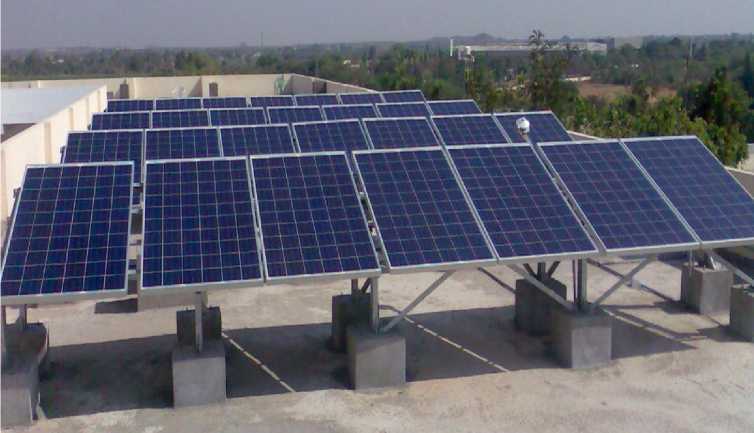
Fig. 2. Co-located ESS® multicrystalline and conventional poly-Si rooftop PV system at BVRIT
Table 1. Module Specifications
|
Item |
Specification |
|
PV Module Make |
Elkem Solar |
|
Total Cell in each Module |
60 |
|
Power (P mp ) |
240 kWp |
|
Max. Output V DC |
30.23 V |
|
Max. Output I DC |
7.94 A |
|
V OC |
37.56 V |
|
I SC |
8.44 A |
Table 2. Experimental Setup
|
S.No |
Parameter |
Value/Detail |
|
1 |
Location |
17.37° N, 78.47° E; 489 m asl |
|
2 |
Tilt Angle |
17° |
|
3 |
Orientation |
Due south |
|
4 |
Module Type |
ESS® (14 units), Polysilicon (14 units) |
|
5 |
Module Specification |
60 cells per module, 243.78 cm² per cell |
|
6 |
Array Configuration |
4 arrays of 7 modules each |
|
7 |
Inverter |
POWERONE Aurora PVI-6000 OUTD (2 units) |
|
8 |
Data Acquisition Rate |
1 minute |
|
9 |
Measured Variables |
DC/AC energy, V, I, module & ambient T, POA & horizontal irradiance, wind |
|
10 |
IV curve tracer |
Make-Day Star DS-100C |
|
11 |
Irradiance sensor |
Make - Kipp & Zonen |
|
12 |
Temperature sensor |
Make - PT100 thermocouple |
3. Results and Discussion
The experimental results provide a comparative study of Elkem Solar Silicon (ESS®) multicrystalline PV modules and conventional poly-Si modules in a 6.71 kWp grid-connected PV system at BVRIT, Telangana, India. The tests were conducted using I-V and P-V characteristics, peak power degradation, field energy yield, advanced electrical deviation and electroluminescence (EL) analysis. The key focus of the results is to analyse the change in the module performances after one year of outdoor exposure and to compare the robustness of ESS® and polysilicon modules under the same climatic and load conditions.
The pre- and post-field analysis of I–V and P–V characteristics shows that the ESS® and polysilicon modules had consistent voltage values. The open-circuit voltage (Voc) and voltage at maximum power (Vmpp) remained unchanged, with Voc around 37.56 V and Vmpp around 30.23 V for most of the modules. But there were changes in current-related characteristics such as Isc and Imp. Because the maximum power of a PV module is largely dependent on the multiplication of Vmpp x Imp, the changes in maximum power output were mainly related to current. This suggests that the performance behaviour of the modules is more affected by degraded currents due to outdoor conditions, temperature effects, cell-to-cell mismatch, and irradiance effects.
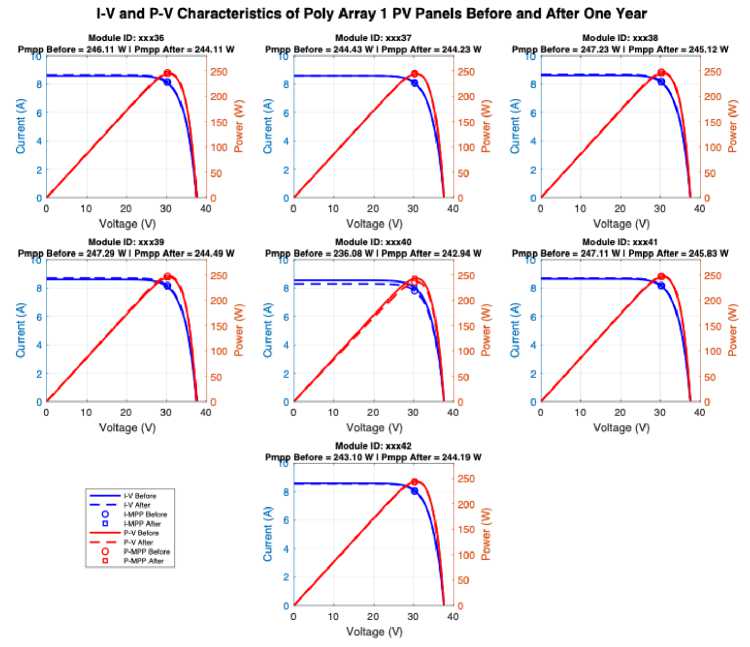
Poly Array 1 shows the IV and PV performance before and after one year, as shown in Fig. 3. This shows mixed behaviour, some with a decrease in maximum power and a few with slightly increased power. A number of modules, such as xxx36, xxx38, xxx39 and xxx41 showed negative power deviation - a decrease in power output. However, a few modules like xxx40 and xxx42 exhibited improved Pmpp, due to the increased current at maximum power point. The variation in results indicates that there are variations between individual PV modules. The overall variation of Poly Array 1 was not significant but the analysis confirms that current variation was the main contributor to the power variation.
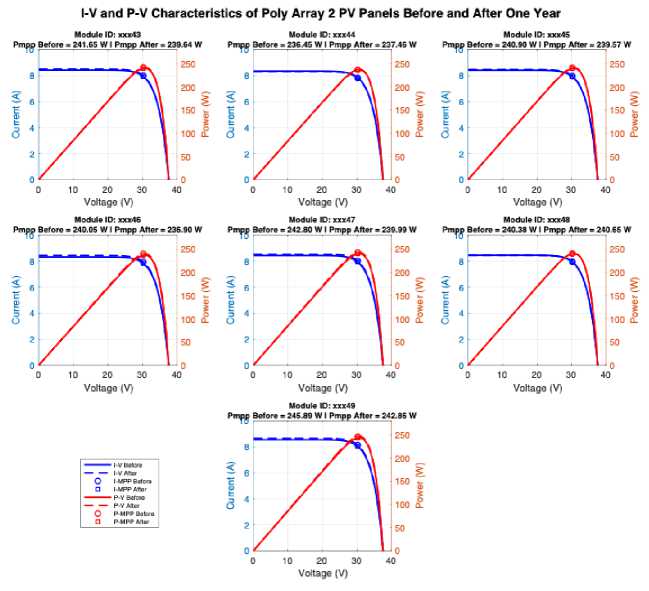
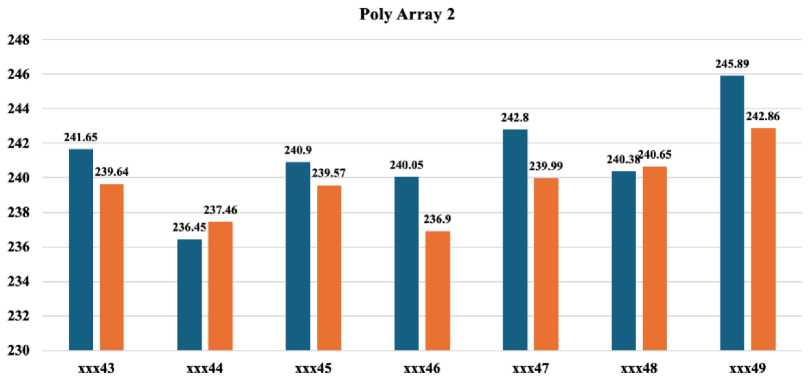
Even though Poly Array 2 has a lower initial degradation rate, the variation in the performance was relatively higher than that of Poly Array 1 as shown in Fig. 4. All the modules showed power decrease after one year exposure. There was higher degradation in xxx46, xxx47, and xxx49 while xxx44 and xxx48 improved a little. The P–V graphs show a loss in peak power for some of the modules. As Voc and Vmpp were nearly unchanged, the power loss is mostly attributed to the loss in Isc and Imp. This reveals that Poly Array 2 had more significant electrical variation and modulelevel mismatch, as compared to ESS® arrays.
There was no significant degradation in the field performance of ESS® Array 1. I-V, P-V curves showed that most of the modules had no change in voltage parameters as shown in Fig. 5. There were some changes in current and maximum power. There was a minor decrease in Pmpp for some modules, but an increase in Pmpp was observed from xxx24, xxx26 and xxx28. Modules xxx22, xxx25, and xxx27 showed relatively higher degradation in power, but the array degradation was minimal. It can be seen that ESS® Array 1 was well stable under outdoor environmental conditions.
ESS® Array 2 exhibited slight degradation in one year as shown in Fig. 6. The P–V curve of most modules showed a small downward shift, i.e. decrease in power output. A larger negative shift was observed for xxx34 and xxx35, and a small positive shift for xxx30. Like the other arrays, the voltage parameters were almost unchanged and the change in power was caused by changes in current parameters. The performance of ESS® Array 2 shows that there was minimum degradation and instability of ESS® modules in hot climatic conditions.
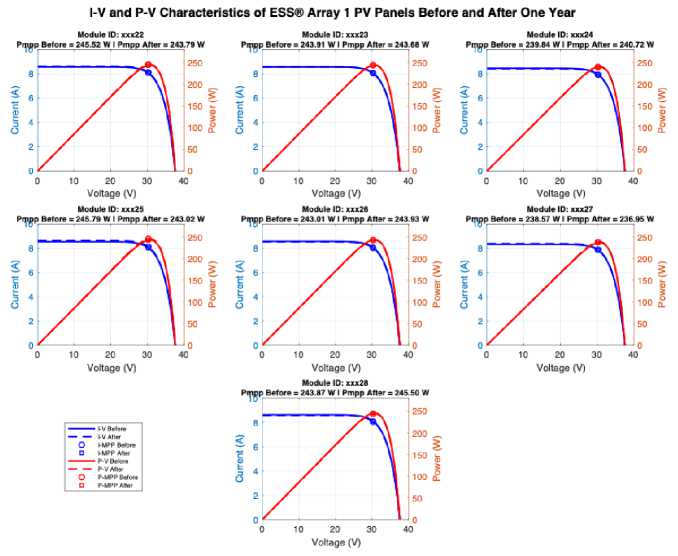
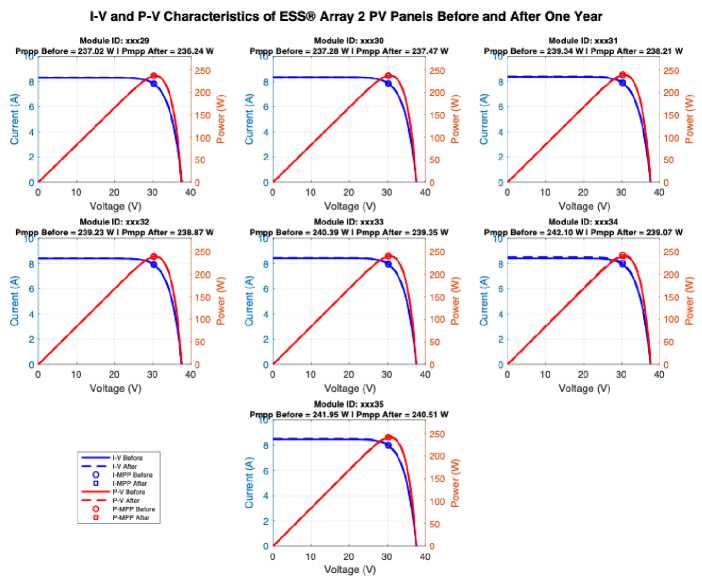
The degradation test indicated that both ESS® and polysilicon technologies have acceptable degradation reduction. The power decrease was only about 0.3% for ESS® modules and 0.4% for the reference polysilicon modules. This demonstrates that both types of systems are suitable for grid-connected PV systems. But compared to polysilicon modules, the ESS® modules had lower degradation implying better reliability in the field. These slight changes in degradation can be explained by better thermal properties and less degradation at higher temperatures as shown in Fig. 7. to Fig. 10. respectively.
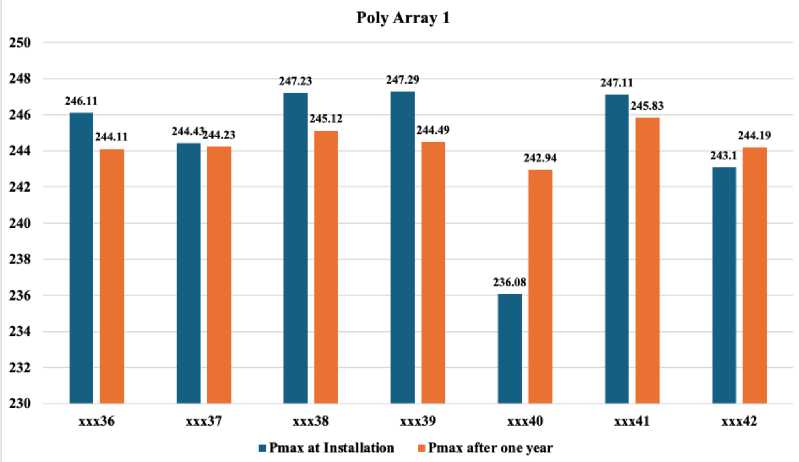
Fig. 7. Poly Array 1
■ Ртах at Installation Ртах after one year
Fig. 8. Poly Array 2
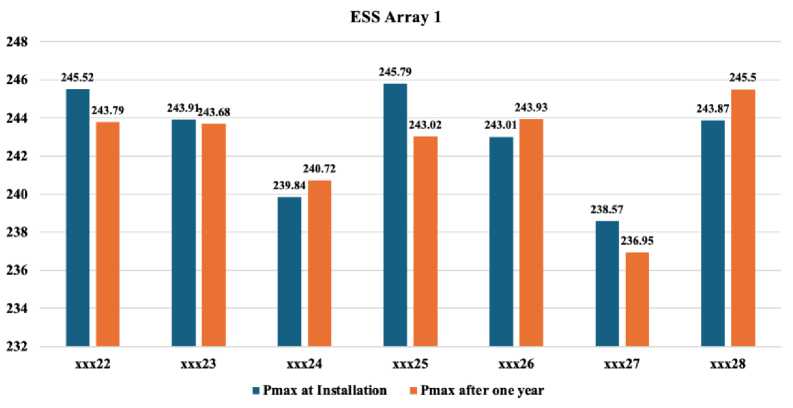
Fig. 9. ESS Array 1
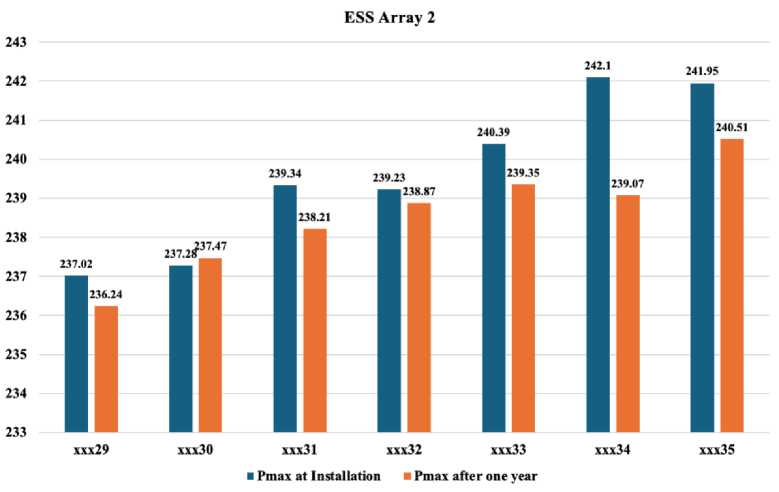
Fig. 10. ESS Array 2
The outdoor energy yield test revealed 1-1.5% more energy yield for ESS® modules compared to polysilicon modules. This increase is important as small gains in energy yield can affect the long-term economics of PV systems. The better energy yield of ESS® modules can be attributed mainly to the improved temperature response in outdoor conditions. As the system is located in a warm climate zone, this ambient temperature affects the energy yield. The better temperature characteristics of ESS® modules helped them perform slightly better under high temperature.
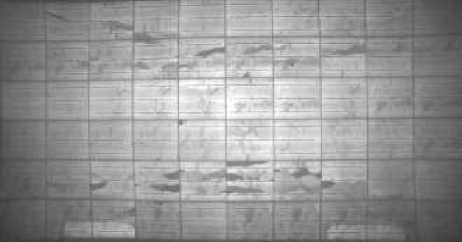
The electrical deviation analysis also indicated that most of the performance degradation was in current-related parameters and not in the voltage-related parameters. The Voc and Vmpp of most of the modules remained intact, while Isc, Imp, fill factor and Pmax resulted in minor changes. The stable values of Voc and Vmpp show that the internal voltage-generating capability of the modules was almost unchanged after one year of operation. This could be due to optical losses, small cell mismatch, micro-cracks, dust, or small variations in cell size. The electrical parameter deviations shown in this analysis show the main driver of the power degradation is current loss for both ESS® and polysilicon modules.
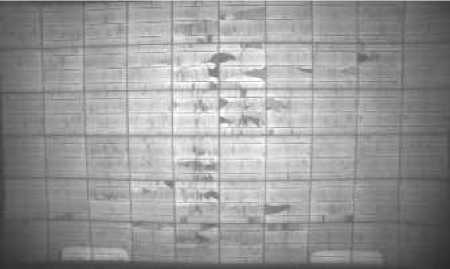
Fig. 11. Module (xxx40) Mechanical Degradation
Nominal Power (Wp)
Fig. 12. Module (xxx27) Mechanical Degradation
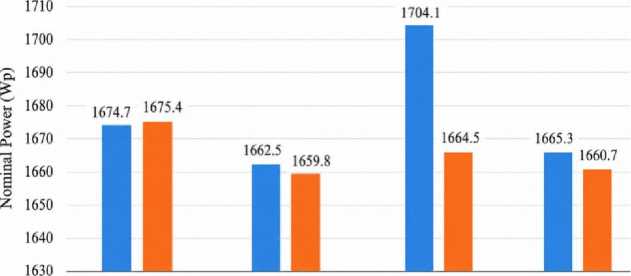
ESS® Array 1 ESS® Array 2 Poly Array 1 Poly Array 2
■ Before installation (Wp) at STC ■ After one year (Wp) at STC
Fig. 13. Nominal Power (Wp)
In conclusion, these results confirm the ESS® multicrystalline silicon PV modules have similar or better durability, degradation, and electrical stability compared to conventional polysilicon modules. The ESS® modules performed slightly better due to the low annual degradation and high field energy yield. The polysilicon modules also performed well, but had relatively larger module variation in some arrays. These results indicate that ESS® modules can be trusted as a sustainable substitute for traditional polysilicon modules for grid-connected rooftop PV systems, particularly in hot climates.
Table 3. Comprehensive Comparison
|
Module technology |
Array |
Initial power at STC (Wp) |
Power after one year at STC (Wp) |
Change in power (Wp) |
Calculated degradation / change (%) |
|
ESS® multicrystalline |
ESS® Array 1 |
1674.7 |
1675.4 |
+0.7 |
-0.04% |
|
ESS® multicrystalline |
ESS® Array 2 |
1662.5 |
1659.8 |
-2.7 |
0.16% |
|
Conventional poly-Si |
Poly-Si Array 1 |
1704.1 |
1664.5 |
-39.6 |
2.32% |
|
Conventional poly-Si |
Poly-Si Array 2 |
1665.3 |
1660.7 |
-4.6 |
0.28% |
4. Conclusion
A one-year field study was performed to compare the performance of 14 ESS® multicrystalline modules and 14 conventional poly-Si modules on a 6.71 kWp rooftop, located in Telangana, India. The mean loss of Pmax was low in both groups (around 0.3% and 0.4%, respectively) and the normalized AC energy yield of ESS® arrays was highest at around 1–1.5%. The different values of Pmax were primarily correlated with the current related parameters whereas the voltage related parameters remained rather stable. Few defects were evident due to handling, and no obvious handling related material failure was identified during the EL imaging process. These results substantiate similar results for the field stability in the short term, and a slight improvement in energy yield for ESS® under the monitored conditions. Limitations of the study include its one-year duration, the moderate sample size, missing batch/tolerance information, uncertainty information that was not detailed, the fact that temperature coefficients were not quantified, and the absence of inferential statistics. It is unable to address long-term mechanisms like PID, LeTID, encapsulant browning, backsheet degradation or interconnect fatigue, however. Future work will also involve expanding monitoring to five or more years, expanding to multiple Indian climate zones, releasing anonymous module level and calibration data, quantifying propagation of uncertainties through the process, and creating irradiance–temperature–yield regression models for technology-specific prediction of performance.
All the Declarations and StatementsAuthor Contributions Statement
Ramchander Nirudi – Conceptualization, Methodology, Software Development, Investigation, and Experimental Validation; Constructed the overall framework, and supervised project execution.
-
G. Tulasi Ram Das – Supervision, Validation, and Scientific Guidance: Provided overall research supervision, ensured methodological rigor and consistency of the research.
T.S. Surendra – Theoretical Validation and Standardization: Conducted theoretical verification of the proposed concepts.
All authors have read and agreed to the published version of the manuscript.
Conflict of Interest Statement
The authors declare no conflicts of interest.
Funding Declaration
This research received no external funding.
Data Availability Statement
The data that support the findings of this study are available from the corresponding author upon reasonable request.
Ethical Declarations
This study did not involve human participants or animals.
Acknowledgments
We sincerely thank the experts for their professional evaluation and valuable recommendations, which have contributed to improving the quality of the experiment and the reliability of its results.
Declaration of Generative AI in Scholarly Writing
The authors have not employed any Generative AI tools.
Abbreviations
The following abbreviations are used in this manuscript:
PV – Photovoltaic
ESS® – Elkem Solar Silicon
BVRIT – B. V. Raju Institute of Technology kWp – Kilowatt-peak
I–V – Current–Voltage
P–V – Power–Voltage
EL – Electroluminescence
Isc – Short-Circuit Current
Imp – Current at Maximum Power Point
Voc – Open-Circuit Voltage
Vmpp – Voltage at Maximum Power Point
MPP – Maximum Power Point
V – Volt
Appendix A/B/C…, with appendix title
N/A
