
Floristic Study of Monotypic Genera of Early and Late Spring Plants of the Fabaceae Lındl. Family, Spread in the Territory of the Nakhchivan Autonomous Republic
Journal: Bulletin of Science and Practice @bulletennauki
Section: Естественные науки
Article in issue: 6 т.12, 2026.
Free access
The article deals with the floristic study of monotypic genera of early and late spring vegetation belonging to the family Fabaceae Lindl. (legumes) spreading in the territory of the Nakhchivan Autonomous Republic. The main purpose of the study is to determine the species composition, bioecological characteristics, distribution area, phytocenotic relationships, and ecological adaptation mechanisms of monotypic genera found in the region. As a result of the study, biomorphological characteristics, life forms, geographical areal classes, and ecological groups of early and late spring plants of the Fabaceae family were studied. Also, the adaptation characteristics of these species to soil-climatic conditions and the level of resistance to anthropogenic influences were analyzed. The analysis of the areal structure of early spring plants showed that among the studied species, the xerophilous areal type predominates with 8 species, constituting 80% of the total composition. Within this type, the Mediterranean areal class is in the first place with 4 species (40%). The Eastern Mediterranean, Eastern Asia, Asia Minor, and Iranian areal classes are each represented by 1 species (10%). In addition, the Boreal type is represented by 1 species (10%) in the European areal class, and the Desert type is represented by 1 species (10%) in the Eastern Pontic areal class. The analysis conducted on altitudinal zones shows that the main part of the species is represented by 4 species (40%) in the plain and low mountain zones. The plain zone is characterized by 3 species (30%), the low mountain zone by 2 species (20%), and the species spreading to the middle mountain zone by 1 species (10%). Overall, 70% of the species are concentrated in the plains and lower mountain levels, while species numbers decline sharply at higher hypsometric levels.
Similar articles in the section Geographic botany. Plant geography (phytogeography). Floras. Geographic distribution of plants
Short address: https://sciup.org/14138218
IDS: 14138218 | UDC: 581.93 | DOI: 10.33619/2414-2948/127/08
Флористическое исследование монотипных родов ранне- и поздневесенних растений семейства Fabaceae Lındl., распространённых на территории Нахчыванской Автономной Республики
Статья посвящена флористическому исследованию монотипных родов ранне- и поздневесенней вегетации, относящихся к семейству Fabaceae Lindl. (Бобовые), распространённых на территории Нахчыванской Автономной Республики. Основной целью исследования является определение видового состава монотипных родов, встречающихся в регионе, их биоэкологических особенностей, ареалов распространения, фитоценотических связей и механизмов экологической адаптации. В результате исследования были изучены биоморфологические особенности, жизненные формы, географические классы ареалов и экологические группы ранне- и поздневесенних растений семейства Бобовые. Также проанализированы особенности адаптации этих видов к почвенно-климатическим условиям и уровень их устойчивости к антропогенным воздействиям. Анализ пространственной структуры ранневесенних растений показал, что среди изученных видов преобладает ксерофильный ареальный тип с 8 видами, составляющими 80% от общего состава. В рамках этого типа на первом месте находится средиземноморский ареальный класс с 4 видами (40%). Восточно-Средиземноморский, Восточно-Азиатский, Малоазиатский и Иранский ареальные классы представлены по 1 виду (10%). Кроме того, бореальный тип представлен 1 видом (10%) в европейском ареальном классе, а пустынный тип — 1 видом (10%) в восточно-портонском ареальном классе. Анализ, проведенный по высотным зонам, показывает, что основная часть видов представлена 4 видами (40%) в равнинной и низменной зонах. Для равнинной зоны характерно 3 вида (30%), для низменной — 2 вида (20%), а для средней горной зоны — 1 вид (10%). В целом, 70% видов сосредоточены на равнинах и в нижних горных районах, в то время как численность видов резко сокращается на более высоких гипсометрических уровнях.
Text of the scientific article Floristic Study of Monotypic Genera of Early and Late Spring Plants of the Fabaceae Lındl. Family, Spread in the Territory of the Nakhchivan Autonomous Republic
Бюллетень науки и практики / Bulletin of Science and Practice
UDC 581.93
The territory of the Nakhchivan Autonomous Republic is considered one of the important phytogeographic regions of Azerbaijan with its rich biodiversity and unique floristic composition. The complex relief of the territory, various altitude zones, sharply continental climate, and diversity of soil cover have created conditions for the formation of plants belonging to various ecological groups here. Despite the arid climate, the Nakhchivan flora is represented by relict, endemic, and widespread species, and the vegetation of the region is of particular interest from a scientific point of view. In this regard, the systematic study of individual families spreading in the area is one of the main directions of floristic research.
One of the important families widely spreading and distinguished by its species diversity in the Nakhchivan flora is the Fabaceae (Legumes) family. Representatives of this family play an important role in the formation of natural phytocenoses, increasing soil fertility (through nitrogen fixation) and in terms of their feed, medicinal, and technical importance. Species belonging to the Fabaceae family are widely spread mainly in the foothills, mountainous, and semi-desert zones. In particular, monotypic genera are of particular importance in systematic and evolutionary terms, since they are represented by a single species and reflect the uniqueness of the flora of the region.
Early and late spring plants belonging to the Fabaceae family differ in the characteristics of the vegetation period and clearly demonstrate their adaptation mechanisms to climatic factors. Early spring plants pass a rapid development stage by effectively using the short-term wet period, while late spring species are distinguished by more stable vegetation characteristics. The main purpose of the study is to conduct a floristic analysis of monotypic genera of early and late spring plants of the Fabaceae family spreading in the territory of the Nakhchivan Autonomous Republic. In this regard, the floristic study of monotypic genera with early and late spring vegetation is of great scientific importance for determining their bioecological characteristics, distribution areas, and phytocenotic roles.
Material and research methods
In the identification of species, classical floristic sources were used - Flora of the Caucasus [12].
Flora The studies were conducted in various areas of the Nakhchivan Autonomous Republic in 2025-2026. The material of the study consisted of samples collected from natural populations of early and late spring vegetation monotypic genera of the Fabaceae family (Legumes) widespread in the region. During the field studies, a route-expedition method was used, covering various altitudinal zones, foothills, mountainous and semi-desert landscapes. The distribution areas, frequency of occurrence and phytocenotic position of the species were observed and recorded on site. During the study, phenological observations were made on selected species, and their vegetation stages (germination, flowering, fruiting, etc.) were studied comparatively in terms of early and late spring aspects. The collected herbarium specimens were dried, prepared in a standard manner, and after systematic designation, they were submitted to the herbarium fund of the Department of Biology.
In the identification of species, classical floristic sources were used — Flora of the Caucasus, Flora of Azerbaijan, as well as the works of S. K. Cherepanov on the systematics of higher plants. The latest nomenclature and taxonomic changes were clarified on the basis of the World Flora Online database .
In the research process, biomorphological, ecological, taxonomic, floristic-systematic and phytocenological methods were used in a complex manner, and the results obtained were summarized through comparative analysis. A number of references were used in conducting of the research [1-10, 12, 16, 17].
Discussion and conclusions of the study
As a result of the conducted floristic studies, the species composition, distribution characteristics, and ecological position of monotypic genera with early and late spring vegetation belonging to the Fabaceae family, widespread in the Nakhchivan Autonomous Republic territory, have been determined. It has been established that these genera spread mainly in the foothills and middle mountain belts, and partly in semi-desert landscapes. Early spring species are distinguished by their short vegetation period and rapid ontogenesis stage, making maximum use of the humid period of spring, while late spring species are characterized by more stable development characteristics and a relatively long flowering phase. During the study, the biomorphological characteristics, life forms, and role of species within the phytocenosis were comparatively analyzed. It was found that monotypic genera, in addition to having a special position in terms of systematics, act as one of the components that create stability in the ecosystem. Their adaptation mechanisms to soil-climatic conditions, especially drought resistance characteristics, have been formed in accordance with the sharp continental climate of the region. The results obtained show that a comprehensive study of monotypic genera with early and late spring vegetation allows for a more complete assessment of the flora diversity of the region. The results of the study create a scientific basis for the protection, sustainable use of these species, and the development of future monitoring programs. Therefore, the floristic study of monotypic genera with early and late spring vegetation belonging to the Fabaceae family, widespread in the Nakhchivan Autonomous Republic territory, is considered an urgent and important problem [11, 16].
During the conducted studies, 10 species of monotypic genera with early and late spring vegetation belonging to the Fabaceae family, widespread in the region, were identified by us. Thus, spring plants are represented by 6 species belonging to 6 genera, and late spring plants are represented by 4 species belonging to 4 genera. The taxonomic composition of these species by genera is given below.
Fam: Fabaceae Lindl.
Genus: 1. Аcаciа Mill.
* Аcаciа deаlbаtа Linк.
Genus: 2. Аlbizziа Durаzz.
* Аlbizziа julibrissiа Durаzz.
Genus: 3. Cаrаgаnа Lаm.
Cаrаgаnа grаndiflоrа DC.
Genus: 4. Spаrtium L.
Spаrtium junceum L.
Genus: 5. Cercis L.
Cercis siliquаstrum L.
Genus: 6. Аrgyrоlоbium Ecкl. et Zeyh.
Аrgyrоlоbium rоseum vаr. subuniflоrum Boiss. ( А. trigоnellоides Jаub. et Spаch.)
Late spring plants
Genus: 7. Оnоnis L.
Оnоnis pusillа L.
Genus: 8. Trigоnellа L.
Trigоnellа glаdiаtа Steven. eх M. Bieb.
Genus: 9. Аrаchis L.
Аrаchis hypоgаeа L.
Genus: 10. Gleditshiа L.
Gleditsiа triаcаnthоs L.
The Fabaceae family (Legumes) occupies an important place in the world flora due to its species richness, biomorphological diversity and ecological plasticity. Species belonging to this family spread in the form of trees, shrubs, annual and perennial herbs, and show the ability to adapt to various climatic and soil conditions. Legumes play a special role in increasing soil fertility, since a symbiotic relationship is formed with nitrogen-fixing bacteria (rhizobium) in their root system.
The early and late spring plants presented by us include mainly decorative, introduced or cultivated species, as well as forms spreading in the natural flora. Species that bloom in early spring start the vegetation period early and effectively use humid and mild temperature conditions. Late spring species, on the other hand, are more resistant to temperature increases and are distinguished by their adaptation to relatively dry and hot conditions. These phenological differences are also reflected in their belonging to ecological groups.
From a bioecological point of view, there are plants with xerophytic and mesophytic characteristics among these species. According to their life forms, trees (e.g. acacia, gleditsia), shrubs (caragana, etc.) and herbaceous plants (ononis, trigonella, etc.) are observed. Spreading by altitudinal zones mainly covers the lowlands, foothills and lower mountain zones, depending on the heat and humidity requirements of the species.
Thus, the systematic presentation of the ecological groups, altitudinal zones, life forms and other bioecological characteristics of these species in the table to be presented will allow for their comparative analysis and assessment of their ecological adaptations (Table).
Danish botanist K. Raunkier (1860–1938), studying the ecological adaptation of plants, proposed a division of life forms based on the way they survive unfavorable seasons (drought, cold, etc.) [19].
The main criterion in the Raunkier system is the location of the renewal (hibernation) shoots relative to the soil surface. This feature is considered an indicator of adaptation to climate and is widely used in the ecological analysis of flora. This system allows you to correlate the morphological characteristics of plants with the environment in which they live. Determining the percentage of life forms (Raunkier spectrum) creates a complete picture of the climatic type and ecological conditions of a particular area. Thus, the analysis of any flora or plant group by life form allows you to determine which ecological strategies prevail in that area and is of great importance in phytocenological studies.
Table
FLORISTIC ANALYSIS OF MONOTYPIC GENERA
OF EARLY AND LATE SPRING PLANTS OF THE FAMILY Fabaceae
|
Genera |
Species |
Life forms |
Ecological groups |
Areal class |
Altitude zones |
|
Аcаciа Mill. |
Аcаciа deаlbаtа |
phanerophyte |
xerophyte |
Mediterranean Sea |
Plain and lower mountain belt |
|
Аlbizziа Durаzz. |
Аlbizziа julibrissiа |
phanerophyte |
xerophyte |
East Asia |
Plain |
|
Cаrаgаnа Lаm. |
Cаrаgаnа grаndiflоrа |
phanerophyte |
xerophyte |
Asia Minor |
Plain and lower mountain belt |
|
Spаrtium L. |
Spаrtium junceum |
phanerophyte |
mesophyte |
Mediterranean Sea |
Lower mountain belt |
|
Cercis L. |
Cercis siliquаstrum |
phanerophyte |
mesophyte |
Mediterranean Sea |
Plain |
|
Аrgyrоlоbium Ecкl. et Zeyh. |
Аrgyrоlоbium rоseum |
phanerophyte |
xerophyte |
Irаn |
Lower mountain belt |
|
Оnоnis L. |
Оnоnis pusillа |
hemicryptophyte |
xerophyte |
Mediterranean Sea |
Plain and lower mountain belt |
|
Trigоnellа L. |
Trigоnellа glаdiаtа |
therophyte |
xerophyte |
Eastern Mediterranean Sea |
Up to the middle mountain belt |
|
Аrаchis L. |
Аrаchis hypоgаeа |
therophyte |
mesophyte |
Eastern-pont |
Plain |
|
Gleditshiа L. |
Gleditsiа triаcаnthоs |
phanerophyte |
mesophyte |
Europe |
Plain and lower mountain belt |
Species belonging to monotypic genera of the Fabaceae family with early and late spring vegetation, distributed in the Nakhchivan Autonomous Republic territory, are grouped into phanerophyte, therophyte, hemicryptophyte and chamaephyte life forms.
Phanerophytes are plants with renewal shoots located above 25 cm above the soil surface and are mainly trees and shrubs, and are more widespread in temperate and warm climates. In the study area, the following species of early and late spring vegetation plants are phanerophytes: Acacia dealbata, Albizzia julibrissica, Caragana grandiflora, Spartium junceum, Cercis siliquastrum, Gleditsia triacanthus.
Chamaephytes are low shrubs and semi-shrubs with renewal shoots located close to the soil surface, below 25 cm, and are mainly adapted to arid and harsh climatic conditions. Among the studied species, Argyrolobium roseum is a chamaephyte. Hemicryptophytes are perennial herbaceous plants with regenerative shoots located on the soil surface and are especially widespread in temperate climate zones, dominating meadow and pasture vegetation. Small ononis ( Ononis pusilla ) is a hemicryptophyte species of early and late spring vegetation belonging to the Fabaceae family. Therophytes are annual herbaceous plants that spend the unfavorable period in the form of seeds and are widely spread mainly in arid and semi-desert conditions. Trigonella gladiata and Arachis hypogaea, species of early and late spring vegetation belonging to families spreading in the region, are examples of therophytes (Figure 1).
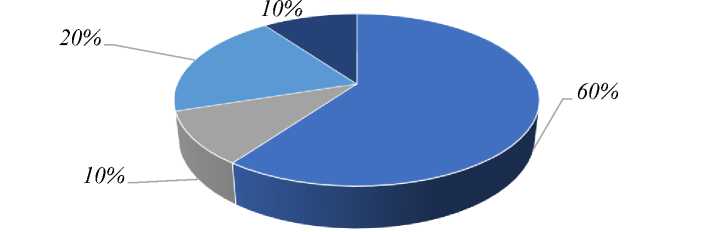
phanerophyte hemicryptophyte therophyte xamephyte
Figure 1. Life form spectrum of the studied species, %
As can be seen from the figure, the Raunkiaer life form spectrum of the studied species is shown. As a result of the analysis, it was determined that phanerophytes predominate among life forms and constitute 60% of the total species (6 species). This indicator indicates that trees and shrubs occupy a dominant position in the research material. The high share of phanerophytes can be explained by the widespread distribution of perennial woody plants in the area and the favorable ecological conditions for their development.
Therophytes are in second place with an indicator of 20% (2 species). The presence of a certain share of therophytes indicates the presence of annual herbaceous plants in the flora, and this is especially characteristic of arid and semi-desert areas. Chamaephytes and hemicryptophytes are the groups with the lowest share, each accounting for 10% (1 species). The low indicator of chamaephytes indicates the small number of semi-shrubby plants, and the relatively limited spread of hemicryptophytes. Plants are divided into various ecological groups, adapting to the main ecological factors of the environment in which they live — in particular, humidity, temperature, light, and soil conditions. This grouping is closely related to the water requirement of plants, the level of evaporation, the structure of the root system, and the morphological characteristics of vegetative organs. Ecological groups are an important indicator characterizing the ability of plants to survive and develop in certain environmental conditions. Plant species are systematized into ecologically different groups according to the degree of water requirement. The ecological grouping of early spring and late spring vegetation plants belonging to the Fabaceae family, widespread in the Nakhchivan Autonomous Republic, based on their attitude to the water regime, was carried out on the basis of the classification principles put forward by Shennikov [18].
Early spring and late spring vegetation plants of the Fabaceae family mainly belong to the mesophyte and xerophyte ecological groups according to their moisture requirements. According to their attitude to the moisture regime, mesophyte plants are transitional between the hygrophyte and xerophyte groups. This group of plants acts as important components of the vegetation cover formed mainly in forest and shrub areas, as well as in subalpine and alpine zones, and has a wide distribution area. Mesophyte species, adapting to the natural-ecological conditions of the environment in which they live, are characterized not only in terms of species diversity, but also by the richness of their morphological and ecological characteristics. The predominance of mesophyte characteristics among early and late spring plants is one of the main factors ensuring their stable spreading in the areas with different levels of moisture. Among these plants, Spartium junceum, Cercis siliquastrum, Arachis hypogaea, Gleditsia triacanthos are mesophyte species.
Xerophytic plants mainly include species formed in arid ecological conditions where moisture is limited. This group of plants is mainly distributed on slopes facing south, characterized by high temperature regimes and minimal moisture indicators. The main distinguishing feature of xerophytic species is related to the morpho-physiological adaptations they have developed against water shortage. Among these adaptations, the formation of a strong and deep root system that allows for efficient absorption of soil moisture plays an important role. The penetration of the root system into the deep layers of the soil allows xerophytes to use existing moisture reserves, including in some cases groundwater. In some species, the intensive branching of the root system acts as the main adaptation mechanism that ensures maximum use of soil moisture. In the study area, the early spring and late spring plants of the family Acacia dealbata, Albizzia julibrissica, Caragana grandiflora, Argyrolobium roseum, Ononis pusilla, and Trigonella gladiata are xerophytes (Figure 2).
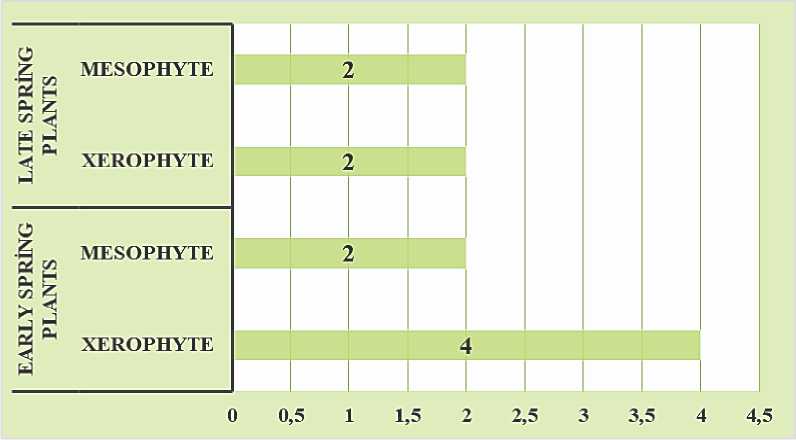
Figure 2. Comparative analysis of monotypic genera of early and late spring plants of the Fabaceae family by ecological groups
The figure shows the distribution of early and late spring plants belonging to monotypic genera of the Fabaceae family by ecological groups. As a result of the analysis, it was determined that among early spring plants, xerophytes predominated, represented by 4 species, and mesophytes by 2 species. This indicator indicates that species more resistant to drought and moisture deficiency conditions actively develop during the early vegetation period. In late spring plants, the number of xerophytes and mesophytes is equal (2 species each). This can be explained by the relative stabilization of ecological conditions in the later stages of the vegetation season and the parallel development of species adapted to both drought-resistant and moderate humidity. Geographical elements of plants are closely related to their historical development, adaptation to climate, and modern ecological conditions. In floristic studies, species are grouped by geographical elements in order to systematize these distribution features. The concept of a geographical element is an important phylogenetic indicator reflecting the distribution boundaries of a species and the origin of this distribution. Geographic elements are characterized by two main criteria: areal class and areal type.
The areal class determines the scale of spreading of the species and its intercontinental or regional character. The areal type, on the other hand, indicates the direction of spreading and floristic relationships of the species within specific geographical regions. This concept allows us to clarify in which floristic regions and biogeographical zones the plant was formed. Monotypic genera of early and late spring plants of the Fabaceae family have a wide spreading spectrum adapted to various ecological conditions. These species are represented both in broad-area classes and in regional and local areal types. Species belonging to the xerophilous areal type are mainly associated with arid and semi-arid climatic zones and are closely related to the Mediterranean and Near Asia-Iran floristic regions. Areal elements of this type usually have ecological characteristics adapted to high temperatures and lack of humidity. Among the species belonging to the monotypic genera of early and late spring plants of the Fabaceae family, xerophilous flora elements spread over a wider area and cover many species. They are superior to other groups in terms of the number of species. Such a superior position of xerophilous flora elements stems from their wider amplitude from an ecological point of view. For this reason, these plants have acquired wider areas. The studied species are grouped into the Mediterranean, Eastern Mediterranean, Eastern Asia, Asia Minor and Iranian areal classes of the xerophilous flora type. The species included in the boreal areal type are related to temperate climate zones and cover floristic elements of more northern origin. Such species are associated with areas where the temperature regime is relatively stable and humidity is sufficient. The species Gleditsia triacanthus belonging to the genus Gleditsia L. of the family is shown in the European class of this type. The desert areal type combines plants formed in arid and continental climates and reflects floristic components adapted to high drought conditions. The species Аrаchis hypogаea, widespread in the study area, is included in the Eastern Pontic class of the desert areal type (Figure 3).
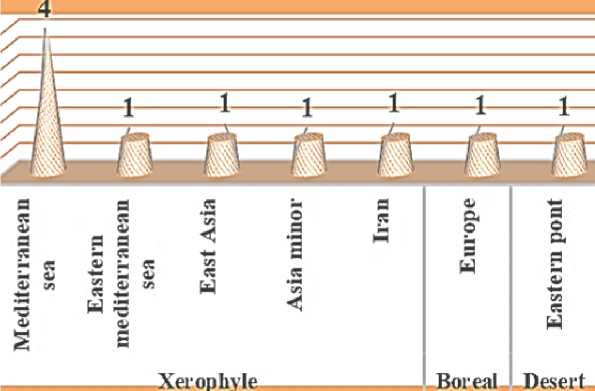
Figure 3. Spreading of the studied species by geographical areal type and class
The xerophilous type dominates in the areal structure of the studied species, constituting 80% of the total composition with 8 species. Within this type, the Mediterranean areal class is in first place with 4 species (40%). The Eastern Mediterranean, Eastern Asia, Asia Minor, and Iranian areal classes each have 1 species, constituting 10% of the total species. The Boreal type is represented by 1 species (10%) in the European areal class, and the Desert type is represented by 1 species (10%) in the Eastern Pontic areal class. In general, the xerophilous elements of Mediterranean origin dominate in the areal structure. Thus, the study of areal types and classes allows us to determine the phytogeographical relationships, historical development direction, and climate-related adaptation characteristics of the flora of the study area. The analysis in the figure visually presents the proportion of this structure. The orographic structure and altitude amplitude of the study area are among the decisive factors in the formation of vegetation cover and the spatial differentiation of species. The relief of the area, mainly covering plains, foothills, and mountains, has led to the formation of altitude belts with different ecological conditions. These belts differ significantly from each other in terms of climatic indicators, soil characteristics, and humidity regime, which directly affects the distribution areas of plant species. Species belonging to monotypic genera of early and late spring plants of the Fabaceae family are distributed in different altitude belts due to their ecological plasticity. These species are mainly distributed in plains, foothills, low mountains, and mid-mountain belts, which indicates that medium humidity and mild temperature conditions are optimal for them. In particular, plains and low mountain belt areas are considered the main biotopes for the studied species [14, 15].
Thus, spreading of the studied species of the Fabaceae family across altitudinal zones clearly reflects the climatic and ecological conditions of the area and the zonal nature of its floristic structure (Figure 4).
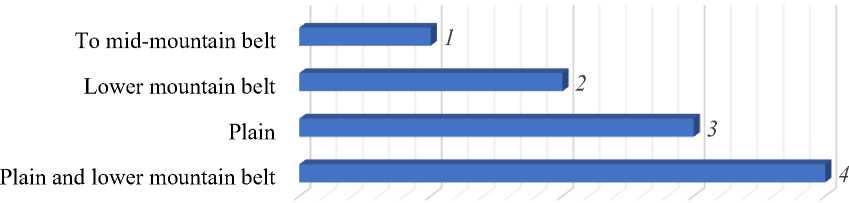
Figure 4. Spreading of species belonging to monotypic genera of early and late spring plants of the Fabaceae family by altitudinal zones
Analysis of spreading of the studied species by altitudinal zones shows that the species are mainly concentrated at low hypsometric levels. According to the diagram, 4 species were recorded in the Plain and Lower Mountain Zone, which constitutes 40% of the total species and is in first place. This indicator reflects the ecological plasticity of the species and their ability to adapt to both plain and low mountain conditions. 3 species (30%) were identified in the Plain Zone. This indicates that the Plain landscapes play an important role in the study area from a floristic point of view. 2 species (20%) were recorded in the Lower Mountain Zone, which indicates that some of the species prefer foothills and slopes. Only 1 species (10%) shows a distribution up to the middle mountain zone. This indicates that the upward spread of the studied species is limited. In general, the analysis of the diagram shows that the flora elements are mainly concentrated in the plain and low mountain belts, and the number of species decreases towards the middle mountain belt. This indicates that the species are better adapted to lower hypsometric levels due to the climatic and soil conditions and ecological factors of the area.
The floristic study of monotypic genera of early and late spring plants of the Fabaceae Lindl. family, distributed in the territory of the Nakhchivan Autonomous Republic, is of great scientific importance in terms of studying the biodiversity and phytogeographical characteristics of the region. During the study, the species composition, distribution areas, distribution by altitudinal belts, ecological groups, and life forms of the monotypic genera spreading in the area were determined, and their occurrence characteristics in various biotopes from the plain to the middle mountain belt were investigated. At the same time, the phenological development stages of these species, adaptation characteristics to soil and climatic conditions, and their role in phytocenoses were analyzed. The conducted floristic analyses allowed us to assess the participation of elements of Mediterranean and Near Eastern origin in the formation of the flora of the region, as well as the predominance of xerophilic characteristics, which was reflected in the results obtained.
Results
During the conducted studies, we identified 10 species of monotypic genera of early and late spring vegetation belonging to the Fabaceae family, which are widespread in the region. Thus, early spring plants are represented by 6 species belonging to 6 genera, and late spring plants are represented by 4 species belonging to 4 genera.
Analysis of the life form spectrum of monotypic genera of early and late spring plants of the Fabaceae family shows that phanerophytes occupy a dominant position and are represented by 6
species (60%), therophytes by 2 species (20%), and chamaephytes and hemicryptophytes by 1 species each (10%).
Comparative analysis of monotypic genera of early and late spring plants by ecological groups shows that in early spring plants, xerophytes are represented by 4 species (66.7%), and mesophytes by 2 species (33.3%). In late spring plants, xerophytes and mesophytes have a 50% share, with 2 species each. In general, while xerophytes dominate in the early spring stage, an equal distribution between ecological groups is observed in the late spring stage.
The analysis of the areal structure of early spring plants showed that among the studied species, the xerophilous areal type predominates with 8 species, constituting 80% of the total composition. Within this type, the Mediterranean areal class is in the first place with 4 species (40%). The Eastern Mediterranean, Eastern Asia, Asia Minor, and Iranian areal classes are each represented by 1 species (10%). In addition, the Boreal type is represented by 1 species (10%) in the European areal class, and the Desert type is represented by 1 species (10%) in the Eastern Pontic areal class.
The analysis conducted on altitudinal zones shows that the main part of the species is represented by 4 species (40%) in the plain and low mountain zones. The plain zone is characterized by 3 species (30%), the low mountain zone by 2 species (20%), and the species spreading to the middle mountain zone by 1 species (10%). Overall, 70% of the species are concentrated in the plains and lower mountain levels, while species numbers decline sharply at higher hypsometric levels.
