
Informal employment: Problems of work-life balance
Journal: Economic and Social Changes: Facts, Trends, Forecast @volnc-esc-en
Section: Social and economic development
Article in issue: 6 т.18, 2025.
Free access
The study analyzes the impact of flexible work schedules on the job satisfaction and behavioral strategies of platform workers with minor children, aiming to identify the advantages and risks of this form of employment for achieving a work-personal/family life balance. The relevance of the research is driven by shifts in employment structures associated with the development of the digital economy and the growing popularity of platform work. The central idea posits that while flexible schedules can facilitate a better balance, they also carry risks of self-exploitation and the systematic blurring of boundaries between work and personal life. The research is based on qualitative in-depth interviews with platform workers who have children, conducted using video conferencing software. The empirical data reveal a paradox of flexibility inherent in this employment form. A flexible schedule allows workers to autonomously regulate their workload; however, according to boundary theory, this very autonomy leads to a systematic breakdown in the segmentation of life domains. The constant pressure stemming from the need to monitor orders and maintain reputational capital fosters self-exploitation, manifested in working non-standard hours (late evenings, weekends) and even while ill, which in turn provokes family conflicts and the "always on" phenomenon. Gender differentiation in approaches to organizing an optimal work schedule is identified, reflecting the gender contract: women use flexibility to reduce paid working hours in favor of domestic responsibilities, whereas men, bearing financial responsibility, intensify their labor. From the standpoint of rational choice theory, workers prefer a high degree of autonomy (the ability to independently regulate time and adapt it to family needs) over the institutional stability of traditional employment, perceiving a standard schedule as "slavery". Possible strategies to mitigate risks and improve working conditions for platform workers are proposed.
Similar articles in the section Theory and organization of work. Relations between business firms and employees


Short address: https://sciup.org/147252999
IDS: 147252999 | UDC: 331.103 | DOI: 10.15838/esc.2025.6.102.9
Text of the scientific article Informal employment: Problems of work-life balance
An individual allocates their time among various activities in pursuit of both personal and societal goals. Certain standards exist for the distribution of work and leisure time, such as the length of the working day and breaks for recovery. These norms were developed under conditions of mass industrial production when the majority of workers were employed full-time, enabling the efficient use of production capacities (Razumova, Serpukhova, 2022). The transition to a new technological paradigm, accompanied by technological changes, digitalization, the introduction of artificial intelligence, shifts in the sectoral structure of employment, and changing demands on workers, affects the distribution of time between work and other activities. The duration of education and professional retraining is increasing, and work becomes not only a source of income but also an opportunity for self-development and self-realization1. According to a Harvard Business Review report for 2025, employees with a healthier work-life balance are 21% more productive and 35% more engaged in their work2. This data underscores the importance of studying the work-life balance as a foundation for successful human functioning.
Among labor factors, one of the primary parameters hindering the harmonization of work and personal/family life is the work schedule. A “rigid” or “fixed” schedule (Pichuk et al., 2024), dictated by production necessity, legislation, and the employer, is established without considering workers’ personal needs and capabilities, forcing them to adjust the rhythms of their personal lives to the rhythms of work time. Moreover, practices of working overtime beyond official hours persistently exist in many enterprises and organizations; these are unofficially encouraged and often not compensated by the employer. Workers with overtime are more likely than those without it to report difficulties in combining work and personal/family life (Burhanova, Baimurzina, 2025, p. 294). Providing a convenient work schedule for employees with family responsibilities is an effective social measure that helps maintain balance but is rarely practiced in enterprises and organizations. According to a 2024 study, such a measure is available at work for only 10.9% of respondents (2020 – 8.3%); among them, the share of respondents with a good work–personal/family life balance was 87.5% (2020 – 83.6%) (Burhanova, Baimurzina, 2025, pp. 297–298).
An alternative to the fixed (rigid) schedule is the “flexible” work schedule – a work and rest regime that allows individuals themselves to determine how much and when to work, taking into account personal and family interests and needs. This schedule is made possible by platform employment – obtaining orders for work through digital internet platforms (Chernykh, 2021). It is platform employment that will determine the vector of labor market development in the digital economies of Russia and other countries (Yanovskaya, 2025, p. 80). The hypothesis of the study is that a flexible schedule acts as the most important factor positively influencing the work–personal/family life balance of platform workers, but at the same time, it carries risks that negatively affect life balance, which are difficult or impossible to eliminate or overcome.
Literature review
The issue of work-life balance first appeared in foreign scientific and business literature in the 1970s and was associated with the increasing number of working women facing difficulties in combining family and professional responsibilities (Tartakovskaya, 2019). By the mid-1990s, it had firmly entered business and scientific discourse because, in conditions of high competition and a neoliberal economy, a work culture emerged that demanded high engagement and practically unlimited working hours from people, leading to the intrusion of work duties into personal life, including through electronic means of communication.
An analysis of Russian and foreign publications, corporate reports, as well as dissertation research leads us to the conclusion that, to date, a unified approach to defining, understanding, and conceptualizing the phenomenon of work-life balance has not been established in scientific discourse, nor have universally accepted approaches to its measurement been formed.
In a number of studies, work/family/leisure balance describes the desired state of a person who successfully combines various aspects of their life (“balance” here implies an already achieved equilibrium). For example, work–family balance is understood as “an equal degree of individual involvement in and satisfaction with work and family roles” (Greenhaus et al., 2003). However, the concept of balance can also be used to describe the specific actions a person takes striving for that balance, or types of social policy aimed at supporting workers with family responsibilities (Tartakovskaya, 2019). In the article (Greenhaus et al., 2003), the components of balance are operationalized: time balance, involvement balance, and balance of satisfaction with various aspects of life.
Within the framework of a meta-analysis, diverse personal and organizational factors affecting the quality of balance are examined, concluding that long working hours, overload, and job insecurity are negatively associated with balance, while extroversion, psychological capital, work autonomy, schedule control, and coworker support in the workplace positively influence it (Vaziri et al., 2022).
J.H. Greenhaus and T.D. Allen emphasize that balance is not a static state but a process that requires constant attention from both employees and HR managers (Greenhaus, Allen, 2011).
Russian (Razumova, Serpukhova, 2022) and foreign (Miri-Lavassani, Movahedi, 2014; Wayne, 2017) authors summarize and compare various theories applicable to the analysis of work/family balance (theories of segmentation, compensation, integration, conflict, boundaries, roles, time allocation, spillover) and methods for measuring the work-family balance (methods of subjective assessment, component approaches, an approach based on measuring role involvement). For example, in the work (Greenhaus et al., 2003), the measurement of work-family balance is carried out by determining the degree of role involvement through an assessment of psychological (satisfaction from fulfillment and involvement) and temporal (satisfaction from time allocation) costs of engagement in the studied life spheres (Razumova, Serpukhova, 2022).
It should also be noted that researchers place different emphases when analyzing the second component of balance. Most often, it concerns the optimization of professional and family responsibilities, although for a number of workers, balancing work with their hobbies and leisure is more important. In the first case, it is the ratio of various duties in a worker’s life, and in the second, the focus is on work and rest (leisure). Sometimes the term “personal life” is used, which includes both family responsibilities and time off from them. There is a range of research that deals not with balance but with work-family conflict (Weer, Greenhaus, 2024).
Questions about the significance of a flexible, i.e., self-determined, work and rest schedule for workers, how it affects life, and the possibility of achieving a balance between work and personal spheres, are raised in Russian (Diallo, 2025; Suleimenova, Orynbekov, 2025; Mukhamadiarova et al., 2024; Tartakovskaya, 2019) and foreign (Greenhaus et al., 2003; Wilson et al., 2007) studies.
The ability to independently manage time, plan work hours, and have a flexible work and rest schedule were significant positive aspects of work for employees (both men and women) who had remote employment during the coronavirus pandemic (Tonkikh, Chernykh, 2022; Tonkikh et al., 2024). However, combining work and family with such a schedule and employment, according to respondents’ assessments, “is not always easy and has its nuances” (Tonkikh et al., 2024, p. 369). For freelancers, a high level of autonomy in managing their own time with a flexible (free) schedule not only has obvious advantages but can also lead to self-exploitation, manifested in working non-standard hours: late evenings and nights, on weekends, holidays, when other people are resting (Strekov, Shevchuk, 2019).
Methodology, empirical base
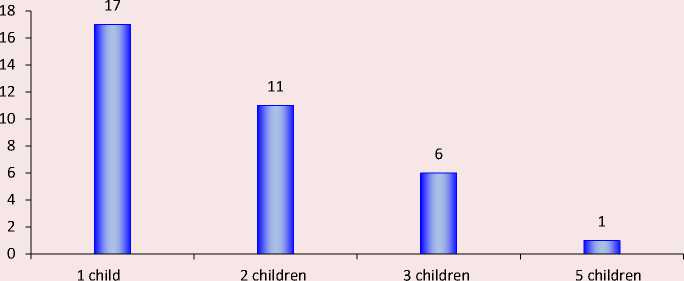
The object of the study consists of workers obtaining orders on the digital platform “Profi.ru” (platform workers) who have minor children. The data collection method was a qualitative focused interview conducted using video conferencing software. The fieldwork was carried out in June– August 2025. Interview invitations were sent to workers registered on the platform with at least one year of experience, while controlling for place of residence; those who responded were interviewed3. A total of 70 respondents were interviewed, of whom 35 have minor children (Fig. 1). They constituted our sample. The sample includes 21 women and 14 men; 22 are married, 13 are not.
Places of residence of the respondents: Moscow, Krasnogorsk (Moscow Region), Saint Petersburg, Yekaterinburg, Ufa, the village of Buzdyak (Republic of Bashkortostan), Novosibirsk, Krasnodar, Stavropol, Sochi, Aksay (Rostov Region), Rostov-on-Don.
The education level of the respondents is presented in Figure 2.
The article utilizes the theoretical tenets of boundary theory, gender contract theory, and rational choice theory, as well as the concept of downward adaptation of expectations.
The limitations of the study consist of the small sample size and the focus on platform workers. We also recognize that respondents’ answers could have
Figure 1. Distribution of respondents by number of children, persons
Source: own compilation.
Figure 2. Distribution of respondents by education level, persons

Source: own compilation.
been influenced by the phenomena of “downward adaptation of expectations” and the “survivor effect”, which we cannot control. The concept of downward adaptation explains how individuals, faced with limited structural opportunities, lower their expectations to maintain a level of subjective satisfaction (Chernykh, 2025).
Research results and discussion
One of the research questions is how respondents characterize their work schedule, whether it is truly “flexible”, and what determines their work and rest time. What opportunities does platform work offer for family people with minor children?
First and foremost, the interviews showed that working on the platform allows for self-regulation of employment, and for the respondents, a “flexible” work schedule represents a paramount value.
“…I regulate my own workload… Meaning, if I feel like taking a job today, I take it. If I don’t feel like it, I don’t. So, accordingly, I had enough of the allotted time, so to speak, to rest properly. Obviously, with official employment you get paid annual leave, that exists. As for the Profi.ru platform, here I regulate my own employment. … This platform gives me, let’s say, a very flexible way to handle tasks from clients. …And I also know that in two weeks I might want to take a vacation or just rest. Accordingly, I can plan all that. That’s why I really like this platform. I find clients myself, we discuss all the details, come to an agreement, and so on. There’s no kind of strict urgency, like if you took a job today, you absolutely must finish it and file a report by tomorrow. That doesn’t happen here” (male, 39, electrician, Yekaterinburg, 1 child).
“Overall, my work schedule is completely flexible. I’m the one calling all the shots. I can work more or less, it’s totally up to me” (male, 47, business consultant, Moscow, married, 3 children).
“I choose a schedule that suits me, I adapt things… I’ve set a trend for myself where I don’t adapt my life to work, I adapt work to my lifestyle”
(female, 35, web designer, Krasnodar, married, 1 child).
“I can adjust my workday anytime and pick the projects I actually like” (Female, 37, photo/ videographer, Sochi, married, 2 children).
“I wanted a flexible schedule, to choose my own working hours” (female, 34, stylist, Saint Petersburg, single, 2 children).
“That’s why I’m hoping to build up my presence more over time and work more via the platform. Because platform work is exactly what allows you to maintain that work-life balance” (female, 36, tutor, musician, Aksay, Rostov Region, married, 2 children).
“That feeling of being able to plan your own time? It’s priceless” (female, 37, lawyer, Moscow, 1 child, on parental leave, left an office job).
A key opportunity of platform work is the ability to work fewer (or more) hours than in a full-time office job. Interviews show this opportunity is typically used by women, who reduce their working hours to fulfill family responsibilities.
“I have three kids, so I only work on weekdays. And I don’t work that many hours. That’s another limitation – not as many orders, like I said. Because I can only work in the mornings, 2 PM at the latest. After that, I have other things, my other ‘job’ – the kids, picking them up from kindergarten” (female, 34, copywriter, Yekaterinburg, married, 3 children).
“I set my own schedule. For example, today I’m completely free until 3 PM. I have time for myself, for the gym, and now I’m giving you this interview. So there’s enough time. And I can adapt – my son’s starting first grade soon. I already know roughly when his classes will be, so the time I drop him off at school, I can block off for client appointments. Then there’s after-school care, extracurriculars, and so on” (female, 30, brow stylist, Sochi, single, 1 child).
“So I’d like to shift the focus a bit. Cut back here, increase there instead. Also because the kids are growing, but they still need attention. It’s not just about dropping them off, picking them up, feeding them – you also need to talk, discuss things, go to parent-teacher meetings, go on trips. All that is necessary. And when you’re swamped at your main job from start to finish, you just can’t manage – your child, roughly speaking, becomes a latchkey kid, right? They let themselves in, feed themselves. So that’s exactly why maintaining this balance is easier on Profi.ru” (Female, 36, tutor, musician, Aksay, Rostov Region, married, 2 children).
“To be honest, I have a small child. I’m not aiming to work from dawn till dusk... Like I said, I have a little one, so my focus isn’t really on working a lot. I’ve delegated the breadwinning to my husband – I told him, ‘You go earn, I’ll work for pleasure’” (female, 35, cosmetologist, masseuse, Yekaterinburg, married, 2 children).
“Well, in winter, when the kids are here or there... you know, or mostly when I need to stay home with a child – God forbid if they get sick – then I don’t take any orders at all” (female, 44, cleaner, Saint Petersburg, married, 3 children).
Conversely, men more often speak about the opportunity to work more, since “the pay depends directly on how much time you put in” (male, 50, driver, married, 1 child).
This finding about different gender strategies is also confirmed by large-scale empirical studies with big datasets (Oshchepkov, 2020).
Platform work allows tailoring one’s schedule to one’s family’s rhythm, choosing the time of day that works best – accommodating children’s school hours, daycare schedules, and the availability of other family members.
Another respondent, a graphic design specialist, quit her job to freelance with a flexible schedule and gets orders through a platform because “it’s easier to work calmly from home than to commute to an office on a fixed schedule every day. It’s just more compatible with having a child” (female, 39, graphic designer, Saint Petersburg, married, 1 child).
The absence of a fixed schedule is articulated as a special value by family-oriented female respondents: “I don’t have a set, concrete schedule. If, say, my child is sick and I’m home with him, I dedicate myself to him almost completely. When he naps, I sit down to work. Sometimes I also work night hours” (female, 35, web designer, Krasnodar, married, 1 child).
Vacation time can also be aligned with family needs:
“The summer break is definitely tied to school... to the kids’ school holidays. Yeah, exactly. It’s all tied to that ( the two breaks the respondent allows himself per year ), absolutely right. Either to summer break, winter break, or the May holidays” (male, 47, business consultant, Moscow, married, 3 children).
“As a rule, I plan my time off around my husband’s vacation schedule” (female, 35, web designer, Krasnodar, married, 1 child).
Respondents highlight the high importance of being able to connect with family under platform employment conditions: “Thanks to this work, I spend more time with my family, especially with my son. Because when I worked at a community center, I had a completely irregular schedule, with constant concerts and trips. I’d leave at 8 in the morning and come back at 8 or 9 in the evening, sometimes even later. So I barely saw my child at all. Now I have the opportunity to, say, go for a walk with him on weekdays, or spend weekends with the family. It’s important. Or rather, it’s very important to me” (male, 36, event host, Ufa, married, 1 child).
Interview participants also noted the opportunities for geographic mobility that platform work provides in achieving a work-family balance.
“It’s the ability to work on the go, from anywhere – on transport, on a plane, on a train, in a taxi. If you have some free time and there’s an order you can complete, you can do it and get paid” (female, 37, photo/videographer, Sochi, married, 2 children).
“...For instance, my husband’s parents live outside the city, about 100 kilometers away. They’re quite elderly now and need care, so we visit them often. I just take my laptop, we go, and I can work right there. I’m nearby, I can help with something, and it doesn’t interfere at all with combining things. There are even times when, say, we go away for a weekend somewhere – out of town, to the mountains, to the seaside. I can easily take my laptop with me and work, so to speak, while on vacation. That doesn’t bother or stress me out in the least” (female, 35, web designer, Krasnodar, married, 1 child).
A “flexible” schedule, which allows one to regulate their own employment, can be a motive for leaving office-based salaried work and choosing platform employment: “I can’t see myself as an office employee anymore... I don’t think I’m ready to go back to office work now...” (female, 37, lawyer, Moscow, 1 child, on parental leave after leaving an office job).
“You know, I don’t like the schedule: five days a week, eight hours or more, it’s really tough. And now I have a flexible schedule” (female, 34, stylist, Saint Petersburg, single, 2 children).
“I decided a long time ago that it’s hard for me to work in a clinic setting, in a team, for a number of reasons” (female, 52, masseuse, Moscow, single, 2 children).
“I wasn’t scared ( to leave my office job ), because it coincided with me going on maternity leave. I went on leave and started trying myself out as a tutor” (female, 43, primary school tutor, Moscow, married, 3 children).
The respondent, working as a self-employed individual, when asked about her willingness and desire to get a job in an organization, demonstrated an extremely categorical position: “Honestly, no. I set my own schedule, I can give myself sick leave, vacation, a day off. I don’t depend on anyone, and no one depends on me. I get exactly what I want, and that suits me. The salaries they offer here, even in a resort city, are peanuts for 10–12 hours of work. When I sometimes think, maybe I should get a regular job, it seems like they pay, but then I start counting the working hours and the daily rate, and I realize I’d rather take on one client, even two, and I won’t burn myself out as much. It’s enough for me, in principle. So, I don’t want a regular job at all. Not for any position, not for any salary” (female, 30, brow stylist, Sochi, single, 1 child).
An even more categorical opinion about salaried work followed: “It’s like prison. Or slavery” (male, 42, design and installation of engineering systems in private houses, plumber, Shchelkovo, Moscow Region, married, 2 children).
However, the “flexible” schedule of platform work entails not only significant advantages but also risks. These risks limit the freedom to choose working hours and volume, turning a flexible schedule into an inflexible one, or at least making it only conditionally free. As the interviews show, a major influencing factor is the desire to maintain a certain income level, which necessitates building and sustaining a client base.
The first risk is that during the initial period on a platform, or when completely switching from office/production work to obtaining orders via a platform, workers are forced to build up their client base. This, in turn, forces them to intensify their workload: they must constantly monitor service requests, respond to them, and secure orders in a competitive environment. The following respondent comments illustrate this scenario. A woman providing accounting services, who previously had her own office-based business, fully transitioned to offering services through a platform and is currently very intensively building her client base.
Interviewer: And in terms of your time, did your schedule change (after closing the office)?
Respondent: …Yes, I started spending more time on this platform. I have to respond constantly. Well, I’m practically always sitting there, checking if there are new requests. I monitor them all the time, and where I’m qualified in that matter, I submit my proposal.
Interviewer: So it turns out you didn’t become more free; on the contrary, you started spending more time?
Respondent: Well, basically, yes. I knew what I was getting into, as they say, because I need to increase my number of clients. Until I build up a client base, I’ll be glued to this platform. Only when I’m swamped with clients, as they say, can I put things on hold. For now, I’m taking on everything I can get.
The respondent regretfully shares her story that the current insufficient number of clients on the platform prevents her from fully transitioning to this form of employment: “I wish this could be my main activity because I really like it. But since I don’t have that many clients right now, I can’t dive into it completely yet” (female, 30, stylist, Novosibirsk, married, 1 child).
Some professionals are initially forced to lower their prices on the platform to attract clients and build their base: “Well, I guess it also depends on how ready a specialist is to make concessions. Because the first clients I took were either... well, for free, or for really laughable money, but specifically to get the person interested, so they would come to me and leave a review, so that later I could promote my services somehow. In principle, I could afford it at that time, and so I built up a certain number of reviews fairly quickly, maybe in 3–4 months. It was visible that orders were completed, that people were satisfied, and working became much more comfortable” (female, 37, lawyer, Krasnogorsk, Moscow Region, in a common-law marriage, 1 child).
At the same time, respondents note that later, having built their client base and positive reviews, they gain the opportunity to raise their prices: “Now I’ve gathered a few reviews from satisfied people, and I can even afford to be a bit choosy. Look how good I am. And you want to hire me on the cheap? No way” (male, 34, system administrator, Ufa, married, 2 children). This, accordingly, can allow them to reduce the number of hours worked and make greater use of the advantages of a flexible schedule.
The second risk is that the work schedule, namely the number of hours worked, is largely determined by the desired income level. The absence of a “fixed salary” and the desire to earn as much as necessary for living dictate more active behavior on the platform – a constant search for and completion of orders. This is especially relevant for married men fulfilling the role of “family breadwinner”, as well as for single women with children. Thus, a respondent engaged in business consulting, working, as he reported, 4–5 hours a day (20–25 hours a week), considers this number of hours insufficient because, with such a workload and the existing rates for orders, it is impossible to achieve the desired earnings: “If you could work 20 hours a week and earn a sufficient amount of money, then that (20 hours a week) might be enough. There’s no proper ratio between the number of clients and the income level.... To reach the figures I’m interested at with the same rates, my workload shouldn’t be 4 hours a day, but 6 hours a day” (male, 47, business consultant, Moscow, married, 3 children).
A man combining platform work with his main employment notes that he is about 80% satisfied with his schedule because “naturally, you have to push the family aside a little, not to have the opportunity, but to provide for that family financially, to give them everything they need. Spending more time now, today, on work duties is essential so that tomorrow... our whole family can sit down at the table and eat not just bread and butter, but also have tea to go with it” (male, 38, voice-over artist, Sochi, married, 1 child).
Male respondents quite often, even when having main employment outside the platform, demonstrate a desire to maximize their free time with platform work: “The thing is, I work a ‘two-on, two-off’ shift pattern at my main job. I work two days, well, two days at home. On the two days when I’m working, I can also go see a client in the evening or morning, or do something remotely for someone before my shift. And those days when I’m off from my main job, I naturally pack them full of work on Profi.ru” (male, 41, system administrator, Rostov-on-Don, married, 1 child).
The third risk is performing orders on weekends and holidays, driven by the fear of losing clients and/or the desire to earn money and maintain a certain income from work. It should be noted that quantitative research shows the prevalence of such practices, which is not exclusive to platform employment. Almost every second Russian worker has to work on weekends or holidays at least once or several times a month (Kozyreva et al., 2024, p. 36).
Almost all respondents spoke about working on weekends and holidays, and the following dialogue is typical.
Interviewer: Do you only work on weekdays or on weekends as well?
Respondent: No, sometimes on weekends too.
Interviewer: What about holidays?
Respondent: Sometimes. And on top of that schedule, sometimes something urgent pops up, like a client asking me to do something ASAP (female, 37, lawyer, Moscow, in a common-law marriage, 1 child).
Sometimes workers try to stick to their own rule of not working on weekends, but it’s not always possible: “Well, clients do ask ( to work on weekends ), but I mostly don’t work on weekends” (male, 47, business consultant, Moscow, married, 3 children); “I communicate directly with the client, so we agree on everything ( the deadlines ). And they’re real people. Obviously, if there’s some urgency, an emergency, then... It gets done” (male, 39, electrician, Yekaterinburg, married, 1 child); “...Lately, I’ve been trying to stick to a weekday schedule and take a couple of days off, at least one day off. But my work, as I said, is mostly in the evenings, at night. If there’s some urgent order, then I work non-stop” (female, 39, graphic designer, Saint Petersburg, married, 1 child).
Even if orders aren’t fulfilled on weekends, there might still be time spent monitoring service requests on the platform: “Now I’ve just stopped working on Saturdays and Sundays.... But I still check for orders on Saturday and Sunday. Because orders come in on weekends, you can just message the client...” (male, 47, business consultant, Moscow, married, 3 children). And although this respondent doesn’t perceive such activity as work (“I consider it work when you’re already working directly with a client. But just responding to an order isn’t work. I just clicked a button...”), it still requires time, effort, and technical capability. The vast majority of those surveyed demonstrate a similar position: “It doesn’t matter if it’s a weekend, doesn’t matter if it’s a weekday. If I don’t have any requests, I’m checking for them” (female, 35, web designer, Krasnodar, married, 1 child); “On Profi.ru, I can even check for some orders during my vacation, write to clients, and we just schedule for when I’m back in town, that’s all” (female, 34, copywriter, Yekaterinburg, married, 3 children).
The next risk is working while sick or in poor health, which is also dictated by fears of losing a client or the need to earn a desired income: “To be honest, I’ve only canceled ( lessons ) once when my dog got lost and I had to look for her. If I feel bad, have a fever, I still conduct lessons at any time. I even gave lessons when I was in the maternity hospital” (female, 32, marketer, teacher of English and journalism, Sverdlovsk Region – work region, resides in Nizhny Novgorod, married, 1 child). Respondents work while sick because “sometimes deadlines are tight, you have to deliver urgently. Sometimes you need the money...” (female, 39, graphic designer, Saint Petersburg, married, 1 child).
The negative practice of working while unwell is also characteristic of office/production workers; in those settings, it can be driven not only by the desire not to lose income but also by the unspoken norms of the employer or team. Almost every second person works through illness due to their work situation; returns to work before fully recovering; every third person – skips doctor visits because of work (Burhanova, Baimurzina, 2025, p. 291).
All respondents interviewed spoke about having to work while unwell. Here is one of the dialogues.
Interviewer: Does it happen that you have to complete orders despite feeling unwell, being sick, for example, and you work anyway?
Respondent: It happens, of course, yes.
Interviewer: Why do you do it?
Respondent: If I’ve taken an order and promised the client to complete it by a certain deadline, then I will.
Interviewer: So you don’t want to lose clients, your reputation comes first?
Respondent: Yes, of course (female, 37, lawyer, Moscow, in a common-law marriage, 1 child).
It was precisely reputation that platform workers cited, explaining the need to work while sick: “And even if you’re sick, you still take as many pills as you can and go to work. Because there’s no other way, reputation is too important” (male, 36, event host, Ufa, married, 1 child); “As my husband likes to say, first you work to build your name, then your name works for you. Right now I’m at the stage where I’m building the name” (female, 35, web designer, Krasnodar, married, 1 child).
However, respondents also noted other factors, such as interest in the work, a desire to fill free time, and, of course, earning money: “To be honest, I was in the hospital once, for example, I was bored, had nothing to do there. And here I can work, I don’t cancel on the person, and I earn money. And it’s good for me too, I just get a kick out of it” (female, 32, marketer, teacher of English and journalism, Sverdlovsk Region – work region, resides in Nizhny Novgorod, married, 1 child); “It’s a matter of price. If it’s very urgent for someone, really needed, you can push yourself and get it done. It’s just that most people need it fast and cheap. If a person is willing to pay for urgency, then why not?” (male, 34, system administrator, Ufa, married, 2 children); “the necessity of earning money” (female, 39, swimming coach, masseuse, physical therapy, Sochi, single, 3 children); “Because you can lie in bed, if your head and eyes don’t hurt, lie there and earn money” (female, 37, photo/videographer, Sochi, married, 2 children).
Some explain the reasons for working while sick differently – as stemming from a generational sense of duty and responsibility. A respondent combining main and platform employment, when asked why she works while sick, noted: “Because I’m 40 years old, and I’ve always done it this way. You’d need to take lessons from 25-year-old university graduates on how not to work when you’re sick” (female, 40, HR management, SMM specialist, Ufa, single, 1 child).
During the interviews, respondents were asked if they managed to achieve a balance between work and personal/family life. The majority of those surveyed answered affirmatively, which suggests a positive influence of a flexible schedule on life organization. However, the stories of those dissatisfied with the “work – personal/family life” balance show that a self-regulated work schedule, especially when working from home, can lead to a persistent blurring of boundaries between work and the rest of life. This, in consequence, results in acute conflict between life spheres, and even to decisions about the need to replace working from home with office work.
This is likely largely connected to another risk of platform employment – the formation of an “always on” phenomenon, where the boundaries between work and personal life blur, which can often lead to misunderstandings, resentment, and even serious conflicts within the family.
Story one: A woman, 39, graphic designer, married, fulfills orders at home. Due to her 9-year-old son, she is forced to work in the evenings or at night: “Because of my child, I end up working more at night... Because I can’t... For example, my child is at home, he’s like a radio, and I can’t concentrate, I need quiet to work.” The result is conflict with her husband: “I think the main conflict between me and my husband is because of work, because when he’s home, I’m sitting at the computer. So, there’s probably a lack ( of time for family duties ). Well, it’s maybe just poor time management on my part, but I can’t do it any other way.” She rates her satisfaction with the distribution of time between work, rest, and family duties as follows: “Well, on a ten-point scale, maybe a three” (Saint Petersburg).
Story two: A man, 35, who over ten years progressed from a tutor to the head of his own online tutoring school for schoolchildren and students, constantly lives in a situation where the boundaries between work and family life are violated. He realizes this problem is common for many freelancers with flexible schedules, has discussed it with his wife to develop a common approach, but sees no other solution than to move work outside his home. From his interview:
Interviewer: At this point in time, can you say you are satisfied with how your time is distributed between work, family, and all other areas of life?
Respondent: Strictly speaking, I’d say no. But I’m very self-critical. To be fair, sometimes yes, sometimes no, but in general, no.
Interviewer: And what causes the greatest concern? Where do you feel you’re falling short?
Respondent: Yes, I’ve thought a lot about this, I’ve realized. Because I work from home, I don’t have a specific schedule. I need an office, I’ve realized that now, and a specific timetable. It doesn’t necessarily have to be 8 hours a day. The main thing is to simply allocate a certain amount of time in a specific work place. I don’t have that. If I solve that, then...” (Yekaterinburg, married, 1 child).
Conclusions
Microdata from the Comprehensive Survey of Living Conditions for 2024, published by Rosstat in September of this year, indicates a growth in working citizens’ satisfaction with all aspects of their work, including their work schedule: 87.55% of workers are satisfied with it (compared to 85.45% in 2022). At the same time, no clear correlation is observed between an individual’s work schedule (full-time, part-time, or flexible) and their level of satisfaction.
Our analysis confirms the hypothesis about the dual nature of platform employment. On the one hand, a flexible work schedule, by providing workers with a high degree of autonomy, is an important factor contributing to the achievement of workfamily balance, fitting well within rational choice theory. However, it carries certain risks that can negatively affect workers.
The positive impact of a flexible schedule lies in: the ability to independently regulate one’s employment and choose convenient working times; flexibility in combining work with family duties and personal interests; increased job satisfaction and improved quality of life for workers.
It was noted that none of the interviewees consider returning to traditional employment, even given the prospect of social guarantees and greater job security. The main reasons cited are low salary and inconvenient work schedules. The preference for platform employment, even with an awareness of its structural flaws, can be explained from the standpoint of rational choice theory, which views action as the result of individuals calculating perceived costs and benefits to maximize personal utility within a social context. Platform workers essentially engage in a rational exchange: they forgo institutional stability (social guarantees, fixed salaries, and job security) in favor of functional flexibility and autonomy. For workers burdened with family responsibilities and raising minor children, the ability to independently regulate their employment in all dimensions – i.e., in time and space (geographic mobility, or “working on the go from anywhere”) – and to adapt it to the family’s rhythm (e.g., working from 9:00 AM to 2:00 PM while the child is at school) is a critical resource that allows them to effectively manage the “work-family” role conflict (Weer, Greenhaus, 2024).
The categorical rejection of traditional employment, expressed through sharp metaphors (“it’s like prison or slavery”), indicates that workers who have gained agency and control over their time perceive a rigid schedule as a direct loss of control. The fixed schedule, born in the era of mass industrial production and often accompanied by unpaid overtime, fails to account for modern needs (e.g., the ability to take a weekday off) and family rhythms. Platform employment, by offering an alternative, becomes a tool of resistance against the forced standardization of working time, which further reinforces the rational preference for this type of activity.
Risks of a flexible schedule:
-
– the necessity for intensive work in the initial period to build a client base;
-
– constant monitoring of requests and order fulfillment can lead to overwork and disruption of balance;
-
– working on weekends, holidays, and while sick negatively impacts health and personal life;
-
– it often implies foregoing career advancement;
-
– the blurring of boundaries between work and personal life4 (the “always on” phenomenon) can lead to family conflicts, chronic fatigue, and a reduced quality of life.
Platform employment, especially when performed remotely from home, inevitably leads to boundary blurring. Unlike a traditional office, where work time and space are clearly separated from home, platform workers are constantly under pressure to monitor for orders. This monitoring, even if not perceived as full-fledged work (“I just clicked a button”), requires time and mental engagement, disrupting free time and creating the “always on” phenomenon.
A flexible schedule leads to self-exploitation, manifesting in work during non-standard hours – late evenings, nights, weekends, and holidays. The absence of a fixed salary and the direct impact of the number of completed orders on income force workers to internalize the control function. Traditional forms of disciplinary control (a manager, the risk of dismissal) are replaced by algorithmic pressure, the primary tool of which is reputational capital (reviews and ratings). The fear of losing one’s rating and, consequently, future income becomes a key imperative, compelling workers to ignore physical needs (fulfilling orders while sick, with a high fever; one respondent conducted lessons from a maternity hospital). The reputational imperative on a platform can be harsher than the unspoken norms in traditional employment, demanding a voluntary sacrifice of rest and health.
Respondents who have successfully built a client base can afford to raise their prices (as noted in interviews), which makes them inclined to idealize the advantages of autonomy, attributing their success solely to personal initiative. This can lead to a cognitive bias that underestimates the systemic risks of precarity faced by less successful colleagues (Tartakovskaya, 2019).
Gender norms and expectations, deeply embedded in the concept of the gender contract – an unspoken social agreement defining the division of paid and unpaid labor between genders – influence work behavior and schedule choices. For women, the flexibility of platform work serves as a mechanism to compensate for structural inequality, since the traditional labor market often discriminates against mothers with young children (Kalabikhina, 2017; Oshchepkov, 2020). The platform allows a woman to remain in the labor market, but at the cost of voluntarily foregoing career advancement and accepting lower income. This mechanism effectively reinforces the traditional gender contract, making it easier for women to meet social expectations regarding domestic labor.
Men, especially those responsible for the financial support of the family, strive to work more than the standard 40 hours, combining platform work with a main job or packing their days off, using the flexible schedule to maximize labor intensity, which exacerbates their own work-life imbalance.
The observed growing demand for flexibility among workers conflicts with current Russian trends toward import substitution and the development of key economic sectors, which imply an “industrialization” of employment and a standardization of labor relations in crucial production sectors5.
The flexible schedule in the platform economy represents one of the paradoxes of the modern labor market. It becomes a powerful source of agency for workers, offering them the necessary autonomy to manage family and personal responsibilities. However, this freedom is a form that may conceal a new type of precarity, where external control by a manager is replaced by internalized control through mechanisms of reputational capital and financial instability.
To mitigate the negative consequences of “flexible” platform employment, workers need constant control over the number of orders and urgent tasks. Platform workers must learn to manage their time effectively and consciously to avoid self-exploitation, burnout, stress, and overload. It is crucial for them to establish clear boundaries between work and personal life to prevent family conflicts and maintain balance, ensuring that a flexible schedule remains a true benefit rather than a mechanism for compensating structural inequality.
At this stage, platform employment is not integrated into the legal framework governing labor. However, the research results have shown that platform workers are in acute need of a social protection system. Given that associations of platform workers in Russia are weak and often engaged not in protecting labor interests but in addressing isolated cases, it is necessary to develop alternative forms of solidarity (cooperative platforms, digital unions, guilds).
