
Исследование фитоценоза с доминированием видов семейства Brassicaceae Burnett в Нахчыванской Автономной Республике
Журнал: Бюллетень науки и практики @bulletennauki
Рубрика: Естественные науки
Статья в выпуске: 4 т.12, 2026 года.
Бесплатный доступ
Рассматривается фитоценоз с доминированием видов семейства Brassicaceae Burnett. В этом сообществе ведущие позиции занимают виды из родов Alyssum L., Arabidopsis (DC.) Heynh., Chorispora R. Br. ex DC., Conringia Adans., Lepidium L., Neslia Desv., Sinapis L. и Sisymbrium L. В исследовании особое внимание уделено видам Alyssum turkestanicum Regel & Schmalh. (син. A. desertorum Stapf), Arabidopsis Thaliana (L.) Heynh., Chorispora tenella (Pall.) DC., Conringia orientalis (L.) Dumort., Lepidium draba L., Lepidium vesicarium L., Neslia paniculata (L.) Desv., Sinapis arvensis L. и Sisymbrium İrio L., а также сопутствующим видам растений, совместно встречающимся в данной среде обитания. Составлена таблица с информацией о растениях, формирующих фитоценоз, их жизненных формах и экологических группах.
Похожие статьи в разделе Экология растений. Этология. Растение и окружающая среда
Короткий адрес: https://sciup.org/14135137
IDS: 14135137 | УДК: 581.527.7 | DOI: 10.33619/2414-2948/125/06
Study of Phytocenosis with Dominance of Species of the Family Brassicaceae Burnett in the Nakhchivan Autonomous Republic
The article concerns a phytocoenosis dominated by species belonging to the family Brassicaceae Burnett. Within this community, species from the genera Alyssum L., Arabidopsis (DC.) Heynh., Chorispora R. Br. ex DC., Conringia Adans., Lepidium L., Neslia Desv., Sinapis L., and Sisymbrium L. occupy leading positions. The study focuses on species such as Alyssum turkestanicum Regel & Schmalh. (syn. A. desertorum Stapf), Arabidopsis Thaliana (L.) Heynh., Chorispora tenella (Pall.) DC., Conringia orientalis (L.) Dumort., Lepidium draba L., Lepidium vesicarium L., Neslia paniculata (L.) Desv., Sinapis arvensis L., and Sisymbrium İrio L., as well as associated plant species co-occurring within the same habitat. A table has been prepared to provide information on the plant species forming the phytocoenosis, their life forms, and ecological groupings.
Текст научной статьи Исследование фитоценоза с доминированием видов семейства Brassicaceae Burnett в Нахчыванской Автономной Республике
Бюллетень науки и практики / Bulletin of Science and Practice
UDC 581.527.7
Plants in nature do not occur individually, but rather in specific groupings known as phytocoenoses. A phytocoenosis, which is the totality of plant species coexisting within a certain area, plays a key role in the structure of the landscape, the maintenance of ecological balance, and the formation of habitats for living organisms. Naturally, plant species belonging to various families are represented within these phytocoenoses [1, 2, 9].
Materials and methods
The object of the study is a phytocoenosis dominated by species belonging to the family
Brassicaceae Burnett., including Alyssum turkestanicum Regel & Schmalh. (syn. A. desertorum Stapf), Arabidopsis thaliana (L.) Heynh., Chorispora tenella (Pall.) DC., Conringia orientalis (L.) Dumort., Lepidium draba L., Lepidium vesicarium L., Neslia paniculata (L.) Desv., Sinapis arvensis L., and Sisymbrium irio L. The latin names of the species were recorded based on literature sources [2-7].
Based on long-term research, the life forms and ecological groupings of the species forming the phytocoenosis, in relation to moisture preference, were determined. The species within the phytocoenosis were identified and verified using diagnostic keys [8, 9].
Discussion
During the research, a phytocoenosis was identified in which species of the family Brassicaceae Burnett were particularly abundant within the local flora. This phytocoenosis includes species from the genera Alyssum L., Arabidopsis (DC.) Heynh., Chorispora R. Br. ex DC., Conringia Adans., Lepidium L., Neslia Desv., Sinapis L., and Sisymbrium L. In the flora of the Nakhchivan Autonomous Republic, there are 13 species of the genus Alyssum L., 3 species of Arabidopsis (DC.) Heynh., 2 species of Chorispora R. Br. ex DC., 4 species of Conringia Adans., 10 species of Lepidium L., 2 species of Neslia Desv., 1 species of Sinapis L., and 4 species of Sisymbrium L. [2].
The phytocoenosis includes the following species: Alyssum turkestanicum Regel & Schmalh. (syn. A. desertorum Stapf), Arabidopsis thaliana (L.) Heynh., Chorispora tenella (Pall.) DC., Conringia orientalis (L.) Dumort., Lepidium draba L., Lepidium vesicarium L., Neslia paniculata (L.) Desv., Sinapis arvensis L., and Sisymbrium irio L. Information regarding the species composition of the phytocoenosis involving the mentioned species is presented in the following Table.
Table
THE SPECIES COMPOSITION OF THE PHYTOCOENOSIS DOMINATED BY SPECIES OF THE Brassicaceae Burnett. FAMILY
Бюллетень науки и практики / Bulletin of Science and Practice Т. 12. №4 2026
|
№ |
Familia |
Genus |
Species |
Life form |
Ecogroup |
|
14. |
Caryophyllaceae Juss. |
Arenaria L. |
Arenaria serpyllifolia L. |
Annual |
Xerophyte |
|
15. |
Caryophyllaceae Juss. |
Cerastium L. |
Cerastium Szowitsii Boiss |
Perennial |
Xerophyte |
|
16. |
Euphorbiaceae Juss. |
Euphorbia L. |
Euphorbia helioscopia L. |
Annual |
Mesophyte. |
|
17. |
Asteraceae Bercht. & J.Presl |
Artemisia L. |
Artemisia vulgaris L. |
Perennial |
Mesoxerophyte |
|
18. |
Asteraceae Bercht. & J.Presl |
Senecio L. |
Senecio vernalis Waldst. & Kit. |
Annual |
Xeromesophyte |
|
19. |
Asteraceae Bercht. & J.Presl |
Senecio L. |
Senecio orientalis Willd. |
Perennial |
Mesophyte |
|
20. |
Asteraceae Bercht. & J.Presl |
Senecio L. |
Senecio Lipskyi Lomak. |
Perennial |
Xerophyte |
|
21. |
Asteraceae Bercht. & J.Presl |
Taraxacum Wigg. |
Taraxacum officinale Wigg. |
Perennial |
Mesophyte |
|
22. |
Asteraceae Bercht. & J.Presl |
Achillea L. |
Achillea millefolium L. |
Perennial |
Xeromesophyte |
|
23. |
Asteraceae Bercht. & J.Presl |
Carduus L. |
Carduus nervosus C.Koch |
Perennial |
Xerophyte |
|
24. |
Asteraceae Bercht. & J.Presl |
Pyrrhopappus DC. |
Pyrrhopappus carolinianus (Walter) DC. |
Annual |
Mesoxerophyte |
|
25. |
Asteraceae Bercht. & J.Presl |
Tussilago L. |
Tussilago farfara L. |
Perennial |
Mesophyte |
|
26. |
Asteraceae Bercht. & J.Presl |
Erigeron L. |
Erigeron caucasicus Stev. |
Perennial |
Xerophyte |
|
27. |
Asteraceae Bercht. & J.Presl |
Nothocalais (A.Gray) Greene |
Nothocalais alpestris (A.Gray) K.L. Chambers |
Perennial |
Xerophyte |
|
28. |
Asteraceae Bercht. & J.Presl |
Sonchus L. |
Sonchus oleraceus L. |
Annual |
Xeromesophyte |
|
29. |
Apiaceae Lindl. |
Daucus L. |
Daucus carota L. |
Biennial |
Mesophyte |
|
30. |
Rubiaceae Juss. |
Galium L. |
Galium aparine L. |
Annual or perennial |
Mesophyte |
|
31. |
Geraniaceae Juss. |
Erodium L’Her. |
Erodium cicutarium (L.) L’Her. |
Annual |
Xeromesophyte |
|
32. |
Fabaceae Lindl. |
Medicago L. |
Medicago sativa L. |
Perennial |
Mesophyte |
|
33. |
Fabaceae Lindl. |
Chrysaspis Desv. |
Chrysaspis campestris (Schreb.) Desv. |
Perennial |
Mesophyte |
|
34. |
Fabaceae Lindl. |
Lathyrus L. |
Lathyrus sphaericus Retz. |
Perennial |
Mesophyte |
|
35. |
Papaveraceae Juss. |
Papaver L. |
Papaver rhoeas L . |
Annual |
Xeromesophyte |
|
36. |
Polygonaceae Juss. |
Rumex L. |
Rumex acetosella L. |
Perennial |
Mesoxerophyte |
|
37. |
Scrophulariaceae Juss. |
Veronica L. |
Veronica arvensis L . |
Annual |
Xeromesophyte |
|
38. |
Scrophulariaceae Juss. |
Euphrasia L. |
Euphrasia caucasica Juz. |
Perennial |
Mesophyte |
|
39. |
Linaceae DC. ex |
Linum L. |
Linum tenuifolium L. |
Perennial |
Xerophyte |
Perleb
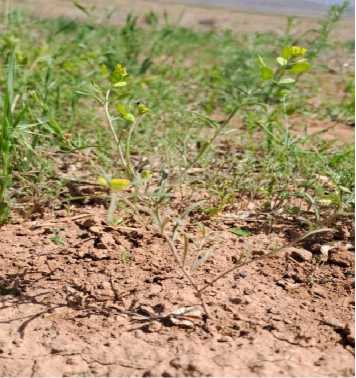
Figure 1. Alyssum Heynh turkestanicum Regel & Schmalh.
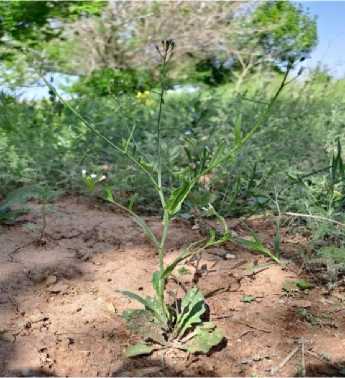
Figure 2. Arabidopsis Thaliana (L.) Heynh
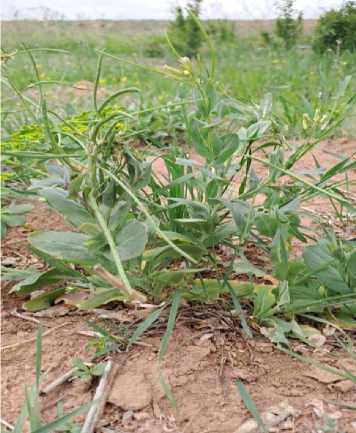
Figure 3. Conringia orientalis (L.) Dumort.
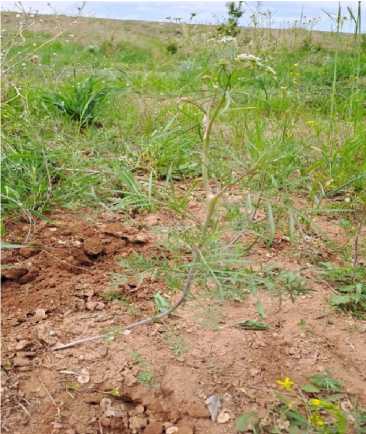
Figure 4. Lepidium vesicarium L.
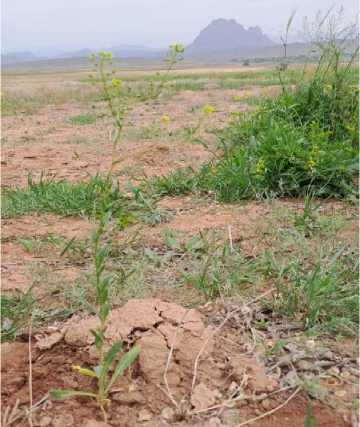
Figure 5 . Neslia paniculata (L.) Desv.
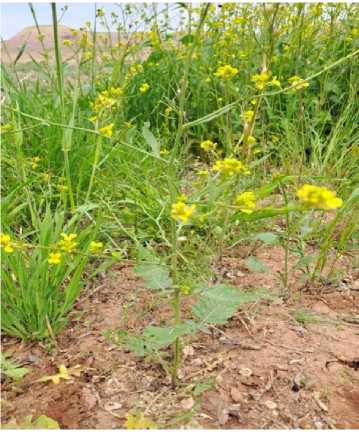
Figure 6 . Sinapis arvensis L.
The coordinates of the area with the phytocoenosis dominated by species of the Brassicaceae Burnett family were precisely determined using GPS: 39º4'56.172'' N, 45º33'47.42388'' E, 956 m a.s.l. 39º4'56.17128'' N, 45º33'47.42352'' E, 956 m a.s.l.
Conclusion
In the phytocoenosis dominated by species of the Brassicaceae Burnett. family, 20 species are perennial (51.28%), 11 species are annual (28.20%), one species is biennial (2.56%), one species is either annual or perennial (2.56%), 3 species are trees (7.69%), and 3 species are shrubs (7.69%). Among these plants, 16 species belong to the mesophyte ecological group (41.02%), 11 species to xerophytes (28.20%), 7 species to xeromesophytes (17.94%), and 5 species to mesoxerophytes (12.82%). According to life form, perennials predominate, while according to ecological groups, mesophyte plants are dominant. Among the families present in the phytocoenosis, Asteraceae Bercht. & J.Presl is the most represented, accounting for 12 species (30.76%).
