
Качественная и количественная оценка фипронила методом термодесорбционной поверхностно-ионизационной спектрометрии
Журнал: Бюллетень науки и практики @bulletennauki
Рубрика: Сельскохозяйственные науки
Статья в выпуске: 10 т.12, 2026 года.
Бесплатный доступ
В данном исследовании рассматриваются качественный и количественный анализ фипронила с использованием метода термодесорбционной поверхностно-ионизационной спектроскопии (ТДПИС). Цель исследования — разработка высокочувствительного аналитического метода для обнаружения фипронила в ветеринарной фармакологии и токсикологии. Исследование включало анализ рынка ветеринарных препаратов на основе фипронила в Узбекистане с изучением как лекарственных форм, так и компаний-производителей. На экспериментальном этапе анализ фипронила методом ТДПИС проводился с использованием прибора ПИИ-Н-С «Искович-1». При анализе раствора фипронила в 96%-ном этиловом спирте появились характерные линейные пики при ~145±15 °C и ~257±10 °C. Чувствительность метода составила 10⁻¹⁰ г. Исследование селективности включало сравнение фипронила с другими инсектицидами, что подтвердило отсутствие влияния этих веществ на определение фипронила. Валидация метода проводилась по параметрам линейности, чувствительности, точности, воспроизводимости и специфичности. Разработанный метод может быть применен для обнаружения фипронила в биологических объектах и объектах экспертизы.
Короткий адрес: https://sciup.org/14139269
IDS: 14139269 | УДК: 636.089:615.9 | DOI: 10.33619/2414-2948/131/38
Qualitative and Quantitative Assessment of Fipronil Using Thermal Desorption Surface Ionization Spectroscopy
This study examines the qualitative and quantitative analysis of fipronil using Thermal Desorption Surface Ionization Spectroscopy (TDSIS). The aim of the study is to develop a highly sensitive analytical method for detecting fipronil in veterinary pharmacology and toxicology. The research included a market analysis of fipronil-based veterinary products in Uzbekistan, examining both dosage forms and manufacturing companies. In the experimental phase, TDSIS analysis of fipronil was performed using the PII-N-S "Iskovich-1" device. When a solution of fipronil in 96% ethyl alcohol was analyzed, characteristic linear peaks appeared at ~145±15 °C and ~257±10 °C. The sensitivity of the method was determined to be 10⁻¹⁰ g. Selectivity studies compared fipronil with other insecticides, confirming that these substances do not interfere with fipronil detection. Method validation was conducted based on parameters including linearity, sensitivity, accuracy, repeatability, and specificity. The developed method can be applied for the detection of fipronil in biological and expert examination objects.
Текст научной статьи Качественная и количественная оценка фипронила методом термодесорбционной поверхностно-ионизационной спектрометрии
Бюллетень науки и практики / Bulletin of Science and Practice
UDC 636.089:615.9
Fipronil is a broad-spectrum insecticide belonging to the phenylpyrazole class. It was first registered for use as an insecticide in 1996. Chemically, this substance appears as a white or yellowish crystalline solid and has very low solubility in water. Fipronil is effective against various pests, including ants, termites, lice, and other insects. It is used in veterinary medicine, agriculture, and household settings against ectoparasites. The main mechanism of action of fipronil relates to the central nervous system, where it disrupts the transmission of nerve impulses, causing the death of parasites. Nevertheless, fipronil also poses environmental risks: the substance is significantly toxic to beneficial organisms, especially bees, birds, and aquatic animals. This situation requires careful handling of fipronil and the implementation of measures to minimize its negative impacts on the environment. Current analyses of fipronil-based medicinal products in the veterinary pharmaceutical market of Uzbekistan indicate that the preparation is available in various dosage forms. According to the analysis results, the majority of existing fipronil preparations, specifically 67%, consist of medicinal products manufactured in liquid form. Preparations in suspension form account for 16% of the total assortment, while spot-on products account for a 17% share. This situation demonstrates that fipronil is most commonly used in liquid form in veterinary practice and that there is also a steady demand for spot-on formulations [1-7].
Analyses show that today, due to the presence of fipronil in the veterinary pharmaceutical market, the development and implementation of modern methods for accurately analyzing fipronil poisoning is a necessity. In veterinary practice, detecting traces of this substance in animals suspected of fipronil poisoning, as well as in their feed and animal products, is an important scientific and practical objective. For this purpose, advanced, highly sensitive detection methods are being introduced. One of these is Thermal Desorption Surface Ionization Spectroscopy (TDSIS). This physicochemical analysis method allows for the determination of extremely small concentrations of organic compounds, particularly pesticides and insecticides. TDSIS technology stands out for its high accuracy, speed, and minimal sample preparation requirements in the rapid and precise detection of residual amounts of fipronil [2, 4].
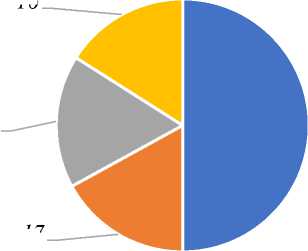
Figure 1. Analysis by manufacturing companies
-
■ O.L.KAR-AgroZooVet-Service (Private Enterprise)
-
■ Bioveta
-
■ VAPCO (Veterinary & Agricultural Product Manufacturing Co.)
-
■ Shijiazhuang Ageruo-Brotesh Co. Ltd.
The main goal of the research is to develop a highly sensitive analytical method for detecting fipronil in the fields of veterinary pharmacology and toxicology. From this perspective, an in-depth study of the possibilities for the qualitative and quantitative assessment of fipronil using Thermal Desorption Surface Ionization Spectroscopy (TDSIS), as well as the development of scientifically based approaches for applying this method to biological and forensic objects, was identified as a relevant direction for this work [8-10].
Experimental part. In performing the thermal desorption surface ionization spectroscopic (TDSIS) analysis of fipronil, the PII-N-S "Iskovich-1" surface ionization device was used. The operating principle of the device consists of evaporating substance molecules in a programmed manner at a specific temperature and recording them in the form of thermal desorption spectra using a surface ionization detector. The recording is based on the operation of the surface ionization detector. When the anode of the detector is heated, it becomes an emitter, while the cathode serves as the positive ion collector. When the solution of the analyzed mixture is passed through the diode, the molecules arriving at the emitter surface are desorbed in the form of ions. The desorbed ions are then directed to the collector for recording with the help of an electric field [2, 4].
Sample preparation for analysis: 1 ml of an 8% fipronil solution was transferred into a beaker, mixed with ethyl alcohol, and stirred using a magnetic stirrer until dissolved. The solution was then filtered and transferred into a 50 ml volumetric flask. Subsequently, qualitative and quantitative analysis was performed. The thermal desorption surface ionization spectroscopic analysis of fipronil was performed under the following conditions: emitter, iridium-doped oxidized molybdenum; emitter voltage, 405 V; emitter temperature, 390–420 °C; evaporation temperature, room temperature to 505 °C; air flow, 50 l/h (compressor voltage 12 V); volume of the test sample taken for analysis, 1.0 µl; analysis duration, 3 minutes. The spectra were recorded using a computer program. 0.001 g (active ingredient) of fipronil was weighed and dissolved in 96% ethyl alcohol in a 25 ml volumetric flask. The volume was brought up to the mark with 96% ethyl alcohol. From this solution, a working standard solution of fipronil at 100 µg/ml was prepared. 1 µl of this was placed into the cylindrical cavity on the evaporator strip of the PII-N-S "Iskovich-1" device using a microsyringe, and the thermal desorption spectra of fipronil were obtained. Quantitative analysis was carried out using a calibration curve constructed based on standard sample solutions of known concentrations [11-15].
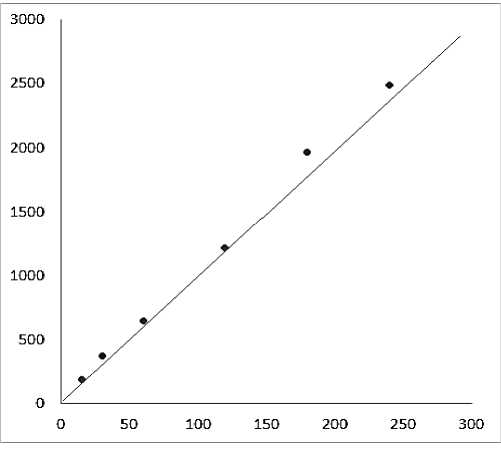
To construct the calibration curve, 1 µl of each alcoholic solution containing standard samples of fipronil at concentrations of 15, 30, 60, 120, 180, and 240 µg/ml was introduced into the cylindrical cavity on the evaporator strip of the PII-N-S "Iskovich-1" device using a microsyringe. The analyses were performed three times; average values (based on the peaks of fipronil at ~145±15 and ~257±10 °C) were calculated, and a calibration curve was plotted. The experimental results for fipronil are presented in Table 3.
Results and discussion
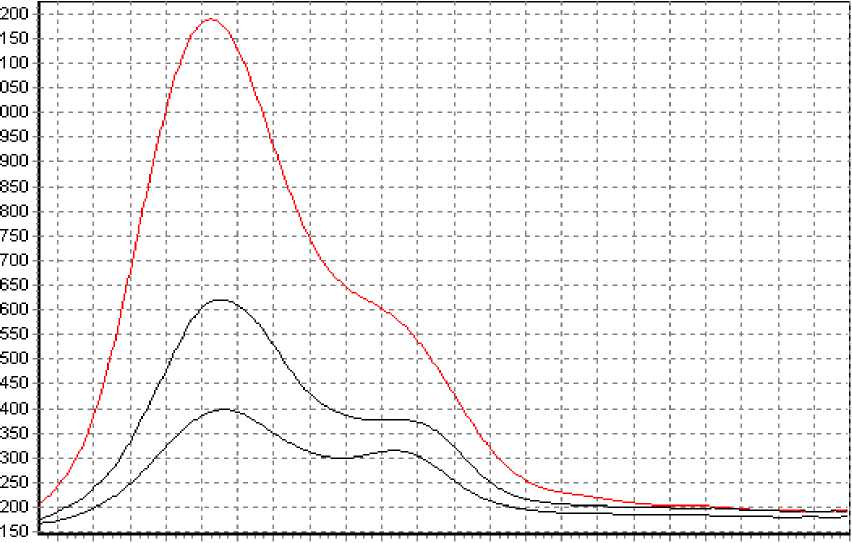
The analysis results showed that when a solution of fipronil in 96% ethyl alcohol was analyzed, peaks characteristic of fipronil appeared at ~145±15 and ~257±10 °C (Figure 2). The obtained thermal desorption spectra were recorded in the computer database as reference spectra. The sensitivity level of the method was 10⁻¹⁰ g.
60 80 100 120 140 160 180 200 220 240 260 280 300 320 340 360 380 400 420 440 460 480 500
Figure 2. TDSI spectrum of fipronil
Assessment of the accuracy and precision of any analytical method is called validation of the analysis conditions. The validation of the developed method was carried out using the following parameters: linearity, sensitivity, accuracy, repeatability, and specificity. For fipronil, the equation of the calibration curve U = a + bX was calculated using the least squares method (where "a" or Umin is the background signal value, i.e., the analytical signal value at zero concentration of the analyte; "b" is the instrument sensitivity coefficient, equal to the tangent of the slope angle of the calibration line; "X" is the concentration of the analyte). Using this formula, the limit of quantification (LOQ) was calculated as LOQ = 2a/b. Given the linearity of the calibration curve, the limit of quantification (LOQ) is 2-3 times greater than the limit of detection (LOD), i.e., (LOQ / LOD) ≈ 2-3. The maximum quantification limit (AChmax) was also determined. The validation results of all conditions developed in the TDSIS method for determining and quantifying sample amounts are presented in Table 1.
In the next stage of the experiment, the selectivity of the developed TDSIS analysis conditions for fipronil was studied. Under the conditions described above, the surface ionization temperature of fipronil differed from those of other insecticides and insecto-acaricides. The results are presented in Table 2.
Table 1
|
Parameters |
Results (n=5) |
|
T max, °C |
~145±15, ~ 257±10 |
|
Linear detection range, ng/µL |
15,0-250,0 |
|
Ionization coefficient (Ki Ix10⁻¹² A) |
11,3 |
|
a – intercept of the regression equation |
42,62 |
|
b – regression coefficient |
10,28 |
|
r² – correlation coefficient |
0,9976 |
|
LOD, ng/µL |
5,0 |
|
LOQ, ng/µL |
15,0 |
|
AChmax, ng/µL |
500 |
Table 2
|
Test substance |
Maximum ionization temperature, °C |
|
|
Fipronil |
~145±15, ~ 257±10 |
|
|
Malathion |
~101±15, 328±10 |
|
|
Imidacloprid |
~177±15 |
|
|
Acetamiprid |
~151,5±15 |
|
|
Cyfluthrin |
~82±15, ~232±10 |
|
|
Cypermethrin |
~161±15 |
VALIDATION PARAMETERS OF THE METHOD
FOR ANALYZING FIPRONIL USING THE TDSIS METHOD
RESULTS OF THE STUDY ON THE SELECTIVITY
OF THE DEVELOPED TDSIS ANALYSIS CONDITIONS FOR FIPRONIL
As can be seen from Table 2, under these TDSI conditions, other insecticides and insecto-acaricides do not interfere with the determination of the fipronil drug substance.
Table 3
RESULTS OF THE STUDY ON THE LINEARITY OF THE DEVELOPED TDSIS CONDITIONS (Fipronil at ~145±15 and ~257±10°C, n=5)
|
Solution concentration, C, µg/ml |
Height of TDSI spectra (current value (I x 10⁻¹² A)) |
|
15 |
194 |
|
30 |
376 |
|
60 |
649 |
|
120 |
1218 |
|
180 |
1967 |
|
240 |
2485 |
The quantitative analysis of fipronil using the TDSIS method was carried out, followed by its metrological calculation. The results are presented in Table 4.
Table 4
RESULTS OF THE THERMAL DESORPTION SURFACE IONIZATION SPECTROSCOPIC ANALYSIS OF FIPRONIL CONTENT (n=5)
|
Fipronil |
Maximum ionization temperature, °C |
Height of TDSI spectra (current value (I x 10⁻¹² A) |
Results of metrological analysis |
|||||
|
Added, ng |
found |
|||||||
|
ng |
% |
|||||||
|
150 |
155,5 |
103,667 |
159 |
1757 |
||||
|
150 |
144,8 |
96,5333 |
161,5 |
1636 |
f = |
5 |
T(95%,5)= |
2,57 |
|
150 |
150,3 |
100,2 |
161 |
1698 |
Xo‘r= |
151,17 |
S2= |
20,351 |
|
150 |
151,8 |
101,2 |
155 |
1715 |
S= |
4,511 |
Sx= |
1,842 |
|
150 |
147,9 |
98,6 |
160,5 |
1671 |
∆Eo‘r= |
4,733 |
ε= |
3,131 |
|
150 |
156,7 |
104,467 |
163 |
1771 |
||||
As can be seen from Table 4, the TDSIS analysis of fipronil resulted in an average value (X̄ ) of 151.15%, and the average relative error (Ē) was 4.733%. Based on the analysis results, the method was applied to detect fipronil in expert examination objects (medicinal products and dosage forms) as well as biological objects (blood and urine), and positive results were achieved.
Conclusion
Thermal desorption surface ionization spectroscopic analysis of fipronil was performed. It was confirmed that a solution of fipronil in 96% ethyl alcohol produces a linear peak at approximately 145±15 and 257±10 °C. The linearity range of the method was 15.0–250.0 µg/mL in the sample, and the sensitivity was 10 ng. Quantitative analysis was performed using a calibration curve constructed based on standard sample solutions. As a result of the TDSIS analysis of fipronil, the average relative error of the method (Ē) was 4.733%. The analysis results were applied to detect fipronil in objects of veterinary pharmacological and toxicological practice.
Acknowledgements. The authors declare that no funding was received for this research.
Declaration of AI Use: During the preparation of this manuscript, the authors used ChatGPT (OpenAI) and DeepSeek for language translation from Uzbek to English. After using these tools, the authors reviewed and edited the content as necessary and take full responsibility for the integrity and accuracy of the final published work.
