
Mapping the Global Landscape of Digital Currencies: A Scoping Review
Journal: Ogarev-online @ogarev-online
Section: Социальные и гуманитарные науки
Article in issue: 2 т.14, 2026.
Free access
Introduction. One of the most significant changes in the last several years is the digitization of money. This interdisciplinary field of research attracts the attention of economists, business managers, and computer technology specialists. However, these studies are still considered different fields of study. Hence, the wide area of digital currency research lacks a single framework that defines the interconnected and localized areas, methodologies, and viewpoints. This study aims to map the global research landscape of digital currencies and to identify its main thematic clusters, methodological patterns, disciplinary linkages, and underexplored research areas. Materials and Methods. The authors performed a scoping review following the PRISMA-ScR guidelines, the methodological framework of Arksey and O’Malley, and the Population-Concept-Context approach. 88 peer-reviewed articles published between 2020 and 2025 were obtained from the ScienceDirect database. Information was gathered across 16 analytical dimensions. Thematic patterns were identified by a combined approach of VOSviewer-based keyword co-occurrence analysis and iterative manual content analysis. Results. There were five main thematic clusters found: (1) central bank digital currency policy design and macroeconomic implications, (2) distributed ledger technology and digital currency infrastructure, (3) cryptocurrencies and decentralized finance, (4) financial intermediation and banking-sector impacts, and (5) user adoption and socioeconomic dimensions. Since most studies address policy design, technology infrastructure, and banking-related implications of digital currencies, particularly central bank digital currencies, the majority of the literature focuses on the supply side. However, very few studies have examined demand-side factors and user adoption. There are hardly any studies that are experimental, qualitative, or longitudinal. Most research is quantitative, empirical, and model-based. Most of the research is done in the US, China, Europe, and Latin America. Three common themes across groups are strong disciplinary silos, a gap between theoretical modeling and real-world use, and supply-side dominance. Conclusion. The exploration of digital currencies is quickly broadening, yet it is still pretty unorganized and difficult to understand. This study is limited to English language peer-reviewed publications from the ScienceDirect database for the period 2020–2025, so it does not fully cover grey literature, central bank reports, working papers and non-English studies. The findings can be useful for researchers, policymakers, central banks, financial institutions and technology developers who require a structured overview of the current research landscape on digital currencies. Next research could gain from better interdisciplinary integration, more emphasis on the users’ perspectives, and an increase in real-world post-implementation studies, especially those that connect the research on cryptocurrencies with that of central bank digital currencies.
Similar articles in the section Application-oriented computer-based techniques
Short address: https://sciup.org/147254213
IDS: 147254213 | UDC: 004.9:336.743 | DOI: 10.15507/2311-2468.26142.131-154
Составление глобальной карты цифровых валют: исследовательский обзор
Введение. Одним из наиболее значительных изменений за последние несколько лет стала цифровизация денег. Эта междисциплинарная область привлекает внимание экономистов, бизнес-менеджеров и специалистов в области компьютерных технологий. Тем не менее данные исследования традиционно относятся к различным областям научного знания. Следовательно, обширное исследовательское поле цифровых валют характеризуется отсутствием единой структуры, определяющей взаимосвязанные и локализованные области, методологии и точки зрения. Целью данного исследования является составление глобальной карты исследований цифровых валют и определение их основных тематических групп, методологических закономерностей, дисциплинарных связей и малоизученных областей. Материалы и методы. Авторы провели обзорный анализ в соответствии с принципами PRISMA-ScR, методологией Аркеси и О’Мэлли и подходом PCC «Население-Концепт-Контекст». Из базы данных ScienceDirect были отобраны 88 статей, опубликованных в рецензируемых научных журналах за период с 2020 по 2025 годы. Информация была собрана по 16 аналитическим направлениям. Тематические шаблоны были определены с помощью комбинированного подхода, основанного на анализе совпадения ключевых слов с помощью программного средства VOSviewer, и итеративном анализе контента, проведенном вручную. Результаты. Было выделено пять основных тематических блоков: (1) разработка политики центрального банка в области цифровой валюты и макроэкономические последствия, (2) технология распределенных реестров и инфраструктура цифровой валюты, (3) криптовалюты и децентрализованные финансы, (4) финансовое посредничество и влияние на банковский сектор, (5) принятие пользователями и социально-экономические аспекты. Поскольку значительная часть проанализированных статей затрагивает вопросы регуляторной политики, технологической инфраструктуры и влияния цифровых валют, особенно цифровых валют центральных банков, на банковскую систему, большая часть научной литературы посвящена вопросам предложения. Факторы спроса и принятие цифровых валют пользователями рассматриваются в ограниченном количестве исследований. Практически нет экспериментальных, качественных или долговременных исследований. Преобладающая часть исследований носит количественный, эмпирический характер и базируется на использовании моделей; географически они сосредоточены в США, Китае, Европе и Латинской Америке. Были определены три ключевые характеристики публикаций: строгие дисциплинарные ограничения, разрыв между теоретическим моделированием и реальным использованием, а также доминирование исследования предложения. Заключение. Исследования цифровых валют динамично развиваются, при этом сохраняется проблема их недостаточной упорядоченности и повышенной сложности восприятия. Данное исследование ограничено англоязычными рецензируемыми публикациями из базы данных ScienceDirect за период 2020-2025 гг., поэтому оно не охватывает в полной мере неакадемическую литературу, отчеты центрального банка, рабочие документы и публикации не на английском языке. Полученные результаты могут быть полезны исследователям, политикам, центральным банкам, финансовым учреждениям и разработчикам технологий, которым требуется структурированный обзор текущего состояния исследований в области цифровых валют. Перспективными направлениями дальнейших изысканий являются междисциплинарная интеграция, изучение предложения со стороны пользователей, исследования практического применения, объединяющие криптовалюты и цифровые валюты центральных банков.
Text of the scientific article Mapping the Global Landscape of Digital Currencies: A Scoping Review
eISSN 2311-2468 Обзорная статья / Review article
EDN:
Peoples' Friendship University of Russia named after Patrice Lumumba,
One of the most drastic changes of the global financial system in the 21st century is the emergence of digital currencies. After the introduction of Bitcoin in 2009, digital money has transitioned from a marginal technological phenomenon to a wide field including decentralized cryptocurrencies, central bank digital currencies (CBDCs) and hybrid digital payment systems1. Presently, more than 130 countries that are responsible for more than 95 % of the world’s Gross Domestic Product (GDP) are considering or developing CBDCs [1]. Such participation represents a profound change in the concept and operation of money, payment systems and monetary governance.
The rise and fall of Ecuador’s state-issued “Dinero Electrónico” and national pilot projects such as China’s digital yuan illustrate the real-world complexity of digital currency implementation, including banking resistance, limited user uptake, monetary sovereignty, and de-dollarization debates, especially in emerging economies [2; 3].
It has become very necessary to have integrative analysis when the technologies of digital currency and the rules for it are changing very fast. Since 2020, the number of countries exploring or implementing CBDCs has surged, mostly driven by financial inclusion, monetary sovereignty and payment system modernization. During that time, the digital currency trading sector has experienced a series of complex developments that have prompted a rising number of intense debates concerning its regulation, the fluctuation of the market, and the relationship between the state-issued and the privately-issued digital currency [4]. Researches by E. W. J. Lee et al. [5] and S. Bibi and R. Canelli [1] also indicate that the pandemic situation of COVID-19 has contributed most significantly towards the worldwide trend to go cashless which has consequently put a loud demand for frequent assessments of digital currency studies and policy frameworks. Furthermore, L. Tan and L. Xue [6] emphasize that the COVID-19 pandemic accelerated interest in digital currencies across Asia, catalyzing new governmental strategies to modernize monetary systems.
Several literature reviews have examined separate segments of digital currency research. Some reviews have focused on central bank digital currencies and discussed macroeconomic effects, monetary policy transmission, and regulatory framework design [7; 8]. Others have addressed selected disciplinary perspectives or thematic areas, such as user adoption, financial stability, technological infrastructure, or accounting and reporting implications [9; 10].
-
1 Illes A., Kosse A., Wierts P. Advancing in tandem: Results of the 2024 BIS survey on central bank digital currencies and crypto [Online]. BIS Papers. 2025;(159).Available at: https://www.bis.org/publ/bppdf/bispap159.pdf (Acessed: 10.12.2025).
Social sciences and humanities 133
These works are valuable, but their analytical scope is usually limited. They rarely show how research themes are distributed between supply-side and demand-side perspectives, how diverse the methods are, or how different strands of research on technology, institutions, and behavior are connected.
The present scoping review serves as a reference point by defining the interdisciplinary research landscape of digital currencies across economics, business management, and computer science. The review, which centers primarily on peer-reviewed publications from 2020 to 2025, locates the main themes of research, methods used, and the prominent as well as neglected areas in the field. This study, unlike previous ones which only consider types of cryptocurrencies or a single disciplinary perspective, basically traces the changes in a cross-disciplinary manner of the knowledge, the research and the evaluation of digital currencies.
The overall aim of this review is to map the interdisciplinary research landscape of digital currencies and to identify its main characteristics, thematic clusters, patterns of integration and fragmentation, and key research gaps. This review aims to address the following research questions:
RQ1 : What are the main characteristics of research on digital currencies, such as the methods used, the focus on certain areas, the theories used, and the different fields of study?
RQ2 : What thematic clusters define contemporary digital currency research, how are publications distributed within these clusters, and how do these themes relate to broader concerns of financial innovation, monetary policy, and technological advancement?
RQ3 : What are the patterns of integration and fragmentation in the various disciplines of digital currency research, and how do these patterns influence the scope of academic research and policy formulation?
RQ4 : Which gaps and uncharted areas in the digital currency domain are identified, and in what way could these be guiding the upcoming research?
MATERIALS AND METHODS
Protocol. This study applied a scoping review methodology to map the scope, characteristics, and thematic structure of recent digital currency research. First, the review aimed to understand the common topics, methods and areas of insufficient knowledge among the three fields. The review was conducted according to the methodological framework suggested by Ark-sey and O’Malley [11] and was consistent with the guidelines of the Preferred Reporting Items for Systematic Reviews and Meta-Analyses extension for Scoping Reviews (PRISMA-ScR) [12]. The scoping review was conducted through the following stages: (1) definition of research questions, (2) search for relevant studies, (3) selection of studies, (4) data extraction and charting, and (5) compilation, summarization, and reporting offindings. A PRISMA-ScR flow diagram (Fig. 1) illustrates the procedures for locating and selecting the studies.
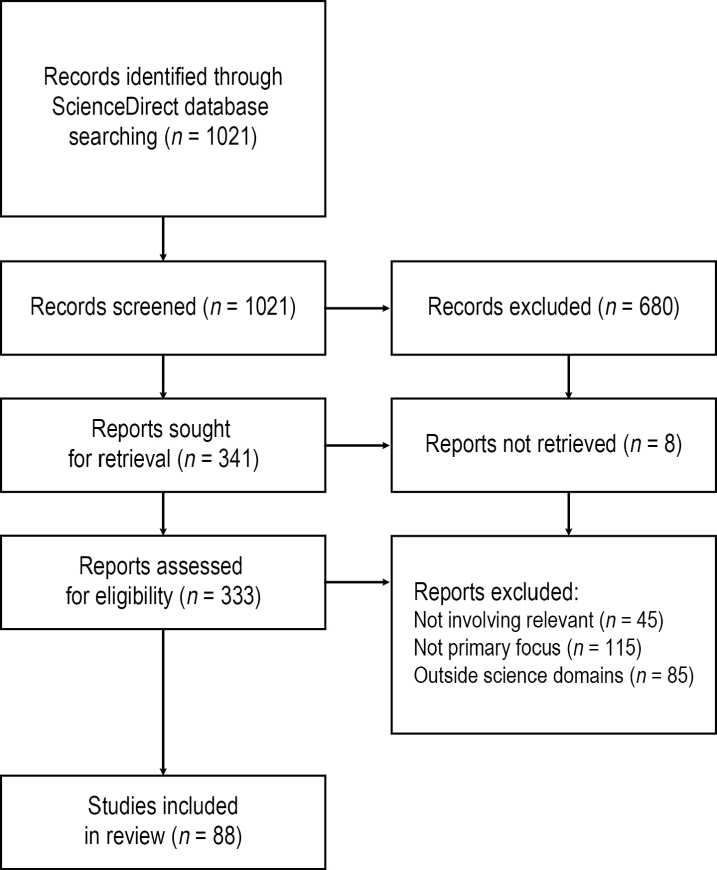
F i g . 1 . Flow Diagram for the Scoping Review Process according to the PRISMA-ScR
Source : hereinafter in the article, figures were prepared by the authors based on the results of the study.
Eligibility criteria were based on the Population-Concept-Context framework and included limits related to language, publication period, and publication type. The review included English-language peer-reviewed research articles and editorials published between 2020 and 2025 in computer science, business management, and economics. Studies were included when their main analytical focus was on CBDCs, cryptocurrencies, stablecoins, virtual currencies, or digital payment systems as forms of digital currency innovation. Studies focused only on conventional electronic payment methods, as well as conference abstracts, non-peer-reviewed publications, and grey literature, were excluded. Table 1 presents the inclusion and exclusion criteria.
Information Sources. Relevant studies were found mainly through database searches and citation networks. ScienceDirect was chosen to be the main database owing to its broad coverage of journals in the fields of business, computer science, and economics that align with the multidisciplinary perspective of this review. Search criteria were restricted to English-language articles and editorials published during the 2020 to 2025 period. Besides that, the reference lists of selected articles were also scrutinized to locate further relevant papers.
Table 1. Eligibility Criteria
|
Criterion |
Inclusion |
Justification |
|
Population |
All stakeholders involved in digital currency research, development, implementation, or use (researchers, policymakers, central banks, financial institutions, technology developers, regulators, users/consumers) |
Focus on digital currencies across economics, business, and computer science domains |
|
Concept |
Commentaries/editorials discussing digital currency definitions and theory; empirical studies on CBDCs, cryptocurrencies, virtual currencies, stablecoins, and digital payment systems |
To map how digital currencies have been conceptualized, studied, and evaluated across disciplines |
|
Context |
Economics, business management, and computer science contexts; any geographical location |
Focus on three core disciplinary domains; broader scope would exceed review resources |
|
Language |
English |
Review team had no resources for translation |
|
Time period |
2020–2025 |
To capture recent developments in this rapidly evolving field |
|
Types of articles |
Peer-reviewed research articles and editorials |
To capture peer-reviewed scholarly work on digital currencies |
|
Geographic |
Any location |
Digital currency research has global relevance |
Source : hereinafter in the article, tables were prepared by the authors based on the results of the study.
The search strategy adhered to the protocol’s methodology. To refine terminology and filters and ensure that known key articles on digital currencies, cryptocurrencies, and digital payment systems were retrieved, a preliminary search in ScienceDirect using the terms “digital currency” OR “digital money” was carried out. To increase sensitivity and specificity, small changes were made to the filters. The final search (ScienceDirect, November 2025) applied filters: 2020–2025, English, research articles/editorials, and subject areas (Economics, Business, Computer Science).
Selection of Sources of Evidence. Data was exported to reference management software after being retrieved from ScienceDirect. Titles and abstracts were independently screened by two reviewers using Table 1’s eligibility requirements. Records deemed potentially relevant by either reviewer were kept for full-text review after pilot screening to achieve inter-rater agreement of at least 0.75 (kappa statistic).
Full articles were obtained directly from the publisher, through the institutional library, and by contacting the authors, if necessary. Attempts to retrieve studies that were not successful were recorded as excluded. Two reviewers independently evaluated the full-text articles that remained after the initial screening and documented the reasons for exclusion based on the Population-Concept-Context criteria in three categories:
-
1) studies that did not specifically consider digital currencies as defined in this review;
-
2) studies that only peripherally focused on digital currencies;
-
3) studies from disciplines other than the three targeted areas.
Disagreements were resolved through discussion or by consulting a third reviewer. The PRISMA-ScR flow diagram (Fig. 1) shows the number of records at each stage and the reasons for exclusion.
Data Charting Process and Data Items. Together, the team developed, tested, and refined through multiple discussions a data-charting form that was used on a subset of the included studies. One reviewer was responsible for data charting for each article, and another reviewer checked it independently; differences were rubbed out by consensus.
The data-charting form included descriptive information, such as authors, year, title, journal, and geographic focus, as well as study type and design, objectives, research questions, digital currency conceptualization, theoretical frameworks, methods and data sources, context and stakeholders, key variables and findings, and evaluation designs, where applicable.
As the scoping review methodology that was used here focuses more on mapping the breadth of the evidence rather than assessing the efficacy of interventions, a formal quality assessment was not performed. It was considered that applying the same quality criteria to all studies would be inappropriate because of the different types of study designs and the fact that both editorials and empirical research were included.
Summarizing and Reporting the Results. Descriptive synthesis and thematic analysis were used to answer the review’s research questions after data charting. Journal sources, geographic locations, digital currency types, temporal distribution, and methodological approaches were all described in descriptive numerical summaries.
Five thematic clusters were identified as a result of the agreement between manually conducted content analysis and automatically generated keyword co-occurrence patterns (VOSviewer software, minimum threshold of two occurrences) [13]. Inductive thematic analysis was done by continuously reading the full texts, open, coding the recurring concepts, and progressively grouping the codes into higher, order themes based on conceptual similarity and analytical relevance. The decisions of coding were constantly compared across the different studies to ensure that the themes were coherent internally and the clusters were clearly differentiated. Both reviewers separately coded the content and together improved the thematic framework through iterative communication, consensus was achieved on disagreements. This helped to find the main thematic clusters that were supported by the data patterns and conceptually interpreted.
The findings are disclosed as per PRISMA-ScR regulations. The narrative synthesis is arranged around the review objectives, and the quantitative findings are shown in the tables and figures.
RESULTS
Research Corpus Characteristics. The final corpus consisted of 88 peer-reviewed publications on digital currencies from the years 2020 to 2025. According to the PRISMA-ScR flow diagram (Fig. 1), academic output has skyrocketed after 2022, reaching its peak in 2024. Almost 60 % of the studies that were included have been published in 2024–2025, which reflects a quick consolidation of research activities following the extension of CBDC pilot programs, the development of blockchain infrastructures, and the appearance of regulatory frameworks for digital assets [1; 14; 15].
The corpus consists of 36 scholarly journals from the areas of economics, finance, business and management, and computer science, which indicates formal interdisciplinarity. Nevertheless, the publication patterns reveal a predominance of financial economics and central banking articles, e.g., Research in International Business and Finance, Finance Research Letters, Journal of International Financial Markets, Institutions and Money, Procedia Computer Science, and the Latin American Journal of Central Banking. The displayed distribution emphasizes the macro-institutional character of the region, i.e., the research questions are mostly related to the topics of monetary policy transmission, financial stability, and regulatory design [1; 16; 17].
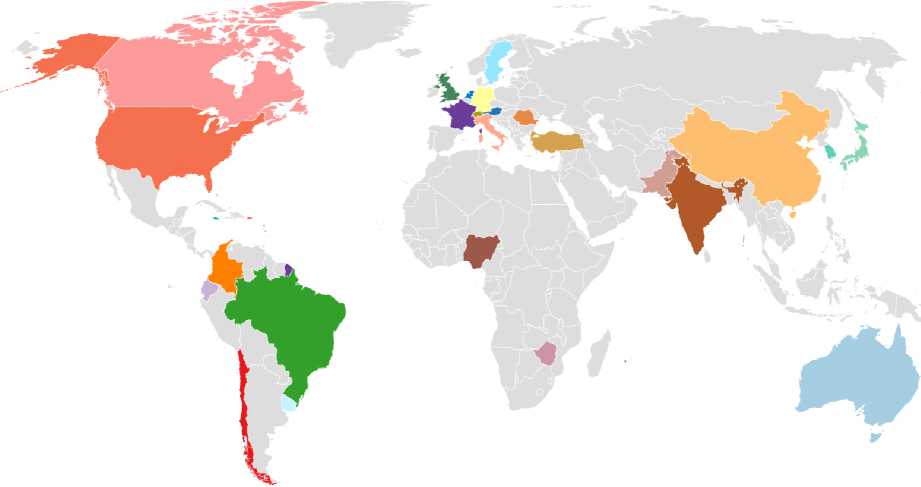
Authorship analysis of these 88 pieces of writing reveals that a total of 278 authors were involved, out of which 272 were different authors, and there is a minimal author overlap among the studies [8; 10]. The dispersion of these publications reveals that the topic remains unrefined and there are still few consolidated research groups or dominant scholarly networks. The research that is prominent all over the major parts of the world (Fig. 2) is essentially supported by China, the United States, and the European countries, together with a growing number of papers from newly developed Asian and Latin American countries [3; 18]. Only a few studies have employed a cross-country or global comparative framework [19; 20], but research conversations are still mostly based in the contexts of developed and upper-middle-income countries, thus, different institutional settings cannot be extended much.
Country
Australia В Austria В Bahamas В Brazil В Canada В Chile В China В Colombia В Ecuador В France Germany В India Italy В Jamaica В Japan В Netherlands В Nigeria В Pakistan В R°mania В Couth Korea | Sweden В Switzerland
В Turkey В United Kingdom В United States Uruguay В Zimbabwe
F i g . 2 . Geographic Distribution of Included Studies
Source : the image was obtained in the program Datawrapper.
Note : Each color represents a country that serves as the primary empirical or policy focus of at least one included study.
In terms of substantive focus, CBDCs dominate the corpus, appearing as the primary analytical object in approximately 65 % of studies (Table 2). Cryptocurrencies constitute the second most prominent category but are more often examined in conjunction with other research objects, primarily as market instruments rather than institutional monetary alternatives [21; 22]. In most cases, stablecoins are not the subject that is mainly focused upon in an analysis. Typically, these concepts are talked about together with both CBDCs and cryptocurrencies, thus pointing to their hybrid conceptual nature [4]. In particular, when one comes across the phrase “digital payment systems” it is a reference to the infrastructure and technology that constitute the background for research on digital currencies, mostly in the case of technical publications. The emergence of other forms of digital money, e.g., tokenized assets and private platform-based currencies, is very limited, and they are mentioned mostly as a few secondary references [23; 24].
Table 2. Types of Digital Currencies Considered in the Included Studies
|
Digital currency type |
Primary focus |
Secondary / mentioned |
Total coverage |
|
Central bank digital currencies (CBDC) |
57 |
14 |
71 |
|
Cryptocurrencies (Bitcoin) |
26 |
18 |
44 |
|
Stablecoins (fiat-backed, algorithmic) |
8 |
12 |
20 |
|
Digital payment systems (broader infrastructure) |
12 |
22 |
34 |
|
Tokenized assets |
3 |
7 |
10 |
|
Private digital money (BigTech, platform currencies) |
4 |
9 |
13 |
The corpus is methodologically characterized by a strong focus on quantitative and model-based approaches, as revealed in Table 3. More than half (58 %) of the publications are quantitative empirical studies, which mostly base their results on econometric time-series models, panel regressions, volatility analysis, and statistical techniques derived from survey data [17; 25; 26]. Besides, theoretical and simulation-based modeling, such as dynamic stochastic general equilibrium (DSGE), New Keynesian, agent-based, and balance-sheet frameworks, to a great extent, represent the research of the CBDC area [27–29]. Almost half of the technical and computational research (about 15 %) is dedicated to different facets of blockchain architecture, various aspects of consensus mechanisms, privacy technologies, and interoperability issues, among others [23; 30; 31]. On the other hand, the number of qualitative, mixed-methods and experimental studies that primarily focus on the effects of the implementation stage, user behavior, or the changes over time is significantly lower [32; 33].
Table 3. Methodological Approaches in the Included Studies
|
Methodology Category |
Studies |
% of corpus |
Representative techniques and approaches |
|
Quantitative empirical |
51 |
58 |
Time series econometrics (GARCH, VAR, DCC models); panel regressions (fixed effects, GMM, dynamic panel); cross-country quantitative analysis; survey research with statistical analysis |
|
Qualitative |
24 |
27 |
Case studies (single / multiple country); policy and regulatory analysis; conceptual and theoretical frameworks; comparative institutional analysis |
|
Technical / computational |
13 |
15 |
Blockchain architecture design; consensus mechanism development; smart contract analysis; cryptographic protocol design; system simulations |
|
Theoretical modeling |
16 |
18 |
DSGE models; agent-based simulations; game-theoretic models; balance sheet analysis; system dynamics modeling |
|
Mixed-methods |
5 |
6 |
Combined quantitative-qualitative designs; survey with interviews; statistical analysis with case studies |
|
Experimental |
4 |
5 |
Laboratory experiments; factorial designs; behavioral experiments with manipulation |
These corpus characteristics define the interpretive boundaries of the field. The dominance of supply-side, institutionally anchored perspectives, combined with a strong reliance on modeling-based inquiry and research concentrated in advanced economies, conditions the thematic structure and patterns identified in the subsequent analysis.
Thematic Structure of Digital Currency Research. In order to uncover the main thematic structure of the digital currency research, a co-occurrence analysis of keywords was performed with VOSviewer software [13]. The author keywords of the 88 publications considered were analyzed by full counting methodology with the minimum threshold for the number of occurrences of a keyword set to two. The visualization results (Fig. 3) show the statistical relations between the central notions, hence serving as a conceptual framework of the researched area.
price-based monetary policy connectedness

digital currencies digital yuan inflation targeting financial^stability

cryptocurrency central bank digital currency ^
banking digital money
blockchain
machineJearning cbdc
centr#bank central bank digital currencie supply chain^nanagement cryptocurrencies
► к attitude distributed ledger ф central bank digital currency
digital currency
blockchainjechnology
central banking cybersecurity
\ \ \ 1 '
payment systems cbdc attention index money stablecoins finipch cbdc adoption
F i g . 3 . VOSviewer Visualization of Keyword Co-occurrence and Thematic Clusters
Source : prepared by the authors based on the results of the study using VOSviewer.
Note : Circle size indicates keyword frequency; spatial distance reflects co-occurrence strength; colors represent cluster groupings identified by VOSviewer’s modularity-based algorithm.
Looking at the keyword map, one can see that the research on digital currency has been split into several stable thematic areas with different conceptual and analytical orientations. The red cluster links central bank digital currencies, blockchain technology, distributed ledger, cybersecurity, machine learning, and transparency, thus it represents a technology-oriented and governance-related domain. The green cluster amalgamates bitcoin fintech financial literacy, and CBDC adoption indicators therefore it points to a demand-side and market-oriented perspective. The blue cluster is centered on monetary policy, inflation targeting, financial stability, financial intermediation, and bank runs, whereas the yellow and purple clusters link general monetary concepts, payment systems stablecoins cryptocurrency, blockchain, and connectedness. Smaller clusters refer to more specific themes, such as central banks and cryptocurrencies, banking and digital money, China's digital yuan, and price-based monetary policy. Therefore, the VOSviewer map serves as a visual support for the upcoming thematic analysis.
Structural Interpretation of Thematic Clusters and Field Asymmetry. The keyword map layout produced by VOSviewer (Fig. 3) partly reflects the thematic clusters derived from content synthesis, but they do not fully match. Such a discrepancy is quite natural as the automatic clustering is done on the basis of statistical co-occurrence, whereas thematic synthesis takes into account conceptual content, analytical focus, and research objectives. Hence stablecoins for example, are placed between the terms related to CBDCs and cryptocurrencies, such placement illustrating their hybrid institutional nature, whereas the geographic markers next to the adoption-related terms indicate that many demand-side studies are referred to specific national contexts. As a result, the visualization is mainly used as a structural map of the corpus, while the final thematic partition is grounded in semantic relationships uncovered through content analysis. Therefore, the nine statistically identified clusters were consolidated into five main thematic clusters, which are shown in Table 4.
Table 4. Thematic Clusters Identified through VOSviewer Keyword Co-occurrence Analysis
|
Cluster |
Amount of Publications |
Keywords |
Research focus |
|
CBDC policy design and macroeconomic implications |
27 |
Central bank digital currency; CBDC; monetary policy; financial stability; central banking; inflation targeting; price-based monetary policy |
State-issued digital currencies, macroeconomic policy implications, monetary transmission mechanisms, systemic financial stability, central banking operations |
|
Distributed ledger technology and infrastructure |
16 |
Blockchain; distributed ledger; blockchain technology; cybersecurity; payment systems; machine learning |
Technical foundations, architectural design, security considerations, transparency, operational features of decentralized systems, broader blockchain applications |
|
Cryptocurrencies and decentralized finance |
15 |
Cryptocurrency; Bitcoin; stablecoin/ stablecoins; fintech |
Private digital currencies, market dynamics, volatility, decentralized financial ecosystems, alternative payment mechanisms, fintech innovation |
|
Financial intermediation and banking impacts |
12 |
Financial intermediation; central bank; bank runs; digital money; money |
Disruption of traditional banking models, deposit dynamics, disintermediation risks, liquidity management, evolving relationships between central banks, commercial banks, and users |
|
User adoption and socioeconomic dimensions |
10 |
Financial literacy; China; digital yuan; transparency; connectedness |
Demand-side factors, consumer acceptance, cross-border payments, financial inclusion, geographic contexts, user behavior, socioeconomic rationales |
|
Uncategorized |
8 |
– |
– |
Intra-Cluster Patterns and Evolution of Research Themes . Cluster 1 has 27 publications (31 % of the corpus) and represents the conceptual foundation of digital currency research. Its main focus is on economics and central banking journals and it examines how state-issued digital currencies alter monetary policy transmission, financial stability and central banking.
The main topic of the initial research is grasping the functioning of monetary policy. A few of these studies show different economic scenarios due to the implementation of CBDC by using DSGE and macro-financial models. Two such studies are the ones from Helmi et al. [14] and Wang et al. [25]. Various researches in this domain uniformly point out that a mono interest-bearing CBDC may serve as a tool that enables the policy to be more efficient by lessening the transmission frictions. However, at the same time, these models also suggest that there could be a significant risk of deposit flight and thus a risk of systemic instability during a financial crisis if people continue to move their funds to the safest central bank liabilities, thereby increasing the system’s vulnerability to banking sector shocks [34; 35].
The second study line explores the design architecture of CBDCs and the related welfare trade-offs. It goes further by analyzing access models, payment schemes, and holding limitations through agent-based simulations and balance-sheet analysis [1; 36; 37]. The findings of these research works on the matter indicate that the system’s conception options entail compromises that linger for the most part between the motivating factors for the system’s uptake and the stability of the financial sector. User welfare and adoption-raising architectures, on the one side, are likely to diminish bank intermediation, while, on the other hand, stability-preserving patterns limit the benefits and attractiveness of CBDCs.
The third research area is concerned with cross-border central bank digital currencies and their international monetary implications. Firstly, the research looks at multi-CBDC platforms and interoperability frameworks through which it indicates not only the efficiency gains in cross-border settlements but also the problems of monetary sovereignty and currency rivalry [38–40]. The papers suggest that the development of a CBDC in a major economy might alter the dynamics of reserve currencies and transform the global payment hierarchies [15].
Cluster 1 features a strong emphasis on theory and simulation with very little reliance on post-implementation empirical data. The composition of the cluster reveals that most of the research on CBDC is mainly conceptual in nature and oriented towards the use of models for the future rather than the evaluation of the past [41–43; 29].
Cluster 2 includes 16 publications, which make up 18 % of the entire corpus and represent the technical-infrastructural side of digital currency research. Most studies come from computer science and engineering and examine distributed ledger architectures, security, scalability, and interoperability in open and closed digital money systems [44; 45].
The first research line examines consensus mechanisms and scalability constraints. This work highlights the study of various proof-of-stake mechanisms, Byzantine fault-tolerant protocols, and hybrid structures aimed at achieving high transaction throughput at a country level [30]. The research shows that scalability gains are always reached through compromises, most notably between decentralization and performance. For instance, gubernatorial architectures facilitate high throughput but at the same time, they lessen the degree of decentralization. Conversely, sharding and layer-2 methods can provide scalability but also entail a higher coordination complexity and the emergence of new systemic risks [44; 46].
The second research area revolves around privacy-preserving technologies and programmability. The research includes cryptographic techniques like zero-knowledge proofs and homomorphic encryption, as well as secure multi-party computation, which make it possible for transactions to be verified without exposing the sensitive data in its entirety [23]. The findings of the studies here suggest that privacy is seen as a system characteristic that can be altered rather than one that is inherently fixed. Consequently, the embedding of smart contracts not only increases programmability, thus enabling conditional payments and automated compliance, but also enhances the system’s exposure to potential attacks. These concerns are addressed in studies proposing interpretable vulnerability detection models for smart contracts and adaptive threat-mitigation systems in CBDC infrastructures [31; 47; 48].
The third research area concerns interoperability and interaction with existing payment systems. The research emphasizes the importance of standardized interfaces, messaging protocols, and identity management frameworks as the key factors that enable the seamless interaction of distributed ledgers with the current financial infrastructures [38; 48]. The literature points to the fact that integration issues are often more difficult than the technical challenges of new blockchain designs, thereby making interoperability a significant obstacle to large-scale implementation [44; 46].
Cluster 2 is characterized by strong technological coherence and a predominance of prototypes, simulations, and architectural modeling, rather than post-deployment evaluation. This cluster provides essential infrastructural knowledge but has only weak connections with the policy formulation, banking outcomes, and user behavior, which are the focus of other disciplines [31; 44–47].
Digital currency research in the market-oriented sector is reflected by 15 publications (17 % of the whole corpus) in Cluster 3. The cluster is essentially narrowed down to finance and financial economics journal articles in which the authors are inclined to view digital currencies as instruments of speculation and the most likely decentralized elements of the future financial system [49; 50].
The first paper analyzes the changes and the movement of the cryptocurrency market by using econometric time-series methods. Such methods are utilized to figure out the price formation, spillovers, and crisis behavior in the market [21; 51; 52]. The research generally suggests that the crypto market is very volatile; sometimes it behaves as a completely separate market, whereas at other times it is extremely sensitive to the news, especially to the negative news and social media activity [53; 54].
The second line is by considering stablecoins as hybrid instruments through figuring out their design mechanisms and cryptocurrency market purpose features [4; 55]. The research indicates that stablecoins often are used as a temporary refuge in times of extreme volatility; however, they also are very susceptible to a loss of faith, particularly those with an algorithmic structure that are weak by nature.
The third line is about the interaction of cryptocurrencies with CBDCs. It studies the effect of announcements about CBDCs and related uncertainties on the prices and volatility of cryptocurrencies [14; 56]. The outcomes are varied, showing the conflicting substitution and complementarity of private and public digital currency narratives.
Cluster 3 is characterized by a highly quantitative and uniform methodology, exhibiting minimal involvement in institutional, technological, or behavioral analysis. Consequently, the cluster stays conceptually detached from discussions regarding policy formulation and execution [57–59].
Cluster 4 contains 12 publications (14 % of the total) that analyze the impact of digital currencies, especially CBDCs, on financial intermediation and the banking sector. The studies in this cluster are mainly from the fields of economics and banking, and a significant rise of the topic can be observed from the year 2022 onwards [41; 60].
The first stream conveys the potential disintermediation effects of CBDCs, devising different scenarios of full CBDC utilization and investigating how these scenarios influence the activities of the traditional banking sector. One of the papers they refer to, by Vollmar and Wening [61], examines the influence of the rates of conversion of a CBDC on bank balance sheets and suggests that even a small fraction of a CBDC can drastically change the way in which commercial banks are financed, and as a result, the banks may face liquidity problems and their profits may decrease. Such cases show that the appearance of a CBDC can lead to a decrease in the volume of deposits in commercial banks and an increase in the central bank’s liabilities [37].
The second stream is centered on local effects of the introduction of CBDCs on banking stability after the CBDCs’ advent in different economies. The empirical study by Heitmann et al. [65] includes the analysis of the bank-level data from 57 banks in 4 countries, and its main finding is that the implementations of CBDCs can increase banking stability, thus going against theoretical expectations. The study attributes such positive results to greater payment efficiency, increased financial inclusion, and intensified regulatory monitoring [62; 63].
The third stream looks into the changing interaction between central banks, commercial banks, and the digital currencies. These studies examine how CBDCs change the traditional functions and structures of the banking sector, among which are the alterations in financial services, payment systems, and monetary policy [1; 64]. The research shows that, as a matter of fact, it is likely that CBDCs in the existing banking structures might lead to some upheavals; on the other hand, they still make the financial system safer and more efficient. Related contributions further refine this line of inquiry by discussing the stability-information trade-off in CBDC design, evaluating the effectiveness of monetary policy under retail CBDC arrangements, decomposing demand across alternative CBDC designs, and reconsidering CBDC transmission under negative interest rate conditions [66–69].
Cluster 4 is a combination of methodologies comprising theoretical frameworks, field research, and simulations. The difference in the findings between the theoretical predictions of instability and the practical evidence of stability points to the complexity and uncertainty of the impact of banking-sector issues related to CBDCs. Nevertheless, the studies, which are mostly positive, have not reached a definite conclusion; hence, more empirical evidence is required for various scenarios [41; 60].
Cluster 5 is the largest discussion of the factors on the demand side that affect the usage of digital money. It consists of ten publications, which is 11 % of the total corpus. Most of the articles of this section were published in the time interval from 2023 to 2025; hence, they are quite recent. This group of articles addresses issues of financial literacy, technology acceptance, and the effect of socioeconomic factors, and, thus, it can be considered a global representative set of research studies, which include the research from Asia, Europe, and several other countries [2; 6].
The first stream is a cross-national data analysis and innovation diffusion theory study that takes financial literacy as a factor influencing the use of digital currencies [20]. The findings indicate that the most significant motive for a person to agree to use CBDC is to acquire financial knowledge, and the relationships are more profound in the countries where the school curriculum offers a more comprehensive financial education. This research highlights the importance of financial literacy in users’ attitudes and their willingness to accept digital currencies. This demand-side agenda can be broadened further by studies that link CBDC adoption to financial literacy in cross-country settings, emphasize customer satisfaction in cryptocurrency-based transactions, apply extended meta- Unified Theory of Acceptance and Use of Technology (UTAUT) models to digital payment adoption, and examine cross-border payment uptake in Belt and Road economies [70–73]. Regional analyses also show that adoption and implementation are embedded in larger Latin American policy trajectories, Asian economic cooperation debates, and the combined supply-demand-infrastructure configuration of China’s e-CNY [74–76].
The second stream is concerned with the behavior of users and their readiness to use digital currency through the application of well-known technology acceptance theories, such as the UTAUT and the Technology Acceptance Model (TAM) [3; 5]. The paper that employs structural equation modeling suggests that the decision to use a product or a service is mainly determined by performance expectancy, the user’s attitude, and trust. In addition, the factors that lead to the adoption of technology vary from locality to locality, specifically in the case of the Asian markets.
The third stream explores the socioeconomic aspects of adoption, such as the potential of digital currencies to stabilize national economies, reduce remittance costs, and provide financial services access [4; 32]. Based on the third research stream, the reasons behind the non-adoption of new technology are numerous, among them being privacy and trust concerns, lack of an adequate infrastructure, and not knowing how to use it. Additionally, the papers reveal that adoption levels differ between individuals. Digital currency is the preferred mode of transaction for city residents with higher education levels, while marginalized groups encounter significant barriers [54].
Cluster 5 has been getting more and more attention, but it is still lagging behind the other clusters in terms of development. User adoption research is key to the success of digital currency projects; however, it only represents 11 % of the corpus, which indicates that there is a considerable necessity for deepening the knowledge of how end users interact with digital currencies and what their role is in the abovementioned adoption strategies.
The main characteristics of the five thematic clusters are summarized in Table 5. These clusters cover 80 publications, while the remaining 8 publications are treated as uncategorized because they do not clearly fit into any of the main thematic clusters (Table 4).
Table 5. Summary Characteristics of the Five Thematic Clusters
|
Cluster |
Publications |
Main focus |
Main gap |
|
CBDC policy design and macroeconomic implications |
27 |
Monetary policy, financial stability, and central banking |
Limited post-implementation evidence |
|
Distributed ledger technology and infrastructure |
16 |
Blockchain architecture, security, scalability, and interoperability |
Weak connection with policy and user studies |
|
Cryptocurrencies and decentralized finance |
15 |
Crypto-asset markets, Bitcoin, stablecoins, and DeFi |
Limited integration with CBDC research |
|
Financial intermediation and banking impacts |
12 |
Banking stability, deposits, liquidity, and disintermediation risks |
Mixed evidence on banking-sector effects |
|
User adoption and socioeconomic dimensions |
10 |
Financial literacy, trust, acceptance, and inclusion |
Underdeveloped demand-side research |
Inter-Cluster Relationships and Knowledge Integration. Although the thematic clusters cover similar topics, they have little integration and thus constitute a study field that is delineated by parallel rather than cumulative knowledge growth. The clusters being conceptually close is not always associated with the clusters being methodologically or theoretically discussed.
Social sciences and humanities 145
The most proximate structural relationship is seen between Cluster 1 (CBDC policy design) and Cluster 4 (financial intermediation and banking impacts). Both address the systemic ramifications of state-issued digital currency, yet remain tenuously linked. Policy-oriented research predominantly uses DSGE and simulation-based modeling [1], whereas banking studies integrate balance-sheet simulations with empirical analysis following implementation [33; 61]. Consequently, theoretical assumptions regarding banking behavior are infrequently evaluated against actual results, and empirical evidence is rarely included in policy transmission models.
The different types of research about technical infrastructure (Cluster 2) and policy analysis (Cluster 1) had secondary disconnection boundaries. Technical studies focus on consensus methods, privacy designs, and interoperability [30; 38], while policy research usually considers the technical side as a single. This leads to a black-box interaction where policy modeling acknowledges very few of the infrastructure limitations and design compromises considered in technical research.
Moreover, the Bitcoin research network (Cluster 3) has fewer ties with topics related to CBDC, as well as Bitcoin-related studies. The work on Bitcoin focuses mostly on the aspects of the market and its volatility [21], and just very few papers address the links between CBDCs and cryptocurrencies [14]. The most convenient ideas from decentralized finance are hardly ever taken into account when carrying out the CBDCs or in making regulatory evaluations, thus keeping a theoretical gap between private and public digital currency research.
The largest significant disparity is to Cluster 5 (user adoption and socioeconomic dimensions). The literature on behavior and adoption [5; 20] is largely separate from the theoretical articles on the supply side, which, in general, treat user behavior as an external factor. As a result, the formulation of policies, technological frameworks, and evaluations of banking impacts are inadequately supported by empirical data about trust, literacy, and acceptance.
Geographic segmentation further deepens these inequalities. Research related to policy and banking is mainly concentrated in advanced economies, while studies on adoption are more focused on Asia, and data from the first implementation are mostly available for developing regions, thus limiting the possibilities for cross-contextual synthesis.
In summary, inter-cluster examination exposes that the investigation of digital currencies constitutes a set of differentiated themes with few connections between them, these connections being mostly made through shared vocabulary rather than through the presence of integrated analytical frameworks.
Overview of Research Landscape and Structural Patterns. The synthesis of corpus features, thematic clusters, the structure within clusters, and the relationships between clusters reveals that digital currency research is thematically rich but structurally unbalanced. The field is organized around five research areas: CBDC policy design, technical infrastructure, cryptocurrencies and decentralized finance, banking-sector implications, and user adoption. Actually, these research areas vary in their scale, age and degree of integration. Literature is still largely based on supply-side perspectives, modeling and simulation methods, and disciplinary barriers, while demand-side research, evidence after implementation, and cross-contextual synthesis are still underdeveloped.
DISCUSSION
The Five-Cluster Architecture and Conceptual Organization. Corpus analysis has shown that most of the research on digital currency is from supply-side perspectives. The three clusters referring to policy design, technical infrastructure, and banking impacts (Clusters 1, 2, and 4) account for around 63 % of the publications, whereas demand-side studies on user adoption and socioeconomic factors (Cluster 5) make up only 11 % of the corpus [1; 5; 20; 33; 38; 61]. As a result, research focuses mainly on institutional actors, system architecture, and macro-level effects, while individual users and behavioral dynamics remain less represented. This configuration reflects the current distribution of research interests rather than an integrated analytical framework.
Theory-Implementation Gap and Evidentiary Patterns. Most of the clustered literature talks about subject-specific models, simulations, and scenario analyses made in advance. Research employing DSGE models and balance-sheet simulations to explore the effect of the CBDC policy on the transmission and financial stability is dominant [14; 61], while the technical papers are largely reliant on prototyping and architectural simulations [30; 23]. There is a scant number of empirical post-implementation studies to be reflected upon.
Where empirical evidence is available, it does not always align with theoretical expectations. As an illustration, modeling studies often forecast that introducing CBDC will lead to increased disintermediation and banking instability. In contrast, empirical analyses of the early implementations reveal that the effects on banking systems are neutral or even stabilizing [33]. These contradictions are present in the literature and signify that the authors refer to different sources of data, have different methodologies, and are at different levels of analysis rather than agreeing in a sense of conclusion.
An additional but comparatively weakly integrated strand of the literature concerns conceptual, accounting, and regulatory interpretations of digital money. These studies discuss money in crypto conditions, accounting and reporting challenges, and the political economy of fintech regulation, showing that legal, reporting, and institutional perspectives remain peripheral to mainstream CBDC modeling [77–79].
Likewise, the technical and market literature extends beyond generic infrastructure questions to cover blockchain-CBDC architecture, smart-contract vulnerability detection, mixer forensics, influential regions in blockchain networks, and the connectedness of stablecoin markets [80–84]. These topics reveal analytical specialization that is rarely incorporated into central banking or adoption-oriented discussions.
Other applied contributions connect digital currency research with supply-chain volatility, portfolio allocation, venture-finance contexts, government digital transformation, state communication, and data stewardship [85–89]. This shows that the field extends into applied and public-sector domains, although these discussions remain only weakly integrated with the main clusters.
Disciplinary Fragmentation and Knowledge Integration. Results also indicated a very pronounced division along the disciplinary lines. For example, technical research tends to deal with finding consensus mechanisms, privacy, and interoperability, whereas economic and institutional analyses are mostly done separately from these topics [30; 38]. Also, articles exploring behavior and adoption seldom draw from policy modeling or banking impact assessment works [5; 20]. The geographical division just makes these discrepancies even more clear since banking and policy research is mostly conducted in wealthy countries, whereas adoption studies are frequently carried out in Asian or developing-country contexts.
Implications. The thematic and methodological differences indicate that digital currencies are mostly considered instruments of institutions and technology, rather than sociotechnical systems embedded in daily economic practices. There is still little discussion of policy design, technological architecture, institutional arrangements, and user behavior within unified analytical frameworks. Moreover, limited integration between CBDC and cryptocurrency research means that the implications of decentralized digital currencies remain only partly explored [4; 21].
Relation to Previous Reviews. Unlike prior reviews limited to CBDC design [7; 8], this scoping review reveals structural asymmetry across the broader digital currency ecosystem.
Limitations. The results of this review ought to be understood with a certain level of skepticism. The search strategy was limited to English-language, peer-reviewed articles that were listed in ScienceDirect. Consequently, it did not account for grey literature such as working papers and technical reports from central banks. This limitation is important because many policy-oriented and practice-based discussions on digital currencies are published outside peer-reviewed journals. The review refrained from performing a formal quality assessment of each study, as is typical for scoping reviews. In fact, it depicts patterns of research interest rather than the strength of the evidence. The use of VOSviewer keyword co-occurrence analysis and manual thematic interpretation also means that the identified clusters depend on the selected corpus, author keywords, and the analytical decisions of the reviewers. Finally, concentrating on the years 2020 to 2025 signifies that the capture is at the very early stage of the implementation, and the organization of the field may alter as more real-world data become available.
Future Research Directions. Combining the results, the authors suggest that the future research should address the following issues: Firstly, it is very important to broaden demandside studies regarding user adoption, trust, financial literacy, and inclusion in order to reduce the current imbalance in the field. Secondly, more post-implementation empirical studies using longitudinal and quasi-experimental designs are needed to verify the theoretical predictions of modeling studies. Third, the creation of integrated frameworks that view digital currencies as sociotechnical systems that connect technology, policy, institutions, and users would facilitate the production of cumulative knowledge. Lastly, the thorough comparative studies linking CBDC and cryptocurrency research could take advantage of the existing empirical experience and, therefore, diminish the fragmentation of the different research domains. At the same time, boundary-case publications found in the corpus show the need for sharper field delimitation in future scoping reviews, as some retrieved studies relate only indirectly to digital currency research [90–93].
CONCLUSION
This scoping review provides a comprehensive analysis of the digital currency research landscape from 2020 to 2025. The study of various disciplines working together in the research field has led to the identification of five thematic clusters: CBDC policy design, blockchain technology and infrastructure, cryptocurrencies and decentralized finance, financial intermediation and banking impacts, and user adoption and socioeconomic dimensions. The clusters had demonstrated that the industry is transforming. However, they had also demonstrated that there are still some unbalanced and fragmented areas, especially those kinds of areas between the tech and institutional perspectives and demand-side factors like user behavior.
The analysis has brought to light a strong concentration on supply-side factors, especially regulation, technological infrastructure, and financial aspects, while user adoption remains less developed. The gap between conceptual models and empirical confirmation points to the need for more post-implementation studies. The insufficient integration of disciplinary methods, mainly the division of technical, economic, and behavioral research, has been a barrier for the field in treating digital currencies as intricate sociotechnical systems.
The findings indicate that policymakers and implementers should prioritize user-related factors and user-centered design when developing digital currencies. Future research should focus on real-world experiments, post-implementation effects, and the interaction of technological, economic, and social factors. Addressing these issues can help digital currency studies progress toward more detailed models that better guide the development, regulation, and application of such technologies in various institutional environments.
The importance of this study is in the manner in which it provides a comprehensive description of the current research about digital currency. Our investigation will depict the research atmosphere of the time by defining the study areas and pointing out the knowledge gaps that have been unsolved for a very long time. Hence, it will be a source of priceless concepts for the academic, policymaker, and practitioner communities of the digital currency field.
