
Метагеномное профилирование нормофлоры Canis familiaris для последующего отбора штаммов-кандидатов в качестве пробиотиков
Журнал: Сельскохозяйственная биология @agrobiology
Рубрика: Микробиология, вирусология, молекулярная биология
Статья в выпуске: 4 т.61, 2026 года.
Бесплатный доступ
Исследование микробиоты желудочно-кишечного тракта домашних животных играет важную роль в поиске способов поддержания их здоровья. Особый интерес представляют собаки (Canis familiaris), которые используются не только как домашние животные, но и в правоохранительных органах, сельском хозяйстве и т.д. Одна из перспективных стратегий лечения и профилактики заболеваний, связанных с пищеварительной системой домашних животных, — применение пробиотиков. Современные подходы в анализе больших микробных сообществ с использованием секвенирования ДНК открывают новые возможности для исследования микробиоты собак и выделения из ее образцов штаммов-кандидатов для использования в качестве пробиотиков. В настоящей работе впервые методом высокопроизводительного метагеномного секвенирования охарактеризована фекальная микробиота клинически здоровой немецкой овчарки на всех таксономических уровнях (от типа до вида) и на ее основе целенаправленно отобраны виды-кандидаы в пробиотики. Выявлено, что Enterococcus lactis не детектируется стандартным метагеномным анализом из-за высокой гомологии с E. faecium, что подтверждено выделением трех штаммов E. lactis при отсутствии соответствующих прочтений в метагеноме. Целью исследования был метагеномный анализ фекальной микробиоты собак для поиска штаммов-кандидатов в пробиотики. Работу проводили на базе ФГБОУ ВО Российский биотехнологический университет (РОСБИОТЕХ) (г. Москва) в 2024-2025 годах. Для метагеномного анализа были отобраны пробы фекалий от клинически здоровой немецкой овчарки возрастом 4 года. Выделение тотальной ДНК проводили с использованием набора ZymoBIOMICS DNA Kit («Zymo Research», США). Для подготовки библиотек использовали 100 нг ДНК и набор Illumina DNA Prep (M) Tagmentation («Illumina, Inc.», США). Секвенирование выполняли на платформе NovaSeq 6000 («Illumina, Inc.», США). Таксономическую классификацию осуществляли алгоритмом LCA в MEGAN6 Ultimate Edition (v6.18.7) при пороге относительной абундантности > 0,01 %. В результате секвенирования было получено 24,009 млн чтений (2,407 Гб данных), из которых 61,97 % успешно классифицированы на таксономическом уровне и 12,6 — на функциональном (Kyoto Encyclopedia of Genes and Genomes, KEGG). Доминирующим доменом оказались бактерии — 99,91 %. Для выделения изолятов микроорганизмов образцы фекалий ресуспендировали в 10 мл 0,9 % NaCl, после чего делали серийные стандартные разведения, высевая каждое разведение на чашки Петри со средой MRS («HiMedia Laboratories Pvt. Ltd.», Индия). Всего было выделено 100 штаммов бактерий, 17 из которых были идентифицированы методом секвенирования гена 16S рРНК. Для некоторых штаммов использовали амплификацию с видоспецифическими праймерами. Метагеномный анализ выявил доминирование бактерий типа Firmicutes (77,28 %) и Actinobacteria (18,88 %). На уровне класса наиболее распространенными были Clostridia, Coriobacteriia и Bacilli; отряда — Eubacteriales, Coriobacteriales и Lacto-bacillales. Видовой состав характеризовался доминированием Ruminococcus gnavus (9,45 %) и Collinsella intestinalis (8,13 %), что может отражать адаптацию микробиоты к составу рациона животного. Анализ выявил 8 видов-кандидатов в пробиотики, присутствовавших в значимых количествах (> 0,05 %): Enterococcus faecium, Bifidobacterium pseudolongum, Latilactobacillus curvatus, Lactiplantibacillus plantarum, Lactobacillus johnsonii, Limosilactobacillus reuteri, Latilactobacillus sakei и Leuconostoc mesenteroides. Из 100 выделенных изолятов 17 были идентифицированы до вида: Enterococcus faecium (7 штаммов), Lactiplantibacillus plantarum (6 штаммов), Enterococcus lactis (3 штамма) и Latilactobacillus sakei subsp. sakei (1 штамм). Наличие E. lactis среди выделенных бактерий при его отсутствии в данных метагенома, вероятно, обусловлено генетической схожестью этого микроорганизма с видом E. faecium. Исследование подтверждает потенциал использования метагеномного профилирования для целенаправленного поиска пробиотических штаммов. Не все потенциально перспективные виды (B. pseudolongum, L. curvatus, L. johnsonii, L. reuteri, L. mesenteroides) удалось выделить из образцов, что указывает на необходимость дальнейших работ по их изоляции и изучению пробиотических свойств уже полученных штаммов. Кроме того, полученные результаты представляют интерес с точки зрения состава здоровой микробиоты пищеварительной системы собак.
Короткий адрес: https://sciup.org/142248604
IDS: 142248604 | УДК: 579.62:577.2 | DOI: 10.15389/agrobiology.2026.4.648rus
Metagenomic profiling of the normal microbiota of Canis familiaris for subsequent selection of candidate probiotic strains
Research into the microbiota of the gastrointestinal tract of domestic animals plays an important role in finding ways to maintain their health. Dogs (Canis familiaris) are of particular interest, as they are used not only as pets but also in law enforcement, agriculture, etc. One of the promising strategies for treating and preventing diseases related to the digestive system of domestic animals is the use of probiotics. Modern approaches to analyzing large microbial communities using DNA sequencing open up new opportunities for studying the microbiota of dogs and isolating candidate probiotic strains from fecal samples. In this study, for the first time, the fecal microbiota of a clinically healthy German Shepherd dog was characterized using high‑throughput metagenomic sequencing at all taxonomic levels (from phylum to species), and based on this, candidate probiotic species were purposefully selected. It was found that Enterococcus lactis is not detected by standard metagenomic analysis due to its high homology with E. faecium, which was confirmed by the isolation of three E. lactis strains in the absence of corresponding reads in the metagenome. The aim of the study was to perform metagenomic analysis of the fecal microbiota of dogs to identify candidate probiotic strains. The work was carried out at the Russian Biotechnological University (ROSBIOTECH) (Moscow) in 2024-2025. Fecal samples from a clinically healthy 4‑year‑old German Shepherd were collected for metagenomic analysis. Total DNA was isolated using the ZymoBIOMICS DNA Kit (“Zymo Research”, USA). For library preparation, 100 ng of DNA and the Illumina DNA Prep (M) Tagmentation kit (Illumina, Inc., USA) were used. Sequencing was performed on the NovaSeq 6000 platform (Illumina, Inc., USA). Taxonomic classification was carried out using the LCA algorithm in MEGAN6 Ultimate Edition (v6.18.7) with a relative abundance threshold of >0.01 %. As a result of sequencing, 24.009 million reads (2.407 Gb of data) were obtained, of which 61.97% were successfully classified at the taxonomic level and 12.6% at the functional level (based on the Kyoto Encyclopedia of Genes and Genomes, KEGG). The dominant domain was Bacteria (99.91 %). To obtain microbial isolates, fecal samples were resuspended in 10 ml of 0.9% NaCl, after which serial standard dilutions were made, with each dilution being plated onto Petri dishes with MRS medium (HiMedia Laboratories Pvt. Ltd., India). A total of 100 bacterial strains were isolated, 17 of which were identified by sequencing the 16S rRNA gene. For some strains, amplification with species‑specific primers was used. Metagenomic analysis revealed the dominance of bacteria of phylum Firmicutes (77.28 %) and Actinobacteria (18.88 %). At the class level, the most common were Clostridia, Coriobacteriia, and Bacilli; at the order level — Eubacteriales, Coriobacteriales, and Lactobacillales. The species composition was characterized by the dominance of Ruminococcus gnavus (9.45 %) and Collinsella intestinalis (8.13 %), which may reflect the adaptation of the microbiota to the composition of the animal’s diet. The analysis identified 8 candidate probiotic species present in significant quantities (>0.05 %): Enterococcus faecium, Bifidobacterium pseudolongum, Latilactobacillus curvatus, Lactiplantibacillus plantarum, Lactobacillus johnsonii, Limosilactobacillus reuteri, Latilactobacillus sakei, and Leuconostoc mesenteroides. Of the 100 isolated strains, 17 were identified to the species level: Enterococcus faecium (7 strains), Lactiplantibacillus plantarum (6 strains), Enterococcus lactis (3 strains), and Latilactobacillus sakei subsp. sakei (1 strain). The presence of E. lactis among the isolated bacteria, despite its absence in the metagenome data, is likely due to the genetic similarity of this microorganism to E. faecium. The study confirms the potential of using metagenomic profiling for the targeted search for probiotic strains. Not all potentially promising species (B. pseudolongum, L. curvatus, L. johnsonii, L. reuteri, L. mesenteroides) could be isolated from the samples, which indicates the need for further work to isolate them and study the probiotic properties of the already obtained strains. In addition, the results obtained are of interest from the perspective of studying the composition of the healthy microbiota of the canine digestive system.
Текст научной статьи Метагеномное профилирование нормофлоры Canis familiaris для последующего отбора штаммов-кандидатов в качестве пробиотиков
Собаки (Canis familiaris) занимают особое место в жизни человека, будучи первыми одомашненными животными. Наиболее древние археологические находки, однозначно принадлежащие домашним собакам, имеют возраст 15-17 тыс. лет назад (1-3). Собаки — самые распространенные домашние животные, которые вносят большой вклад в повседневную жизнь различных сообществ (4, 5). Общение человека с домашними собаками может оказывать положительное влияние на биологические процессы и психоэмоциональное состояние (6, 7). Кроме того, собаки используются правоохранительными органами и службами и играют ключевую роль в сельских общинах при выгуле скота и его защите от диких животных (5). Повсеместное распространение и влияние на жизнь человека делают собак важным объектом исследования современной науки. При этом особое внимание уделяется состоянию их здоровья. Поддержание здоровья и физической формы рабочих собак, в том числе через коррекцию микробиома, — необходимое условие для обеспечения эффективности их хозяйственной эксплуатации.
Здоровье желудочно-кишечного тракта (ЖКТ) — важнейшая составляющая состояния животных, в основе которого лежит несколько сложных механизмов эффективного функционирования пищеварительной системы (8, 9). Cложное сообщество микроорганизмов, обитающих в органах пищеварения и называемых микробиотой ЖКТ, служит одной из основных составляющих поддержания функциональности ЖКТ и гомеостаза организма в целом (10, 11). Эта микробная экосистема способствует эффективному поглощению и метаболизму питательных веществ, участвует в защите от патогенов и модулировании иммунных реакций, стимулирует развитие кишечника и улучшение его барьерной функции (11-13). В настоящее время ведется поиск и изучение новых стратегий поддержания здоровья ЖКТ собак, в том числе включение в рацион пробиотических добавок (11-14).
Пробиотики — это живые микроорганизмы, которые при употреблении в достаточном количестве полезны для здоровья хозяина (12, 14). Пробиотики могут подавлять рост патогенов кишечника, улучшать всасывание питательных веществ, модулировать иммунную систему и способствовать росту полезной микрофлоры (11-14). Микроорганизмы, полученные непосредственно из биоматериала собак, могут безопасно использоваться этими животными (14). Пробиотики выделяют из образцов фекалий, молока, биопленок ротовой полости (15-17). Известен ряд видов, обладающих высоким потенциалом включения в различные пробиотические добавки для собак: Lactobacillus acidophilus (15, 16), Limosilactobacillus reuteri (18), Lactiplantibacillus plantarum (19), Limosilactobacillus fermentum (20), Enterococcus faecium (21), Bifidobacterium animalis (22) и другие.
Выделение и изучение пробиотиков для собак — актуальная задача современной ветеринарии. Полезным инструментом для поиска штаммов-кандидатов в пробиотики могут стать методы секвенирования нового поколения (next generation sequencing, NGS). Они позволяют изучать большие микробные сообщества, получая информацию о присутствии и распределении тех или иных микроорганизмов (23). Образцы биоматериала собак могут стать объектом исследования для NGS, что полезно не только при изучении кишечной микробиоты, но и для разработки стратегий выделения пробиотических штаммов из образцов.
В настоящей работе впервые методом высокопроизводительного ме-тагеномного секвенирования охарактеризована фекальная микробиота клинически здоровой немецкой овчарки на всех таксономических уровнях (от типа до вида) и на ее основе целенаправленно отобраны виды-кандидаы в пробиотики. Выявлено, что Enterococcus lactis не детектируется стандартным метагеномным анализом из-за высокой гомологии с E. faecium, что подтверждено выделением трех штаммов E. lactis при отсутствии соответствующих прочтений в метагеноме.
Целью исследования был метагеномный анализ фекальной микробиоты собак для поиска штаммов-кандидатов в пробиотики.
Методика . Работу проводили на базе ФГБОУ ВО Российский биотехнологический университет (РОСБИОТЕХ) (г. Москва) в 2024-2025 годах.
Для метагеномного анализа были отобраны пробы фекалий от клинически здоровой немецкой овчарки возрастом 4 года. Образцы собирали в стерильные контейнеры и хранили при -80 °С. Выделение тотальной ДНК проводили с использованием набора ZymoBIOMICS DNA Kit («Zymo Research», США) по инструкции производителя. Концентрация ДНК составила 24,7 нг/мкл (0,889 мкг).
Для подготовки библиотек использовали 100 нг ДНК и набор Illumina DNA Prep (M) Tagmentation («Illumina, Inc.», США). Секвенирование выполняли на платформе NovaSeq 6000 («Illumina, Inc.», США) с параметрами 2x101 п.н., Q30 > 87,15 %. Демультиплексирование ридов проводили с помощью bcl2fastq v2.20 («Illumina, Inc.», США), удаление адаптеров — Skewer v0.2.2 (24).
Для анализа использовали 10 млн прямых ридов, выравненных на базу RefSeq protein (v94) с помощью DIAMOND (BLASTX) (25). Таксономическую классификацию осуществляли алгоритмом LCA в MEGAN6 Ultimate Edition (v6.18.7) (26) при пороге относительной абундантности > 0,01 %. Функциональную аннотацию выполняли по базам данных KEGG (Kyoto Encyclopedia of Genes and Genomes, Kanehisa Laboratories, Kyoto University, Япония; , SEED (27), VFDB (28) и InterPro (29). Статистическую обработку, расчет индексов разнообразия (Shannon-Wiener, Evenness) и построение графиков проводили в R v4.0.4 с использованием пакета ggplot2 (30).
В результате секвенирования было получено 24,009 млн прочтений (2,407 Гб данных), из которых 61,97 % успешно классифицированы на таксономическом уровне и 12,6 — на функциональном (Kyoto Encyclopedia of Genes and Genomes, KEGG). Доминирующим доменом оказались бактерии — 99,91 %.
Все процедуры проводили с соблюдением этических норм при наличии информированного согласия владельца животного.
Для выделения изолятов микроорганизмов образцы фекалий ресус-пендировали в 10 мл 0,9 % NaCl, после чего делали серийные стандартные разведения, высевая каждое разведение на чашки Петри со средой MRS («HiMedia Laboratories Pvt. Ltd.», Индия). Чашки Петри инкубировали в течение 1 сут при 37 °С, затем 100 отдельных колоний пересевали на свежие чашки Петри со средой MRS для получения чистых культур, после чего их также инкубировали при 37 °С в течение 1 сут. Полученные изоляты окрашивали по Граму с использованием набора для окраски («HiMedia Laboratories Pvt. Ltd.», Индия). В итоге было отобрано 17 грамположительных изо-лятов, проявляющих стабильный рост на среде MRS, которые были идентифицированы до вида.
Видовую принадлежность штаммов определяли на основе секвенирования гена 16S рРНК. Для амплификации генов 16S рРНК использовали праймеры 8f (3‘-AGAGTTTGATCCTGGCTCAG-5‘) и 702r (3'-CTACGCAT-TTCACCGCTAC-5’). Полученные ПЦР-продукты секвенировали на автоматическом секвенаторе HiSeq 3000 («Illumina, Inc.», США). Полученные нуклеотидные последовательности были соотнесены с соответствующими последовательностями ближайших видов бактерий при помощи базы данных NCBI GenBank и программы BLAST (NCBI, NIH, США). Для уточняющей идентификации некоторых штаммов был использован метод идентификации с помощью видоспецифических праймеров: 16 (3′-GCTGGATCACCTCCTTTC-5′); Lpl (3′-ATGAG-GTATTCAACTTATG-5′); Lpapl (3′-ATGAGGTATTCAACTTATT-5′); Lpe (3′-GTATTCAACTTATTAGAACG-5′).
Ðåçóëüòàòû. В результате метагеномного анализа 5 951 778 прочтений было аннотировано на уровне типа (рис. 1).
Данные о распределении филумов были использованы для сравнения с сообщениями из научной литературы (рис. 2). Наши метагеномные данные продемонстрировали значительное сходство с результатами, опубликованными J.F. Garcia ‐ Mazcorro с соавт. (31), главным образом, за счет доминирования филумов Firmicutes и Actinobacteria и относительно низкого содержания Bacteroidetes и Fusobacteria . Такой уровень близости особенно заметен на фоне других работ, где содержание Firmicutes было существенно ниже, например 27,8 % по данным L.P. Coelho с соавт. (32) и 21,5 % в работе S. Schmitz с соавт. (33).
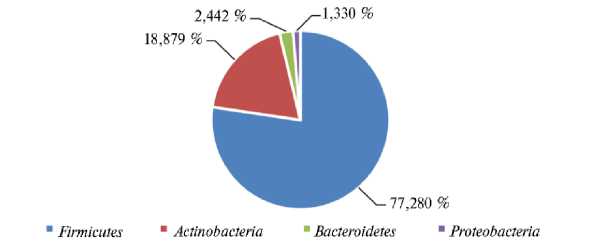
Рис. 1. Распределение прочтений, аннотированных на уровне типа, по результатам метагеномного анализа проб фекалий от клинически здоровой немецкой овчарки .
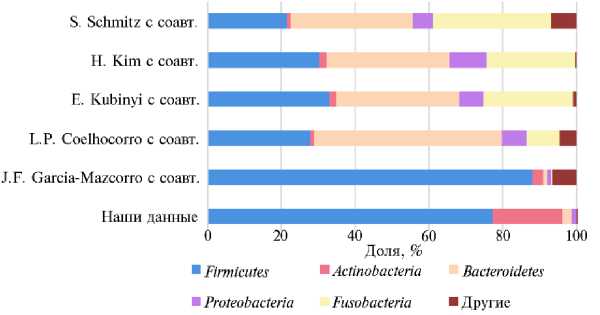
Рис. 2. Сравнение распределений бактериальных филумов в фекальной микробиоте собак по данным настоящего исследования и источникам литературы (31-35) .
Высокая доля Firmicutes, выявленная в настоящем исследовании, а также в работе J.F. Garcia-Mazcorro с соавт. (31), указывает на сходный микробиотический профиль и может быть связана с эффективным извлечением энергии из корма, характерным для определенных диет собак. Содержание Actinobacteria (18,88 %) было сопоставимо с установленным J.F. Garcia-Mazcorro с соавт. (до 22 %), что, вероятно, отражает схожие условия содержания или состав рациона; представители этого филума, включая Bifidobacterium, играют важную роль в пищеварении и иммунной регуляции. Низкие показатели Bacteroidetes (2,44 %) отличались от большинства опубликованных данных, где этот филум часто занимает второе место по распространенности (32-35), и могут указывать на рацион с низким содержанием неперевариваемых волокон. Аналогично, Fusobacteria оказались представлены минимально (0,04 %), что резко контрастирует с результатами других работ, но соответствует профилю, выявленному J.F. Garcia-Mazcorro с соавт. (31). Вероятно, это отражает различия в диете или других экологических факторах.
До класса и отряда были аннотированы соответственно 5 503 407 и 5 464 532 прочтений. Были обнаружены микроорганизмы 13 классов, распределенные по 25 отрядам. Распределение наиболее распространенных представителей этих таксонов представлено на рисунках 3 и 4. Наиболее распространенными классами организмов в образцах оказались Clostridia , Coriobacteriia и Bacilli ; отрядами — Eubacteriales , Coriobacteriales и Lacto-
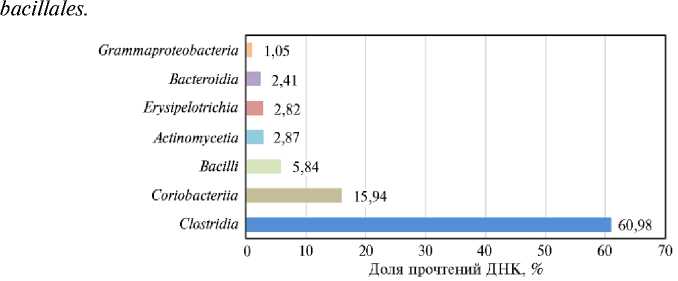
Рис. 3. Распределение прочтений, аннотированных на уровне класса, по результатам метагеном-ного анализа проб фекалий от клинически здоровой немецкой овчарки.
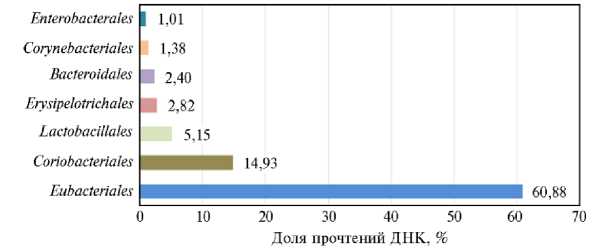
Рис. 4. Распределение прочтений, аннотированных на уровне отряда, по результатам метагеном-ного анализа проб фекалий от клинически здоровой немецкой овчарки.
1. Наиболее распространенные семейства микроорганизмов в образцах фекалий от клинически здоровой немецкой овчарки
|
Тип |
Класс |
Отряд |
Семейство |
Распределение, % |
|
Firmicutes |
Clostridia |
Eubacteriales |
Lachnospiraceae |
30,79 |
|
Actinobacteria |
Coriobacteriia |
Coriobacteriales |
Coriobacteriaceae |
14,35 |
|
Firmicutes |
Clostridia |
Eubacteriales |
Peptostreptococcaceae |
4,52 |
|
Oscillospiraceae |
3,11 |
|||
|
Erysipelotrichia |
Erysipelotrichales |
Erysipelotrichaceae |
2,82 |
|
|
Clostridia |
Eubacteriales |
Eubacteriaceae |
2,06 |
|
|
Bacteroidetes |
Bacteroidia |
Bacteroidales |
Bacteroidaceae |
2,05 |
|
Firmicutes |
Bacilli |
Lactobacillales |
Lactobacillaceae |
1,93 |
|
Enterococcaceae |
1,86 |
|||
|
Actinobacteria |
Actinobacteria |
Corynebacteriales |
Corynebacteriaceae |
1,24 |
|
Прочие |
<1 % |
На уровне семейства было аннотировано 4 231 697 прочтений ДНК, идентифицированы представители 48 семейств микроорганизмов. Наиболее распространенные семейства микроорганизмов (с указанием вышестоящих таксонов), которые были идентифицированы в образцах, представлены в таблице 1.
На уровне рода было аннотировано 3 177 981 прочтение и идентифицировано 98 родов. Наибольшее число прочтений ДНК в образцах на уровне рода принадлежало Blautia и Collinsella — соответственно 16,17 и 13,65 %.
Род Blautia (сем. Lachnospiraceae ) включает анаэробные грамположи-тельные бактерии, широко распространенные в кишечнике млекопитающих и играющие ключевую роль в ферментации сложных углеводов с образованием короткоцепочечных жирных кислот, в частности ацетата и бутирата. Эти метаболиты участвуют в поддержании целостности слизистого барьера и регуляции иммунного ответа. Недавние исследования показали, что представители Blautia способны поддерживать функции слизистого слоя толстой кишки даже при рационе с низким содержанием клетчатки, стимулируя синтез слизи и активируя рецептор Ffar2 (36). Кроме того, в работе на модели домашних собак установлено, что состав кишечной микробиоты, обогащенный Blautia , может быть связан с поведенческими особенностями, включая проявления тревожности (37).
Род Collinsella (сем. Coriobacteriaceae ) был представлен анаэробными грамположительными актинобактериями, обитающими в кишечнике человека и животных. Они участвуют в метаболизме желчных кислот и сложных углеводов, а также способны оказывать влияние на липидный и углеводный обмен. Биологическая роль Collinsella двойственна: с одной стороны, повышенное распространение микроорганизмов этого рода выявляли при ряде воспалительных и метаболических нарушений, с другой, имеются данные о его потенциальных защитных функциях. Так, представители рода Collinsella участвовали в восстановлении микробного баланса при туберкулезе за счет регуляции взаимодействия между кишечной и легочной микробиотой (38).
На рисунке 5 представлено распределение, отражающее число прочтений родов, потенциально перспективных в качестве пробиотиков.
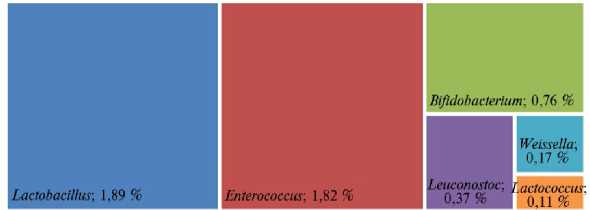
Рис. 5. Распределение аннотированных прочтений потенциально пробиотических родов микроорганизмов, содержащихся в образцах фекалий от клинически здоровой немецкой овчарки.
На уровне вида было аннотировано 2 219 177 прочтений и идентифицировано 207 видов микроорганизмов. Наиболее распространенными видами были Ruminococcus gnavus и Collinsella intestinalis , у которых количество прочтений ДНК составило соответственно 9,45 и 8,13 % от общего числа прочтений.
Детекция R. gnavus и C. intestinalis в качестве доминантных видов в фекальной микробиоте клинически здоровой собаки, возможно, отражает адаптацию микробного сообщества к составу рациона и физиологии пище- варения. Содержание белка и жиров в корме коррелирует с численностью R. gnavus: между белком и его распространением отмечена обратная связь, тогда как рост жирового компонента сопровождается увеличением численности вида (39). R. gnavus эффективно утилизирует сложные углеводы, включая муцин, что обеспечивает преимущество при низком содержании легко ферментируемых волокон (40). C. intestinalis специализируется на утилизации продуктов реакции Майяра, что подтверждено экспериментами in vivo и in vitro (41). Повышенная представленность C. intestinalis зафиксирована у собак, получавших сухой корм, по сравнению с животными, получавшими сырую пищу (42). То есть доминирование R. gnavus и C. intestinalis может отражать скоординированную адаптацию микробиоты: первый вид участвует в поддержании слизистого барьера и утилизации эндогенных субстратов, второй — в трансформации термически обработанных компонентов рациона. Такая структура микробиоты свидетельствует о ее функциональной гибкости, позволяющей кишечнику реагировать на изменения диеты, но при этом требует аккуратного подхода при смене корма или появлении признаков кишечной патологии.
Среди всех идентифицированных микроорганизмов особое внимание привлекают виды, перспективные как кандидаты в пробиотики (табл. 2).
2. Список видов-кандидатов в пробиотики, обнаруженных в образцах фекалий от клинически здоровой немецкой овчарки
|
Тип |
Класс |
Отряд |
Семейство |
Вид |
Доля от общего числа прочтений, % |
|
Firmicutes Bacilli Lactobacillales Enterococcaceae Enterococcus faecium 1,041 ActinobacteriaActinobacteria Bifidobacteriales Bifidobacteriaceae Bifidobacterium pseudolongum 0,432 Firmicutes Bacilli Lactobacillales Lactobacillaceae Latilactobacillus curvatus 0,358 Latilactobacillus sakei 0,143 Lactiplantibacillus plantarum 0,088 Lactobacillus johnsonii 0,073 Limosilactobacillus reuteri 0,070 Leuconostoc mesenteroides 0,060 |
|||||
В научной литературе уже сообщалось о выделении из биоматериала собак штаммов видов L. reuteri (18), L. plantarum (19), E. faecium (21), L. sakei (43) и L. johnsonii (42) с хорошими пробиотическими свойствами. О микроорганизмах видов B. pseudolongum , L. curvatus и L. mesenteroides в качестве пробиотиков для собак, насколько нам известно, ранее не сообщалось. Однако известны штаммы этих микроорганизмов, которые продемонстрировали высокие пробиотические свойства. Так, B. pseudolongum Bp7 и Bp8 из куриного помета в экспериментах на лабораторных мышах показали способность к улучшению барьерной функции кишечника и перспективны в лечении колита (45). Из содержимого рубца взрослой самки пятнистого оленя был получен штамм L. curvatus Z12, продемонстрировавший такие пробиотические свойства, как антимикробная активность, высокая выживаемость в искусственной желудочно-кишечной модели, чувствительность к антибиотикам, и подтвердивший свою безопасность в модели in vivo (46). Также сообщалось о выделении из моркови штаммов L. mesenteroides C2 и C7, обладающих высоким процентом выживаемости в условиях, имитирующих ЖКТ, а также способностью подавлять рост различных патогенов. При скрининге in vivo на Caenorhabditis elegans исследуемые штаммы способствовали продлению жизни и стимуляции врожденного иммунитета (47).
Таким образом, вышеупомянутые микроорганизмы потенциально перспективны для выделения и изучения их пробиотических свойств. Исследованные образцы фекалий немецкой овчарки хорошо подходили для выделения изолятов бактерий, что важно для дальнейших исследований.
В процессе работы мы идентифицировали 17 грамположительных бактериальных изолятов (LBCF01-LBCF17), которые демонстрировали стабильный рост на среде MRS (табл. 3).
3. Штаммы-кандидаты в пробиотики, выделенные из образцов фекалий от клинически здоровой немецкой овчарки
|
Штамм |
Вид по результатам секвенирования 16S РНК |
Окраска по Граму |
Форма микроорганизмов |
|
LBCF01 |
Enterococcus lactis |
Грамположительные |
Кокки |
|
LBCF02 |
Enterococcus faecium |
Грамположительные |
Кокки |
|
LBCF03 |
Lactiplantibacillus plantarum |
Грамположительные |
Палочки |
|
LBCF04 |
Lactiplantibacillus plantarum |
Грамположительные |
Палочки |
|
LBCF05 |
Latilactobacillus sakei subsp . sakei |
Грамположительные |
Палочки |
|
LBCF06 |
Enterococcus faecium |
Грамположительные |
Кокки |
|
LBCF07 |
Enterococcus faecium |
Грамположительные |
Кокки |
|
LBCF08 |
Enterococcus lactis |
Грамположительные |
Кокки |
|
LBCF09 |
Enterococcus faecium |
Грамположительные |
Кокки |
|
LBCF10 |
Enterococcus faecium |
Грамположительные |
Кокки |
|
LBCF11 |
Enterococcus faecium |
Грамположительные |
Кокки |
|
LBCF12 |
Lactiplantibacillus plantarum |
Грамположительные |
Палочки |
|
LBCF13 |
Lactiplantibacillus plantarum |
Грамположительные |
Палочки |
|
LBCF14 |
Lactiplantibacillus plantarum |
Грамположительные |
Палочки |
|
LBCF15 |
Enterococcus lactis |
Грамположительные |
Кокки |
|
LBCF16 |
Lactiplantibacillus plantarum |
Грамположительные |
Палочки |
|
LBCF17 |
Enterococcus faecium |
Грамположительные |
Кокки |
Микроорганизмы видов E. faecium, L. plantarum и L. sakei были обнаружены в метагеноме, тогда как прочтений ДНК, ассоциированных с Enterococcus lactis , не выявили. E. faecium и E. lactis — близкородственные микроорганизмы, обладающие высокой гомологией генетического материала (48). Высказываются предположения, что многие штаммы E. faecium на самом деле соответствуют E. lactis , в связи с чем ведется разработка новых методов их дифференциации, например с применением ПЦР-анализа гена gluP (49). Вероятно, в связи с высокой степенью родства при высокопроизводительном секвенировании многие прочтения, ассоциированные с E. fae-cium , принадлежали на самом деле E. lactis , что свидетельствует о необходимости дополнительных методов выделения и идентификации микроорганизмов при исследованиях больших микробных сообществ.
Некоторые перспективные виды микроорганизмов ( B. pseudolongum , L. curvatus , L. johnsonii , L. reuteri и L. mesenteroides ) выделить из образцов не удалось. Их выделение, а также подробное изучение пробиотических свойств — важная задача дальнейших исследований.
Итак, в настоящем исследовании был получен метагеном образцов фекалий немецкой овчарки для анализа состава кишечной микробиоты и дальнейшего выделения пробиотиков. Firmicutes оказался самым распространенным типом микроорганизмов (более 75 %), за которым следовали микроорганизмы типа Actinobacteria (около 19 %). Наиболее распространенными организмами в образцах на уровне класса были Clostridia, отряда — Eubacteriales, семейства — Lachnospiraceae, рода — Blautia. В образцах были наиболее распространены микроорганизмы видов Ruminococcus gnavus и Collinsella intestinalis. В фекалиях идентифицированы 207 видов микроорганизмов, 8 из которых мы считаем наиболее перспективными для выделения: Enterococcus faecium, Bifidobacterium pseudolongum, Latilactobacillus curvatus, Latilactobacillus sakei, Lactiplantibacillus plantarum, Lactobacillus johnsonii, Li-mosilactobacillus reuteri и Leuconostoc mesenteroides. Эти микроорганизмы были обнаружены в значительном количестве (более 0,05 %), а в научной литературе присутствуют сообщения об обнаружении штаммов этих бактерий, обладающих хорошими пробиотическими свойствами. Также нами были выделены 100 изолятов микроорганизмов, 17 из которых идентифицированы до вида. Выделенные бактерии относились к видам Enterococcus faecium, Latilactobacillus sakei, Lactiplantibacillus plantarum и Enterococcus lactis. Дальнейшие работы целесообразно направить на выделение других изоля-тов бактерий из образцов фекалий, а также изучение пробиотических свойств уже идентифицированных штаммов.
ÔÃÁÎÓ ÂÎ Ðîññèéñêèé áèîòåõíîëîãè÷åñêèé óíèâåðñèòåò (ÐÎÑÁÈÎÒÅÕ),
Ïîñòóïèëà â ðåäàêöèþ 15 ÿíâàðÿ 2026 ãîäà Принята к публикации 16 февраля 2026 года
125080 Россия, г. Москва, Волоколамское шоссе, 11,
Sel’skokhozyaistvennaya biologiya [ Agricultural Biology ], 2026, V. 61, ¹ 4, pp. 648-659
METAGENOMIC PROFILING OF THE NORMAL MICROBIOTA OF Canis familiaris FOR SUBSEQUENT SELECTION OF CANDIDATE
PROBIOTIC STRAINS
I.A. Detinkin И , S.V. Frolov, V.V. Fomenko, N.G. Mashentseva, E.R. Volnova
The authors declare no conflict of interests
