
Методология анализа данных и построения цифровых двойников в интеллектуальных производственных системах
Журнал: Мировая наука @science-j
Рубрика: Естественные и технические науки
Статья в выпуске: 2 (107), 2026 года.
Бесплатный доступ
В условиях четвертой промышленной революции данные становятся ключевым стратегическим активом промышленных предприятий. Однако, по экспертным оценкам, лишь около 5% операционных данных реально используется для принятия решений. Целью настоящей работы является разработка комплексной методологии анализа данных и построения цифровых двойников производственных систем. В статье рассматриваются этапы аналитической обработки, классификация методов промышленной аналитики от дескриптивной до прескриптивной, а также эволюция виртуальных представлений физических объектов от цифровой модели к цифровому двойнику. Статья предназначена для специалистов в области промышленной автоматизации, аналитики данных и цифровой трансформации производства.
Похожие статьи в разделе Искусственный интеллект

Короткий адрес: https://sciup.org/140315091
IDS: 140315091 | УДК: 004.89:658.5 | DOI: 10.24412/2541-9285-2026-2107-131-140
Methodology of data analysis and construction of digital twins in intelligent production systems
In the context of the Fourth Industrial Revolution, data is becoming a key strategic asset for industrial enterprises. However, according to expert estimates, only about 5% of operational data is actually used for decision-making. The aim of this work is to develop a comprehensive methodology for data analysis and the construction of digital twins of production systems. The article discusses the stages of analytical processing, the classification of industrial analytics methods from descriptive to prescriptive, and the evolution of virtual representations of physical objects from a digital model to a digital twin. The author's 'Pulse' protocol for collecting telemetric information is presented, providing 41% higher throughput compared to MQTT. Quantitative estimates of the effectiveness of digital twins implementation are given: reduction of unplanned downtime by 30-50%, increase in equipment service life by 20-40%, reduction of maintenance costs by 18-25%. The main barriers to implementation and ways to overcome them are identified. The article is intended for specialists in the field of industrial automation, data analytics and digital transformation of production.
Текст научной статьи Методология анализа данных и построения цифровых двойников в интеллектуальных производственных системах
Наступление четвертой промышленной революции (Индустрия 4.0) ознаменовало фундаментальный сдвиг в логике функционирования производственных предприятий. Ключевым активом современного производства становятся данные, генерируемые киберфизическими системами, датчиками и исполнительными устройствами. Согласно прогнозам ABI Research, к 2030 году мировая обрабатывающая промышленность будет генерировать 4,4 зеттабайта операционных данных ежегодно, что сопоставимо с объемом данных всей мобильной связи [1]. Однако сегодня лишь около 5% этих данных реально используется для принятия управленческих решений, остальная часть теряется в «силосах» разрозненных информационных систем [2].
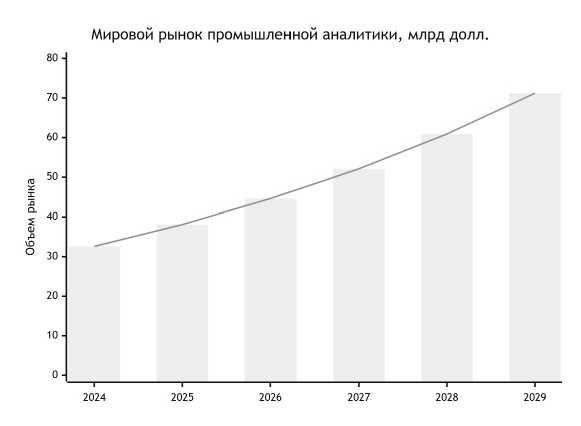
Рынок инструментов для работы с промышленными данными демонстрирует взрывной рост. Как показано на рисунке 1, объем мирового рынка промышленной аналитики увеличится с 32,6 млрд долл. в 2024 году до 71,2 млрд долл. к 2029 году, демонстрируя среднегодовой темп роста 16,9% [3].
Рисунок 1 — Динамика роста мирового рынка промышленной аналитики (2024–2029 гг.)
Параллельно усложняется ландшафт технологий передачи и обработки данных: классические полевые шины (Modbus, Profibus) дополняются, а зачастую вытесняются открытыми IIoT-протоколами (MQTT, OPC UA). Ответом на вызовы интеграции и анализа становится внедрение концепций цифровых теней и цифровых двойников, позволяющих создавать виртуальные копии физических активов для симуляции, прогнозирования и оптимизации.
Несмотря на обилие публикаций по отдельным аспектам Индустрии 4.0, наблюдается дефицит комплексных исследований, рассматривающих проблему анализа промышленных данных системно — от физического уровня сбора данных до уровня принятия решений. Настоящая работа призвана восполнить этот пробел. Цель исследования — разработка и систематизация теоретических положений и практических рекомендаций по применению современных методов анализа данных и построению цифровых двойников для повышения эффективности управления интеллектуальными производственными системами. Для достижения цели поставлены следующие задачи:
-
1) Проанализировать этапы аналитической обработки и классифицировать методы промышленной аналитики.
-
2) Уточнить понятийный аппарат в области цифрового моделирования, разграничить концепции цифровой модели, цифровой тени и цифрового двойника.
-
3) Представить авторскую разработку протокола «Пульс» для задач телеметрии и оценить его производительность.
-
4) Привести количественные оценки эффективности внедрения цифровых двойников и аналитических систем.
-
5) Определить основные барьеры цифровой трансформации и пути их преодоления.
МЕТОДЫ
В основе методологии лежит системный подход, объединяющий методы сбора и интеграции данных, математического и имитационного моделирования, машинного обучения и визуализации. Процесс аналитической обработки промышленных данных рассматривается как многоэтапный конвейер (рис. 1), включающий:
-
• Сбор данных (Data Ingestion) — получение информации от разнородных источников: датчиков, контроллеров, систем технического зрения. Для эффективного сбора применяется событийно-ориентированный подход, при котором данные передаются только при их изменении. В работе используется разработанный протокол «Пульс», модули сопряжения которого поддерживают интерфейсы Modbus RTU/TCP, I2C, 1-Wire, CAN, Ethernet (MQTT/Modbus TCP), GPIO.
-
• Очистка и предобработка (Data Cleansing & Preprocessing) — фильтрация шумов, интерполяция пропусков, обнаружение выбросов с использованием статистических методов и алгоритмов машинного обучения.
-
• Агрегация и трансформация — приведение данных к единой временной сетке, вычисление производных показателей (например, эффективной мощности), нормализация.
-
• Хранение (Data Storage) — использование специализированных хранилищ временных рядов (InfluxDB, ClickHouse) и озер данных (Data Lakes) для долговременного хранения.
-
• Анализ (Analytics) — применение методов дескриптивной, диагностической, предиктивной и прескриптивной аналитики. Классификация этих уровней представлена в таблице 1.
Таблица 1 — Примеры применения уровней аналитики
Уровень аналитики
Дескриптивный
Диагностический
Предиктивный
Прескриптивный
-
• Визуализация (Visualization) — построение интерактивных дашбордов для различных категорий пользователей (операторы, технологи, руководители).
Для создания цифровых двойников критически важно различать три уровня зрелости виртуальных представлений физических объектов:
-
1. Цифровая модель — статичное представление, не имеющее автоматической связи с реальным объектом.
-
2. Цифровая тень — однонаправленный поток данных от объекта к модели (мониторинг).
-
3. Цифровой двойник — двунаправленная связь, позволяющая не только отслеживать состояние, но и управлять объектом, прогнозировать его поведение.
Сравнение этих концепций приведено в таблице 2.
Таблица 2 — Сравнение цифровой модели, цифровой тени и цифрового двойника
|
Характеристика |
Цифровая модель |
Цифровая тень |
Цифровой двойник |
|
Поток данных |
Отсутс твует (ручной ввод) |
Однонаправлен ный (объект → модель) |
Двунаправлен ный (объект ↔ модель) |
|
Автоматизация обновления |
Нет |
Да (мониторинг) |
Да (мониторинг + управление) |
|
Прогнозирование |
Ограни ченное (сценарное) |
На основе исторических данных |
На основе физических моделей + ИИ |
|
Управляющие воздействия |
Нет |
Нет |
Да |
|
Время существования |
Дискре тное (на этапах ЖЦ) |
Непрерывное (в эксплуатации) |
Непрерывное (весь ЖЦ) |
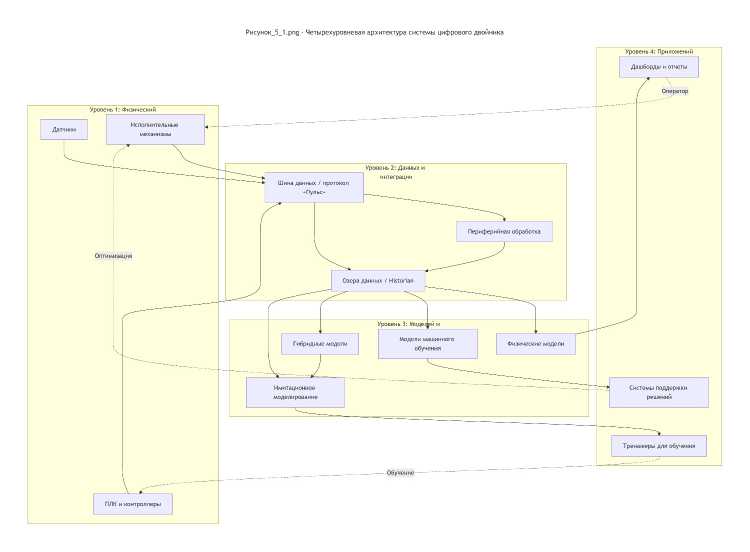
Технологический стек цифрового двойника включает четыре уровня физический (сенсоры и исполнительные механизмы), уровень данных и интеграции (шина данных), уровень моделей и аналитики (физические, эмпирические и гибридные модели), уровень приложений (дашборды, системы поддержки принятия решений). В качестве шины данных предлагается использовать разработанный протокол «Пульс», архитектура которого представлена на рисунке 2.
Рисунок 2 – архитектура разработки
Рисунок_3_1.рп§ ■ Архитектура программного комплекса протокола «Пульс»
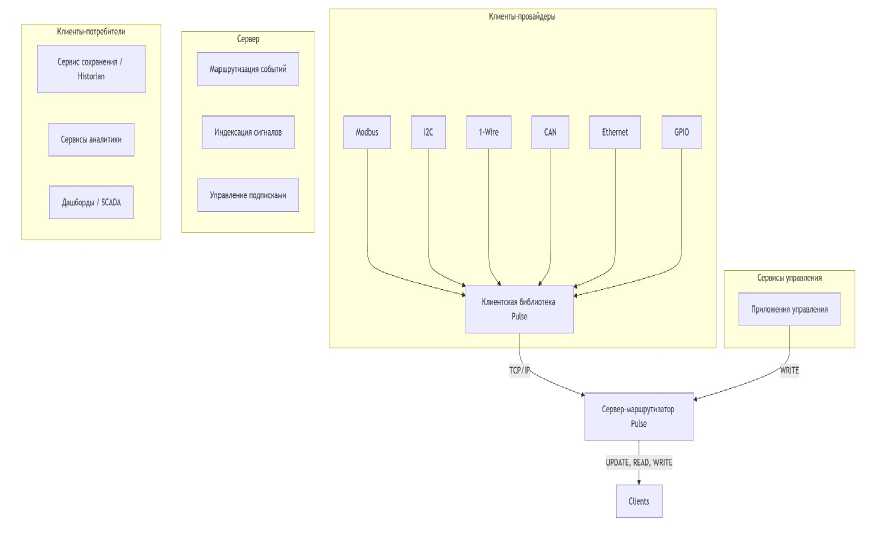
Протокол «Пульс» реализует клиент-серверную модель с эффективной индексацией сигналов (по имени, маске, типу, числовому идентификатору), что обеспечивает сложность поиска O(1).
Поддерживаются типы данных INT, UINT, DOUBLE, TEXT, BLOB. Для оценки производительности проведены сравнительные испытания с MQTT (брокер Mosquitto) на стенде с процессорным модулем Raspberry Pi CM3.
РЕЗУЛЬТАТЫ
Сравнительный анализ промышленных протоколов
Анализ классических и современных протоколов (табл. 3) показывает, что выбор конкретного решения зависит от требований к детерминизму, безопасности и области применения. Традиционные протоколы (Modbus, Profibus) сохраняют актуальность для простых систем, но уступают современным промышленным Ethernet (Profinet IRT, EtherCAT) в задачах жесткого реального времени. Для вертикальной интеграции и IIoT-приложений наиболее перспективны OPC UA (благодаря встроенным информационным моделям) и легковесные MQTT/CoAP.
Таблица 3 — Сравнение промышленных протоколов передачи данных
|
Протокол |
Тип |
Детерминизм |
Безопасность |
Область применения |
|
Modbus RTU/TCP |
Полевая шина / Ethernet |
Низкий (опрос) |
Отсутствует |
Простые датчики, ПЛК, SCADA |
|
Profinet IRT |
Промышленны й Ethernet |
Очень высокий (мкс) |
Опционально |
Управление движением, синхронные приводы |
|
EtherCAT |
Промышленны й Ethernet |
Очень высокий (мкс) |
Опционально (IPsec) |
Высокопроизводительно е управление |
|
OPC UA |
Сервис-ориентированн ый |
Средний (PubSub) |
Встроенная (шифрование, аутентификац ия) |
Интеграция систем, MES/ERP, Industry 4.0 |
|
MQTT |
IIoT-протокол |
Низкий |
TLS |
Телеметрия, связь с облаком |
Результаты испытаний протокола «Пульс»
Испытания разработанного протокола проводились в конфигурации с двумя издателями и двумя подписчиками. Издатели генерировали поток обновлений сигналов. Результаты (табл. 4) демонстрируют, что протокол «Пульс» обеспечивает среднюю пропускную способность 84 338 сообщений в секунду, что на 41% выше, чем у MQTT (59 805 сообщений/с). Высокая производительность достигается за счет компактного бинарного формата (минимальный заголовок 4 байта) и эффективной индексации на сервере.
Таблица 4 — Сравнение пропускной способности протокола «Пульс» и MQTT
|
Протокол |
Средняя пропускная способность (сообщений/с) |
Относительная производительность |
|
Протокол «Пульс» |
84338 |
141% |
|
MQTT (Mosquitto) |
59805 |
100% |
Тестирование масштабируемости показало, что сервер способен обслуживать до 500 000 сигналов на слабом процессоре (ARM Cortex-A53, 1 ГБ ОЗУ) без существенной деградации скорости. Время обработки события (от получения UPDATE до отправки подписчикам) составляет 5– 12 мс.
Применение цифровых двойников и оценка эффективности
Разработанная платформа на базе протокола «Пульс» была апробирована при создании цифровых теней и двойников производственных активов. На рисунке 3 представлена четырехуровневая архитектура цифрового двойника, где протокол «Пульс» выполняет функцию унифицированной шины данных.
Рисунок 3 – четырех уровневая архитектура
Внедрение цифровых двойников в промышленности позволяет достичь следующих экономических эффектов (обобщение данных из [4– 7]):
-
• Сокращение незапланированных простоев оборудования на 30–50% за счет перехода к предиктивному обслуживанию.
-
• Увеличение срока службы оборудования на 20–40% благодаря оптимизации режимов эксплуатации.
-
• Снижение затрат на техническое обслуживание и ремонт на 18–25%.
-
• Повышение производительности труда на 10–15%.
-
• Уменьшение доли брака на 15–30% за счет раннего выявления отклонений.
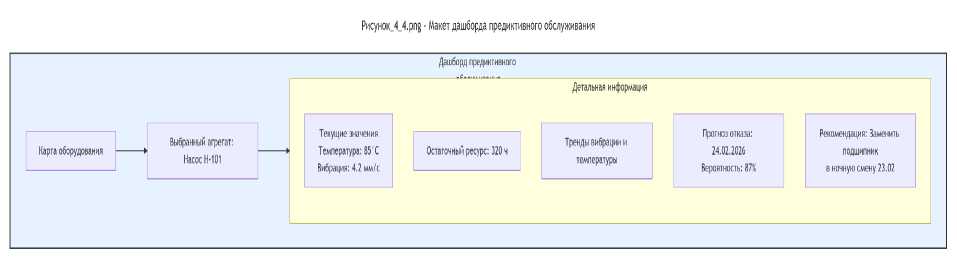
В качестве примеров визуализации на рисунках 4 и 5 приведены макеты дашбордов для мониторинга общей эффективности оборудования (OEE) и предиктивного обслуживания.
Рисунок 4- вариант информационного наполнения
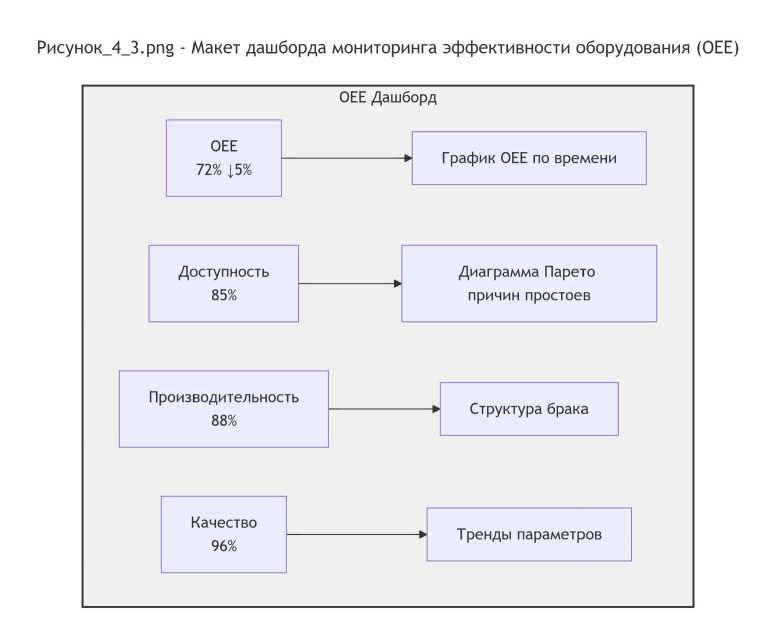
Рисунок 5
ЗАКЛЮЧЕНИЕ
В результате проведенного исследования разработана комплексная методология анализа данных и построения цифровых двойников в интеллектуальных производственных системах. Основные выводы и результаты работы:
-
1. Предложена классификация методов промышленной аналитики (дескриптивная, диагностическая, предиктивная, прескриптивная), позволяющая структурировать процесс извлечения ценности из данных.
-
2. Уточнены понятия цифровой модели, цифровой тени и цифрового двойника, что критически важно для корректного проектирования киберфизических систем.
-
3. Разработан и апробирован протокол «Пульс», обеспечивающий высокопроизводительный (84 тыс. сообщений/с) и масштабируемый (до 500 тыс. сигналов) сбор телеметрических данных с разнородных аппаратных интерфейсов. Преимущество перед MQTT по пропускной способности составляет 41%.
-
4. Количественно подтверждена эффективность цифровых двойников: сокращение простоев на 30–50%, увеличение срока службы на 20– 40%, снижение затрат на обслуживание на 18–25%.
Основными барьерами внедрения остаются дефицит квалифицированных кадров, низкое качество исходных данных и высокие начальные инвестиции. Для их преодоления рекомендуется поэтапный подход: от пилотных проектов на критичных агрегатах к масштабированию, использование открытых стандартов и платформ, инвестиции в обучение персонала.
Перспективы дальнейших исследований связаны с развитием семантической интероперабельности на основе онтологий, применением методов искусственного интеллекта для автоматического обнаружения активов и построения информационных моделей, а также интеграцией разработанного протокола с когнитивными цифровыми двойниками, способными к самообучению.
