
Molecular Diagnosis of Bovine Viral Diarrhea Virus Based on Real-Time Polymerase Chain Reaction (qPCR)
Журнал: Бюллетень науки и практики @bulletennauki
Рубрика: Сельскохозяйственные науки
Статья в выпуске: 10 т.12, 2026 года.
Бесплатный доступ
Bovine viral diarrhea (BVD) is a globally distributed infectious disease of cattle that leads to substantial economic losses in livestock production due to decreased productivity, reproductive disorders, immunosuppression and increased mortality. The causative agent, bovine viral diarrhea virus (BVDV), belongs to the genus Pestivirus within the family Flaviviridae and is characterized by high genetic variability, mutation rate and antigenic diversity. These features complicate disease control and vaccination strategies. BVDV exists in two main biotypes, cytopathic (CP) and non-cytopathic (NCP), as well as multiple genotypes, including BVDV-1 and BVDV-2. The NCP biotype is the most prevalent in nature and is responsible for the formation of persistently infected (PI) animals, which represent the main reservoir of infection within cattle populations. Investigation of BVDV was carried out for the first time in Azerbaijan. The current governmental vaccination program does not include BVDV; however, private farms use vaccines for prophylaxis. The aim of this study was to evaluate the applicability of real-time polymerase chain reaction (qPCR) for the detection of BVDV in blood samples collected from 25 cows and to assess the importance of molecular diagnostic methods in epidemiological surveillance and vaccine efficacy control. The results demonstrated that qPCR is a rapid, highly sensitive and specific method for detecting viral RNA in clinical samples. The method allows for early diagnosis and identification of persistently infected animals and supports effective implementation of biosecurity measures. The CT values show that the positive samples were the result of vaccination, which demonstrated differentiation from the disease. Therefore, the integration of qPCR into routine veterinary diagnostics can significantly improve monitoring systems, control programs and prevention strategies against BVD in large ruminant farms.
Короткий адрес: https://sciup.org/14139268
IDS: 14139268 | УДК: 636.2: 578.833.3 | DOI: 10.33619/2414-2948/131/37
Молекулярная диагностика вирусной диареи крупного рогатого скота методом полимеразной цепной реакции в реальном времени (qPCR)
Вирусная диарея крупного рогатого скота (ВВК) — это инфекционное заболевание крупного рогатого скота, распространенное по всему миру и приводящее к значительным экономическим потерям в животноводстве из-за снижения продуктивности, нарушений репродуктивной функции, иммунодепрессии и повышения смертности. Возбудитель, вирус вирусной диареи крупного рогатого скота (ВВД), относится к роду Pestivirus семейства Flaviviridae и характеризуется высокой генетической изменчивостью, скоростью мутаций и антигенным разнообразием. Эти особенности осложняют борьбу с болезнью и стратегии вакцинации. ВВД существует в двух основных биотипах: цитопатическом (ЦП) и нецитопатическом (НКП), а также в нескольких генотипах, включая ВВД-1 и ВВД-2. Биотип НКП является наиболее распространенным в природе и отвечает за формирование персистентно инфицированных (ПИ) животных, которые представляют собой основной резервуар инфекции в популяциях крупного рогатого скота. Исследование ВВД впервые проведено в Азербайджане. Действующая государственная программа вакцинации не включает ВВД; однако частные фермы используют вакцины для профилактики. Целью данного исследования была оценка применимости полимеразной цепной реакции в реальном времени (кПЦР) для обнаружения вируса диареи крупного рогатого скота (ВДК) в образцах крови, собранных у 25 коров, а также оценка важности методов молекулярной диагностики в эпидемиологическом надзоре и контроле эффективности вакцин. Результаты показали, что кПЦР является быстрым, высокочувствительным и специфическим методом обнаружения вирусной РНК в клинических образцах. Метод позволяет проводить раннюю диагностику и идентификацию животных с персистентной инфекцией и способствует эффективному внедрению мер биобезопасности. Значения КТ показывают, что положительные образцы являются результатом вакцинации, что позволяет отличить их от заболевания. Таким образом, интеграция кПЦР в рутинную ветеринарную диагностику может значительно улучшить системы мониторинга, программы контроля и стратегии профилактики ВДК на фермах, занимающихся разведением крупных жвачных животных.
Текст научной статьи Molecular Diagnosis of Bovine Viral Diarrhea Virus Based on Real-Time Polymerase Chain Reaction (qPCR)
Бюллетень науки и практики / Bulletin of Science and Practice
UDC 636.2: 578.833.3
Bovine viral diarrhea virus (BVDV) is one of the most economically important viral diseases affecting cattle worldwide. The disease is characterized by a wide spectrum of clinical manifestations, ranging from subclinical infections to severe acute and fatal forms [1, 2].
Clinical signs may include diarrhea, respiratory disorders, reproductive failure, decreased milk production and immunosuppression, which predispose animals to secondary infections [3, 12].
The etiological agent, bovine viral diarrhea virus (BVDV), is an enveloped, single-stranded RNA virus belonging to the genus Pestivirus . The virus exhibits high genetic variability, which contributes to antigenic diversity and complicates both diagnosis and control strategies [4, 8].
BVDV is classified into two main biotypes based on their effect in cell culture: cytopathic (CP) and non-cytopathic (NCP). The NCP biotype is predominant in natural infections and plays a crucial role in the development of persistently infected (PI) animals. These animals are infected in utero during early gestation and remain lifelong carriers of the virus, continuously shedding it into the environment [5].
In addition to biotypes, BVDV is divided into different genotypes, primarily BVDV-1 and BVDV-BVDV-1 is more widely distributed globally and is often associated with mild or subclinical infections, whereas BVDV-2 is linked to more severe clinical forms, including hemorrhagic syndrome and high mortality rates [11].
The presence of PI animals in cattle herds represents a major challenge for disease control, as they serve as a constant source of infection. Therefore, early detection and elimination of such animals are essential components of effective BVD control programs [6].
Traditional diagnostic methods, including virus isolation and serological assays, have limitations, particularly in early detection and identification of PI animals. In contrast, molecular diagnostic methods such as real-time polymerase chain reaction (qPCR) allow direct detection of viral RNA with high sensitivity and specificity [7, 9, 10].
Methods
The study was conducted at a farm located in the city of Tovuz, in the western part of Azerbaijan. The animal population included cows and sheep where biosafety measures were not strictly followed. The epidemiological situation is reported to be stable according to records from the veterinary office. Throughout the year, the entire population is vaccinated against foot-and-mouth disease, anthrax, and brucellosis, as covered under the governmental animal health program.
This study was conducted in a biosafety level 2 (BSL-2) laboratory under standard molecular diagnostic conditions. A total of cows of different age groups and physiological conditions were included in the investigation. The study was designed as an observational and analytical assessment of bovine viral diarrhea virus (BVDV) occurrence in selected herds.
Blood samples were collected aseptically from each animal via jugular venipuncture using sterile vacutainer tubes. In some cases, animals showing clinical signs suggestive of BVDV infection were specifically targeted. All samples were transported to the laboratory under controlled conditions to prevent contamination and degradation of viral RNA. All procedures were carried out in accordance with established biosecurity and biosafety regulations.
Total RNA was extracted from whole blood samples using commercially available extraction kits according to the manufacturer’s instructions. The quality and concentration of the extracted RNA were evaluated prior to further analysis to ensure suitability for downstream applications.
Complementary DNA (cDNA) was synthesized from RNA using reverse transcription. Subsequently, real-time polymerase chain reaction (qPCR) was performed using specific primers targeting conserved regions of the BVDV genome. Amplification and real-time detection were carried out using the Bio-Rad CFX96 Real-Time PCR System. Each reaction included both positive and negative controls to ensure the reliability, sensitivity, and accuracy of the results.
The obtained results were evaluated qualitatively based on amplification curves and cycle threshold (Ct) values. Samples showing detectable amplification signals were considered positive for BVDV RNA. Comparative interpretation of results allowed for the assessment of the infection status among the examined animals.
Table 1
TABLE WITH DEVIATION AND Z-SCORES OF PCR TEST
|
N |
CT VALUE |
DEVIATION (CT – MEAN) |
Z-SCORE |
|
1 |
29.3 |
-2.95 |
-1.51 |
|
2 |
31.2 |
-1.05 |
-0.54 |
|
3 |
33.4 |
1.15 |
0.59 |
|
4 |
31.5 |
-0.75 |
-0.38 |
|
5 |
29.6 |
-2.65 |
-1.36 |
|
6 |
31.3 |
-0.95 |
-0.49 |
|
7 |
30.5 |
-1.75 |
-0.90 |
|
8 |
28.9 |
-3.35 |
-1.72 |
|
9 |
33.5 |
1.25 |
0.64 |
|
10 |
31.2 |
-1.05 |
-0.54 |
|
11 |
31.4 |
-0.85 |
-0.44 |
|
12 |
36.5 |
4.25 |
2.18 |
|
13 |
32.5 |
0.25 |
0.13 |
|
14 |
33.6 |
1.35 |
0.69 |
|
15 |
34.1 |
1.85 |
0.95 |
|
16 |
30.6 |
-1.65 |
-0.85 |
|
17 |
32.8 |
0.55 |
0.28 |
Бюллетень науки и практики / Bulletin of Science and Practice Т. 12. №10 2026
|
N |
CT VALUE |
DEVIATION (CT – MEAN) |
Z-SCORE |
|
18 |
33.1 |
0.85 |
0.44 |
|
19 |
35.2 |
2.95 |
1.51 |
|
20 |
34.7 |
2.45 |
1.26 |
|
21 |
32.5 |
0.25 |
0.13 |
|
22 |
33.3 |
1.05 |
0.54 |
|
23 |
31.5 |
-0.75 |
-0.38 |
|
24 |
31.9 |
-0.35 |
-0.18 |
|
25 |
31.5 |
-0.75 |
-0.38 |
As shown in Table 1, most Ct values cluster between 30 – 34, suggesting a moderate viral load range across samples. A few higher Ct values ( ≥ 35) may indicate low viral RNA concentration or a late infection stage. The SD (~1.95) shows relatively tight variation, meaning the dataset is fairly consistent. Strict biosafety measures were maintained throughout the study. Laboratory personnel used appropriate personal protective equipment, including gloves, masks, and protective clothing. All manipulations involving biological materials were performed in certified biosafety cabinets to prevent contamination and ensure environmental safety.
Results and discussion
Detection of BVDV by qPCR. The qPCR analysis revealed the presence of BVDV RNA in several of the examined samples (Figure), confirming active or persistent infection in the tested animals. The method demonstrated high sensitivity and specificity, allowing reliable detection of viral genetic material even in samples with low viral load.
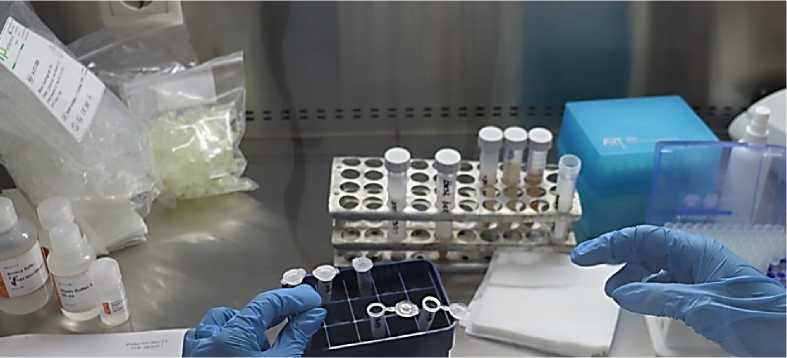
Figure. Extraction of RNA from patological materials
Advantages of qPCR in BVD diagnosis. Compared to conventional diagnostic methods, qPCR provides significant advantages, including rapid processing time, high accuracy, and the ability to detect infection at early stages. These characteristics make qPCR a valuable tool for routine diagnostic applications and large-scale surveillance programs.
Epidemiological significance and control measures. One of the most important aspects of BVD epidemiology is the presence of persistently infected (PI) animals. These animals continuously shed large quantities of virus without showing clinical signs, thereby maintaining infection within the herd. The identification of PI animals is crucial for effective disease control and eradication programs.
The findings of this study confirm that molecular diagnostic approaches, particularly qPCR, are essential for the detection of PI animals and for monitoring the spread of BVDV within cattle populations. Furthermore, the implementation of qPCR-based diagnostics enhances epizootiological surveillance by providing accurate and timely data on infection status. This enables veterinarians and farm managers to take appropriate control measures, including isolation or culling of infected animals and improvement of biosecurity practices.
The results also highlight the importance of integrating molecular diagnostics with other control strategies, such as vaccination and herd management, to achieve effective control of BVD.
Table 2
DETECTİON OF BVDV RNA İN CATTLE USİNG Q PCR
|
Sample |
Age (years) |
Clinical status |
Ct value |
Result |
|
1 |
1,5 |
healthy |
- |
Negative |
|
2 |
2 |
symptomatic |
29,4 |
Positive |
|
3 |
3 |
healthy |
- |
Negative |
|
4 |
2,5 |
symptomatic |
31,2 |
Positive |
|
5 |
1 |
healthy |
- |
Negative |
|
6 |
4 |
symptomatic |
27,8 |
Positive |
|
7 |
2 |
healthy |
- |
Negative |
|
8 |
2,5 |
symptomatic |
30,6 |
Positive |
|
9 |
3 |
healthy |
- |
Negative |
|
10 |
1,5 |
symptomatic |
28,9 |
Positive |
|
11 |
3 |
healthy |
- |
Negative |
|
12 |
2 |
symptomatic |
32,1 |
Positive |
|
13 |
4 |
healthy |
- |
Negative |
|
14 |
2,5 |
symptomatic |
29,7 |
Positive |
|
15 |
1 |
healthy |
- |
Negative |
|
16 |
3 |
symptomatic |
31,5 |
Positive |
|
17 |
2 |
healthy |
- |
Negative |
|
18 |
3,5 |
symptomatic |
30,1 |
Positive |
|
19 |
2 |
healthy |
- |
Negative |
|
20 |
4 |
symptomatic |
28,3 |
Positive |
|
21 |
1,5 |
healthy |
- |
Negative |
|
22 |
2 |
symptomatic |
33,0 |
Positive |
|
23 |
3 |
healthy |
- |
Negative |
|
24 |
2,5 |
symptomatic |
29,9 |
Positive |
|
25 |
1 |
healthy |
- |
negative |
Conclusion
The results of this study demonstrate that real-time polymerase chain reaction (qPCR) is a highly effective method for the detection of bovine viral diarrhea virus. The method allows rapid, sensitive and specific identification of viral RNA, making it an essential tool for early diagnosis and epidemiological surveillance. QPCR plays a key role in detecting persistently infected animals, which are the main reservoirs of infection. The integration of molecular diagnostic methods into routine veterinary practice significantly improves the effectiveness of disease control programs and contributes to enhanced biosecurity in cattle farms.
Бюллетень науки и практики / Bulletin of Science and Practice Т. 12. №10 2026
List of Abbreviations:
BVD: Bovine Viral Diarrhea
BVDV: Bovine Viral Diarrhea Virus
PI: Persistently Infected
TI: Transiently Infected
CP: Cytopathic
NCP: Non-cytopathic
RT-PCR: Reverse Transcription Polymerase Chain Reaction
PCR: Polymerase Chain Reaction
ELISA: Enzyme-Linked Immunosorbent Assay
RNA: Ribonucleic Acid
DNA: Deoxyribonucleic Acid
BSL: Biosafety Level qPCR: Quantitative Polymerase Chain Reaction
