
Особенности языка дореволюционных памятников мордовской письменности второй половины XVII – начала XVIII в.
Бесплатный доступ
Введение. Уникальный языковой материал дореволюционных памятников мордовской письменности выступает источником изучения современного состояния мордовских языков. Содержащиеся в источниках важные сведения о языковых особенностях, материальной и духовной культуре мордовского народа в настоящее время приобретают особую историко-филологическую, лингвистическую и историко-литературную ценность, прежде всего для уяснения реальной картины письменной языковой эволюции мордовского народа, позволяют воссоздать язык на определенном историческом этапе его развития, найти взаимосвязь между другими языками. Цель исследования – выявить характерные особенности фрагментарных записей образцов речи, установить диалектную основу языкового материала, а также рассмотреть принципы письменной передачи языкового материала, необходимые для решения вопросов, связанных с развитием мордовских письменно-литературных языков. Материалы и методы. Материалом для данного исследования послужили дореволюционные памятники мордовской письменности. В процессе исследования был задействован комплекс методов, включающий описательный (для систематизации и характеристики материала, извлеченного из памятников мордовской письменности XVII–XVIII вв.) и сравнительно-сопоставительный (в ходе анализа языковых особенностей мокшанского и эрзянского языков) методы. Результаты исследования и их обсуждение. В ходе исследования были выявлены наиболее частотные характерные особенности фрагментарных записей образцов речи, зафиксированных в дореволюционных памятниках мордовской письменности. Установлена диалектная основа анализируемого языкового материала. Проведен сопоставительный анализ, позволивший выявить исторические связи, отражающие лингвистические и культурно-исторические особенности мордовского народа. Заключение. Анализ языка дореволюционных памятников мордовской письменности XVII–XVIII вв. позволяет локализовать хронологическую и территориальную принадлежность образцов мордовской речи и констатирует факт наличия письменности мордовского народа до Великой Октябрьской социалистической революции. Для воссоздания более древнего состояния мордовских (мокшанского и эрзянского) языков необходимо сопоставление данных из памятников с характерными особенностями современного мокшанского и эрзянского языков. Результаты исследования могут быть использованы при составлении исторических грамматик и диалектологических атласов мокшанского и эрзянского языков, а также в вузовских курсах по истории и диалектологии мордовских языков.
Похожие статьи в разделе Системы письма и письменности. Знаки и символы. Семиотика в целом. Коды. Графическое представление мысли
Короткий адрес: https://sciup.org/147253483
IDS: 147253483 | УДК: 003.3:81’282:811.511.152 | DOI: 10.15507/2076-2577.018.2026.01.057-073
Linguistic Features of Pre-Revolutionary Monuments of Mordovian Written Tradition from the Second Half of the 17TH to the Early 18TH Century
Introduction. The unique linguistic material preserved in pre-revolutionary monuments of Mordovian writing serves as a valuable source for studying the present state of the Mordovian languages. The sources contain important information on linguistic features as well as on the material and spiritual culture of the Mordovian people, which today acquires particular historical-philological, linguistic, and literary-historical significance. Above all, these materials contribute to clarifying the actual trajectory of the written linguistic evolution of the Mordovian people, enabling the reconstruction of the language at specific historical stages of its development and the identification of its interrelations with other languages. The aim of this study is to identify the characteristic features of fragmentary records of speech samples, to determine the dialectal basis of the linguistic material, and to examine the principles of its written representation, which are essential for addressing issues related to the development of Mordovian written literary languages. Materials and Methods. The material for this study comprises pre-revolutionary monuments of Mordovian written tradition. The research employs a set of methods, including the descriptive method (used to systematize and characterize the material extracted from Mordovian written sources of the 17th–18th centuries) and the comparative-contrastive method (applied in the analysis of linguistic features of the Moksha and Erzya languages). Results and Discussion. The study identified the most frequent characteristic features of fragmentary recordings of speech samples preserved in pre-revolutionary monuments of Mordovian writing. The dialectal basis of the analyzed linguistic material was established. A comparative analysis was conducted, making it possible to reveal historical connections that reflect the linguistic and cultural-historical characteristics of the Mordovian people. Conclusion. The analysis of the language of pre-revolutionary monuments of Mordovian written tradition from the 17th–18th centuries makes it possible to determine both the chronological and territorial attribution of the recorded samples of Mordovian speech, and to establish the existence of a written tradition among the Mordovian people prior to the Great October Socialist Revolution. In order to reconstruct earlier stages of the Mordovian languages (Moksha and Erzya), it is necessary to compare the data derived from these monuments with the characteristic features of the contemporary Moksha and Erzya languages. The results of this study may be employed in the compilation of historical grammars and dialectological atlases of the Moksha and Erzya languages, as well as in university-level courses on the history and dialectology of the Mordovian languages.
Текст научной статьи Особенности языка дореволюционных памятников мордовской письменности второй половины XVII – начала XVIII в.
ISSN 2076-2577
a National Research Mordovia State University, Saransk, Russian Federation, b University of Debrecen, Debrecen, Hungary, H
Мордовский народ с давних времен привлекал внимание ученых и путешественников своеобразием языка, культуры и традиций. В сочинениях авторов прошлых столетий содержатся обширные сведения об особенностях его материальной и духовной культуры. Несмотря на наличие исследований по памятникам письменности мордовских языков, фрагментарных записей образцов мокшанской и эрзянской речи в виде небольших списков слов, переводов и словарей разного объема (спорадических и нелитературных письменных фиксаций), имеющих исключительное значение при изучении вопросов исторической диалектологии, лексикологии и истории мордовских языков, в настоящее время недостаточно проанализированы отдельные источники, в некоторых случаях не установлена диалектная основа языкового материала, не выявлены характерные особенности образцов мокшанской и эрзянской речи, что имеет важнейшее значение для исследования современного состояния мордовских языков.
Цель исследования – анализ языкового материала памятников мордовской письменности, выявление характерных особенностей фрагментарных записей образцов речи, установление диалектной основы лингвистического материала и оценка его значения для изучения мордовских литературных языков.
Обзор литературы
Памятники письменности XVII–XVIII вв. многих финно-угорских языков неоднократно становились объектом исследования в сравнительно-исторических, структурносопоставительных работах зарубежных исследователей1 [1‒3], где авторами представлен этимологический анализ языкового материала по мордовским, марийскому и удмуртскому языкам, сохранившийся в записях иностранных ученых Н. К. Витсена, Д. Г. Мессерш-мидта, Ф. И. Страленберга, Г. Ф. Миллера, И. Э. Фишера, П. С. Палласа и др.
На сегодняшний день глубоко исследованы дореволюционные памятники марийского языка в работах О. А. Сергеева, Л. А. Абукаевой, М. А. Ключевой и др. [4‒6]. Авторы в целях получения объективной картины истории развития марийского языка использовали лингвистический, системный, сравнительно-сопоставительный подходы для выявления памятников письменности раннего периода, зафиксировавших марийские слова и связные тексты, которые способствуют изучению памятников письменности других языков. Многие ученые рассматривали памятники письменности удмуртского языка и обоснованно отмечали, что словари различного объема и лексемы, зафиксированные в них, дают довольно полное представление об основном словарном фонде удмуртского языка более чем двухвековой давности, что является бесценным источником исторической лексикологии финно-угорских языков2 [7‒9]. Следует отметить, что существует сравнительно мало монографических трудов с лингвистическим анализом источников письменности карельского, водского, саамского, коми языков. Однако языковой материал памятников с привлечением данных современных диалектов частично проанализирован в трудах И. И. Муллонен, В. Б. Бакулы, Г. В. Федюневой [10‒12].
Интерес к изучению дореволюционных памятников мордовской письменности является актуальным как в лингвистических, так и в междисциплинарных исследованиях. Важно отметить весомый вклад А. П. Феоктистова в изучение истории развития мордовских письменно-литературных языков3. Материалы его исследования актуальны как для истории, этнографии, так и для языкознания. Автором были проанализированы оригиналы документов XII–XIII вв. и представлены образцы речи мокшанского и эрзянского языков в виде переводов, словарей, словников, которые необходимы для интерпретации языковых процессов и явлений, а также для исследования современного состояния мордовских языков. Эти сведения извлечены автором из архивов и редких печатных источников, хранящихся в российских, венгерских, финских и других библиотеках.
Анализ этнографических, географических, антропологических, исторических, лингвистических сведений о мордовском народе (начиная с раннего средневековья вплоть до наших дней), представленных зарубежными учеными и путешественниками, изложен в исследовании Н. Ф. Мокшина «Мордва глазами зарубежных и российских путешественников»; частичное представление фрагментарных записей памятников мордовской письменности находим в работах О. Е. Полякова, П. Е. Седовой [13; 14].
Важно выделить исследования Д. В. Цыганкина, в которых проанализированы: современное состояние мордовских языков и диалектов, словообразовательная архитектоника мордовских языков, топонимика, ономастика, этимология и межъязыковые контакты4 [15].
Несмотря на глубокое исследование памятников мордовской письменности XVII– XVIII вв., выявляются трудности в процессе анализа лингвистического материала, которые обусловили проведение данного исследования. Анализ приведенных источников указывает на значимость исследования, позволяет изучить особенности языковой системы, разрешить отдельные вопросы по лексикологии, истории и диалектологии мордовских языков, а также восполнить некоторые пробелы в мордовском языкознании.
Материалы и методы
Материалом исследования послужили ранние текстовые записи на мокшанском и эрзянском языках XVII–XVIII вв., извлеченные методом сплошной выборки из следующих опубликованных источников и научных работ: «Северная и восточная Тартария, включающая области, расположенные в северной и восточной частях Европы и Азии»5, «Дневные записки путешествия доктора и Академии наук адъюнкта Ивана Лепехина по разным провинциям Российского государства, 1768 и 1769 году»6, «Описания живущих в Казанской губернии языческих народов»7, «Мордовские языки и диалекты в историко-этнографической литературе XVII–XVIII вв.»8; «Истоки мордовской письменности»9; «Первые текстовые записи на мордовских языках»10; «Русско-мордовский словарь. Из истории отечественной лексикографии»11; «Мордва глазами зарубежных и российских путешественников»12.
Методологическую основу исследования составил комплекс лингвистических методов. Посредством описательного метода осуществлены отбор (методом сплошной выборки), систематизация и характеристика языкового материала, извлеченного из дореволюционных памятников мордовской письменности. Сравнительно-сопоставительный метод позволил провести анализ языковых особенностей мокшанского и эрзянского языков в диахроническом аспекте, выявить специфику их диалектного членения, а также установить закономерности исторических изменений, происходивших в мордовских языках на ранних этапах их развития.
Результаты исследования и их обсуждение
Дореволюционные памятники в виде небольших списков слов, словарей разного объема, фрагментарных записей, зафиксированные в XVII в., имеют огромное значение при изучении вопросов развития мордовских языков.
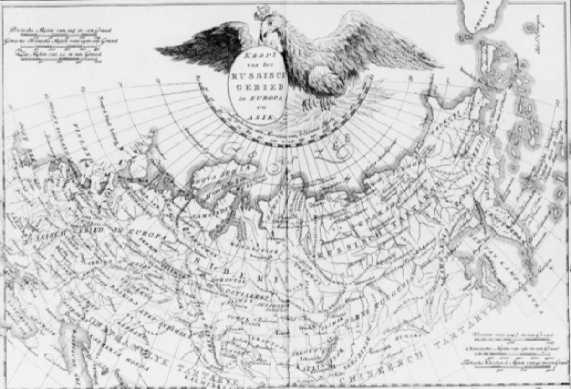
Самым ранним источником, в котором зафиксирован мордовский языковой материал, является исследование голландского ученого Н. К. Витсена Noord en Oost Tartarye («Северная и Восточная Тартария», Амстердам, 1692 г.), где отдельный раздел Mordvinen посвящен описанию жизни мордвы.
Особенности быта мордовцев XVII в., описанные в данном очерке, представляют исторический интерес. Н. Витсен обратил внимание на основное занятие мордовцев – земледелие, отметил их гостеприимство, описал защитно-оборонительные сооружения, которые они воздвигали вокруг своих жилищ13. «…Мордва – народ, который тоже причисляется к тартарам, находятся между 58° и 60° высоты, к северу от реки Волга и около реки Кама. Их северо-восточные соседи – пермяки и вогуличи, на западе – Казанское царство, на севере ‒ область Югория и на юге – башкирские тартары. Это зажиточные люди, гостеприимные и добрые, они живут в хорошо построенных деревнях в избах, рассеянных внутри страны, занимаются земледелием» (рис. 1) [16].
Важным представляется высказывание Н. Витсена о степени родства мордовского и марийского языков: «Мордовский, или мордвинский, и черемисский языки почти одинаковы и отличаются, как верхний и нижний немецкий»14 [12, с. 25]. Следует
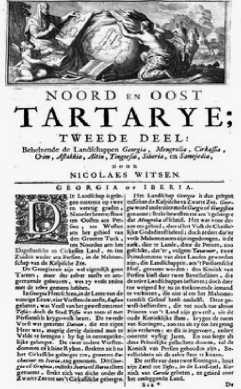
Р и с. 1. Изображение расселения мордвы в атласе Н. К. Витсена
F i g. 1. Depiction of the Mordvin settlement in N. K. Witsen’s atlas
Источник : фрагмент из книги Н. К. Витсена «Северная и Восточная Тартария».
Source : Еxcerpt from N. K. Witsen’s book “Northern and Eastern Tartary”.
отметить, что такое сравнение преувеличивает близость мордовских (мокшанского и эрзянского) и марийского языков, но тем не менее заключение ученого об их ближайшем родстве в условиях науки XVII в. поднимается до ранга подлинного открытия, которое сохраняет свою силу и в современном финно-угроведении.
В конце раздела приводится словарь (перечень мордовских названий из 325 голландско-мордовских соответствий), которые описаны в исследованиях А. П. Феок-тистова15.
Мордовская лексика в словаре главным образом представлена именами существительными в номинативе неопределенного склонения, наиболее полно охвачены количественные числительные, некоторые формы глагола изъявительного и повелительного наклонений, в небольшом количестве встречаются прилагательные, наречия и послелоги. Большинство слов, указанных в словаре, чаще всего функционируют в современном мокшанском языке, в частности в говорах западного и переходного диалектов16 (табл. 1).
В словаре Н. Витсена также представлены слова, которые функционируют в обоих современных мордовских языках без существенных изменений (табл. 2).
Однако встречаются лексемы, свойственные как отдельным говорам мокшанского, так и эрзянского языка (табл. 3).
В словаре Н. Витсена зафиксированы лексемы, имеющие широкое употребление в современном эрзянском языке, частичное – в мокшанском (табл. 4).
Отметим, что в мокшанском языке лексема tor функционирует лишь в сочетании toran’ kandi ‘почетный гость на свадьбе, имеющий при себе нож, оберегает молодоженов от всякого сглазаʼ и зафиксировано в работе Х. Паасонена Mordwinische Volksdichtung . Например: toran’ kandi, toran’ kandi! toran’ kandi, ivasa ( toran’ kandi -почетное название гостя, который на свадьбе занимает первое место, оберегает молодых от порчи)17.
При анализе языкового материала выявляется отсутствие единства или однородности в лексическом составе словаря Н. Витсена: различное оформление транскрипции (неточная передача звуков), например: sile ‘четыре’ (ср. мокш. / эрз. ńiľe ), kemkilia ‘четырнадцать’ (ср. мокш. kemńiľe ), kensk ‘дверь’ (ср. kenkš ), kiel ‘камень’ (ср. kev ), makta ‘печень’ (ср. maksa ), tulda ‘весна’ (ср. tunda ); из-за не сложившейся окончательно орфографии некоторые слова приводятся в разных формах: jomla , jolam , jomlj , jomlu ‘маленький’; kize , kise , kiase , kysa ‘летоʼ, ‘год’ [17], что затрудняет установление диалектной основы мордовской части словаря.
Однако анализ языкового материала позволяет утверждать вслед за финно-угроведом А. П. Феоктистовым, что языковой материал мордовской части словаря, предположительно, был собран среди мордвы (в основном мокши) южной части современной Мордовии и Пензенской области. Это подтверждается следующим материалом: 1) преимущественным употреблением словоформ в современном мокшанском языке; 2) наличием š вместо č в анлауте слов: словарь Н. Витсена shufta , мокш. shufta , эрз. čuftо ‘деревоʼ; 3) наличием гласного а в ауслауте слов: словарь Н. Витсена kota , мокш. kota , эрз. kotо ‘шестьʼ; словарь Н. Витсена kolma , мокш. kolma , эрз. kolmо ‘триʼ; словарь Н. Витсена ofta , мокш. ofta , эрз. ovto ‘медведь’; словарь Н. Витсена kurga , мокш. kurga , эрз. kurgo ‘ротʼ и др.; 4) отсутствием прямых соответствий для отдельных лексем šumbas ‘заяцʼ, takje ‘шапкаʼ и других в современном эрзянском языке.
Т а б л и ц а 1. Мордовская лексика в словаре Н. Витсена
T a b l e 1. Mordovian vocabulary in the dictionary by N. Witsen
|
Словарь Н. Витсена / Dictionary by N. Witsen |
Мокш. / Moksh. |
Эрз. / Erz. |
Перевод / Translation |
|
аle ( * не указана мягк. согл. l ) |
alʼä / alʼe |
alʼe |
мужчина |
|
(говоры, где ä > э ) |
|||
|
stir ( * не указана мягк. согл. t , r ) |
sʼtʼirʼ |
tʼеjtʼerʼ |
дочь |
|
i d ( * не указана мягк. согл. d ) |
idʼ |
ejkakš |
дитя |
|
takje |
vazʼ (зап.д. takije ) |
шапка |
шапка |
|
ozu |
оcʼu |
pokš |
большой |
|
jomla |
jomla |
viška |
маленький |
|
scholka |
šalka |
sudo |
нос |
|
trax |
traks |
skal |
корова |
|
uʃza |
učа |
rʼeve |
овца |
|
kelas |
kelazʼ |
rʼivezʼ |
лиса |
|
schumbas |
numol (зап.д. šumbas ) |
numolo |
заяц |
|
orxofta |
оrksofta |
лев |
лев |
|
кu ts kan ( * не указана мягк. согл. t , c ) |
kucʼkan / сокол |
сокол, орел |
сокол, орел |
|
kertiaks |
krʼtʼaks, pǝzʼgata |
cʼanav |
ласточка |
|
schobdava |
šоbdava |
valsʼke |
утром |
|
ilet ( * говоры, где ä > э ) |
ilʼätʼ |
čоkšnʼe |
вечером |
|
atumzara |
аtʼam / atʼama |
purʼgine |
гром |
|
ludna |
lunda / lopa |
lopa |
листва |
|
иnх |
unrs |
jur |
корень |
Источник : здесь и далее таблицы составлены авторами.
Source: Here and below, the tables are compiled by the authors.
Т а б л и ц а 2. Лексемы финно-угорского происхождения
T a b l e 2. Lexemes of Finno-Ugric origin
|
Словарь Н. Витсена / Dictionary by N. Witsen |
Мокш. / Moksh. |
Эрз. / Erz. |
Перевод / Translation |
|
tol |
tol |
tol |
огонь |
|
ved |
vedʼ |
vedʼ |
вода |
|
moda |
moda |
moda |
земля |
|
vele |
velʼe |
velʼe |
село |
|
siʃem |
sʼisʼǝm |
sʼisʼem |
семь |
Т а б л и ц а 3. Лексемы, свойственные отдельным говорам мокшанского / эрзянского языков
T a b l e 3. Lexemes characteristic of individual dialects of the Moksha and Erzya languages
|
Словарь Н. Витсена / Dictionary by N. Witsen |
Мокш. / Moksh. |
Эрз. / Erz. |
Перевод / Translation |
|
rudas |
ǝrdas (городищ.д. rudas ) |
rudas |
грязь |
|
piʃime |
pizʼǝm (зап.д. pizʼǝme ) |
pizʼeme |
дождь |
|
toʃero |
tozʼer (зап.д. tozʼera ) |
tozʼero |
пшеница |
|
tele |
tʼala |
tʼele |
зима |
Т а б л и ц а 4. Лексемы, свойственные отдельным говорам эрзянского языка
T a b l e 4. Lexemes characteristic of individual dialects of the Erzya language
|
Словарь Н. Витсена / Dictionary by N. Witsen |
Мокш. / Moksh. |
Эрз. / Erz. |
Перевод / Translation |
|
uге |
uгʼе |
uгʼе |
раб |
|
varda |
‒ |
vardo |
раб |
|
‘девушка-рабыняʼ |
|||
|
tor |
tor |
toro |
сабля |
|
adaida ‘пора, срокʼ |
темн.-атр.г. adaj pinge ‘очень давноʼ |
‒ |
Таким образом, Мордовский словарь Н. Витсена, изданный в XVII в., открывает первую страницу в развитии мордовского языкознания, в частности лексикографии.
Новый и чрезвычайно интересный материал по изучению тюркских и финноугорских народов (манси, хантов, удмуртов, бурят, монголов, киргизов, казахов, татар и др.) собрал по просьбе Петра I Даниэль Готлиб Мессершмидт, в дневнике которого содержатся разнообразные сведения об обычаях, верованиях и обрядах, жилищах, орудиях труда, внешнем виде, одежде, украшениях, происхождении и территориях расселения этих народов. Вместе с тем автор собирал сведения о языке каждого народа, составлял списки общеупотребительных слов. В рукописи автора Specimen der Zahlen und Sprache Einiger Orientalischen und Siberischen Völker имеются списки слов из ряда финно-угорских, в том числе и мордовских языков. В мордовском списке, кроме существительных, даны названия числительных первого десятка18. Некоторые формы типа waxe можно сопоставить с эрзянским диалектным waxke / vejke ‘один’, а написания kaffta ‘дваʼ, kolma ‘триʼ соответствуют современным мокшанским kafta ‘дваʼ, kolma ‘триʼ. Приведенные мордовские слова, по-видимому, записаны в Нижнем Новгороде или Казани, где Д. Г. Мессершмидт побывал в начале своего далекого путешествия в Сибирь (сентябрь 1719 г.)19. Отдельные словоформы, зафиксированные Д. Г. Мессершмидтом, можно отнести как к i - кающим мокшанским говорам (например, vite , ср: мокш. vеte ‘пятьʼ), так и к пограничным эрзянским говорам ( wäxke ‘одинʼ) и т. д. Спорадический материал по мордовским языкам имеется в работе Ф. И. фон Страленберга «Северная и восточная части Европы и Азии» (1730 г.), где автор впервые дал классификацию уральских (финно-угорских и самодийских) и алтайских языков и отметил их типологическое сходство и родство. Урало-алтайская теория в современной науке приобрела многих сторонников, однако в вопросе о составе урало-алтайских языков и их генезисе среди исследователей имеются расхождения. В собранный языковой материал вошли исконные слова: числительные, названия частей тела и прочие понятия, принадлежащие к базовому словарному составу. Автором было представлено около 60 слов на 32 языках. В переводах на некоторые языки имеются многочисленные лакуны. Так, например, на мордовский язык переведено 28 слов, на мансийский и хантыйский языки - только 16, чувашский - 17, удмуртский – 20 и т. д. Неодинаковое количество переводов объясняется потерей записной книжки Страленберга по пути из Тобольска в Москву (1723 г.), в которой были зафиксированы собранные слова. В мордовской части фигурируют в основном существительные и числительные (от 1 до 20) (табл. 5).
Запись некоторых лексем неточна и показывает влияние немецкой орфографии. Числительные лишь частично напоминают сегодняшние литературные формы ( kaffta ‘два’, kollma ‘три’, nille ‘четыре’, wäte ‘пять’; мокш. kafta , kolma , ńiľe , veťe ; эрз. kavto , kolme , ńiľe , Т а б л и ц а 5. Мордовская лексика в словаре Ф. И. фон Страленберга
T a b l e 5. Mordovian vocabulary in the dictionary of F. I. von Strahlenberg
|
Словарь Ф. И. фон Страленберга / Dictionary by F. I. von Strahlenberg |
Мокш. / Moksh. |
Эрз. / Erz. |
Перевод / Translation |
|
kaffta |
kafta |
kavto |
два |
|
kollma |
kollma |
kolmo |
три |
|
nille |
nilʼe |
nile |
четыре |
|
loman |
lomanʼ |
lomanʼ |
человек |
|
prea |
prʼä |
prʼe |
голова |
|
soda |
šalka |
sudo |
нос |
|
hipas ‘деньʼ |
ši |
čipas |
солнце, день |
18 Левин Н.В. Мордовские языки в источниках XVII‒XVIII вв. С. 26.
19 Феоктистов А.П. Очерки по истории формировании мордовских письменно-литературных языков. М.; 1976. С. 16.
veťe ). В фиксации некоторых форм выявляются опечатки, часто не обозначается палатализация, например: pelli ‘нога’ (ср. мокш. piľge ), pills ‘ухо’ (ср. мокш. pile ), katti ‘рука’ (ср. мокш. kad’, эрз. ked ) pretzier ‘волосы’ (ср. pracer ), loman ‘человек’ (ср. lomań ), nille ‘четыре’ (ср. ńiľe ), silms ‘глаз’ (ср. śeľme ) [17]. Из-за нечеткой фиксации слов трудно определить, из какого наречия была введена эта лексика, однако наличие в словаре слов soda ‘нос’, wäte ‘пятьʼ свидетельствует о том, что в основу списка мордовских слов легли материалы говоров эрзянского диалекта, имевшего в вокализме фонему а на месте е в других говорах, так как ни в одном мокшанском говоре слово soda не встречается20.
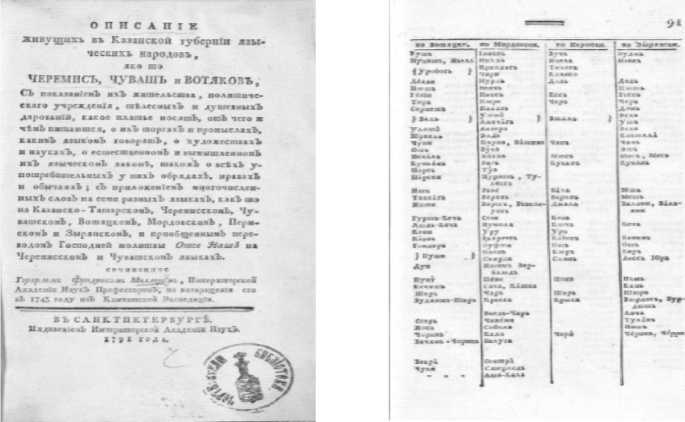
Актуальными остаются материалы XVIII в. по инородческим языкам, в том числе мордовским, собранные во время Второй Камчатской экспедиции (1733-1743 гг.). Небольшая группа участников, среди которых находился и Г. Ф. Миллер, двигаясь на судне по Волге, осенью 1733 г. добралась до Казани, где за короткий срок собрала необходимый материал относительно народов, живущих в Казанской губернии (татары, черемисы, чуваши и мордвины). Г. Ф. Миллер издал труд под названием «Описание живущих в Казанской губернии языческих народов…» в 1791 г. (рис. 2). В конце монографии приложен словарь на 8 языках поволжских народов: русском, татарском, черемисском (марийском), чувашском, вотяцком (удмуртском), пермском (коми-пермяцком и зырянском (коми-зырянском)21.
Мордовская часть словаря состоит из более чем 300 слов, преимущественно зафиксированы формы существительных, прилагательных, числительных и глаголов в настоящем-будущем времени изъявительного наклонения, которые находят свои соответствия в говорах эрзянского языка (табл. 6).
По приведенным из словаря Г. Ф. Миллера словоформам можно составить представление не только о лексике, но и морфологии эрзянского языка.
Описание финно-угорских народов, в том числе мордовских, встречается в книге И. Э. Фишера Geschichte von der Entdeckung Sibiriens bis auf die Eroberung dieses Langs durch die Russische Waffen («Сибирская история с самого открытия Сибири до завоевания
Р и с. 2. Образец страницы из словаря поволжских языков в труде Г. Ф. Миллера «Описание живущих в Казанской губернии языческих народов…»
F i g. 2. Sample page from the dictionary of Volga languages in G. F. Miller’s work “Description of the pagan peoples living in the Kazan province...”
Т а б л и ц а 6. Мордовская лексика в словаре Г. Ф. Миллера
T a b l e 6. Mordovian vocabulary in G. F. Miller’s dictionary
Мордовские лексемы, преимущественно существительные, вероятнее всего, были получены из разных диалектных ареалов. Большее количество словоформ сопоставляются с формами эрзянского языка, например: weigke ‘одинʼ, pjel ‘облакоʼ, zuda ‘носʼ, katka ‘кошкаʼ, меньшее – с мокшанским языком, а именно: hafta ‘дваʼ, kolma ‘триʼ, ssjаda ‘стоʼ, toschen ‘тысячаʼ, jerke ‘озероʼ, schufta ‘деревоʼ. Отнесение остальных слов к мокшанскому или же эрзянскому языку невозможно, поскольку они в равной степени присущи и мокшанским, и эрзянским говорам: wjete ‘пятьʼ, ssisim ‘семьʼ, wei ‘ночьʼ, kal ‘рыбаʼ, al ‘яйцоʼ, nall ‘стрелаʼ и др. [19].
Особую значимость для исследований по мордовскому языкознанию представляют материалы в виде списка слов и небольших связных текстов, которые собрали участники научных экспедиций в Оренбургскую провинцию 1768–1774 гг. ‒ П. С. Паллас, И. И. Лепехин, И. П. Фальк, И. Г. Георги.
Петер Симон Паллас, руководитель Первой Оренбургской экспедиции, работавший в Поволжье, в своей книге «Reise durch verschiedene Provinzen des Russischen Reichs («Путешествие по разным провинциям Российской империи», 1771–1801 гг.) представил материал (22 лексические единицы) из мордовских языков22.
Результатом языковедческой работы П. С. Палласа является исследование Linguarum totius orbis vocabularia comparative («Сравнительные словари всех языков и наречий»)23, в котором даются названия 285 предметов и понятий на 200 языках (на 51 европейском и 149 азиатских), среди которых фигурируют финно-угорские и самоедские, в том числе мордовские языки (на 61-м месте значится мордовский, на 62-м – мокшанский). В работе представлены следующие понятийные группы: названия людей, родственных связей, частей тела, отвлеченные понятия, явления природы, периоды суток, основные географические понятия, названия растений, животных, цветов; прилагательные, основные глаголы, местоимения, наречия, числительные24 [17]. Мордовский материал в основном представлен словоформами какого-либо говора эрзянского языка, где функционирует а . Например: cuvtokad’ ‘кора’, sʼälʼme ‘глаз’, tʼeхtʼerʼ ‘дочьʼ, pokšǝvarma ‘вихрь’ sʼelʼmeturva ‘веко’ и др.
Материал мокшанского языка представлен словоформами и выражениями, например: cʼifkst ‘ожерелье, нагрудное и наплечное украшение из монет на женской рубахе’, s’uka ‘кисть, хохол на головном уборе’, vot t’et’ / ver’gas / uca ‘вот тебе, волк,
FINNO-UGRIC WORLD. Vol. 18, no. 1. 2026 овца’, jejz’irman-tise ‘лоскутным цветом’ (‘трава, которой припаривают больные места у детейʼ – А. П. Феоктистов ) 25 , относящимися к названиям трав, употребляемых в народной медицине, а также названиям некоторых видов мордовской одежды.
В XVIII в. вопросы языка занимали важное место в системе взглядов ученого Василия Никитича Татищева. Он выдвинул идею составления «Словаря всех подвластных России народов». В 1739 г. Татищев представил в Академию наук словник под названием «Лексикон, сочиненный для приписывания иноязыческих слов обретающихся в России народов, для которых выбраны токмо такие слова, которые в простом народе употребляемы». Автор труда «История российская с самых древнейших времен» включил языковой материал (около 500 слов) из чувашского, марийского и мордовского языков с русскими словарными статьями. Мордовские слова принадлежат к эрзянскому диалекту, в котором используется звук а , например: мякш [ maks ] ‘пчела’ (ср.: мекш ), вяли [ val’i ] ‘деревня’ (ср.: веле ), тяхтирь [ t’aht’ir’ ] ‘девица’ (ср.: тейтерь ), вядь [ vad’ ] ‘вода’ (ср.: ведь ) 26 .
Рукописные записи второй половины XVIII в. были обнародованы ученым финно-угроведом А. П. Феоктистовым. К ним следует отнести «Список русских слов с переводом на черемисский, чувашский, мордовский языки»; «Слова, взятые из разговоровъ для переводу на мордовской языкъ» («Валтъ саизь кортамста путумксъ ярзя кель ланксъ», составитель - студент Нижегородской семинарии Григорий Си-милейский), где представлен материал из эрзянского языка: ašo macʼij ‘белый гусь’, in’e vad’ ‘море, большая вода’ 27 ; «Словарь языка мордовского», в котором содержится много архаичных слов, сегодня встречающихся лишь в диалектах. По мнению А. П. Феоктистова, оформление списка слов в данном словаре во многом соответствует словарю епископа И. Дамаскина. Возможно, этот материал был представлен одним из его предшественников 28 .
Отдельные слова, выражения, а также небольшие фрагменты текстов на мордовских языках представлены в работе Ивана Ивановича Лепехина, руководителя Второй Оренбургской экспедиции, посетившего Поволжье и Оренбургский регион, «Дневныe
17»!, СКНТЯВрЯ Т-4- р-Ькл териопт. ц;
3 А II II С К II п у т е in ес т » I я «ПКИ» ■ 1C14UUI шужъ UlKlllTl 1114 И I ЛГПКХИК4
• О МОрДВБ , ЧУВАШАХЪ И ТАТА-рАХЪ.
рниикк npouiBgiixb российские гос/длрег* I, tyt>S И iy<9 «оду.
Мордва разделяется собственно на два колена , иаЪ которых! первое называется Моя- 0 рц^ ria неким! , а другое Ерзянским! : но и вЪ «л Мор. Мокшанах! есть некоторое различ!е. Одни *’“' называются коренными или высокими Мокшанами , а других! почитают! простыми Мокшанами , и вся разность состоит! вЪ некоторых! нарЪч'1яхЪ. Они еще сказывали намЪ о четвертом! род* Мордвы , которых! Ка-ратаями называют!^ и которых! только три деревни в! Казанском! уЬздЪ находятся. В! Мокшанском! и Ерзянском! язык* была прежде великая разность ; но по преселен!и их! из! коренной отчизны , то есть к! Волг* и за Волгу , и по смЪшенУи между собою д^уг! друга разумеют! , сохранив! при том! в!
своих! языках! и разность. О пропсхождеЖи . своем! и разности между Мокшанами и Ерзя-нами , за незнанием! никаких! писмен!, ни ма- . ло доказать не могут!: но из! предания гово-рятЪ, что Мокшанский корень произходитЪ из!
eiSbUSiSbCUSMSb®
"* С^ И КГ 11К Г КГ I Г Г Г » ■Vе N«Mf,»ofCi4l luinda lU/ab ,
’города Темникова, не подалеку от! Кололомны, гд* и нын* ходят! еще по древнему обыкно-вев(ю ; а Ерзянсый от! Алаторскаго и Пензе пека го уЬздов!. НамЪ так! было сказано ; хотя вЬроятнЪе производить на оборот! . по тому, что в! Пензенской провинции и по нын* находится город! по имени их! Мокшайск! Называемый, Трудолюбивый г. Сшашск1й Со У з в1п)никЪ
Р и с. 3. Фрагмент из «Дневных записок путешествия…» И. И. Лепехина
F i g. 3. Excerpt from “Daily notes of a journey...” by I. I. Lepekhin записки путешествия доктора и Академии наук адъюнкта Ивана Лепехина по разным провинциям Российского государства» (Санкт-Петербург, 1771–1805 гг.), где автором сделаны этнографические заметки о многих народах, впервые были указаны различия между языками мокши и эрзи, а также упомянуты так называемые мордовские каратаи29
В разделе «О мордвe, чувашахъ и татарахъ» (рис. 3) приводятся словоформы и короткие тексты на мордовских языках, например: панаръ [panar ] ‘женская рубаха’, сюлгама(о) [ s’ulgama(o) ] ‘нагрудное украшение’, пилексъ [pil’ekst ] ‘серьги’, которые записаны в мордовском селе Курмышского уезда Симбирской губернии. Тексты преимущественно взяты из смешанных говоров мокшанского языка. Например: Трязя, вардя шка басъ, макстъ чаче зiора, калдасъ живота, куцъ семья, шумара уляза миръ ингалка ню, монь, миньгакъ ста трямястъ . Аминь «Кормилец мой, вышний бог, дай растущий хлеб (дай уродиться урожаю), двор скота, в дом семью, пусть здравствует мир и впредь, меня, нас также корми. Аминь»30.
В толкование отдельных частей представленного текста следует внести некоторые примечания и дополнения: 1) трязя ‘кормилец (мой)ʼ; отглагольное существительное с мокшанским лично-притяжательным суффиксом ряда «Монь» 1 л. ед. ч. -зе [t’r’a-ja-z’e], ср.: мокш. тряезе [t’r’aja-z’e]; 2) вардя ‘сверху’; в форме указана фонетическая неточность: вместо а уместна буква я, ср.: мокш. вярде [var’d’e]; 3) шкабась ‘бог’; оглушение в ауслауте слов с основой за з, ср.: мокш. шкабаваз [srabavas]; 4) макстъ ‘дай’, ср.: мокш. макет [makst]; 5) чаче ‘растущий’; в форме указана фонетическая неточность: вместо е уместно буква и, ср.: мокш. шачи [saci], эрз. [caci]; 6) чаче зiора ‘зерно’; наблюдается процесс ассимиляции: второй компонент словосочетания с переходит в звонкий вариант з под действием конечных звуков первого компонента, ср.: мокш. с’ора [s’ora], но: шачи зʼора ‘растущий хлеб (зерно)ʼ; 7) калдасъ ‘во хлевеʼ; существительное в форме инессива, ср.: мокш. калдаз-са [kaldaz-sa]; 8) живота (заим. из рус. животное) ‘животное, скот’, ср.: мокш. жувата [zuvata]; 9) куцъ ‘в доме’; существительное в форме инессива, ср.: мокш. куд-са [kud-sa]; 10) семья (заим. из рус. семья), ср.: мокш. семия [s’emija]; 11) шумара ‘здоровыйʼ; в форме указана фонетическая неточность: вместо б указана буква а, ср.: мокш. шумбра [sumbra]; 12)уляза ‘пусть будет’; глагол в побудительном наклонении 3 л. ед. ч., ср.: мокш.улеза [ul’eza]; 13) миръ; возможно, данное слово оформлено фонетически неточно: пропущен согласный ауслаута слова мирць ‘мужчина, мужʼ, так как в своих языческих молитвах молящие (преимущественно женщины) просят у Бога здоровье первостепенно мужу, мужчине, тому, кто содержит дом. Слово мир в анализируемом тексте интерпретировано, возможно, ошибочно, поскольку и в настоящее время подобные молитвы встречаются у мордвы старшего поколения. Ср.: атр. г. Шкабаваскей, макст шумбра парашиня мърьдезти, идненди, касоза племезе-юрозе [skabavasksj / makst sumbra para sin’e mar’d’a’z’t’i/ id’n’an’d’i/ kasazapl’emez’a-juraz’a] «Верхний бог, дай здоровья мужу, детям, пусть вырастет и племя мое»; 14) ингалканю – нечеткое написание слова со значением ‘впредь’, ср.: мокш. инголивок / инголькивок [ingal’ivak/ ingal’kivak] ‘и впредь’; 15) монь ‘я’, ср.: мокш. мон [mon]; 16) выражение миньгакъ ста трямястъ следует, возможно, разделить на следующие части: миньгак ‘и нас’, ср.: мокш. миньге [min’ge], эрз. миньгак [min’gak]; ъста, возможно, мокш. эста [еsta] ‘тогда’; трямястъ ‘корми ты нас’; глагол объектного спряжения ряда «Минь [Наш]» в форме 2 л.; форма характерна для говоров западного и переходного диалектов мокшанского языка, ср.: северо-западная подгруппа западного диалекта tʼrʼämäsʼtʼ, мокш. лит. tʼrʼamasʼtʼ. Следовательно, и перевод частично будет отличаться: Тряезе, вярде шкаб асъ, макстъ шачи сёра, калдазса жувата, кудса семья, шумбра улеза мирдсь инголькине, монъ, миньгак эста трямястъ. Аминь «Кормилец мой, верхний бог, дай растущий хлеб (урожай, зерно), во хлеве – скота, дома – семью (детей), сохрани здоровье мужу впредь и мне, и нас тогда прокорми. Аминь» (частичное изменение внесено нами – Авт.).
Руководитель Пятой Оренбургской экспедиции И. П. Фальк в своей работе «Записки путешествия академика Фалька. Полное собрание ученых путешествий по России» (Санкт-Петербург, 1824-1825 гг.) приводит около 20 наименований из мордовских языков, главным образом полевых и огородных культур, домашних животных: куярь [ kujar ] ‘огурец’, пина [pina ] ‘собака’, пинеме [pin’eme ] ‘овес’, реву [ r’evu ] ‘овцаʼ и др., которые взяты из эрзянского языка, хотя с мокшей академик И. Фальк встречался еще в начале своего путешествия по Рязанской провинции, где проживало и мокшанское население31. Так как труд И. П. Фалька был издан уже после его смерти, примечания и существенные дополнения к труду были введены И. Г. Георги, спутником И. П. Фалька в Оренбургской экспедиции. Кроме этого, И. Г. Георги в своем дневнике «Описание всех в Российском государстве обитающих народов, также их житейских обрядов, вер, обыкновений, жилищ, одежд и прочих достопамятностей» (Санкт-Петербург, 1776-1777 гг.) привел около 30 слов и словосочетаний из мордовского языка, например: atʼe ‘старик, верховный старикʼ, wergas ‘волкʼ, inʼiči ‘Пасхаʼ и др., которые также сопоставляются с формами из эрзянского языка. Автор работы обратил внимание на различия между мокша- и эрзя-мордовскими языками, а также указал на тюркские элементы в мордовской речи.
В конце XVIII в. важное место в развитии мордовского языкознания занимала рукопись «Словарь языков разных народов, в Нижегородской епархии обитающих, именно: россиян, татар, чувашей, мордвы и черемис, по Высочайшему соизволению и повелению Ея Имераторского Величества Премудрой Государыни Екатерины Алексеевны... по алфавиту российских слов расположенный и нижегородской семинарии от знающих оные языки священников и семинаристов, под присмотром Преосвященного Дамаскина Епископа Нижегородского и Алатырского, сочиненный 1785 г., в 2-х томах».
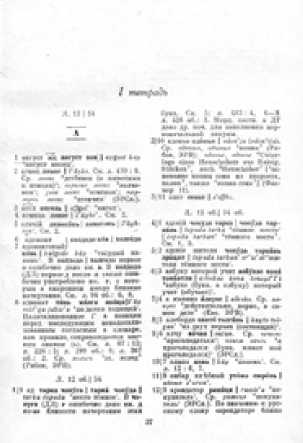
Мордовская часть словаря, изданная А. П. Феоктистовым в 1971 г. (рис. 4), включает свыше 11 тысяч словарных статей по отдельным семантическим группам: чаще по терминам, связанным с работой официальных учреждений, профессий, а также религиозной тематикой. Языковой материал представлен как из мокшанского, так и из эрзянского языков, но преимущественно с эрзянской лексикой. Например: адвокат - тявьмялгаякиця [ t’au mal’ga jakoc’a ] ‘букв. по делам ходящий’; государство -инязоронь мастор [ in’azoron’ mastor ] ‘букв. царская страна’; граница - межа [ veza ]; крестьянин - чирязонь ломань [ cir’azon’ loman’ ] ‘букв. господский человек’; грЪх -пяжеть [pazet’ ]; спаситель - ойме ваны [ ojme van Р] ‘букв. душу охраняет (спасает)’32.
Источник «Русско-мордовского словаря», содержащий в себе огромный материал по мордовским языкам, занимает достойное место среди других письменных памятников XVIII в. и считается выдающимся достижением мордовского языкознания.
Заключение
Уникальные языковые материалы дореволюционных памятников мордовской письменности XVII–XVIII вв. и в настоящее время не утратили научную ценность. Результаты исследования необходимы для сравнительно-сопоставительных исследований, для решения вопросов, связанных с развитием мордовских письменно-литературных языков, имеют большое значение для представления реальной картины языковой эволюции мордовского народа.
pyсско - МОРДОВСКАЯ ЧАСТЬ
*ОоМТр* АЛИМ ^qjwm* «MiipOcXM
U чМ^ЫЦЫ1а^... 1765 м&.
di* nw~a К' тл • гало
Р и с. 4. Фрагмент из «Русско-мордовского словаря» А. П. Феоктистова F i g. 4. Fragment from the “Russian-Mordvin dictionary” by A. P. Feoktistov
УСЛОВНЫЕ СОКРАЩЕНИЯ
Атр.г. – атюрьевские говоры мокшанского языка; городищ.д. – городищеский диалект мокшанского языка; зап.д. – западный диалект мокшанского языка; мокш. – мокшанский язык; мокш. лит. – мокшанский литературный язык; темн.-атр.г. – темниковско-атюрьевские говоры мокшанского языка; эрз. – эрзянский язык.
ABBRЕVIATIONS
Атр.г. – Atyuryevo dialects of the Moksha language; городищ.д. – the Gorodishche dialect of the Moksha language; зап.д. – the Western dialect of the Moksha language; мокш. – the Moksha language; мокш. лит. – the standard Moksha literary language; темн.-атр.г. – the Temnikov–Atyuryevo dialects of the Moksha language; эрз. – the Erzya language.
