
Процессуальные санкции по уголовно-процессуальному законодательству Республики Армения и Российской Федерации
Журнал: Правовое государство: теория и практика @pravgos
Рубрика: Уголовно-правовые науки
Статья в выпуске: 3 (85), 2026 года.
Бесплатный доступ
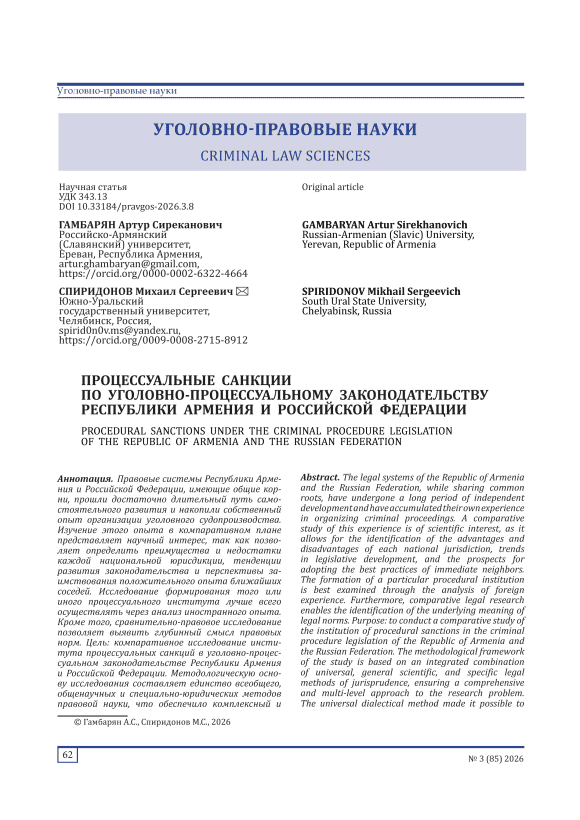
Правовые системы Республики Армения и Российской Федерации, имеющие общие корни, прошли достаточно длительный путь самостоятельного развития и накопили собственный опыт организации уголовного судопроизводства. Изучение этого опыта в компаративном плане представляет научный интерес, так как позволяет определить преимущества и недостатки каждой национальной юрисдикции, тенденции развития законодательства и перспективы заимствования положительного опыта ближайших соседей. Исследование формирования того или иного процессуального института лучше всего осуществлять через анализ иностранного опыта. Кроме того, сравнительно-правовое исследование позволяет выявить глубинный смысл правовых норм. Цель: компаративное исследование института процессуальных санкций в уголовно-процессуальном законодательстве Республики Армения и Российской Федерации. Методологическую основу исследования составляет единство всеобщего, общенаучных и специально-юридических методов правовой науки, что обеспечило комплексный и многоуровневый подход к анализу проблематики. Всеобщий диалектический метод позволил рассмотреть процессуальные ответственность и санкции в динамике, выявить противоречия и закономерности их развития, учесть взаимосвязь данных правовых явлений с иными социальными и правовыми процессами; абстрактно-логический применялся для построения теоретических конструкций, выведения общих понятий и категорий, формулирования дефиниций и выявления сущностных признаков исследуемых правовых феноменов; структурно-функциональный метод позволил раскрыть внутреннее строение института процессуальной ответственности и санкций, выделить их элементы и определить их назначение, оценить, как данный институт выполняет свои функции в системе уголовного процесса и взаимодействует с другими его частями; сравнительно-правовой использовался для сопоставления норм УПК Армении и России, подходов в данных юрисдикциях, что позволило выявить общие тенденции и возможные направления совершенствования законодательства; формально-юридический применялся для анализа текстов нормативных актов, толкования правовых норм, выявления их элементов (гипотезы, диспозиции, санкции), а также для определения места и роли норм в системе права с опорой на юридическую технику и устоявшуюся доктрину. Результаты: проанализированы подходы к построению системы процессуальных санкций и определению их содержания в уголовно-процессуальном законодательстве Республики Армения и Российской Федерации. Выявлены существенные различия между данными правопорядками, заключающиеся в отсутствии в УПК РФ понятия «злоупотребление правом» и общих норм о процессуальных санкциях. Проведен сравнительный анализ содержания шести процессуальных санкций, предусмотренных уголовно-процессуальным законом Республики Армения, с аналогичными санкциями в законодательстве России. Обоснован вывод, что законодательство Армении более последовательно и детализировано, лучше отвечает задаче защиты участников процесса от необоснованного применения к ним санкций и способствует достижению цели уголовного судопроизводства.
Короткий адрес: https://sciup.org/142248789
IDS: 142248789 | УДК: 343.13 | DOI: 10.33184/pravgos-2026.3.8
Procedural Sanctions under the Criminal Procedure Legislation of the Republic of Armenia and the Russian Federation
The legal systems of the Republic of Armenia and the Russian Federation, while sharing common roots, have undergone a long period of independent development and have accumulated their own experience in organizing criminal proceedings. A comparative study of this experience is of scientific interest, as it allows for the identification of the advantages and disadvantages of each national jurisdiction, trends in legislative development, and the prospects for adopting the best practices of immediate neighbors. The formation of a particular procedural institution is best examined through the analysis of foreign experience. Furthermore, comparative legal research enables the identification of the underlying meaning of legal norms. Purpose: to conduct a comparative study of the institution of procedural sanctions in the criminal procedure legislation of the Republic of Armenia and the Russian Federation. The methodological framework of the study is based on an integrated combination of universal, general scientific, and specific legal methods of jurisprudence, ensuring a comprehensive and multi-level approach to the research problem. The universal dialectical method made it possible to examine procedural liability and sanctions in their dynamics, identify contradictions and patterns in their development, and consider the interconnection between these legal phenomena and other social and legal processes. The abstract-logical method was employed to construct theoretical frameworks, derive general concepts and categories, formulate definitions, and identify the essential features of the legal phenomena under study. The structural-functional method served to uncover the internal structure of the institution of procedural liability and sanctions, identify their elements and objectives, and assess how this institution performs its functions within the criminal procedure system and interacts with its other components. The comparative legal method was used to contrast the provisions of the Criminal Procedure Codes of Armenia and Russia and the approaches adopted in these jurisdictions, which helped identify general trends and potential avenues for legislative improvement. Finally, the formal-legal method was applied to analyze the texts of normative acts, interpret legal norms, identify their structural elements (hypotheses, dispositions, and sanctions), and determine the place and role of these norms within the legal system, relying on legal technique and established doctrine. Results: the article analyzes the approaches to structuring the system of procedural sanctions and defining their content within the criminal procedure legislation of the Republic of Armenia and the Russian Federation. Significant differences between the two legal systems are identified, primarily the absence of the concept of “abuse of right” and general provisions on procedural sanctions in the Criminal Procedure Code of the Russian Federation. A comparative analysis of six procedural sanctions provided for by the criminal procedure law of the Republic of Armenia and their counterparts in Russian legislation is conducted. The article concludes that the Armenian legislation is more consistent and detailed, thereby better addressing the need to protect participants in criminal proceedings from the unjustified application of sanctions and contributing more effectively to achieving the goals of criminal justice.
