
Production of a highly dispersed filler for building composites from flax processing waste
Journal: Nanotechnologies in Construction: A Scientific Internet-Journal @nanobuild-en
Section: Application of nanomaterials and nanotechnologies in construction
Article in issue: 1 Vol.18, 2026.
Free access
Introduction. The study investigates the possibility of extracting valuable compounds from flax processing waste (flax shives) for subsequent use as a highly dispersed filler in building composites. Materials and methods. The following chemical reagents were used for synthesis: H2SO4 93.64 % (C.P.), NaOH (C.P.), H2O (distilled), H2O2 ~30 % (C.P.) as well as flax shives powder crushed in a cryogenic mill. Results and discussion. The characteristics of the raw materials confirmed the presence of useful components in the material – cellulose, silicon dioxide and lignin. A technology for the chemical treatment of flax shives was developed, thereby enabling the extraction of valuable components. Conclusion. A method for obtaining cellulose, silicon dioxide and lignin from flax shives has been worked out. Further practical application of the obtained materials for building compositions is possible after the use of special purification methods.
Similar articles in the section Field crops and their production
Short address: https://sciup.org/142247071
IDS: 142247071 | DOI: 10.15828/2075-8545-2026-18-1-82-92
Text of the scientific article Production of a highly dispersed filler for building composites from flax processing waste
Original article
Черкашина Н.И., Ручий А.Ю., Пушкарская Д.В., Кужелева А.А., Литвинова Ю.И. Получение высокодисперсного наполнителя для строительных композиций из отходов производства льна. Нанотехнологии в строительстве. 2026;18(1):82–92. – EDN: UGIZEX.
A key priority for the modern construction industry is the development and adoption of resource-efficient and environmentally friendly technologies. “One of the promising areas of development is the use of secondary raw materials and production waste, which makes it possible not only to reduce the anthropogenic load on the environment, but also to obtain materials with new or improved properties [1–4]. Recently years, the concept of a circular economy has been actively developing, which involves minimizing waste and maximizing the use of resources [5]. This requires finding innovative solutions to efficiently recycle waste and turn it into valuable products.
Of particular interest is waste from the processing of plant raw materials, which is generated in significant volumes in the agro-industrial complex [6–9].
In this regard, research works focused on processing plant waste into valuable products is actively developing. A key task of this research is to find cost-effective and highly efficient solutions for extracting valuable components from biomass using chemical and thermochemical methods [10–13]. A promising source of such raw materials can be flax processing waste, in particular, flax shives [11, 14–15], which contains valuable components that can be used to create various building materials. Flax shives are lignified parts of the stem, separated when obtaining flax fiber. It consists mainly of cellulose (45–60%), lignin (20–30%), hemicellulose, and organosilicon compounds [9, 16]. It is these components that determine the main physical and chemical properties of flax shives, making it a promising component for the creation of building materials with comparable strength, durability and environmental friendliness.
Cellulose, being the main polysaccharide of plants, is used not only in traditional industries, such as the paper and textile industries [17–19], but also in the production of composite functional materials in construction, as well as for purification sorbents [20–24] and composite fuels [25]. Its unique properties, such as high biocompat- ibility and biodegradability, make it attractive for use in environmentally friendly building solutions. In addition, cellulose can be modified to give it new properties, such as increased strength [21–23].
Lignin, the second most important component of flax brome, has found application in various industries, including chemical, agricultural, and construction [23, 26]. It is highly resistant to biodegradation, making it a valuable material for creating long-lasting composites. In recent years, lignin has also been actively studied as a basis for the production of new environmentally friendly biodegradable polymers and composites based on it [27–32]. These materials have unique properties such as low density, high strength, and environmental resistance.
Hemicellulose can be used as biodegradable film formers or additives that regulate the properties of solutions [31, 32]. These compounds act as effective waterretention agents and enhance the rheological performance of materials, which makes them valuable for use in various construction products. Hemicellulose can also be modified to give them new properties, such as increased adhesion or resistance to external influences.
Silicon dioxide in flax shives is of interest to scientists due to its unique properties. This material has a wide range of potential applications, including: in construction materials as an additive to raw material mixtures in cement production; in electronics in the manufacture of microcircuits and semiconductors; in pharmaceuticals as an excipient in dosage forms; in nanomaterials synthesis; in various other industrial sectors. Silicon dioxide has high heat resistance, chemical inertness and the ability to improve the physical and mechanical properties of materials.
The use of flax shives to obtain highly dispersed fillers for building compositions addresses several challenges simultaneously: to dispose of waste, reduce the cost of production by replacing part of the raw materials and add new useful properties. One of the methods of effective use of coarsely dispersed shives in the composition of high-quality materials is grinding to a highly dispersed state [33]. This approach ensures a larger specific surface
Nanotechnologies in construction
Нанотехнологии в строительстве
2026; 18 (1):
82–92
Nanob
APPLICATION OF NANOMATERIALS AND NANOTECHNOLOGIES IN CONSTRUCTION
area of the particles and their better compatibility with the composite matrix. Various methods are used to obtain a highly dispersed filler from flax shives. The most common is mechanical grinding (using mills of various types) and mechanical activation, which allows not only to reduce the size of particles, but also to increase their physical and chemical activity [34].
Another method of using flax shives to obtain highly dispersed fillers is its physicochemical transformation to extract useful compounds. This method makes it possible to use the valuable components of flax shives as efficiently as possible and obtain materials with improved properties. Physicochemical transformation can include various processes, such as extraction, hydrolysis, oxidation, and others, which allow the extraction of valuable components such as cellulose, lignin, and hemicellulose from the shives [35].
Thus, the use of flax shives opens up wide prospects for the creation of new construction materials with high performance and environmental safety. The study of the possibility of extracting valuable components from flax shives is an advance step towards the development of innovative technologies for waste processing and the creation of materials of the future.
The purpose of this research is to study the possibility of extracting valuable components from flax plant waste in order to use them in construction materials.
MATERIALS, EQUIPMENT, RESEARCH METHODS
Materials
In the course of the experiment, high-purity reagents were used for synthesis: sulfuric acid 93.64% (C.P.), produced by «ECOS-1» JSC; sodium hydroxide (C.P.), manufactured by «ECOS-1» JSC; distilled water and hydrogen peroxide ~30% (C.P.), produced by «Lega» LLC. The waste of plant origin used was a fine powder obtained from flax fire, which made it possible to dispose of agricultural waste.
Equipment and research methods
Flax shives were ground in the 6875 Freezer/Mill cryogenic mill (NOLTECH, Russia). The grinding parameters were as follows: pre-cooling – 8 minutes, grinding time – 3 minutes, cooling between cycles – 5 minutes, number of cycles – 3, rotor speed – 15 rpm.
The particle size of the highly dispersed flax shives powder was determined using the Analysette 22 NanoTec plus laser particle size analyzer. The measurement range of the Analysette 22 NanoTec plus is 0.01 to 2000 µm.
A Bruker Vertex 70 spectrometer was used to analyze the FTIR absorption spectra of the samples of the substances under study. Measurements were carried out in the wavenumber range of 400–4000 cm–1 with a high spectral resolution (≥ 0.4 cm–1), which provided detailed information about the structure of the materials.
The phase composition of materials before and after synthesis was studied by X-ray diffraction analysis method. Radiographs of substances were obtained using the ARL X’TRA device (Thermo Fisher Scientific SARL, Ecublens, Switzerland) with a CuKα source.
To process and decode the obtained powder X-ray diffractograms, the PDF-2 (Powder Diffraction File-2) radiograph database was used.
To weigh the samples, we used a laboratory scale of the MERTECH M-ER 122 ACF-3000 brand. For these scales, the maximum weighing weight is 3 kg, and the weighing accuracy is 0.1 g.
Scanning electron microscopy images were obtained using the Tescan MIRA 3 LMU device.
The thermal behavior of flax shives was studied by differential thermal analysis (DTA) using the STA 449 F1 Jupiter device. The samples were heated in the temperature range of 20–600 °C at a rate of 10 deg/min in an atmosphere close to air (21% oxygen, 79% argon).
RESULTS AND DISCUSSION
1. Characteristics of raw materials
Mechanoactivation is a method of physical and chemical modification of solids based on the effect of mechanical energy. In the process of mechanical activation, particles are crushed, the specific surface area increases, defects are formed in the structure of the material and its chemical activity change.
Traditional mechanical activation methods may be ineffective for processing plant raw materials like flax shives due to their high strength and elasticity. In contrast, cryogenic grinding serves as a powerful mechanoactivation tool, particularly suitable for brittle and heat-sensitive materials.
Cryogenic grinding is carried out at low temperatures (–182 °C) using liquid nitrogen or other refrigerants. At such temperatures, materials become brittle, which greatly facilitates the grinding process and increases the efficiency of mechanical activation [36].
The particle size of flax shives was originally from 1.00 to 0.20 mm. The result of the granulometric analysis (Fig. 1) has showed that in the additive used, the particle size distribution is described by a bimodal system with one mode at 45.73 µm and a second mode at 55.08 µm. The predominant fraction in the powder is 63.54 µm. The specific surface area of the material was 7259 cm2/cm3.
X-ray phase analysis (XRF) of flax shives, the results of which are presented in Figure 2, made it possible to identify a number of crystalline and amorphous phases.
Nanotechnologies in construction
Нанотехнологии в строительстве
2026; 18 (1):
82–92
Nanob
APPLICATION OF NANOMATERIALS AND NANOTECHNOLOGIES IN CONSTRUCTION
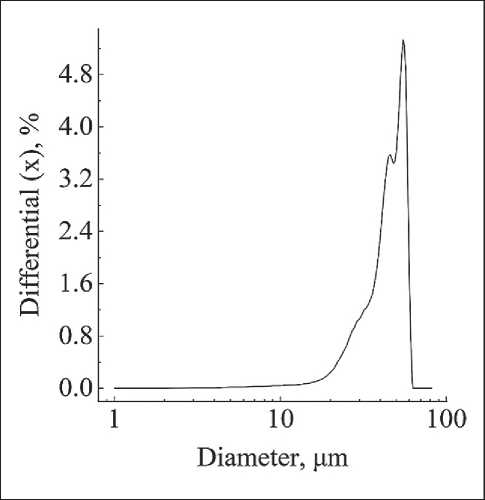
Fig. 1. Fractional composition of flax shives
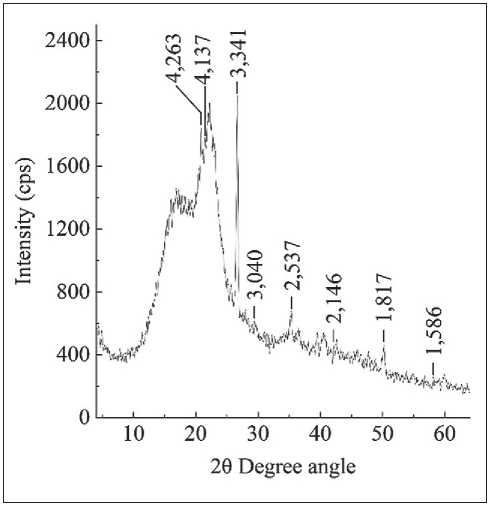
Fig. 2. X-ray of flax shives
Analysis of the resulting diffraction pattern revealed the presence of quartz, identified by characteristic diffraction reflections at 4.263, 3.341 and 3.214 Å (Reference Card PDF-2: 85-1053 Quartz, syn). The presence of carbon is confirmed by diffraction reflections at 3.040 and 2.146 Å (PDF-2 card: 72-2091 Carbon). In addition, aluminum phosphate was identified by diffraction reflections at 4.137 and 2.537 Å (the latter with overlay, card PDF-2: 50-303
Aluminum Phosphate), as well as corundum characterized by reflections at 2.537 (overlay) and 1.586 Å (card PDF-2: 75-788 Corundum). The presence of a wide amorphous halo with two vertices in the region of angles of 17° and 22° indicates a significant content of hydrated phases of silicon dioxide.
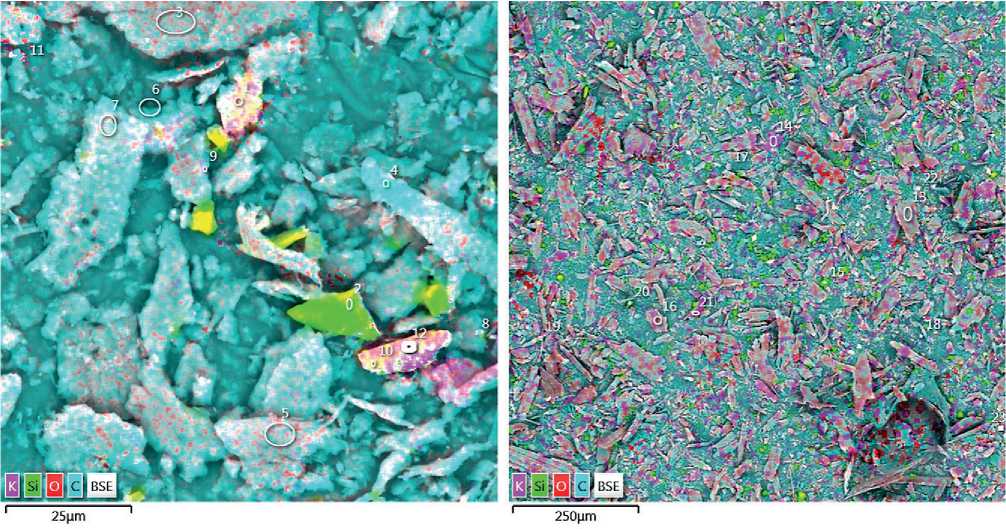
Figure 3 shows the data obtained using a scanning electron microscope. Figure 3 shows a patch of flax shives
250pm
J Si . cjlBSE
25pm
Fig. 3. Multi-layer map of EDS of flax shives
Nanotechnologies in construction
Нанотехнологии в строительстве
2026; 18 (1):
82–92
APPLICATION OF NANOMATERIALS AND NANOTECHNOLOGIES IN CONSTRUCTION
Nanob
Table 1
Analysis of the data in Table 1 showed that there is a large amount of C (50.14%), O (29.13%), Si (11.22%), K (2.97%) in the flax shives. In addition, the presence of Al (2.07%), Ti (2.08%), Ca (1.06%) is noticeable, but in much smaller quantities. And in the minimum ratio are recorded Na, Mg, P, S, Fe.
Figure 4 shows the Fourier-transform IR spectra absorption of the original flax brome powder. The interpretation of the FTIR spectra and the ratio of the bands are presented in Table 2.
Thus, the FTIR spectrum indicates the complex chemical structure of flax shives – the presence of functional groups inherent in alcohols and phenols, pentosans, carbonyl compounds, aromatic and aliphatic fragments, as well as the presence of organosilicon components [1].
Analysis of the derivatogram of flax shives (Fig. 5) revealed several successive thermal stages, each of which is accompanied by characteristic energy effects and mass loss (Table 3).
Summing up, the tabular data indicate a high content of minerals in flax shives.
Table 2. Interpretation of absorption bands on the FTIR spectrum of flax shives powder
|
Characteristics |
Absorption area, cm–1 |
|
ν-oscillations –OH (symmetry index ≈ 1.04) |
3380 |
|
ν-oscillations C–H |
2922 |
|
ν-oscillations of the carbonyl group (CHX–COOH) |
1739 |
|
Δ-oscillations H2O |
1655 |
|
Imposition of ν-oscillations C=C |
1620 |
|
δ-oscillations of CH and CH2OH in aliphatic groups |
1465–1410 |
|
R–SO2–OR |
1375 |
|
δ oscillations –COH |
1321 |
|
–SiCH3 |
1245 |
|
δ-oscillations –OH and –CH2 |
1159 |
|
ν-oscillations C–O |
1150–950 |
|
νas-oscillations Si–O–Si |
1080 |
|
ν-coupling oscillations C–O–C |
1054 |
|
δ-oscillation C=C, δ-oscillation Si–C |
898 |
|
aromatic compounds, C–H δ oscillations in aromatic rings |
850–560 |
|
δ oscillations Si–O–Si |
664, 608 |
|
Si–OH |
461 |
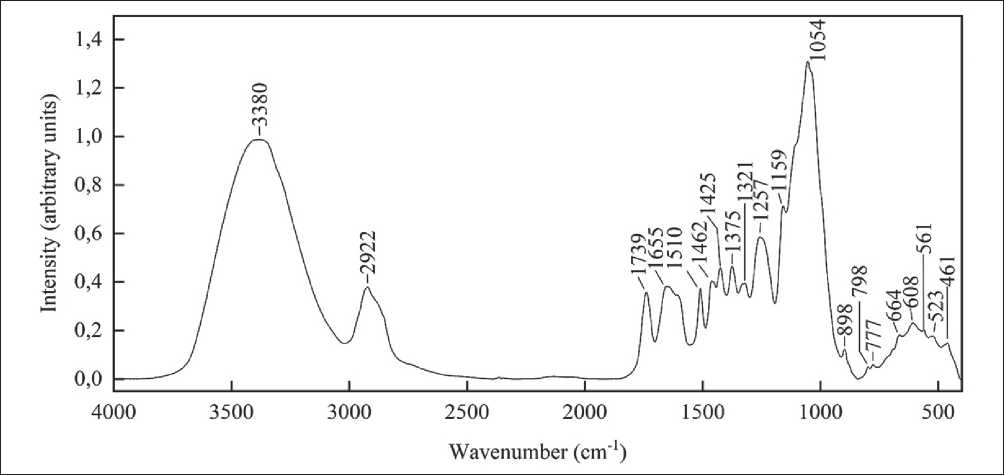
Fig. 4. FTIR absorption spectrum of the original flax shives
Nanotechnologies in construction
Нанотехнологии в строительстве
2026; 18 (1):
82–92
Nanob
APPLICATION OF NANOMATERIALS AND NANOTECHNOLOGIES IN CONSTRUCTION
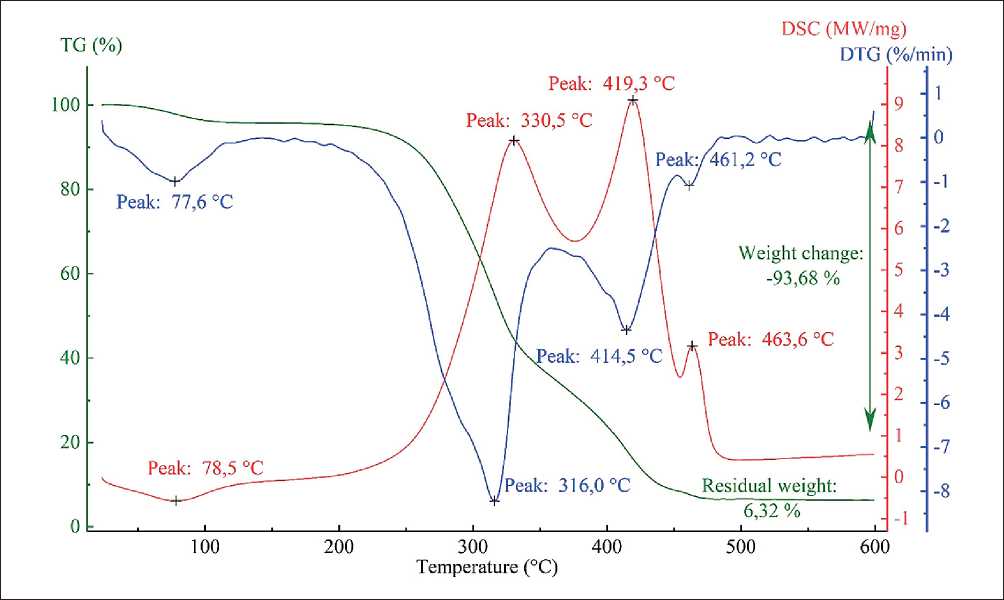
Fig. 5. Derivatogram of flax shives
Table 3. Deciphering the thermal effects of flax shives powder
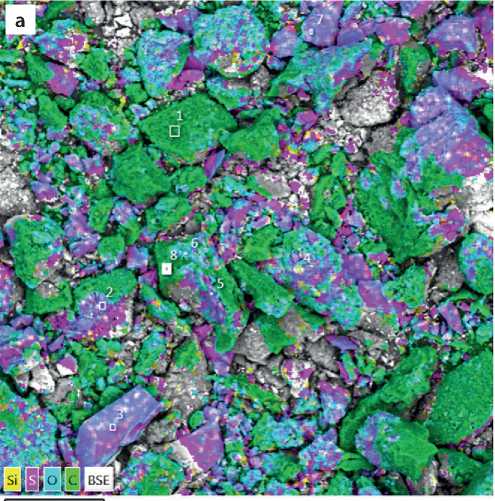
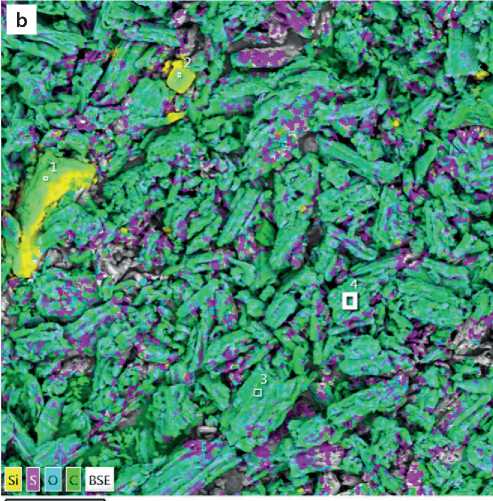
The resulting silicon dioxide is dominated by C (49.88%) and O (42.0%). The presence of S (6.65%) is also noticeable. K atoms (0.08%) were recorded in the minimum number. The content of Si atoms was 1.00%.
The resulting lignin contains a large amount of C (56.95%) and O (33.25%). The presence of Na (5.42%) and S (4.21%) is also noticeable. Si and Ca are present as impurities in the product.
The presence of Na and S in the resulting products is due to the fact that Na2SO4 is a by-product of synthesis.
Nanotechnologies in construction
Нанотехнологии в строительстве
2026; 18 (1):
82–92
Nanob
APPLICATION OF NANOMATERIALS AND NANOTECHNOLOGIES IN CONSTRUCTION
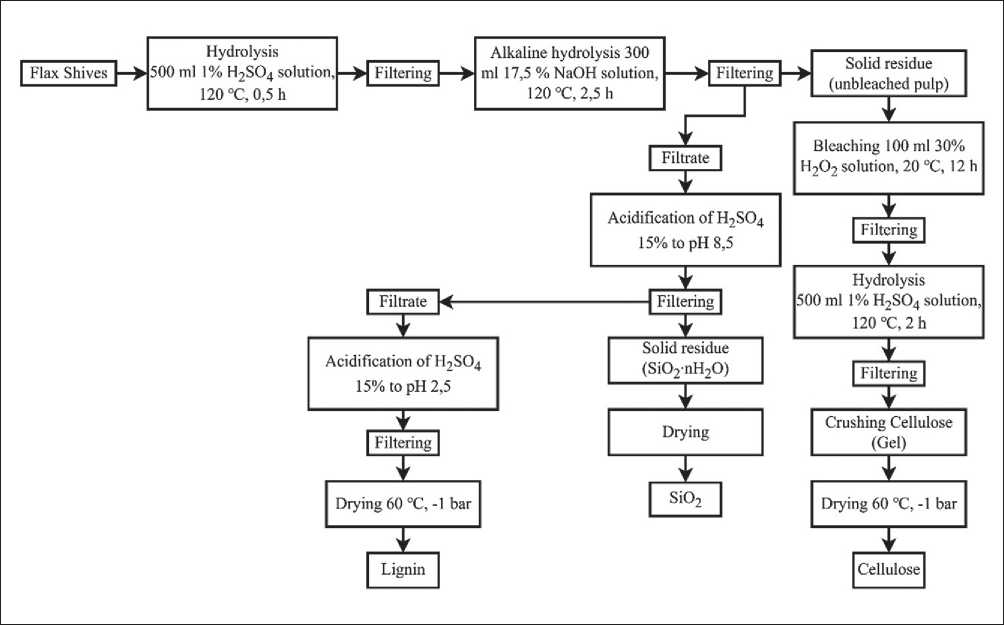
Fig. 6. Scheme of extraction from flax shives: lignin, silicon dioxide and cellulose [37]
50pm
Fig. 7. Multilayer map of EDS: a) cellulose, b) silicon dioxide, c) lignin
50pm
Nanotechnologies in construction
Нанотехнологии в строительстве
2026; 18 (1):
82–92
Nanob
APPLICATION OF NANOMATERIALS AND NANOTECHNOLOGIES IN CONSTRUCTION
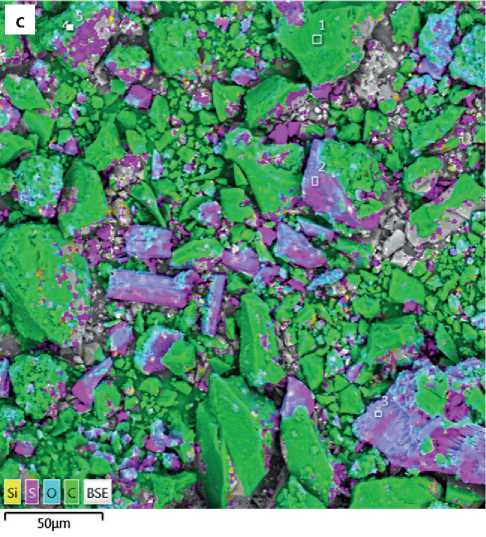
Fig. 7. The End
Table 4
|
Average elemental composition of cellulose, weight. % |
|||||||||
|
Material |
C |
O |
Na |
Mg |
Al |
Si |
S |
K |
Ca |
|
Cellulose |
41.09 |
38.16 |
12.17 |
– |
0.04 |
0.05 |
8.38 |
0.05 |
0.06 |
|
Silicon dioxide |
49.88 |
42.02 |
0.36 |
– |
– |
1.00 |
6.65 |
0.08 |
– |
|
Lignin |
56.95 |
33.25 |
5.42 |
– |
– |
0.09 |
4.21 |
– |
0.07 |
