
Совершенствование устройств для очистки закрытых горизонтальных дренажных систем
Журнал: Informatics. Economics. Management - Информатика. Экономика. Управление.
Рубрика: Экономика и управление: АПК, экология и устойчивое развитие
Статья в выпуске: 5 (1), 2026 года.
Бесплатный доступ
Закрытые горизонтальные дренажные системы играют важную роль в регулировании водного режима почв и обеспечении продуктивности орошаемых земель, однако со временем их гидравлическая эффективность существенно снижается из‑за накопления осадков внутри дренажных труб. Существующие гидродинамические устройства очистки нередко характеризуются неэффективным использованием энергии рабочей жидкости, неравномерным воздействием водяных струй на отложения и потерей устойчивого положения рабочего органа при кручении напорного шланга. В статье предложено усовершенствованное устройство для очистки закрытых горизонтальных дренажных трубопроводов, применяемых в мелиоративных сетях. Конструкция включает эксцентрично выполненный корпус с возможностью свободного вращения подводящего шланга и короткие гибкие рукава с струеформирующими насадками, направление которых изменяется системой шарнирных рычагов. Такое решение обеспечивает автоматическое перераспределение энергии струй между созданием тягового усилия и размывом отложений в зависимости от наличия, расположения и толщины наносов. Результаты оценки показывают более рациональное использование энергии рабочей жидкости, устойчивое позиционирование головки внутри трубопровода и повышение качества и надежности удаления отложений. Устройство рекомендуется для эксплуатации, обслуживания и реконструкции закрытых горизонтальных дренажных систем на орошаемых землях.
Похожие статьи в разделе Гидротехническое строительство. Гидротехника в целом
Короткий адрес: https://sciup.org/14135111
IDS: 14135111 | DOI: 10.47813/2782-5280-2026-5-1-2015-2021
Текст статьи Совершенствование устройств для очистки закрытых горизонтальных дренажных систем
DOI:
MATERIALS AND METHODS
Closed horizontal drainage systems are widely used in agriculture to regulate the soil water regime and increase crop productivity [1]. During operation, drainage pipelines are prone to silting and sediment accumulation, which reduces their hydraulic capacity and the overall efficiency of the drainage system [2].
The territory of the Republic of Uzbekistan is characterised by unique soil and climatic conditions [3]. Due to insufficient natural drainage and high groundwater mineralisation, a number of regions are classified as primarily saline [4]. At the same time, irrational water use and the negative impact of other anthropogenic factors have caused secondary soil salinization in several areas. As a result, varying degrees of salinity are observed on approximately 45.7% of irrigated lands [5].
The water management system of the Republic of Uzbekistan represents a complex network of irrigation infrastructure serving about 4.3 million hectares of irrigated land, including more than 180,000 km of canal networks and approximately 106,507 km of collector–drainage systems [6]. The total length of closed horizontal drainage networks exceeds 36,913 km, of which about 14.6 thousand km (39.5%) require immediate and subsequent periodic flushing, while approximately 3.9 thousand km are in poor technical condition [7]. A significant proportion, and in some cases the entirety, of arable land is irrigated for the cultivation of industrial crops, which is supported by an extensive state irrigation system [8].
Existing methods for cleaning drainage pipes are predominantly based on hydrodynamic devices that deliver pressurised water jets [9]. However, many of these devices are characterized by inefficient utilization of the working fluid energy and unstable positioning within the pipeline, particularly under conditions of torsion of the water supply hose [10]. These drawbacks reduce sediment removal effectiveness and increase energy consumption [11].
In this context, improving the design of devices for cleaning closed horizontal drainage systems is a relevant and important task aimed at enhancing the efficiency of working fluid energy utilization and increasing operational reliability. The objective of this study is to develop and substantiate an improved device for cleaning closed horizontal drainage systems used for agricultural purposes.
Existing methods for cleaning closed horizontal drainage systems are conventionally classified into mechanical, chemical, and hydraulic approaches. Mechanical cleaning methods use scrapers, brushes, and other tools to remove sediment deposits by direct contact with the internal surface of the pipeline [12]. Despite their relative simplicity, these methods are characterized by high labor intensity and limited efficiency when applied to drainage lines of considerable length. Chemical cleaning methods use reagents that promote the dissolution or loosening of organic and mineral deposits [13]. However, their application in agricultural drainage systems is limited by environmental regulations and the potential for adverse effects on soil and water resources. The most widely used approach is hydraulic cleaning, which uses pressurised water jets. This method effectively removes sediment deposits without the use of chemical agents.
Analysis of Existing Devices for Cleaning Drainage Pipelines
Under the conditions of the Republic of Uzbekistan, hydraulic cleaning methods are the most commonly applied for closed horizontal drainage systems, owing to their technological simplicity, environmental safety, and the possibility of utilizing existing pumping and water supply infrastructure. The PDT-200 closed horizontal drainage flushing system represents a complex of units powered by two 10 kN class tractors (TTZ-100) and includes a main pumping station mounted on a single-axle trailer with a hose drum, an auxiliary pumping station, and a water reservoir installed on a wheeled tractor. In Uzbekistan, a joint production initiative was established at KRANTAS LLC to manufacture a new drainage flushing machine, KPM6-01, mounted on a KAMAZ-43118 chassis and equipped with a 6,000-litre water tank and a 200-m hose (Figure 1).
Each device was tested in various sections of the drainage system to evaluate its performance under different operating conditions. Auger-based systems were deployed in areas with severe silting to assess their ability to mechanically dislodge and remove blockages from pipes. To evaluate the effectiveness of high-pressure water-based cleaning devices in removing sediment and deposits, automated robotic systems were employed where applicable.
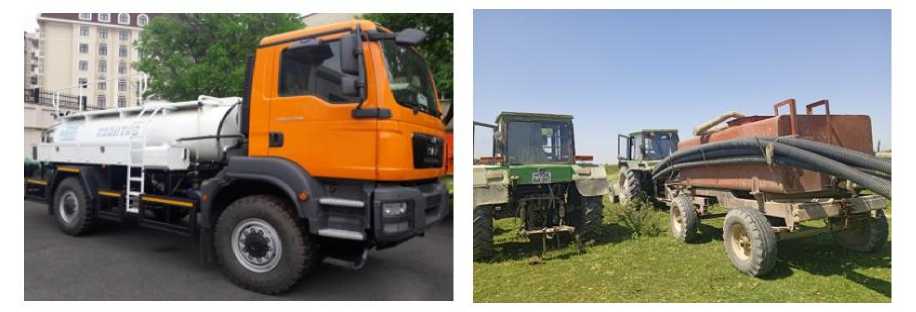
Figure 1. Equipment for flushing closed horizontal drainage systems (KPM6-01 and PDT-200).
Following the field trials, feedback was collected from key stakeholders involved in the testing process, including drainage system operators, local maintenance crews, and engineers (Figure 2).
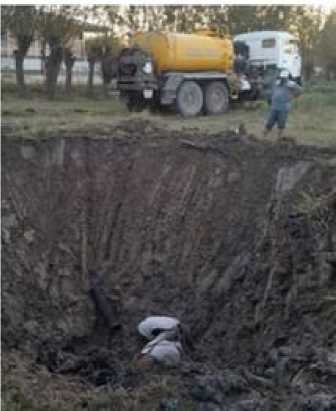
Figure 2. The process of cleaning drainage systems
These stakeholders provided insights into the practical aspects of using each cleaning device, such as ease of operation, training requirements, and longterm reliability. Stakeholder feedback was essential for identifying operational challenges and assessing the potential for scaling the use of specific devices across different regions. The implementation of field trials and the analysis of relevant case studies enabled a comprehensive understanding of the practical application, advantages, and limitations of various cleaning devices for closed horizontal drainage systems.
The results of this stage of the study helped identify the most effective drainage pipe-cleaning technologies and provided valuable information to improve maintenance practices and enhance overall system sustainability.
RESULTS AND DISCUSSION
A device for cleaning closed horizontal
DRAINAGE PIPES
One of the most critical functional units of a machine used for cleaning closed horizontal drainage pipes is the working head (nozzle). The overall efficiency, reliability, and economic performance of the cleaning process largely depend on the design features of this component and the accuracy of its operating parameters. The working head must provide uniform treatment of the inner surface of the drain pipe and ensure effective removal of accumulated sediment and deposits.
According to their functional characteristics, hydrodynamic working heads used for drain pipe cleaning can be classified into three main groups: continuous-flow, reversible, and rotating nozzles (Figure 3). Continuous-flow nozzles in Figure 3 (1-3) are characterized by a simple and robust design, which explains their widespread use in drainage pipe cleaning. These nozzles generally include one or more forward-directed outlets and several rear-directed jet outlets. The resultant force of the rearward water jets exceeds that of the forward jets, generating a reactive thrust that propels the nozzle along the pipeline while simultaneously drawing the supply hose forward. Sediment removal is mainly achieved through the intense turbulent water flow produced by the rear jets, which carries loosened deposits toward the pipe outlet.
Reversible nozzles in Figure 3 (4-6) are designed to eliminate severe obstructions and compacted deposits by allowing remote switching between rearward, forward, and lateral water jets directly at the blockage site. Although such nozzles are highly adaptable and effective in clearing difficult obstructions, their structural complexity limits their application. As a result, reversible nozzles are predominantly used in municipal pipeline systems and are rarely used in agricultural drainage pipe-cleaning equipment.
Rotating nozzles in Figure 3 (7-9), in addition to conventional rear-facing jets, are equipped with side-directed outlets that rotate at high speed due to the reactive torque generated during nozzle movement. This rotation enables the side jets to act uniformly on the inner wall of the pipe, improving the quality and consistency of surface cleaning. For the removal of substantial deposits and invasive plant roots, more advanced nozzles incorporating hydromechanical working elements are applied. These devices combine hydraulic flushing with mechanical cutting or milling actions, a process commonly referred to as hydromechanical cleaning. Such methods require elevated static water pressure and smooth internal pipe surfaces, which restricts their use mainly to municipal drainage networks. Hydraulic cleaning, in its conventional form, is the process of flushing or cleaning a pipeline by directing water flow through the interior of the pipe. When applied to drainage systems, this method can be implemented in several ways: by periodically obstructing the drainage line during active flow, by pumping out drainage water under high groundwater conditions, by injecting water into the drainage network and allowing it to discharge naturally, or by supplying water to the system followed by its removal using pumping equipment.
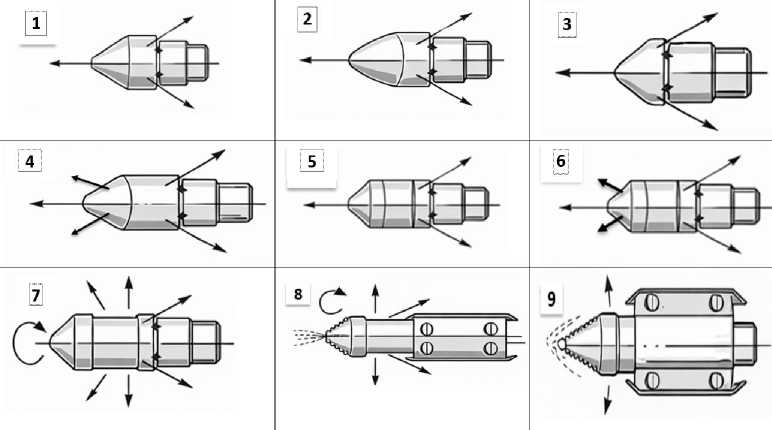
Figure 3. Classification of drainage pipe cleaning nozzles.
An analysis of existing technical solutions shows that most pipeline cleaning devices in use consist of a body with an inlet opening and a system of nozzle outlets connected to a water supply hose.
Cleaning is performed through the action of pressurized water jets on sediment deposits.
The main disadvantages of such devices include:
-
• non-uniform distribution of water jet energy;
-
• loss of stable positioning of the device within the pipeline due to torsion of the water supply hose;
-
• insufficient adaptation of jet direction to the actual location and thickness of sediment deposits;
-
• reduction of traction force in the absence of deposits, which complicates forward movement of the device.
These shortcomings indicate the need to develop a design that automatically adjusts its operating mode in response to varying conditions within the drainage pipeline.
Design and Operating Principle of the Improved Device
The proposed pipeline cleaning device comprises a body connected to a flexible water supply hose, equipped with an inlet opening and a set of nozzle outlets arranged along a circumference concentric with the inlet opening. A mechanism for controlling the nozzle outlets is located within the cavity formed by the head and inlet sections of the body and is installed eccentrically relative to the device's longitudinal axis, ensuring hydraulic communication between the inlet and nozzle openings.
To improve the efficiency of working fluid energy utilization, the device body is designed with an eccentric configuration relative to its longitudinal axis. The inlet section of the body and the pressurized water supply hose are connected in a manner that allows free rotation about the body axis, which ensures stable positioning of the device inside the drainage pipeline regardless of torsion of the water supply hose. Short flexible rubber-fabric hoses equipped with jet-forming nozzles are installed in the lower rear part of the body. The direction of the water jets is controlled by articulated levers mounted on the body. This design enables automatic adjustment of the water jet direction in response to varying operating conditions within the pipeline (Figure 4, 5 and 6).
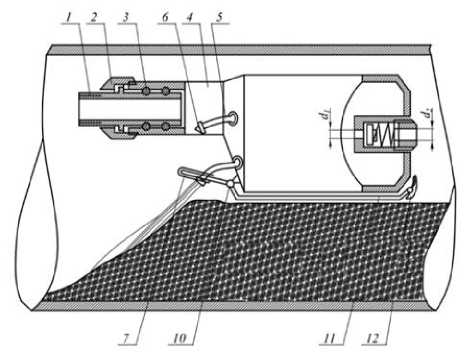
Figure 4. Diagram of the location of the drainage pipe cleaning device.
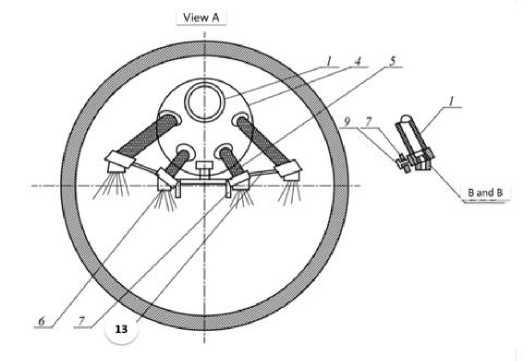
Figure 5. Layout of jet-forming nozzles.
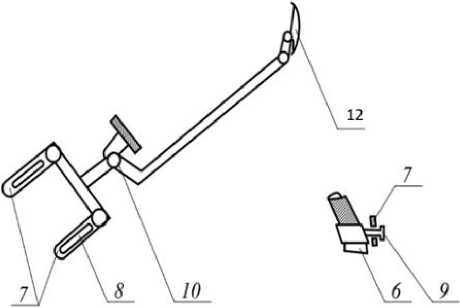
Figure 6. View of the lever: 1-main water-supplying pipe, 2-union nut, 3- sealing gasket, 4- body / housing, 5- flexible rubber-fabric hose, 6- jet-forming nozzles, 7-8-13 - slot on the lever, 9- groove of the jet-forming nozzle, 10- lever hinge, 11- lever, 12- runner of the hinged end part of the washing head.
The device's operating principle is as follows. In the absence of sediment deposits within the drainage pipeline, the energy of the water jets is fully utilized to generate a reactive thrust force that ensures the forward translational movement of the device. When sediment deposits of a certain thickness are encountered, the skid equipped with a lever changes its position, causing the flexible hoses with jetforming nozzles to be oriented at a predetermined angle relative to the deposit surface. This configuration provides directed erosion of the sediment layer with maximum efficiency.
Evaluation of Efficiency and Scope of Application
The design features of the proposed device enable more rational utilization of the working fluid energy through automatic redistribution of water flows. The eccentric configuration of the body combined with the free rotation of the water supply hose prevents loss of stable positioning of the device within the pipeline and ensures uniform impact of the water jets on sediment deposits.
The use of flexible hoses equipped with jet-forming nozzles and articulated levers enables the cleaning process to adapt to sediment deposits of varying thickness and density, thereby improving cleaning quality and reducing operational time. The device can be effectively applied in the operation, maintenance, and rehabilitation of closed horizontal drainage systems used for agricultural purposes.
CONCLUSION
As a result of the conducted study, an improved device for cleaning closed horizontal drainage systems has been developed, characterized by enhanced efficiency of working fluid energy utilization and improved operational reliability. The proposed design ensures automatic adjustment of the water jet direction based on sediment deposits' presence and thickness, as well as the device's stable positioning within the pipeline. The obtained results confirm the feasibility and practical relevance of applying this device in agricultural drainage system operations.
