
Specificities of strategic management in the public administration of the Republic of Srpska
Journal: Ekonomski signali @esignali
Article in issue: 2 vol.20, 2025.
Free access
In public administration - whether at the state level or within any unit of local self-government - positions are predominantly held by politically elected individuals whose professional and experiential foundations for such responsible work are often questionable. Being a municipal head or mayor in one of the 64 units of local self-government, or being a minister in the Government of the Republic of Srpska, or a responsible person in a state agency, directorate, or public company, means being accountable to the “owner of the capital,” that is, to the owner of budget funds - the citizens. It is the citizens, through their payment of taxes, duties, and contributions, who fill the budget and to whom results must be reported. Citizens have the right to receive increasingly better services for their money and to know whether mechanisms for sanctioning and rewarding managers are defined, as is the case in the private sector. They closely observe indicators of misuse, political manipulation, corruption, and all other possible irregularities within the budget, which they finance primarily through work in the real sector. The concept of “modern public administration” is a project that holds significant promise in terms of depoliticization, anti-corruption, prevention of misuse, and more responsible spending of public funds. The introduction of electronic public administration has opened the way to more transparent functioning of state institutions at all levels and has brought the model of state governance closer to the standards of the European Commission, for which the fight against abuse is a key priority. The authors propose a much broader application of strategic management models and experiences from the real sector to public administration management, as such an approach would strengthen strategic management within public administration and bring it closer to the true owners of the capital - the citizens who fund the budget that is being spent within an excessively large public administration system at all levels: the state of Bosnia and Herzegovina, the entities, cities, and local communities.
Similar articles in the section Management
Short address: https://sciup.org/170211626
IDS: 170211626 | UDC: 005.21:351.073.52(497.11) | DOI: 10.5937/ekonsig2502131K
Specifičnosti strateškog menadžmenta u javnoj upravi Republike Srpske
U javnoj upravi, bilo na državnom nivou ili u okviru bilo koje je-dinice lokalne samouprave, funkcije pretežno zauzimaju politički izabrani pojedinci čiji su profesionalni i iskustveni temelji za takav odgovoran rad često upitni. Biti načelnik opštine ili načelnik u jednoj od 64 jedinice lokalne samouprave, ili biti ministar u Vladi Republike Srpske, ili odgovorno lice u državnoj agenciji, direkciji ili javnom preduzeću, znači biti odgovoran "vlas-niku kapitala", odnosno vlasniku budžetskih sredstava građanima. Gra-đani su, kroz plaćanje poreza, dažbina i doprinosa, ti koji popunjavaju bu-džet i kojima se moraju prijaviti rezultati. Građani imaju pravo da dobiju sve bolje usluge za svoj novac i da znaju da li su definisani mehanizmi za sankcionisanje i nagrađivanje menadžera, kao što je slučaj u privatnom sektoru. Oni pažljivo prate pokazatelje zloupo-trebe, političke manipulacije, korupcije i svih drugih mogućih nepravilnosti u budžetu, koji finansiraju prvenstveno radom u realnom sektoru. Koncept "moderne javne uprave" je projekat koji ima značajno obećanje u smislu depolitizacije, borbe protiv korupcije, sprečavanja zloupotrebe i odgovornijeg trošenja javnih sredstava. Uvođenjem elektronske javne ko-munikacije otvoren je put transparentnijem funkcionisanju državnih in-stitucija na svim nivoima i model državnog upravljanja približen stan-dardima Evropske komisije, za koju je borba protiv zloupotrebe ključni pri-oritet. Autori predlažu mnogo širu primenu modela strateškog upravljanja i is-kustava iz realnog sektora na upravljanje javnom upravom, jer bi takav pristup ojačao strateški menadžment u okviru javne uprave i približio ga stvarnim vlasnicima kapitala građanima koji finansiraju budžet koji se tro-ši u okviru prevelikog sistema javne uprave na svim nivoima: država Bosna i Hercegovina, entiteti, gradovi i lokalne zajednice.
Text of the scientific article Specificities of strategic management in the public administration of the Republic of Srpska
Strategic management in public administration
Strategic management represents a managerial concept that refers to comprehensive planning, management, control, and adjustment of operations in accordance with an organization’s goals, while continuously monitoring and adapting the strategy to a changing environment and internal circumstances (Medić, 2021, p.10). Strategic management, as a form of change management, was initially intended for the private sector; however, in modern times it has found wide application in the public sector of many countries around the world. Following the democratic changes that occurred in the states formed after the dissolution of the former Yugoslavia at the beginning of the 21st century, and with the start of the European integration process, as well as global development in terms of implementing new policies, standards, and technologies, and responding to new societal needs, the necessity of public sector reform began to be considered and increasingly accepted. Strategic planning, as an element of strategic management, has been implemented in public administration across all countries in the region - including the Republic of Srpska - in recent years, as a way of modernizing state administration. Reform, or the modernization of public administration in transitional countries, emerged from the need for rapid adaptation to societal changes and efficient performance of duties, in order for public administration to approach the ideal of a high-quality and democratic administration that serves exclusively the interests of citizens. Inspiration for modernization and greater operational speed in state administration came from observing the organization and activities of private sector entities, along with the belief that the private sector could serve as an example of best practice in fast and efficient service delivery. The public administration reform known as “new public management” is an idea and implementation grounded in managerial principles. The reform itself requires considerable time and patience, as it involves fundamental changes in a sector traditionally perceived as rigid, closed, and resistant to change. The traditional model of public administration required minimal understanding of strategy and rarely involved detailed or serious planning, which was either not carried out or done very sparingly. Due to this structure, public administration employees often became mere task executors, without strategic objectives and without an understanding of how to use resources efficiently to achieve goals, as it was simpler for them to follow the instructions of their superiors. Consequently, traditional public institutions frequently lacked long-term vision and often forgot about the citizens they were meant to serve, who financed their operations and elected them. The application of strategic management in public administration has many specific characteristics. The primary difference between public administration and a private enterprise lies in the type of users of their services. Since the state is oriented toward citizens (rather than a specific category of consumers as in private enterprises), it must also address questions of accountability to the public. Accordingly, citizens - as buyers of goods or consumers of services - ave the right to request information from public administration regarding how budget funds are spent on actions undertaken in their name, or actions that were not taken but should have been. Strategic ma--nagement represents a “continuous and dynamic process, just like the reality in which we live and work. A change in any variable in the environment can trigger a change in the entire strategy. When any variable or component changes, the entire management concept must be re- examined or altered, because it must always correspond to the actual state of the environment. Therefore, strategic management implies a systemic approach.” Strategy is understood as a process of change because strategies develop as a result of changes in the business environment. It represents a type of “game plan” that enables the achievement of defined goals within a given time, space, and under internal and external influences. Strategy, as the backbone of strategic management, has no value if it is not implemented -that is, if it is not “brought to life” through programs, action plans, procedures, and rules. For this reason, strategic management planning is one of the primary tools that strategic leaders and sector managers must use to make high-quality and optimal decisions. It is a process that supports future activity planning, the determination of priorities, and the efficient allocation of resources -not only financial, but also human and all other resources available to an organization or institution. Monitoring progress in relation to defined strategic goals is a continuous process for public administration management. Therefore, strategic planning in public administration represents a disciplined effort aimed at making highly important decisions and determining the key activities that shape the development strategy of the state and its institutions. Strategic management thus functions at both the macro level (state governance) and the micro level (corporate governance), coordinating processes in both directions: from the state toward enterprises and from enterprises back toward the state. Management is carried out by managers at all levels who, through others and together with them, achieve clearly defined strategic goals of public administration within a given environment and timeframe, including all the roles listed in Table 1.
(Holmberg, 2012, p. 18), as full legal regulation of administration exists only within a state governed by the rule of law. A state governed by the rule of law is typically understood as a state in which all governmental bodies, holders of political authority, and citizens are obliged to respect and apply laws and other regulations, meaning that both those who adopt such regulations and those to whom they apply are equally bound by them. This implies that laws and regulations have binding force for everyone. Since all societal actors -not only citizens but also political au-
Table 1. Roles in Which Managers May Find Themselves (Knezevic, 2009, p. 63)
|
No. |
Interpersonal Roles / Other Roles |
Description |
|
Interpersonal Roles |
Description |
|
|
1. |
Figurehead |
Performs a certain number of routine duties |
|
2. |
Leader |
Motivates employees |
|
3. |
Liaison |
Maintains contacts with external organizations and individuals |
|
Informational Roles |
Description |
|
|
4. |
Monitor |
Collects, receives, and stores external and internal information |
|
5. |
Disseminator |
Distributes information within the organization |
|
6. |
Spokesperson |
Provides information about the company to the external environment |
|
Decisional Roles |
Description |
|
|
7. |
Entrepreneur |
Explores the environment, initiates changes, and takes risks |
|
8. |
Disturbance Handler |
Resolves problems in crisis and conflict situations |
|
9. |
Resource Allocator |
Allocates resources |
|
10. |
Negotiator |
Represents the company in important negotiations |
Public administration represents a complex social phenomenon and is the subject of study not only in legal sciences but also in various other academic disciplines. According to Holmberg and Rothstein, public administration reflects the institutional foundations of how a state is governed thorities - are equally subject to legal norms, it can be said that the rule of law is achieved in such a state. The theoretical concept of public administration, from a functional perspective, is viewed by most authors in two dimensions: formal and material. When examining the external, formal cha- racteristics of administration, the discussion refers to the functional concept of public administration in the formal sense. Conversely, when examining the internal, substantive characteristics of administration, the discussion pertains to the functional concept of public administration in the material sense. Determining the material and formal concepts of administration thus represents two aspects of the same phenomenon, encompassing both its internal content and its external form (Lilić, 2009, p. 45).
The term “public administration” is broader and includes a larger number of actors performing administrative activities, as well as a wider scope of such activities. This means that, in addition to traditional actors of administrative functions (state administrative bodies), it also includes other entities entrusted with public authority, such as non-state actors (companies and institutions delegated public powers), and administrative actors at the level of local self-government units (municipalities, cities, etc.). Therefore, public administration represents an extremely important area of contemporary political, legal, and economic thought. Strategic management in public administration is highly specific, and experiences from other sectors cannot be unconditionally transferred to this area - particularly given that our state exists within an environment shaped by Europeanization and globalization of economic, political, legal, social, technological, and cultural contexts. On the other hand, the process of creating a modern public administration in the Republic of Srpska has been driven by the necessity of using new information and communication technologies (ICT). This modernization - from the entity administration to local government units - must constantly improve internal work processes by increasing effectiveness, efficiency, and economy, which consequently leads to more comfortable services for citizens and faster communication. According to Dimit-rijević, only openness, absence of fear of change, and readiness to engage in modernization can lead to transformation and progress (Dimitrijević, 2005, p. 195). Frequently mentioned obstacles - inefficiency, multi-party decision-making structures, political legacy, enormous costs, insufficient expertise, and low technological development - clearly indicate that conditions have matured for changes in the strategic management of public administration. The quality of work in a public administration is generally assessed through the quality of public services delivered to citizens. Practice has shown that reforms implemented in European Union mem- ber states over the past thirty years have somewhat improved cost efficiency and the functional performance of public administration. In general, public administrations have become more open and transparent, and access to public services and their quality have improved.
According to theory, modern public administration should perform the following activities:
-
• prepare laws and other regulations;
-
• adopt legal acts that may have individual or general character;
-
• provide public services related to the protection of state security, individuals, and property;
-
• provide social and cultural services;
-
• provide economic and financial services;
-
• support and prepare documents for the government, and perform administrative tasks for the parliament and courts (Kunić, 2009, p. 11).
Specificities of public administration in the republic of Srpska
The public administration of the Republic of Srpska includes ministries, administrative bodies, administrative organizations, as well as all other entities entrusted with public authority. It is organized at the state level of Bosnia and Herzegovina - where the state is responsible for its functioning - but also at the entity and local levels, where responsibility lies with the entity authorities or local self-government units. Unlike state administration, which is characterized by a hierarchical structure, subordination of lower bodies to higher ones, and centralized functioning, the primary characteristics of local self-government are autonomy, independence, decentralization, and democratization. While the functioning of state administration is backed - at least potentially - by co-ercive authority, local self-government rests on voluntariness. The organizational structure of local self-government is created in the opppsite direction - from the citizens themselves. Its bodies derive authority from citizens through direct elections, rather than from the state. Public administration bodies execute delegated powers in a binding manner, while local self-government relies primarily on voluntary organization and fulfilment of local needs and tasks of public importance. Even when local self-government bodies perform duties transferred to their competence - under authorization and supervision of state bodies - they still act autonomously and may ad-just the manner of exercising these powers to their concrete circumstances. Therefore, local self-government bodies should not be appointed by higher authorities; instead, they must be elected directly by the citizens of the respective entity or local government unit. Governance is exercised in municipalities and cities, and it is carried out by citizens and local selfgovernment bodies, either directly or indirectly - through their elected representatives. Based on the criterion of citizen participation in local self-government, two forms may be distinguished: The environment in which these activities take place differs across countries; therefore, strategic management must take into account historical, traditional, and cultural elements, as well as the broader external environment in which the Republic of Srpska and Bosnia and Herzegovina operate. In addition to these factors, relevant elements include the transition process, the condition and level of development of the private sector, and the relationship between society and administration. Considering that the main characteristic of the transition process in Bosnia and Herzegovina is its slowness - not caused solely by the consequences of war or post-war institutional ambi-guities, but also by the fact that it is a fourfold transition:
from war to peace, from a recipient of substantial international aid to sustainable development, from a socialist economy and political monopoly to a market economy, democracy, and civil society - it becomes clear that the condition of public administration reflects the condition of the state itself. The fourth transition process, which is only emerging in Bosnia and Herzegovina, has significant implications for public administration, reflected in the shift from the existing (traditional) model of public administration toward a new model of e-govern-ment. In the Republic of Srpska, it was necessary to implement a lar-ge number of reforms within a short period of time, some of which directly concern administration and the aspiration to professionalize it. The intention to establish a professional administration was approached empirically - through the adoption of appropriate regulations. There are certain disagreements regarding whether the defined goals are clear and transparent, which resources and means should be used to achieve them, and what personnel and efforts are required. Ultimately, it was concluded that adopting regulations should aim to achieve neutrality, stability, and efficiency within entity administration. However, everyday practice does not always align with the proclaimed spirit of such regula- tions. European Union guidelines call for regulations to be continually updated and harmonized with those at the state level, which is particularly challenging in Bosnia and Herzegovina and the Republic of Srpska due to the complexity of the system in which public administration serves citizens. Bosnia and Herzegovina has 143 municipalities, 10 cantons, 2 entities, and the Brčko District (Ministry of Civil Affairs of BiH). (Before 1992, BiH had 109 municipalities.) The Federation of Bosnia and Herzegovina has 79 municipalities and 10 cantons, while the Republic of Srpska has 64 municipalities. Bosnia and Herzegovina is a state union composed of the Federation of Bosnia and Herzegovina, the Republic of Srpska, and the Brčko District. In the Republic of Srpska, there are two levels of governance (municipality/city and entity level), while in the Federation of BiH there are three levels, as shown in the Picture 1.
What is particularly alarming, based on the World Development Indicators research (April 2003), is that Bosnia and Herzegovina ranked last among 60 observed countries in terms of the quality of administrative regulations, and this situation has not significantly changed to this day. One of the limiting factors is the structural complexity of the state established by the Dayton Agreement, as each entity and each canton has its own ministries, resulting in Bosnia and Herzegovina -with a population of 3-4 million -having 176 ministries, with the same number of ministers. The extent of how large and dysfunctional this administrative apparatus is becomes evident when compared to certain European countries, particularly those with a similar number of inhabitants, that is, a similar number of taxpayers who finance and sustain their state administration.
Picturel: Levels of Government in the Republic of Srpska and Bosnia and Herzegovina
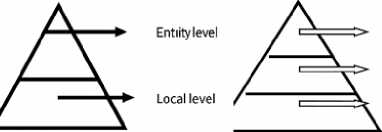
Table 2. Number of Ministries and Population in Selected European Countries
|
Country |
Population (millions) |
Ministries |
|
Croatia |
4.2 |
19 |
|
Bulgaria |
7.2 |
18 |
|
Denmark |
5.6 |
17 |
|
Ireland |
4.6 |
16 |
|
Romania |
19.8 |
16 |
|
Malta |
0.4 |
15 |
|
Estonia |
1.3 |
14 |
|
Latvia |
3.0 |
14 |
|
Germany |
81.0 |
14 |
|
Slovakia |
5.4 |
14 |
|
Slovenia |
2.0 |
14 |
Source: Data collected by the authors
How do public administration institutions in the Republic of Srpska, as well as in Bosnia and Herzegovina, function? As follows:
-
• Public bodies (services and organizations) operate separately, with weak network connections, and without a steady flow of information, data, and feedback, which results in multiple repetition of the same data;
-
• They do not have unified databases or registers of anything: the number of citizens and taxpayers, the number and types of unresolved issues, nor the ways in which these issues are resolved;
-
• Existing applications are unintegrated and often more harmful
than useful, as they do not provide quality information on the basis of which opportunities could be identified and solutions found;
-
• There are no clear objectives for the development of the information system, nor clear general development goals;
-
• The treatment of automated data processing is inadequate - it serves itself more than citizens, even though public administration is supposed to serve citizens;
-
• There is no unified development strategy across levels: the state of BiH, entities, and local governments, nor is one considered necessary, since no one is actually obligated to implement any stra-
- tegy, nor does anyone bear responsibility for inaction, obstruction of assembly work, absence from meetings, corruption, crime, and similar issues;
-
• The work of institutions at all levels often resembles a “reality show” of multi-party systems, where regular assemblies sometimes cannot be held even a few times a year, and budgets are adopted at the end of the year for the current year - retroactively - so everyone spends according to their own (party or political) conscience, which is not perceived as a problem, because there are no sanctions or accountability to anyone, least of all to the citizens who fund and elect them.
Citizens endure, remain silent, work, and vote for the same people again, most often explaining it by saying “we have no better option.”
How to improve strategic management of punlic administration in the Republic of Srpska
The identified problems may be grouped as follows:
-
1. General problems , which are addressed through overall public policy and whose resolution cannot be directly supported solely by the
-
2. Insufficiently developed, undefined, and non-standardized business procedures and related documentation , which must be addressed through the development of individual subsystems, and whose development must be preceded by appropriate formalization of procedures and standardization of documents - from the local to the highest levels of authority;
-
3. The public administration of the Republic of Srpska , as a service to citizens, does not meet the basic preconditions arising from the common legal heritage of EU member states, that is, from the European principle of good governance, which is one of the key requirements for states in the process of EU accession. Therefore, the apparatus must be restructured;
-
4. In practice, when it comes to imposing rules, regulations, obligations, and recommendations by the EU and its various representatives, Bosnia and Herzegovina has no difficulty formally adopting them; however, when it comes to implementation, no one
development of the information system, but instead requires a systemic approach at all levels of public administration;
can truly commit to enforcement, precisely because of the already mentioned oversized and complex administrative structure.
There is a so-called SIGMA programme, which has developed the Principles of Public Administration that today form the basis of good governance and, consequently, represent requirements that candidate countries must meet in the process of EU accession. The Principles of Public Administration are based on EU legislation, such as the Charter of Fundamental Rights, as well as on good practice standards of OECD member states. These Principles represent benchmarks in various aspects of public administration management and can now be considered part of the Union’s informal acquis. However, they are not applied in Bosnia and Herzegovina, because there is no consensus among the political actors in power. The three constituent peoples are organized along national lines, and every significant decision is evaluated from the perspective of “protection of vital national interests,” and it is very easy to link almost any decision to a potential threat to such interests.
In Bosnia and Herzegovina, as well as in the Republic of Srpska, the situation is such that the private sector strives to operate according to new, market-oriented rules, while at the same time state bodies, institutions, and public administration continue to function as if the environment has not changed. Aside from “cosmetic” changes in the names of bodies or individual job positions, everything has largely remained as it was in the previous century. Old systemic layers and methods of operation have proven very resilient and resistant to change, causing serious problems precisely for those they are supposed to serve -enterprises, entrepreneurs, other administrative bodies, and citizens.
One of the many reasons for such a situation is that every bureaucracy tends to preserve the status quo at the expense of change and improvement. Public administration will, if allowed, continue maintaining a traditional system of work and operations in its institutions, regardless of new and better methods. A more detailed analysis shows that, in certain segments, the state apparatus still functions according to an authoritarian work system typical of the 19th century, even though its “users” have embraced new and more efficient business practices. Entrepreneurs struggle with this system, which significantly undermines entrepreneurship and the entire entrepreneurial economy; it neither de- velops nor supports the entrepreneurial spirit, either in society at large or within the education system, which is a major obstacle to economic development - especially given that over 80% of the economy in BiH and RS is entrepreneurial (Kojić et al., 2011).
Politics at all levels is responsible for such a business environment and for an education system that does not foster entrepreneurial spirit, thereby acting as a brake on positive change. Political winners generally do not accept the programmes of those who lost elections, even when those programmes are good. With each change of government, the manner of functioning of public administration also typically changes, which means that everything often starts again from scratch, as if previous efforts had never existed. Instead of ensuring continuity of well-chosen and well-implemented solutions, new ones are constantly devised. Under such conditions, where every few years everything starts over, there can be no real progress. Today, the opposite extreme is also present -any attempt to improve the poor performance of public administration is paralysed by a false notion of “continuity,” preserving a fictitious political “peace” and status (Vukša, et al., 2024; Pušonja, et al. 2025).
In transitional countries, there is an additional, very serious problem. The administration is large, slow, expensive, poorly organized, and significantly corrupt. The fight against corruption in Bosnia and Herzegovina has begun, particularly in the legislative sense, but without a change in the structure and functioning of public administration, it cannot and will not be effective. There is pronounced rivalry between ministries at all levels, which significantly undermines the process of making sound decisions - both political and technical. Any public administration reform that aims to better define roles within the ruling structure will inevitably face this harsh reality. Resistance from powerful bureaucratic structures that have survived political changes is typical of reform processes. Bureaucracy usually opposes initiatives aimed at promoting accountability and openness in governance. From the described state of reality, the authors pose the key question:
What next? What should be done? What and how should be changed?
Quality, of course, is not an absolute reference point for all management problems, but international experience shows that the introduction and application of key quality principles is a very effective instrument for increasing the efficiency of public administration and reducing bribery at all levels. However, two preconditions are necessary for the successful application of quality principles:
-
• determination of the leadership -namely, the government, line ministers, and municipal leadership;
-
• problem mapping and an appropriately chosen method for solving those problems.
Here is an example from business digitalization, which generates the greatest dissatisfaction among citizens regarding public administration performance. Citizens mainly complain about: complex procedures, bureaucracy, crowds, waiting in lines, the behaviour of clerks, unfriendliness, poor organization, outdated technology, the absence of written instructions and maps, complicated forms, and high fees. Employees in public administration, on the other hand, are dissatisfied with: working conditions, the information system, their financial situation, the perception that they “work too much,” incompetent leadership, aggressive clients, and poor or inappropriate regulations.
Public administration in Bosnia and Herzegovina is additionally subjected to constant pressure to deliver more with fewer resources. Further digitalization and continuous informatization should, primarily through web portals, bring administration closer to citizens, since this is a strategic commitment of every administration, aimed at increasing and gaining user trust. In that way, public administration fulfils its fundamental purpose - citizen satisfaction with public services. However, in this area, numerous obstacles arise from political parties and managers who wish to maintain the status quo, whether due to distrust in technological advancements or due to ignorance of the advantages offered by egovernment and modern information and communication technologies. Sometimes they simply do not want to learn or adapt. These are obstacles of a subjective nature. The second, somewhat less frequent group consists of objective obstacles, which include lack of financial resources and personnel, social pressures, and so forth. When it comes to e-government, the situation in the Republic of Srpska is such that it is still in its initial, although in the largest local communities already in a developmental, phase. A considerable amount has been done at the state level (CIPS, information systems of the state border service, police reporting systems, tax systems, etc.), and the websites of the Republic of Srpska, entities, and municipalities are functioning. Citizens mostly complain about poor maintenance, frequent system crashes or shutdowns, power outages, and the like, while there is no real alternative. Our research has shown that, particularly in business circles, there are concerns that e-government will require additional financial resources, especially in the area of raising user awareness regarding computer use, given the low level of IT, financial, and general literacy among citizens. Future designers of public administration management processes must take such objections into account, because the modernization and improvement of public administration require the alignment of administrative processes with end users - that is, with citizens, whether they are business entities or individuals. On the other hand, service users must be encouraged to use electronic online services, which can attract them only if they provide high quality - meaning fast service delivery, ease of use, and availability through many channels: personal computers, mobile phones, digital television, etc. - and, very importantly for citizens, they must convey reliability and security.
In the literature, this is referred to as “New Public Management”, which has been used in developed countries since the crisis of the public sector in the 1980s. It encompasses various types of public sector reforms across developed countries, which should be studied and comparatively analysed in relation to the situation and level of development in our country and its surroundings. These countries differ significantly from one another when their economic, socio-political, cultural, constitutional, and institutional characteristics are taken into account, and therefore also in how their public administrations function. These differences are not unique to comparisons between developed and transitional countries; even among developed Western states, there are very significant administrative differences. Public administration reform in transitional countries aspiring to EU membership -such as Bosnia and Herzegovina and the Republic of Srpska - is usually one of the first reform requirements and measures undertaken immediately after the introduction of party pluralism and the holding of democratic elections. Although it does not constitute a separate chapter in the EU accession negotiation process, public administration reform in most candidate countries is implemented according to the recommendations of the European Commission and typically intensifies immediately before or during the accession negotiations (Kavran, Vukašinović, 2004, pp. 9–34). According to the European Commission’s recommendations for BiH, “public administration reform should lead to increased transparency, accountability, and functionality, and ensure a stronger focus on the needs of citizens and economic actors (Vučić, 2022; Stanković,et al. 2023).
Conclusion
In line with the recommendations of the European Union, the IMF, and the World Bank, over the last three decades many transitional countries - including the Republic of Srpska and Bosnia and Herzegovina - have carried out, or are still carrying out, public administration reforms aimed at its professionalization as one of the key principles of New Public Management. In transforming public administrations in transitional states, the SIGMA initiative (Support for Improvement in Governance and Management) has made a significant contribution as a support mechanism for improving public governance and management in Central and Eastern European countries. This is a joint initiative of the OECD and the European Union that supports public administration re- form in 13 Central and Eastern European countries, including Bosnia and Herzegovina. The initiative represents a combination of traditional and managerial principles in public administration, such as: the rule of law, openness and transparency, accountability of administration to citizens, and efficiency and effectiveness in the use of public funds and in achieving the objectives of sectoral public policies (Koprić, Marčetić, 2005, p. 37). Further ereform of public administration in the Republic of Srpska, consistent with New Public Management, should strengthen and accelerate the application of new technologies in public administration, as well as the implementation of quality management systems and business intelligence. This will lead to higher-quality execution of delegated tasks and more efficient use of control mechanisms within public administration. It will also strengthen the transfer of certain competences to lower administrative levels, services, and units that serve end-users (citizens and businesses), and increase the quality of legal regulation and more efficient use of employee capacities, among other benefits. Greater use of artificial intelligence in the collection and real-time processing of data and information will further accelerate these processes, especially in those segments where our public administration lags the most, according to the latest EU reports: the education of human resources in public administration, strengthening reliability, predictability, accountability, and transparency, financial sustainability, and citizen participation in the adoption and implementation of policies and regulations. Leveraging the experience of the private sector and its strategic management can be extremely beneficial, as entrepreneurial management in the Republic of Srpska is still the closest to the entrepreneurial management model in EU countries (Kojić et al., 2016).
When it comes to human resources, public administration in the Republic of Srpska is specific in that the work of civil servants is regarded as a duty, rather than a job, as is typically the case in the private sector. The specific rights and obligations of civil servants do not stem only from labour law but also from the Law on Civil Servants. Another particularity of human resource management relates to the specific nature of public administration activities. While in the private sector the main imperatives are cost-effectiveness, capital creation, and strengthening competitiveness in the labour and capital markets (which is entirely normal), in the public administration of the
Republic of Srpska the prevailing priorities are the general interests of ruling structures and governing political parties (which is contrary to the practice in EU countries). Modern management functions, one of the most important of which is knowledge management, in line with New Public Management, are reflected in a shift toward increasing participation of creative and innovative activities, as opposed to purely operational and repetitive tasks. In this respect, there is a visible shift of emphasis toward creativity and innovation. Such an approach requires an ever-expanding knowledge base necessary for the successful performance of public administration management activities. Knowledge management has recently been regarded as a new direction in management and represents a collective term for a group of processes and practices that institutions use to increase their value by improving the effectiveness of creating and applying regulations required by the EU, with the goal of harmonizing public administration functioning and moving closer to EU integration. A well-run and professional civil service, better policy planning and coordination, reliable administrative procedures, and improved financial management in the public sector are crucial for the functioning of any state, as well as for its rapprochement with Europe. In line with these recommendations, Bosnia and Herzegovina should place greater emphasis on enhancing public administrations at all levels, based on national strategies, which requires a strong political commitment to coordinate and guide reform processes. The fundamental model, tool, or mechanism is negotiation, which represents one of the key business skills, rooted in an intangible resource - the abilities and skills of human capital - ultimately materia-li-zed in overall business success (Me-dić, 2021, p. 75). For this reason, negotiation as a specific skill can no longer be left or delegated solely to a small group of capable and experienced professionals, as was often the case until recently. Instead, it is increasingly necessary to rely on acquisitions and strategic alliances in order to achieve faster and higher-quality negotiation outcomes within the complex governance structures of the state or entity. This is achieved through a systemic approach to negotiation processes, where more time is devoted to preparing negotiation processes, lobbying and informing participants, and conducting reviews, and less to actual time spent at the negotiating table. Such an approach focuses not only on the time spent at the negotiation table, but even more on the preparation phase and the review phase of negotiations.
