
The Arctic in the Post-Truth Era: Risks to International Security and Counteraction Scenarios
Journal: Arctic and North @arctic-and-north
Section: Political processes and institutions
Article in issue: 61, 2025.
Free access
The article examines the impact of the post-truth phenomenon on the perception of international security in the Arctic region. The main focus is on analyzing information distortions in the media resources of leading foreign mass media outlets (The New York Times, The Washington Post, The Guardian, The Daily Telegraph). Based on content analysis and discourse analysis of 176 publications from 2022 to 2025, the study reveals that the Western media systematically constructs an image of the Arctic as a zone of permanent crisis and military-political confrontation, where Russia and China are presented as key sources of instability. The actions of Western states, in contrast, are presented as necessary and defensive. The authors identify characteristic post-truth techniques: use of emotionally charged headlines, selective presentation of facts, distortion of cause-and-effect relationships, and imposition of simplified narratives. The article assesses the risks of such destructive information influence, including growing mistrust between Arctic states, escalation of conflict potential, and reduction of opportunities for international cooperation in scientific, environmental, and economic spheres. Based on the identified trends, two key scenarios for the development of the situation in the region are developed: “acute escalation” and “freezing of cooperation”. In response to these challenges, a system of comprehensive multi-level measures is proposed, including promotion of international information security, creation of objective information resources about the Arctic, improvement of media literacy among the population, and support for expert and scientific contacts to counter manipulative narratives and maintain stability in the Arctic.
Similar articles in the section Social questions. Social practice. Cultural practice. Way of life (Lebensweise)
Short address: https://sciup.org/148332690
IDS: 148332690 | UDC: 304.4(985)(045) | DOI: 10.37482/issn2221-2698.2025.61.147
Text of the scientific article The Arctic in the Post-Truth Era: Risks to International Security and Counteraction Scenarios
DOI:
In the current context of globalization and the development of information technology, the phenomenon of post-truth is becoming one of the key challenges to international security not only on a global scale, but also on a regional one. This is particularly evident in the Arctic context, as there is a distortion of the image of the region itself and the actions of individual states, primarily Russia.
-
∗ © Zaikov K.S., Kortunov D.S., 2025
T his work is licensed under a CC BY-SA License
The subject of this study is the informational distortions of the image of Arctic security in foreign media resources. The goal is to determine the impact of informational distortions on international security in the Arctic. Growing attention to the phenomenon of post-truth is evident in the works of A.V. Manoylo, A.E. Popadyuk [1], N.N. Rostova [2], and A.E. Hyvönen 1. The relationship between the concepts of post-truth and fake news is the subject of works by N.N. Koshkarova and N.B. Ruzhentseva [3]. Post-truth as an environment or reality in which political and communicative processes take place is considered by such authors as N.S. Danyuk, P.Ya. Feldman [4], A.G. Kostyrev [5]. Besides, M.K. Kovshar [6], V.P. Miletskiy, O.A. Nikiforova [7], A.V. Morozov [8], S.V. Chugrov [9], R. Kralli [10] analyze the influence, essence, and causes of post-truth in their works. Some characteristic manifestations of post-truth specifically in the Arctic region (its features within the framework of hybrid confrontation) are discussed by V.N. Konyshev [11]. The novelty of this study lies in the fact that the influence of post-truth is examined in the regional dimension, using the Arctic as an example. This aspect has almost never been analyzed in foreign and Russian literature.
For studying the impact of the post-truth phenomenon on international security in the Arctic region, the most appropriate concept is constructivism, since today’s information channels use certain techniques to construct alternative interpretations of events that replace the real ones. This involves not only the reflection of factual information, but also the manipulation of public opinion through the distortion of facts or the incomplete provision of information.
Research methodology
Both general scientific and specific methods were used in this study. In addition to analysis, synthesis, and comparison, a forecasting method was applied to assess possible scenarios related to the presence of information distortions about the Arctic in the information space.
Using elements of discourse and content analyses, 176 publications from some of the most popular foreign news outlets were selected and studied: The New York Times, The Washington Post, The Guardian, and The Daily Telegraph. Content analysis was used to quantitatively assess the thematic distribution of publications, while discourse analysis was applied to identify media narratives, specific patterns, and structures.
Publications for content and discourse analyses were selected according to the following criteria:
-
• inclusion criteria: publications in The New York Times, The Washington Post, The Guardian, and The Daily Telegraph from January 2022 to October 2025, containing the keywords “Arctic”, “Russia”, “security”, “militarization”, or “climate” in the headline or main text;
-
• exclusion criteria: short articles (less than 200 words), duplicate publications, and materials not related to issues of international politics, security or ecology in the Arctic;
-
• sample limitations: the study is limited to the English-language media field and does not claim to provide exhaustive coverage of all narratives. A number of limitations should be taken into account when interpreting the results. Firstly, publication activity on Arctic topics could increase sharply during periods of international tension, creating “peaks” in certain narratives. Secondly, the sample selection may have been influenced by the explicit or implicit editorial policies of the publications under study, aimed at supporting a particular foreign policy course, as well as by possible imbalances in publication activity on different topics at different periods.
Theoretical context of post-truth and media
The ways of information production and consumption are undergoing a radical transformation. Along with this, political and informational processes are also changing. One of the key phenomena defining these changes is post-truth, i.e. a state of public discourse in which emotional perceptions, personal beliefs, and subjective narratives begin to dominate over fact-based argumentation 2 [6, Kovshar, M.K.].
Based on an analysis of several studies, it can be assumed that we entered the era of “posttruth” between 2008 and 2016, with the lower boundary being the year when the global financial crisis started and the upper boundary — the year when Donald Trump was elected President of the United States [12, Ahlstrom-Vij, K., p. 3]. His election campaign featured the active use of emotional appeals (the promise to “drain the swamp in Washington” 3) , the dissemination of news that had been repeatedly proven incorrect, and the production of “alternative facts” (the phrase is attributed to Trump’s campaign manager Kellyanne Conway).
A typical example of the use of a post-truth strategy is the campaign for the United Kingdom’s exit from the European Union. During this campaign, Brexit supporters spread information that EU membership costs £350 million per week, despite expert refutations of this claim 4.
The term “post-truth” has become firmly established in academic discourse: it is used in contemporary political, media, and sociological literature. This lexical unit has evolved from an occasional expression into one of the most frequently used words in political commentary [13, Paliy O.L., p. 156]. Post-truth can be considered a hypernym encompassing manipulation, fact substitution, unreliable news, information warfare, psychological pressure on the mass audience, etc. O.L. Paliy believes that this term includes “the most egregious characteristic of the activities of politicians, political strategists, and the media — dishonesty” [13, p. 157].
It is important to understand the fundamental difference between the phenomenon of posttruth and simple deception: “If lies, dissembling and propaganda have always been part and parcel of politics, then what has changed is how publics respond to them” 5. V.D. Solovey ⁎ 67n otes that post-truth is generated not by facts, but by how they are experienced [14, p. 291]. Thus, when analyzing the phenomenon of post-truth, the key is an understanding of agency. Post-truth is not a question of producing lies (fake news), but a question of their perception. Furthermore, there are several reasons why it is necessary to draw a line between the two concepts:
-
• post-truth emerged not in the socio-cultural, but in a purely political-communicative space as a “politically convenient truth”;
-
• post-truth appeals to reflexes rather than reflection, resulting in the disappearance of real meanings;
-
• unlike fakes, which can be easily refuted, post-truth is quite difficult to refute [7, Miletskiy V.P., Nikiforova O.A., p. 67].
In this study, we analyze the phenomenon of post-truth, which can occur both in the modern media and in the information space. There are several spheres or spaces in which individuals, society, and the state carry out their activities. The category of space has been a subject of debate among philosophers since the time of Ancient Greece. There are many opinions about what a particular space represents: both from a physical perspective and from a socio-political and cultural point of view. In this regard, it is important to understand the concepts of media space and information space.
Media space is the range of sources that provide people with information on a professional basis and follow the patterns of social system development [15, Evdokimov V.A., p. 47]. In other words, media space is the field of mass media activity. It is an information environment created from messages that carry a specific meaning.
Information space is a complex of chaotic processes that includes messages of any nature (false or true), rumors and various versions that can be disseminated not only by the mass media, but also by individuals, government agencies, businesses, social networks, and other entities [15, Evdokimov V.A., p. 49]. Therefore, information space is difficult to regulate and control.
Thus, after conducting a comparative analysis, we can identify the key differences: the information space is a broader, more chaotic and difficult to regulate category, which involves all types of information flows (including rumors and personal communication). The media space, on the other hand, represents its institutionalized and professionally organized component, controlled by the media and more amenable to targeted formation, which makes it the main field for the promotion of post-truth politics.
The policy pursued in the post-truth era is aimed at gaining the trust of as large audience as possible, without regard for the accuracy of particular judgements [6, Kovshar M.K., p. 41]. This is a targeted manipulation of the audience and its attention. Taking this and the above-mentioned characteristics of media space and information space into account, it is worth noting that post-truth policies can be most effective within the media space, since such a space is much easier to control. It is quite difficult to organize information campaigns using fake news, disinformation and other mechanisms within the entire information space, where it would be necessary to use every subject of the space to build a line for the implementation of post-truth policies.
When discussing the subjects within the media space, it is important to distinguish between the concepts of “mass media” and “mass communications”, as they are not identical and have different definitions, content, and functions.
In a broad sense, mass media is a complex of channels for disseminating information. However, it would be accurate to say that each element of this complex can be called means of mass media. When studying the literature on this topic, one often encounters the overlap between the concepts of “mass media” and “mass communications”. In the United States, the country where the term “mass media” originated, its use was abandoned in 1960s-1970s, replaced by “mass communications”, which includes radio, television, the Internet, and other technologies for disseminating information [16, Abramyan N.L., Alekyan M.V., Tadevosyan M.R., p. 100]. Thus, the use of the term “mass media” ceased in the course of the development of scientific thought. It is also worth assuming that this transformation was caused, among other things, by the development of information technologies, since with the introduction of the Internet in the field of journalism, it became important not only to inform, but also to establish contact with the audience or a specific person. The situation is similar in other countries, such as Germany and France. Nevertheless, since Soviet times, the term “mass media” has become a kind of legacy, being firmly established in the consciousness, everyday life and scientific discourse [16, p. 100].
Despite the familiarity of the term “mass media”, there is now a need to introduce the term “mass communication” into scientific and legal discourse. Mass communication means are understood as the methods and institutions through which centralized providers transmit or distribute information and other forms of symbolic communication to a large, heterogeneous and geographically dispersed audience 8. Mass communication means simultaneously include both a set of communication channels and a complex of specific institutions and agencies. While the mass media involves a one-way process of disseminating messages and information, the mass communication additionally implies the establishment of communication between the parties of the information process [16, Abramyan N.L., Alekyan M.V., Tadevosyan M.R., p. 101].
Mass communication means not only inform people, but also set certain trends and shape public opinion on various issues. Shaping public opinion in the political sphere is particularly important, since politics determines all traditional components of society and state life: economy, social sphere, and culture. The actions of states on the international stage define the future of both the entire system of international relations and individual actors. In turn, the media can exert pressure on states to make decisions or to refrain from actions. Thus, national security depends on the nature of the media’s activities within a state [17, Fominykh V.Yu., p. 59]. Furthermore, from the perspective of international relations, the mass communication means can be used by a particular state to exert pressure on another state, thereby increasing the potential for conflict in international relations in a certain region or between two or more states.
Thus, it should be noted that throughout the history of the media, this institution has played, and continues to play, an important role in shaping the global agenda and public opinion on any given issue. In his seminal work, “The Reality of the Mass Media”, the eminent German sociologist Niklas Luhmann emphasizes that we gain knowledge about the society around us, and even about the world in which we live, from the media [18]. The media is indeed the “fourth estate”, and this is due to its wide-ranging capabilities, the realization of which can directly or indirectly affect the security or perception of security of a state or an entire region. The Arctic region is no exception and is the subject of close attention from the global media.
Post-truth in the Arctic: impact on regional security
In order to analyze the image of security in the Arctic in the post-truth era, several media outlets and social media platforms were selected from among the most widely viewed and largest in terms of audience reach: The New York Times, The Washington Post, The Guardian, and The Daily Telegraph. Thus, the sample included publications from the United States and the United Kingdom. In 2023, Russian Presidential Press Secretary Dmitriy Peskov stated: “The global media monopoly, the hegemony of the global media, unfortunately still belongs to the Anglo-Saxons — that is, in Russian, to the Americans and the British. This is because the most powerful global media outlets are still British and American.” 9 It is reasonable to assume that there may be several reasons for this hegemony in the media space. First of all, content in English, the language of global communication, is more accessible and disseminates much more quickly among information consumers. It is precisely English-language media that originally occupies leading positions today. Furthermore, during globalization processes, Western culture, including media culture, began to be perceived as a model for journalists worldwide. This is associated both with the continuing political influence of the United States and the United Kingdom throughout history and with the fact that the main network platforms that play a key role in disseminating information and shaping public opinion are physically based in the United States. These include, first and foremost, the Google search engine, as well as certain social networks, which use algorithms that can be configured to promote particular information channels. Therefore, it is reasonable to analyze these media outlets for their role in shaping the post-truth agenda.
In the current circumstances, the Arctic has become not only a geopolitical, but also an information battleground. The media are playing an increasingly important role in shaping public opinion in and about the Arctic, supporting certain advantageous narratives. Various methods of information influence are used, including those characteristic of the post-truth era. This study analyzed 176 publications containing images or representations of the Arctic as a whole and within national sectors. The focus was on materials from the following publications: The New York Times, The Washington Post, The Guardian, and The Daily Telegraph.
During the period under review, from January 2022 to October 2025, The New York Times published a total of 62 articles mentioning the Arctic. The analysis revealed that some post-truth techniques were used in these articles to shape a certain perception of the region, which could potentially influence international relations and security in the future. First, we note the distribution of news articles by topic, taking into account that some of them overlap within a single article. Thus, the topic of climate was found in 17 publications, economics — in 2, politics — in 36, and the military sphere — in 24 (see Fig. 1).
The New York Times
■ Climate ■ Economy ■ Politics ■ Military
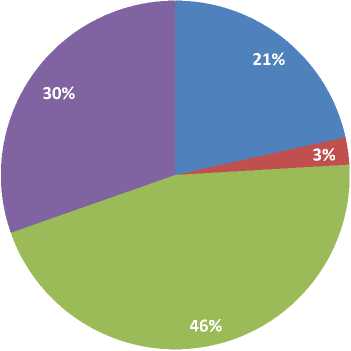
Fig. 1. Thematic distribution of news publications in The New York Times 10.
The New York Times has the largest number of publications on military and political topics. The increasing military presence of various countries in the region is often mentioned, but the greatest emphasis is placed on Russia and China, as well as their cooperation in the region, which is an indicator of the use of media priming. The actions of Russia and China are perceived as a threat to the West and stability in the Arctic. For example, one of the articles of 2022 notes that “against the
-
10 Compiled by the authors.
backdrop of Russia’s war in Ukraine”, it is worth questioning the vision of the Arctic as a zone of peace and cooperation, as Arctic states no longer feel secure in the region 11. Such publications persuade the public that the militarization of the Arctic is indeed necessary. The image of Russia as an “aggressor” and a potential threat in the region is often used for this. In addition, “espionage in the Arctic” by Russia and China is a frequently mentioned topic. Several articles are devoted to the “Chinese spy balloon” that was shot down off the coast of Alaska 12. Thus, from a military-political perspective, according to The New York Times, Russia and China are factors of instability in the Arctic, and this requires a corresponding response. The inclusion of the Arctic in military-political discourse reinforces anti-Russian and anti-Chinese sentiments. It should be noted that at the same time, the active presence of NATO and the United States in the region is depicted as a necessary response to Russia’s allegedly “aggressive military expansion in the Arctic” 13.
Having analyzed publications related to Russia’s Arctic policy and its relations with its neighbors, it is worth noting that the narratives are constructed in such a way as to make it clear to readers that Russia is not a reliable party in the Arctic region. Furthermore, publications focusing primarily on the economy often provide arguments as to why foreign companies should not do business with Russia. Various reasons are given: harsh conditions, economic instability, “inappropriateness” of financing Russia during the conflict in Ukraine, and others 14, 15. Causal relationships are distorted, creating the impression that Western companies’ withdrawal from the Arctic is motivated solely by moral considerations, rather than sanctions and other factors. Readers are presented with information without mentioning the losses suffered by foreign partners as a result of their withdrawal from the Russian Arctic. This situation is reminiscent of a classic example of post-truth — Brexit, in which the losses that the UK could experience were actively concealed, and only favorable information was disseminated, contributing to the growth of support for Brexit among the population.
Distorting causal relationships is a common tactic used by The New York Times. For example, one of the publications states that Russia is exacerbating the situation related to climate change in the Arctic because it “began an invasion of Ukraine”, which has prevented Western scientists from gaining full access to data, while at the same time the Russian Arctic is warming the most 16. This gives readers the impression that, in addition to being responsible for the conflict in Ukraine, Russia is also to blame for the warming of the Arctic.
The New York Times publications that touch on the topic of climate require special attention. The problem of climate change is considered not only from the ecological perspective, but also in a political context. An analysis of publications on this topic revealed the use of a “cascade of accessible information” technique, in which the same topic is repeated frequently. Initially, it may seem neutral, but then certain details are added, which, upon reading, influence the public’s opinion. This creates the impression of the inevitability of the consequences of climate change and warming in the Arctic, and emphasizes the need for urgent action to address the situation. As an example, let us cite an article that acknowledges climate change, but simultaneously reports that China will use 49 million gallons of water to create artificial snow in preparation for the Olympic Games 17. The inclusion of such information creates a connection in readers’ minds between climate change in the Arctic and China’s actions. It is worth noting that no information was provided about other countries’ use of water for artificial snow during Olympic preparations. Specific countries and individuals are often directly accused, with rather sensational headlines being used. For example, in a publication titled “How to Defeat Putin and Save the Planet”, Russia is accused of climate change and the purchase of Russian gas is noted as unacceptable 18.
Publications often alternate in the following manner. Climate change and rising temperatures in the Arctic are mentioned. At the same time, it is noted that this situation is beneficial to Russia in terms of opening up transport routes, extracting resources and increasing its military presence. One of the publications states: “The Kremlin has tried to take advantage of climate change to gain access to resources” 19.
Thus, after analyzing news reports in The New York Times, we can conclude that a certain image of the Arctic as an area of intensifying rivalry is being formed, for which Russia and China are allegedly to blame. In addition to the military-political component, these states are also accused of causing instability in the Arctic in an environmental context. There is a risk that readers will form a perception of the Arctic as an unstable region requiring active Western intervention.
Next, we will analyze publications from The Washington Post. We identified 37 news articles about the Arctic that demonstrate the use of manipulative and post-truth mechanisms. The topics are distributed as follows: 24 publications are devoted to politics, 14 — to the military sphere, and 14 — to climate (see Fig. 2).
The Washington Post
■ Climate ■ Politics ■ Military
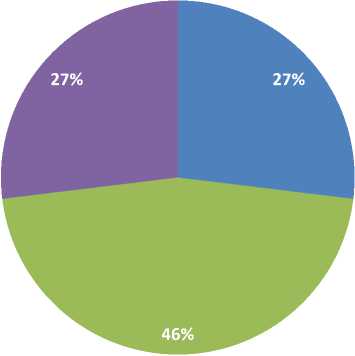
Fig. 2. Thematic distribution of news publications in The Washington Pos t 20.
The largest number of publications is related to politics or the military sphere. The militarization of the Arctic is noted 21. As in The New York Times, it is stated that Russia and China are destabilizing actors in the Arctic. According to the publisher, Russia’s well-known submarines off the coast of Northern Europe, as well as Chinese spy balloons, are matters that need to be addressed and defended against, despite the lack of clear evidence of the alleged behavior of Russia and China 22 23.
A publication about NATO military exercises in the Arctic is of particular interest 24. It notes that an American aircraft with four military personnel on board crashed during the exercises. This is followed by information that the exercises were launched against the backdrop of “Russia’s invasion of Ukraine”. Based on this, a certain connection between these events is established. The reader may blame Russia for the death of American servicemen, despite the fact that no real arguments are provided for Arctic exercises conducted thousands of kilometers from the site of the Russian-Ukrainian conflict.
It is precisely because of Russia’s allegedly aggressive actions that Western countries justify their policies in the Arctic. There is a possibility of conflict in the Arctic not only with Russia, but also with China, as their “ambitions in the Arctic are growing” 25. That is why, according to The Washington Post, the US is also conducting exercises in the Arctic, Canada is increasing its military spending, Finland and Sweden have joined NATO, etc. Based on the above, it is not difficult to conclude that, from a political and military point of view, The Washington Post presents the following view of the Arctic: NATO is in a defensive position, while Russia and China are on the offensive. If NATO conducts exercises, it is “preparing for defense”, but if Russia does the same, it is “escalating the threat”. Militarization by Western countries is a “strategic necessity”, but when Russia does it, it is “aggression”. Thus, the information is presented in the spirit of the post-truth era, with information manipulation and double standards.
Publications on climate change and Arctic warming are no less controversial. Like many other media outlets, The Washington Post reports on the disappearance of glaciers, the melting of permafrost, and other phenomena. This, in turn, harms animals, people, and entire cities. However, some details of the environmental discourse raise questions. For example, one of the publications notes that the Arctic is warming, and some cities, including Yakutsk, are at risk of collapse 26. It also mentions the oil spill in Norilsk in 2000, which was also caused by the melting of permafrost. Based on this, the Russian Arctic is presented as a dangerous place from an environmental perspective, which also threatens the entire Arctic. Another publication claims that “fires are raging” in Siberia because Russian firefighters are currently stationed in Ukraine 27. In this way, the publication seeks to establish a connection between these two events in readers’ minds, thereby reinforcing antiRussian sentiment. According to The Washington Post, it is Russia that is harming the Arctic. In some cases, causal chains are even provided: Russia “invaded” Ukraine, scientific cooperation in the Arctic has been suspended, and polar bears are suffering as a result 28. However, the real reasons for the suspension of cooperation in the Arctic are not given.
Thus, based on an analysis of The Washington Post news coverage, it can be concluded that the publication is shaping the following discourse: the Arctic is either a new arena for military and geopolitical confrontation or a place where climate change will cause the death of humanity. In both cases, Russia (in some cases, China) is or will be blamed. One of the publications acknowledges that melting ice will inevitably lead to competition between powers in the Arctic 29. The Washington Post presents scenarios for cooperation in the Arctic only in its military-political discourse, in the context of NATO member states collaborating to “contain Russia”.
Analyzing The Guardian, it is worth noting that the publication also covers Arctic topics. A total of 49 news articles were found during the study period, which are thematically distributed as follows: 26 publications on political issues, 17 — on the climate in the Arctic, and 12 — on military issues (see Fig. 3).
The Guardian
■ Climate ■ Politics ■ Military
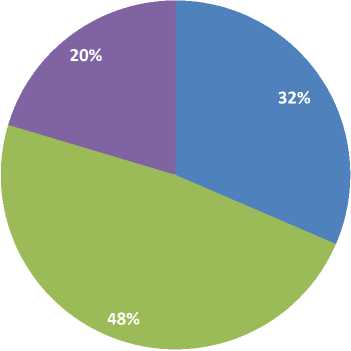
Fig. 3. Thematic distribution of news publications in The Guardian 30.
Military and political issues are mainly reflected in publications mentioning the militarization of the Arctic, sanctions against Russia and Russian military exercises. The Arctic is presented as an area where Russia is the main threat. Many articles note the presence of Russian bases in the Arctic, the country’s desire to conduct military exercises in the region, and “aggression” in general. However, military bases of other states in the Arctic are not mentioned, even in the context of defense against the “threat” posed by Russia. Thus, the reader is made to believe that Russia is the only entity militarizing the Arctic, which is not true. According to The Guardian, China is also a destabilizing factor in the Arctic region. It is noted that both Russia (using submarines and whales) and China are engaged in espionage 31, 32, 33.
Some military-political publications intersect with environmental themes, with Russia often being blamed. One of the publications claims that Russia, in addition to building up its military
-
30 Compiled by the authors.
-
31 Suspected Russia-trained spy whale reappears off Sweden’s coast. URL: https://www.theguard-ian.com/world/2023/may/29/suspected-russia-trained-spy-whale-reappears-off-swedens-coast (accessed 30 October 2025).
-
32 Russia stepping up security at Black Sea base with spy dolphins, says UK intelligence. URL: https://www.theguard-ian.com/world/2023/jun/23/russia-security-sevastopol-black-sea-base-spy-dolphins (accessed 30 October 2025).
-
33 Chinese warships spotted off Alaska coast, US Coast Guard says. URL: https://www.theguardian.com/us-news/arti-cle/2024/jul/11/chinese-warships-alaska-us-coast-guard (accessed 30 October 2025).
power, is also polluting the Arctic 34. Furthermore, the alternation of accusations against Russia for damaging the Arctic environment with information about climate change in the region may lead readers to believe that Russia is responsible for all the negative processes taking place in the Arctic.
In general, it should be noted that there are some unfounded sensational headlines. For example, when readers come across a publication with the headline “Russia's Sami fight to save their language and traditions”) 35, they will probably think that Russia has not created the conditions necessary to support the livelihoods of indigenous peoples. However, the news article itself makes no mention of this. Like other indigenous peoples, the Sami face the need to preserve their traditions. The only questionable aspect is the publication’s decision to use the example of the Russian Sami with such a headline to convey this message. Numerous other examples were found: “Nature is being destroyed: Russia’s arms buildup in the Barents Sea creating toxic legacy” 36, “How Russia is taking control of the Arctic”, 37 and others.
Summarizing The Guardian’s publications on the Arctic, we note that security in the Arctic is perceived negatively for two main reasons: climate and military-political. Russia in the Arctic is perceived as an exclusively destabilizing factor, threatening both the ecology of the region and the security of other Arctic states.
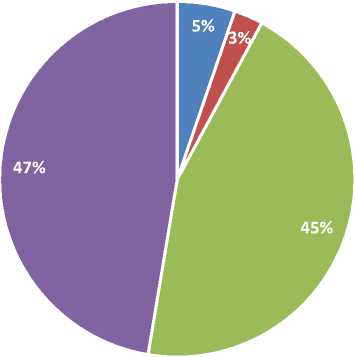
Next, let us consider news articles from The Daily Telegraph (The Telegraph). Of the 22 publications, 17 deal with political topics, 14 — with military topics, 2 — with climate topics, and 1 — with economic topics (see Fig. 4). Although the total number of references to the Arctic is not that high, it can be argued that the material demonstrates the use of various techniques characteristic of the post-truth era.
The Daily Telegraph
■ Climate ■ Economy ■ Politics ■ Military
-
Fig. 4. Thematic distribution of news publications in The Daily Telegraph 38.
The military-political situation in the Arctic is characterized as unstable and unsafe. The threat posed by Russia and China is frequently mentioned. For example, according to the publication, Russia and China are strengthening their naval presence 39, Sweden is forced to defend itself against Russia 40, Finland has experience in confronting Russia, which could invade the country 41, etc. Such coverage of events may contribute to the formation of a certain public opinion that confrontation in the Arctic is inevitable. In turn, the formation of an image of states as aggressors may lead to an escalation of diplomatic conflicts and an arms race.
The Daily Telegraph uses emotional headlines and rhetoric in its articles on Arctic security issues involving Russia and China. Based on the distribution of topics covered in articles about the Arctic, we see that the main focus is on military activity and conflicts. The topics of ecology and climate are practically not mentioned in this media outlet. A significant amount of information about military maneuvers, tests and potential conflicts can create the impression that there is a real need to counter “threats”, even though these threats are often unsubstantiated. Furthermore, the selective reporting and one-sided coverage lead to the formation of stereotypes and biased opinions among the audience.
The analysis of the above-mentioned media outlets and the topics of their publications in which information distortions were found is presented in the form of a diagram (Fig. 5):
-
■ Climate ■ Economy ■ Politics ■ Military
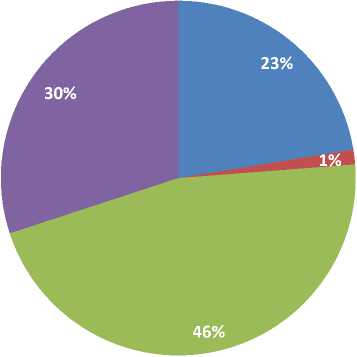
Fig. 5. Thematic ratio of news publications of all mass media outlets analyze d 42.
Table 1
Typology of post-truth narratives about the Arctic in Western media outlets (2022–2025) 43
|
Narrative |
Key message |
Characteristic techniques |
Example from publications |
|
Russian / Chinese threat narrative |
Russia and China are destabilizing actors, leading to militarization and confrontation |
Media priming, hyperbole, omission of NATO actions |
“Russia is taking control of the Arctic” (The Guardian) |
|
Environmental guilt narrative |
Russia is to blame for worsening climate problems in the Arctic |
Distortion of causal relationships, “cascade of accessible information” |
Connection between forest fires in Siberia and redirection of forces to Ukraine (The Washington Post) |
|
Conflict inevitability narrative |
The Arctic is a zone of permanent crisis; cooperation is impossible |
Emotional headlines, selective choice of facts |
Description of NATO exercises as “forced defense” (The Washington Post) |
|
Economic insolvency narrative |
The Russian Arctic is an unattractive and unsafe region for investment |
Omission of losses by Western companies, emphasis on sanctions as a “moral choice” |
Materials about Shell’s withdrawal from Russia (The New York Times) |
Based on the analysis of publications from the above-mentioned news outlets, it is possible to form an overall distribution of publications by subject area. Politics was reflected in 103 articles, the military sphere — in 67, climate — in 50, and economics — in 3. It was found that, in general, all of the above-mentioned media outlets portray the Arctic as an unsafe and unstable region in terms of the military sphere, politics, and climate. Russia and China are largely blamed for this.
-
42 Compiled by the authors.
-
43 Compiled by the authors.
Russia’s militarization of the Arctic is noted without any mention of similar actions by other Arctic states. Even when such mention is made, it is only in the context of “necessary self-defense”.
The image of Arctic security in Western media is shaped in such a way as to convey the impression that the region is in a state of permanent crisis. The analysis did not find any publications indicating opportunities for cooperation in the Arctic or any ongoing cooperation. The only possible framework for cooperation is military-political, directed against Russia and China. Based on this, it is possible to conclude that there is a desire to legitimize the current actions of NATO member states in the Arctic to militarize the region and effectively destabilize international security there.
Forecast and prospects
It is undeniable that post-truth narratives are leading to the formation of negative perceptions of each other among the states of the Arctic region. A spiral of mistrust is formed, which intensifies with every misinterpreted event by one actor or another. The process can be described as follows: information disseminators find a pretext for spreading misinformation and artificially inflate the threat using the mechanisms mentioned above. The population begins to feel fear and a sense of insecurity for no apparent reason. The results of well-conducted sociological surveys demonstrate a public demand for “forced” and tough measures to neutralize the threat (condemnatory statements, increased military presence, intensified reconnaissance activities, preventative measures in case of a full-scale military conflict, etc.). Politicians take these tough measures based on public opinion or regardless of it. It should be noted that the manipulation of facts can be used not only to prepare future decisions, but also to justify those already taken. Other states, often neighboring ones, perceive these actions as a threat and take their own security measures.
Furthermore, the development of the post-truth phenomenon in and about the Arctic has consequences for the humanities and sciences. The atmosphere of mistrust and attempts to isolate Russia in the region are leading to the cessation of scientific cooperation on Arctic development issues, as reflected in some publications. Joint efforts that were undertaken to study global warming and climate change in detail are fading away. Previously active expert networks, such as UArctic, are losing their effectiveness in intergovernmental cooperation, as Russia, the largest actor in the Arctic, is being pushed out and artificially isolated. Although the institutions themselves continue to exist, research conducted within them can be considered marginalized. The narratives of the largest Western media outlets accuse Russia of bringing scientific and educational cooperation in the Arctic to a standstill due to the start of a special military operation in 2022. This event was indeed a turning point, but Russia has never refused constructive cooperation in the Arctic, despite all the events that have taken place outside its borders. Thus, there is an unjustified shifting of blame, while at the same time an exclusively negative image of Russia is being formed in the public mind, including in the Arctic. If this trend continues, security in the region will indeed become vulnerable.
In the case of scenarios dominated by post-truth reporting on the security situation in the Arctic, the region’s economic component is also at risk. For example, one of the key economic consequences of the spread of post-truth could be a significant reduction in the investment attractiveness of the Arctic region. Western media outlets have a particularly strong tendency to publish materials devoted to unprecedented warming, melting Arctic ice and the destruction of permafrost. These publications are often accompanied by apocalyptic predictions and dramatic headlines. The constant fear-mongering and exaggeration of dangers makes investors to perceive the Arctic as an extremely unstable and unpredictable territory. As a result, there is a high probability that capital that could have been directed, for example, towards large-scale and long-term projects in the field of infrastructure, the exploitation and extraction of natural resources, the transport and logistical development of the Northern Sea Route and tourism, will shift from the Arctic to other regions of the world. The spread of false information about the Arctic in the media is becoming a factor that could significantly limit the region’s development, make its economic future unpredictable, and lead to a prolonged economic downturn, the consequences of which will be felt in all spheres of life in the region. In this regard, the manipulation of information can be considered a weapon used to achieve specific goals.
There are two main scenarios for the development of international security in the Arctic in the post-truth era: acute escalation and freeze in cooperation. The first scenario, associated with an escalation of the current situation, is the most alarming. In this scenario, the continued spread of post-truth information increases mistrust between states and provokes a redistribution of power. The Arctic is finally becoming established in the information space as a territory dominated by militarization, espionage, and rivalry between great powers. Conflicts arise not from direct aggression, but as a result of a distorted perception of the actions of other actors.
The second scenario, which envisions only a freeze in Arctic cooperation, is less acute, but no less dangerous in the long term. States formally maintain diplomatic relations, but in practice refuse to work together within the Arctic Council, scientific platforms, environmental projects, and so on. Under the influence of negative media reports, trends are shifting toward isolation or loyalty to certain blocs and away from comprehensive cooperation. This leads to a decline in trust and a gradual erosion of previously stable collaborative formats. A barrier is emerging that divides countries even in areas where consensus had previously been reached. This also has a destructive impact on international security in the Arctic.
Possible scenarios for the development of international security in the Arctic are presented in Table 2:
-
Table 2
Scenarios for the development of international security in the Arctic in a post-truth environment 44
|
Scenario |
Characteristics |
Consequences |
|
Acute escalation |
Security dilemma, information aggression |
Local incidents, militarization, armed conflicts, diplomatic deadlock |
|
Freezing cooperation |
Final rejection of joint projects, decline in trust, deliberate blocking of communications |
Degradation of mechanisms for cooperation in the Arctic, scientific and environmental interaction |
|
Controlled tension |
Maintaining minimal dialogue on the least conflictual topics (science, emergency situations), maintaining a high level of militarization and mutual distrust |
Low-intensity confrontation, limited cooperation on specific projects, slow degradation of multilateral institutions |
In this regard, it is necessary to develop and implement comprehensive measures aimed at minimizing the consequences caused by the peculiarities of the post-truth era and preventing further deterioration of international security in the region. In order to effectively address the impact of post-truth on international security in the Arctic region, it is necessary to develop not simply linear solutions, but a flexible and multi-level system that takes into account the specifics of the information space, geopolitical contradictions, and public perception.
Attempts to formulate a convention on international information security have already been made. For example, in 2023, Russia, Belarus, North Korea, Nicaragua, and Syria proposed a draft UN Convention on International Information Security 45. The document emphasized the growth of military ICT technologies and their potential use as weapons. However, the initiative did not receive widespread support, although the attempt itself demonstrates the urgent need for international regulation.
In 2009, the SCO member states signed an agreement on cooperation in international information security 46. The document identifies key threats: from the development of information weapons to information terrorism, crime, and various distortions capable of harming the political, social, and spiritual spheres of society. The states identified areas of cooperation such as the development of norms to limit the spread of information weapons, combating crime, sharing experiences, and other coordination tools. A similar approach is also needed in the Arctic. Understanding the risks of post-truth should become a platform for restoring coordination mechanisms.
Obviously, effective international initiatives could play a significant role in countering the spread of post-truth; however, given the current heterogeneous geopolitical situation in the world, attention should be paid to implementing measures to ensure information security at the national level. A strategy to combat the post-truth phenomenon and its consequences should not be limited to government regulation, such as tightening laws or restricting access to information. More effective measures include a comprehensive approach covering various aspects, such as institutional, educational, technological, and others. The aim of these measures should be to strengthen society’s ability to recognize manipulation and misinformation, as well as to form an objective image of international security in the Arctic and the processes taking place there. One of the approaches could be the creation of interdepartmental structures to monitor and analyze information threats. Their task is not to block information, but to identify manipulation, bring it into the public sphere, and explain the nature and purpose of the distortions.
Another area of focus is the development of multilingual information resources dedicated to Arctic topics and aimed at a foreign audience. This task is set out in the Strategy for Developing the Russian Arctic Zone and Ensuring National Security until 2035 47. Scientifically substantiated and systematic presentation of information would strengthen the global audience’s awareness of Russian initiatives and real processes in the region.
The most obvious and key method of responding in the post-truth era is to increase media literacy, especially among the population of the region where critical events are unfolding, including those that depend on the correct perception of information, as well as to double-check materials that are of interest or necessary for professional and educational activities. Society should understand the true causes, nature, characteristics, and consequences of post-truth narratives. Conducting educational campaigns, including subjects aimed at developing critical thinking in school and university curricula, and forming the habit of checking sources of information — all these measures can contribute to the formation of citizens’ resistance to information manipulation.
In the Arctic, where official state formats of interaction are limited due to political confrontation between actors, or more precisely, due to the isolation of one actor, collaboration between scientists and experts, professional communities, and other non-state actors is particularly relevant. They can maintain space for constructive interaction. Joint scientific projects, even in the absence of political dialogue, can correct distorted facts in the media. Despite many media outlets reporting the cessation of scientific cooperation “due to Russia’s fault”, Russia is open to such collaboration and does not prohibit its scientists from interacting with foreign specialists.
The scientific community can counteract the negative aspects of the post-truth phenomenon by developing methodologies and tools to increase resilience to disinformation and awareness of manipulation techniques, etc. In this case, we are not talking about fact-checking, which was mentioned earlier, but about analyzing specific post-truth narratives about the Arctic. By systematizing linguistic patterns in media publications, it seems possible to develop an aggregated rating or database that would allow for tracking and recording information distortions, as well as data on which topics and with what frequency are articulated in the media environment. With relations between all Arctic states improving, it seems appropriate to create such an instrument based on consortia of scientific institutions and analytical centers. For now, it is important to support those international contacts that have been preserved. Furthermore, participation in scientific conferences, joint research, interpersonal scientific contacts, and participation in international Arctic development projects are all important components of restoring trust between countries.
Therefore, to maximize the effectiveness of countering the post-truth phenomenon, strategies should not be limited to individual states or institutional mechanisms. These should be developed both in expert circles and in the technological and civil spheres. Only through coordinated actions at all levels — from international diplomatic platforms to local initiatives of research communities — it can be possible to weaken the polarizing effect of post-truth and to maintain the stability of international relations in the Arctic.
Possible levels and measures of response to manifestations characteristic of the post-truth era are summarized in Table 3:
-
Table 3
Main levels and measures of response to information threats in the Arctic 48
|
Scenario |
Characteristics |
|
International level |
Movement toward an international convention on information security; Creation of international platforms for interaction; Dialogue to reduce the cross-border risks of the post-truth phenomenon |
|
National level (using the Russian Federation as an example) |
Laws on de-anonymization and the fight against fake news; Creation of information resources about the Arctic for foreign audiences; Support for educational programs on media literacy; Use of modern technologies to verify facts and combat information bubbles |
|
Civil and scientific community |
Developing methodology and expert mechanisms for post-truth analysis; Supporting scientific contacts; Participating in international conferences, maintaining and developing academic ties; Creating independent analytical databases and rankings |
Conclusion
In the post-truth era, the tools for exerting influence have expanded significantly. Their use by the media and other actors in international relations not only limits opportunities for constructive interaction, but also deliberately shapes public opinion, shifting it in the desired direction. Real and objective analysis is replaced by emotions based on bias and unverified information.
Several foreign media outlets and social media platforms with the largest audiences were selected to analyze the destructive influence of information on the Arctic region: The New York Times, The Washington Post, The Guardian, and The Daily Telegraph. Of all the publications since 2022, those related to the Arctic were sampled. A total of 176 publications were reviewed. It was concluded that all analyzed media outlets, in one way or another, pursue policies that can be described as post-truth in one way or another. Emotionally charged statements, formulations, and headlines are actively used, facts are presented selectively, and threats are exaggerated, creating dramatic narratives. The Arctic region is portrayed exclusively in a negative light. In most publications, Russia and China are blamed for destabilizing international security in the Arctic. Russia is accused of militarization, environmental damage, and creating obstacles to international cooperation. Such unfounded rhetoric directed at the largest actor in the Arctic region could undermine international security there.
It has been identified that the most alarming and worrying scenario is the one involving escalation, as mistrust between states will only increase and the balance of power in the Arctic will shift. According to this scenario, the Arctic will never return to its former status as a territory of dialogue and cooperation. If post-truth policies by foreign media and other actors intensify and become more active, the Arctic will finally become defined as a territory dominated by processes such as espionage, great power rivalry, militarization and environmental pollution.
It should be emphasized that, due to the complexity of the post-truth phenomenon, a response is required at many levels, from the international to the civil society and scientific. It is necessary to move toward an international convention on information security; create various platforms for cooperation to counter destructive trends in the information sphere; develop specialized information resources about the Arctic for international audiences; support and widely disseminate educational programs on media literacy and critical thinking; utilize modern technologies for factchecking and combating the emergence of information bubbles; maintain mutually beneficial scientific contacts and academic ties; create analytical databases and ratings that will allow the general public to assess the accuracy of various sources of information.
